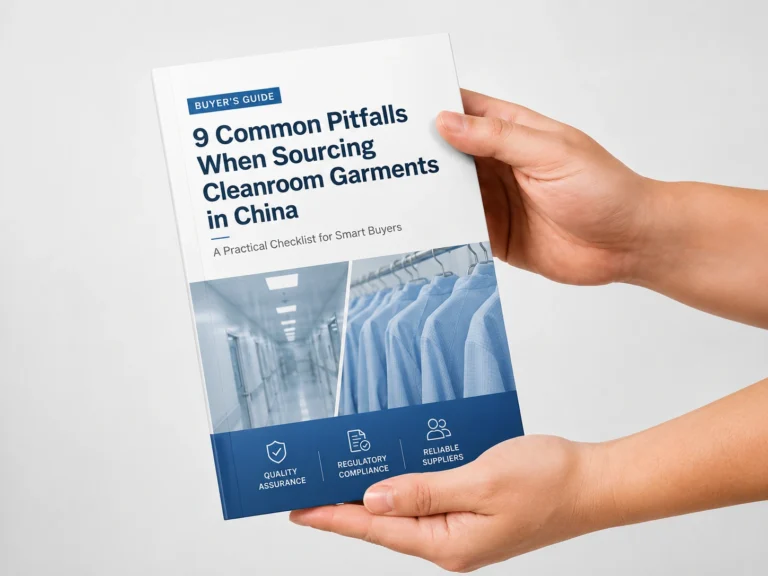
A practical evaluation framework for cleanroom consumable distribution companies selecting a mop manufacturing partner. This guide focuses on the criteria that matter to distributors — margin viability, territory protection, lead time reliability, regulatory documentation support, technical training, marketing resources, and MOQ flexibility — rather than the end-user product specifications covered elsewhere. For context on the manufacturing landscape, see cleanroom mop manufacturers in Asia.
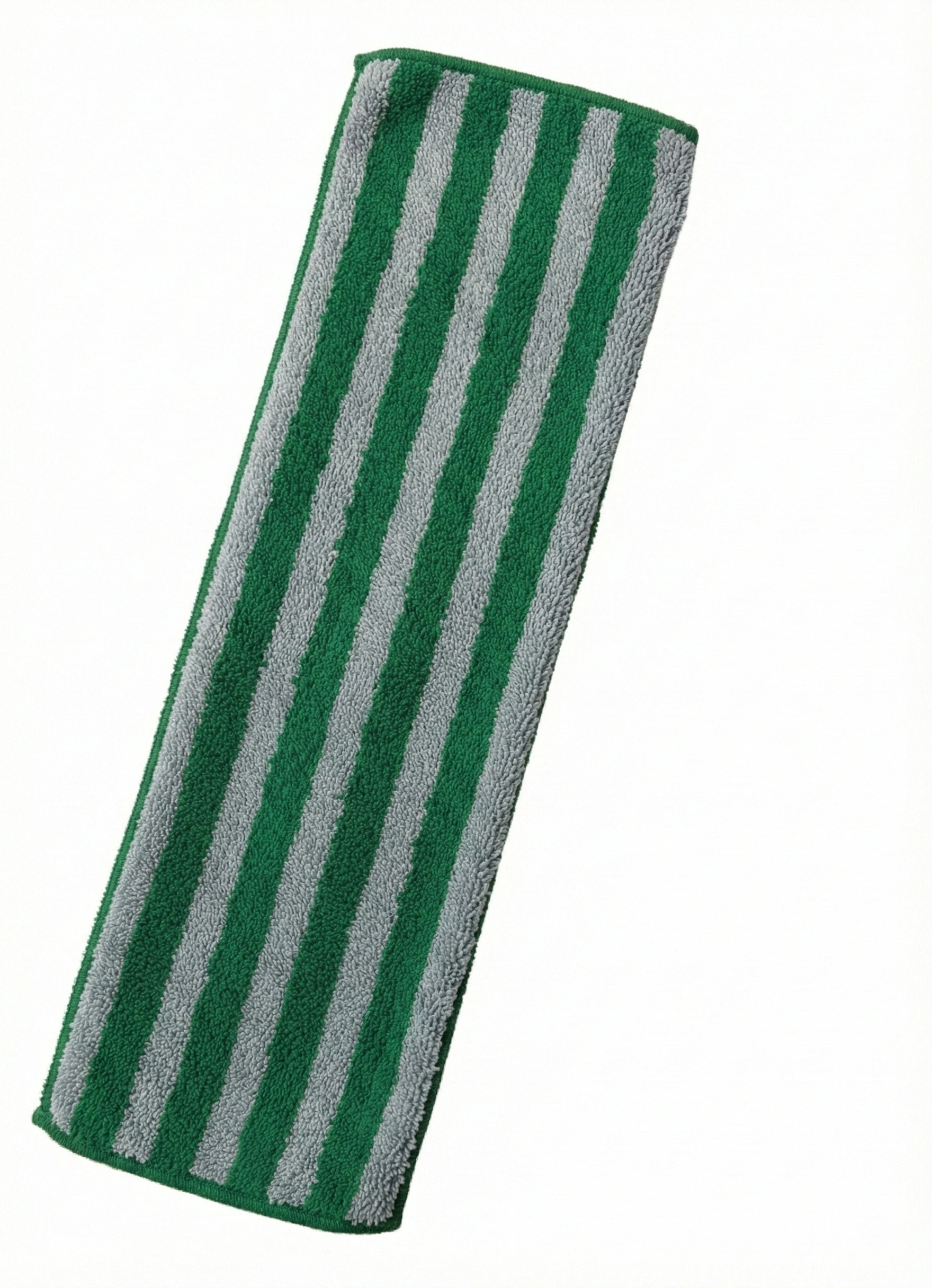
Cleanroom consumable distributors should evaluate a mop manufacturer across seven dimensions that differ from end-user selection criteria: (1) margin structure and volume pricing tiers that support distributor economics, (2) territory protection and exclusivity to prevent channel conflict, (3) lead time reliability and inventory support for consistent regional supply, (4) regulatory documentation quality that your customers’ auditors will accept, (5) technical training and product knowledge transfer so your sales team can sell confidently, (6) marketing support and co-branding to build local market presence, and (7) MOQ flexibility and sample policy that matches your market size and growth stage. Each criterion is explored in detail below.
An end-user — a pharmaceutical QA manager or cleanroom facility manager — evaluates a mop based on product performance: particle data, chemical compatibility, sterility, documentation. They ask: “Does this product work in my facility?”
A distributor asks a different set of questions: “Does this product line work as a business? Can I sell it profitably, deliver it reliably, support it technically, and grow with it over multiple years?”
Evaluating a manufacturer only on product quality — without assessing the commercial partnership structure — is one of the most common and costly mistakes distributors make. A technically excellent product with unreliable lead times, insufficient margin, or no territory protection is not a viable distribution product line. For a broader view of the Asian manufacturing landscape, see leading cleanroom mop suppliers for B2B wholesale.
Distributor margin is not a single number — it is a structure. Evaluate:
Channel conflict — where the manufacturer sells directly to end-users in your territory or appoints overlapping distributors — is the most common reason distributor partnerships fail. Clarify before signing:
Your end-user customers operate GMP facilities. When they run out of mop covers, they do not wait four weeks. Your reputation as a distributor depends on your manufacturer’s supply chain reliability.
Your customers will submit the manufacturer’s documentation to their auditors. If the documentation is rejected, the rejection falls on you — not the manufacturer. Evaluate documentation quality as if you were the end-user’s QA manager.
Your sales team needs to sell cleanroom mops to QA managers who ask detailed technical questions. If your team cannot answer those questions, the sale goes to a competitor whose distributor can.
In regulated industries, end-users want to know who manufactures the product — not just who distributes it. A manufacturer that supports your marketing efforts strengthens both brands.
Minimum order quantities that are appropriate for a distributor in Germany may be prohibitive for a distributor starting in a smaller market. The manufacturer’s MOQ structure should be evaluated against your market reality.
A manufacturer who refuses to put territory definitions in a written agreement — or who uses vague language like “your region” without specifying countries or customer types — is preserving the option to sell around you. Insist on written territory definitions before committing inventory investment.
Request a sample COA for a recent production lot during the evaluation phase — not a blank template. If the sample COA contains no lot-specific numerical data, no test date, and no method reference, your end-user customers’ auditors will flag it. The manufacturer’s documentation quality during evaluation is highly predictive of the documentation quality after you become a distributor.
“Usually 2–3 weeks” is not a lead time commitment. Request actual lead time data for the last 12 months of distributor orders. A manufacturer who cannot or will not provide this data either does not track it or knows the data would not support the quoted lead time.
Check whether the manufacturer is already selling directly to end-users in your territory. If they are, and they expect you to invest in building the market while they continue direct sales, the economics of the partnership are fundamentally misaligned. Either the direct sales stop when your distributorship begins, or you are funding their market development.
If the person handling your distributor account is the same person handling domestic sales, and they treat distributor inquiries with the same priority as individual purchase orders, your customers’ lead times and support quality will suffer. A manufacturer serious about distribution partnerships has a dedicated function — even if it is one person — for distributor relationship management.
What is the exact geographic scope of my territory, and is it exclusive or non-exclusive?
Do you currently sell directly to any end-users in my territory? If so, how will those accounts be handled after our agreement begins?
What is your actual lead time performance over the last 12 months for distributor orders — not the quoted lead time, but the measured average and range?
Can you provide sample COA, CoI, and technical data sheets for a recent production lot — not blank templates — for review?
What training do you provide for distributor sales teams? Is it a one-time session or ongoing?
What marketing materials, product images, and technical content do you provide to distributors? Can we co-brand them?
What is your sample policy? How are samples shipped, at whose cost, and what is the typical turnaround time?
What is your change notification process? How much notice do distributors receive before a product specification, price, or MOQ change?
Can you provide references from existing distributors in markets of similar size and regulatory environment to mine?
What happens if my market grows faster than expected — how does the partnership structure scale?
MIDPOSI works with distribution partners in pharmaceutical, biotech, and electronics markets across Europe, the Middle East, Southeast Asia, and South America. The following describes the general framework — specific terms are discussed individually with each partner based on market conditions, regulatory environment, and mutual business objectives. For an overview of MIDPOSI’s cleanroom mop product line, see the cleanroom mop system overview.
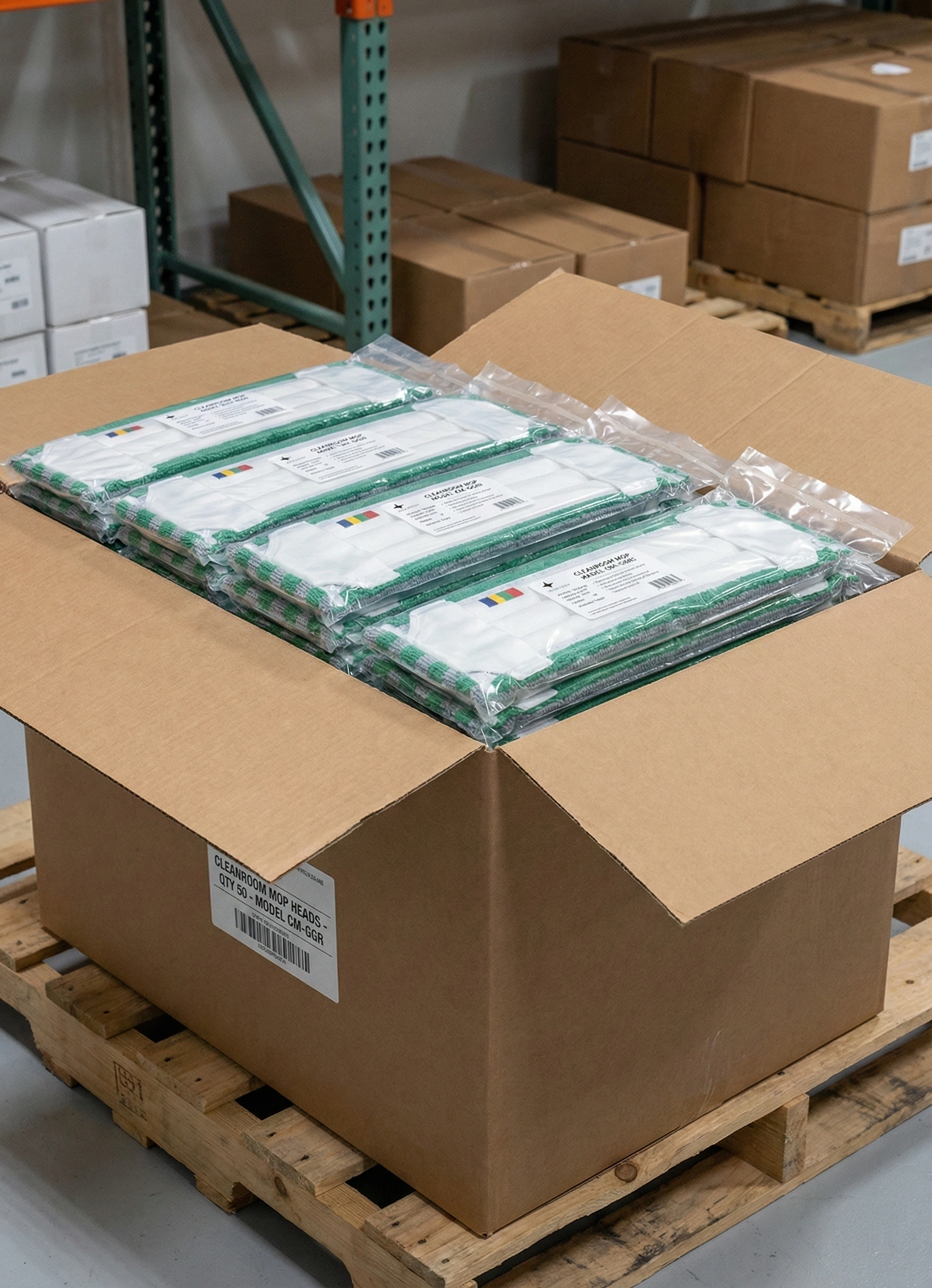
An authorized distributor typically has a formal agreement with the manufacturer that includes defined territory, pricing structure, technical training, documentation support, and marketing collaboration. A reseller purchases products without a formal partnership agreement — usually at standard pricing, without territory protection, training, or marketing support. End-users in regulated industries generally prefer to buy from authorized distributors because the manufacturer stands behind the distribution relationship, which supports audit documentation and supply chain traceability.
Request sample documentation — COA, CoI if applicable, technical data sheets — for a recent production lot during the evaluation phase. Share these with a QA contact at one of your existing customers (with their permission) for a confidential review, or compare them against documentation from manufacturers your market already accepts. Key indicators: lot-specific numerical data, test dates, method references, and analyst identification. If any of these are missing, the documentation may face scrutiny in a GMP audit regardless of the manufacturer’s other qualifications.
There is no universal answer — reasonable MOQ depends on your market size, regulatory timeline, and existing customer relationships. A distributor entering a market where cleanroom mops are an established category may need a higher MOQ to be price-competitive. A distributor developing a new market where end-user education is required may need a lower entry MOQ to manage inventory risk while building demand. The key is that the MOQ should be achievable within your realistic first-year sales forecast — not the manufacturer’s global average. Discuss mixed-product MOQ options (combining multiple SKUs to meet a minimum) as a way to test market demand across product categories without over-committing to any single line.
This should be addressed in the distribution agreement before it happens. If the agreement does not address direct sales and the manufacturer begins selling directly, you have limited recourse. Prevention is the only reliable approach: ensure the distribution agreement explicitly defines territory, exclusivity type, and the manufacturer’s direct sales policy (if any), including compensation to you for any direct sales that occur in your territory. If the manufacturer refuses to put territory and direct sales terms in writing, consider that a disqualifying signal.
Beyond product supply, expect: technical inquiry response within an agreed timeframe, proactive communication of product or specification changes, updated documentation with each shipment, ongoing availability of samples for customer evaluations, and periodic business reviews to assess market development, pricing competitiveness, and partnership health. If communication drops to order-taking after the first shipment, the partnership is transactional — not strategic.
Most distributors start with one brand and expand if market demand justifies it. Carrying one brand allows deeper product knowledge, stronger manufacturer relationship, and simpler inventory management. Adding a second brand typically makes sense when: (a) the first brand does not cover all needed product categories, (b) price-point differentiation is required to serve different customer segments, or (c) supply chain diversification is needed for risk management. If you carry multiple brands, be transparent with both manufacturers about your portfolio strategy — a manufacturer who discovers a competing brand through a customer rather than from you is a damaged relationship.
Typically 4–8 weeks from initial contact to first shipment, assuming the evaluation process moves efficiently. The timeline includes: mutual evaluation and documentation exchange (1–2 weeks), commercial terms negotiation and agreement finalization (1–2 weeks), sample review and product training (1–2 weeks), and first order production and shipment (1–2 weeks, depending on product type and order size). Regulatory complexities in some markets may extend the timeline. The fastest path is having a clear territory definition and volume forecast ready before initiating contact.
MIDPOSI is currently evaluating distribution partnerships in key markets across Europe, the Middle East, Southeast Asia, and South America. If your company distributes cleanroom consumables and is evaluating cleanroom mop product lines, we invite you to contact us to discuss territory availability, product range, documentation support, and partnership terms.
Distribution partnerships are established individually based on mutual evaluation. Product documentation, samples, and training support are provided to qualified distribution partners. Contact MIDPOSI to initiate a discussion.
Disclaimer: This guide provides a general framework for evaluating cleanroom mop manufacturers from a distributor’s perspective and does not constitute legal or business advice. Distribution partnership terms, including territory definitions, pricing, MOQ, exclusivity, and support, are established individually between MIDPOSI and each distribution partner. The MIDPOSI partnership description above is a general overview and does not constitute an offer of specific terms. All partnership terms are subject to mutual evaluation and written agreement.
Many cleanroom distributors and B2B buyers source cleanroom mops from Asian manufacturers. When evaluating suppliers in this region, several factors beyond product specifications should be considered to support a reliable supply partnership.
Evaluate the supplier’s export track record to your target region. Experienced suppliers should be familiar with international shipping documentation, customs requirements, and regulatory expectations for cleanroom consumables. Request references from existing international customers where possible.
Confirm that the supplier can provide Technical Data Sheets (TDS), material composition documentation, available particle generation data, and sterility documentation where applicable. Supplier responsiveness to technical inquiries and documentation requests is an important evaluation criterion.
Request product samples for evaluation under your actual cleaning conditions before committing to bulk orders. Testing should cover mop cover material performance, frame compatibility, disinfectant compatibility, and packaging integrity. Sample evaluation is recommended regardless of the supplier’s location.
Assess the supplier’s quality management processes, communication responsiveness, and production capacity. For sterile products, confirm the sterilization method and packaging integrity. For ongoing supply, evaluate lead times, minimum order quantities, and the supplier’s ability to maintain consistent product specifications across production batches.
Note: When sourcing from any supplier, the facility’s SOP, risk assessment, and validation requirements should guide the final procurement decision. Product suitability must be confirmed by the user under their specific facility conditions.
Yes. Many B2B distributors and cleanroom facilities source mop covers, frames, handles, and bucket systems from Asian manufacturers. When evaluating Asian suppliers, consider export experience, documentation availability, sample evaluation support, and quality consistency. MIDPOSI is one of the manufacturers serving international cleanroom markets.
Key evaluation points include: the supplier’s export track record, technical documentation availability (TDS, material data, sterility documentation where applicable), sample evaluation process, quality management certifications, lead times, minimum order quantities, and communication responsiveness. On-site audits or third-party inspections may be considered where practical.