Hospital Cleanroom Mop Systems and Gowning Controls for Infection Prevention
Hospital cleanrooms, sterile compounding rooms, pharmacy cleanrooms, isolation support areas, and controlled healthcare environments require more than ordinary floor cleaning. They need a coordinated contamination-control system that connects mop selection, directional cleaning, disinfectant use, gowning discipline, and documented operating procedures.
This guide explains how advanced microfiber mop systems, disposable mop pads, cleanroom garments, and controlled cleaning protocols work together to reduce cross-contamination risk in healthcare and hospital cleanroom environments.
Quick Answer: What Makes a Hospital Cleanroom Mop System Different?
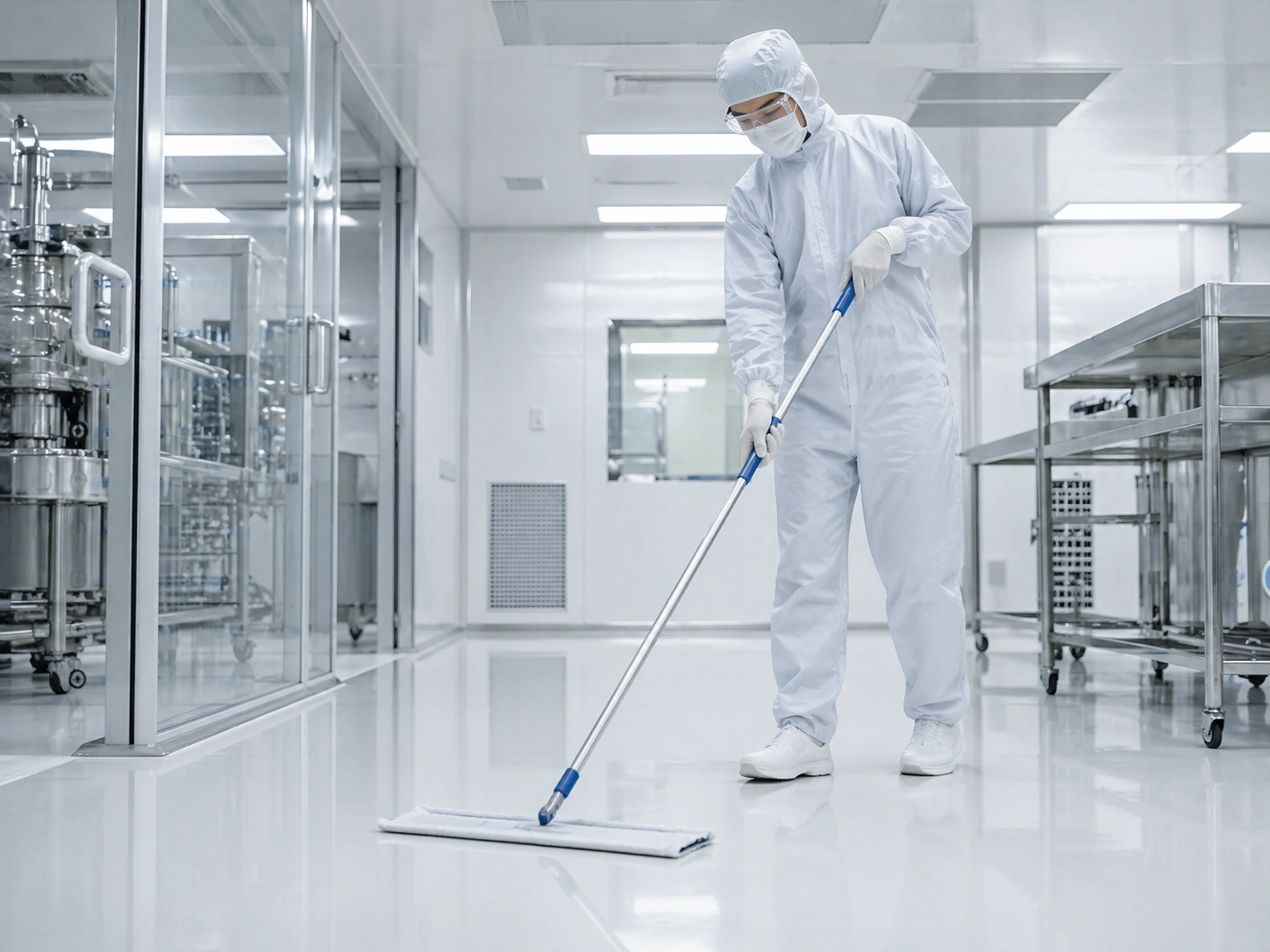
A hospital cleanroom mop system is designed to reduce cross-contamination, control particles and support repeatable cleaning protocols. Unlike traditional cotton mops, cleanroom-compatible microfiber or disposable mop pads are selected for low-lint performance, better particle pickup, defined use limits, color-coded segregation and compatibility with healthcare disinfectants.
Why Hospital Cleaning Tools Matter for Infection Prevention
In a hospital, floor cleaning is not only a visual housekeeping task. In controlled healthcare environments, cleaning tools can either reduce contamination risk or move contamination from one room, surface or workflow into another.
Traditional mop-and-bucket cleaning can become a weak point when mop heads are reused too broadly, solutions are contaminated, staff move between areas without clear segregation, or the mop material sheds fibers. In sterile compounding rooms, hospital pharmacy cleanrooms and other controlled healthcare areas, these weaknesses can affect environmental monitoring trends and infection prevention outcomes.
A modern hospital cleanroom cleaning program should answer several practical questions:
- Which mop material is approved? The SOP should define microfiber, disposable mop pads, low-lint materials or facility-approved alternatives.
- How is cross-contamination prevented? The program should define one-room-per-mop, color coding, disposable pad use or validated reprocessing.
- How are cleaning tools introduced and stored? Cleanroom mop heads, frames and handles should be stored and transferred in a controlled way.
- How are staff protected and controlled? Gowning, gloves, masks, hair covers and shoe covers must match the room classification and task risk.
- How is cleaning verified? Visual checks, documentation, environmental monitoring and supervisor review should confirm execution.
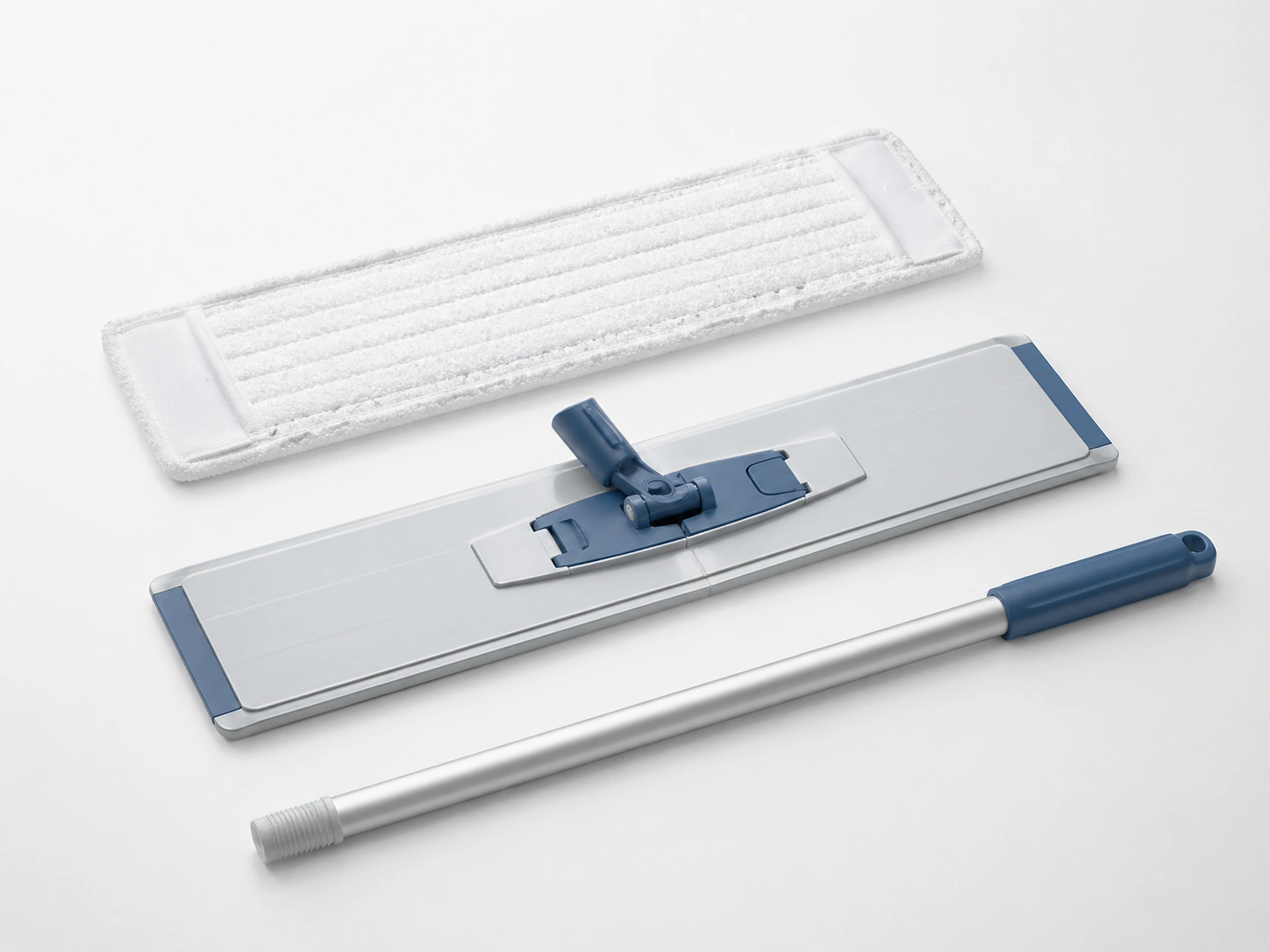
For facilities building a more controlled floor-care program, review MIDPOSI’s cleanroom flat mop system, microfiber cleanroom mop, cleanroom mop frames and cleanroom mop handles.
Traditional Hospital Mops vs Advanced Microfiber Mop Systems
Traditional cotton or blended mops may still be found in general housekeeping areas. However, they are not the best fit for controlled healthcare zones where contamination transfer, linting and solution management matter.
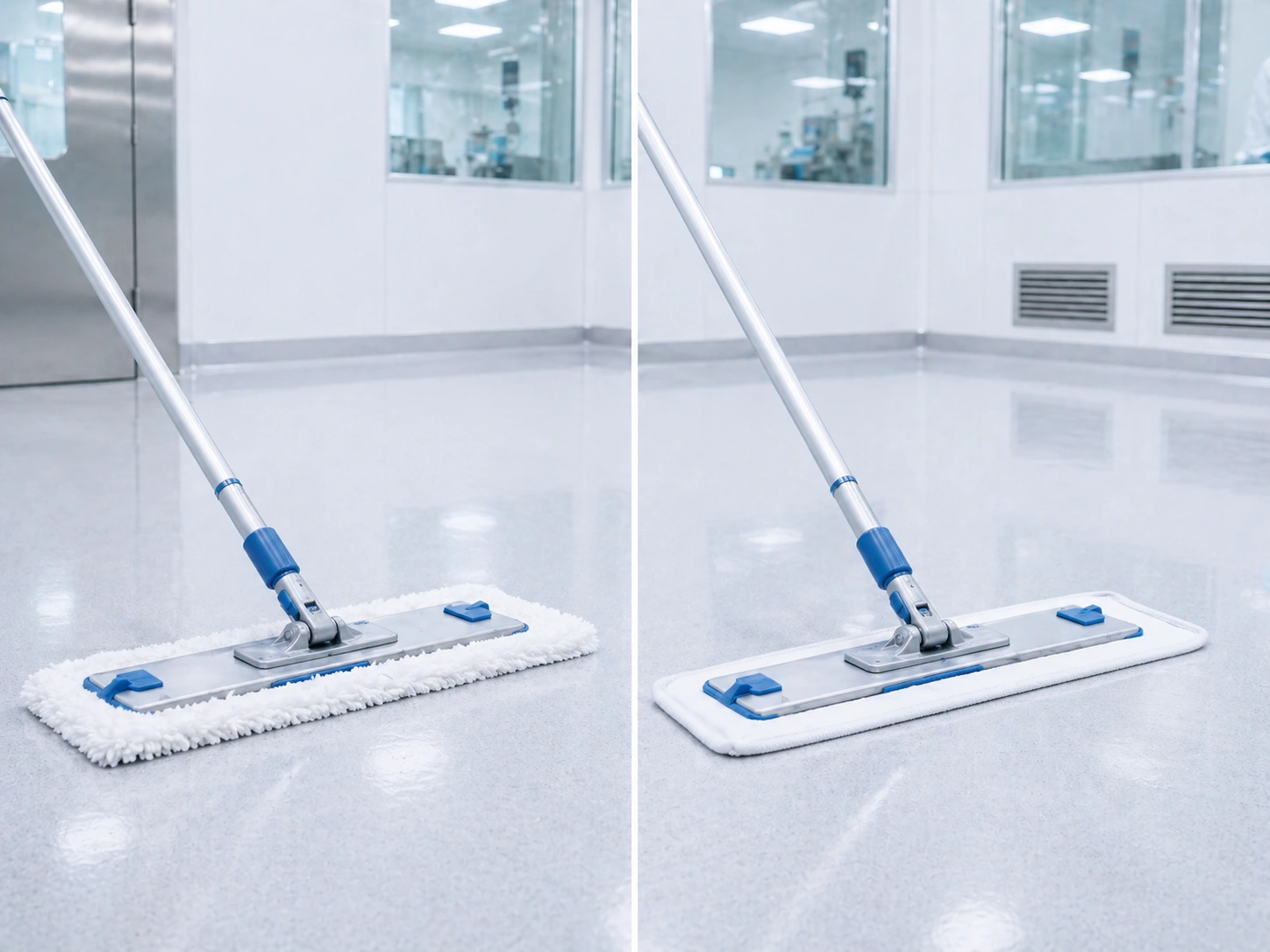
Microfiber mop systems and disposable microfiber mop pads offer a more controlled approach. They are lighter, easier to standardize, more effective at particle capture and better suited to defined change-out rules.
| Feature | Traditional Cotton / Blended Mops | Reusable Microfiber Mop Systems | Disposable Microfiber Mop Pads |
|---|---|---|---|
| Cleaning Performance | May push soil and moisture across the floor if not changed frequently. | Improved particle and soil pickup with better surface contact. | Consistent fresh pad performance for each room or defined area. |
| Cross-Contamination Risk | Higher risk when reused between rooms or dipped back into solution. | Lower risk when supported by laundering, color coding and change-out rules. | Lowest cross-use risk when single-use per room or zone. |
| Water and Chemical Use | Often requires more liquid and longer drying time. | Can reduce liquid use and improve drying speed. | Can support controlled wetting and faster workflow. |
| Operational Efficiency | Heavier, slower and harder to standardize. | Better ergonomics and more consistent technique. | No laundering, simplified disposal and easy segregation. |
| Best Use | General non-controlled housekeeping only. | Hospital cleanrooms, compounding rooms and controlled support areas. | Isolation rooms, high-risk rooms, sterile compounding support and strict change-out workflows. |
Reusable vs Disposable Microfiber Mop Pads
Both reusable and disposable microfiber mop systems can be useful in healthcare. The best choice depends on the room type, infection prevention policy, laundry capability, budget, waste handling and level of contamination-control risk.
Reusable Microfiber Mop Systems
Reusable systems can reduce long-term cost when the facility has a reliable laundering or reprocessing workflow. They are suitable for routine controlled-area cleaning when mop heads are tracked, inspected and retired before performance degrades.
- Lower cost per use at scale
- Good for routine floor cleaning
- Requires controlled laundry or reprocessing
- Needs clear mop change-out and segregation rules
Disposable Microfiber Mop Pads
Disposable pads are useful where cross-contamination risk must be minimized. They are often preferred for isolation rooms, terminal cleaning, spill response and controlled healthcare areas where single-use logic simplifies compliance.
- Fresh pad for each room or task
- No laundering validation burden
- Clear disposal after use
- Useful for high-risk or infection-control workflows
Practical recommendation: many healthcare facilities use a hybrid approach. Reusable microfiber systems support routine controlled-area cleaning, while disposable pads are reserved for isolation rooms, high-risk zones, spills, terminal cleaning or strict one-room-per-pad workflows.
Cleaning Protocols for Controlled Healthcare Environments
Even the best mop system can fail if the cleaning protocol is vague. Hospital cleanroom cleaning should be standardized so that operators follow the same sequence, use the same number of pads, respect disinfectant contact time and avoid recontaminating cleaned surfaces.
1. Directional Cleaning
Cleaning should move from cleaner areas to dirtier areas and from the farthest point toward the exit. This prevents staff from walking back over cleaned surfaces and dragging contamination into cleaner zones.
2. One-Room or One-Zone Mop Logic
For higher-risk areas, the SOP should define whether each mop pad is used for one room, one bed space, one isolation zone or a specific surface area. This is especially important for disposable microfiber mop pads.
3. No Double-Dipping
Once a mop pad has contacted the floor, returning it to clean solution can contaminate the solution. Cleanroom-compatible protocols typically use pre-wetted pads, controlled solution dosing or bucket systems that separate clean solution from used mop contact.
4. Disinfectant Contact Time
The surface should remain visibly wet for the required contact time. If the floor dries too quickly, the SOP should define whether re-wetting is required and how the operator documents completion.
5. Color Coding and Tool Segregation
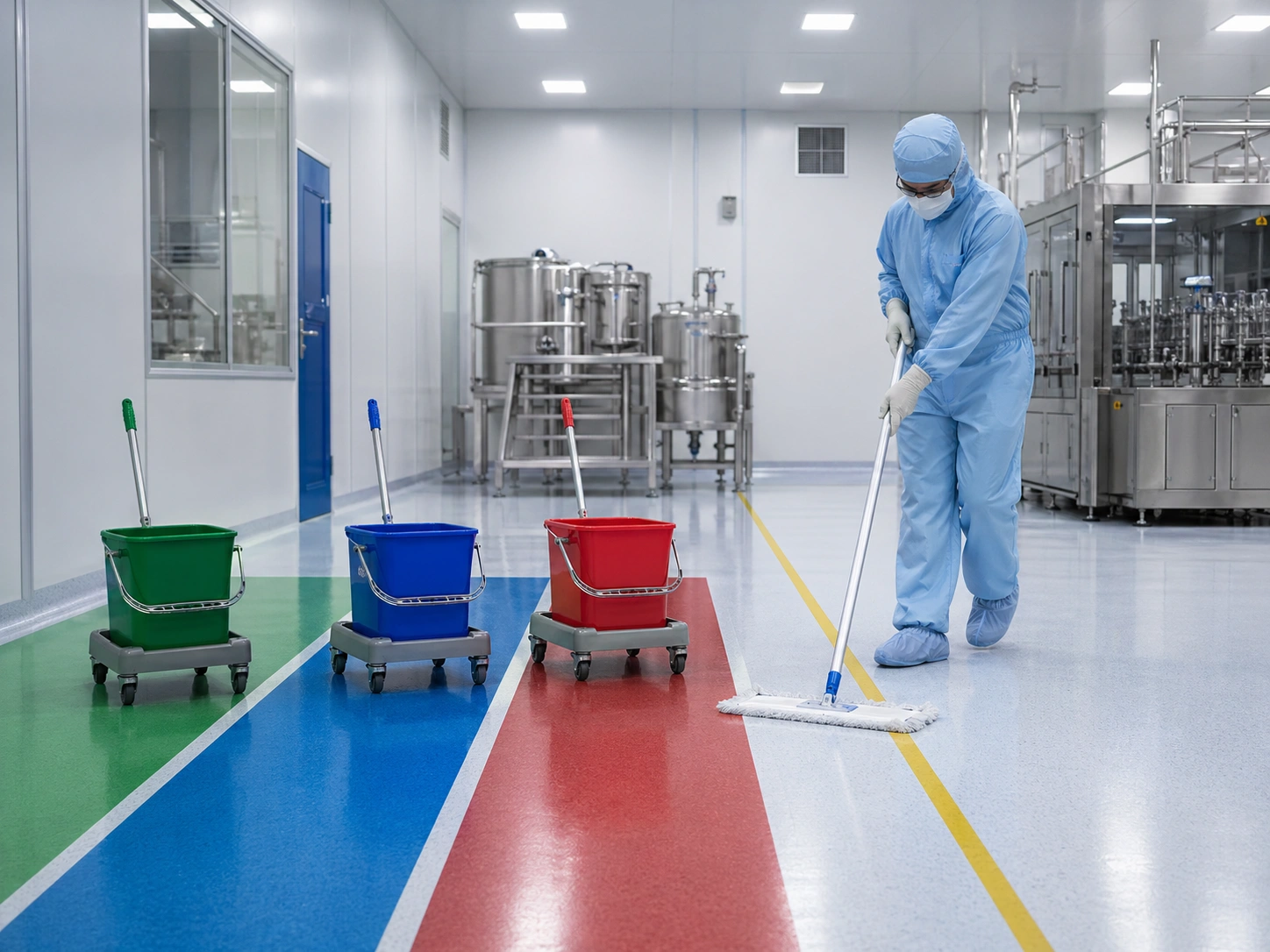
Hospitals can use color-coded mop heads, frames, handles or storage bins to separate cleanroom zones, pharmacy areas, isolation areas, restrooms and general corridors.
Cleanroom Gowning Requirements for Hospital Controlled Areas
Mops control surface contamination, but personnel are still one of the largest contamination sources in controlled environments. Hair, skin particles, clothing fibers and glove contact can all affect cleanroom control.
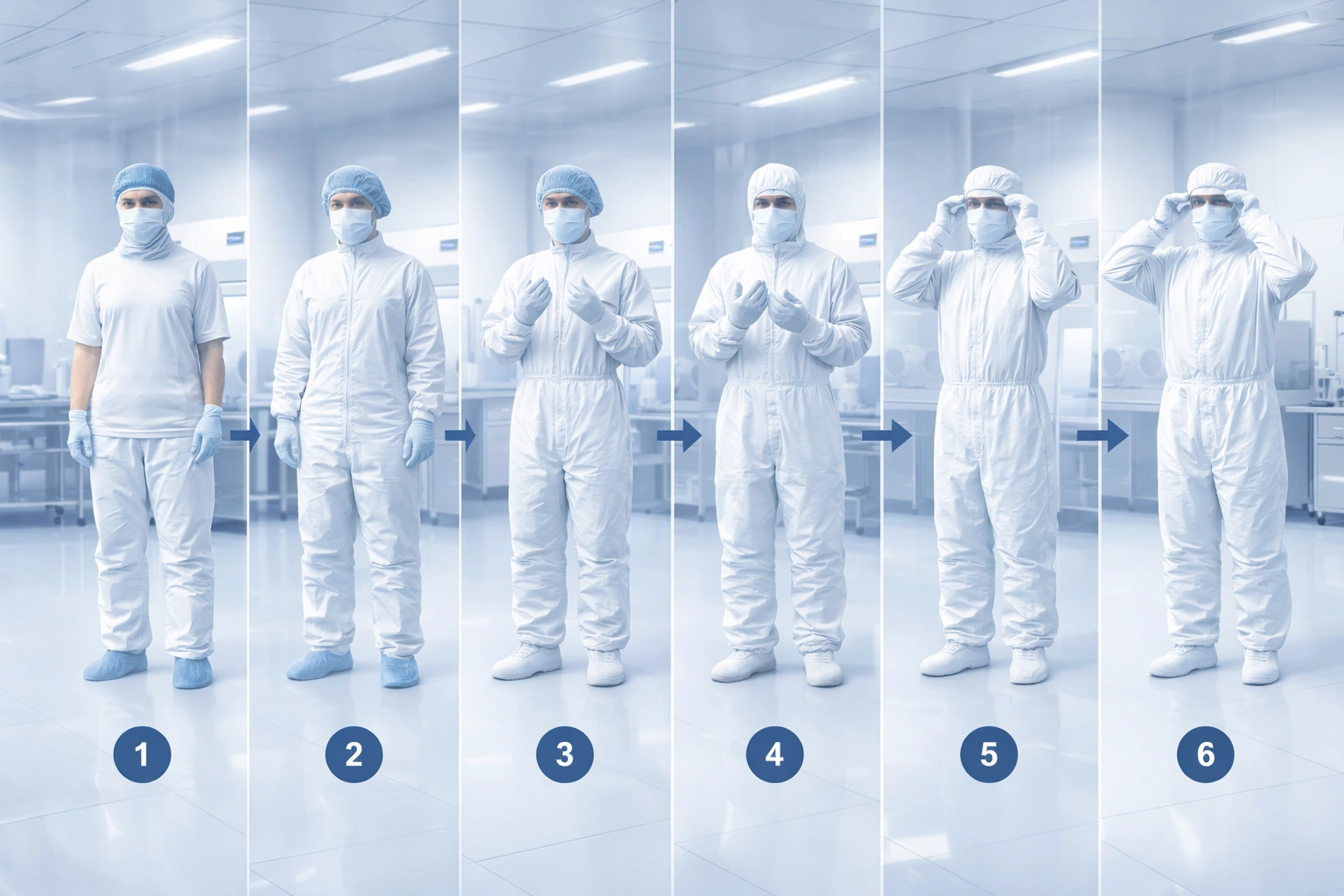
Hospital cleanroom gowning should match the risk level of the room. A sterile compounding area, a hospital pharmacy cleanroom and a general controlled support room may each require different gowning levels.
| Area Type | Typical Minimum Apparel | Contamination-Control Purpose |
|---|---|---|
| General Hospital Support Area | Facility uniform or scrubs, gloves as required. | Basic hygiene and staff protection. |
| Controlled Healthcare Room | Hair cover, mask, gloves, shoe covers, clean gown or coat. | Reduce particles and personnel-borne contamination. |
| Hospital Pharmacy Cleanroom | Low-lint gown, hair cover, beard cover if needed, mask, shoe covers and gloves. | Support cleanroom entry discipline and controlled compounding workflows. |
| Sterile Compounding / Higher-Control Area | Sterile or cleanroom-compatible gowning set, gloves, mask, eye protection where required, and controlled footwear or shoe covers. | Minimize personnel contamination in areas with higher product or patient safety risk. |
MIDPOSI also supports cleanroom garment programs. Review cleanroom suits and garments, cleanroom lab coat solutions and hoods with integrated masks for controlled healthcare and cleanroom applications.
How Mop Systems and Gowning Work Together
Hospital cleanroom contamination control is strongest when floor cleaning and personnel gowning are treated as one system. A high-quality microfiber mop cannot compensate for poor gowning discipline. Likewise, excellent gowning cannot correct mop reuse between rooms or poor solution control.
A practical contamination-control program should connect four areas:
- Tool control: Approved mop heads, frames, handles, buckets and storage locations.
- People control: Gowning requirements, glove hygiene, training and room entry discipline.
- Process control: Directional cleaning, contact time, mop change-out and waste handling.
- Documentation control: Cleaning records, product lots, pad usage, training records and deviation handling.
When these elements work together, the hospital gains a more reliable system for infection prevention, cleanroom hygiene and audit readiness.
Recommended MIDPOSI Solutions for Hospital Cleanroom Programs
MIDPOSI supports healthcare and controlled-environment buyers with cleanroom mop systems, microfiber mop heads, mop frames, mop handles and cleanroom garment options. The goal is to help facilities build practical, repeatable and contamination-control-focused cleaning workflows.
| Need | MIDPOSI Product Direction | Recommended Resource |
|---|---|---|
| Controlled floor cleaning | Flat mop systems and low-lint mop heads | Cleanroom Flat Mop System |
| Particle and surface pickup | Microfiber cleanroom mop options | Microfiber Cleanroom Mop |
| Complete mop assembly | Mop frames and mop handles | Cleanroom Mop Frames / Cleanroom Mop Handles |
| Gowning and staff control | Cleanroom suits, gowns, hoods and lab coats | Cleanroom Suits and Garments |
| Documentation and qualification | Validation documents, supplier records and traceability support | Cleanroom Mop Validation Documents and CoA |
FAQ: Hospital Cleanroom Mops and Gowning
Why are traditional mops not ideal for hospital cleanrooms?
Traditional cotton or blended mops can retain contamination, shed fibers, require more liquid and create cross-contamination risk if reused between rooms. Hospital cleanrooms need low-lint, controlled mop systems with defined change-out and segregation rules.
Are disposable microfiber mop pads better than reusable mop heads?
Disposable pads are better for high-risk workflows where single-use control and reduced cross-contamination risk are priorities. Reusable microfiber mop heads may be more cost-effective for routine cleaning if laundering, inspection and replacement are well controlled.
What is the best mop system for a hospital pharmacy cleanroom?
A hospital pharmacy cleanroom typically benefits from a low-lint microfiber or disposable pad system, compatible mop frame and handle, defined directional cleaning protocol, and clear pad change-out rules. The exact system should match the room classification and facility SOP.
How does gowning support hospital cleanroom cleaning?
Gowning reduces personnel-borne contamination such as hair, skin particles and clothing fibers. When staff clean controlled areas, their apparel should match the area risk and support the facility’s contamination-control program.
How should hospitals prevent cross-contamination during mopping?
Hospitals should use one-room-per-mop or defined-area mop change rules, color-coded tools, directional cleaning, no double-dipping, proper disposal or laundering, and documentation of cleaning completion.
Need Help Building a Hospital Cleanroom Mop and Gowning Program?
MIDPOSI supplies cleanroom mop systems, microfiber mop heads, mop frames, mop handles and cleanroom garments for controlled healthcare and cleanroom environments. Share your room type, cleaning protocol and gowning requirement, and our team can help recommend suitable options.