MIDPOSI / Cleanroom Mop Hub / Medical Cleanroom Mop Supplier

Medical Cleanroom Mop Supplier: ISO 14644 & GMP Procurement Guide (B2B)

For procurement, QA/validation, and facility teams sourcing cleanroom mops for pharmaceutical manufacturing, hospitals, and medical device facilities.
Medical cleanroom mop supplier hero image showing cleanroom staff and low-lint mop systems in a controlled environment

Medical cleanroom mop supplier perspective: contamination control, documentation, and scalable supply.

Introduction: Why sourcing wholesale medical cleanroom mops is a compliance decision

In regulated medical manufacturing, cleanroom mops are not “janitorial items”—they directly impact contamination risk, audit readiness, and product safety.

Medical cleanroom mop procurement typically fails in three places: (1) mismatched ISO class vs mop design, (2) missing validation documentation, and (3) unstable batch quality over time. Your mop supplier should help you reduce these risks with consistent materials, traceability, and documented performance aligned with ISO 14644 and GMP expectations.

This guide summarizes what makes medical cleanroom mops different, how to select disposable vs reusable systems, and how to evaluate a medical cleanroom mop supplier for long-term B2B supply. (See also: Wholesale Cleanroom Mop Hub.)

What makes medical cleanroom mops different from standard cleaning equipment?

Medical cleanroom mops are engineered for low particle generation, material purity, and chemical compatibility with disinfectants used in pharma, healthcare, and device manufacturing.

Key distinctions

  • Material engineering: non-shedding microfiber, polyester, blends (and optional ESD/carbon fibers for electronics)
  • Low ionic / low extractables: supports sensitive processes and residues control
  • Construction controls: sealed edges, reinforced pockets, consistent backing for repeatable performance
  • Documentation: COA/lot traceability, test data, and validation support

Regulatory frameworks (what procurement teams must map)

Framework What it impacts Typical buyer teams
ISO 14644 Cleanroom class alignment, monitoring, particle control targets Facilities, QA
GMP / Annex 1 / Validation Cleaning process control, change control, documentation expectations QA/Validation, Compliance
ISO 13485 / QMS Supplier controls, traceability, complaint handling Supplier Quality, Procurement

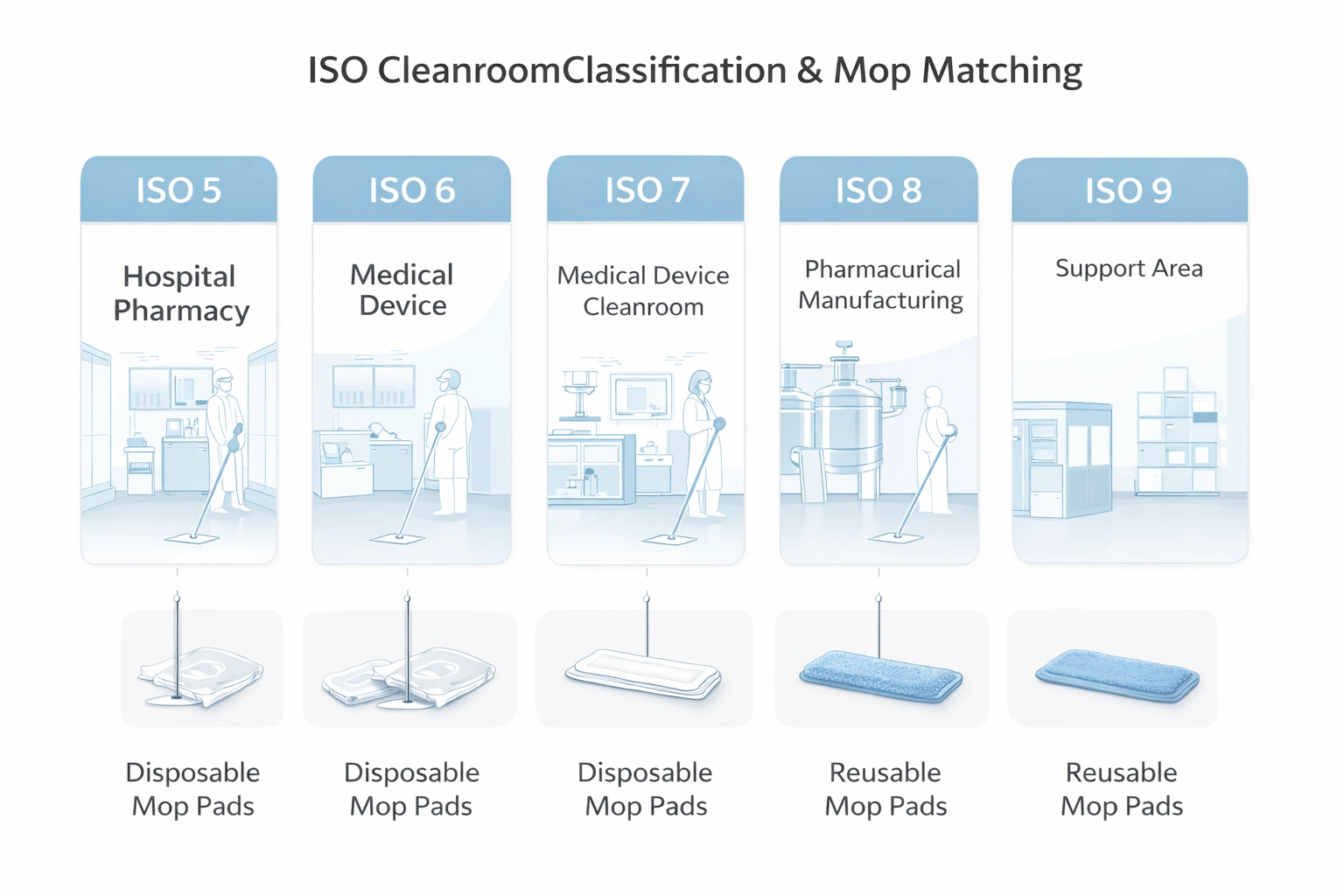
ISO class mapping: choose mop systems by ISO 5–9 risk profile

ISO 14644 cleanroom mop classification illustration for medical facilities showing ISO 5 to ISO 9 mapping

ISO 14644 mapping helps procurement align mop type, material, and validation burden to area risk.
Practical shortcut: ISO 5–6 areas typically prioritize lowest particle generation and simplified contamination control (often disposable or tightly validated reusable). ISO 7–9 areas usually optimize TCO and workflow efficiency.

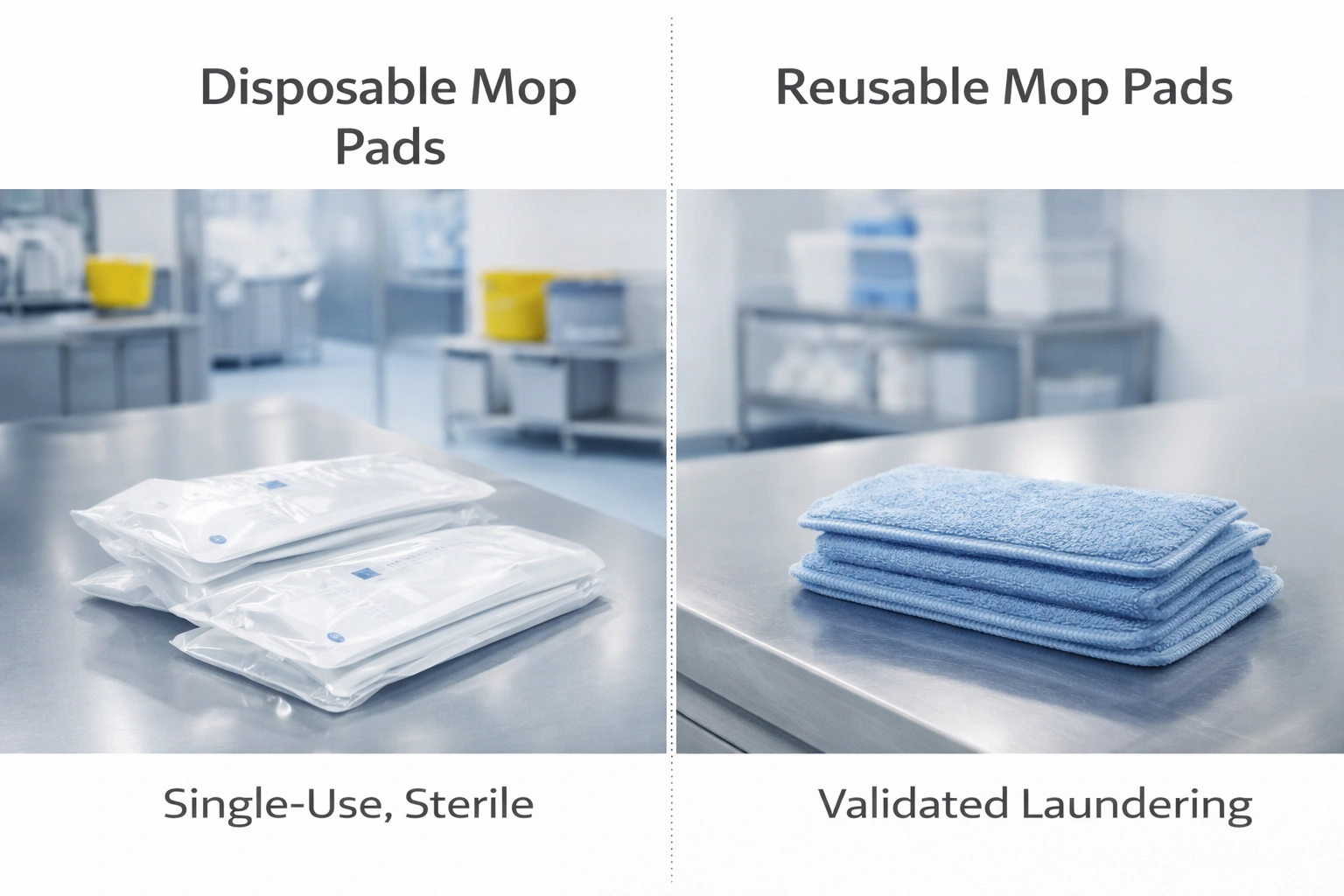
Disposable vs reusable medical cleanroom mops: how to decide

Disposable vs reusable cleanroom mop comparison decision guide for medical procurement

Decision guide: evaluate cross-contamination risk, validation resources, usage volume, and TCO.

When disposable systems are preferred

  • Highest cross-contamination risk zones (critical suites, high changeover)
  • Limited laundering validation capability
  • Need to simplify cleaning validation scope and reduce failure points

When reusable systems are preferred

  • High-volume ISO 7–9 operations where TCO matters
  • Stable, validated laundering program with monitored bioburden/particles
  • Need for durable pads and consistent coverage performance

For deeper cost/compliance trade-offs, see: Disposable vs Reusable Cleanroom Mops.

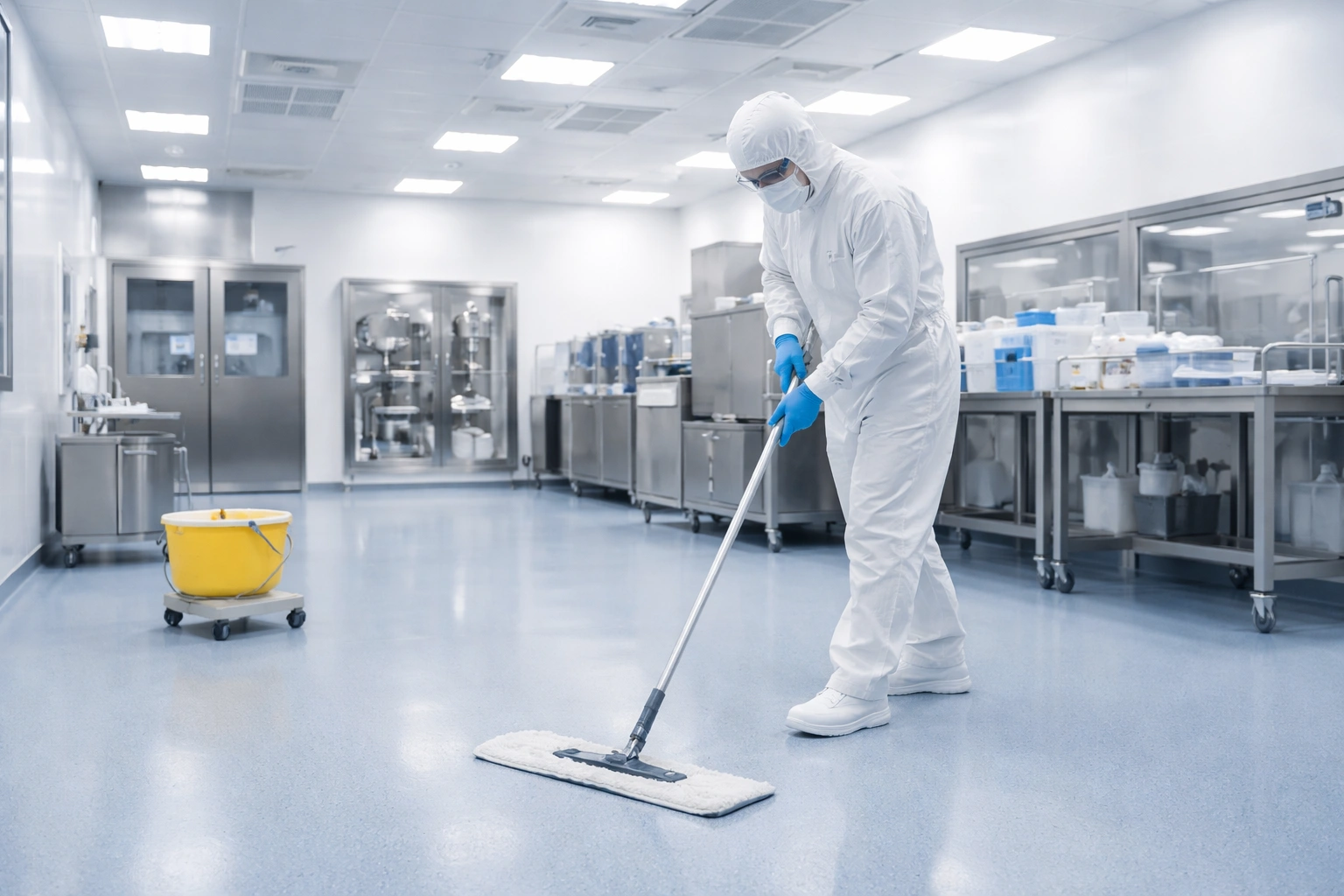
Hospital cleaning protocol example: repeatable workflow matters

Hospital cleanroom cleaning protocol scene showing staff executing standardized mop workflow

Standardized protocols reduce variability—critical for audit readiness and infection control programs.

Hospitals and healthcare environments often emphasize standardized workflows (zone separation, SOP adherence, and training). If you manage healthcare procurement, you may also want: Hospital Cleanroom Mop Selection.
How to evaluate a medical cleanroom mop supplier (B2B checklist)

Documentation & validation support

  • Lot traceability / COA support
  • Particle shedding / microbial testing data
  • Chemical compatibility information with common disinfectants
  • Change control readiness (materials, processes, packaging)

Quality system & manufacturing controls

  • Consistent batch quality and repeatable construction
  • Incoming material verification and in-process inspection
  • Stable lead times and scalable supply
Procurement tip: Ask suppliers to show how they control “the small things”: edge sealing consistency, pocket tolerance, backing bonding, and packaging integrity. These often correlate strongly with real-world particle performance and user feedback.

Recommended product pathways (internal navigation)

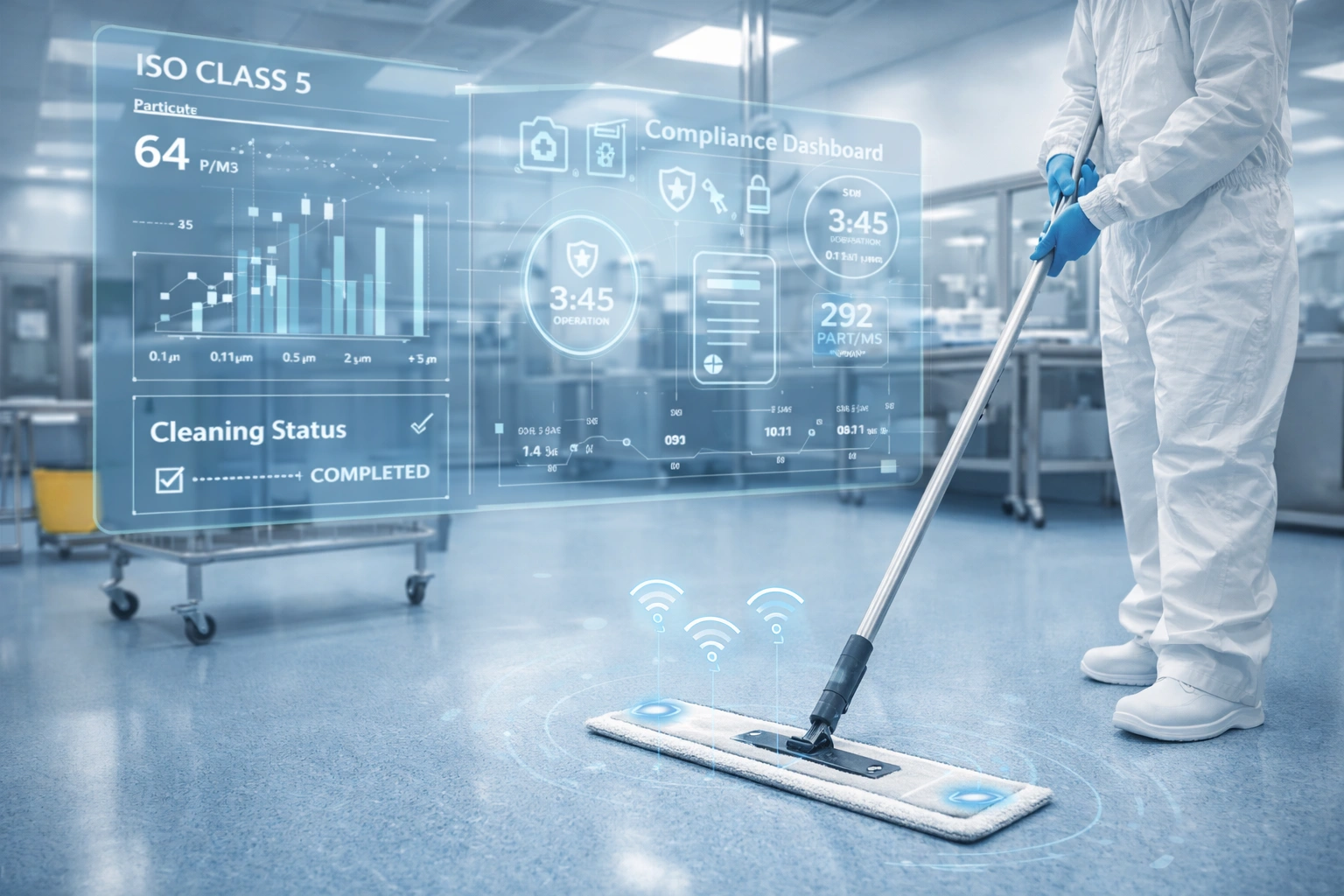
Future trend: smart cleanroom cleaning (IoT + data accountability)

Future smart cleanroom cleaning concept showing IoT and AI monitoring in hospital cleanroom operations

Trend: visibility and accountability—digital SOPs, monitoring, and workflow traceability.

Conclusion

If you are sourcing mops for medical cleanrooms, build your evaluation around: ISO-class alignment, material purity/compatibility, validation documentation, and long-term supply stability.

It's Free!

《9 Deadly Pitfalls of Sourcing Cleanroom Garments in China》

e book 400
22

Ask For A Quick Quote

We will contact you within 1 working day, please pay attention to the email with the suffix “@midposi.com”

Ask For A Quick Quote

We will contact you within 1 working day, please pay attention to the email with the suffix “*@midposi.com”