Aseptic Cleanroom Operations
ISO 5 Cleanroom Cleaning Procedure: Step-by-Step Guide for Pharmaceutical Aseptic Environments
ISO 5 cleanrooms require the strictest contamination control. This guide explains the correct cleaning sequence, unidirectional mopping technique, disinfectant strategy, environmental monitoring feedback, and documentation requirements used in pharmaceutical aseptic manufacturing.
What Is ISO 5 Cleanroom Cleaning?
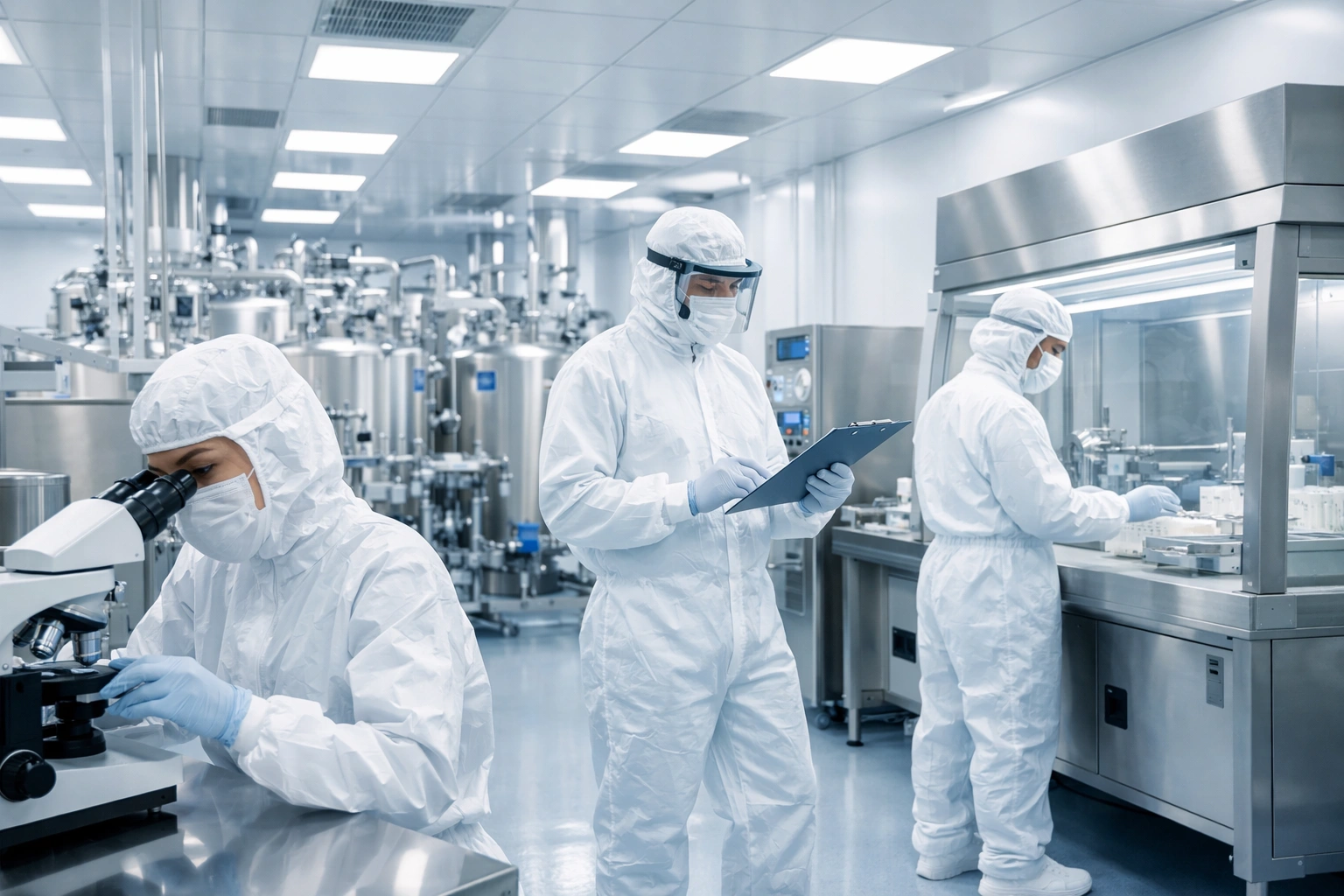
ISO 5 cleanroom cleaning refers to validated cleaning and disinfection procedures used in critical aseptic environments where airborne particle levels must remain below 3,520 particles per cubic meter according to ISO 14644-1. These procedures typically include sterile cleaning tools, unidirectional mopping techniques, validated disinfectants, and fully documented cleaning sequences to maintain pharmaceutical aseptic conditions.
Why ISO 5 Cleaning Procedures Are Critical
ISO 5 cleanrooms are typically used in the most critical pharmaceutical operations including aseptic filling, sterile compounding, vaccine manufacturing, and cell or gene therapy production.
According to EU GMP Annex 1 and ISO 14644 standards, these environments require extremely strict contamination control procedures to prevent microbial and particulate contamination during manufacturing.
Because these spaces operate at extremely low contamination thresholds, even small procedural mistakes during cleaning can introduce particles, microorganisms, or chemical residues that compromise sterility assurance.
For this reason, ISO 5 cleaning procedures should be executed according to validated cleanroom cleaning SOPs, while the actual execution details must remain specific to critical-grade aseptic environments.
ISO 5 Cleanroom Cleaning Procedure Step by Step
1. Preparation and Material Setup
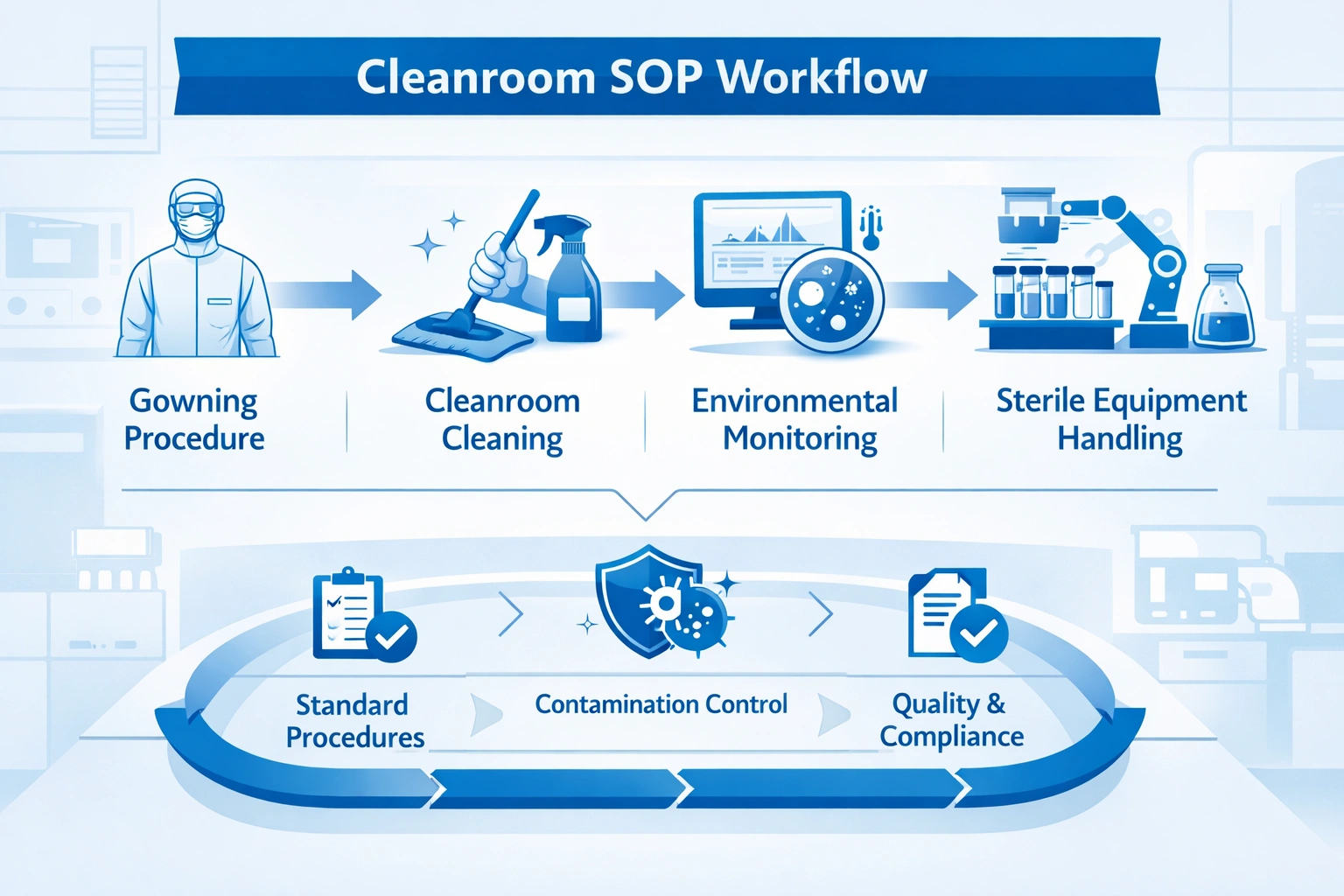
Operators must first enter the cleanroom using validated gowning procedures appropriate for critical aseptic zones. Only approved cleaning tools and disinfectants should be introduced into the area. Common materials include sterile microfiber mop heads, low-lint cleanroom wipes, sterile buckets, and pharmaceutical-grade disinfectants.
All cleaning tools must be dedicated to ISO 5 areas to avoid cross-contamination from lower-grade cleanrooms or uncontrolled support spaces.
2. Cleaning from Top to Bottom
Cleaning must follow a strict sequence beginning with ceilings, followed by walls, equipment contact surfaces, and finally floors. This top-to-bottom structure is essential because contaminants removed from upper surfaces should not fall onto already-cleaned lower areas.
3. Unidirectional Mopping
Floor cleaning in ISO 5 environments should always use unidirectional strokes following a validated cleanroom mopping SOP. This approach prevents particle redistribution and helps move contamination toward the exit of the cleanroom.
Slight overlap between mop passes improves cleaning coverage and reduces the risk of leaving untreated zones in critical floor areas.
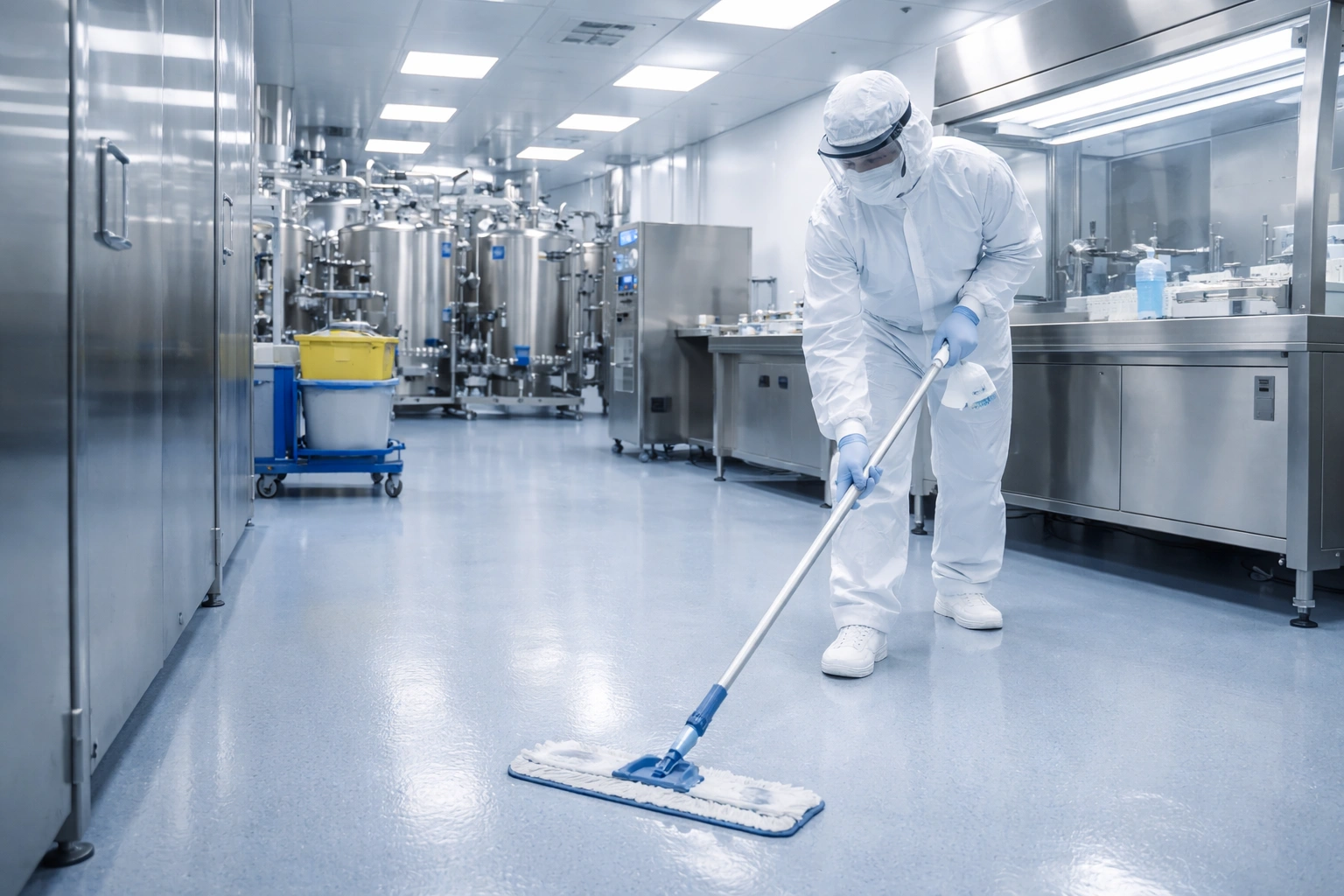
To minimize particle shedding, facilities typically use validated pharmaceutical cleanroom mop systems designed specifically for aseptic manufacturing environments.
4. Disinfectant Application
After physical cleaning, disinfectants are applied to reduce microbial contamination. Many pharmaceutical facilities rotate multiple disinfectants, including alcohol-based disinfectants, hydrogen peroxide solutions, and periodic sporicidal agents.
The cleaning procedure must define the minimum contact time required for each chemical agent, because insufficient wet contact time can reduce disinfection effectiveness in critical environments.
5. Environmental Monitoring Feedback
ISO 5 cleaning programs should always be connected with environmental monitoring data. Surface monitoring, airborne particle counts, and microbial sampling results help confirm whether the cleaning procedure is working as intended.
If contamination trends begin to rise, facilities should review cleaning frequency, disinfectant rotation, operator technique, and tool suitability.
6. Documentation and Verification
Every cleaning activity should be documented, including the operator, time, disinfectant used, lot or batch details where required, and the exact area cleaned.
Documentation supports traceability, regulatory inspections, internal quality review, and ongoing improvement of contamination control performance.
Common ISO 5 Cleaning Mistakes
Incorrect cleaning direction
Back-and-forth motions redistribute contamination instead of moving it out of the cleanroom.
Using non-sterile tools
Non-validated tools may shed fibers, particles, or residues into critical aseptic areas.
Skipping disinfectant contact time
Short contact time prevents the disinfectant from achieving validated microbial reduction.
Improper mop replacement frequency
Overused mop heads can spread contamination instead of removing it effectively.
Weak documentation
Incomplete records increase audit risk and reduce traceability in pharmaceutical operations.
Incorrect disinfectant rotation
Using the same disinfectant repeatedly may allow resistant microorganisms to survive. Many facilities rotate alcohol, hydrogen peroxide, and periodic sporicidal agents.
Using the wrong cleaning strategy
Facilities should assess whether disposable vs reusable cleanroom mops are more suitable for their contamination control program.
Ignoring monitoring trends
Cleaning programs should be adjusted when microbial or particle monitoring data indicates rising contamination risk.
Frequently Asked Questions
What is ISO 5 cleanroom cleaning?
ISO 5 cleanroom cleaning is a validated cleaning process used in critical pharmaceutical and aseptic environments where particle and microbial contamination must be tightly controlled.
What particle limit defines an ISO 5 cleanroom?
According to ISO 14644-1, an ISO 5 cleanroom must maintain airborne particle concentrations below 3,520 particles greater than or equal to 0.5 micrometers per cubic meter.
How often should an ISO 5 cleanroom be cleaned?
ISO 5 cleanrooms are typically cleaned before production, during operations as required by facility SOPs, and after batch completion. The exact frequency depends on process risk and contamination control strategy.
Why is unidirectional mopping important in ISO 5 cleanrooms?
Unidirectional mopping helps move contamination in a controlled direction and reduces the risk of redistributing particles across already-cleaned surfaces.
What disinfectants are commonly used in ISO 5 cleanrooms?
Common disinfectants include alcohol-based disinfectants, hydrogen peroxide solutions, and periodic sporicidal agents depending on the validated contamination control strategy.
What disinfectant rotation is recommended for ISO 5 cleanrooms?
Many pharmaceutical facilities use alcohol-based disinfectants for routine cleaning, hydrogen peroxide or other broad-spectrum agents for scheduled rotation, and sporicidal agents periodically to control resistant microorganisms.
What mop system is recommended for ISO 5 cleanroom cleaning?
ISO 5 cleanrooms typically use validated sterile mop systems designed to minimize particle shedding and support aseptic cleaning procedures.
Looking for a Sterile Mop System for ISO 5 Cleaning?
Midposi provides sterile cleanroom mop systems designed for pharmaceutical and biotechnology contamination control.