The silent threat in your cleanroom isn’t just airborne particles; it’s the very fabric protecting your operations. For industries where precision is paramount—pharmaceuticals, biotechnology, semiconductor manufacturing, and medical devices—a single contaminant can trigger a cascading failure, leading to devastating financial losses, stringent regulatory penalties, and irreparable damage to brand reputation. While advanced HEPA filtration systems and meticulous environmental controls are foundational, the human element remains the most significant source of contamination, contributing up to 70-80% of particles within a controlled environment. This underscores why your cleanroom garments, and the Standard Operating Procedures (SOPs) governing their care, represent your last and most critical line of defense, directly impacting product quality and patient safety.
Maintaining pristine cleanroom conditions extends far beyond the initial investment in specialized attire; it demands a rigorous, validated approach to garment lifecycle management. The complexities of washing, sterilizing, and tracking the service life of cleanroom garments can introduce substantial operational challenges, ranging from ensuring consistent cleanliness and barrier integrity to navigating evolving regulatory landscapes such as ISO 14644 and EU GMP Annex 1. Failure to implement robust, scientifically backed protocols can expose operations to invisible threats: increased particle shedding, microbial proliferation, and a compromised barrier function, all of which jeopardize product integrity. Historically, the evolution of cleanroom garments, from rudimentary surgical drapes to advanced low-linting fabrics, reveals a continuous push for enhanced contamination control. Early cleanroom clothing recommendations emphasized designs without pockets or pleats, featuring double-needled seams to minimize particle shedding, processed and laundered within cleanroom environments themselves. This historical trajectory highlights the ever-increasing demands for precision in every aspect of contamination control, culminating in today’s stringent requirements.
Illustration: A cleanroom worker in full protective gear, highlighting the human element in contamination control.
Mastering Your Cleanroom Garment Lifecycle: A Strategic SOP for B2B Excellence
To achieve and maintain unassailable contamination control, a meticulously documented and rigorously executed SOP for cleanroom garment care is not merely a compliance checkbox—it’s an indispensable strategic asset. This comprehensive approach transforms potential vulnerabilities into a definitive competitive advantage, ensuring regulatory adherence, optimizing garment lifespan, and safeguarding your valuable products and processes.
Establishing Foundational Protocols: Roles, Responsibilities, and Water Quality
Effective cleanroom garment care begins with clear lines of accountability and uncompromisable material standards. The SOP must define distinct responsibilities:
Line Operators/Personnel:Accountable for proper handling of soiled garments and strict adherence to gowning/de-gowning procedures.
Laundry/Service Personnel:Responsible for executing washing, drying, packing, and sterilization protocols detailed in the SOP.
Supervisors/Executives:Oversee processes and ensure overall compliance.
Quality Assurance (QA):Mandated to ensure SOP compliance, validate processes, and continuously monitor garment quality and service life.
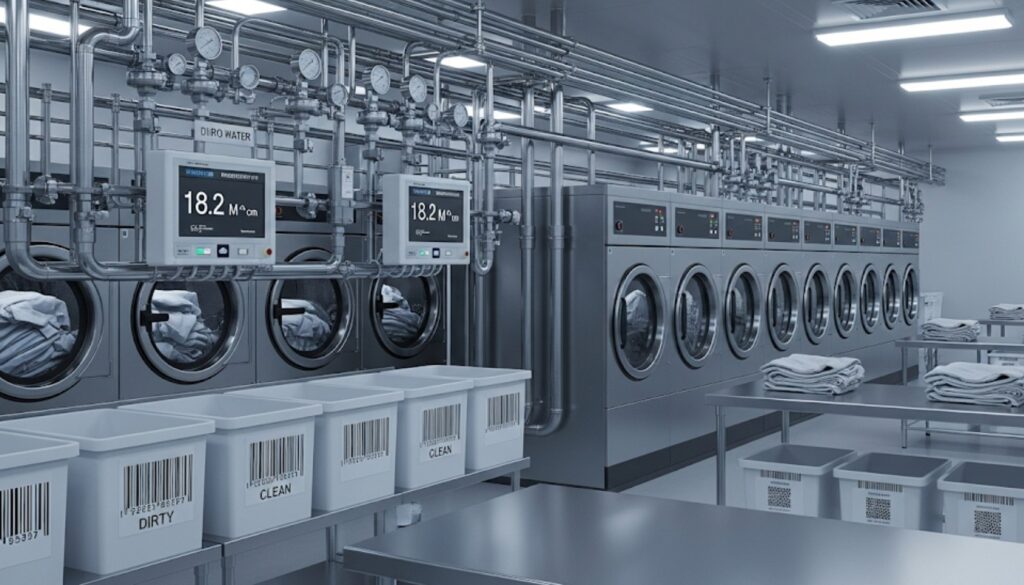
Central to effective washing is the quality of water and detergents. Onlypurified water—such as deionized (DI) or reverse osmosis (RO) water, with ultrapure water (resistivity of at least 10 megaohms/cm) preferred for rinsing in dust-free purification workshops—should be used. This is critical as pure water helps reduce static, which can attract particles, and prevents the deposition of ionic contaminants. Simultaneously, employ onlynon-ionic detergentswith a neutral pH (between 6.5 and 7.5). Ionic detergents can leave difficult-to-remove residues, and extreme pH levels can prematurely degrade garment fibers, compromising their barrier function.
Precision Washing and Drying: Preserving Garment Integrity
The washing and drying phases are crucial for maintaining garment integrity and cleanliness.
Collection, Pre-sorting, and Inspection Protocols:Soiled garments must be collected from de-gowning areas and transported to the dirty laundry room in designated, closed containers to prevent cross-contamination. Critical pre-sorting is required; for instance, boots and overshoes must be washed separately from coveralls, frocks, hoods, or facemasks. Before washing, garments require meticulous inspection for any signs of damage (tears, fiber shedding), stains, or missing components. Damaged garments must be immediately removed from circulation.
Validated Washing Cycles:Utilize a dedicated cleanroom garment washing machine, ensuring it is in optimal working order. Wash garments at ultra-hot temperatures for optimal cleaning, following a validated washing cycle specific to the garment type and level of soiling. Strict machine loading limits must be observed to ensure effective cleaning and proper rinsing.
Controlled Drying and Transfer:After washing, garments are transferred to a dedicated drying machine. Upon completion of the drying cycle, garments must be immediately transferred to an area with aLaminar Air Flow (LAF) hoodfor packing into sterile pouches, minimizing exposure to ambient air and preventing re-contamination.
Illustration: Cleanroom garments being processed in a specialized laundry facility.
Achieving aSterility Assurance Level (SAL) of 10^-6—meaning a one-in-a-million chance of a microorganism remaining—is paramount for garments utilized in aseptic environments (e.g., ISO Class 5/Grade A/B cleanrooms). Understanding the nuances of each sterilization method is crucial for selecting the most appropriate, compliant, and cost-effective approach for your specific garment types and operational needs. The selection directly impacts garment longevity and efficacy.
Deep Dive into Sterilization Techniques:
Steam Autoclaving (Moist Heat):This method achieves sterility by exposing garments to saturated steam and pressure at high temperatures (e.g., 121°C for 15 minutes or 134°C for 3 minutes), denaturing microbial proteins.
الايجابيات:Highly effective against a broad spectrum of microorganisms (bacteria, viruses, spores), and does not leave toxic residuals.
سلبيات:High temperatures can cause significant garment shrinkage (up to two sizes), premature fabric degradation, and set in wrinkles, potentially compromising the cleanroom barrier. It has limited material compatibility, particularly for many synthetic plastics. Historically, on-site steam autoclaving was common, but its detrimental effects on garment lifespan and filtration performance have led to its declining use for routine cleanroom garment sterilization.
Ethylene Oxide (EtO) Sterilization:EtO utilizes gas within a vacuum chamber to kill microorganisms, followed by an aeration period to remove residuals.
الايجابيات:Broad material compatibility with a wide range of materials, including many polymers and plastics that cannot withstand other methods. The gas effectively penetrates medical packaging.
سلبيات:EtO is highly toxic, flammable, and classified as a carcinogen, posing significant health risks. It requires an extended aeration/quarantine period, often up to two weeks, for the gas to off-gas to safe levels, necessitating a larger inventory of garments. There are also environmental concerns with EtO emissions.
Ionizing Radiation (Gamma & E-beam):This high-energy method is currently the most popular for cleanroom apparel. Gamma rays (from cobalt-60) are electromagnetic radiation with high penetrating power. E-beam uses high-energy electron beams.
Pros of Gamma Irradiation:Offers high penetration, ensuring thorough sterilization of packaged garments. It leaves no radioactive or toxic chemical residues and is generally considered cost-effective. It’s a well-established and validated process for achieving SAL 10^-6, compliant with standards like ANSI/AAMI/ISO 11137-1.
Cons of Gamma Irradiation:It is inherently destructive; the dosage must be carefully validated to be as low as practical (e.g., up to 50 cycles for some fabrics) to minimize fabric degradation. Over-dosing can prematurely age the material, altering physical properties.
E-beam Specifics:Offers a higher dose rate and shorter cycle times. However, its penetration is relatively poor compared to gamma, making it less suitable for dense garment loads or complex packaging configurations common with cleanroom garments.
طريقة
الايجابيات
سلبيات
Key Considerations
Steam Autoclaving
Highly effective against broad spectrum of microbes, no toxic residuals
Material degradation (shrinkage, wrinkles), limited material compatibility
Declining for routine garment sterilization; shortens fabric life
Ethylene Oxide (EtO)
Broad material compatibility (polymers, plastics), effective penetration
Toxic, carcinogen, flammable; requires long aeration period (up to 2 weeks)
Stringent regulations; requires extra inventory for quarantine
Gamma Irradiation
High penetration, no toxic/radioactive residuals, cost-effective
Most popular for cleanroom garments; well-established SAL
Maximizing Service Life and Ensuring Ongoing Compliance
Optimizing the service life of cleanroom garments while maintaining peak performance is a critical aspect of both cost control and contamination risk management. Studies by DuPont on reusable coveralls subjected to 30 cycles of laundering and gamma radiation found that particle shedding increased significantly after 25 cycles, indicating a decline in contamination containment. Hydrostatic head tests showed decreased resistance to water penetration, and trapezoidal tear strength tests revealed decreased durability with increasing cycles. These findings highlight that visible wear is not the only indicator of diminished performance; invisible degradation can critically compromise the garment’s barrier function.
Frequency of Garment Change:Define specific change frequencies based on cleanroom classification and activity. For aseptic or sensitive areas (e.g., ISO Class 5/Grade A/B), garments should be changed after every use or at least daily. For other cleanroom areas (e.g., ISO Class 7/Grade C), frequency can be twice a week or weekly, depending on the product and risk assessment. EU GMP Annex 1 mandates defining the maximum period a sterilized gown may be worn during a shift in Grade A or B areas as part of garment qualification.
Rigorous Inspection and Monitoring:Implement regular visual inspection for wear, tears, fiber shedding, or missing components (buttons, tying strings). Damaged garments must be immediately removed. Utilize tracking systems—such as logbooks, barcodes, or UHF chips embedded in garments—to monitor individual garment lifecycles, including the number of washes and sterilization cycles. This data is crucial for compliance and optimizing replacement schedules.
Performance Testing:Mandate periodic assessment of filtration efficiency and particle shedding (e.g., Helmke Drum Test) and microbial contamination (e.g., RODAC plates, swab testing) to ensure garments continue to meet defined parameters throughout their service life.
Determining End-of-Life:The end of life for reusable garments must be determined through recognized testing and scientific data, not solely on visual checks or anecdotal experience. This objective data prevents the premature disposal of effective garments or, critically, the continued use of compromised garments.
cleanroom laundry di water 20250901
Illustration: Data visualization showing garment performance metrics over cycles.
Factor
Reusable Garments
Disposable Garments
Initial Cost
Higher per garment
Lower per garment
Lifecycle Cost
Variable; includes washing, sterilization, repair, replacement
More predictable; purchase + disposal, but ensure quality
Can vary; potential compromises in durability/comfort for low cost
Compliance Mgt.
Complex tracking and validation of care cycles, often outsourced
Simpler inventory management, but ensure “clean & sterile” quality
متانة
High with advanced fabrics; susceptible to degradation over cycles
Limited; designed for single-use
Tracking
Essential for lifecycle management (RFID, microchips)
Less critical, but traceability of origin important
راحة
Can offer superior comfort with ergonomic designs
Often less comfortable due to material and design constraints
Industry Insights: Navigating the Future of Cleanroom Garment Care
The cleanroom garment industry is rapidly evolving, driven by technological advancements, sustainability goals, and the increasing stringency of global regulations. Decision-makers must be aware of these trends to make informed strategic choices that future-proof their operations.
Market Trends & Growth Drivers:The global cleanroom apparel market is experiencing robust growth, projected to reach up to USD 5.82 billion by 2033 with a Compound Annual Growth Rate (CAGR) of 7.1%. This rapid expansion is primarily fueled by the escalating demand for sterile manufacturing in the pharmaceutical, biotechnology, and semiconductor industries. Geographically, Asia Pacific is the fastest-growing market due to rapid industrialization and significant investments, while North America continues to hold a leading market share due to its mature regulatory environment and strong industry presence.
Technological Innovations Shaping the Future:The future of cleanroom garments lies in advanced materials and smart technologies.Smart garmentsare integrating RFID and microchip technology for real-time tracking of personnel movement within facilities, ensuring adherence to gowning procedures, and automating lifecycle management. This allows for comprehensive records and improved quality control. Innovations inadvanced materialsare leading to lightweight, permeable, low-linting fabrics with inherent antibacterial, antistatic, and even self-cleaning properties. There’s a growing focus on sustainable materials, including fabrics crafted from up to 100% pre-consumer textile waste. Complementing this,automated and sustainable care systemsare emerging, utilizing IoT-driven smart laundry systems, waterless washing techniques (e.g., polymer beads, minimal moisture), ultrasonic cleaning, and energy-efficient drying (e.g., heat pump technology) to optimize resource usage and extend garment life.
Key Challenges for Cleanroom Operators:Despite advancements, significant challenges persist. Thehigh costsassociated with acquiring advanced cleanroom apparel and maintaining rigorous care processes can be a restraint.Garment degradationremains a critical concern for reusable garments, with studies showing invisible damage from repeated laundering and sterilization cycles that compromises barrier function (e.g., Bacterial Filtration Efficiency decline of over 25% after just five washes).Supply chain resilienceis also a continuous challenge, with disruptions impacting raw material availability and logistics. Furthermore,wearer discomfortdue to restrictive designs and heat retention can impact productivity and compliance, leading to physical and psychological challenges for personnel.
The Rise of Outsourced Garment Management:Pharmaceutical companies are increasingly recognizing the strategic advantage ofoutsourcing cleanroom garment managementto specialized service providers. This trend addresses the high initial investment, complex daily operations, and the intricate demands of evolving regulatory compliance, particularly with the latest EU GMP Annex I. Benefits include significant cost savings, substantial risk mitigation (e.g., preventing cross-contamination), improved traceability through digital technologies, and access to cutting-edge expertise and infrastructure that might be cost-prohibitive to develop in-house.
Illustration: A futuristic cleanroom environment showcasing advanced technology and smart garments.
Documentation: Your Audit-Ready Trail
Comprehensive and meticulous documentation is not just a best practice; it is your audit-ready trail, proving adherence to every aspect of your cleanroom garment care SOP. Maintain precise records for:
Washing and drying cycles, including validated parameters (temperatures, cycle times).
Packing and sealing activities, including materials used.
Sterilization cycles, detailing date, load, and validation records (e.g., certificates of sterility, specific parameters for autoclaving or gamma irradiation dosage).
Garment inspection results, including any repairs or disposals.
Tracking of individual garment life cycles, including the number of washes, sterilizations, and their associated performance testing data, critical for robust regulatory compliance and traceability.
Secure Your Cleanroom’s Future: Take Control of Garment Care Today
The integrity of your cleanroom environment, and by extension, your product quality and brand reputation, hinges on a vigilant and scientifically backed approach to cleanroom garment care. Don’t let overlooked or outdated garment protocols become the weakest link in your contamination control strategy. Proactively addressing these challenges now can reduce contamination risks by up to 99%, potentially saving millions in recalled batches, regulatory fines, and lost market share.
Re-evaluate Your Current SOPs:Conduct a thorough audit of your existing garment care procedures against the latest ISO 14644 and EU GMP Annex 1 guidelines. Ensure every step, from collection to sterilization and disposal, is validated and documented.
Strategize on Garment Selection:Assess the long-term cost-benefit and performance of reusable versus disposable garments, considering new fabric technologies, advancements in durability, and your sustainability goals.
Invest in Future-Proofing:Explore integrating smart garments with RFID/UHF tracking systems and automated laundry solutions to enhance traceability, efficiency, and compliance.
Consider Strategic Partnerships:Engage with specialized cleanroom laundry and sterilization service providers. This can offload operational complexity, mitigate risks associated with in-house processing, and provide access to advanced technologies and compliance expertise.
Prioritize Continuous Training and QA Oversight:Reinforce the human element. Ensure all personnel are rigorously trained in proper donning, doffing, handling, and adherence to SOPs, backed by robust Quality Assurance monitoring and periodic audits.
Elevate your cleanroom garment care from a mere operational task to a strategic pillar of your business success, transforming contamination control into a definitive competitive advantage.
أسئلة مكررة
Why is cleanroom garment care critical for ISO/GMP compliance?▼
Cleanroom garment care is critical because personnel are the primary source of contamination in controlled environments. Proper washing, sterilization, and maintenance ensure garments act as an effective barrier, preventing particle shedding and microbial contamination, which is essential for adhering to standards like ISO 14644 and EU GMP Annex 1, safeguarding product quality, and ensuring patient safety.
What are the main challenges in managing cleanroom garments?▼
Key challenges include ensuring consistent cleanliness, preventing invisible degradation (e.g., increased particle shedding, reduced Bacterial Filtration Efficiency) from repeated laundering/sterilization, managing high initial and lifecycle costs, navigating complex regulatory requirements, and addressing wearer comfort and compliance issues. Supply chain disruptions also pose a challenge.
What water quality and detergents are recommended for cleanroom garment washing?▼
For cleanroom garment washing, purified water such as deionized (DI) or reverse osmosis (RO) water is essential, with ultrapure water preferred for rinsing. Only non-ionic detergents with a neutral pH (between 6.5 and 7.5) should be used to prevent residue, static, and fiber degradation.
What are the primary sterilization methods for cleanroom garments, and what are their pros and cons?▼
The primary methods are Steam Autoclaving, Ethylene Oxide (EtO) Sterilization, and Ionizing Radiation (Gamma/E-beam). Steam autoclaving is effective but causes material degradation. EtO is compatible with many materials but is toxic and requires long aeration. Gamma irradiation is highly penetrating and cost-effective but is inherently destructive, limiting garment cycles.
How is the service life of a cleanroom garment determined?▼
The service life of a cleanroom garment is determined not just by visual inspection but by recognized testing and scientific data, including periodic assessment of filtration efficiency (e.g., Helmke Drum Test) and particle shedding. Tracking systems like logbooks, barcodes, or UHF chips monitor individual garment lifecycles and the number of washes/sterilizations to inform end-of-life decisions.
What are the emerging trends in cleanroom garment technology and care?▼
Emerging trends include smart garments with integrated RFID/microchip technology for real-time tracking, advanced materials with antibacterial/antistatic/self-cleaning properties and recycled content, and automated/sustainable care systems like IoT-driven laundries, waterless washing, and energy-efficient drying. There’s also a significant shift towards outsourced garment management.
What is the role of outsourcing in cleanroom garment management?▼
Outsourcing cleanroom garment management to specialized providers is a growing trend, especially in pharmaceuticals. It helps mitigate high initial investment costs, operational complexity, and compliance risks (like cross-contamination or adhering to EU GMP Annex I). It also provides access to advanced technologies, improved traceability, and cost efficiencies.
انه مجانا!
《9 عوائق قاتلة للحصول على ملابس غرف الأبحاث في الصين》
اسأل عن اقتباس سريع
سوف نتصل بك في غضون يوم عمل واحد ، يرجى الانتباه إلى البريد الإلكتروني الذي يحتوي على اللاحقة "@ midposi.com".
اسأل عن اقتباس سريع
سوف نتصل بك في غضون يوم عمل واحد ، يرجى الانتباه إلى البريد الإلكتروني الذي يحتوي على اللاحقة "*@midposi.com".