Cleanroom Mop Validation Documents & COA: What Auditors Expect and How to Prepare
A technical guide for QA and validation teams on essential documentation for GMP cleanroom consumables.
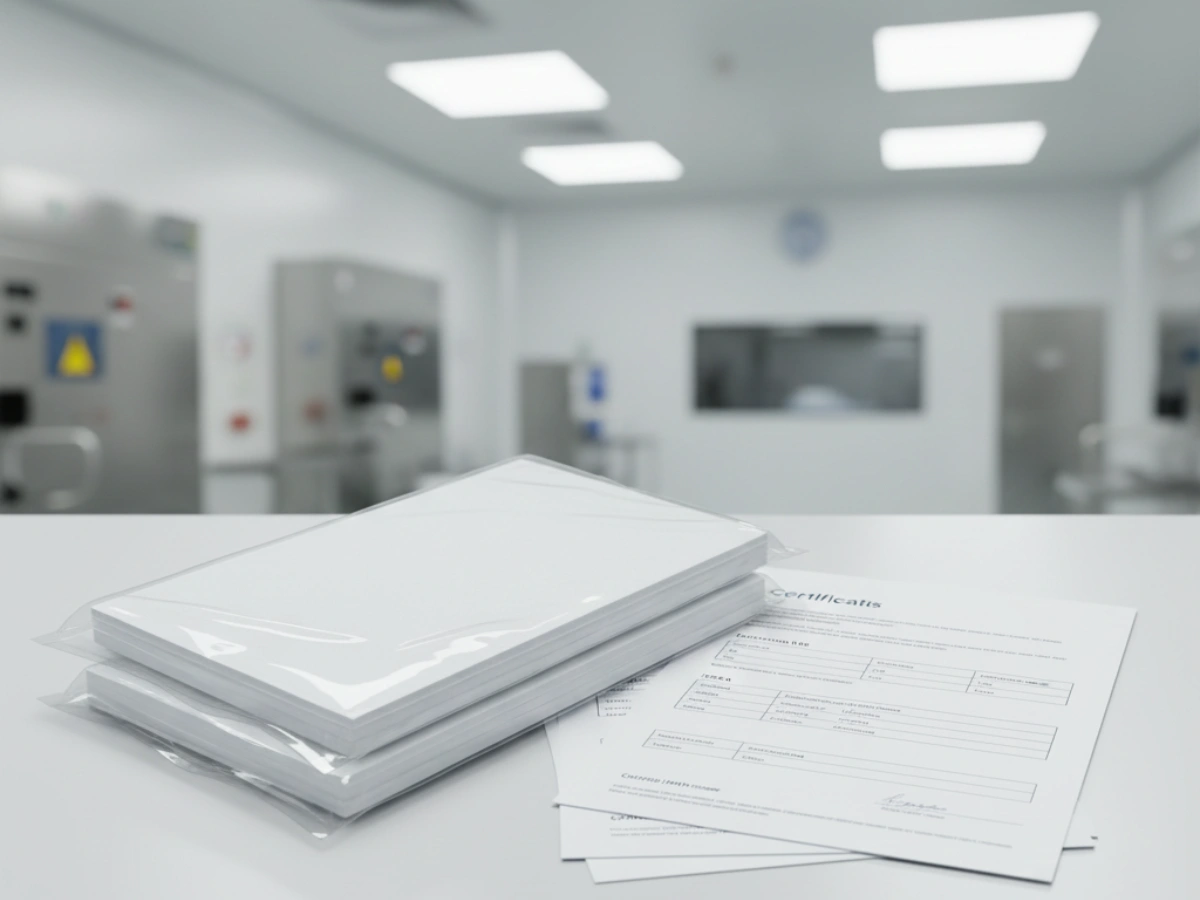
Audit-ready documentation and traceability evidence for cleanroom mop consumables.
ممارسات التصنيع الجيدةامتثال
ايزو 14644Alignment
100%إمكانية التتبع
Cleanroom mop validation and COA are core evidence packages in GMP audit preparation.
1. Why Cleanroom Mop Validation Matters in Audits
Cleanroom mops are not generic cleaning tools; they are critical cleanroom consumables. Their material, construction, and cleanliness directly impact the controlled environment and, by extension, product quality.
Auditors frequently identify gaps in the documentation supporting consumables. Missing or incomplete data for cleanroom mops can lead to findings related to contamination control, supplier qualification, and overall quality system deficiencies.
Regulatory expectations within GMP principles and ISO 14644 alignment require that materials introduced into classified areas are controlled and verified to reduce contamination risks.
2. What Are Cleanroom Mop Validation Documents?
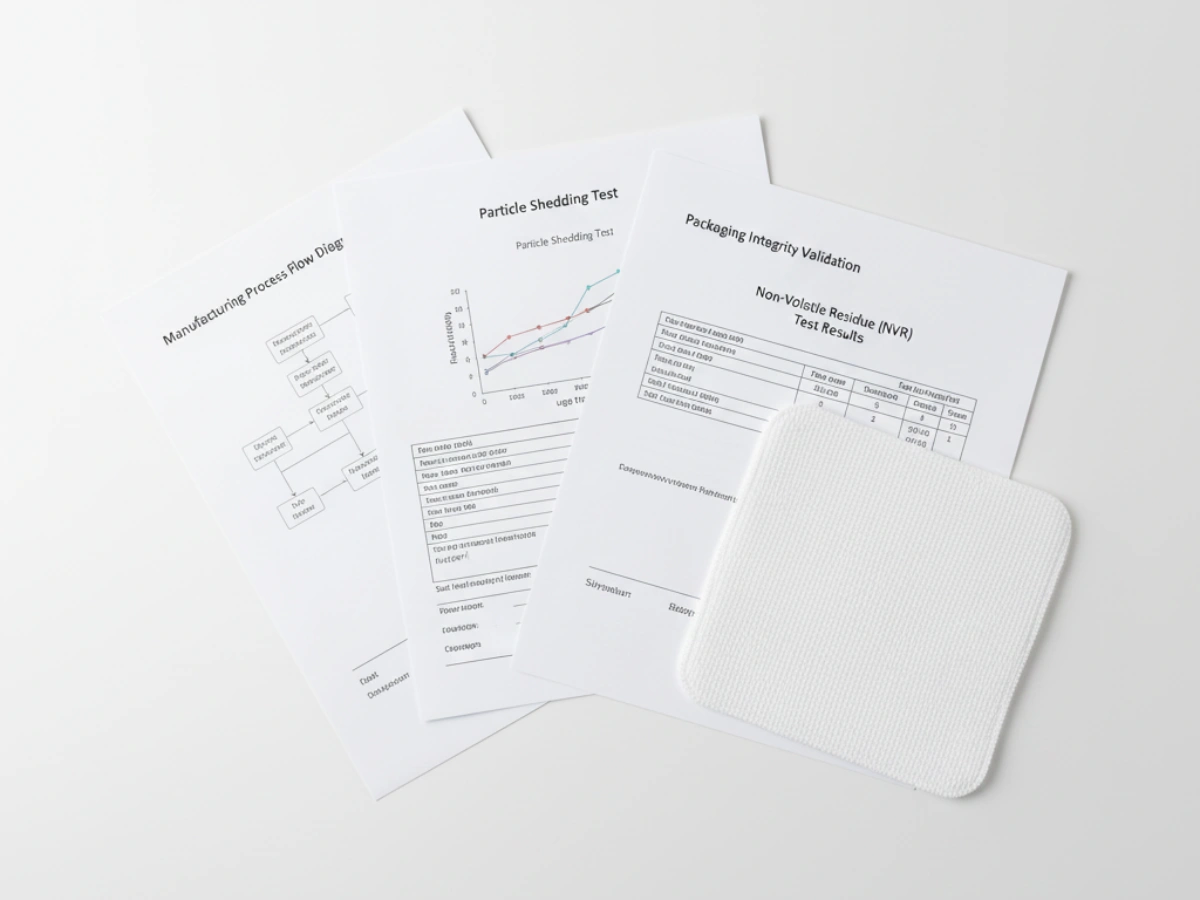
Validation documents demonstrate that the manufacturing process is capable and controlled over time.
Cleanroom mop validation documents establish documented evidence that the manufacturing process for a specific mop consistently produces a product meeting predefined specifications.
Validation proves the process is capable; QC confirms each batch meets established criteria.
Raw material specifications
Manufacturing process flow diagrams
Particle shedding test reports (IEST-RP-CC004.3)
Non-volatile residue (NVR) data
Endotoxin testing (if applicable)
Sterilization validation (ISO 11137)
Packaging integrity validation
Shelf-life stability data
3. COA for Cleanroom Mops: What It Covers (and What It Does Not)
A COA is batch-specific evidence tied to lot release and traceability.
A Certificate of Analysis (COA) for cleanroom mops is a batch-specific document issued by the manufacturer.
Lot/Batch Number— traceability to manufacturing records
Particle Cleanliness— Helmke Drum or equivalent
Non-Volatile Residue (NVR)
Absorbency(if applicable)
Visual Inspection
Sterility Assurance Level (SAL)for sterile mops
A COA confirms lot quality, but it does not replace process validation.
4. How Auditors Review Mop Documentation During Supplier Qualification
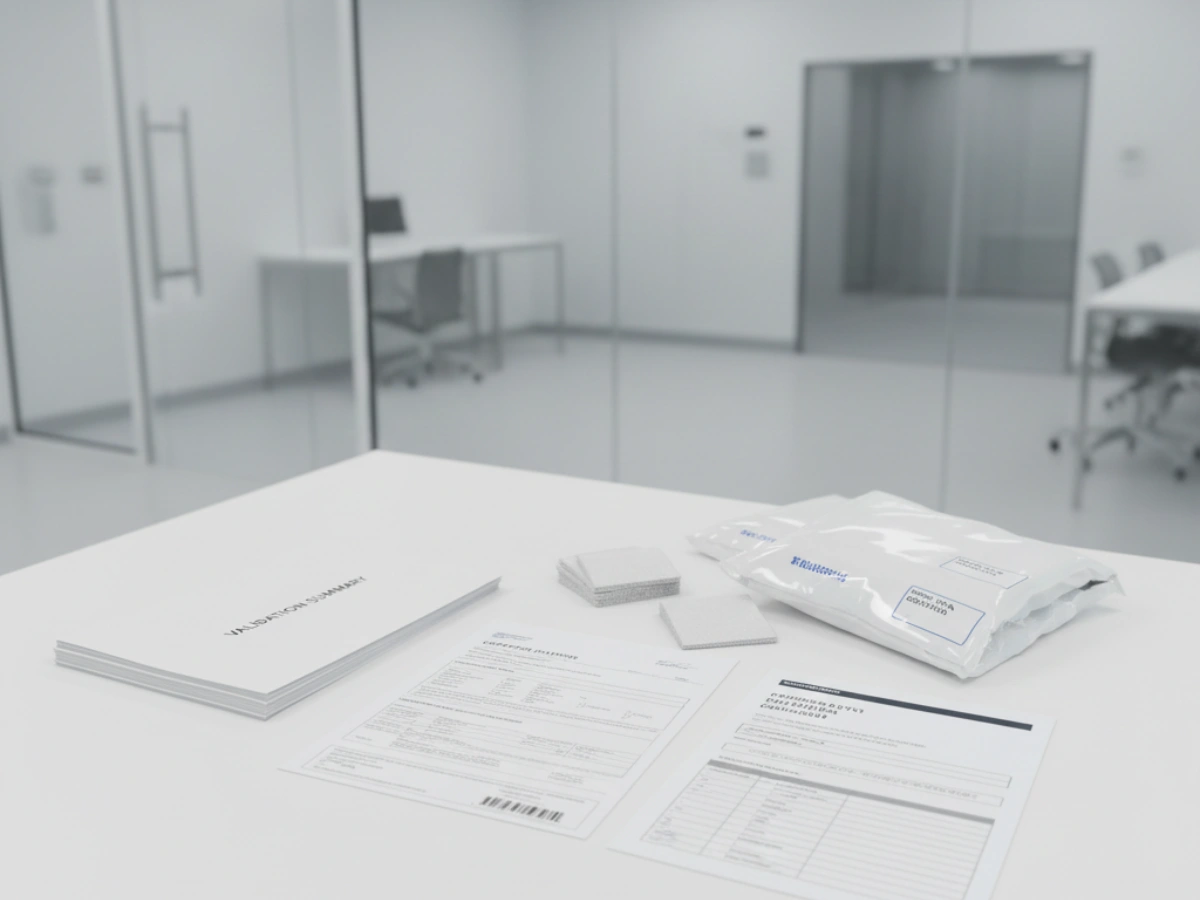
Auditors evaluate supplier controls, incoming inspection linkage, and change control readiness.
Auditors connect thesupplier’s overall quality systemwith mop-specific validation documents to evaluate contamination control, vendor approval, and incoming inspection practices.
Duringsupplier qualification,
auditors assess whether validation documents demonstrate consistent process control and whether the received COA matches purchase orders and approved internal specifications.
Typical auditor questions include:
How do you ensure lot-to-lot consistency for cleanroom mops?
What test data supports the declared particle cleanliness levels?
Can this COA be traced back to initial supplier qualification records?
What is your procedure when a COA parameter is out of specification?
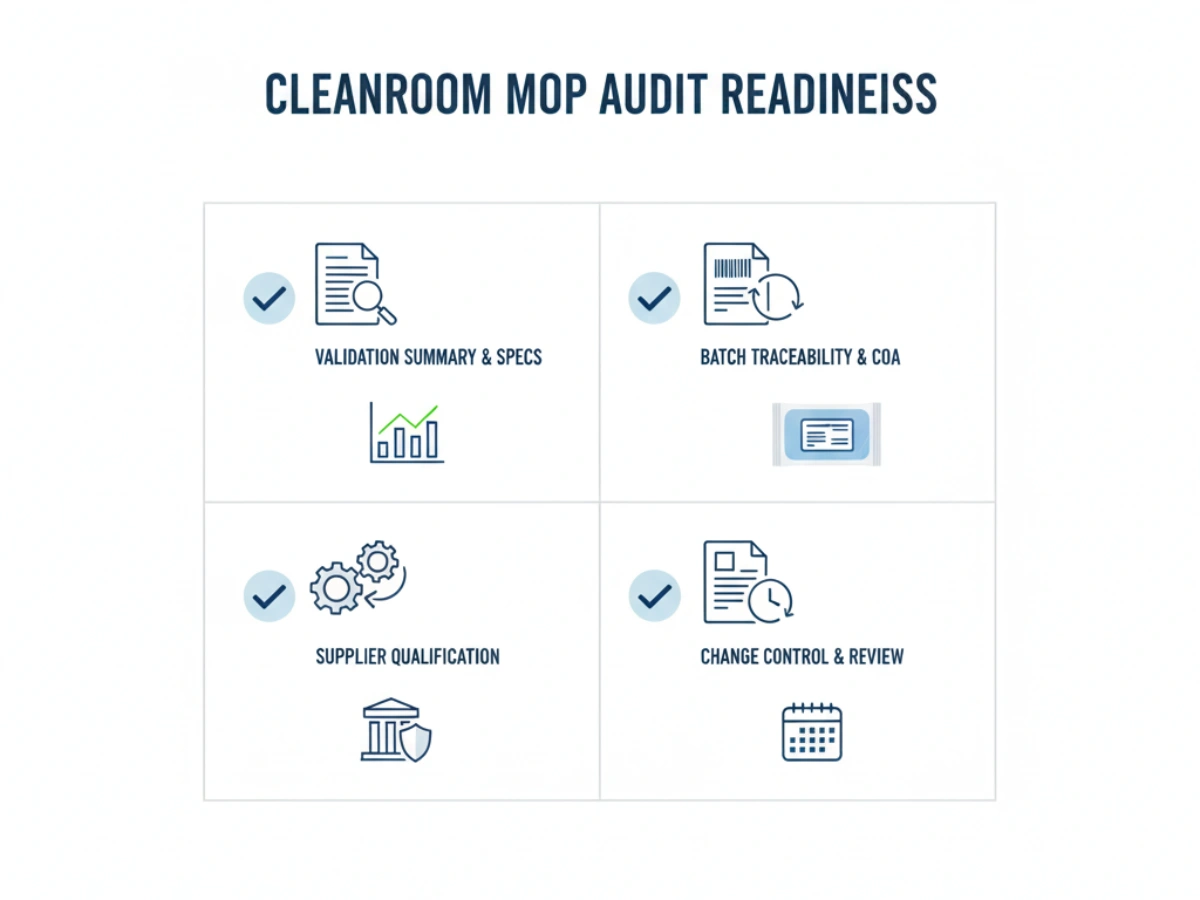
A practical checklist QA teams can use to reduce audit risk for cleanroom mop consumables.
Use this checklist to ensure your facility is prepared for audits involving cleanroom mop consumables:
Validation Summary Available:Maintain an accessible summary of all mop validation data.
COA Traceability:Ensure every COA is uniquely identifiable and batch-specific.
Specification Consistency:Confirm COA parameters match approved internal specifications.
Change Notification:Document procedures for reviewing supplier changes.
Supplier Re-qualification:Define frequency and triggers for re-qualification.
Retention Policy:Retain COAs and validation records per document control requirements.
6. Common Gaps That Trigger Audit Findings
Audits frequently uncover the following documentation deficiencies related to cleanroom mops:
Generic COAs:Single COAs covering multiple batches or missing batch identifiers.
Outdated Validation:Validation performed years ago without periodic review.
Mismatching Descriptions:COA product descriptions not matching received items.
No Change Control:Lack of documented evaluation of supplier changes.
Missing Test Data:COAs lacking critical parameters such as particle counts or NVR.
7. How to Use Validation Documents to Reduce Audit Risk
Robust validation documents and batch-specific COAs significantly simplify audits by providing objective evidence of control.
They demonstrate a proactive contamination management strategy rather than reactive remediation.
By requesting, reviewing, and maintaining these documents upfront, mature QA teams reduce audit pressure and
establish transparent, long-term supplier relationships.
خاتمة:For audit-driven environments, cleanroom mop validation documents and COAs are not optional —
they are integral components of a controlled quality system.
Support Your Audit Narrative.
Request validation summaries, batch-specific COAs, and material specifications
to strengthen your supplier qualification files.