ممسحة غرف الأبحاث مقابل مناديل غرف الأبحاث: ما الذي يجب أن تستخدمه؟
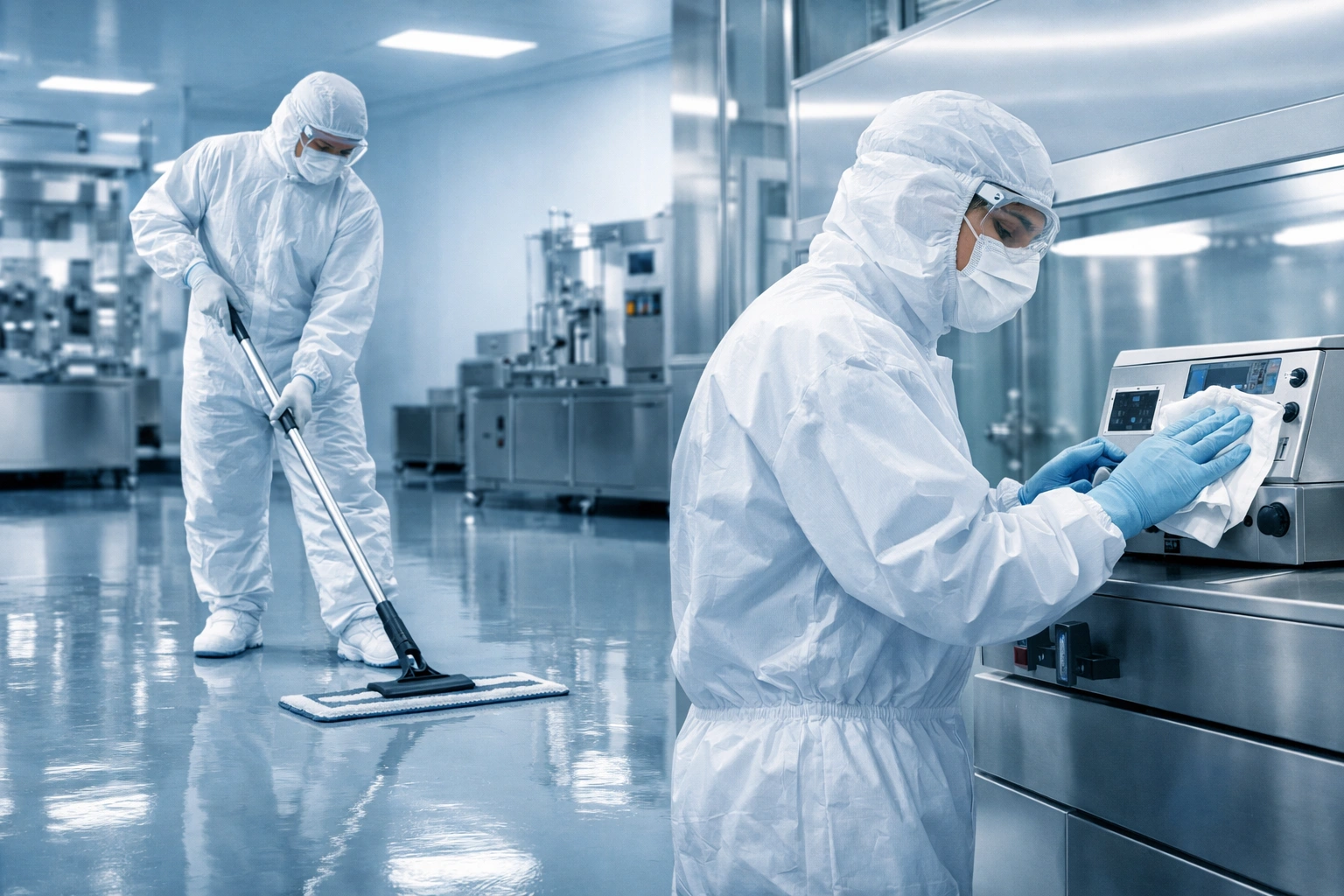
أفضل إجابة هي عادة لا ممسحة أو مناديل. إنها ما هي الأداة التي تناسب أي سطح، وأي منطقة غرف نظيفة، وأي هدف للتحكم في التلوث. تم تصميم مماسح غرف الأبحاث للتنظيف الفعال والمتكرر على الأسطح الأكبر مثل الأرضيات والجدران والألواح العريضة. تم تصميم مناديل غرف الأبحاث من أجل تحكم أكثر إحكامًا في المناطق الأصغر حجمًا أو عالية اللمس أو ذات الاتصال الدقيق مثل الأجزاء الخارجية للمعدات، وأسطح العمل، والممرات، والنوافذ، والمقابض، والمناطق المحيطة بالتدفق الصفحي.
جدول المحتويات
إجابة سريعة
استخدم ممسحة غرف الأبحاث عندما تحتاج إلى تنظيف محكم ومريح ومتكرر على الأسطح الكبيرة مثل الأرضيات والجدران والمناطق المكشوفة الواسعة.
استخدم مناديل غرف الأبحاث عندما تحتاج إلى تحكم يدوي دقيق على الأسطح الأصغر مثل لوحات المعدات، والمقاعد، والنوافذ، وعربات النقل، ونقاط اللمس، ومناطق العمل الحرجة.
استخدم كلاهما معًا عندما يتطلب إجراء التشغيل المعياري (SOP) الخاص بك تنظيفًا واسع النطاق بالإضافة إلى المسح المستهدف لأسطح التلامس المهمة.
ومن الناحية العملية، نادرًا ما تعتمد برامج التنظيف الصيدلانية والبيئية الخاضعة للرقابة على أداة واحدة فقط. تخدم المماسح والمناديل أغراضًا تشغيلية مختلفة. يجب أن يأخذ إطار الاختيار الجيد في الاعتبار حجم السطح، وإمكانية الوصول، والأهمية، وبيئة العمل للمشغل، وطريقة تطبيق السائل، والمستوى المطلوب من اتساق العملية.
1. الفرق الأساسي بين مماسح غرف الأبحاث ومناديل غرف الأبحاث
ممسحة غرف الأبحاث هي أداة تمديد يمكن التحكم فيها. فهو يعمل على تحسين الوصول والتغطية واتساق الحركة وكفاءة المشغل عبر الأسطح الأوسع. إنه مفيد بشكل خاص عندما يكون هدف التنظيف متكررًا ومعتمدًا على المنطقة. المسح هو أداة يدوية للاتصال المباشر. فهو يتيح للمشغل الشعور بالسطح، وضبط الضغط على الفور، والتنظيف حول الحواف والزوايا والتركيبات والمقابض وتفاصيل الماكينة بدقة أعلى.
يبدو هذا الاختلاف بسيطًا، ولكن له عواقب مباشرة على التحقق من الصحة، وتصميم إجراءات التشغيل القياسية، وتخطيط العمل، ومخاطر التلوث. إذا حاول المشغل تنظيف أرضية ممر كبيرة بالكامل باستخدام المناديل المبللة، تصبح العملية بطيئة وغير متسقة ومكلفة. إذا حاول نفس المشغل تنظيف مقابض المعدات التفصيلية أو حواف الماكينة الضيقة بالكامل باستخدام ممسحة، فقد يصبح الاتصال السطحي غير كامل ويصعب توحيده.
2. حجم السطح، وهندسة السطح، وسلوك الاتصال
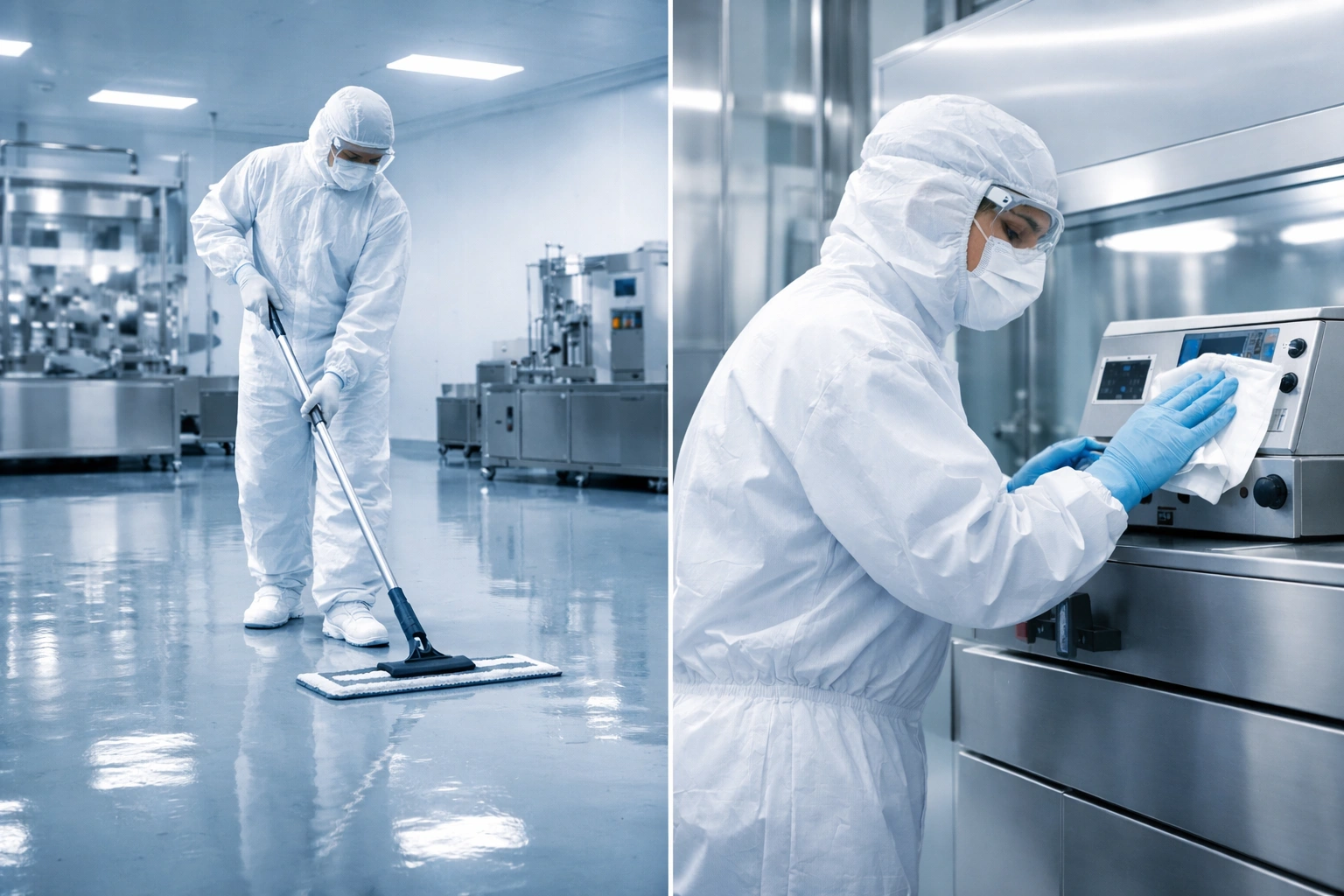
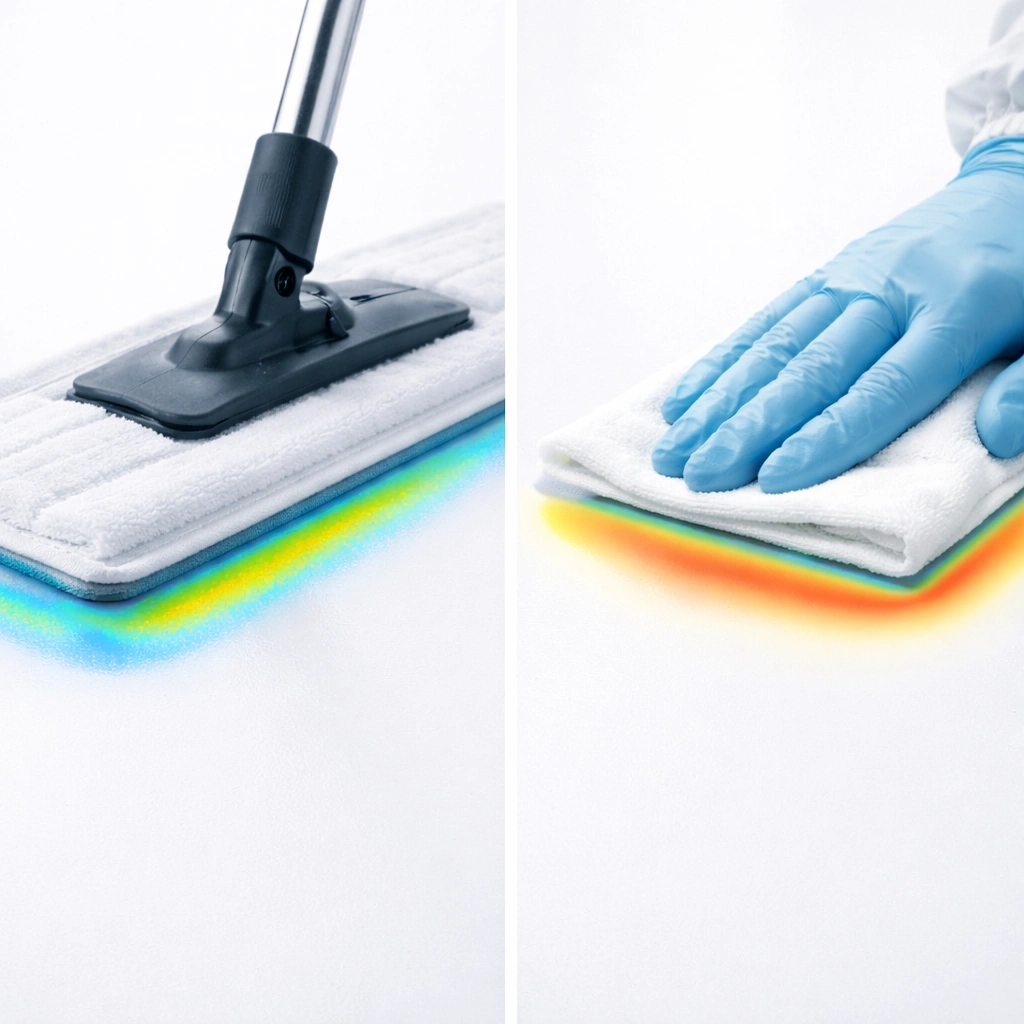
أحد أهم الاختلافات بين الممسحة والممسحة ليس فقط حجم المنطقة، ولكن كيفية تصرف كل أداة على السطح. يمكن للممسحة المسطحة أن تحافظ على اتصال عالي الكفاءة في المساحات الواسعة والمفتوحة نسبيًا. يمكن للمسح أن يتكيف بسهولة أكبر مع الهندسة المحلية والحواف وتغيرات الضغط التي يتم التحكم فيها يدويًا. وهذا مهم لأن جودة الاتصال تؤثر بشكل مباشر على التقاط الجسيمات وإدارة البقايا والتكرار.
في المناطق المفتوحة، يمكن للممسحة المسطحة توفير تداخل ثابت وتحكم في الاتجاه وحركات متكررة. في المقابل، على الأسطح غير المنتظمة، غالبًا ما يحتاج المشغلون إلى طي المناديل وتدويرها وإعادة طيها للحفاظ على وجه تلامس نظيف وتجنب إعادة الوضع. ولهذا السبب قد يستخدم نفس الموقع كلتا الأداتين بشكل قانوني في خطوات مختلفة من نفس دورة التنظيف.
| عامل | ممسحة غرف الأبحاث | مسح غرف الأبحاث |
|---|---|---|
| حجم السطح | أفضل للمساحات الكبيرة | أفضل للمناطق الصغيرة |
| التحكم اليدوي | معتدل | عالي |
| وصول المشغل | ممتاز | محدودة باليد |
| الوصول إلى التفاصيل | أقل على الهندسة الضيقة | أعلى على الحواف والتجهيزات |
| التكرار على مناطق واسعة | عالي | أقل للمناطق الكبيرة |
| كفاءة العمل لكل متر مربع | عادة أفضل | عادة أقل |
3. أمثلة لتطبيقات ISO 5 وISO 7
ISO 5: الدقة والاتصال النقدي
في بيئات ISO 5، غالبًا ما يكون التركيز على التحكم بالاتصال المباشر، والعرض المعقم، والمسح المُدار بإحكام للأسطح المهمة. تُستخدم مناديل غرف الأبحاث المعقمة بشكل شائع داخل مناطق التدفق الصفحي أو مناطق الدعم المعقمة لأن المشغل يحتاج إلى تحكم ممتاز باللمس والقدرة على تنظيف الأسطح الأصغر بطريقة يتم التحكم فيها بدرجة عالية.

ISO 7: صيانة أوسع للغرفة والتحكم في الأرضية
في ممرات ISO 7 وغرف الدعم والمساحات الأوسع التي يمكن التحكم فيها، غالبًا ما تكون الممسحة المسطحة هي الخيار الأكثر عملية لصيانة الأرضيات. يمكن للمشغل الحفاظ على ضربات الاتجاه، وتقليل ملامسة اليد غير الضرورية للسطح المنظف، وتغطية مساحة أكبر بحركة أكثر اتساقًا. لا يزال من الممكن استخدام المناديل المبللة لفتحات النقل، والمقابض، والطاولات الجانبية، وأسطح المعدات داخل نفس الغرفة.
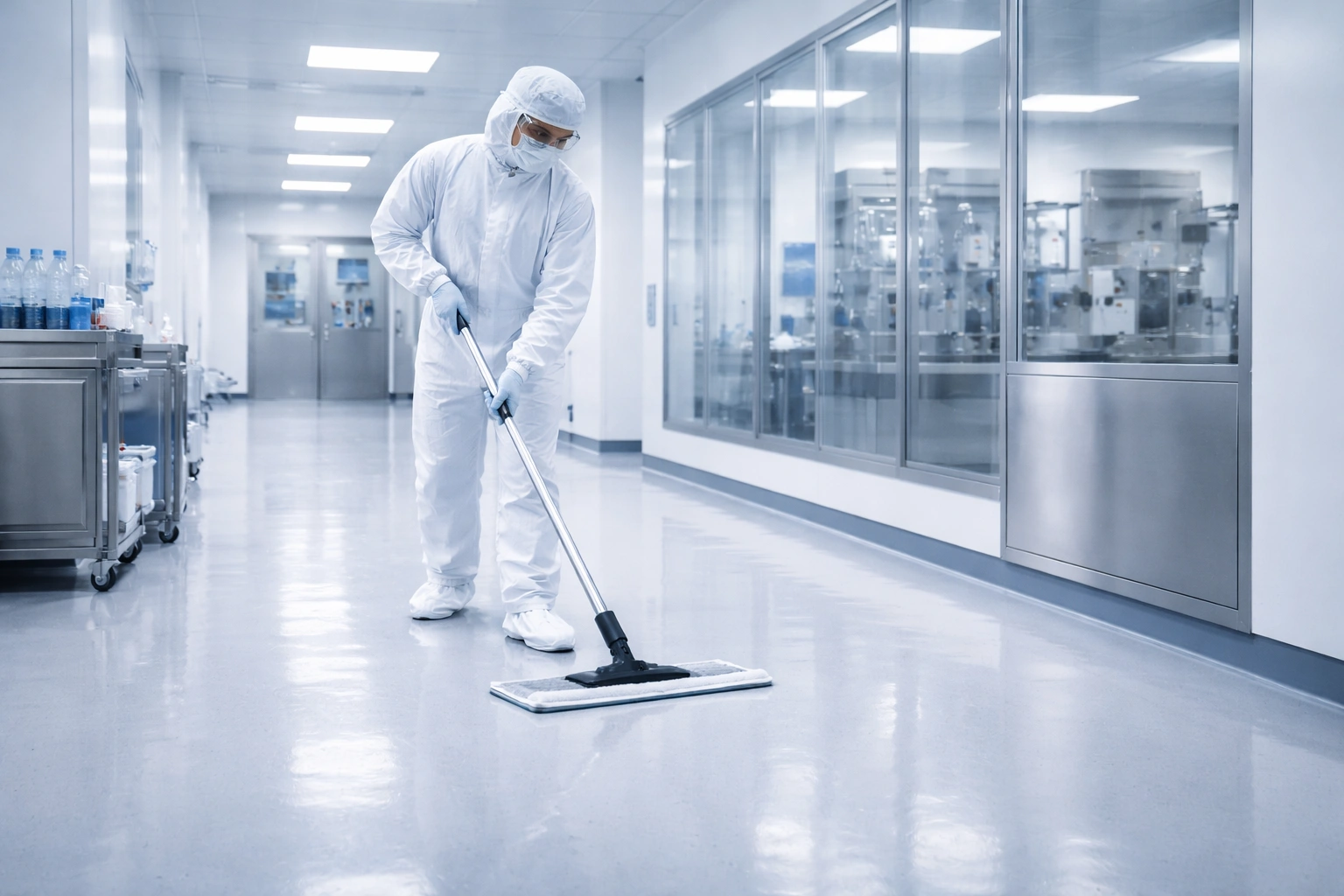
النقطة الأساسية هي أن تصنيف ISO وحده لا يحدد الأداة. يحدد السطح الفعلي والمهمة وهدف التنظيف الأداة. ISO 5 لا يعني تلقائيًا المناديل المبللة فقط، وISO 7 لا يعني تلقائيًا المماسح فقط. القرار الصحيح يأتي من هدف التنظيف ومتطلبات العملية.
4. مصفوفة القرار: أي واحدة يجب أن تختار؟
يبدأ إطار اتخاذ القرار المفيد بستة أسئلة: ما حجم السطح؟ ما مدى سهولة الوصول إليها؟ هل يتطلب التحكم اليدوي المعقم أو المباشر؟ كم مرة يتم تكرار المهمة؟ ما هو مستوى الاتساق المطلوب للمشغل؟ ما هي التكلفة لكل منطقة تم تنظيفها عند النظر في العمالة والمواد الاستهلاكية معًا؟
| سيناريو التنظيف | الأداة الموصى بها | لماذا |
|---|---|---|
| مساحة أرضية كبيرة في غرفة يمكن التحكم فيها | ممسحة غرف الأبحاث | وصول أفضل وتغطية وتكرار مريح |
| أسطح الخزانات ذات التدفق الصفحي | مناديل غرف الأبحاث | تحكم مباشر باللمس ووصول أفضل إلى الحافة |
| المعدات الخارجية مع الزوايا والتجهيزات | مناديل غرف الأبحاث | تحكم أفضل في الأشكال الهندسية الصغيرة وغير المنتظمة |
| أرضية الممر بالإضافة إلى مقابض الأبواب | ممسحة + مناديل | أداة واحدة لتغطية المنطقة، وواحدة للنقاط الدقيقة |
| تنظيف دوران الغرفة الروتينية | ممسحة + مناديل | كفاءة متوازنة وتنظيف التفاصيل |
5. مقارنة المواد: رؤوس الممسحة والمناديل
اختيار الأداة ليس سوى جزء من القرار. اختيار المواد مهم أيضا. تتصرف رؤوس الممسحة المختلفة وركائز المسح بشكل مختلف من حيث الامتصاص، وإطلاق الجسيمات، والانزلاق، والاستجابة للتآكل، والتوافق الكيميائي. يجب أن تساعد المقالة جيدة التنظيم القارئ على فهم أن فئة المنتج وفئة المادة تعملان معًا.
مواد رأس الممسحة
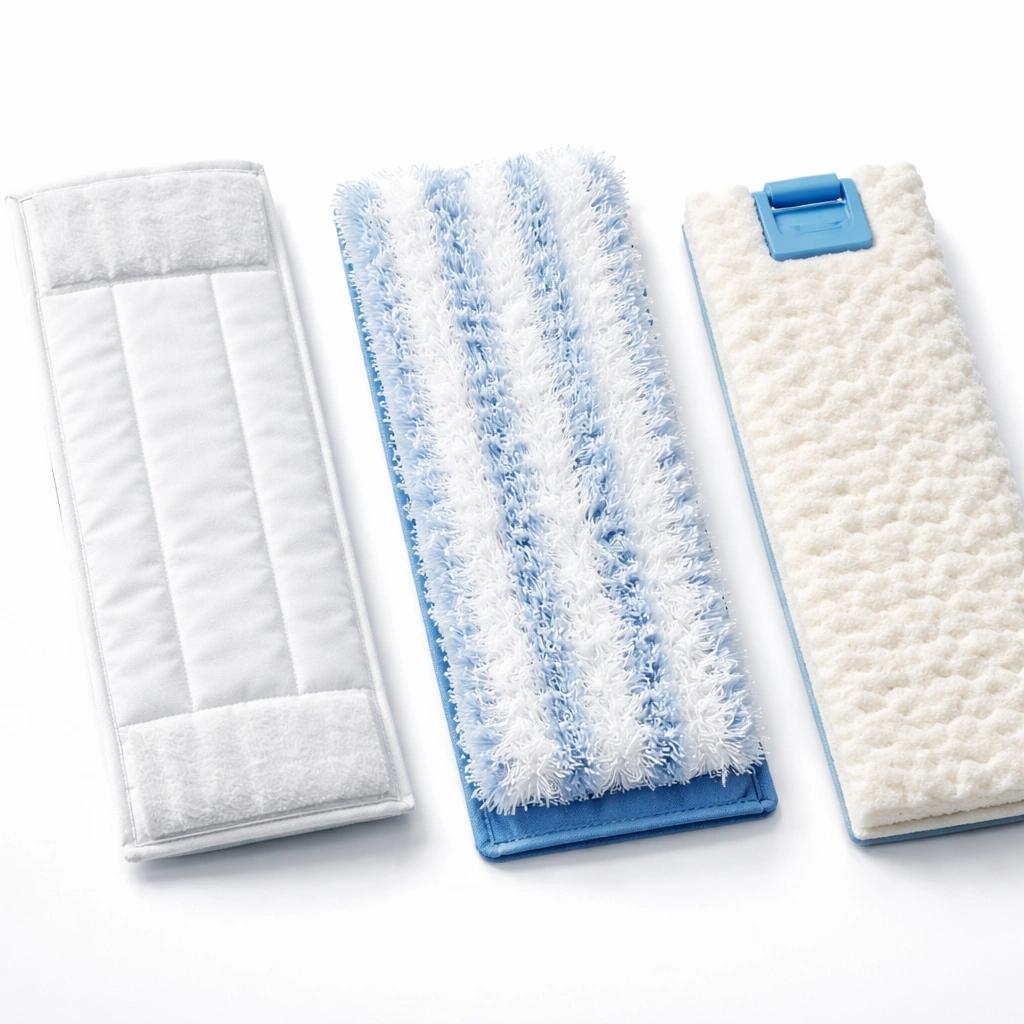
غالبًا ما يتم اختيار رؤوس الممسحة المصنوعة من البوليستر والألياف الدقيقة لتنظيف الأرضيات في بيئة خاضعة للرقابة، بينما يمكن استخدام إنشاءات أخرى اعتمادًا على السطح المستهدف واحتياجات إدارة السوائل. يجب أن يدعم رأس الممسحة المناسب بطانة منخفضة وتغطية قابلة للتكرار والتوافق مع كيمياء التنظيف الخاصة بالموقع وإجراءات التشغيل القياسية (SOP).
مسح المواد
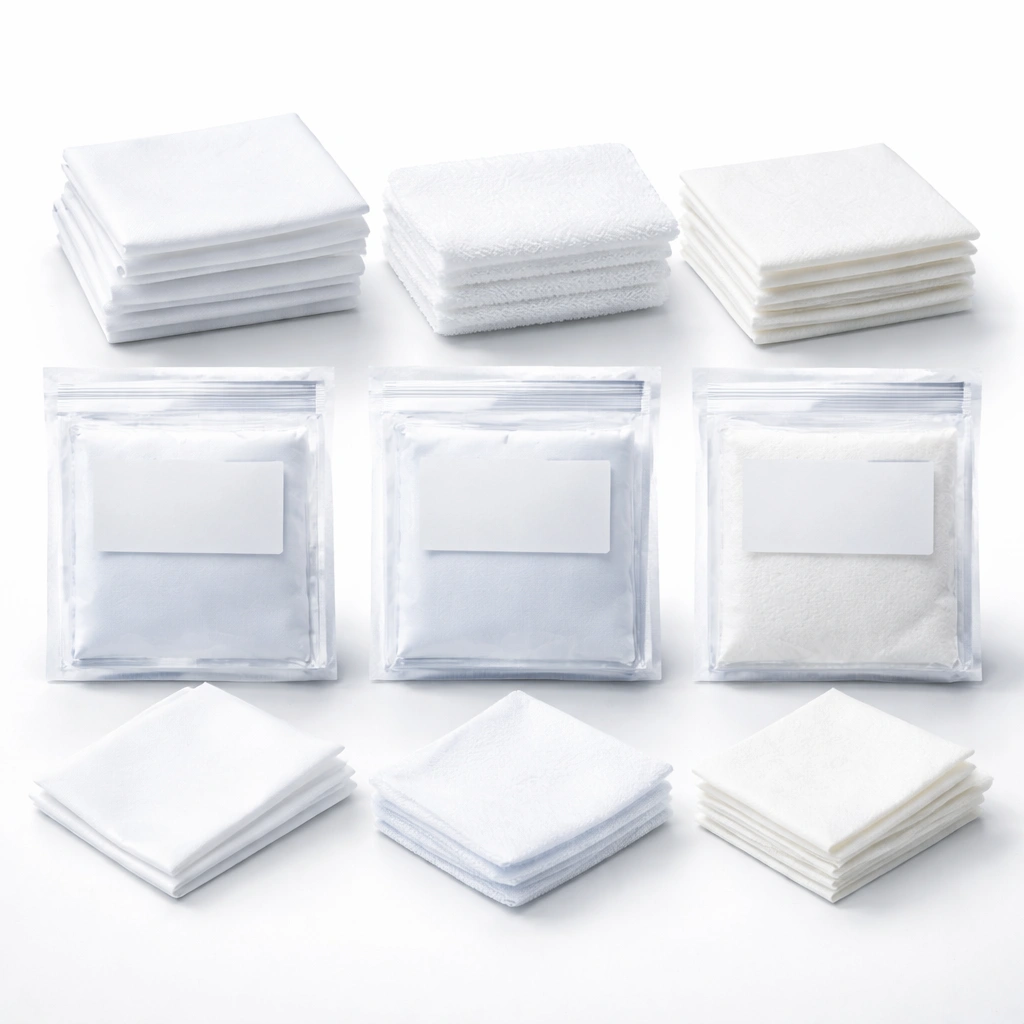
تؤدي مناديل البوليستر والألياف الدقيقة والبولي بروبيلين أدوارًا مختلفة. تُستخدم مناديل البوليستر على نطاق واسع في مهام المسح الخاضعة للرقابة. يمكن أن توفر المناديل المبللة المصنوعة من الألياف الدقيقة التقاطًا قويًا للجسيمات الدقيقة. يمكن اختيار مادة البولي بروبيلين حيثما يكون التخلص منها أو استخدام المذيبات أو متطلبات سير العمل الخاصة أمرًا مهمًا.
6. التكلفة وكفاءة العمالة
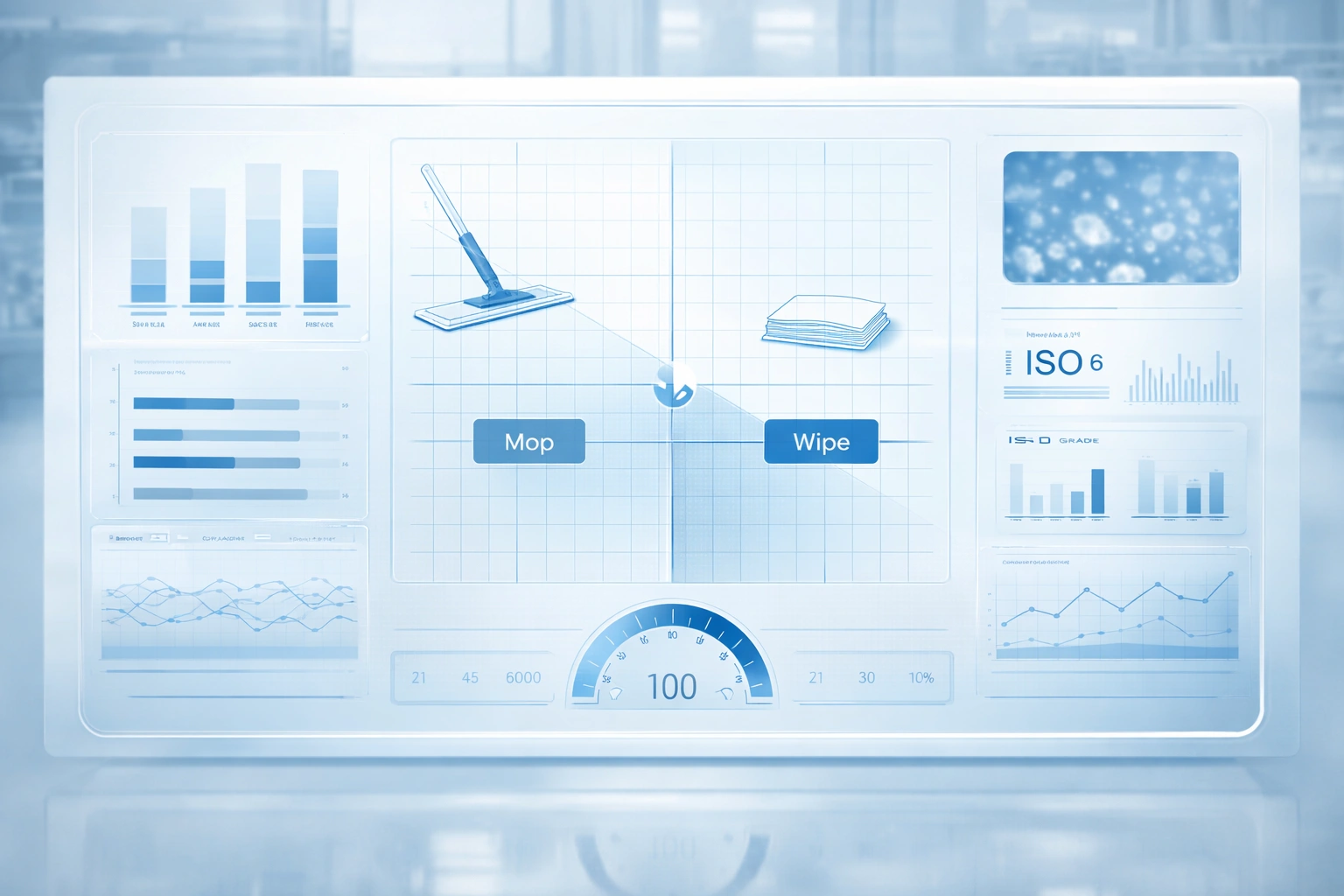
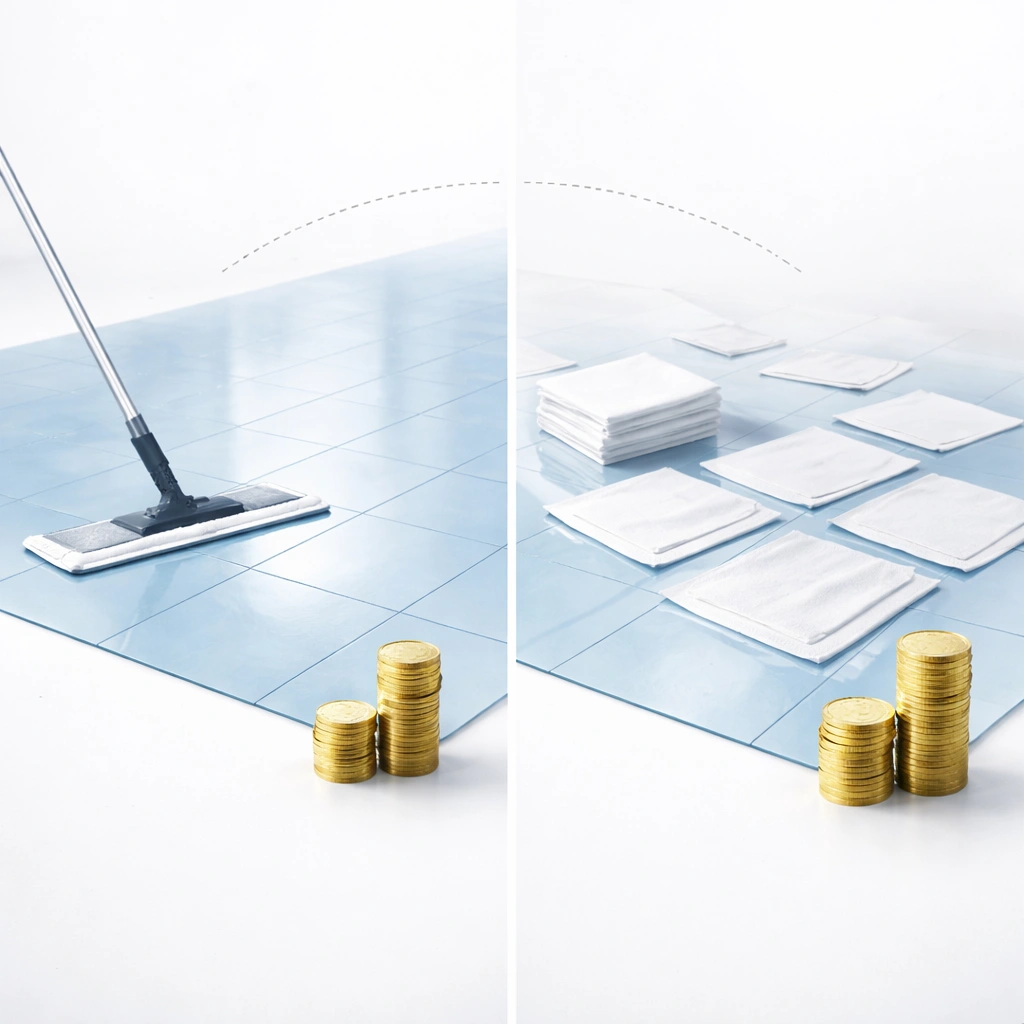
تقوم الفرق أحيانًا بمقارنة المماسح والمناديل حسب سعر الوحدة فقط. وهذا يؤدي عادة إلى قرارات سيئة. المقارنة الأفضل هي الكفاءة التشغيلية الإجمالية. ما هي المساحة التي يمكن للمشغل تنظيفها لكل وحدة زمنية؟ ما هو عدد المواد الاستهلاكية اللازمة لغرفة واحدة أو وردية واحدة؟ ما مدى تكرار النتيجة؟ ما مقدار التدريب المطلوب؟ ما مقدار المخاطر التي تنشأ عن اختيار طريقة غير فعالة أو غير متسقة؟
بالنسبة للأسطح الأكبر حجمًا، غالبًا ما تفوز المماسح بكفاءة العمل وتغطية المنطقة. بالنسبة للأسطح ذات الدقة الأصغر، غالبًا ما تفوز المناديل المبللة بالتحكم والتطبيق العملي. وهذا يعني أن الخيار الأقل تكلفة يعتمد كليًا على مهمة التنظيف. قد يكون المسح أكثر فعالية من حيث التكلفة بالنسبة لمقبض الباب الصغير حتى لو كان سعر وحدته أعلى من بطاقة التنظيف المرتبطة بالممسحة. قد تكون الممسحة أكثر فعالية من حيث التكلفة بالنسبة لأرضيات الممرات لأنها تقلل الوقت واستخدام المواد الاستهلاكية عبر مساحة أكبر بكثير.
| نقطة التقييم | ميزة الممسحة | ميزة المسح |
|---|---|---|
| كفاءة العمل في منطقة كبيرة | قوي | محدود |
| دقة التفاصيل الصغيرة | محدود | قوي |
| تغطية أرضية روتينية | قوي | ضعيف |
| مسح المعدات المحلية | ضعيف | قوي |
| أفضل قرار التكلفة الإجمالية | عندما تكون المساحة كبيرة | عندما تكون المساحة مفصلة وصغيرة |
7. أفضل ممارسات SOP لكلا الأداتين
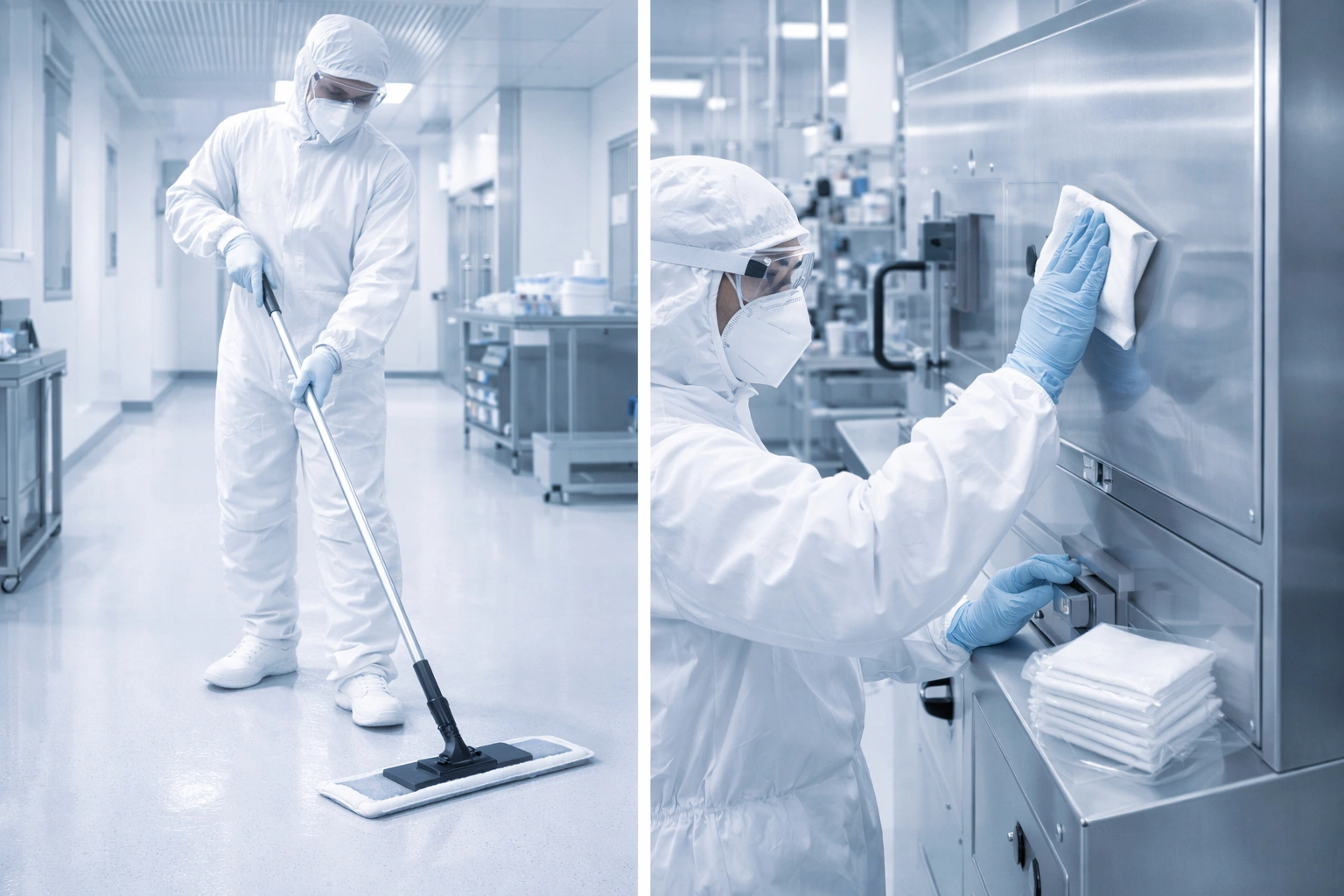
حتى المنتج المناسب يفشل إذا كانت التقنية ضعيفة. لا يقتصر تنظيف غرف الأبحاث على المواد الاستهلاكية فقط. يتعلق الأمر بالتحكم في الطريقة. بالنسبة للمماسح، تعد الحركة الاتجاهية المتسقة والتداخل أمرًا بالغ الأهمية. بالنسبة للمناديل المبللة، تعد إدارة الطيات وتدوير الوجه النظيف أمرًا بالغ الأهمية. يمكن أن تعمل مرئيات SOP على تحسين التدريب والاستعداد للتدقيق والاتساق بين التحولات.
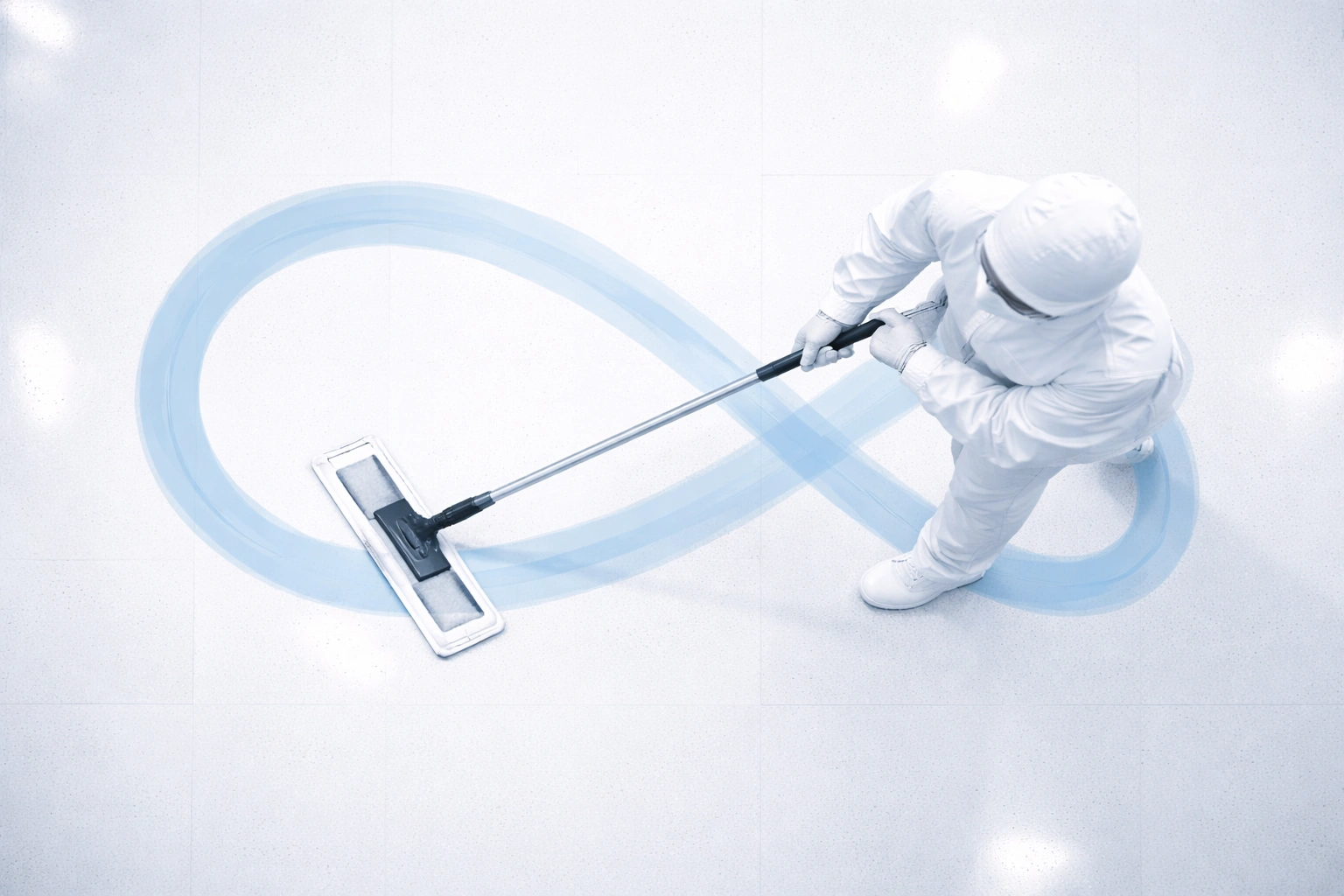
الشكل-8 طريقة الممسحة
تساعد طريقة الشكل 8 أو طريقة السكتة الدماغية المتداخلة الخاضعة للتحكم المشغلين على تنظيف مساحات الأرضية العريضة مع اتساق اتجاهي أفضل وتقليل خطر إعادة التموضع العشوائي. إنها أداة مرئية عملية لتدريب المشغلين والتوحيد القياسي.
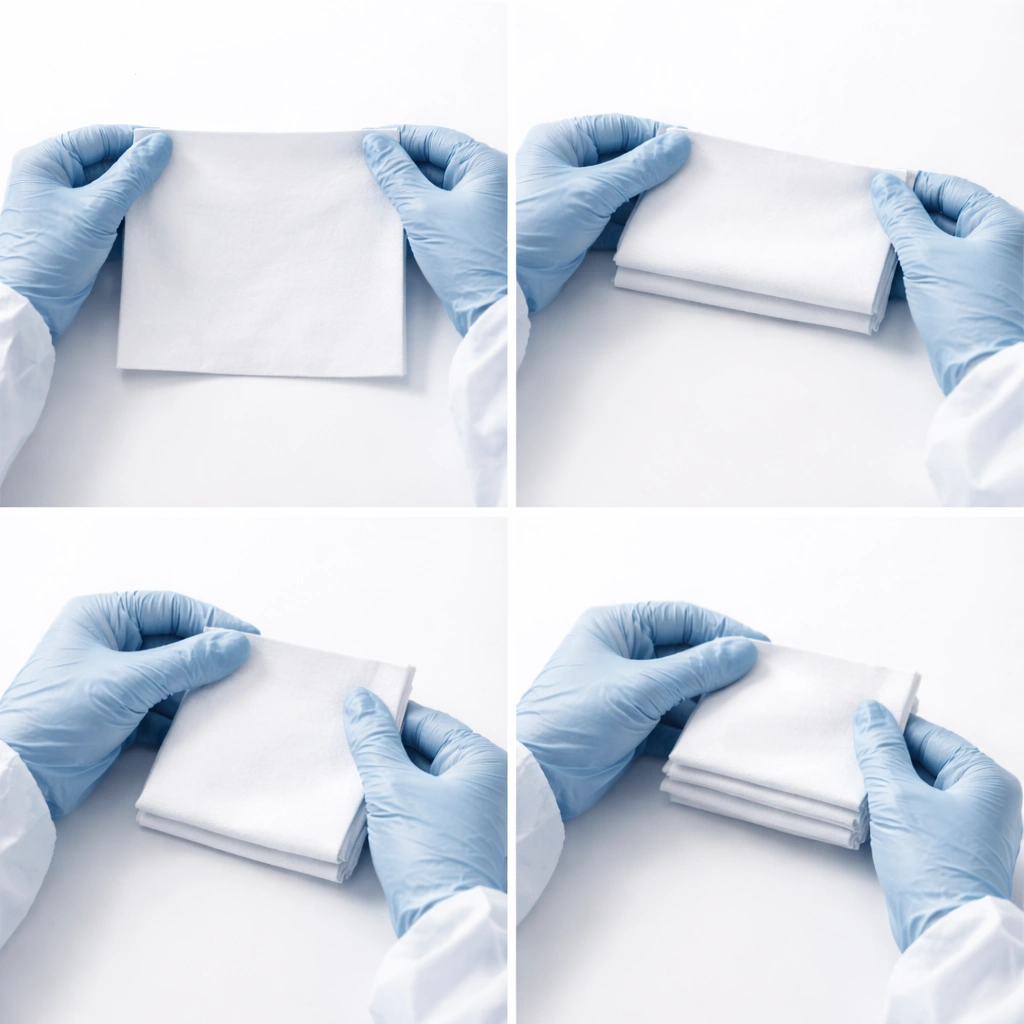
تقنية مسح الطي
ينبغي طي المناديل وتدويرها حتى يقدم المشغل سطحًا نظيفًا للمنطقة المستهدفة خطوة بخطوة. وهذا يقلل من فرصة انتشار التلوث عبر الأسطح الحرجة ويحسن نظام التنظيف الذي يمكن تتبعه.
- قم بمطابقة الأداة مع السطح قبل بدء المهمة.
- احتفظ بمنطق اتجاه واضح من "القذرة إلى النظيفة" في الإجراء التشغيلي الموحد (SOP).
- توحيد التداخل وتسلسل التمرير وتدوير مسح الوجه.
- تدريب المشغلين بصريًا، وليس فقط من خلال التعليمات النصية.
- تقنية المراجعة أثناء عمليات التدقيق، وليس فقط اختيار المنتج.
8. أفضل الممارسات غالبًا ما تكون استراتيجية تنظيف مشتركة
بالنسبة للعديد من بيئات التصنيع الصيدلانية والخاضعة للرقابة، فإن الإجابة الأكثر واقعية هي سير العمل المختلط. استخدم المماسح للأرضيات وغيرها من الأسطح المكشوفة الواسعة. استخدم المناديل المبللة للمعدات ونقاط الاتصال والبوابات والعربات والمقاعد والزجاج والمناطق التي يكون فيها التحكم اليدوي المباشر أكثر أهمية من التغطية الواسعة. يعمل هذا الأسلوب على محاذاة منطق العملية مع السلوك السطحي الفعلي.
تدعم الإستراتيجية المدمجة أيضًا بنية SOP الأنظف. يصبح من الأسهل تحديد من يقوم بتنظيف ماذا، وما هي الأداة التي يتم استخدامها وأين، وكيف ينبغي إجراء الفحص البصري أو التحقق بعد ذلك. يمكن أن يساعد هذا النوع من الوضوح فرق الجودة والمشغلين وفرق المشتريات على البقاء متسقين.
توصية عملية: لا تسأل ما إذا كانت المماسح أفضل من المناديل المبللة بشكل عام. اسأل عن الأسطح التي يتم تنظيفها، وما هي مخاطر التلوث الأكثر أهمية، وكيف ينبغي لإجراءات التشغيل القياسية (SOP) توحيد المهمة. هذا هو نموذج القرار الذي ينتج نتائج أفضل.
التعليمات
متى يجب عليك استخدام ممسحة غرف الأبحاث بدلاً من مناديل غرف الأبحاث؟
استخدم ممسحة غرف الأبحاث لمناطق الأرضية والجدران والسقف الأكبر حيث تكون التغطية والتكرار وكفاءة المشغل أكثر أهمية. استخدم مناديل غرف الأبحاث للأسطح الأصغر حجمًا أو عالية اللمس أو المفصلة أو التي تلامس المعدات.
هل مناديل غرف الأبحاث أفضل لتطبيقات ISO 5؟
بالنسبة لمهام المسح الدقيقة، ومحطات عمل التدفق الصفحي، والتنظيف المباشر للمعدات، غالبًا ما تُفضل مناديل غرف الأبحاث المعقمة في مناطق ISO 5. تنظيف الأرضيات في المساحات المحيطة الخاضعة للرقابة قد لا يزال يتطلب المماسح.
هل يمكن استخدام مماسح ومناديل غرف الأبحاث معًا؟
نعم. تعد الإستراتيجية المدمجة شائعة في البيئات الصيدلانية والخاضعة للرقابة: حيث تتعامل المماسح مع المساحات السطحية الأكبر بكفاءة، بينما تتعامل المناديل المبللة مع نقاط الاتصال التفصيلية والأدوات والعربات والأجزاء الخارجية للمعدات.
ما هو الفرق التشغيلي الرئيسي بين المماسح والمناديل؟
الفرق التشغيلي الرئيسي هو التحكم في الحجم والاتصال. تعمل المماسح على تحسين السرعة والتغطية المريحة على المساحات الكبيرة، بينما توفر المناديل تحكمًا أكثر إحكامًا على الأسطح الموضعية وخطوات التنظيف التفصيلية.
هل تحتاج إلى مساعدة في اختيار التنسيق المناسب لتنظيف غرف الأبحاث؟
إذا كان فريقك يقوم بتقييم المماسح أو المناديل المبللة أو سير عمل التنظيف المختلط للبيئات الصيدلانية أو الخاضعة للرقابة، فقم ببناء الاختيار حول نوع السطح وأهمية المنطقة وتكرار إجراءات التشغيل المعيارية (SOP) بدلاً من سعر الوحدة وحده.
تم تضمين كل نص ALT الخاص بالصورة مباشرة في HTML. يتم تضمين JSON-LD للمقالة وصفحة الأسئلة الشائعة وقائمة التنقل في القسم الرئيسي.