
Why Environmental Monitoring Matters in GMP Cleanrooms
Even well-designed cleanrooms with strong HVAC systems, validated cleaning programs, and trained personnel cannot be assumed to remain under control without evidence. Environmental monitoring provides that evidence by showing whether contamination levels stay within defined expectations during routine operation.
An effective EM program supports microbial control, particulate control, investigation readiness, process understanding, and continuous improvement. It also creates a direct connection between room classification, personnel gowningو personnel trainingو airflow visualizationو دورة حياة التحقق من الصحة، و فعالية التنظيف.
| مكون EM | ما يقيسه | لماذا هو مهم |
|---|---|---|
| مراقبة الجسيمات | مستويات الجسيمات المحمولة جوا غير قابلة للحياة | يساعد على التحقق من نظافة الهواء وأداء التدفئة والتهوية وتكييف الهواء (HVAC). |
| أخذ عينات الهواء النشطة | الكائنات الحية الدقيقة المحمولة جوا قابلة للحياة | يكتشف خطر التلوث الميكروبي في هواء الغرفة |
| تسوية اللوحات | تداعيات سلبية قابلة للحياة مع مرور الوقت | مفيد لتقييم التعرض أثناء العمليات |
| لوحات الاتصال / مسحات | التلوث الميكروبي السطحي | يظهر فعالية التنظيف والانضباط اللمسي |
| مراجعة الاتجاه | الأنماط المتكررة عبر الزمن والمناطق | يدعم الكشف عن المخاطر قبل حدوث حالات فشل أكبر |
مراقبة قابلة للحياة مقابل مراقبة غير قابلة للحياة
Environmental monitoring usually includes both viable and non-viable methods. These are related, but they are not interchangeable. A room can meet particulate expectations and still show microbial risk, particularly if personnel behavior, cleaning practices, or intervention controls are weak.
| Monitoring Type | أمثلة | Main Use |
|---|---|---|
| Non-viable monitoring | Particle counters, airborne particle testing | Verifies cleanroom air classification and dynamic control |
| Viable monitoring | Active air samplers, settle plates, contact plates, swabs | Detects microbiological contamination risks |
هل تحتاج إلى دعم غرف الأبحاث الجاهزة لـ GMP؟
Midposi supports contamination control programs with cleanroom garments and GMP-focused product solutions designed for pharmaceutical and controlled environments.
Common EM Sampling Methods in Cleanrooms
Sampling methods should be selected based on room grade, activity level, product exposure, intervention frequency, and investigation needs. Good programs define not only what is sampled, but also why each method is appropriate.
Typical methods include:
- Particle counters for real-time airborne non-viable monitoring
- Active air samplers for viable airborne monitoring
- Settle plates for passive viable monitoring during operations
- Contact plates for equipment, walls, work surfaces, and gloves
- Swabbing for irregular or hard-to-contact surfaces
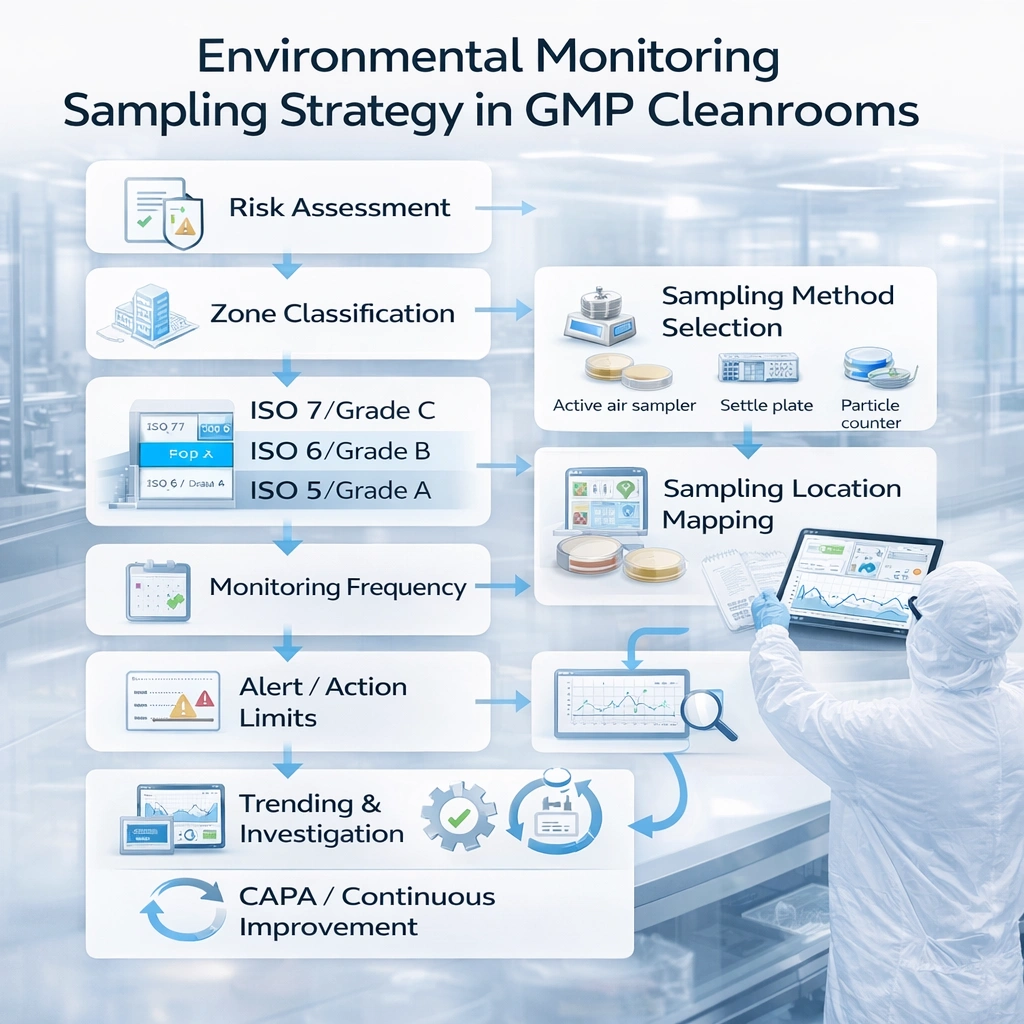
Visual Explanation: EM Sampling Strategy
يجب أن توضح خريطة المراقبة البيئية القوية الأساليب المستخدمة في المناطق الحرجة، ومناطق الدعم، ونقاط اتصال الموظفين، ومواقع التدخل الديناميكية.
كيفية تحديد مواقع EM وتردد أخذ العينات
لا ينبغي أن تكون مواقع الرصد عشوائية أبدًا. ويجب أن تعكس مخاطر التلوث، ومسارات تدفق الهواء الحرجة، ومناطق التدخل، ووجود المشغل، وتدفق المواد، وأنماط الأحداث التاريخية.
غالبًا ما تتضمن مواقع أخذ العينات عالية القيمة ما يلي:
- نقاط المعالجة الحرجة
- فتح مناطق التعرض للمنتج
- قفازات بأطراف الأصابع والأكمام
- أسطح المعدات بالقرب من مواقع التدخل
- فتحات النقل ونقاط دخول المواد
- المناطق التي لها تاريخ رحلة سابق
- تحديد الأساس المنطقي لكل موقع ثابت
- التفريق بين المراقبة أثناء الراحة والمراقبة التشغيلية
- استخدم كثافة أعلى لأخذ العينات في المناطق الحرجة أو ذات التدخل العالي
- قم بمراجعة مدى ملاءمة الموقع بعد تغييرات التخطيط أو المعدات أو العملية
حدود التنبيه مقابل حدود العمل
أحد أكثر الأجزاء التي يساء فهمها في المراقبة البيئية هو الفرق بين حدود التنبيه وحدود الإجراء. حدود التنبيه هي تحذيرات مبكرة بأن الظروف قد تنجرف. تشير حدود الإجراء إلى انحراف أكثر خطورة يتطلب تحقيقًا واستجابة محددة.
| نوع الحد | غاية | الاستجابة النموذجية |
|---|---|---|
| حد التنبيه | يشير إلى تحول غير عادي أو اتجاه سلبي | مراجعة البيانات الحديثة، وتأكيد التكرار، وتقييم العوامل المساهمة |
| حد الفعل | يشير إلى رحلة كبيرة أو فشل التحكم | بدء تحقيق رسمي، وتحديد CAPA، وتقييم تأثير المنتج والعملية |
يجب أن تكون الحدود المصممة جيدًا قائمة على المخاطر ومدعومة بالبيانات التاريخية وتصنيف الغرف وأهمية العملية والتوقعات التنظيمية. غالبًا ما تؤدي الحدود المنسوخة من موقع آخر دون مبرر إلى إنشاء منطق تحكم ضعيف.
تتجه، والتحقيق، وCAPA
جمع بيانات EM ليس كافيا. القيمة الحقيقية لنظام المراقبة تأتي من قدرته على تحديد الأنماط، وتحفيز التحقيق في الوقت المناسب، ودعم قرارات CAPA. ينبغي لمراجعة الاتجاه أن تنظر إلى ما هو أبعد من الرحلات الفردية وتتساءل عما إذا كانت الإشارات المتكررة تشير إلى نقاط ضعف هيكلية.
غالبًا ما تقوم مراجعة الاتجاه بتقييم:
- الأحداث المتكررة حسب الموقع
- الأنماط المتعلقة بالمناوبات أو المتعلقة بالموظفين
- تكرار التنظيف وتكرار التلوث
- الاختلافات بين حالات الغرفة وأنواع الحملات
- التغيرات الموسمية أو التشغيلية في التعافي الميكروبي
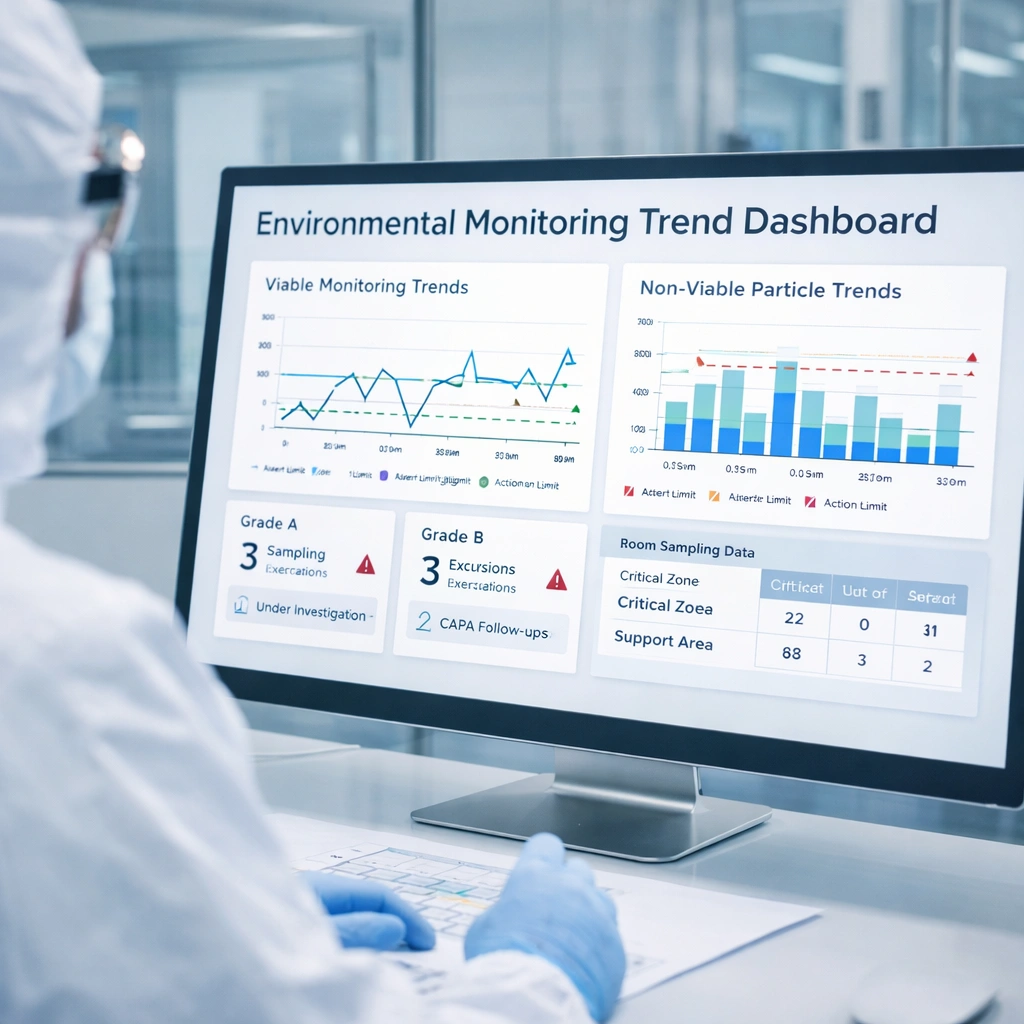
Visual Explanation: EM Trend Dashboard
A data dashboard can help QA teams trend recovery by room, zone, method, operator activity, and shift. This makes investigation more targeted and evidence-based.
Common Environmental Monitoring Failures
Many weak EM programs fail not because sampling is absent, but because strategy, interpretation, and follow-up are weak.
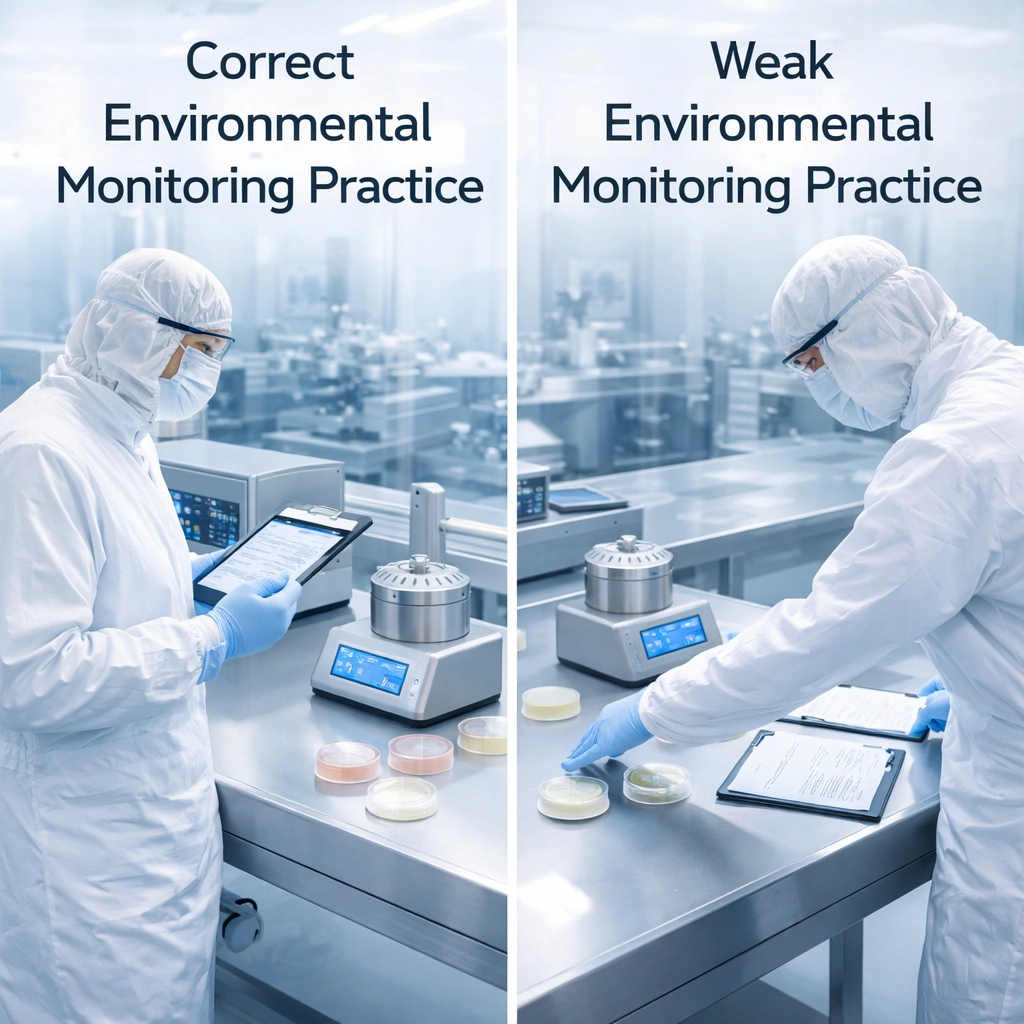
Visual Explanation: Correct vs Weak EM Practice
A clear comparison can show the difference between risk-based monitoring with defined investigation paths and generic sampling programs with poor response quality.
| Weak Practice | Why It Is Risky | Better Approach |
|---|---|---|
| Sampling without rationale | Locations may miss the highest-risk points | Use risk-based site selection tied to process and airflow |
| Only reacting to action limits | Misses early signals of deterioration | Review alert-level trends and recurring signals |
| Minimal investigation after excursion | Root causes remain unresolved | Link excursion review to personnel, airflow, cleaning, and process factors |
| No link to training or behavior | Human-factor patterns remain hidden | Cross-review EM data with gowning, training, and interventions |
What Auditors Usually Look For in an EM Program
During inspection, auditors rarely focus only on raw counts. They look at whether the full monitoring system is justified, controlled, and actionable. That includes site selection, frequency rationale, limit setting, investigation quality, and CAPA follow-through.
Auditors often request:
- EM program SOPs and sampling maps
- Alert and action limit rationale
- Trend reports by room or campaign
- Excursion investigations and CAPA records
- Evidence linking EM to contamination control strategy
- Correlation with training, cleaning, airflow, and intervention control
Best-Practice Model for a High-Performance EM Program
تشترك أقوى أنظمة المراقبة البيئية في عدة مميزات:
- تصميم العينات على أساس المخاطر
- التمييز الواضح بين الأهداف القابلة للتطبيق وغير القابلة للتطبيق
- تعريف التنبيه ومنطق العمل
- مراجعة الاتجاه الروتيني، وليس مجرد مراجعة الأحداث
- تحقيق متعدد الوظائف يشمل ضمان الجودة والعمليات وعلم الأحياء الدقيقة
- الارتباط المباشر به personnel trainingو تنظيفو أداء تدفق الهواء، و الاستعداد للتدقيق
تعمل المراقبة البيئية بشكل أفضل عندما تكون جزءًا من نظام معرفي أوسع للتحكم في التلوث بدلاً من نشاط علم الأحياء الدقيقة المستقل.
Strengthen Your Contamination Control Program with Midposi
Explore cleanroom garments and GMP-focused product solutions designed for pharmaceutical, biotech, and controlled manufacturing environments.
أسئلة مكررة
What is environmental monitoring in a cleanroom?
Environmental monitoring is a GMP program used to detect, trend, and investigate viable and non-viable contamination in controlled environments.
What is the difference between viable and non-viable monitoring?
Non-viable monitoring measures airborne particles, while viable monitoring detects microorganisms through methods such as active air sampling, settle plates, and surface sampling.
Why are alert and action limits important?
Alert limits indicate early drift, while action limits signal a more serious excursion that requires investigation and documented response.
How should EM sampling locations be chosen?
Locations should be risk-based and linked to critical process points, airflow behavior, personnel activity, intervention zones, and historical excursion patterns.
What does a weak EM program usually look like?
Weak programs often sample without rationale, fail to trend data effectively, investigate poorly, and do not connect results to cleaning, behavior, or process controls.
Does environmental monitoring replace room classification?
No. Room classification and environmental monitoring are related but different. Classification defines expected cleanliness, while EM checks whether control remains effective during use.
How does EM connect to personnel training?
غالبًا ما يؤثر السلوك البشري على نتائج EM. قد تشير الرحلات المتكررة إلى مشاكل في ارتداء الملابس أو الحركة أو التدخل أو الانضباط العقيم التي تتطلب إعادة التدريب.
ماذا يتوقع المدققون من برنامج EM؟
ويتوقع المدققون عادة الأساس المنطقي الواضح لأخذ العينات، وتحليل الاتجاه، والتنبيه ومنطق حدود الإجراء، وجودة التحقيق، ومتابعة CAPA، والارتباط باستراتيجية مكافحة التلوث.