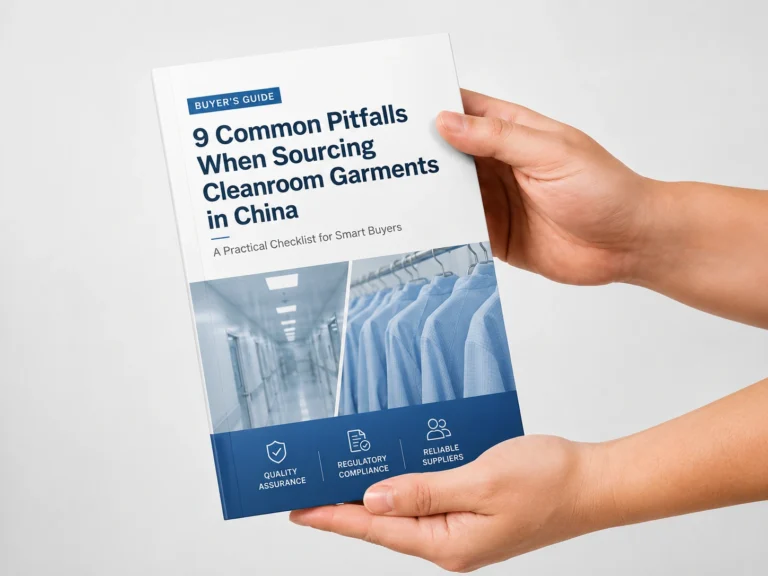
كيفية اختيار نظام ممسحة غرف الأبحاث لغرف الأبحاث GMP وISO
لاختيار أ نظام ممسحة غرف الأبحاث for GMP and ISO cleanrooms, buyers should first confirm the cleanroom classification, cleaning surface, sterility requirement, mop head material, disinfectant compatibility, bucket and wringer setup, documentation needs, and sample availability. A suitable system should match the facility SOP, contamination control strategy, and practical cleaning workflow rather than being selected only by price.
Start with the cleanroom zone, then define the cleaning surface, choose the mop head material, decide sterile or non-sterile, check disinfectant compatibility, select the bucket and wringer setup, and request samples or product information before bulk purchasing.
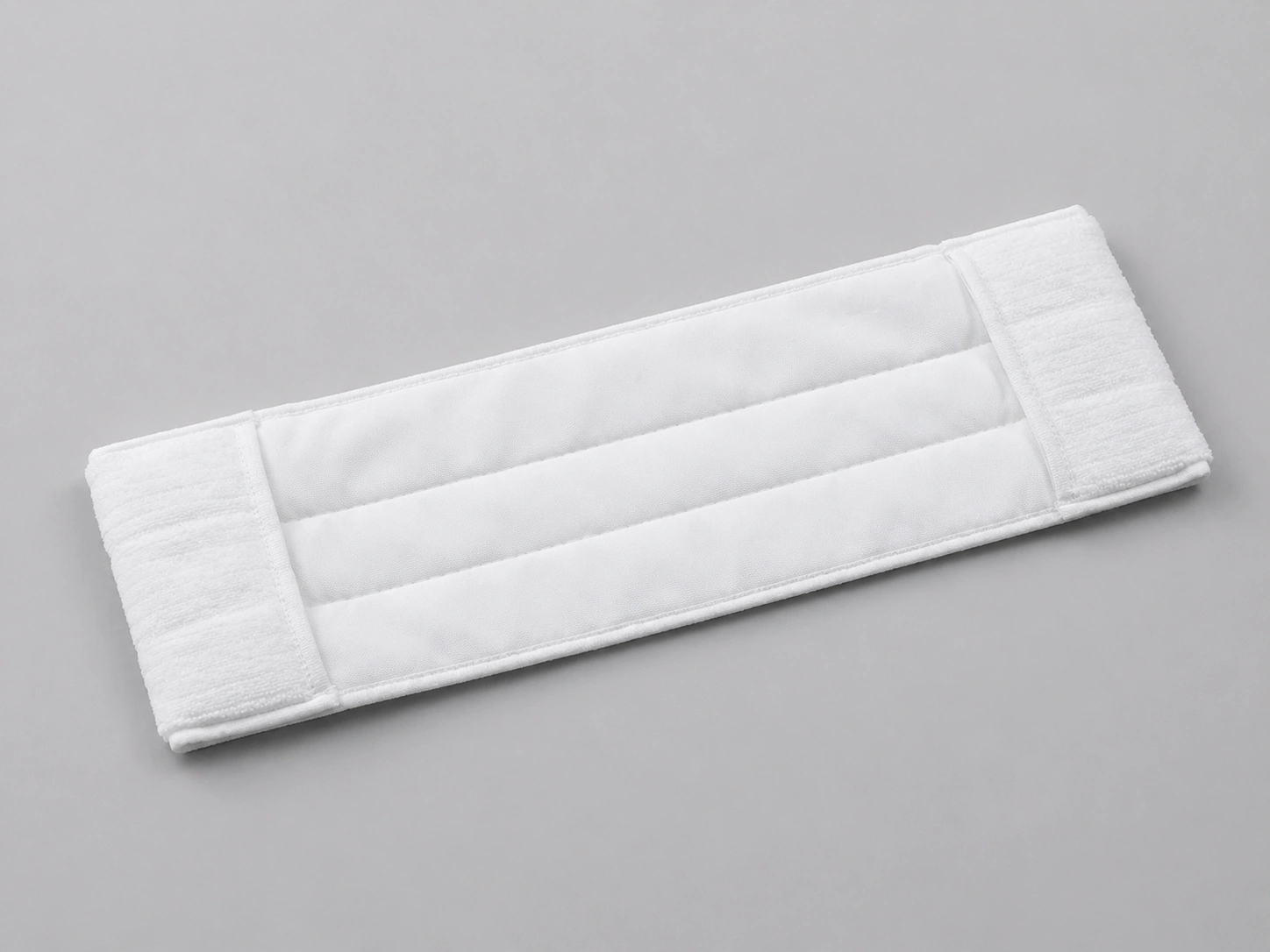
قائمة مراجعة الاختيار السريع لأنظمة ممسحة غرف الأبحاث
A cleanroom mop system should be selected as a workflow tool, not as a single product. The mop head, frame, handle, bucket, wringer, packaging, and supplier support should all fit the cleanroom procedure.
| عامل الاختيار | ما يجب التحقق منه | لماذا يهم؟ |
|---|---|---|
| تصنيف غرف الأبحاث | فئة ISO، درجة GMP، نوع المنطقة الخاضعة للرقابة | يحدد متطلبات سير عمل العقم والمواد والتنظيف |
| سطح التنظيف | الأرضية، الجدار، السقف، المعزل، سطح المعدات | قد تتطلب الأسطح المختلفة رؤوس ممسحة أو إطارات أو مقابض مختلفة |
| مادة رأس الممسحة | البوليستر، الألياف الدقيقة، الرغوة، غير المنسوجة | يؤثر على مستوى الوبر، والامتصاص، وأداء المسح، والتوافق الكيميائي |
| متطلبات العقم | وسادات ممسحة معقمة أو غير معقمة | يجب أن يتبع إجراءات التشغيل القياسية الخاصة بالمنشأة ومنطقة غرف الأبحاث ومتطلبات الجودة |
| إعداد الجرافة والعصارة | نظام دلو فردي أو مزدوج أو متحكم فيه | يدعم التحكم في السائل، وفصل المحلول المستخدم، وسير عمل المشغل |
| دعم الموردين | العينات، مواصفات المنتج، تفاصيل التعبئة والتغليف، موك، المهلة الزمنية | يساعد المشترين على تقييم ملاءمة المنتج قبل الشراء بالجملة |
عملية اختيار نظام ممسحة غرف الأبحاث خطوة بخطوة
تساعد القائمة المرجعية التالية المشترين في مجال B2B وفرق ضمان الجودة والموزعين وشركات خدمات غرف الأبحاث على مقارنة أنظمة الممسحة بشكل أكثر منهجية.
تأكيد تصنيف غرف الأبحاث ومنطقة GMP
The first step is to confirm where the mop system will be used. ISO-classified cleanrooms, GMP cleanroom zones, pharmaceutical areas, semiconductor fabs, laboratories, and medical device manufacturing rooms may each have different cleaning procedures.
Buyers should avoid choosing the same mop system for every area without reviewing the facility SOP. A mop system used in a routine controlled area may not be appropriate for a stricter contamination control workflow.
Define the Cleaning Surface
Cleanroom mop systems may be used on floors, walls, ceilings, isolators, equipment surfaces, gowning areas, and support rooms. The cleaning surface affects the mop head shape, frame type, handle length, and liquid control requirement.
For floor cleaning, buyers may focus on absorbency and wiping coverage. For walls and ceilings, lightweight frames and compatible handles become more important.
Choose the Right Mop Head Material
The mop head material affects lint level, absorbency, disinfectant compatibility, durability, and wiping performance. Common cleanroom mop materials include polyester, microfiber, foam, and nonwoven materials.
Polyester is commonly selected for stable low-lint wiping. Microfiber may be useful for fine surface contact. Nonwoven materials may support disposable workflows. Foam may be considered for controlled liquid application or smooth surface contact.
للحصول على تفاصيل تركز على المواد، راجع مقارنة مواد ممسحة غرف الأبحاث منخفضة الوبر.
قرر بين خيارات الممسحة المعقمة وغير المعقمة
Sterile cleanroom mops may be required in higher-risk cleanroom zones depending on the facility SOP, GMP grade, and quality requirements. Non-sterile mop pads may be suitable for routine controlled-area cleaning where sterile presentation is not required.
Buyers should confirm whether sterile packaging, gamma-irradiated mop pads, double-bagged presentation, or sterility information is needed before finalizing the product.
للحصول على خيارات معقمة، قم بزيارة ممسحة غرف الأبحاث المعقمة.
اختر رؤوس الممسحة التي يمكن التخلص منها أو القابلة لإعادة الاستخدام
Disposable cleanroom mop heads are often selected when facilities want simpler replacement, reduced laundering needs, and more controlled single-use workflows. Reusable mop heads may be suitable when a facility has validated laundering, drying, inspection, and storage procedures.
The right choice depends on cleaning frequency, contamination control requirements, internal validation workload, storage, labor cost, and total workflow cost.
للحصول على خيارات الاستخدام الفردي، راجع ممسحة غرف الأبحاث القابل للتصرف.
حدد تكوين الجرافة والعصارة والإطار والمقبض
A cleanroom mop system is not only the mop pad. The bucket, wringer, frame, handle, and optional trolley affect operator workflow, disinfectant handling, liquid control, and cleaning consistency.
Buyers should check whether the facility needs a single-bucket setup, double-bucket setup, wringer system, mobile trolley, adjustable handle, or specific frame for floor, wall, or ceiling cleaning.
مراجعة موارد MIDOSI ذات الصلة: دلو ممسحة غرفة الأبحاث والعصارةو إطارات ممسحة غرف الأبحاث، و مقابض ممسحة غرف الأبحاث.
تحقق من توافق المطهر
Mop head material, bucket material, frames, handles, and wringers should be compatible with the cleaning agents or disinfectants used in the facility.
Buyers should test samples with their own cleaning procedure when possible. This helps confirm absorbency, surface contact, handling comfort, and material behavior before bulk procurement.
طلب الوثائق والعينات ودعم الموردين
For B2B purchasing, buyers should ask suppliers for product specifications, packaging information, sterility information for sterile versions, sample availability, MOQ, lead time, and carton-level supply details.
قد تختلف احتياجات التوثيق حسب المنشأة. يجب على المشترين تأكيد المستندات المطلوبة مع فريق ضمان الجودة أو التحقق من الصحة أو فريق عمليات غرف الأبحاث.
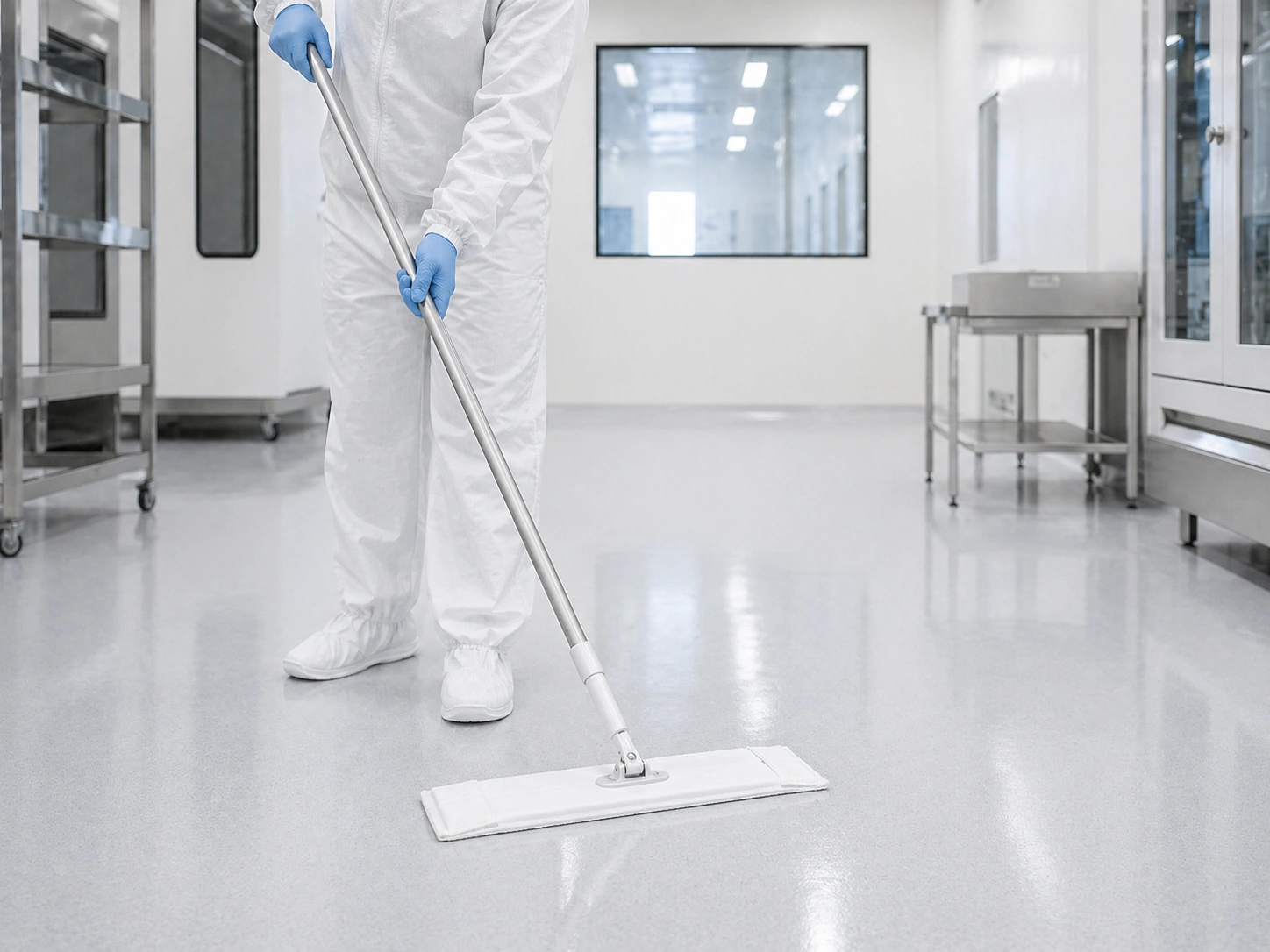
Match the Mop System to the Cleaning Workflow
A mop system that works well in one facility may not be the best fit for another. The correct choice depends on cleanroom classification, cleaning surface, SOP, operator workflow, disinfectant use, and replacement frequency.
- For floors: focus on absorbency, wiping coverage, mop pad size, and bucket workflow.
- For walls and ceilings: focus on frame compatibility, handle length, and operator comfort.
- For higher-risk zones: review sterile presentation, packaging, and internal quality requirements.
- For routine controlled areas: compare cost, replacement frequency, and non-sterile options where SOP allows.
Cleanroom Mop Head Material Selection Table
Mop head material should be selected according to lint level, absorbency, cleaning surface, disinfectant compatibility, and disposable or reusable workflow.
| مادة | Typical Strength | Common Use | Buyer Check |
|---|---|---|---|
| البوليستر | Low-lint wiping, stable material structure, chemical compatibility | Pharmaceutical, biotech, medical device, and ISO cleanroom cleaning | Check weight, layer structure, sterile option, and packaging |
| ستوكات | Fine surface contact and particle pickup | Controlled surface cleaning and precision cleaning workflows | Confirm disinfectant compatibility and lint performance |
| محبوكة | Disposable use and simple replacement | Single-use cleaning workflows and controlled-area replacement programs | Review cost per use, packaging, and supply stability |
| رغوة | Controlled liquid application and smooth surface contact | Surface wiping or specific liquid application tasks | Check absorbency, chemical compatibility, and application fit |
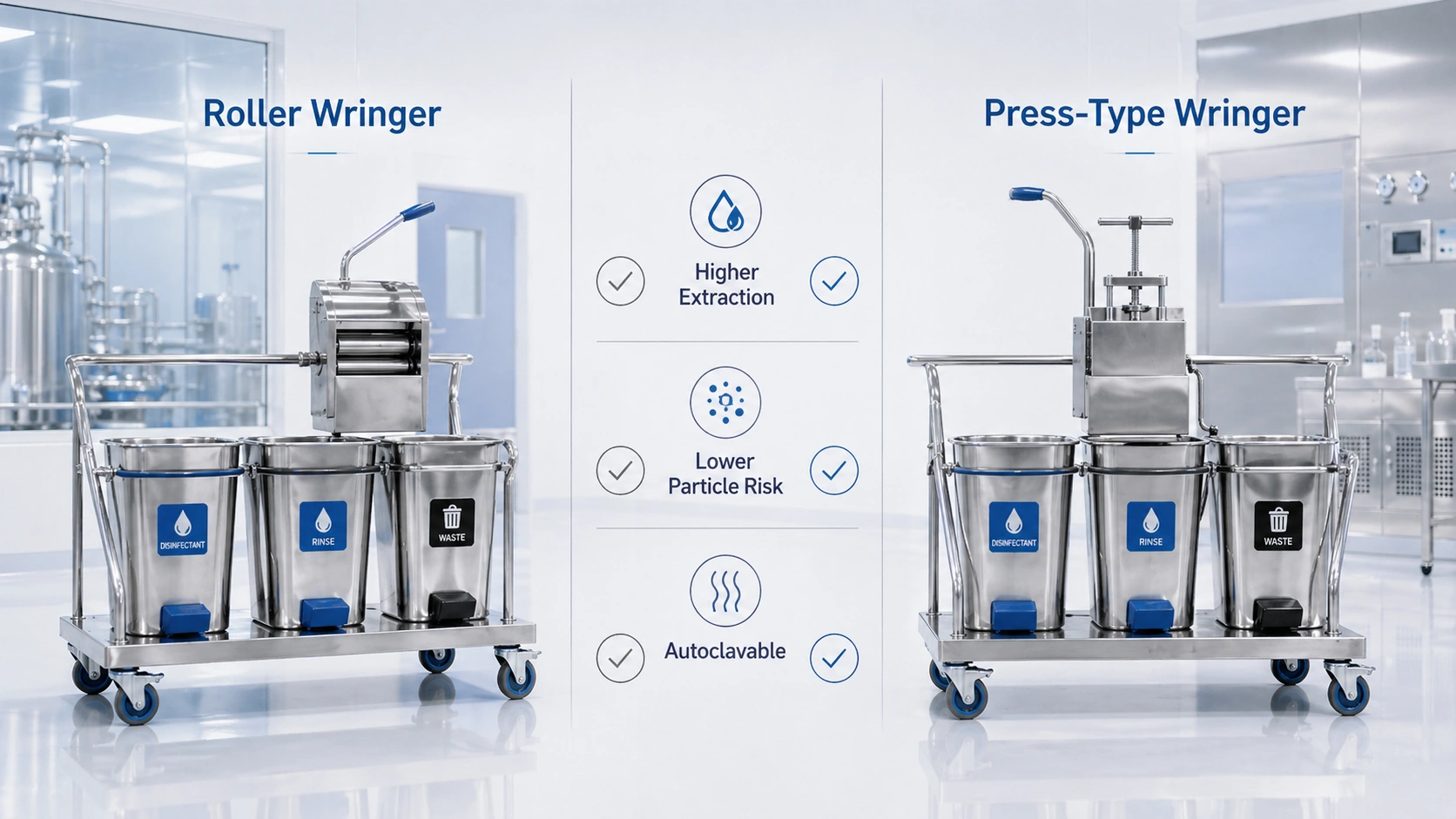
Bucket and Wringer Configuration: What Should Buyers Check?
The bucket and wringer setup affects how cleaning solution is handled, how much liquid remains on the mop head, and how operators separate clean and used solution during cleaning.
For a simple controlled-area workflow, a basic bucket setup may be enough. For more controlled procedures, buyers may compare double-bucket systems, wringer types, mobile carts, and separation of cleaning and rinse steps.
جدول اختيار نظام ممسحة غرف الأبحاث حسب التطبيق
يساعد الجدول التالي المشترين على مقارنة احتياجات نظام ممسحة غرف الأبحاث حسب منطقة التطبيق.
| منطقة التطبيق | التركيز الموصى به | متطلبات المفتاح | قلق المشتري النموذجي |
|---|---|---|---|
| غرف الأبحاث الصيدلانية | وسادات ممسحة معقمة أو غير معقمة حسب إجراءات التشغيل القياسية | مكافحة التلوث والتعبئة والتغليف والتوثيق | ما هو خيار الممسحة الذي يناسب سير عمل التنظيف GMP؟ |
| إنتاج التكنولوجيا الحيوية | رؤوس ممسحة منخفضة الوبر مع سير عمل دلو متوافق | توافق المطهر واتساق التنظيف | هل يمكن اختبار العينات في المنشأة؟ |
| مصانع أشباه الموصلات | Low-lint mop material and controlled surface cleaning | Particle and fiber control | Is the material suitable for sensitive production environments? |
| تصنيع الأجهزة الطبية | Disposable or reusable low-lint mop options | Consistent replacement and controlled surface cleaning | Can the supplier support stable supply? |
| المختبرات | Polyester, microfiber, or foam mop system | Chemical compatibility and ease of use | Which material works with the cleaning agents? |
| Cleanroom service companies | Complete mop system with mop heads, handles, frames, buckets, and wringers | Operational efficiency across multiple sites | Can the supplier support MOQ, samples, and repeat orders? |
Recommended MIDPOSI Cleanroom Mop Options
MIDPOSI White Cleanroom Mop Series includes 40g, 55g, and 65g disposable mop pad options in sterile and non-sterile versions. The series is designed for controlled cleaning workflows where buyers need clear options by weight, sterility, and cleaning workload.
| Option | الأفضل ل | Typical Buyer Need |
|---|---|---|
| ممسحة خفيفة 40 جرام | Lightweight routine cleaning | Easier handling and cost-efficient disposable use |
| ممسحة متوسطة الحجم 55 جرام | Balanced cleanroom cleaning performance | A middle option between light and heavy-duty cleaning |
| ممسحة شديدة التحمل بوزن 65 جرامًا | Higher absorbency and stronger wiping coverage | More demanding controlled cleaning tasks |
| النسخة العقيمة | Workflows requiring sterile presentation | Confirm SOP, packaging, and sterility needs |
| Non-Sterile Version | Routine controlled-area cleaning | Useful where SOP allows non-sterile mop pads |
Questions to Ask Before Buying a Cleanroom Mop System
Before selecting a supplier, B2B buyers should ask practical questions that connect product specifications with actual cleanroom use.
Technical Questions
- Are the mop heads low-lint?
- What materials are available?
- Are sterile and non-sterile options available?
- What cleaning surfaces are supported?
- Can the mop be used with the facility’s disinfectants?
- Is the mop compatible with existing frames or handles?
Commercial Questions
- Are samples available for testing?
- Can product specifications be provided?
- What are the packaging options?
- What is the MOQ?
- What is the lead time?
- Can the supplier support distributors, importers, or cleanroom service companies?
Why B2B Buyers Work with MIDPOSI
MIDPOSI provides cleanroom mop systems and disposable cleanroom mop pads for controlled environments, including pharmaceutical, biotechnology, semiconductor, medical device, laboratory, and cleanroom service applications.
Cleanroom Mop Options
40g, 55g, and 65g mop pad options for different cleaning workloads and procurement needs.
معقمة & غير معقمة
Options for workflows requiring sterile presentation and routine controlled-area cleaning.
B2B Support
Sample support, product information, packaging details, and inquiry support for distributors and facility teams.
For application-specific resources, review ممسحة غرف الأبحاث الصيدلانيةو biotech cleanroom mop، و semiconductor cleanroom mop.
FAQ: Choosing a Cleanroom Mop System
كيف أختار نظام ممسحة غرف الأبحاث؟
Start by confirming the cleanroom classification, cleaning surface, sterility requirement, mop head material, disinfectant compatibility, bucket and wringer setup, documentation needs, sample availability, MOQ, and lead time.
What should be included in a cleanroom mop system?
A cleanroom mop system may include mop heads, frames, handles, buckets, wringers, trolleys, and sterile or non-sterile mop pad options. The exact configuration should follow the facility’s SOP and cleaning workflow.
Do GMP cleanrooms always need sterile mop pads?
Not always. Sterile mop pads may be required in higher-risk areas depending on the facility SOP, GMP grade, and quality requirements. Non-sterile mop pads may be suitable for routine controlled-area cleaning where the SOP allows.
Which cleanroom mop material should buyers choose?
Buyers should compare polyester, microfiber, foam, and nonwoven materials by lint level, absorbency, chemical compatibility, sterile availability, disposable or reusable format, and cleaning surface.
Should buyers choose disposable or reusable cleanroom mops?
Disposable mops are often selected for simpler replacement and reduced laundering needs. Reusable mops may be suitable when the facility has controlled laundering, drying, inspection, and storage procedures.
What information should buyers request before purchasing?
Buyers should request product specifications, material details, sterile or non-sterile options, packaging information, sample availability, MOQ, lead time, and compatibility with the facility’s cleaning procedure.
Need Help Choosing a Cleanroom Mop System?
Contact MIDPOSI to discuss cleanroom mop heads, mop bucket and wringer systems, sterile or non-sterile options, and sample availability for your GMP or ISO cleanroom workflow.