Standardized procedure for surface disinfection, contact time management, and audit-ready documentation.
ScopeGrade A/B/C/D
امتثالAnnex 1 / GMP
هدفQA & Operations
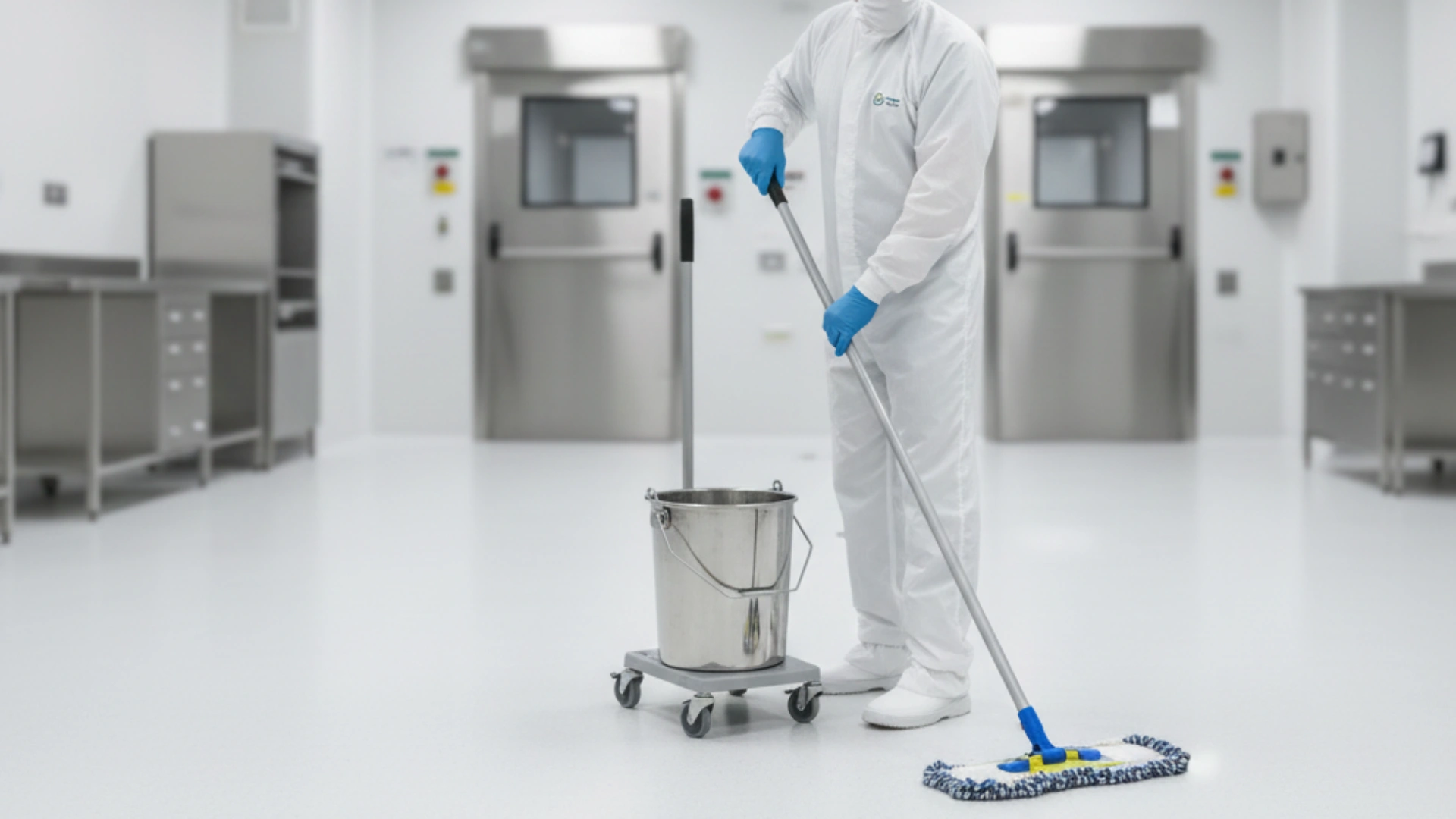
Feature visual: GMP-grade cleanroom mop cleaning SOP — sterile handling, contact time, and audit-ready execution.
1. SOP Overview: Scope and Personnel
Thiscleanroom mop SOPdefines the standardized methodology for floor and wall disinfection within classified life science environments. Adherence ensures consistent bioburden reduction and prevents cross-contamination between cleanroom grades.
Personnel:Only personnel successfully trained in cleanroom gowning and aseptic technique may perform this SOP.
Frequency:As per the site-specific Master Cleaning Schedule (MCS).
Control:This document is a controlled reference; all updates must undergo QA impact assessment viasupplier-aligned change control.
2. Materials & Preparation
Success in cleanroom disinfection starts with material integrity. Preparation must occur in a controlled manner prior to entering the critical zone.
Mop Selection:Use sterile, double-bagged polyester or microfiber mops for Grade A/B. Verifybatch-level documentationbefore use.
Disinfectant:Prepare agents (IPA, Quats, Peroxides) according to the validated concentration specified in the site SDS.
Saturation:Ensure mops are adequately wetted but not dripping. For pre-saturated mops, follow the "first-in, first-out" (FIFO) logic to maintain chemical efficacy.
Thepharmaceutical cleaning procedure moptechnique focuses on removing contaminants rather than redistributing them. Avoid "scrubbing" motions which can generate particles.
Core Principle:Always clean from the cleanest area to the least clean area (e.g., Grade A → Grade B, or Ceiling → Floor).
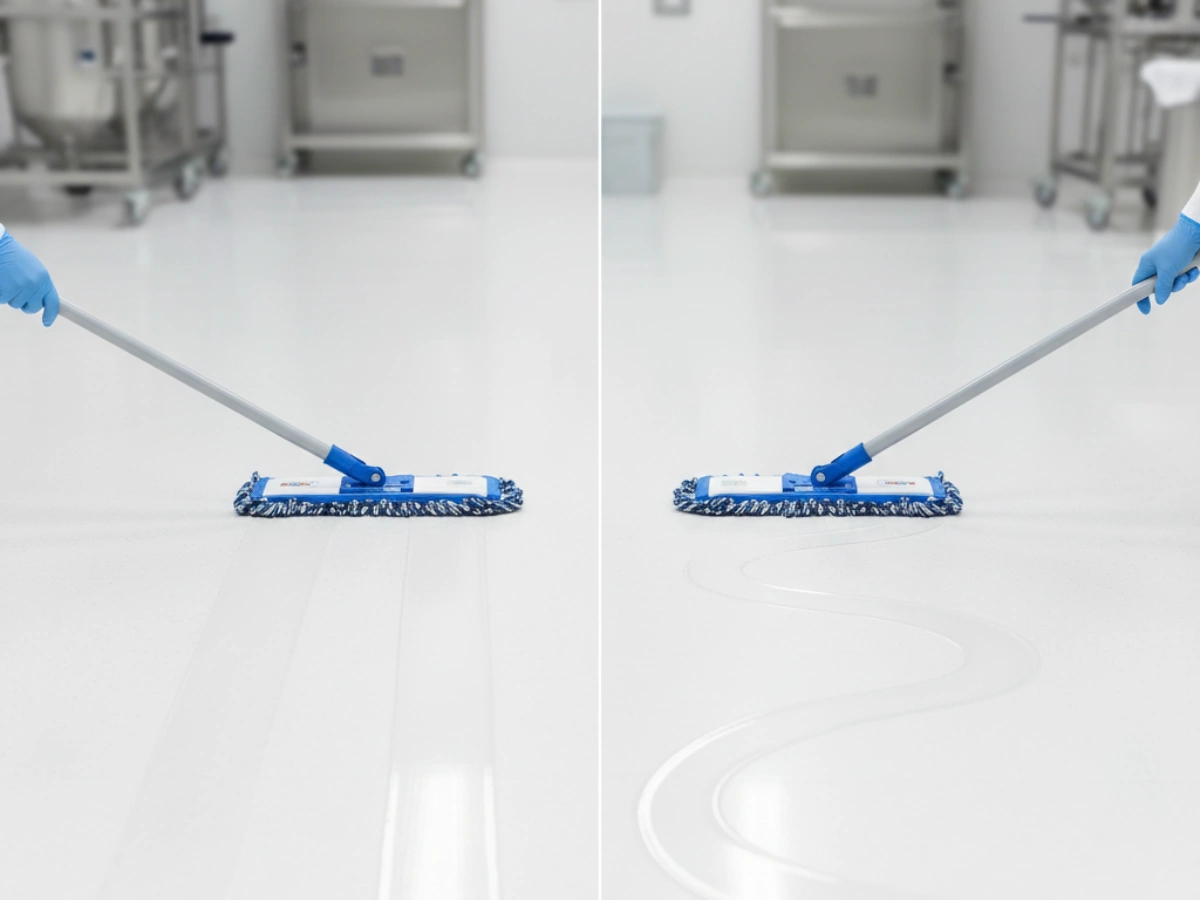
Unidirectional Strokes:Use long, straight strokes. Each new stroke must overlap the previous one by approximately 20%.
"S" Pattern:When using a swivel mop head, maintain a continuous "S" motion to capture particles at the leading edge.
Changeover Frequency:Change the mop head every 15–20 m² or whenever visible soiling is present. Never return a contaminated mop to a clean disinfectant bucket.
Wiping technique: overlapping, controlled strokes reduce redistribution and support consistent outcomes.
4. Disinfectant Contact Time & Rotation
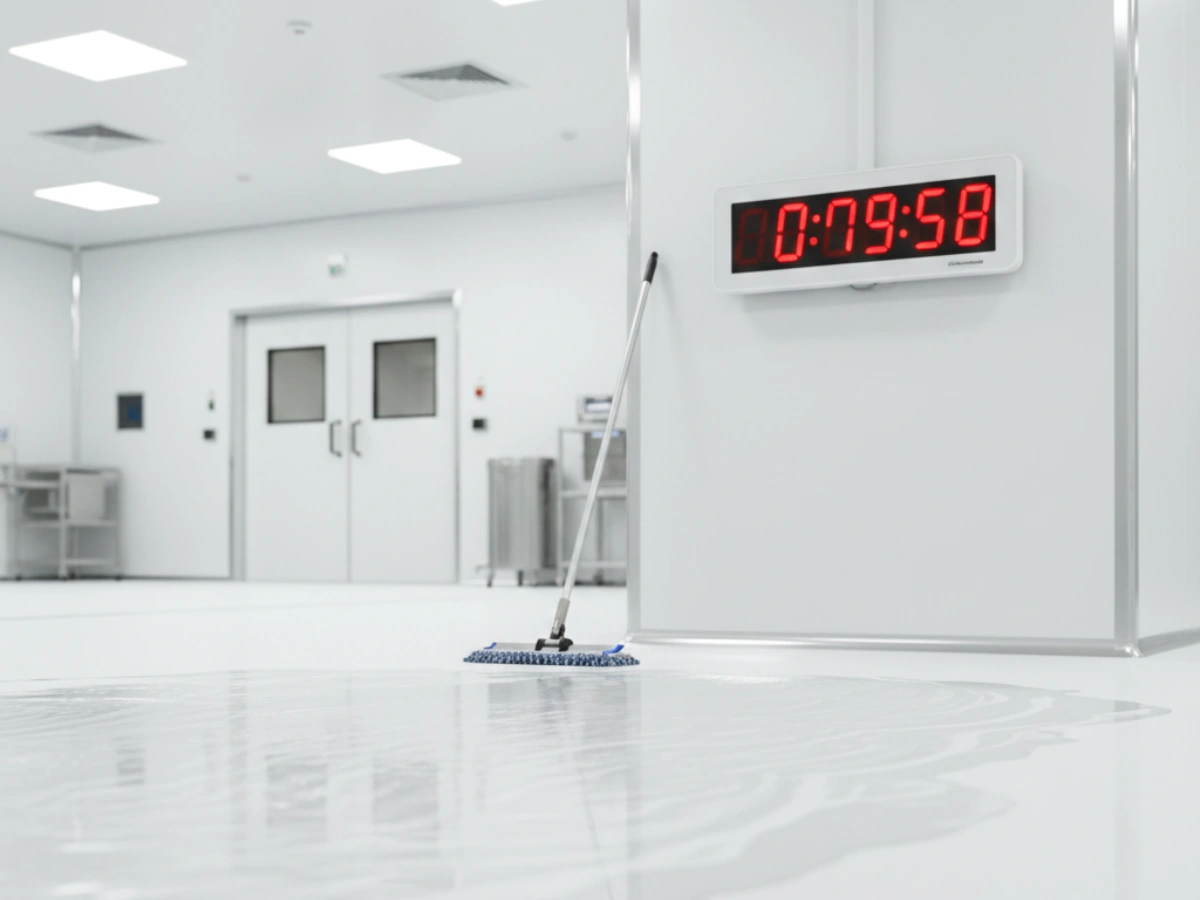
Disinfection is a chemical reaction requiring time. Surfaces must remain visibly wet for the full duration of thedisinfectant contact timevalidated by the facility.
Agent Type
Typical Target
Contact Time (Ref.)
70% Sterile IPA
Vegetative Cells
Remain wet; allow to air dry
Quaternary Ammonium
Broad Spectrum
10 Minutes (Site Validated)
Sporicidal (H2O2/PA)
Bacterial Spores
5–10 Minutes (Rotation)
Rotation Logic:Perform a weekly or monthly sporicidal "hit" to prevent the development of resistant microflora, documenting each cycle in the cleaning log.
Contact time: keep surfaces visibly wet for the full validated duration to achieve intended kill efficacy.
5. Sterile Handling & Aseptic Transfer
In high-grade zones, thesterile mop proceduremust include strict transfer protocols:
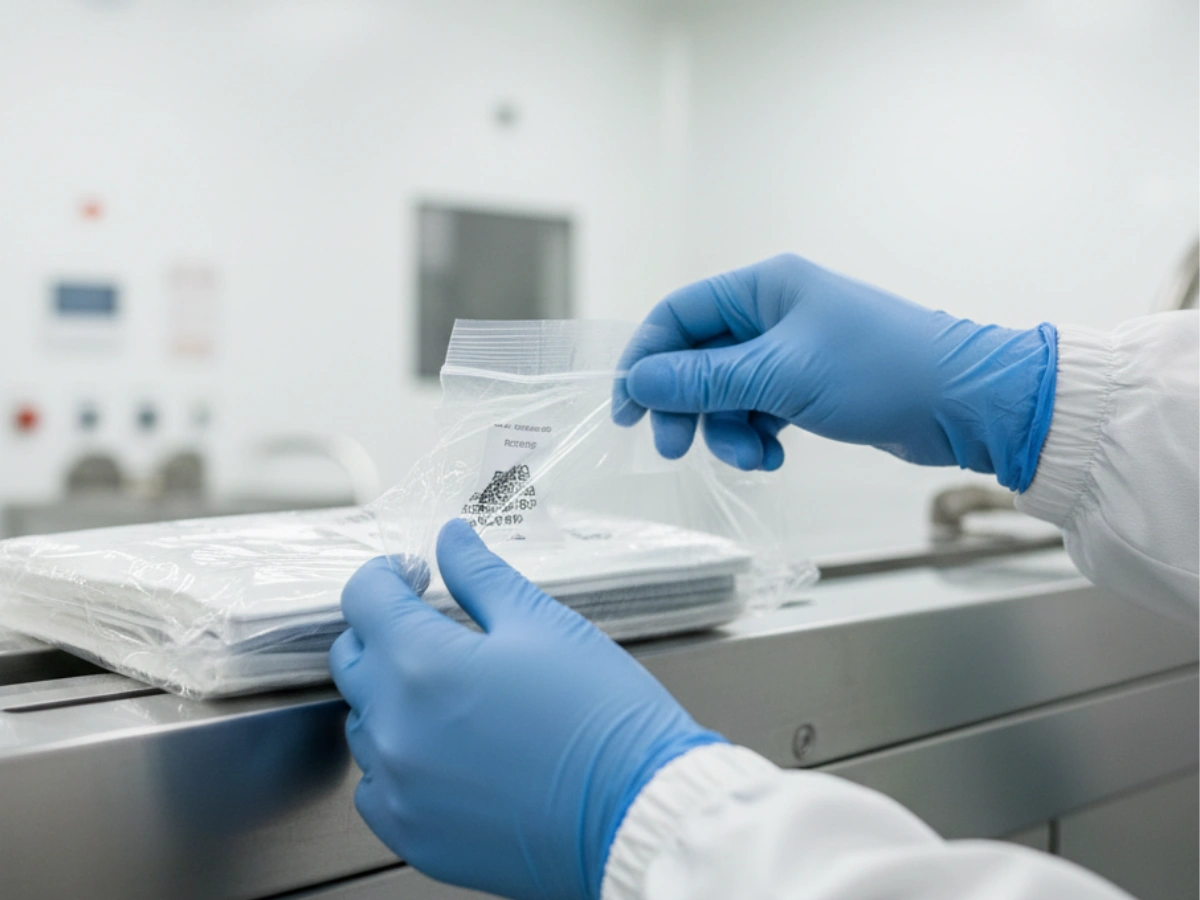
Opening:Use "peel-back" methods to remove the outer bag at the airlock boundary. The inner bag is removed only within the cleanroom.
Isolation:If a mop head touches the floor accidentally (when cleaning walls) or contacts a non-sterile surface, it must be discarded immediately.
Gloving:Sanitize gloves with sterile IPA after every mop head change.
Aseptic transfer: controlled peel-back and inner-bag handling reduces contamination risk at the boundary.
6. Documentation & Records (Audit-Ready)
In the eyes of a GMP auditor, "if it isn't documented, it didn't happen." Every cleaning session must be recorded with 100% traceability.
Logbook Fields:Room ID, date/time, disinfectant lot number,mop batch number, and operator signature.
Second Person Verification:Grade A cleaning must be witnessed and co-signed by a supervisor or QA lead.
Deviation Management:Record any EM (Environmental Monitoring) excursions or instances where contact time was not met, initiating a CAPA if necessary.
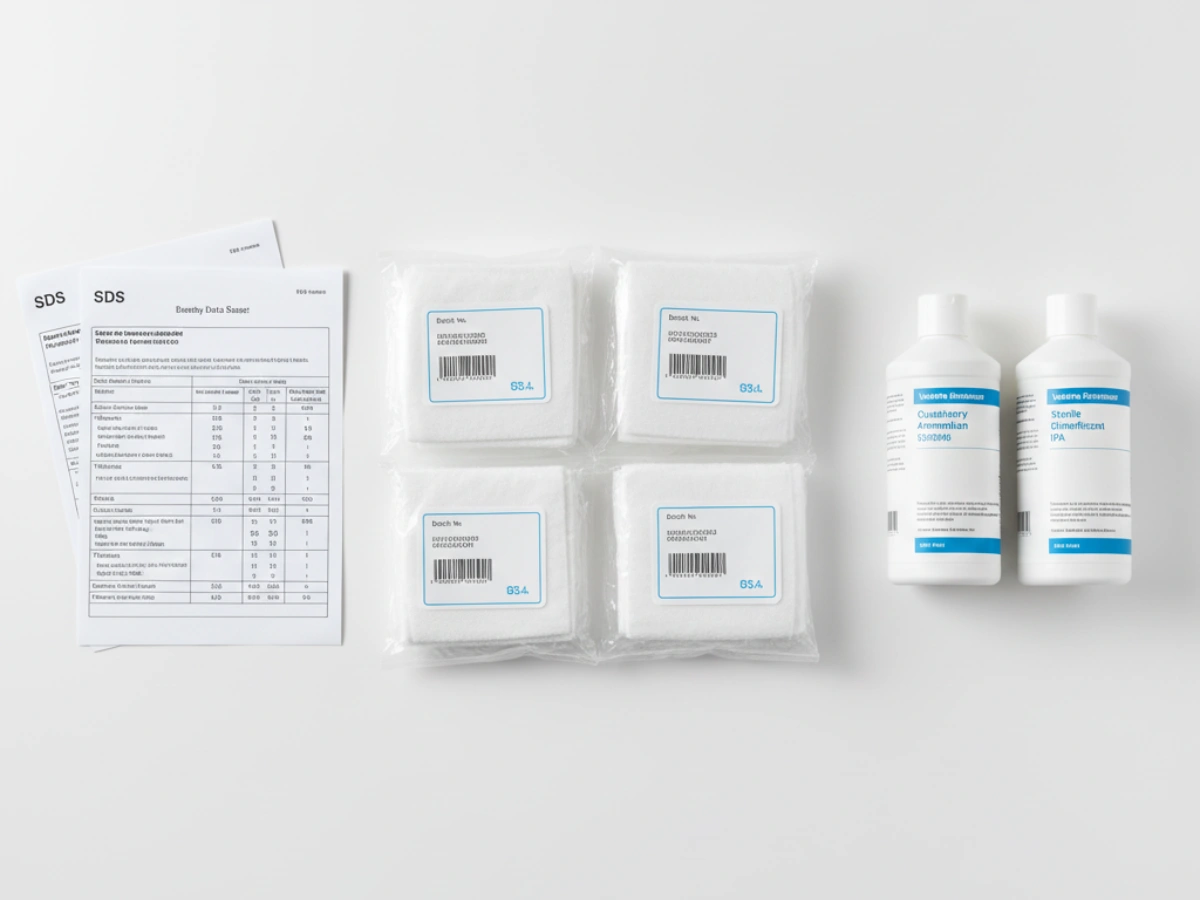
Audit-ready records: link cleaning execution to disinfectant lots and mop batch numbers for traceable evidence.
7. Training & Visual Aids
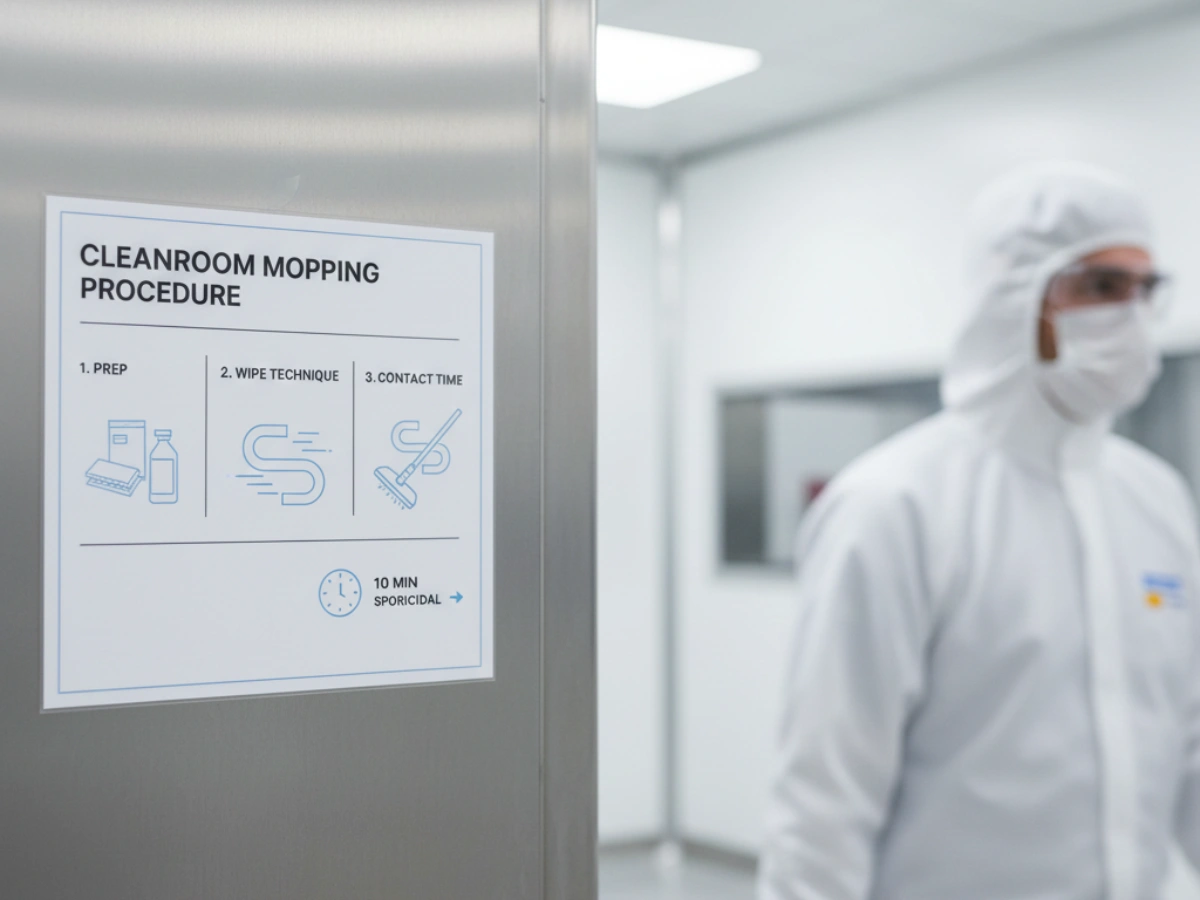
To ensure SOP compliance, facilities should post "SOP Quick Cards" at gowning exits. These cards should visually demonstrate the stroke pattern and list required contact times.
Audit Tip:Ensure all cleaning staff have a current training certificate on file specifically for this SOP version.
المساعدات البصرية: تعمل البطاقات المرجعية السريعة على تعزيز التقنية وقواعد التغيير ومتطلبات وقت الاتصال التي تم التحقق منها.
تعزيز امتثال موقعك
قم بتنزيل حزمة التحقق الفني الخاصة بنا لمواءمة إجراءات التشغيل القياسية (SOP) الخاصة بك مع ضوابط تصنيع الممسحة المعقمة لدينا.