
يضع إجراء التشغيل القياسي هذا نهجًا قائمًا على المخاطر للمراقبة البيئية في غرف الأبحاث GMP، ويغطي اختيار موقع EM، وإجراءات أخذ العينات، وتكرار المراقبة، وحدود التنبيه والإجراء، والاتجاه، وCAPA، والتحكم في التغيير، والتدريب.
إنه مصمم للأدوية والتكنولوجيا الحيوية والأجهزة الطبية ومرافق التصنيع الخاضعة للرقابة التي تحتاج إلى برنامج مراقبة بيئية موثق ويمكن الدفاع عنه يتماشى مع مخاطر الغرف النظيفة وأهمية العمليات وتوقعات التحكم في التلوث.

تساعد إجراءات التشغيل المعيارية (SOP) للمراقبة البيئية القائمة على المخاطر غرف الأبحاث GMP في الحفاظ على التحكم الميكروبيولوجي من خلال تحديد مواقع المراقبة وطرق أخذ العينات والترددات وحدود التنبيه ومستويات العمل وقواعد الاتجاه وسير عمل CAPA بناءً على مخاطر التلوث.
استخدم نموذج المخاطر المنظم لتحديد أولويات نقاط المراقبة حسب نشاط الموظفين، واضطراب تدفق الهواء، والقرب من الدرجة الأولى، ونقل المواد، ومعدل التنبيه التاريخي.
قم بمواءمة طرق المراقبة والترددات مع درجة غرف الأبحاث ودرجة المخاطر وأهمية العملية.
بيانات مراقبة الاتجاه بشكل مستمر وتحديد استجابات التنبيه والإجراءات قبل حدوث الرحلات.
ربط التنبيهات بالتحقيق الموثق، وتحليل السبب الجذري، والإجراءات التصحيحية، والتحقق من الفعالية.
التحكم في جميع تغييرات برنامج EM من خلال التحكم في التغيير المعتمد من ضمان الجودة والتدريب الدوري.
| إصدار | تاريخ | وصف | أُعدت بواسطة | تمت الموافقة عليه بواسطة |
|---|---|---|---|---|
| 1.0 | 2026-03-23 | القضية الأولية | ضمان الجودة | مدير الجودة |
يضع إجراء التشغيل المعياري (SOP) هذا نهجًا قائمًا على المخاطر للمراقبة البيئية (EM) في غرف الأبحاث GMP. والغرض من ذلك هو ضمان بقاء بيئات غرف الأبحاث ضمن الحدود الميكروبيولوجية المحددة، وتوفير إطار منهجي لاختيار موقع EM، وإنشاء ترددات مراقبة مناسبة لمستويات المخاطر، وتحديد إجراءات أخذ العينات والتحليل وإدارة البيانات، ودعم الامتثال للملحق 1 لممارسات التصنيع الجيدة للاتحاد الأوروبي، وFDA cGMP، وتوقعات تشغيل غرف الأبحاث المستندة إلى ISO.
ملاحظة ميدبوسي: ترتبط نتائج المراقبة البيئية ارتباطًا وثيقًا بتنفيذ التنظيف، والانضباط في ارتداء الملابس، وأدوات غرف الأبحاث، والمواد الاستهلاكية للتحكم في التلوث. للتعرف على عناصر التحكم في التنظيف ذات الصلة، راجع دليل MIDPOSI تنظيف ممسحة غرف الأبحاث الصيدلانية SOP.
| شرط | تعريف |
|---|---|
| أخذ عينات الهواء النشطة | أخذ عينات الهواء الحجمية باستخدام أجهزة الارتطام أو أجهزة أخذ العينات الشقية أو غيرها من الأجهزة المؤهلة لالتقاط الكائنات الحية الدقيقة المحمولة جواً. |
| مستوى التنبيه | مستوى محدد من التلوث الميكروبي يشير إلى احتمال الانحراف عن ظروف التشغيل العادية. |
| مستوى العمل | مستوى محدد من التلوث الميكروبي يتطلب التحقيق والاستجابة الموثقة والإجراءات التصحيحية. |
| المنطقة الحرجة | منطقة من الدرجة "أ" أو المنطقة الأكثر خطورة حيث قد تحدث عمليات معقمة أو التعرض المباشر للمنتج. |
| مصفوفة موقع EM القائمة على المخاطر | أداة منظمة لتقييم المخاطر لتسجيل مواقع EM بناءً على النشاط وتدفق الهواء وحركة المواد والقرب من العمليات الحرجة والبيانات التاريخية. |
| لوحة التسوية | لوحة أجار مغذية مكشوفة للبيئة لمراقبة الهواء السلبي خلال فترة تعرض محددة. |
| كابا | يتم استخدام الإجراءات التصحيحية والوقائية لمعالجة حالات فشل نظام الجودة المؤكدة أو المحتملة. |
| دور | المسؤوليات |
|---|---|
| مدير ضمان الجودة | الموافقة الشاملة على برنامج EM، ومراقبة التغيير، والامتثال التنظيمي، ومراجعة الانحراف، وموافقة CAPA. |
| مدير الأحياء الدقيقة | تنفيذ برنامج EM، وتأهيل الطريقة، ومراجعة العينات، ودعم التحقيق، والإشراف على التدريب. |
| فني ميكروبيولوجي | جمع العينات، والحضانة، وقراءة المستعمرة، وإدخال البيانات، والإخطار الفوري بنتائج التنبيه أو الإجراء. |
| مدير الإنتاج | صيانة تشغيل غرف الأبحاث، ومراقبة سلوك الموظفين، والامتثال للملابس، ودعم الإنتاج أثناء التحقيقات. |
| مدير الهندسة | صيانة التدفئة والتهوية وتكييف الهواء (HVAC)، والتحقق من نمط تدفق الهواء، ودعم سلسلة الضغط، وإجراءات CAPA المتعلقة بالهندسة. |
| مدير مراقبة الجودة | مراجعة البيانات وتحليل الاتجاهات وتقييم التنبيهات المتكررة والدعم الفني لتحليل السبب الجذري. |
يجب اختيار جميع مواقع المراقبة البيئية باستخدام إطار التقييم القائم على المخاطر. الهدف هو تركيز كثافة أخذ العينات على المناطق ذات مخاطر التلوث العالية، والتعرض العالي للمنتج، والمزيد من نشاط الأفراد، واضطراب أقوى في تدفق الهواء، وتاريخ التنبيه المتكرر.
RISK SCORE = (Personnel Activity × 0.30) + (Airflow Disturbance × 0.25)
           + (Proximity to Critical Zone × 0.20) + (Material Transfer × 0.15)
           + (Historical Alert Rate × 0.10)
نطاق النتيجة: 0-100. يجب مراجعة النتيجة أثناء التأهيل الأولي لغرفة الأبحاث، وبعد تغييرات التخطيط، وبعد تغييرات كبيرة في العملية، وأثناء المراجعة الدورية لبرنامج EM.
| درجة المخاطرة | تصنيف | المراقبة مطلوبة |
|---|---|---|
| 80-100 | شديد الأهمية | مطلوب مراقبة مستمرة أو عالية التردد. |
| 60-79 | عالي | مراقبة الموقع الثابت مرة واحدة على الأقل لكل نوبة عمل أو لكل فترة إنتاج محددة. |
| 40-59 | معتدل | المراقبة الدورية، أسبوعيًا عادةً أو بناءً على تكرار العملية. |
| 20-39 | قليل | المراقبة الدورية، عادةً ما تكون شهرية أو أثناء التحقق الروتيني. |
| 0-19 | الحد الأدنى | قد لا تكون المراقبة مطلوبة ما لم تكن هناك تغييرات في المخاطر أو تشير بيانات الاتجاه إلى القلق. |
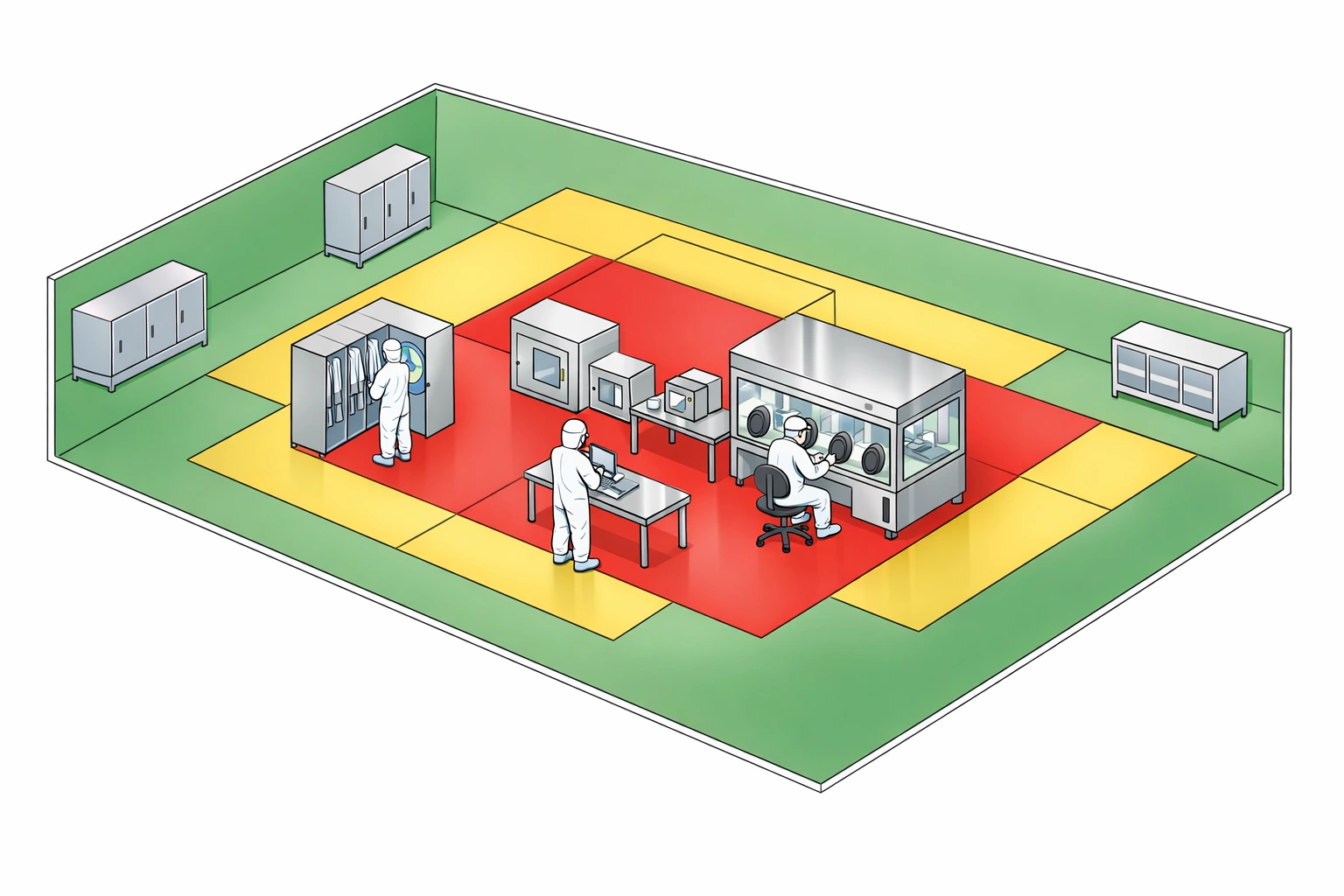
يجب تعيين مواقع أخذ العينات وتكراراتها وفقًا لدرجة غرفة الأبحاث ودرجة المخاطر ومخاطر تعرض المنتج ومعدل التنبيه التاريخي وحركة المرور التشغيلية. تتطلب المناطق ذات الدرجة الأعلى ترددًا أكثر إحكامًا وتبريرًا أقوى وتحملًا أقل للانطلاق.
| غرف الأبحاث الصف | أولوية EM النموذجية | منطق أخذ العينات |
|---|---|---|
| الصف أ | شديد الأهمية | مراقبة المناطق الحرجة والتدخلات المعقمة ونقاط التعبئة ومناطق المنتج المكشوفة والمواقع المتأثرة بشكل مباشر بالهواء الأول. |
| درجة ب | عالي | مراقبة البيئة الخلفية حول الدرجة الأولى وطرق حركة الأفراد ونقاط النقل ومناطق التدخل. |
| الصف ج | معتدل | مراقبة مناطق الدعم وغرف التحضير ومناطق تجهيز المعدات ومناطق حركة المواد. |
| الصف د | منخفضة إلى متوسطة | مراقبة مناطق الدعم منخفضة المخاطر، وممرات الدخول، ومناطق التدريج، والمواقع ذات سجل التنبيه المتكرر. |
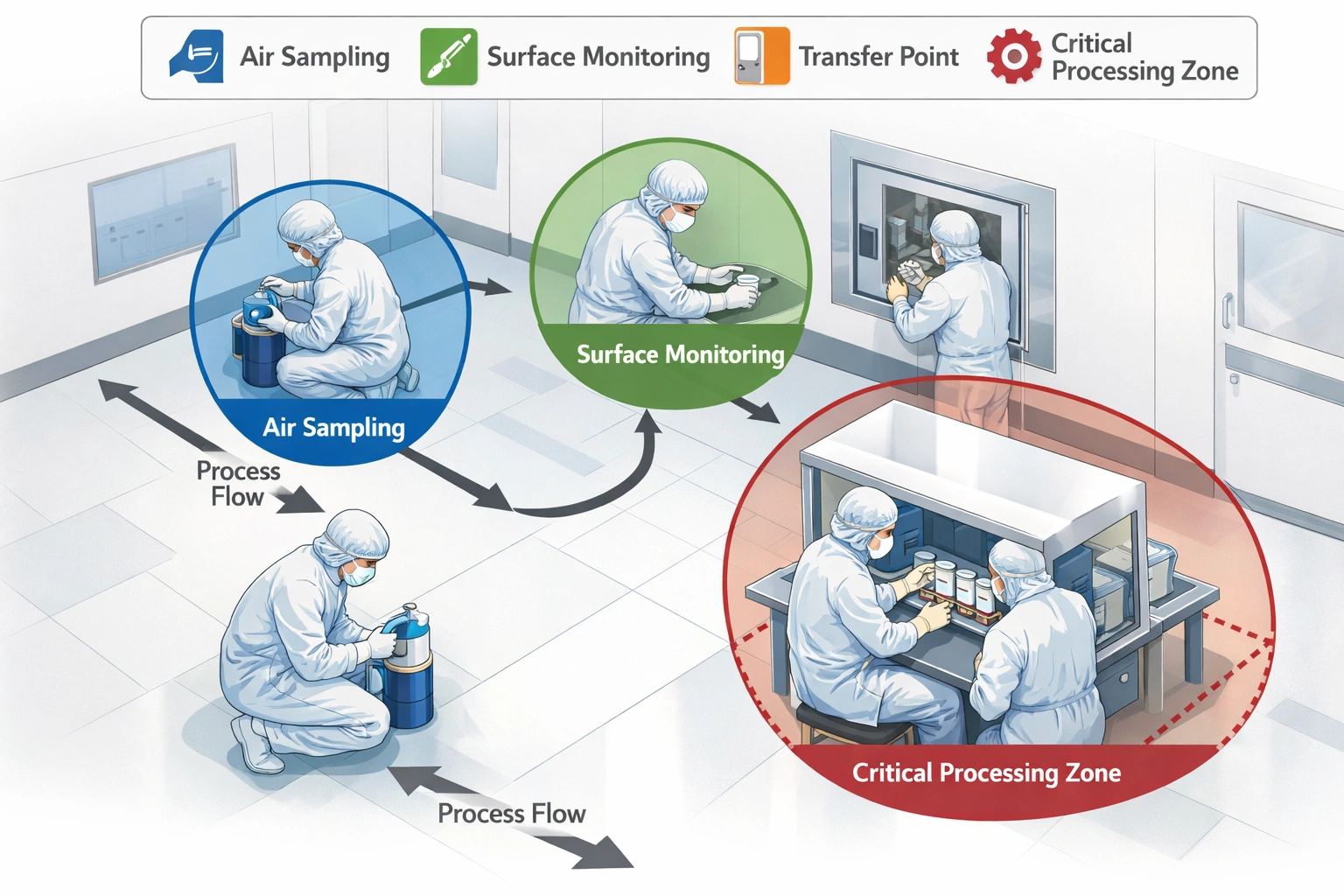
| معدات | مواصفة | التنسيب | معدل التدفق | مدة |
|---|---|---|---|---|
| جهاز أخذ عينات SAS أو جهاز أخذ عينات الهواء المؤهل | جهاز أحادي المرحلة أو معتمد من المنشأة | بالقرب من السطح الحرج دون تعطيل تدفق الهواء في العملية | لكل مؤهل المعدات | لكل خطة أخذ العينات ودرجة المنطقة |
| نوع اللوحة | مقاس | التنسيب | وقت التعرض | ارتفاع |
|---|---|---|---|---|
| TSA | 90 ملم | تحت أو بالقرب من نقطة المراقبة المحددة | لكل SOP أو مدة العملية | ممثل ارتفاع العمل |
| SDA | 90 ملم | بجوار نقطة المراقبة المحددة | لكل SOP أو مدة العملية | ممثل ارتفاع العمل |
يجب أن تركز مراقبة الأسطح على المناطق المجاورة لملامسة المنتج، ونقاط النقل، والأسطح التي يتم لمسها بشكل متكرر، وواجهات المعدات، والأرضيات القريبة من المناطق ذات حركة المرور العالية، والمواقع ذات اتجاهات التنبيه التاريخية. يجب أن تشمل مراقبة الموظفين القفازات أو أكمام الرداء أو الصدر أو الساعدين أو أي مواقع أخرى محددة بالموقع بناءً على مخاطر ارتداء الملابس والنشاط المعقم.
يمكن أن تتأثر نتائج مراقبة السطح بأدوات تنظيف الأرضيات وتقنية المشغل. يمكن أيضًا تقييم المرافق التي تقوم بمراجعة الرحلات المتكررة المتعلقة بالطابق أنظمة الممسحة المسطحة في غرف الأبحاثو ممسحات غرف الأبحاث من الألياف الدقيقة، و وثائق التحقق من صحة ممسحة غرف الأبحاث.
يجب تعيين تكرار المراقبة وفقًا لدرجة غرفة الأبحاث ودرجة المخاطر وأهمية العملية وأداء الاتجاه التاريخي. تتطلب المواقع الحرجة والعالية المخاطر مراجعة مستمرة أو مرة واحدة لكل نوبة عمل، بينما قد تستخدم المواقع المعتدلة والمنخفضة المخاطر جداول أسبوعية أو شهرية متناوبة.
| فئة المخاطر | التردد النموذجي | مواقع المثال |
|---|---|---|
| شديد الأهمية | مستمر، لكل دفعة، أو لكل عملية | المناطق الحرجة من الدرجة الأولى، والتدخلات المعقمة، ومناطق المنتجات المعقمة المكشوفة |
| عالي | كل وردية أو كل يوم إنتاج | خلفية من الدرجة B، نقاط نقل، أسطح عالية اللمس |
| معتدل | جدول أسبوعي أو متناوب | غرف دعم من الدرجة C، ومناطق التحضير، ومناطق تخزين المعدات |
| قليل | التحقق الشهري أو الدوري | ممرات من الدرجة D، ومناطق دعم التخزين، والمناطق ذات الحركة المرورية المنخفضة |

تشير حدود التنبيه إلى الانحراف المحتمل عن ظروف التشغيل العادية وتحفيز المراجعة. تتطلب مستويات العمل تحقيقًا فوريًا، وتقييم تأثير المنتج حيثما كان ذلك مناسبًا، واتخاذ الإجراءات التصحيحية، ومراجعة الفعالية. يجب أن تتماشى الحدود مع درجة غرفة الأبحاث ونوع العينة وأهمية العملية والقدرة التاريخية والتوقعات التنظيمية.
| مستوى | معنى | الاستجابة النموذجية |
|---|---|---|
| مستوى التنبيه | إنذار مبكر من الانحراف المحتمل عن الظروف العادية. | توثيق ومراجعة الاتجاه وإخطار الوظيفة المسؤولة والنظر في المراقبة المحسنة. |
| مستوى العمل | حالة مؤكدة غير مقبولة أو رحلة كبيرة. | فتح الانحراف وإجراء التحقيق وتقييم تأثير المنتج وتحديد CAPA والتحقق من الفعالية. |
| تنبيه متكرر | تنبيه متكرر في نفس الموقع أو الطريقة أو نوع الكائن الحي أو الفترة الزمنية. | إجراء تحقيق في الاتجاه ومراجعة التنظيف والموظفين والتدفئة والتهوية وتكييف الهواء وتدفق المواد وأداء الأداة. |
يجب مراجعة البيانات في الوقت الفعلي حيثما أمكن ذلك وتوجيهها حسب الموقع والصف والطريقة والكائن والتحول والحملة وتاريخ الرحلة. يجب أن تدعم لوحات معلومات مؤشرات الأداء الرئيسية الشهرية مراجعة ضمان الجودة، ومراجعة الإدارة، وقرارات التحكم في التلوث، وتحديد أولويات CAPA.
عند تجاوز مستوى التنبيه أو الإجراء، يجب أن يقوم التحقيق بتقييم خطأ أخذ العينات، وسلوك الموظفين، وتنفيذ التنظيف، وأداء أدوات غرف الأبحاث، وحالة التدفئة والتهوية وتكييف الهواء، ونقل المواد، وحالة المعدات، ونشاط العملية في وقت أخذ العينات.
[ALERT OR ACTION TRIGGERED]
       │
       ▼
Immediate Notification and Documentation
       │
       ▼
Initial Assessment
       │
   ┌───┼───┐
   │   │   │
Sampling  Personnel  Environment/
Method    Behavior    Equipment
   │   │   │
   └───┼───┘
       ▼
Root Cause Analysis
       │
       ▼
Corrective and Preventive Action
       │
       ▼
Effectiveness Verification and Trend Review
إذا أشار CAPA إلى أداء أداة التنظيف، أو وثائق المورد، أو مخاطر التلوث المرتبطة بالممسحة، فراجع إرشادات MIDPOSI بشأن كيفية تأهيل مورد ممسحة غرف الأبحاث الصيدلانية و إمكانية تتبع الدفعات لمماسح غرف الأبحاث الصيدلانية.
يجب مراجعة أي تغيير يؤثر على تخطيط المنشأة، أو المعدات، أو تدفق الموظفين، أو موقع المراقبة، أو درجة المخاطر، أو طريقة أخذ العينات، أو عملية تنظيف غرف الأبحاث، أو عملية ارتداء الملابس، أو اختيار المواد الاستهلاكية تحت سيطرة التغيير قبل التنفيذ أو قبل استئناف الإنتاج حيثما ينطبق ذلك.
يجب تدريب جميع الموظفين المعنيين قبل القيام بأنشطة EM. يجب أن يغطي التدريب السلوك المعقم، وتنفيذ العينات، وإدخال البيانات، والاستجابة للتنبيه، وسير عمل CAPA، ومتطلبات التحكم في التغيير، وتوقعات سلامة البيانات.
| منطقة التدريب | مطلوب ل | تكرار |
|---|---|---|
| EM SOP وتقنية أخذ العينات | موظفو علم الأحياء الدقيقة وأخذ العينات | تجديد أولي وسنوي |
| السلوك المعقم والملابس | موظفي غرف الأبحاث | الأولي والسنوي والانحراف الناتج |
| تنبيه/استجابة الإجراء | ضمان الجودة، مراقبة الجودة، الإنتاج، الهندسة | الأولي وبعد تغيير SOP |
| سلامة البيانات | جميع الموظفين الذين يتعاملون مع سجلات EM | تنشيط أولي ودوري |
ترتبط المراقبة البيئية ارتباطًا وثيقًا بأدوات التنظيف وملابس غرف الأبحاث والمواد الاستهلاكية للتحكم في التلوث ووثائق الموردين. يمكن أن تساعد موارد MIDPOSI ذات الصلة في ربط نتائج EM بضوابط غرف الأبحاث العملية.
توفر شركة MIDPOSI ملابس غرف الأبحاث وأنظمة الممسحات والمواد الاستهلاكية للتحكم في التلوث للأدوية والتكنولوجيا الحيوية والأجهزة الطبية وبيئات التصنيع الخاضعة للرقابة. إذا كانت اتجاهات EM الخاصة بك تشير إلى تنفيذ التنظيف، أو ارتداء الملابس، أو المخاطر المتعلقة بالمواد الاستهلاكية، فيمكن لفريقنا المساعدة في مراجعة خيارات المنتج المناسبة.