MIDPOSI Cleanroom Cleaning Solutions

Cleanroom Mops and Mop Systems for GMP, ISO & Pharmaceutical Facilities

A cleanroom mop system is more than a mop head. It is a coordinated cleaning solution that combines low-lint mop covers, compatible frames, sterilizable handles, bucket or wringing options, and validated cleaning workflows for controlled environments.
GMP-OrientedFor pharmaceutical and controlled environments
Low-Lint MaterialsPolyester and microfiber mop options
System ApproachMop head, frame, handle and workflow
RFQ SupportSpecification guidance for B2B buyers
Reviewed byMIDPOSI Cleanroom Product Team
Last updatedMay 2026
Product focusCleanroom mops, sterile mop covers, mop systems
Document supportTDS, COA, sterility information, material data
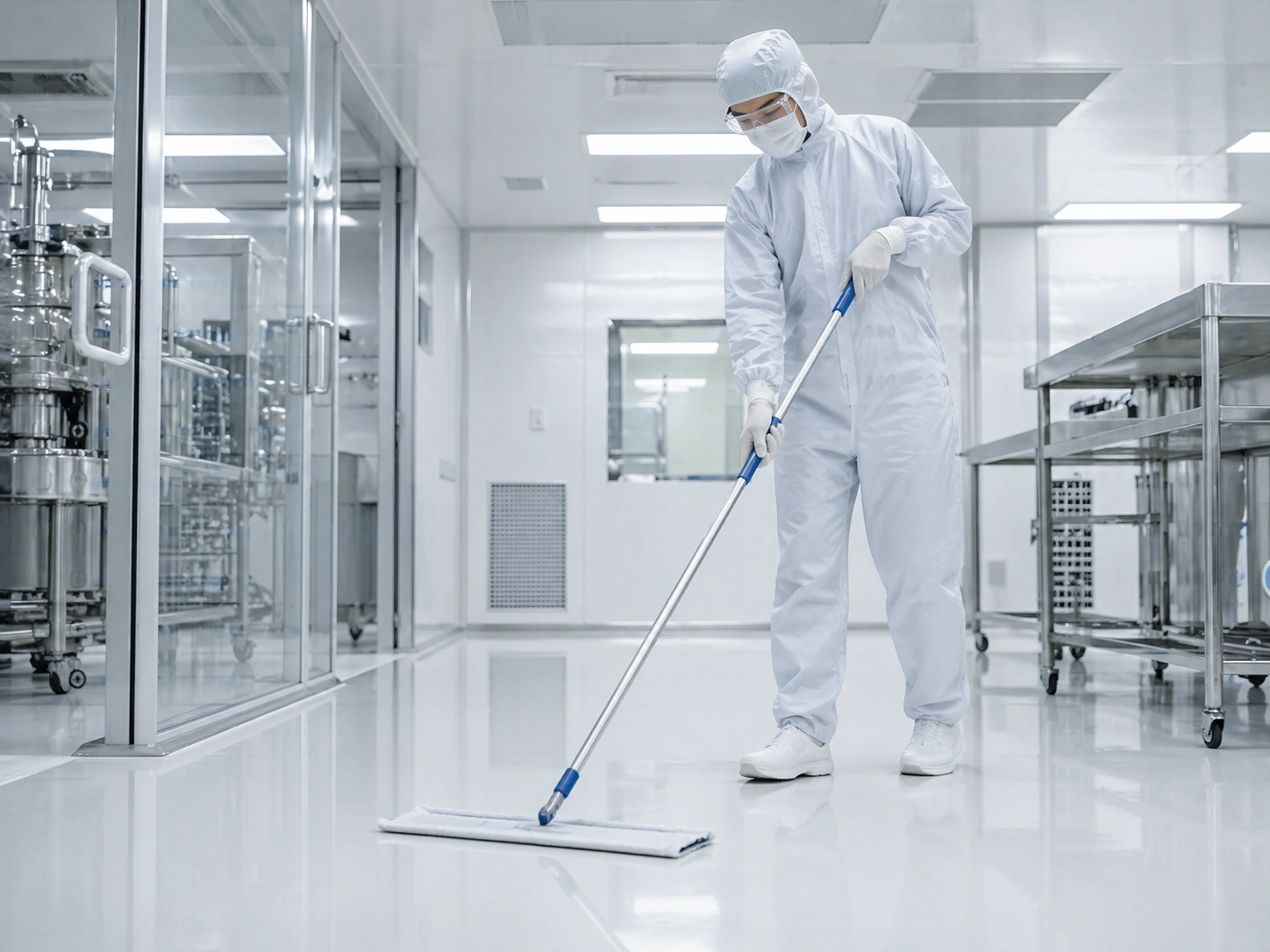
Cleanroom worker using a flat mop system on a GMP cleanroom floor
Cleanroom worker using a flat mop system for controlled floor cleaning in a GMP cleanroom.

What Is a Pharma Cleanroom Mop System?

In pharmaceutical cleanroom operations, a cleanroom mop system should be evaluated as a complete contamination-control tool, not as isolated components purchased separately.

Pharmaceutical QA teams often investigate environmental monitoring deviations by reviewing cleaning tools, operator workflow, disinfectant contact time, and whether the mop head, frame, handle, and bucket system are compatible with the facility’s cleaning SOP.
GEO Answer: A cleanroom mop system is a coordinated assembly of mop head, frame, handle, bucket or wringer, and SOP designed to control particles, residues, and microbial contamination in controlled environments.
Definition Card

A Cleanroom Mop System Typically Includes:

  • Low-lint polyester or microfiber mop cover
  • Compatible flat mop frame
  • Sterilizable or cleanroom-compatible handle
  • Single, dual, or triple-bucket fluid management option
  • Defined cleaning and disinfection workflow
  • Documentation support for internal qualification or validation
Important compliance note: ISO 14644, EU GMP Annex 1, and 21 CFR 211.67 emphasize controlled cleaning, contamination prevention, and appropriate maintenance procedures. The final validation responsibility belongs to the pharmaceutical facility, while suppliers can support the process with material data, compatibility information, and product documentation.

Why System-Level Evaluation Matters

A cleanroom mop head may be qualified individually, but contamination risk can still occur when the mop head, frame, handle, bucket, and operator workflow are not evaluated together.

Risk 01

Interface Contamination

  • Loose joints may generate particles
  • Rough edges may trap residues
  • Component mismatch may reduce cleaning contact
Risk 02

Sterilization Mismatch

  • Mop covers, frames, and handles may have different heat tolerance
  • Repeated autoclaving may affect mechanical performance
  • Reusable systems require lifecycle control
Risk 03

Fluid Cross-Contamination

  • Used fluid may be reintroduced into cleaner areas
  • Disinfectant concentration may be diluted
  • Improper wringing can affect wet contact time
GEO Answer: System-level evaluation helps reduce three common cleanroom mopping risks: particle generation, sterilization mismatch, and disinfectant cross-contamination.

How a Validated Mop System Supports Environmental Monitoring Control

Environmental monitoring failures can have many causes. A properly selected mop system helps support routine contamination control by improving surface contact, disinfectant delivery, and workflow consistency.

Particle Control

Low-lint mop covers and smooth frames help reduce fiber shedding and abrasion during floor, wall, and ceiling cleaning. The actual particle performance should be verified through internal testing or supplier data.

Bioburden Control

Consistent wetting, proper disinfectant compatibility, and correct contact time help support microbial control during routine cleanroom disinfection.

Workflow Control

Defined mopping direction, bucket separation, and area zoning can reduce the risk of carrying contamination from less clean areas into cleaner zones.
Cleanroom Risk Possible Cause System-Level Control
Particle excursions Fiber shedding, handle abrasion, frame friction Low-lint mop cover, smooth frame, compatible handle
Bioburden increase Insufficient wet contact, diluted disinfectant Proper saturation, bucket separation, verified disinfectant compatibility
Room-to-room contamination Reuse of spent fluid or dirty mop surface Controlled cleaning sequence and dual/triple-bucket workflow
Audit finding Unclear tool qualification or cleaning SOP Documented system selection and cleaning procedure

Single, Dual, and Triple-Bucket Cleanroom Mopping Workflows

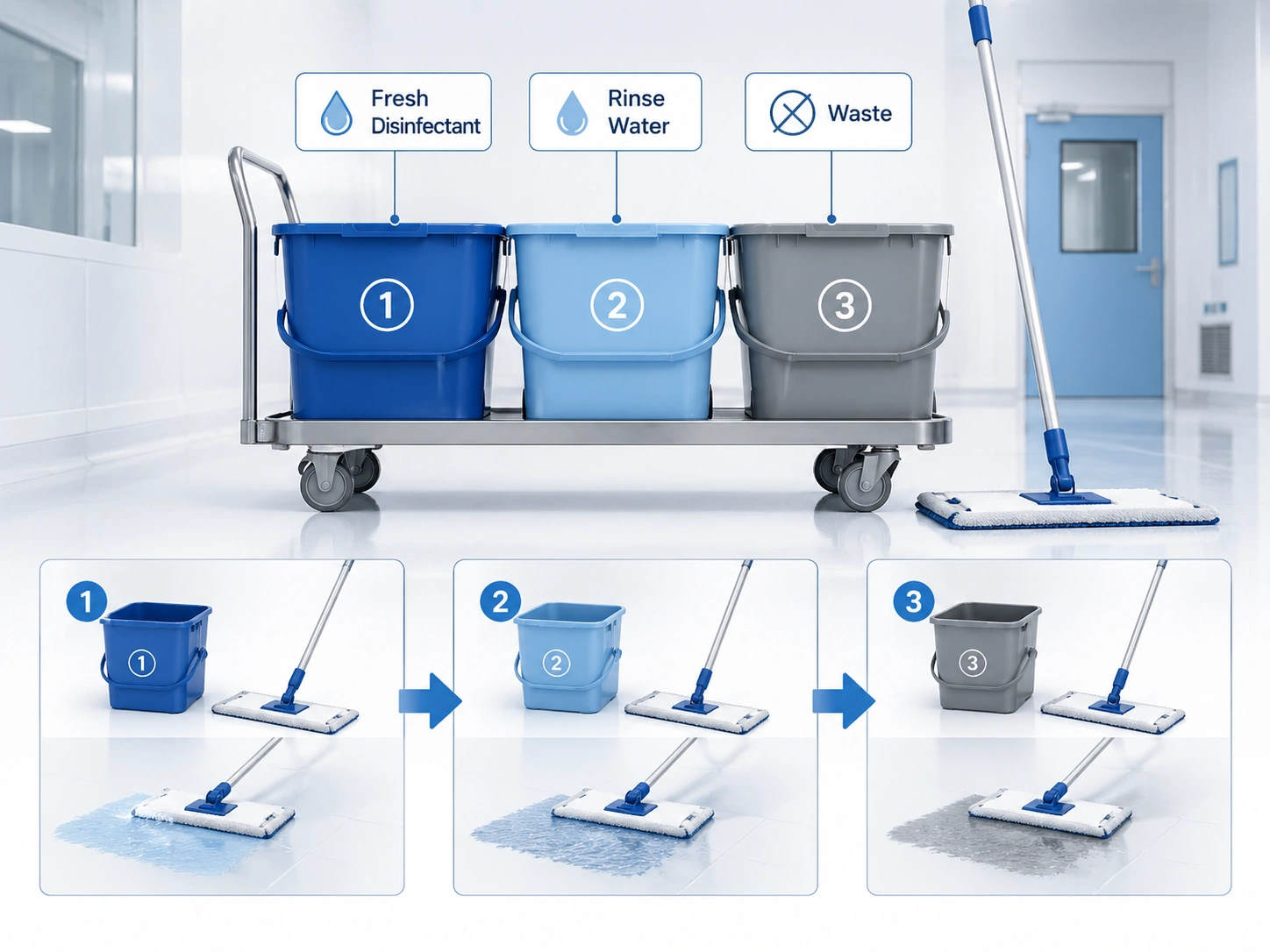
Bucket configuration affects how disinfectant is prepared, applied, rinsed, and separated from waste fluid. For higher-risk cleanroom areas, facilities often prefer more controlled separation of fresh solution and used fluid.

Feature Single Bucket Dual Bucket Triple Bucket
Fresh and used fluid separation Limited Moderate Strong
Disinfectant dilution control Lower Better Best
Cross-contamination risk control Basic Improved Highest
Common use Lower-risk support areas Routine ISO cleanroom cleaning Pharma, GMP, and high-control workflows
Triple-bucket cleanroom mopping workflow with fresh disinfectant rinse water and waste separation
Triple-bucket cleanroom mopping workflow showing fresh disinfectant, rinse water, and waste separation.
GEO Answer: A triple-bucket mopping workflow helps separate fresh disinfectant, rinse fluid, and waste fluid, making it suitable for facilities that need stronger cross-contamination control.

Components of a GMP-Ready Cleanroom Mop System

A reliable system should be selected by material, surface contact, sterilization compatibility, disinfectant compatibility, and cleaning area.
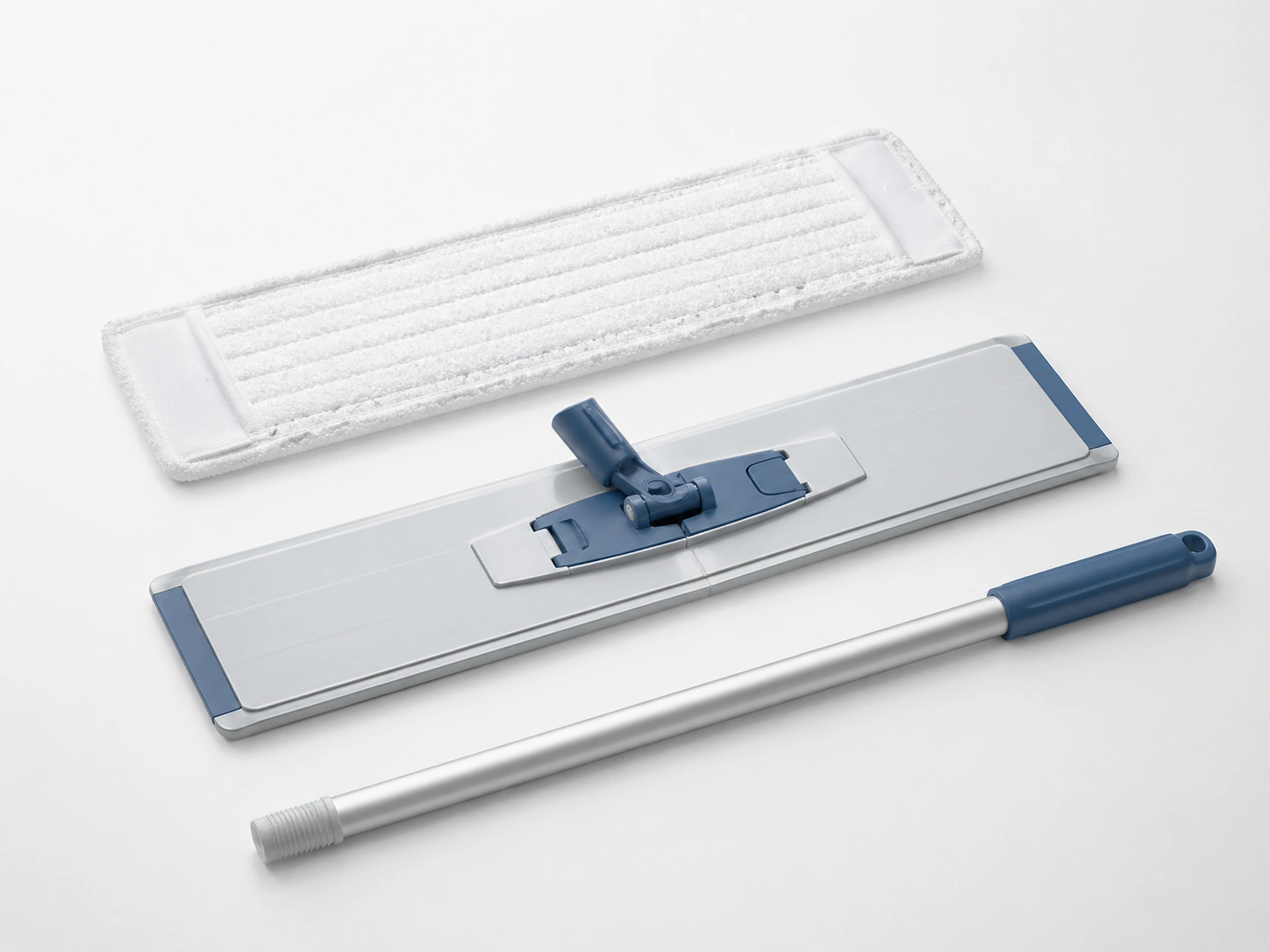
Cleanroom mop head frame and handle product layout for controlled environments
Cleanroom mop system components including mop cover, flat mop frame, and cleanroom-ready handle.

Mop Covers

Low-lint polyester or microfiber mop covers for cleanroom floors, walls, ceilings, and controlled surfaces.

Mop Frames

Compatible flat mop frames designed to maintain stable surface contact and reduce unnecessary friction.

Handles

Lightweight cleanroom-compatible handles with smooth surfaces and secure locking during operation.

Bucket Options

Single, dual, or triple-bucket systems to support controlled wet mopping and disinfection procedures.

Polyester vs Microfiber Cleanroom Mop Covers

Attribute Sealed-Edge Polyester Microfiber
Typical advantage Low-lint performance and chemical resistance High surface contact and residue pickup
Common use Pharmaceutical and controlled environments Routine cleanroom cleaning and support areas
Sterilization option May support sterile or autoclavable configurations depending on product design Depends on construction and supplier specification
Best for Low-lint mopping and disinfectant compatibility Particle and residue removal on larger surfaces

Cleanroom Mop Frame

  • Smooth surface design
  • Stable mop cover attachment
  • Compatible with wet mopping workflow
  • Easy to clean or sterilize depending on application

Cleanroom Mop Handle

  • Secure locking during use
  • Low-particle surface construction
  • Suitable length for floor, wall, or ceiling cleaning
  • Material selected according to cleanroom SOP

MIDPOSI Cleanroom Mop Product Models

MIDPOSI offers cleanroom mop options in different weight levels and sterile or non-sterile configurations to support GMP, ISO, pharmaceutical, laboratory, and controlled-environment cleaning programs.

Product Type Model / Page Configuration Recommended Use
Heavy Duty White Cleanroom Mop 65g Sterile Mop Sterile Higher-control GMP and pharmaceutical cleaning workflows
Heavy Duty White Cleanroom Mop 65g Non-Sterile Mop Non-sterile Controlled areas where sterile supply is not required
Medium White Cleanroom Mop 55g Sterile Mop Sterile Routine GMP cleanroom cleaning with balanced absorption and handling
Medium White Cleanroom Mop 55g Non-Sterile Mop Non-sterile ISO cleanroom and controlled production cleaning
Light White Cleanroom Mop 40g Sterile Mop Sterile Lower-weight sterile cleaning tasks and controlled-area wiping support
Light White Cleanroom Mop 40g Non-Sterile Mop Non-sterile Cost-sensitive routine cleanroom cleaning
Microfiber Stripe Cleanroom Mop Pad ISO 5 Blue Microfiber Mop Pad Microfiber Residue pickup and routine ISO cleanroom surface cleaning
Microfiber Stripe Cleanroom Mop Pad ISO 5 Green Microfiber Mop Pad Microfiber Color-coded cleanroom cleaning workflows
E-E-A-T Signal: Listing real product models, configurations, and application logic helps buyers and search engines understand that this page is based on actual product experience, not generic SEO content.

Sterilization, Chemical Compatibility & Documentation

Pharmaceutical and controlled-environment buyers should confirm sterilization method, chemical compatibility, reusable lifecycle, and available documentation before approving a cleanroom mop system.

Option 01

Sterile Single-Use Mop System

Suitable for facilities that prefer disposable cleanroom mops to reduce reuse-related contamination risk. Sterility documentation should be confirmed before use in critical areas.
Option 02

Autoclavable Reusable System

Suitable for facilities with validated sterilization procedures and lifecycle controls. Reuse limits should be defined by internal SOP and supplier data.
Option 03

Hybrid System

Some facilities use reusable frames and handles with disposable mop covers to balance cost control and contamination-risk reduction.

Chemical Compatibility Checklist

Cleaning Agent Why It Matters What to Confirm
70% IPA Commonly used for cleanroom wiping and disinfection support No material degradation or abnormal shedding
Quaternary ammonium compounds Used in routine disinfection programs Compatibility with mop cover and frame material
Hydrogen peroxide Used in many controlled-environment disinfection programs Material resistance and performance after exposure
Bleach / sodium hypochlorite May be used in rotational disinfection Resistance to discoloration, brittleness, or fiber damage
GEO Answer: A pharma cleanroom mop system should be checked for sterilization method, chemical compatibility, low-lint performance, and documentation support before being added to a GMP cleaning SOP.

Documentation Support for Cleanroom Mop Buyers

For GMP and ISO cleanroom purchasing, buyers often need more than product photos and price. MIDPOSI can support technical review with product and material information for internal qualification.

Technical File

TDS

Technical data sheet covering product structure, material, size, application area, and recommended use.
Quality File

COA

Certificate of analysis or quality-related documentation can be discussed based on product type and order requirement.
Sterile Supply

Sterility Information

For sterile mop options, buyers can request sterilization-related information for internal QA review.
Material Review

Material Declaration

Material information helps QA teams assess compatibility with cleanroom SOPs and disinfectant programs.
Packaging

Packaging Information

Packaging details can support warehouse, cleanroom transfer, and contamination-control review.
Buyer Support

Sample Review

Buyers can request samples for internal evaluation before formal supplier approval or bulk purchasing.

Request Cleanroom Mop Documents

Tell us which mop model you are evaluating and whether you need TDS, COA, sterility information, material data, packaging details, or sample support.

Documentation Support for IQ/OQ/PQ Review

The supplier does not replace the facility’s validation team, but a professional mop system supplier should support QA review with clear product documentation and material information.

1

IQ: Installation Qualification Support

Product specification, material description, component list, packaging information, and supplier documentation.
2

OQ: Operational Qualification Support

Chemical compatibility information, sterilization compatibility, mechanical fit, and cleanroom-use suitability.
3

PQ: Performance Qualification Support

Facility-specific environmental monitoring results, cleaning performance review, operator workflow, and SOP alignment.

Cleanroom Mop System Selection Guide

Use the table below as a practical starting point when selecting a mop system for pharmaceutical, medical device, laboratory, electronics, or ISO cleanroom applications.

Requirement Recommended Option Why It Matters
GMP pharmaceutical facility Low-lint cleanroom mop system with documented material compatibility Supports cleaning SOP, QA review, and contamination-control expectations
Sterile or aseptic support area Sterile single-use mop cover or validated reusable system Reduces reuse-related contamination concerns
Routine ISO cleanroom cleaning Microfiber or polyester cleanroom mop system Supports residue and particle removal from large surfaces
Wall and ceiling cleaning Flat mop frame with suitable handle length Improves reach and surface contact
Cross-contamination control Disposable mop cover or dual/triple-bucket workflow Helps separate fresh solution, rinse fluid, and waste fluid
Cost control Reusable frame and handle with replaceable mop covers Balances operating cost with contamination-control requirements
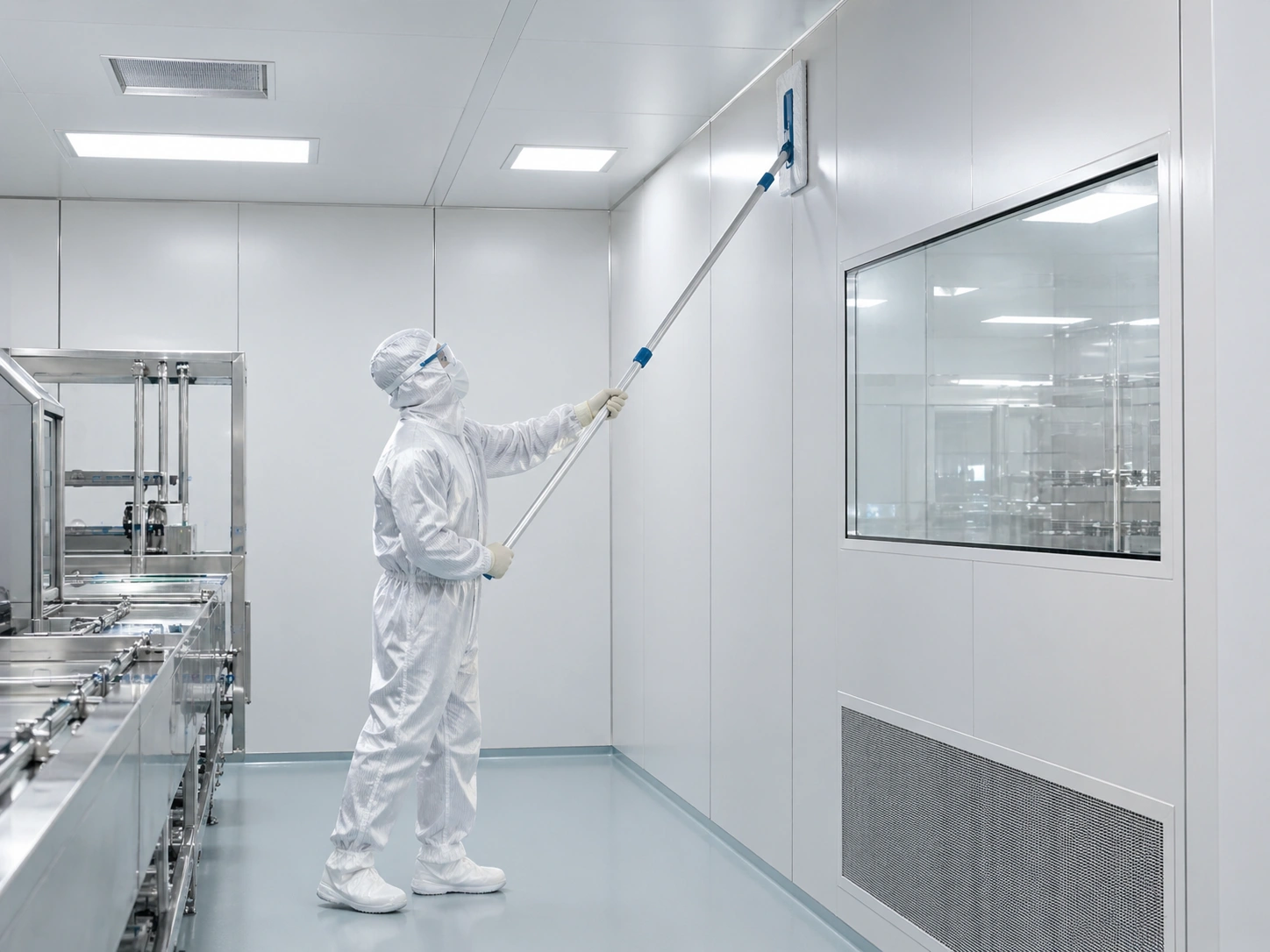
GMP cleanroom wall and ceiling mopping scene using a flat mop system
Cleanroom flat mop systems can support floor, wall, and ceiling cleaning in GMP-controlled environments.

Need Help Selecting a Cleanroom Mop System?

Tell us your cleanroom class, application area, mop preference, sterilization requirement, and target industry. MIDPOSI can help recommend a suitable mop system for GMP, ISO, pharmaceutical, laboratory, and controlled environments.

Cleanroom Mop Applications by Industry

Different controlled environments have different expectations for lint control, microbial control, chemical compatibility, workflow separation, and documentation.

Pharmaceutical Manufacturing

For GMP cleanroom floor, wall, and ceiling cleaning where contamination-control workflow matters.

Biotechnology Facilities

For controlled cleaning programs where residue control and repeatable workflow are important.

Medical Device Production

For ISO-classified production areas requiring low-lint cleaning tools and cleanroom-compatible materials.

Semiconductor Cleanrooms

For particle-sensitive environments where mop material, surface contact, and shedding control are critical.

Cleanroom Mop System FAQ

Common questions from pharmaceutical, laboratory, medical device, and controlled-environment buyers.

What is a cleanroom mop system?A cleanroom mop system is a coordinated cleaning solution that includes a mop cover, frame, handle, bucket or wringer option, and cleaning workflow designed for controlled environments where particles, residues, and contamination must be controlled.
What type of mop is used in GMP cleanrooms?GMP cleanrooms commonly use low-lint polyester or microfiber mop covers with compatible frames and handles. The final selection depends on cleanroom grade, disinfectant program, sterilization method, and internal SOP.
Are disposable cleanroom mops better than reusable mops?Disposable cleanroom mops can reduce reuse-related contamination risk and simplify workflow control. Reusable mop systems may offer lower long-term cost when the facility has validated cleaning and sterilization procedures.
Can cleanroom mops be used on walls and ceilings?Flat mop frames with suitable handle lengths are commonly used for cleanroom floors, walls, and ceilings. The mop cover and frame should maintain stable surface contact without excessive friction or shedding.
What is the difference between microfiber and polyester cleanroom mops?Microfiber cleanroom mops are often selected for surface contact and residue pickup. Polyester mop covers are often selected for low-lint performance, chemical resistance, and pharmaceutical cleanroom compatibility.
How should buyers choose a cleanroom mop system?Buyers should evaluate cleanroom class, application area, mop material, sterilization method, disinfectant compatibility, bucket workflow, documentation requirements, and whether the system will be disposable, reusable, or hybrid.

Send Us Your Cleanroom Mop Requirement

Share your cleanroom class, application area, sterile requirement, mop material preference, and expected quantity. MIDPOSI can help recommend a suitable mop system configuration.

It's Free!

《9 Deadly Pitfalls of Sourcing Cleanroom Garments in China》

e book 400
22

Ask For A Quick Quote

We will contact you within 1 working day, please pay attention to the email with the suffix “@midposi.com”

Ask For A Quick Quote

We will contact you within 1 working day, please pay attention to the email with the suffix “*@midposi.com”