

A cleanroom spill is not a janitorial event. It is a contamination control incident that requires a pre-defined, documented sequence of containment, cleaning, disinfection, and verification — with specific mop selection at each stage based on spill classification and cleanroom grade. Most facility spill SOPs say “clean with appropriate mop” without defining what “appropriate” means. This guide closes that gap by mapping spill type directly to mop material, sterility requirement, and disposal decision — so the operator reaching for the spill kit knows exactly which mop to use and why.
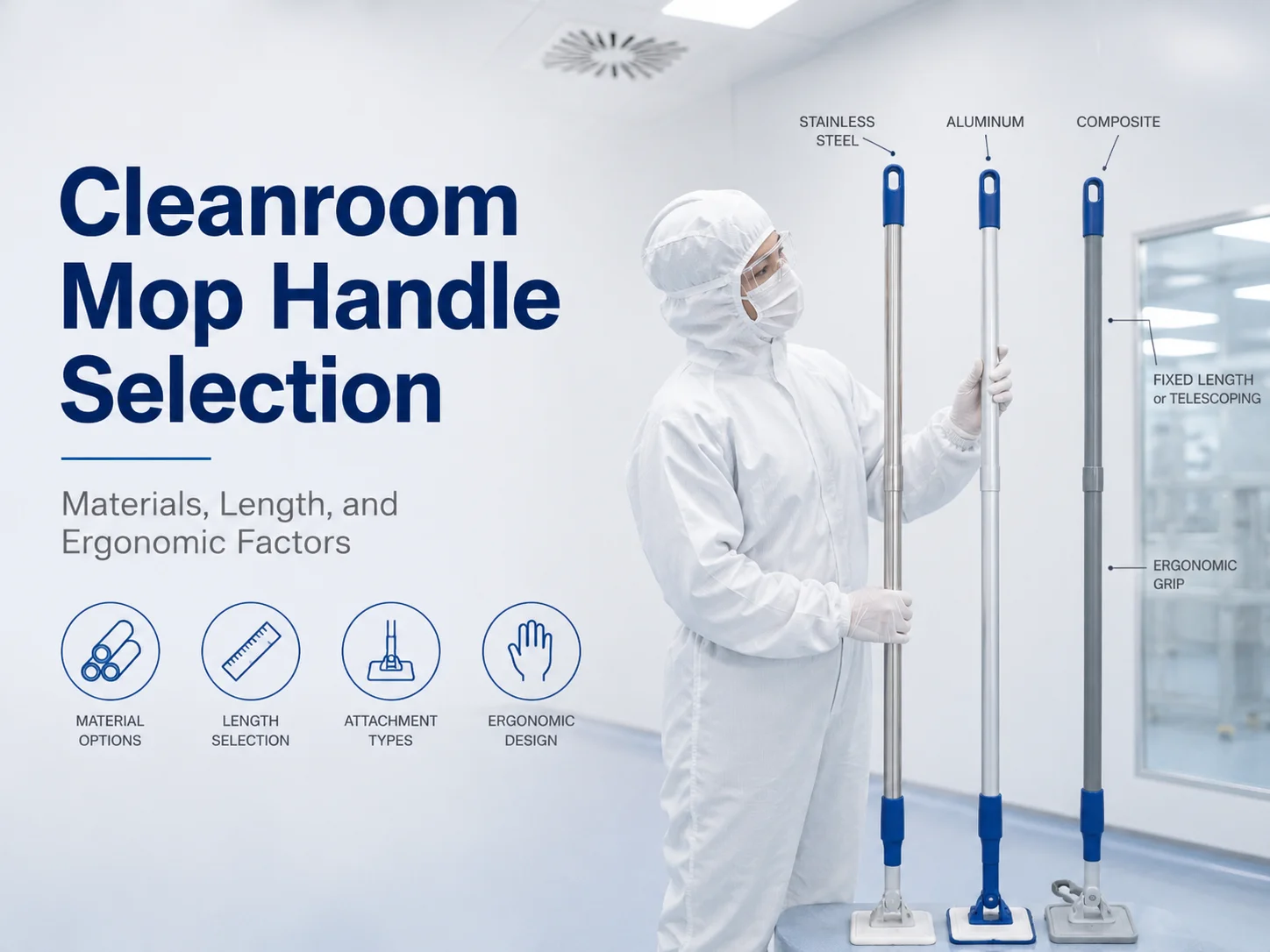
A cleanroom spill response protocol is a pre-defined, documented sequence of containment, cleaning, disinfection, and verification steps — with specific mop selection at each stage based on spill classification and cleanroom grade. Unlike a general cleaning SOP, a spill response protocol answers the question: “This specific substance just spilled in this specific zone — which mop do I reach for, what technique do I use, and how do I document it for the batch record?”
The 4-step sequence is the operational backbone:
The most common root cause of audit findings related to spill events is not inadequate cleaning — it is using the wrong mop for the spill type, followed by incomplete documentation. The protocol in this guide addresses both.
Spill response in a GMP facility begins with classification. The spilled material — not the zone grade, not the operator’s judgment — determines which mop to use, whether the mop must be sterile, and whether the response sequence applies disinfectant before or after absorption. Facilities should maintain a written spill classification matrix that operators can reference during an event; reliance on memory leads to inconsistency and audit vulnerability.
Aqueous spills are the most common and generally the lowest-risk in terms of chemical reactivity. Buffers, Water for Injection, saline solutions, and cleaning agent dilutions fall into this category. The primary concern is not chemical hazard but volume — a large aqueous spill can spread contamination across zone boundaries if not immediately contained. Standard cleanroom mop materials (polyester, microfiber) are compatible with aqueous solutions. A non-sterile disposable mop is typically adequate for Grade C/D aqueous spills. The main decision point is mop head weight: a 40g mop head may handle a 200 mL spill, while a 500 mL spill may require a 55g or 65g head with higher fluid capacity.
Organic solvent spills introduce chemical compatibility as the controlling variable. Isopropyl alcohol and ethanol are the most common cleanroom solvents, and standard polyester mop materials are generally compatible with both at typical usage concentrations. However, acetone, acetonitrile, and other aggressive organic solvents may degrade certain mop materials — polyamide (a component in some microfiber constructions) is particularly vulnerable. The facility’s Safety Data Sheets should be the reference source for mop material compatibility. A mop that is compatible with 70% IPA should not be assumed compatible with acetone without verification. For solvent spills, the response sequence is: contain, absorb with a solvent-compatible mop, then disinfect the surface area. Applying disinfectant before absorbing the solvent can create unknown reaction products.
Product-contact spills — active pharmaceutical ingredient powders, cell culture media, fermentation broth, protein solutions — carry two distinct risks: cross-contamination between product batches and biological growth from nutrient-rich media. API powder spills require damp mopping (not dry sweeping) to prevent airborne dispersion, and the mop must be low-lint to avoid adding fiber particles to the cleaned area. Cell culture media spills require immediate disinfection because the media supports microbial growth. In Grade A/B areas where the spilled material contacts an aseptic processing zone, a sterile mop head is strongly recommended — the cleanup tool itself must not introduce additional contamination into the critical zone.
Cytotoxic and potent compound spills are the highest-risk category in pharmaceutical cleanroom environments. These spills require specialized response protocols that go beyond standard cleaning procedures. The mop used must be single-use disposable — no reprocessing, no laundering, no return to inventory. The mop head, along with all absorbent materials and PPE used during the response, enters a dedicated cytotoxic waste stream. Material compatibility is secondary to containment and operator safety: the facility’s cytotoxic spill kit protocol takes precedence over general spill response guidance. The mop’s role is as a containment and removal tool within a larger hazardous material response framework, not as a standalone cleaning instrument.
Biological spills — microbial cultures, blood products, cell lysates, or any material containing viable organisms — present a fundamentally different contamination mechanism. Unlike chemical spills that are cleaned and verified by residue absence, biological spills require post-cleanup verification that bioburden levels have returned to acceptable limits. The disinfectant applied must be effective against the specific biological agent, and contact time must be verified. For spills in Grade A/B zones, a sterile mop head prevents the cleanup operation itself from becoming a source of microbial introduction. In QC laboratories handling blood products or BSL-2 materials, facility biosafety protocols define the response requirements, and the mop selection must align with those protocols.
Operational note: These five categories are a best-practice framework for facility SOP development. They are not defined in a single regulatory document. Facilities should adapt the classification to their specific material inventory, zone configuration, and risk assessment. The classification matrix should be reviewed annually or whenever a new process material is introduced.
The matrix below maps each spill classification to the recommended mop material, sterility requirement, disposability decision, and application technique. This is the decision table that operators and supervisors should reference during spill response — replacing the gap left by SOPs that say “use appropriate mop” without defining what appropriate means.
| Spill Type | Recommended Mop Material | Sterilitetskrav | Disposability | Application Technique |
|---|---|---|---|---|
| Aqueous (buffers, WFI, saline) | Polyester or microfiber | Non-sterile acceptable for Grade C/D; evaluate sterile for Grade A/B | Disposable recommended; reusable evaluated per facility SOP | Damp mop from perimeter inward; contain, then absorb |
| Organic Solvent (IPA, ethanol, acetone) | Polyester (verify SDS compatibility); avoid polyamide-containing microfiber for aggressive solvents | Non-sterile acceptable | Disposable — mop exposed to solvent; do not return to inventory | Absorb with dry or damp mop; disinfect surface after absorption |
| Product / Biologic (API powder, cell culture media) | Low-lint polyester for API powder; disinfectant-compatible for culture media | Sterile recommended for Grade A/B; evaluate for Grade C based on spill nature | Disposable — single use only | Damp mop for powder (prevent aerosolization); disinfect-soaked mop for culture media |
| Cytotoxic / Hazardous (chemo agents, potent compounds) | Single-use disposable; material secondary to containment protocol | Follow facility cytotoxic protocol | Single-use — cytotoxic waste stream disposal | Follow facility cytotoxic spill kit protocol; mop as containment/removal tool only |
| Biological (microbial culture, blood products) | Disinfectant-compatible material | Sterile required for Grade A/B; evaluate for Grade C based on BSL level | Disposable — biohazard waste stream | Disinfect surface first, then absorb; verify bioburden post-cleanup |
The dry-vs-wet decision depends on the spill type, not operator preference:
Mop head weight (commonly 40g, 55g, or 65g for cleanroom applications) affects fluid absorption capacity, which is directly relevant to spill response. A 40g mop head is typically evaluated for small-volume spills (approximately 100-300 mL) where fluid capacity is not the limiting factor. A spill in the 300-800 mL range may benefit from a 55g mop head’s greater absorption capacity. Large spills exceeding 800 mL may require a 65g head or multiple mop heads used in sequence. The decision should be based on spill volume, not on a fixed correspondence between mop weight and cleanroom grade. For guidance on cleanroom mop selection by facility grade, see the GMP vejledning til valg af renrumsmoppekvalitet.

The 4-step sequence — Contain, Clean, Disinfect, Verify — is the operational framework for every cleanroom spill response. Each step has a specific mop-related decision: which mop to use, how to apply it, and when to dispose of it. Deviating from the sequence — for example, disinfecting before absorbing — is one of the most common spill response errors and can compound the contamination rather than resolve it.
Objective: Stop the spill from spreading. Establish a physical perimeter and remove the bulk material.
Mop role: A damp mop head can serve as a containment barrier when placed at the outward edge of the spill and worked inward. For larger spills, absorbent pads or booms are deployed first, and the mop is used for residual absorption and boundary cleaning.
Objective: Remove residual material that absorption missed. The surface should be visibly clean before disinfection — disinfectants are less effective on surfaces with visible residue.
Mop role: A second, clean mop head is used for the cleaning pass. Reusing the Step 1 absorption mop reintroduces the spilled material onto surfaces that were just cleaned.
Objective: Reduce microbial contamination on the affected surface to within facility acceptance limits. This step is mandatory for biological spills and recommended for all spills in Grade A/B zones.
Mop role: A third mop head — or a dedicated disinfection mop — applies the disinfectant with controlled contact time. The mop material must be compatible with the disinfectant being used.
Objective: Confirm that the spill zone is clean, disinfected, and ready for return to normal operations. This step closes the event loop and generates the documentation required for audit readiness.
Mop role: No mop is used at this stage. Verification is visual (inspection under appropriate lighting) and, where required, analytical (environmental monitoring, surface swabs, ATP testing).
Key principle: Each step in the sequence should use a separate mop head. The mop that absorbed the spill should not be the mop that cleans the surface, and the cleaning mop should not be the disinfection mop. Cross-contamination between response stages is one of the most frequently observed audit findings in spill response documentation reviews.

Cleanroom grade is one of the determining factors in spill response protocol design — not because the spill itself changes, but because the consequences of inadequate cleanup are amplified in higher-grade zones. Grade A/B spills can impact batch release decisions. Grade C/D spills, while still requiring documented response, have less stringent verification requirements.
In Grade A (aseptic filling zones) and Grade B (background to Grade A), a spill is a contamination control event that must be treated as a potential batch impact incident. Sterile mop heads are strongly recommended — the cleanup tool itself must not introduce bioburden or particulates into the critical zone. The disinfectant used must be sporicidal where the facility’s contamination control strategy requires sporicidal rotation. Environmental monitoring (active air sampling and surface contact plates) must be performed after cleanup and before the zone is released for operations. Results must be within alert and action limits. The spill event, response details, EM results, and zone release authorization are part of the batch record and are reviewed during batch disposition.
For facilities evaluating sterile mop options, see the sterilization methods comparison for guidance on gamma, EtO, and autoclave sterilization pathways.
In Grade C and D zones, sterile mops are typically not required for spill response unless the spill itself involves sterile materials or the facility’s CCS specifies sterile consumables for all interventions. The documentation burden is lower — a dated cleaning log entry with spill type, mop used, and verification result is generally sufficient. Environmental monitoring returns to the routine schedule after the spill is cleaned and visually verified, unless the spill volume or material type triggers an elevated monitoring protocol per the facility SOP. However, the same principle of single-use, spill-specific mop heads applies across all grades: the mop used for spill response should not be returned to the routine cleaning inventory.
Spills in corridors, airlocks, and material transfer zones present a unique challenge: they sit at the boundary between cleanroom grades. A spill in a Grade C corridor adjacent to a Grade B suite must be treated with the upstream (higher-grade) response protocol if there is any risk of contamination spreading into the higher-grade zone. The containment step is especially critical — an uncontained spill in a transition zone can introduce contamination during material or personnel movement. The spill kit in transition zones should be configured for the highest-grade zone accessible from that location.
For detailed guidance on mop selection by cleanroom grade, see the GMP vejledning til valg af renrumsmoppekvalitet.
From a GMP audit perspective, a spill that is cleaned but not documented is a spill that may not have been cleaned. Documentation closes the loop between event detection and verified resolution, providing traceability for batch record review, deviation investigation, and regulatory inspection. The documentation requirements scale with cleanroom grade and spill severity.
A spill should trigger a deviation report when any of the following conditions apply:
Every spill response, regardless of grade or severity, must generate a cleaning log entry. At minimum, the entry records: date and time of the spill, location (room/zone), spill classification and estimated volume, mop type and material used, disinfectant applied (if any) with batch/lot number, response sequence followed, verification result, and operator/supervisor signatures.
For guidance on standard cleaning SOP structure, see the cleanroom mopping SOP guidelines. For validation documentation expectations, see the validation documents buyer checklist og den mop workflow validation checklist.
Post-spill environmental monitoring is required when the spill occurs in Grade A/B zones, when the spilled material is biological, or when the spill volume or nature creates a reasonable expectation of airborne or surface contamination beyond the immediate spill zone. The monitoring should include active air sampling at the spill location and adjacent areas, surface contact plates from the cleaned surface and surrounding zones, and, for API spills where residue limits are defined, surface swab testing for the specific API. Monitoring should continue until results are within action limits for at least two consecutive sampling intervals before the zone is released for operations.
Facilities should maintain a dedicated spill response cleaning record — separate from the routine cleaning log — that captures all the data points an auditor will ask for. The template below is a reference structure that can be adapted to the facility’s documentation system.
Template note: This is a reference structure. Facilities should adapt it to their existing documentation format (paper log, electronic QMS, or hybrid). The data fields — not the format — are what an auditor evaluates. All sections shown above should be present in the facility’s spill response record.
The errors below are based on patterns observed in GMP audit reports and facility deviation investigations. Each represents a failure point where an auditor will ask: “How did the facility’s spill response protocol prevent this?”
This is the most frequently cited finding. The mop head used for routine floor cleaning may carry residues from previous cleaning cycles. Using it for a chemical spill introduces those residues into the spill zone. A dedicated, single-use mop head — or, at minimum, a mop head validated for the specific spill agent — must be used. The cost difference between a dedicated spill mop and a contamination investigation triggered by improper mop use is orders of magnitude apart.
An auditor reviewing a spill event will look for: the mop batch/lot number, the disinfectant batch/lot number, the contact time achieved, the verification result, and the zone release authorization. If any of these fields are blank or marked “N/A” without justification, the finding is almost certain. For Grade A/B spills, the absence of post-spill environmental monitoring data is a critical documentation gap that can escalate to a deviation investigation.
Returning a spill-response mop to the cleaning inventory — or reusing it for a different spill type — is a cross-contamination vector. The mop has been in contact with a known contamination source. Even if it appears clean after rinsing, residual material may remain at concentrations below visual detection but above acceptable cross-contamination limits. Spill response mops should be treated as single-use and disposed after the event, regardless of whether they appear reusable.
After the spill is cleaned and the zone released, facilities sometimes skip the follow-up question: “Did the spill response itself leave any residue?” Disinfectant residue from Step 3 can accumulate on surfaces if not wiped down with a clean, damp mop after the contact time is achieved. This is particularly relevant for oxidizing disinfectants used in Grade A/B zones, where residue buildup can affect subsequent environmental monitoring results. A final damp-mop pass with WFI or purified water may be evaluated as a post-disinfection step.
A single spill kit configuration that attempts to cover chemical, biological, and particulate spills across Grade A through D zones fails on two fronts: it provides the wrong mop type for specific spills, and it creates the temptation to use whatever is available rather than what is correct. Each zone’s spill kit should be configured for the spill types most probable in that zone, not for a theoretical “all-spill” scenario that does not exist in practice.
A properly configured spill station eliminates the most common root cause of spill response failure: “I grabbed what was available.” The kit should be assembled based on the spill types most probable in each zone and should be inspected on a defined frequency (monthly at minimum) to verify that consumables have not expired and that all components are present.
Kit inspection frequency: Spill kits should be inspected at least monthly. Inspection verifies that all components are present, that sterile items are within expiry, that disinfectant containers are sealed, and that documentation forms are stocked. The inspection itself should be documented. An empty or incomplete spill kit discovered during an actual spill event is a deviation waiting to happen.
For the foundational understanding of cleanroom mop system components that support spill kit configuration, see the renrumsmoppesystem oversigt. For the decision framework between disposable and reusable mop strategies, which directly impacts spill kit stocking decisions, see the disposable vs reusable mop decision guide.
Classify the spill — aqueous, organic solvent, product/biologic, cytotoxic/hazardous, or biological. The classification determines every downstream decision: which mop type and material to use, whether the mop must be sterile, whether disinfectant is applied before or after absorption, the disposal pathway, and what post-cleanup verification is required. Simultaneously, establish containment — place an absorbent barrier or damp mop perimeter around the spill — but mop selection without prior classification is a guess that can compound the contamination rather than resolve it.
No. Chemical and biological spills require different mop materials, different disinfectant compatibility profiles, and different disposal pathways. Even within a single spill category, a mop compatible with IPA may not be compatible with acetone. Using the same mop head for different spill types creates a cross-contamination risk that can spread one type of contamination while attempting to clean another. Each spill response should use dedicated, single-use mop heads. The cost of a single mop head is negligible compared to the cost of a contamination investigation triggered by improper mop reuse.
Sterile mop heads should be evaluated for: spills in Grade A or B zones, biological spills in any zone where the facility conducts active bioburden monitoring, and any spill where the facility’s contamination control strategy specifies sterile consumables for all interventions in aseptic processing areas. In Grade C and D zones, sterile mops are typically not required for spill response unless the spilled material is sterile or the BSL classification of the biological agent dictates enhanced controls.
No. Spill response mops should be treated as single-use and disposed after the event. The mop has been in contact with a known contamination source — chemical, biological, or particulate — and reintroducing it into the cleaning inventory creates a cross-contamination vector. This applies regardless of whether the mop appears visually clean after rinsing. Residual material may persist at concentrations below visual detection but above acceptable cross-contamination limits. Disposal into the appropriate waste stream (chemical, biohazard, cytotoxic, or general) is part of the documented spill response.
An auditor will look for a complete spill response cleaning record that includes: date and time of the spill, location (room/zone/grade), spill classification and estimated volume, spilled material identification, containment method, mop type/material/batch number used (with sterility status), disinfectant applied with batch number and contact time, PPE used, waste disposal record with waste stream classification, post-cleanup verification result (visual inspection and EM data where applicable), deviation report cross-reference if triggered, and zone release authorization with operator and supervisor/QA signatures. Missing any of these elements — particularly post-cleanup verification — is a documentation gap that can escalate to a finding.
For biological spills in Grade A/B zones: active air and surface monitoring should continue until results are within alert and action limits for at least two consecutive sampling intervals. The zone should not be released for operations until this condition is met. For chemical and particulate spills without biological contamination risk: EM returns to the routine monitoring schedule once post-cleanup visual inspection and any required surface residue testing are completed and passed. The specific monitoring duration should be defined in the facility’s spill response SOP, informed by the CCS and risk assessment for the zone.
Grade A/B spills have the strictest requirements: sterile mop heads, sporicidal disinfectant compatibility, mandatory post-spill environmental monitoring before zone release, and full documentation as part of the batch record. A deviation report is typically required. Grade C/D spills are more flexible: non-sterile mops are often acceptable, documentation is a standard cleaning log entry rather than a full deviation investigation, and EM returns to routine schedule after visual verification passes. However, the same principle of using spill-specific, single-use mop heads applies at all grades.
A spill kit is purpose-configured for emergency response — it contains single-use, spill-specific consumables (dedicated mop heads matched to probable spill types, chemical-specific absorbents, pre-labeled waste bags, documentation forms). A standard cleaning cart contains routine-use tools and may carry residues from previous cleaning cycles. The cart should not be used for spill response unless it is specifically configured and segregated for that purpose, because residues on the cart’s mop heads can contaminate the spill zone. A spill kit is sealed, inspected on a defined frequency, and contains only items validated for spill response use — not for routine cleaning.
A spill response protocol is only as reliable as the mops that execute it. Whether your facility handles aqueous, solvent, biologic, or cytotoxic spill risks — the mop material, sterility, and configuration must match your spill classification matrix. MIDPOSI can help you specify cleanroom mops that align with your facility’s spill response SOPs, supported by batch-level documentation for audit readiness.
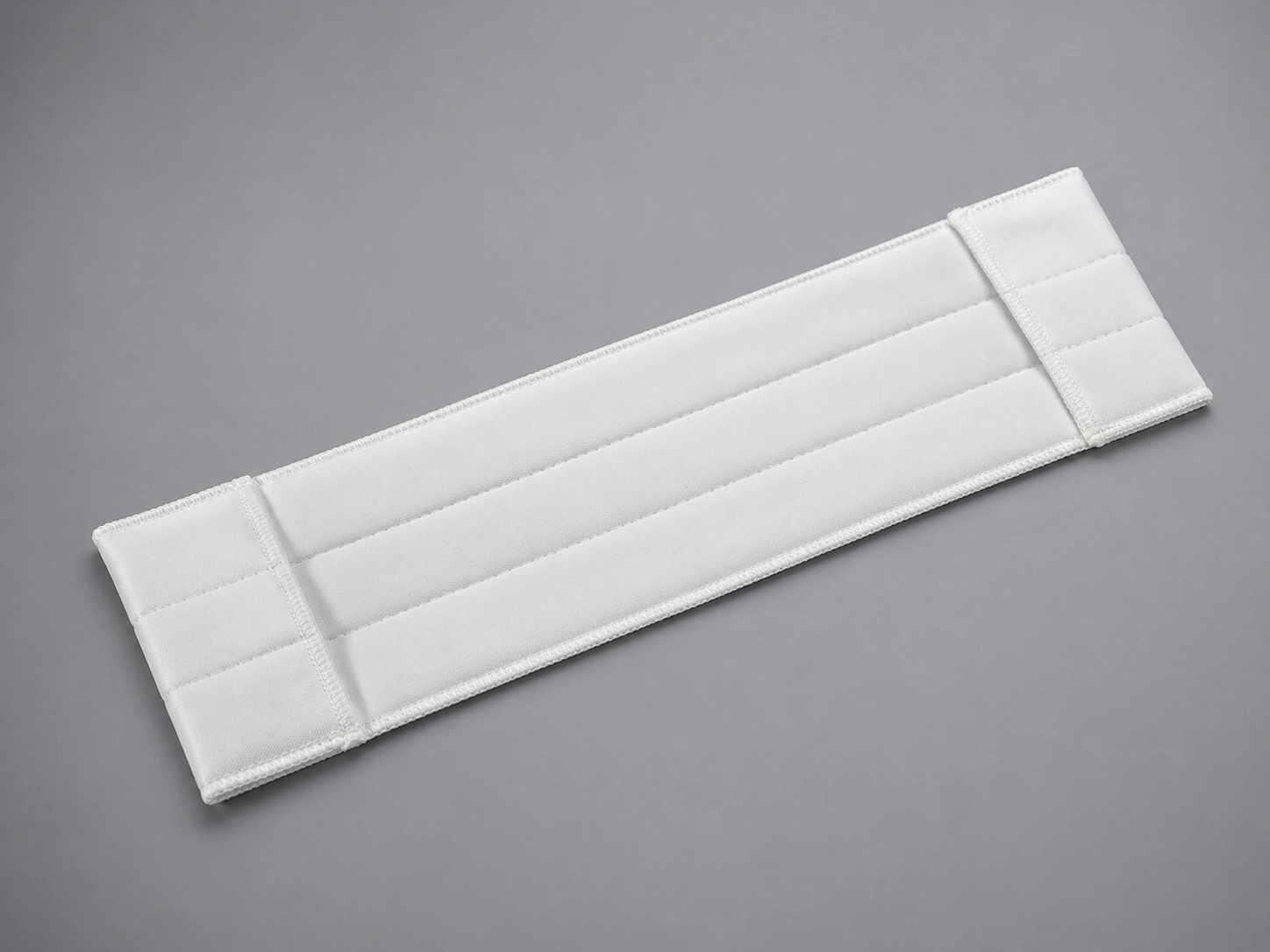
White Cleanroom Mop Series — disposable and sterile configurations — 40g, 55g, and 65g head weight options — polyester and microfiber material choices — batch-level traceability documentation available for GMP audit support
Disclaimer: This guide provides a best-practice framework for cleanroom spill response protocol development. It is not a substitute for facility-specific risk assessment, chemical compatibility testing, or regulatory review. All mop material compatibility claims should be verified against the facility’s Safety Data Sheets and actual chemical inventory. Spill classification categories are a synthesis of industry practice and are not codified in any single regulatory standard. Facilities should validate their spill response protocols through in-facility trials and periodic review.


 Optimized by Seraphinite Accelerator