
In a single-shift facility, selecting a cleanroom mop head weight is primarily about matching the mop weight to the cleaning area size and the cleanroom grade. In a multi-shift operation running two or three shifts per day, the same decision involves an additional layer: the cumulative effect of repeated mopping across consecutive shifts on operator fatigue, head change frequency, and overall cleaning consistency.
A weight that works well for a day-shift crew covering a full GMP production floor may introduce unnecessary strain on a skeleton night-shift crew operating with fewer personnel and tighter timelines. This guide provides a structured approach to selecting cleanroom mop head weights of 40g, 55g, and 65g for multi-shift operations, based on shift pattern, staffing level, coverage requirement, and ergonomic risk.
The following table provides immediate guidance for the three most common shift scenarios in GMP pharmaceutical, medical device, and biotech cleanroom facilities.
| Shift Pattern | Recommended Mop Head Weight | Rationale |
|---|---|---|
| Day Shift (peak staffing, full area coverage) |
55g – 65g | Maximum coverage per mop head change. Full staffing means fatigue risk is distributed across more operators. Higher absorbency supports full-floor disinfection protocols. |
| Night Shift (reduced staffing, zone-based coverage) |
40g – 55g | Lighter head weight reduces cumulative fatigue for smaller crews. Zone-focused cleaning means per-operator coverage is lower, so fewer head changes per shift are needed. |
| Weekend / Skeleton Crew (minimum staffing, critical zone only) |
40g | Lowest operator strain when one or two operators cover a facility with no relief. Limited cleaning scope means the lower coverage of 40g is acceptable. |
These are starting-point recommendations. The optimal weight for a specific facility should also account for cleanroom grade, floor area per shift, operator rotation schedule, and existing SOP constraints.
In a single-shift facility, an operator mops for one shift and then has approximately 16 hours before the next mopping session. In a three-shift operation, the same cleaning zones are covered three times every 24 hours. The total daily ergonomic load on the cleaning tool—and on the operators using it—is multiplied by the number of shifts.
A 65g mop head that is comfortable for an operator working a single 8-hour shift may contribute to measurable fatigue when used across three consecutive 8-hour shifts, even if different operators handle each shift. The cleaning program accumulates strain on the same muscle groups, the same tools, and the same consumables day after day.
This is why a dedicated multi-shift weight selection logic differs from the general-purpose logic described in a single-shift cleanroom mop head weight selection guide. The focus shifts from “what weight covers this area?” to “what weight can this cleaning program sustain across 16 or 24 hours of daily operation?”
A heavier mop head covers more square meters per change, but the advantage is less meaningful in a multi-shift environment if it means operators are physically exhausted by hour six of an eight-hour shift. The table below compares the practical implications:
| Weight Consideration | Single-Shift View | Multi-Shift View |
|---|---|---|
| Coverage per head change | Higher is better | Higher helps, but must not come at the cost of operator endurance across shifts |
| Head change frequency | Minimize changes for efficiency | More frequent but lighter changes may improve shift-to-shift consistency |
| Operator fatigue | Managed within one shift | Accumulates across all shifts; fatigue in Shift A can affect Shift B if overlapping zones or shared tools exist |
| Inventory consumption | Calculated per shift | Calculated per 24-hour cycle; 3x daily consumption changes procurement quantities |
| Ergonomic program fit | One weight for one shift | Possibly two different weights for different shift types |
The multi-shift view should inform both the weight selection and the broader cleanroom mop system configuration. For a detailed framework on system-level evaluation, see the Renrumsmoppesystem køberevalueringsramme.
The day shift in a 24/7 GMP facility typically has the largest cleaning crew, the widest scope of cleaning zones, and the most time allocated for complete cleaning protocols. Under these conditions, a 55g or 65g mop head is usually the appropriate choice.
Night shifts in GMP facilities often operate with fewer operators and a narrower cleaning scope—typically focused on specific zones rather than full-facility coverage. Because the cleaning area per operator is smaller, the coverage advantage of a 65g head is less relevant, while the fatigue reduction benefit of a lighter mop becomes more important.
Weekend shifts with skeleton crews present the highest ergonomic risk. With only one or two operators covering critical zones, there is no opportunity for task rotation within the shift. A 40g mop head reduces the per-operator physical load to the lowest level available in the White Mop Series.
GMP Grade Consideration: The recommendations above assume consistent cleanroom grade across all shifts. In practice, a facility may have Grade A/B zones cleaned during day shifts only and Grade C/D zones cleaned during night shifts. In such cases, the weight decision should follow the grade-specific logic described in the GMP cleanroom mop grade selection guide.
Operator fatigue in cleanroom mopping is not merely a comfort issue—it directly affects cleaning quality, compliance consistency, and staff turnover. The following factors deserve attention in any multi-shift mop weight evaluation.
The difference between a 40g and a 65g mop head (dry weight) appears small, but the effect is amplified when wet and in motion. A fully saturated mop head can weigh several times its dry weight, and the force required to push a wet mop across a cleanroom floor accumulates over hundreds of strokes per shift. The table below illustrates the relative ergonomic impact:
| Faktor | 40g Mop Head | 55g Mop Head | 65g Mop Head |
|---|---|---|---|
| Dry weight | Lightest | Mid-range | Heaviest |
| Wet weight (fully saturated, approx.) | ~280–320g | ~380–440g | ~450–520g |
| Per-stroke push force | Laveste | Moderat | Højest |
| Fatigue risk after 4 hours of continuous mopping | Lav | Moderat | Moderate to high (shift-dependent) |
| Fatigue risk after 8 hours of continuous mopping | Moderat | Moderate to high | Høj |
| Recommended maximum continuous use per operator per shift | Up to full shift with task rotation | 6–8 hours with task rotation | 4–6 hours; task rotation strongly advised |
Wet weight values are approximate and depend on mop material, disinfectant solution type, and application technique. Facilities should validate wet-weight behavior under their specific cleaning protocols.
A common procurement assumption is that a heavier mop head = faster cleaning = higher productivity. In a multi-shift context, this is true only up to the point where operator fatigue reduces cleaning speed and consistency. An operator using a 65g mop head may clean larger areas per hour in the first three hours of a shift, but if fatigue causes a 20% speed reduction in hours five through eight, the net per-shift coverage may be comparable to—or worse than—a 55g head used at a steady pace for the full shift.
Facilities evaluating weight selection should consider running a time-motion observation across a full shift with different mop weights before committing to a single-weight specification. What appears optimal on a specification sheet may not hold under the cumulative load of daily multi-shift operation.

In a multi-shift operation, the decision of when to change mop heads is as important as which weight to use. The strategy must account for both cleaning quality and cross-shift contamination risk.
| Strategy | When to Apply | Key Consideration |
|---|---|---|
| Fresh head at every shift start | All multi-shift facilities as a baseline practice | Eliminates risk of Shift A’s contamination carrying into Shift B. Each shift starts with a verified clean mop head. |
| Per-zone head changes within a shift | Facilities with strict zone separation (Grade A to Grade B, or product-contact to non-contact zones) | Follows cross-contamination prevention logic. Heavier heads (65g) may cover more zones before requiring a change, but zone-grading rules should override coverage convenience. |
| Saturation-based changes | When using 40g heads in high-area coverage scenarios | Lighter heads saturate faster. Operators should be trained to recognize saturation indicators (streaking, reduced solution release) and change heads proactively, not on a fixed timer. |
| Pre-staged head inventory per shift | All multi-shift facilities | Calculate required heads per shift based on: (total cleaning area in m² / estimated coverage per head) × 1.2 (safety margin). Pre-stage inventory before each shift begins. |
A three-shift facility using 55g heads across all shifts will consume approximately three times the daily head inventory of a single-shift facility with the same floor area. Procurement teams planning for multi-shift operations should calculate head consumption at the 24-hour level, not the per-shift level, and build a buffer of at least 20% above calculated consumption to cover unexpected cleaning events.
If a facility uses a mixed-weight strategy (e.g., 65g for day shift, 40g for night shift), the head inventory model should be calculated separately per weight class, since lighter heads may require more frequent changes even though each head is lighter.
Facilities often default to a single mop weight across all shifts because procurement initially specified it for the day shift. A 65g head that makes sense for a 10-operator day crew may be unreasonable for a 2-operator night crew. Each shift’s staffing level, cleaning scope, and operator rotation pattern should inform its weight selection separately.
Heavier mop heads typically cost more per unit, but the cost comparison should consider total consumption across all shifts. A 65g head used 30% fewer times per day may have a lower total daily cost than a 40g head changed more frequently. However, if the 40g head prevents one operator injury report per year, the safety benefit may justify the higher consumable cost.
In a 24/7 facility, the night shift and weekend shift often operate without warehouse or procurement staff on-site. If head inventory is not pre-staged before each shift, operators face a choice between using fewer heads than required or interrupting cleaning to locate stock. Both scenarios create compliance risk.
Weight specifications are often made by procurement or QA without direct input from the operators who use the mops daily. A weight that looks optimal on a comparison spreadsheet may generate consistent complaints from operators working consecutive shifts. Soliciting structured feedback from each shift team at least quarterly should be part of the mop program review cycle.
A common procurement error is to estimate how many square meters a mop head can cover based on its dry weight rather than its behavior when saturated with cleaning solution. In practice, a lighter head reaches saturation faster and may need to be changed more frequently than the dry-weight calculation suggests. Facilities should validate coverage estimates under the actual cleaning solution and application technique used in production.
Mop head weight is one dimension of a multi-shift cleaning program. The following related topics are worth reviewing when building or updating a multi-shift mop specification:
If all three shifts have similar staffing, cleaning scope, and cleanroom grade, a single weight specification may be reasonable. However, even under similar conditions, cumulative operator fatigue across consecutive days should be monitored. Facilities should review operator feedback and fatigue reports at least quarterly and adjust the weight specification if any shift reports consistent strain.
Calculate separately for each weight class: (total cleaning area per shift in m²) / (estimated coverage per head for that weight) × 1.2 safety margin. Sum the results for each shift. The safety margin accounts for unexpected spills, zone re-cleaning, and operator variability. For night and weekend shifts with reduced inventory access, increase the safety margin to 1.3–1.5.
Cleanroom grade primarily dictates mop material, sterility, and packaging requirements rather than head weight. However, grade does influence weight indirectly: Grade A/B zones typically require more controlled, deliberate mopping movements, which favors lighter heads. Grade C/D zones that involve larger areas and faster-paced cleaning may benefit from heavier heads. The grade should be evaluated alongside the shift pattern—not treated as the sole determinant of weight.
At minimum, one fresh head per zone per shift. If a facility has four cleaning zones and three shifts, that means at least 12 heads per 24-hour cycle. In practice, many zones require more than one head per shift depending on area size and head weight. A 40g head covering a 200m² Grade C zone may require 2–3 changes, while a 65g head in the same zone may require only 1–2.
Yes, this is a common and valid practice. A day shift may use 65g heads for large Grade C/D corridors and 55g or 40g heads for smaller Grade B preparation areas. Zone-based weight differentiation allows facilities to optimize for both coverage and ergonomic control within a single shift. The key is that the zone specification—including the assigned weight—must be clearly documented in the cleaning SOP so that operators in each zone know which weight to use.
Microfiber mop heads typically absorb and retain more liquid than polyester heads of the same dry weight, meaning their wet weight can be higher. This makes the ergonomic difference between a 40g and 65g microfiber head potentially larger than the same weight difference in polyester. If operator fatigue is a primary concern, polyester heads at the lower end of the weight range (40g) may provide the lowest cumulative strain across consecutive shifts.
Potentially yes. If different shifts use different mop weights, the cleaning action (pressure, stroke pattern, fluid release) may differ between shifts. Validation protocols should account for this by specifying the acceptable weight range per zone and per shift, and by conducting cleaning performance verification under each weight condition that is used in production. A multi-shift cleaning validation should not be performed with only one weight class if multiple weights are in operational use.
MIDPOSI offers the White Cleanroom Mop Series in 40g, 55g, and 65g weights, available in both sterile and non-sterile configurations. These mop heads are designed for GMP-controlled cleaning workflows and can be specified by weight class and sterility type to match multi-shift program requirements. For weight-specific product details and ordering information, see the White Mop Series linked below or contact MIDPOSI for a program-level discussion.
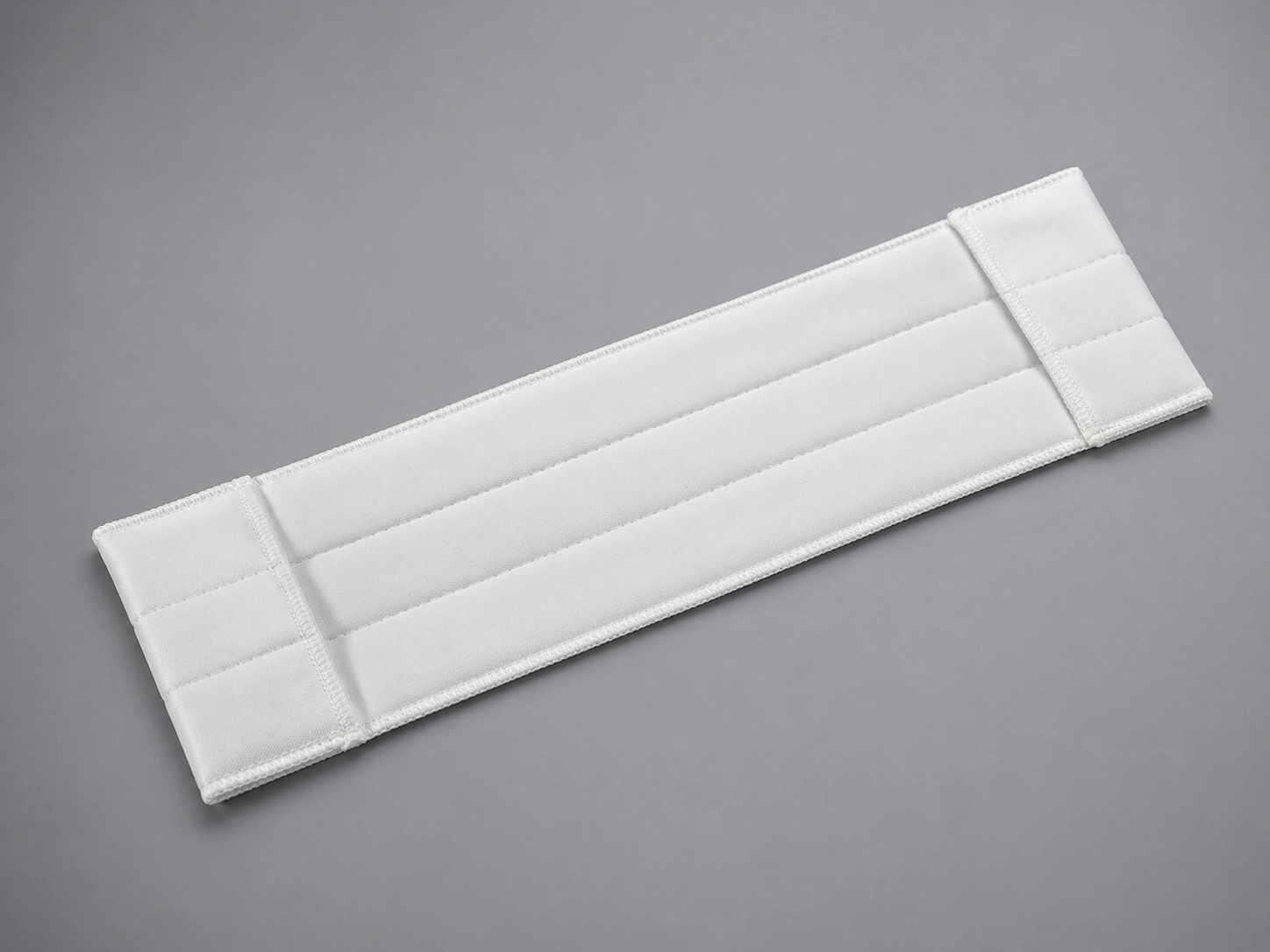
Selecting the right weight across day, night, and weekend shifts requires balancing per-shift coverage with long-term operator safety and cleaning consistency. MIDPOSI offers the White Cleanroom Mop Series in 40g, 55g, and 65g weights to support structured multi-shift programs. Explore the full series or contact us to discuss a weight-by-shift specification for your facility.
Cleanroom mop heads available in 40g, 55g, and 65g — sterile and non-sterile configurations — for structured multi-shift cleaning programs in GMP-controlled environments.