MIDPOSI microfiber cleanroom mops are designed for controlled environments where surface contact, residue pickup, low-lint cleaning performance, and consistent floor, wall, and ceiling cleaning matter.
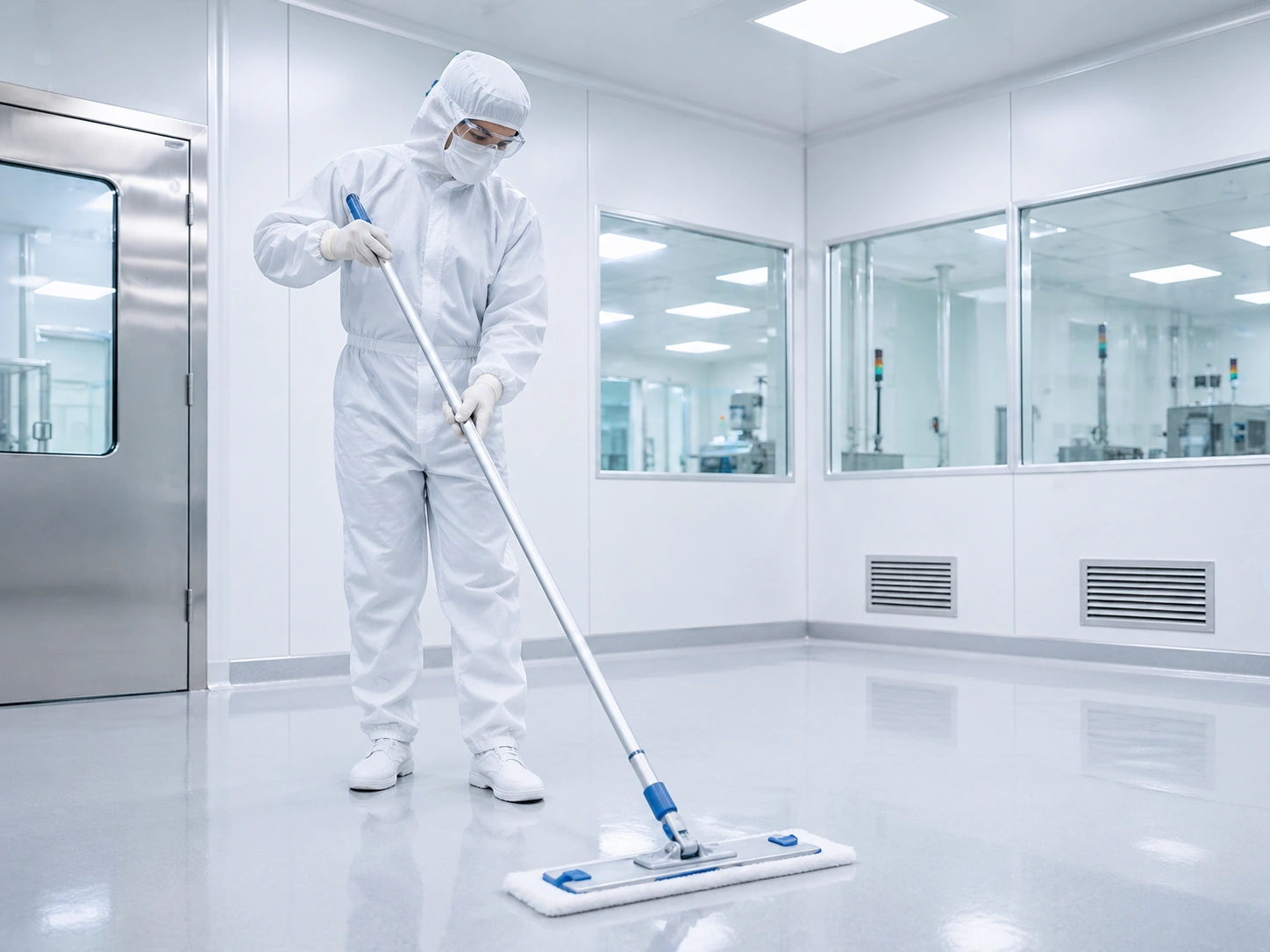
A microfiber cleanroom mop is a low-lint mop cover designed for controlled environments where surface contact, residue pickup, and cleaning coverage are important.
Unlike general-purpose microfiber mops, microfiber cleanroom mops should be selected based on cleanroom suitability, fiber construction, edge design, backing structure, frame compatibility, and disinfectant compatibility. They are commonly used for cleanroom floors, walls, ceilings, corridors, laboratories, and controlled production areas.
Microfiber is often selected for controlled-environment cleaning because its fine fiber structure can support better contact with smooth surfaces and improve residue pickup during routine cleaning.
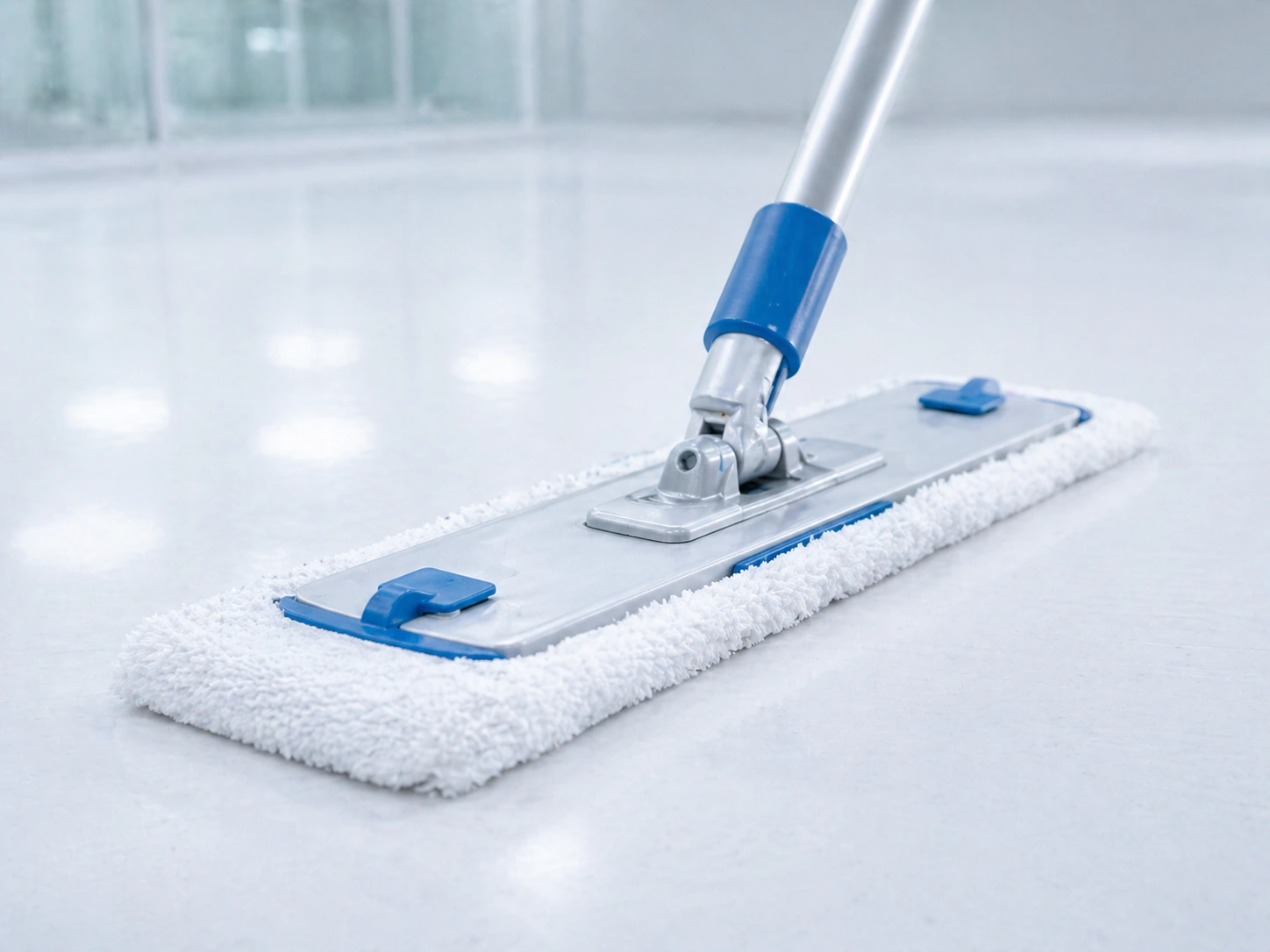
Microfiber creates a high-contact cleaning surface that can help improve coverage on smooth cleanroom floors and panels.
The material can help capture fine residues and light contamination during routine controlled-environment cleaning.
Flat microfiber mop systems are useful for large floors, walls, ceilings, corridors, and support areas.
For cleanroom applications, microfiber mop covers should be selected with low-lint construction and clean edges.
Microfiber cleanroom mops can support many routine cleanroom cleaning tasks when the material, frame, disinfectant compatibility, and cleaning SOP are properly matched.
Supports routine wet or damp mopping of smooth cleanroom floors where residue pickup and surface contact are important.
Can be used with a flat mop frame and suitable handle for vertical cleanroom panel cleaning.
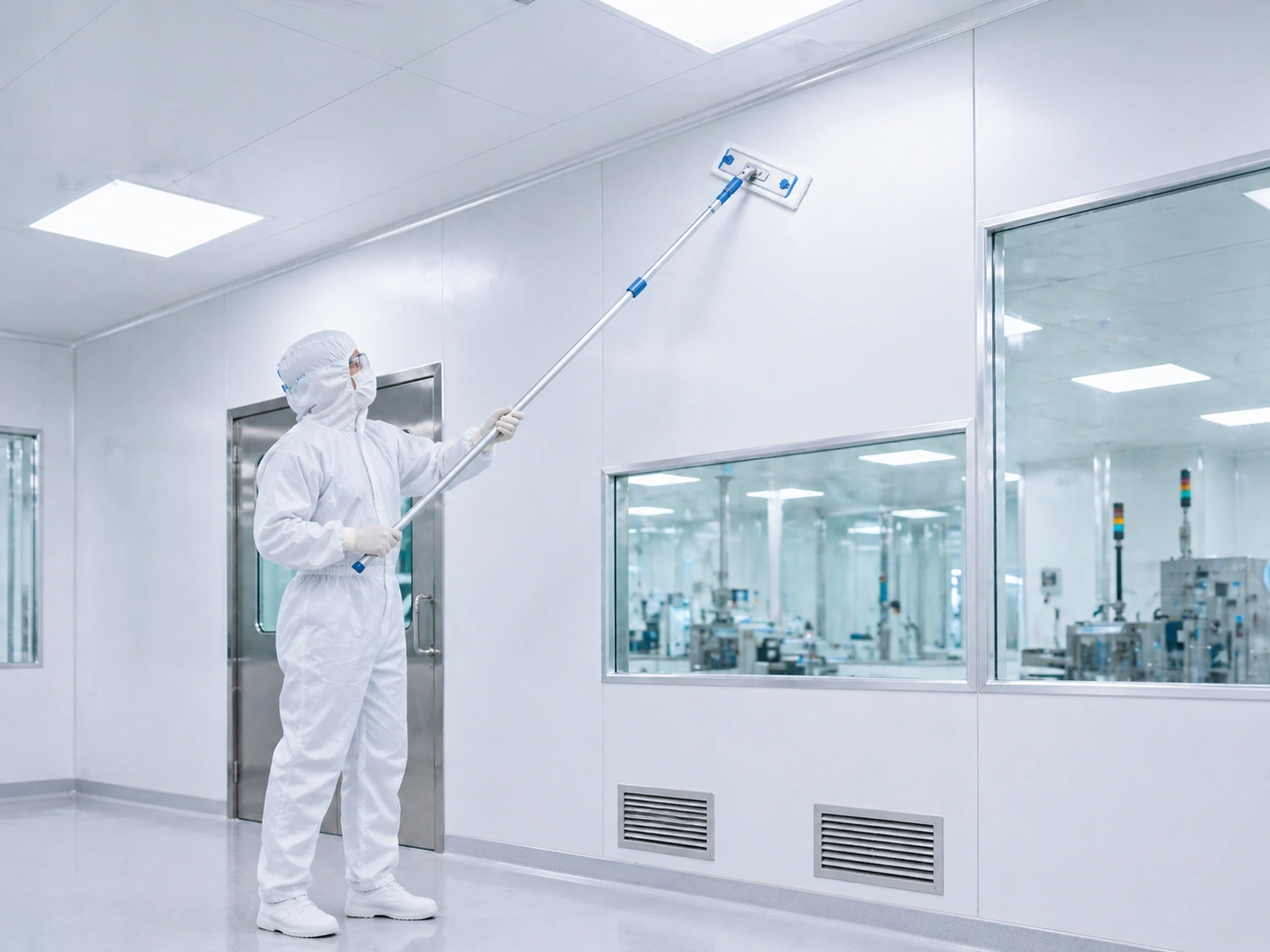
Supports overhead surface cleaning when paired with an extended handle and compatible frame.
Suitable for laboratories, biotech spaces, clean corridors, and controlled support rooms.
Useful for controlled production areas where surface cleanliness and low-lint cleaning tools are required.
Can support cleaning tasks in precision manufacturing and electronics-related controlled spaces.
Microfiber and polyester mop covers can both be used in controlled environments, but they are often selected for different reasons. The best choice depends on the cleanroom area, disinfectant program, low-lint requirements, and internal SOP.
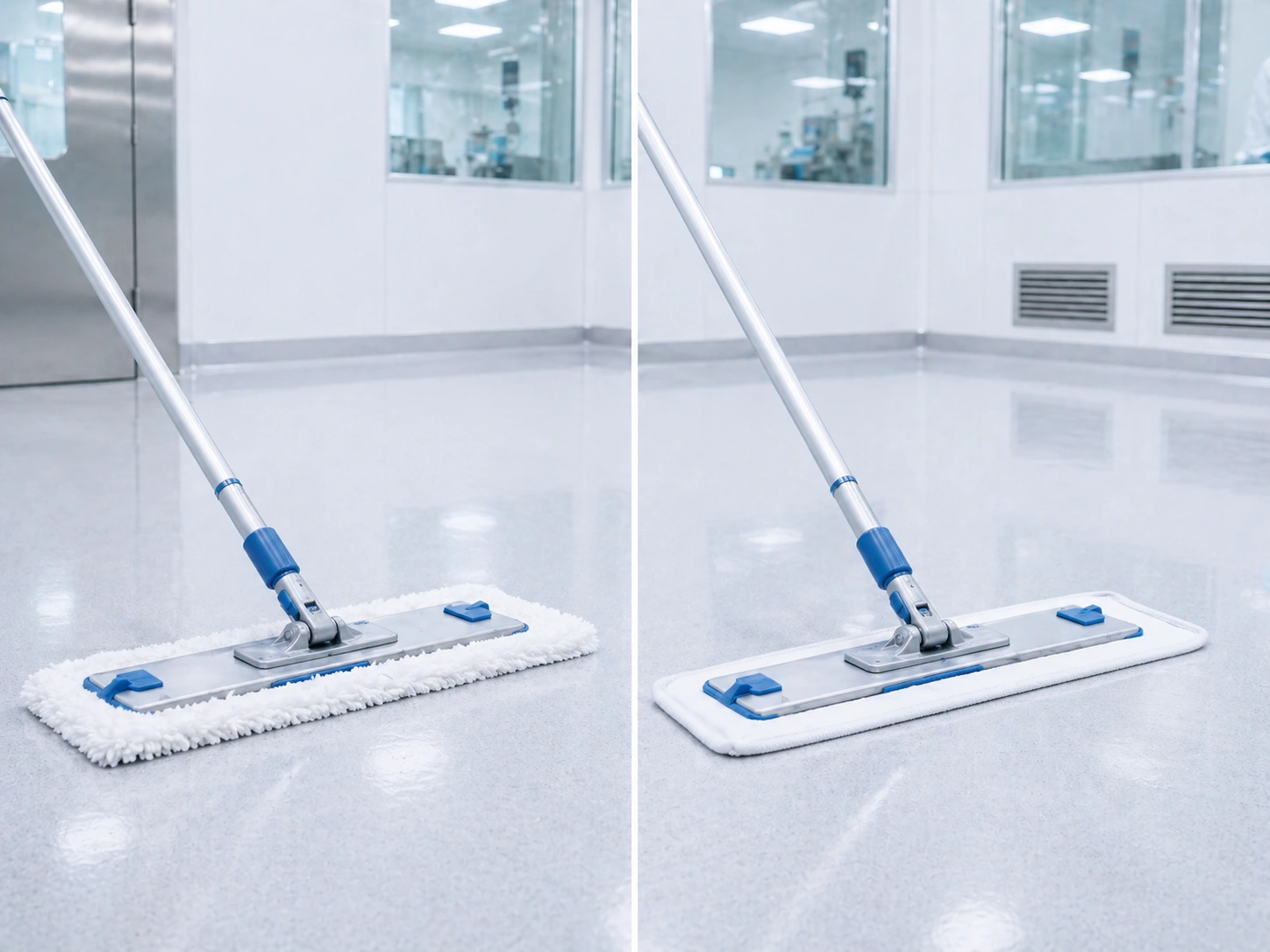
| Udvælgelsesfaktor | Renrumsmoppe i mikrofiber | Polyester renrumsmoppe |
|---|---|---|
| Main advantage | Surface contact and residue pickup | Fnugløs ydeevne og kemisk modstandsdygtighed |
| Typical use | Routine ISO cleanroom cleaning and support areas | Pharmaceutical, GMP, and higher-control cleaning workflows |
| Cleaning area | Floors, walls, ceilings, corridors, and smooth panels | Floors, walls, critical surfaces, and controlled cleaning areas |
| Kemisk kompatibilitet | Depends on microfiber blend, construction, and supplier data | Often preferred where stronger disinfectant compatibility is required |
| Disposable or reusable | Both options may be possible depending on product design | Both options may be possible depending on product design |
| Best fit | Residue pickup and routine cleanroom surface cleaning | Low-lint GMP cleaning and stronger chemical-resistance needs |
A microfiber mop cover should not be selected alone. It performs best when matched with the correct flat mop frame, cleanroom handle, bucket workflow, and cleaning SOP. For the complete system view, visit the MIDPOSI systemguide til renrumsmoppe.
Selected for residue pickup, surface coverage, and cleanroom-compatible cleaning performance.
Supports stable contact between the microfiber cover and the cleanroom surface.
Allows ergonomic floor, wall, and ceiling cleaning in controlled environments.
Defines wetting, mopping direction, area zoning, replacement, and disinfection procedure.
Use the table below as a practical procurement guide when comparing microfiber cleanroom mop options.
| Krav | Hvad skal man tjekke | Hvorfor det betyder noget |
|---|---|---|
| Cleanroom class | ISO class, cleanroom area, and internal cleaning SOP | Determines where microfiber mop covers are suitable |
| Material construction | Microfiber blend, edge structure, backing, and surface texture | Affects residue pickup, durability, and lint control |
| Rammekompatibilitet | Flat mop frame size and attachment method | Improves surface contact and cleaning coverage |
| Kemisk kompatibilitet | Compatibility with IPA, disinfectants, and cleaning agents | Reduces risk of fiber damage or material degradation |
| Cleaning area | Floor, wall, ceiling, corridor, or controlled surface | Helps determine mop cover size and handle length |
| Dokumentation | Specification, material data, packaging, and lot information | Supports procurement review and QA approval |
Tell us your cleanroom class, application area, mop frame size, cleaning chemical, and whether disposable or reusable options are preferred. MIDPOSI can help recommend a suitable microfiber mop configuration.
Microfiber is useful for routine controlled-environment cleaning, but some facilities may require a different mop material depending on sterility, chemical exposure, and internal QA requirements.
If microfiber is not the best fit, buyers may consider disposable cleanroom mops, polyester mop covers, or a complete validated cleanroom mop system depending on the facility’s SOP.
MIDPOSI supports B2B buyers with microfiber cleanroom mop options for ISO cleanrooms, laboratories, medical device production, electronics support areas, and routine controlled-environment cleaning.
Cleanroom-compatible mop covers for floor, wall, ceiling, and support-area cleaning.
Flat mop frames designed to support stable surface contact and practical cleaning coverage.
Handle options for floor cleaning, wall cleaning, and overhead cleaning workflows.
Product selection support for cleanroom class, application area, and cleaning workflow.
These answers are written for purchasing managers, QA teams, cleanroom supervisors, and contamination-control buyers.
A microfiber cleanroom mop is a cleanroom-compatible mop cover designed to support surface contact, residue pickup, and routine controlled-environment cleaning on floors, walls, ceilings, and smooth panels.
Yes, microfiber mops can be suitable for cleanrooms when the mop cover is designed for low-lint performance, cleanroom compatibility, chemical compatibility, and the facility’s internal cleaning SOP.
Microfiber cleanroom mops are often selected for surface contact and residue pickup. Polyester cleanroom mops are often selected for low-lint performance and stronger chemical compatibility in higher-control environments.
Microfiber cleanroom mops may be used in GMP facilities when properly qualified by the facility. Buyers should confirm material data, chemical compatibility, lint performance, and internal SOP suitability before approval.
Yes. Microfiber cleanroom mop covers can be used on walls and ceilings when matched with a suitable flat frame and cleanroom handle for vertical or overhead cleaning.
Buyers should evaluate cleanroom class, cleaning area, microfiber construction, edge design, frame compatibility, chemical compatibility, packaging, documentation, and whether disposable or reusable use is preferred.
MIDPOSI supports B2B buyers with microfiber cleanroom mop options for ISO cleanrooms, GMP support areas, laboratories, medical device production, electronics manufacturing, and controlled-environment cleaning applications.