Farmaceutisk • GMP • Validering • Kontamineringskontrol
Renrumsmoppekrav til farmaceutisk fremstilling (GMP & validering)
En GMP-fokuseret guide til valg af en farmaceutisk renrumsmoppe based on contamination risk, SOP repeatability, validation, and audit readiness—written for procurement and QA teams.
Start fra sourcing-hubben: Engros renrumsmoppe – komplet vejledning.
Inden for farmaceutisk fremstilling betragtes rengøringsværktøjer ikke som hjælpeudstyr. EN farmaceutisk renrumsmoppe er en del af forureningskontrolstrategien og har direkte indflydelse på GMP-overholdelse, produktsikkerhed og inspektionsresultater. For indkøbsledere, QA/valideringsteams og facility managers skal moppevalg stemme overens med regulatoriske forventninger frem for bekvemmelighed eller omkostninger alene.
Denne artikel skitserer nøglen krav til renrumsmoppe til farmaceutisk fremstilling, med fokus på GMP-principper, valideringslogik og revisionsberedskab. Den er skrevet ud fra et teknisk perspektiv på leverandørsiden for at understøtte risikobaseret beslutningstagning.
Er du ny med det grundlæggende i moppesystemet? Læse: Hvad er en renrumsmoppe.
1. Hvorfor renrumsmopper betyder noget i farmaceutiske GMP-miljøer
I GMP-regulerede faciliteter er rengøring en valideret proces designet til at fjerne rester, kontrollere mikrobiel kontaminering og forhindre krydskontaminering mellem produkter. Renrumsmoppen er et direkte kontaktværktøj i denne proces.
Forkert valg af moppe kan medføre risici som:
- Ukontrolleret partikel- eller fiberudskillelse
- Inkonsekvent anvendelse af desinfektionsmidler
- Variable rengøringsresultater mellem operatører
- Huller i sporbarhed og dokumentation
Af disse grunde evaluerer regulatoriske inspektører ofte rengøringsværktøjer som en del af den overordnede forureningskontrolstrategi, især i klasse A-D farmaceutiske renrum.
Beslutningspunkt på systemniveau: Engangs- vs genanvendelige renrumsmopper.
2. Oversigt over farmaceutiske rengøringskrav til renrum
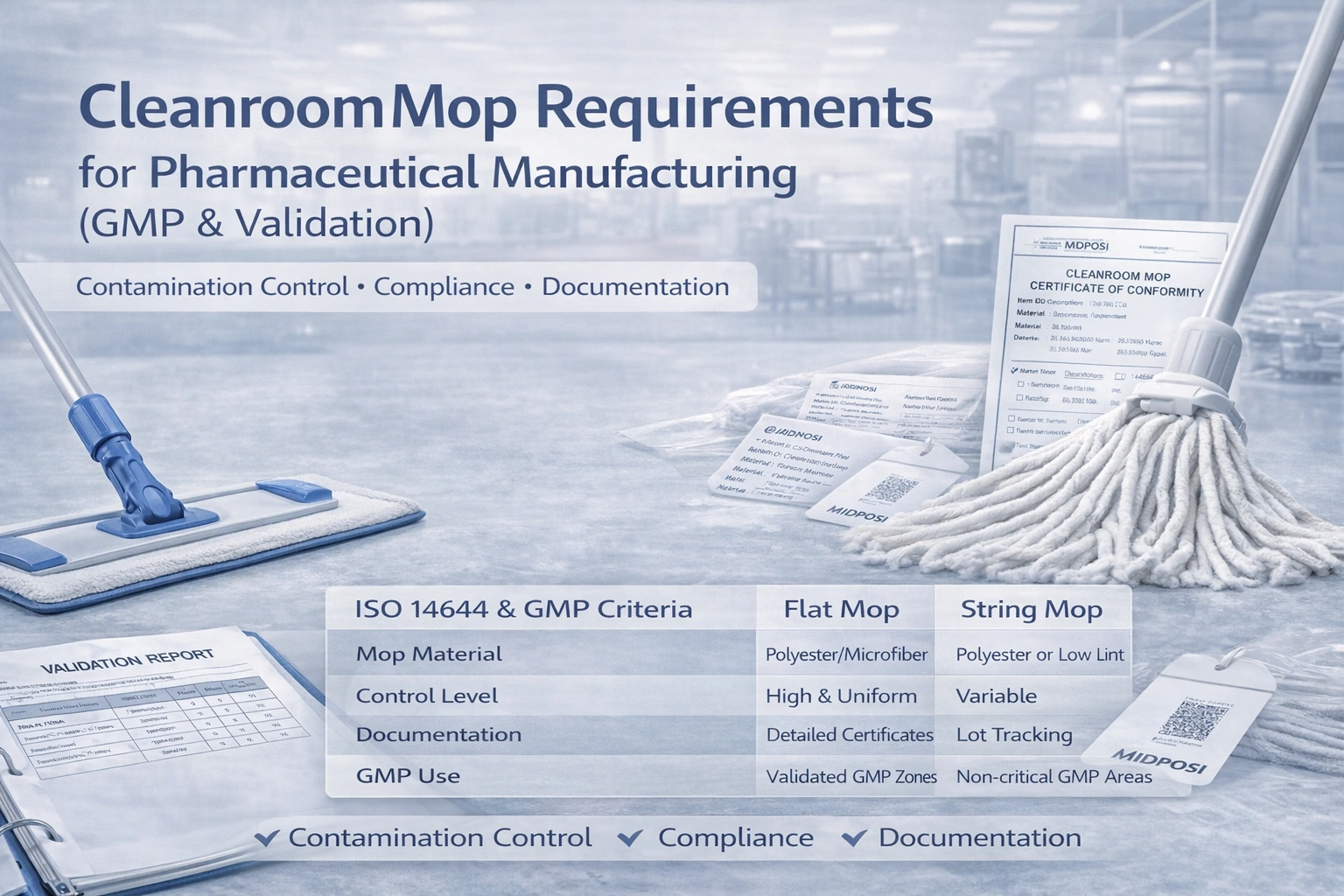
Farmaceutiske renrumsrengøringsprogrammer er styret af en kombination af GMP-principper, interne SOP'er og internationale standarder såsom ISO 14644. Rengøringsværktøjer skal understøtte:
- Fjernelse af synlige og usynlige rester
- Kontrol af partikel- og mikrobiel kontaminering
- Gentagelighed af validerede rengøringsprocesser
- Dokumenteret bevis for audit og inspektioner
I modsætning til generel industriel rengøring lægger farmaceutisk renrumsrengøring vægt på proceskontrol over rengøringskraft eller -hastighed.
Standardkortlægning: ISO 14644 & GMP renrumsmopper.
3. GMP-principper, der påvirker valg af renrumsmoppe
Risikobaseret kontamineringskontrol
Valg af moppe bør afspejle risikoprofilen for renrumszonen. Områder af højere kvalitet kræver strengere kontrol med fibre, partikler og mikrobiel belastning.
Processens repeterbarhed
Rengøringsresultater skal være ensartede uanset operatør. Moppedesign og materiale spiller en afgørende rolle for at minimere variationen.
Sporbarhed og ændringskontrol
Enhver ændring i moppemateriale, leverandør eller fremstillingsproces kan udløse genvalidering. Stabilitet og konsistens er derfor afgørende.
Hvis dit risikofokus er partikel-/fiberkontrol, se: Partikel & Kontrol af fiberrester.
4. Krav til moppemateriale i farmaceutiske renrum
Renrumsmopper i polyester
Polyestermopper fremstillet af kontinuerlige filamentgarner er meget udbredt i farmaceutiske miljøer på grund af deres lave og forudsigelige partikelafgivelse.
- Stærk kemisk modstandsdygtighed over for desinfektionsmidler og opløsningsmidler
- Stabil ydeevne på tværs af batcher
- Nemmere integration i validerede processer
Renrumsmopper i mikrofiber
Mikrofibermopper giver forbedret mekanisk partikelfangning på grund af deres fine fiberstruktur. De kræver dog strammere produktions- og proceskontrol.
- Højere rest- og partikelfjernelseseffektivitet
- Større afhængighed af fiberkvalitet og forarbejdning
- Potentielt højere valideringskompleksitet
Dyb materialesammenligning: Polyester vs mikrofiber renrumsmopper.

5. Krav til moppestruktur og format
Flade mopper
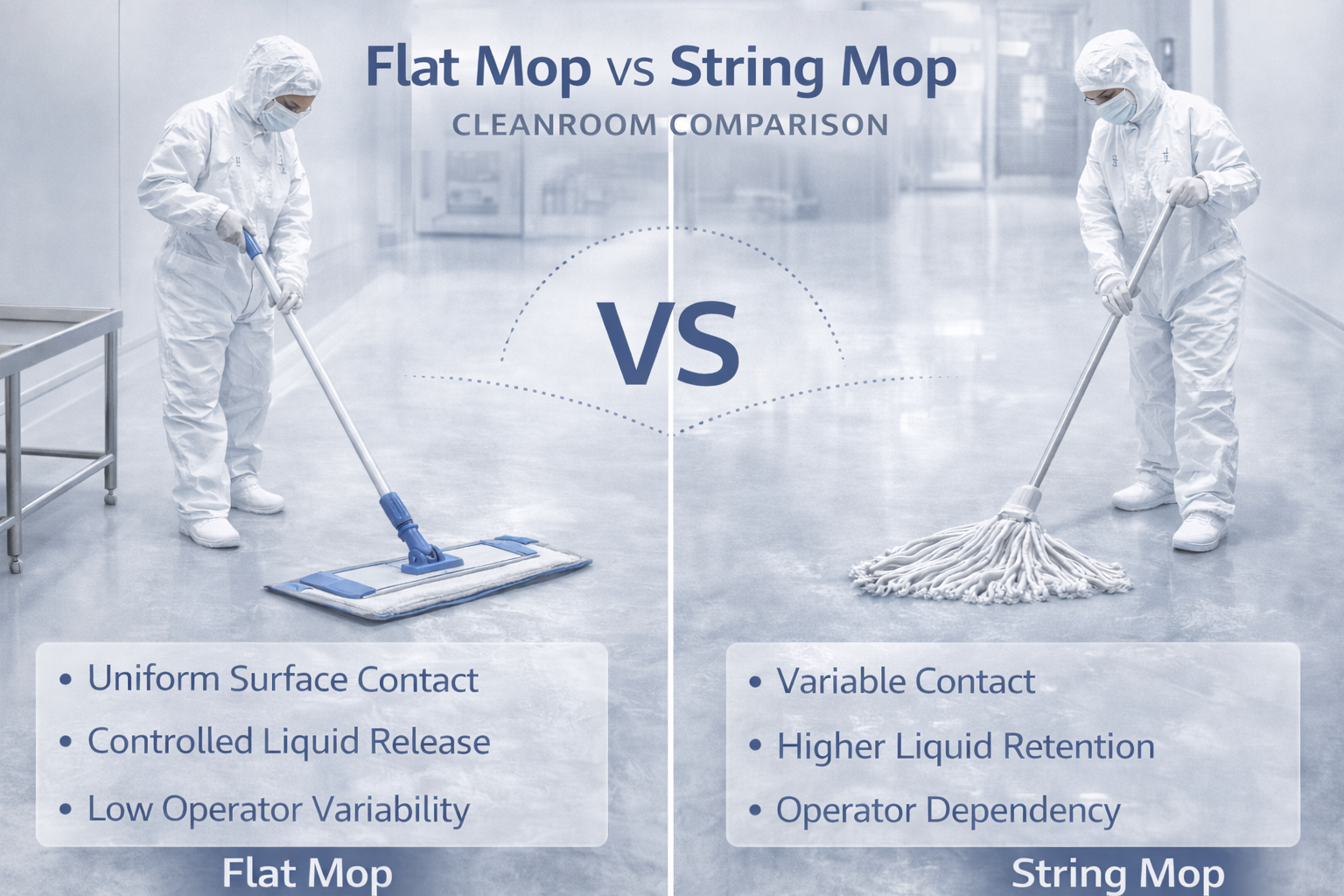
Flade mopper giver ensartet overfladekontakt og kontrolleret væskefrigivelse, hvilket gør dem velegnede til validerede farmaceutiske rengøringsprocesser.
Strengemopper
Stringmopper tilbyder højere væskeretention og fleksibilitet, men introducerer større operatørafhængig variabilitet.
Strukturel valgvejledning: Fladmoppe vs Stringmoppe i renrumsrengøring.
Engangsmopper vs genanvendelige mopper
Engangsmopper foretrækkes ofte i farmaceutiske områder med højere risiko for at reducere krydskontaminering og hvidvaskvariabler, mens genanvendelige mopper kan bruges i kontrollerede støtteområder.
Systemtilgang: Engangs- vs genanvendelige renrumsmopper.
6. Forventninger til partikel-, fiber- og restkoncentrationer
Farmaceutiske renrumsmopper skal opfylde strenge forventninger til partikel- og fiberkontrol.
- Lav fnug- og fiberfrigivelse under våde og tørre forhold
- Minimal restdannelse under brug
- Kompatibilitet med miljøovervågningsprogrammer
Manglende kontrol med disse faktorer kan føre til øget partikelantal eller uønskede inspektionsresultater.
Detaljeret risikokontrol: Partikel & Kontrol af fiberrester.
7. Rengøringsvalidering og dokumentationskrav
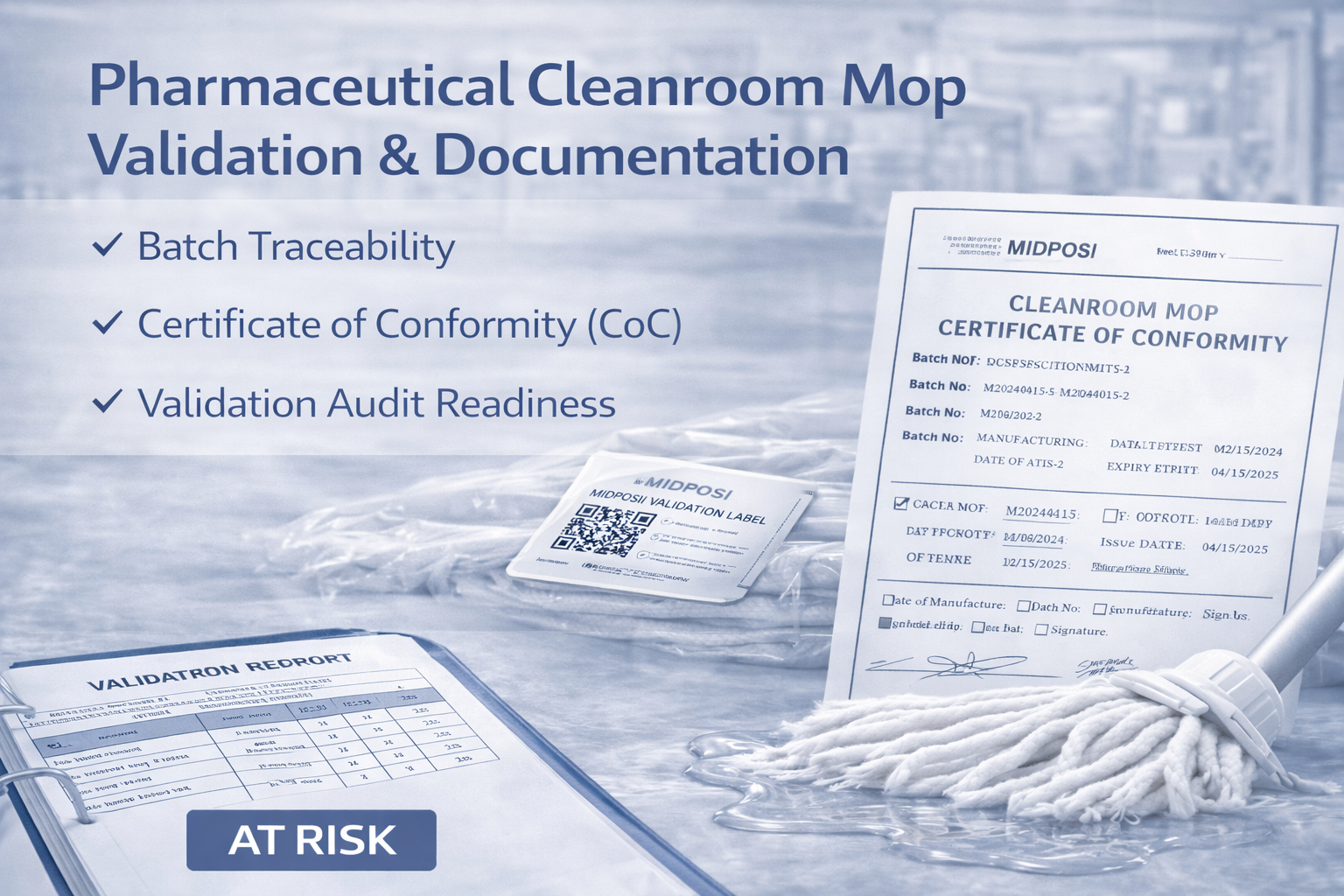
Rengøringsvalidering i farmaceutiske miljøer kræver dokumenteret dokumentation for, at rengøringsprocessen konsekvent opfylder foruddefinerede acceptkriterier.
For renrumsmopper omfatter dette typisk:
- Materialespecifikationer og overensstemmelsescertifikater
- Batch- og partisporbarhed
- Ændringsstyringsdokumentation
- Understøttelse af rengøringsvalideringsprotokoller
Detaljer om valideringsdokumentation: Renrumsmoppe-valideringsdokumentation.
8. Overvejelser om revision og lovgivningsmæssig inspektion
Under GMP-inspektioner kan tilsynsmyndigheder gennemgå:
- Tilpasning mellem SOP'er og brugte rengøringsværktøjer
- Konsistens af moppematerialer på tværs af partier
- Optegnelser om leverandørkvalifikation
- Bevis på ændringskontrol
Tydelig dokumentation og leverandørgennemsigtighed hjælper med at reducere inspektionsrisikoen.
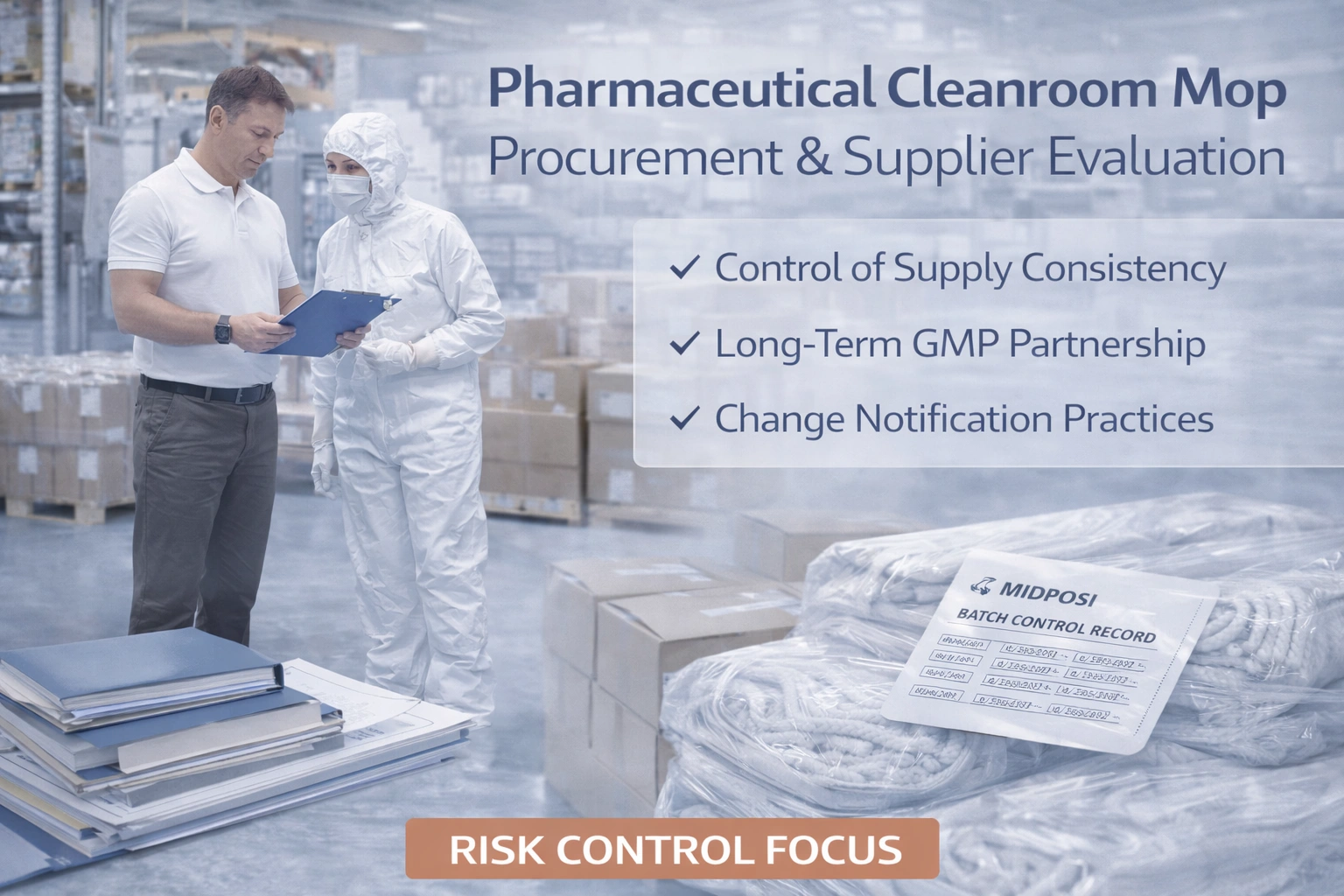
9. Hvordan indkøbs- og kvalitetssikringsteams bør evaluere moppeleverandører
Leverandørevaluering bør strække sig ud over enhedspris og tilgængelighed.
- Produktionskontrol og batchkonsistens
- Dokumentationsstøtte til GMP-validering
- Skift underretningspraksis
- Skalerbarhed til langsigtet levering
Leverandørevalueringsramme: Sådan vælger du en engrosleverandør af renrumsmoppe.
Hvis du har brug for et dybere blik på stabilitetskontrol: Kvalitetskonsistens & Batch kontrol.
10. Almindelige indkøbsfejl i farmaceutiske renrumsmopper
- Valg af mopper baseret på omkostninger uden valideringskonsekvensvurdering
- Skift leverandør uden formel ændringskontrol
- Ignorerer batch-til-batch-variabilitet
- Overser dokumentationskrav
At undgå disse fejl hjælper med at opretholde GMP-overholdelse og inspektionsberedskab.
11. Hvorfor MIDPOSI understøtter farmaceutiske GMP-rengøringsprogrammer
MIDPOSI leverer renrumsmopper designet til farmaceutiske miljøer med fokus på batchkonsistens, dokumentationsunderstøttelse og langsigtet forsyningsstabilitet. Målet er at støtte kompatible rengøringsprogrammer i stedet for at fremme en enkelt produkttype.
Praktiske indkøbsvariabler såsom MOQ og leveringstid: MOQ, ledetid & Prissætning.
GMP-fokuseret indkøbstjekliste
- Definer renrumskvalitet: match moppevalg til zonerisiko og rengøringshensigt.
- Bekræft SOP-tilpasning: befugtningsmetode, desinfektionsmiddelkompatibilitet, kontakttid, acceptkriterier.
- Kontrolvariabilitet: reducere operatørens afhængighed i GMP-kritiske områder.
- Bekræft dokumentation: batchsporbarhed, CoC, ændringskontrol, valideringsunderstøttelse.
- Plan skalerbarhed: stabil gennemløbstid og ensartet batch-til-batch-ydelse.
Vend tilbage til søjle-navet: Engros renrumsmoppe – komplet vejledning.