Sterile cleanroom mops for aseptic processing are single-use or strictly validated reusable mops that achieve sterility assurance level SAL 10⁻⁶ (Sterility Assurance Level) through validated sterilization methods with biological indicator confirmation.
Sterile cleanroom mops for aseptic processing are a critical part of GMP and ISO-compliant cleanroom operations. They support contamination control, validated cleaning procedures, and sterility assurance in aseptic manufacturing environments.
Sterile cleanroom mops are a core part of GMP-compliant contamination control programs.
FDA, EMA, and EU GMP Annex 1 expectations require validated sterility, traceability, and documentation.
Regular monitoring and sterility verification are essential to maintain compliance and process control.
Personnel training and procedural discipline are necessary to ensure correct aseptic mop handling and use.
Deviation handling, CAPA systems, and audit-ready records help drive continuous improvement.

Sterile cleanroom mops for aseptic processing are single-use or strictly validated reusable mops that achieve sterility assurance level SAL 10⁻⁶ (Sterility Assurance Level) through validated sterilization methods with biological indicator confirmation. According to EU GMP Annex 1 and FDA guidance, sterile mops used in Grade A (ISO 5) critical zones require gamma irradiation or validated autoclave sterilization, sterile barrier packaging, lot-based traceability, and documented sterility verification through biological indicators. Sterile mops reduce re-use contamination risk and provide assured sterility for aseptic manufacturing where product sterility is non-negotiable.
In aseptic pharmaceutical processing, one compromised mop or one unvalidated cleaning procedure can result in batch loss, patient safety risk, and regulatory findings. Most facilities understand the concept, but few have a complete sterility assurance framework that integrates material science, sterilization validation, packaging integrity, and usage tracking.
This article provides a complete, implementation-ready sterility assurance framework for aseptic processing mops — a critical topic that many competitors address only at a basic product-description level rather than from an operational excellence and contamination control perspective.
As discussed in our disposable vs reusable cleanroom mop guide, sterility assurance requires understanding the full lifecycle from material selection through validated sterilization to aseptic use and traceability.
| Standard | Grade A (ISO 5) Requirement | Evidence Required | Frequency |
|---|---|---|---|
| EU GMP Annex 1.5 | Sterility demonstrable | BI confirmation | Per use |
| FDA Aseptic Processing Guide | Validated sterilization method | Validation report | Per batch / mop |
| USP <797> | Sterility assurance | Certificate of analysis | Per lot |
| PDA TR13 | Sterility maintenance program | Monitoring data | Ongoing |
┌─────────────────────────────────────────────────────────────────────┐
│              STERILITY ASSURANCE LEVEL (SAL) EXPLAINED             │
├─────────────────────────────────────────────────────────────────────┤
│  WHAT IS SAL 10⁻⁶?                                                 │
│  • Probability of finding viable microorganism: 1 in 1,000,000    │
│  • Mathematical notation: 10⁻⁶                                    │
│  • Required for aseptic processing and terminally sterilized       │
│    products                                                        │
│                                                                     │
│  HOW IS IT ACHIEVED?                                               │
│  • Method: Gamma irradiation (25-50 kGy) OR ETO (37-63°C)         │
│  • Validation: Biological indicator (BI) showing no growth        │
│  • Material compatibility: Must withstand sterilization without    │
│    degradation                                                     │
│  • Packaging: Maintains sterility until use                        │
│                                                                     │
│  DOCUMENTATION REQUIRED                                            │
│  • Sterilization certificate from supplier                         │
│  • Lot number traceability                                         │
│  • BI confirmation records                                         │
│  • Validation data for facility method                             │
│                                                                     │
│  STERILITY ASSURANCE LEVELS                                        │
│  • SAL 10⁻⁶: Terminal sterilization (Grade A critical zone)       │
│  • SAL 10⁻³: High-level disinfection (Grade B)                    │
│  • SAL 10⁻⁴: Sanitization (Grade C)                               │
└─────────────────────────────────────────────────────────────────────┘

| Method | Temperature | Dose / Time | Effectiveness | Material Compatibility | Verification |
|---|---|---|---|---|---|
| Gamma Irradiation | N/A | 25-50 kGy | ≥6 log, SAL 10⁻⁶ | All materials | BI certificate |
| Autoclave (Steam) | 121-134°C | 15-30 min @ 15 psi | ≥6 log, SAL 10⁻⁶ | Polyester compatible | BI per cycle |
| ETO (Ethylene Oxide) | 37-63°C | 3-12 hrs + 48h aeration | ≥6 log, SAL 10⁻⁶ | All materials | BI certificate |
| Dry Heat | 160-180°C | 2-4 hrs | ≥4 log, SAL 10⁻⁶ | Limited materials | BI certificate |
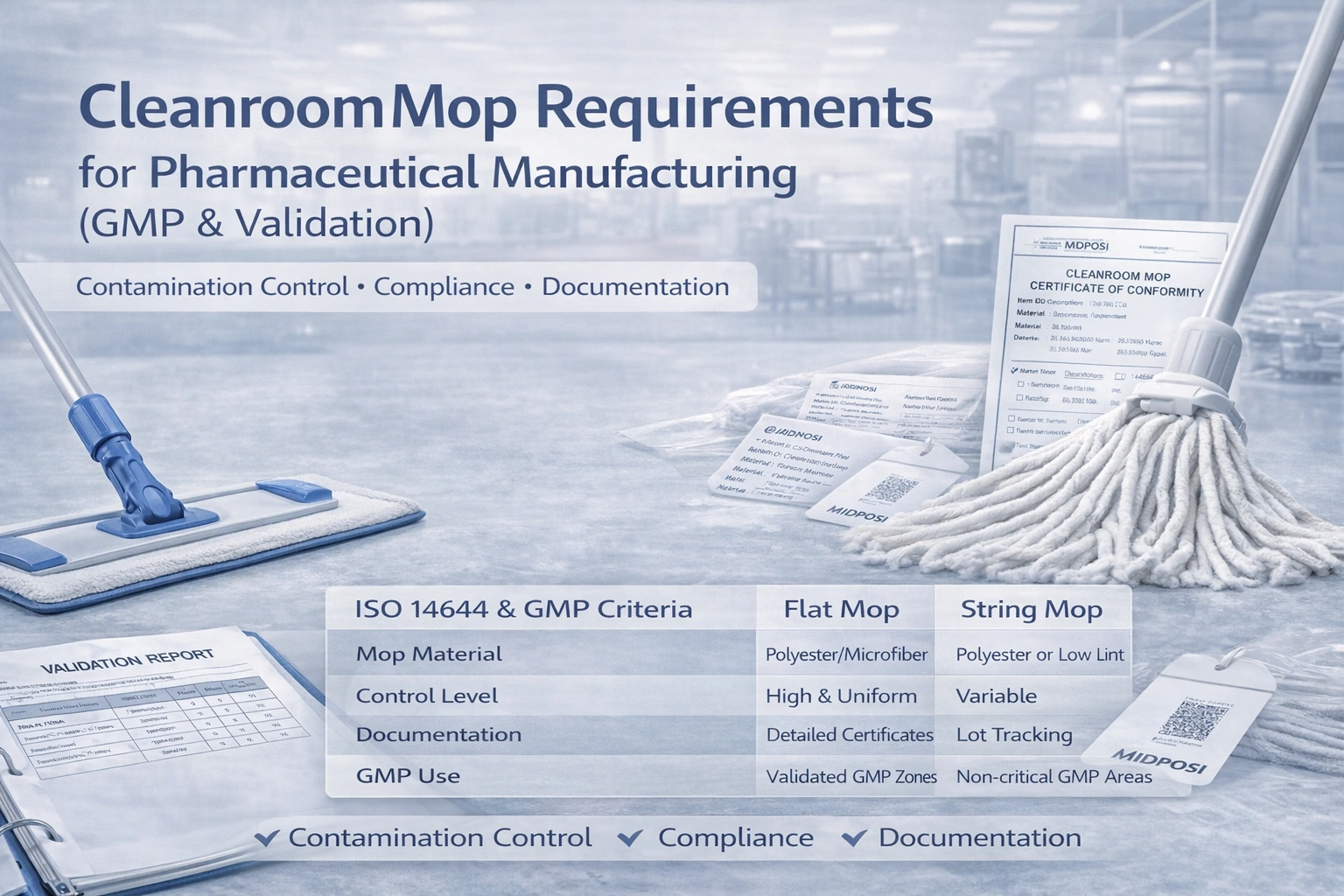
Recommended for Grade A:
┌─────────────────────────────────────────────────────────────────────┐
│            GAMMA IRRADIATION FOR ASEPTIC MOPS FRAMEWORK            │
├─────────────────────────────────────────────────────────────────────┤
│  IRRADIATION PARAMETERS                                            │
│  • Dose range: 25-50 kGy                                           │
│  • Source: Cobalt-60 or Cesium-137                                 │
│  • Effect: SAL 10⁻⁶ sterility achieved                            │
│  • Penetration: Through entire mop assembly                        │
│  • Temperature rise: Minimal during irradiation                    │
│                                                                     │
│  MATERIAL CONSIDERATIONS                                           │
│  • Polyester: Excellent (maintains integrity)                      │
│  • Microfiber: Good (minor degradation at high dose)               │
│  • Blends: Variable (validate per material)                        │
│  • Handles: Must be irradiation-compatible                         │
│                                                                     │
│  VALIDATION PROTOCOL                                               │
│  ☐ Supplier BI certificate attached to each package batch          │
│  ☐ BI type specified                                               │
│  ☐ BI population: ≥10⁶ spores                                      │
│  ☐ D-Value: ≥10⁶ (10⁻⁶)                                           │
│  ☐ Incubation: 30 days at 55-60°C                                  │
│  ☐ Result: No growth required for acceptance                       │
│                                                                     │
│  PACKAGING INTEGRITY                                               │
│  ☐ Sterile barrier packaging                                       │
│  ☐ Sealed outer packaging                                          │
│  ☐ Maintain sterility indicator visibility                         │
│  ☐ No damage or breach detected                                    │
│                                                                     │
│  CERTIFICATE VERIFICATION                                          │
│  ☐ Certificate reviewed against irradiation parameters             │
│  ☐ Lot number cross-referenced                                     │
│  ☐ Valid through date confirmed                                    │
└─────────────────────────────────────────────────────────────────────┘
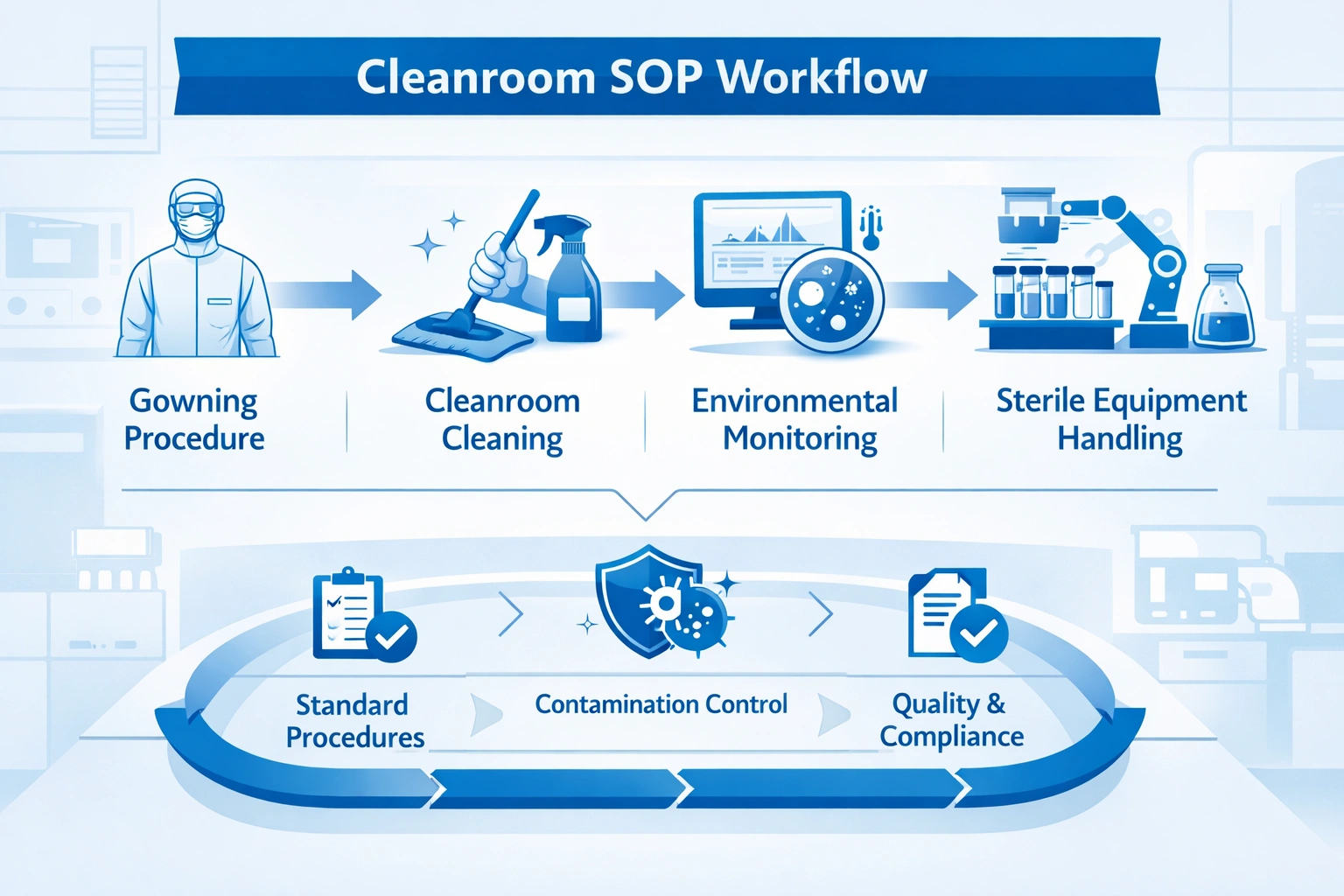
| Packaging Element | Requirement | Critical Control | Verification |
|---|---|---|---|
| Primary Barrier | Double sterile bag or sealed container | No breach detection | Visual inspection |
| Outer Packaging | Protective tear-proof layer | Physical integrity | Seal integrity test |
| Sterility Indicator | Visible and accessible | Confirm intactness | Color change verification |
| Lot Traceability | Unique lot number on all units | Traceability | Scanning / verification |
| Use-Ready Format | Quick access without contamination | Containment risk | Aseptic transfer protocol |
| Expiration | Valid through date displayed | Time-limited sterility | Date monitoring |
Critical procedure for Grade A zones:
┌─────────────────────────────────────────────────────────────────────┐
│           ASEPTIC MOP TRANSFER PROTOCOL (GRADE A)                  │
├─────────────────────────────────────────────────────────────────────┤
│  PRE-TRANSFER PREPARATION                                          │
│  ☐ Personnel in Grade A gowning complete                           │
│  ☐ Gloves sanitized and donned                                     │
│  ☐ Transfer area validated as clean                                │
│  ☐ Mop staging area prepared                                       │
│  ☐ Tools and materials ready                                       │
│                                                                     │
│  PHASE 1: PACKAGING OPENING                                        │
│  ☐ Outer packaging inspected for integrity                         │
│  ☐ No damage, tears, or breaches detected                          │
│  ☐ Sterility indicator verified                                    │
│  ☐ Opened with sterile scissors or tool                            │
│                                                                     │
│  PHASE 2: PRIMARY BARRIER REMOVAL                                  │
│  ☐ Inner sterile bag exposed within clean air                      │
│  ☐ Mop immediately removed with sterile forceps                    │
│  ☐ Transferred to sterile holding container                        │
│  ☐ Container sealed immediately                                    │
│                                                                     │
│  PHASE 3: ASEPTIC TRANSFER                                         │
│  ☐ Mop transported via pass-through or direct transfer             │
│  ☐ No exposure to non-aseptic environment                          │
│  ☐ Received by Grade A operator                                    │
│  ☐ Transfer documented: Time, Mop ID, Lot #, Operators             │
│                                                                     │
│  PHASE 4: DOCUMENTATION                                            │
│  ☐ Transfer log updated                                            │
│  ☐ Sterility indicator recorded                                    │
│  ☐ Any discrepancies documented and investigated                   │
└─────────────────────────────────────────────────────────────────────┘
┌─────────────────────────────────────────────────────────────────────┐
│           STERILE MOP LOT TRACEABILITY FRAMEWORK                   │
├─────────────────────────────────────────────────────────────────────┤
│  SUPPLIER LOT INFORMATION                                          │
│  ☐ Supplier name                                                   │
│  ☐ Supplier lot #                                                  │
│  ☐ Manufacturing date                                              │
│  ☐ Sterilization date                                              │
│  ☐ Irradiation dose and method                                     │
│  ☐ Sterility certificate #                                         │
│  ☐ Valid through                                                   │
│                                                                     │
│  RECEIVING VERIFICATION                                            │
│  ☐ Certificate matches shipment                                    │
│  ☐ Lot number matches certificate                                  │
│  ☐ Dose within specified range                                     │
│  ☐ Sterility indicator verified                                    │
│  ☐ Packaging integrity confirmed                                   │
│                                                                     │
│  USAGE TRACKING SYSTEM                                             │
│  ☐ Unique mop ID per unit                                          │
│  ☐ Use date / operator / zone / purpose                            │
│  ☐ Disposal method documented                                      │
│                                                                     │
│  DISPOSAL / REPLACEMENT TRACKING                                   │
│  ☐ Disposal date                                                   │
│  ☐ Replacement mop ID                                              │
│  ☐ Disposal reason documented                                      │
│                                                                     │
│  AUDIT TRAIL                                                       │
│  ☐ Complete record from receipt to disposal                        │
│  ☐ Audit-ready for inspection                                      │
│  ☐ Retention period: 5 years minimum                               │
└─────────────────────────────────────────────────────────────────────┘
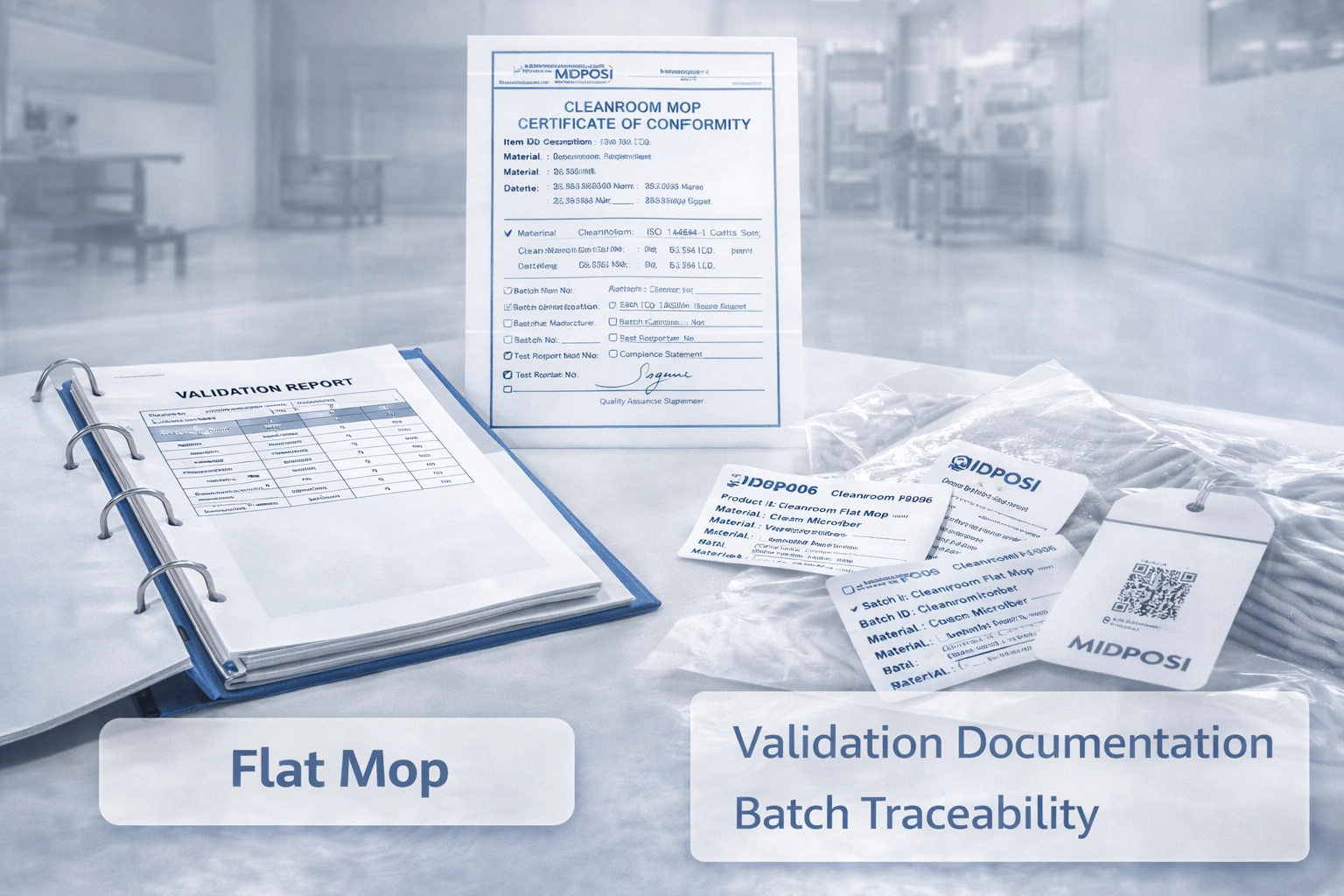
| QC Indicator | Acceptance Criteria | Frequency | Action Threshold |
|---|---|---|---|
| BI Acceptance | No growth required | Per lot | Any growth = lot rejection |
| Lot Number Accuracy | 100% match between packaging and certificate | Per receipt | Mismatch = investigation |
| Dose Range | 25-50 kGy | Per lot | Outside range = re-sterilization |
| Packaging Integrity | 100% intact | Per use | Breach = disposal |
| Expiry Compliance | No expired mops used | Per use | Expired = rejection |
| Traceability | 100% from receipt to disposal | Quarterly | Gaps = investigation |
Complete BI testing program:
┌─────────────────────────────────────────────────────────────────────┐
│         BIOLOGICAL INDICATOR (BI) VERIFICATION FRAMEWORK           │
├─────────────────────────────────────────────────────────────────────┤
│  BI SELECTION CRITERIA                                             │
│  ☐ Organism: Geobacillus stearothermophilus spores                 │
│  ☐ Population: ≥10⁶ spores                                         │
│  ☐ D-Value: ≥10⁶ (10⁻⁶)                                           │
│  ☐ Resistant to irradiation                                        │
│                                                                     │
│  SUPPLIER VERIFICATION                                             │
│  ☐ Supplier BI validation data reviewed                            │
│  ☐ Certificate authenticity verified                               │
│  ☐ BI placement confirmed                                          │
│                                                                     │
│  INCUBATION PROCEDURE                                              │
│  ☐ Temperature: 55-60°C                                            │
│  ☐ Duration: 30 days minimum                                       │
│  ☐ Positive control included                                       │
│  ☐ Negative control included                                       │
│                                                                     │
│  RESULT INTERPRETATION                                             │
│  ☐ No growth = Acceptable                                          │
│  ☐ Growth = Reject lot                                             │
│  ☐ Inconclusive = Re-test                                          │
│                                                                     │
│  LOT ACCEPTANCE DECISION                                           │
│  ☐ ACCEPT / REJECT / RE-STERILIZE / INVESTIGATE                    │
└─────────────────────────────────────────────────────────────────────┘
| Metric | Target | Data Source | Frequency | Alert Level |
|---|---|---|---|---|
| BI Pass Rate | 100% (0 failures) | BI testing | Per lot | <95% |
| Lot Rejection Rate | <1% | Rejection log | Quarterly | >2% |
| Sterility Indicator Integrity | 100% intact | Inspection | Per use | <95% |
| Traceability Completeness | 100% | Audit | Monthly | <90% |
| Expiry Compliance | 100% | Usage log | Monthly | <95% |
| Valid Through Rate | 0% expired | QC system | Continuous | Any |
| Re-sterilization Rate | <0.5% | Re-sterilization log | Quarterly | >1% |

Consequences
Best Practice
Consequences
Best Practice
Consequences
Best Practice

A: Aseptic processing requires SAL 10⁻⁶, meaning there is a one-in-one-million probability of finding a viable microorganism. This is achieved through validated sterilization methods such as gamma irradiation, validated autoclave sterilization, or ETO sterilization with proper aeration. Method selection depends on material compatibility and available sterilization infrastructure.
A: Sterility verification requires a biological indicator confirmation program. This includes supplier certificate review, receiving inspection, packaging integrity verification, correct lot matching, BI certificate confirmation, and complete documentation from receiving through disposal. Reusable mops require BI testing per sterilization cycle or at validated intervals.
A: Sterile cleanroom mops require packaging that maintains sterility until use. This usually includes a primary sterile barrier, an outer protective layer, visible sterility indicators, lot traceability, a use-ready aseptic transfer format, and a clearly marked valid-through date.
A: Testing frequency depends on the sterilization approach. Supplier-sterilized products may not require routine BI testing if certificates are valid, while facility-sterilized reusable mops generally require BI testing per cycle or at validated intervals. Initial validation and re-validation are required when sterilization parameters change.
A: Gamma irradiation is performed at room temperature, penetrates the full assembly, and offers a pre-validated SAL 10⁻⁶ certificate. Autoclave sterilization uses high temperature and pressure, may affect some materials, and requires per-cycle validation and biological indicator confirmation. Gamma irradiation is often preferred for terminal sterilization of aseptic mops.
A: A full traceability system should include unique identification, lot-based tracking, manufacturing and sterilization dates, use logs, operator records, disposal records, and a complete audit trail from receipt through disposal. Digital tools such as barcode or RFID systems can improve traceability in larger operations.
If you are comparing sterile mop materials, sterilization methods, packaging formats, or traceability requirements for aseptic environments, our team can help you evaluate the right cleanroom solution for your process.