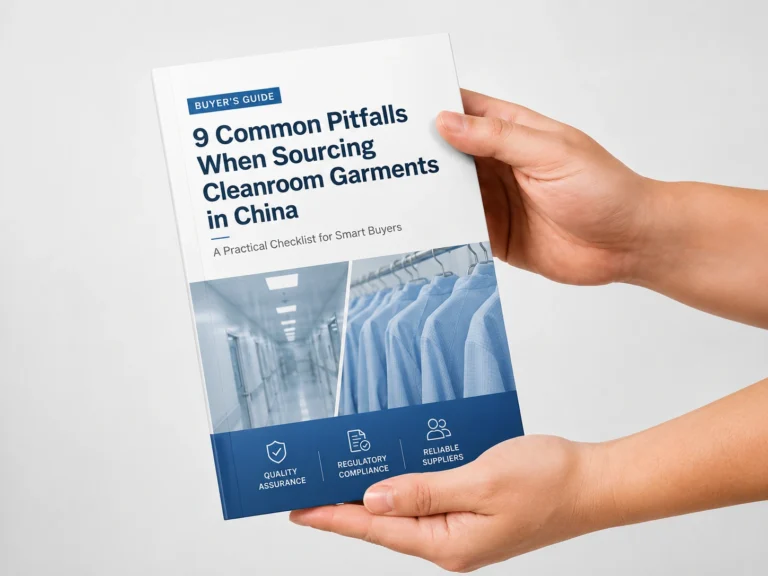
Kiel Elekti Purĉambran Mop-Sistemon por GMP kaj ISO Puraj ĉambroj
To choose a purĉambra mopsistemo for GMP and ISO cleanrooms, buyers should first confirm the cleanroom classification, cleaning surface, sterility requirement, mop head material, disinfectant compatibility, bucket and wringer setup, documentation needs, and sample availability. A suitable system should match the facility SOP, contamination control strategy, and practical cleaning workflow rather than being selected only by price.
Start with the cleanroom zone, then define the cleaning surface, choose the mop head material, decide sterile or non-sterile, check disinfectant compatibility, select the bucket and wringer setup, and request samples or product information before bulk purchasing.
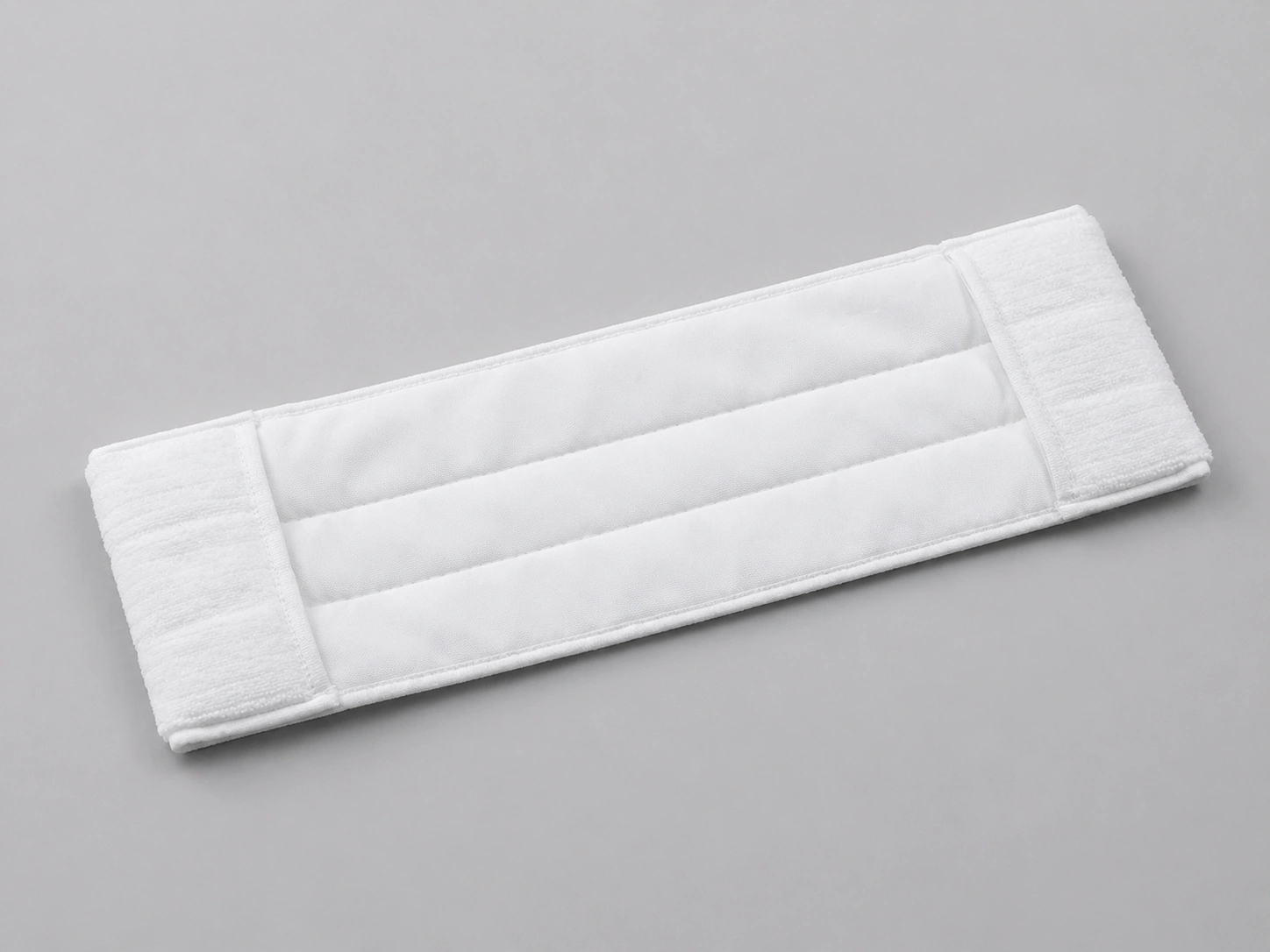
Quick Selection Checklist for Cleanroom Mop Systems
A cleanroom mop system should be selected as a workflow tool, not as a single product. The mop head, frame, handle, bucket, wringer, packaging, and supplier support should all fit the cleanroom procedure.
| Elekta Faktoro | Kion Kontroli | Kial Ĝi Gravas |
|---|---|---|
| Klasifiko de Cleanroom | ISO class, GMP grade, controlled area type | Determines sterility, material, and cleaning workflow requirements |
| Purigado de Surfaco | Floor, wall, ceiling, isolator, equipment surface | Different surfaces may require different mop heads, frames, or handles |
| Mop Kapa Materialo | Polyester, microfiber, foam, nonwoven | Affects lint level, absorbency, wiping performance, and chemical compatibility |
| Sterileca Postulo | Sterile or non-sterile mop pads | Should follow facility SOP, cleanroom zone, and quality requirements |
| Bucket and Wringer Setup | Single, double, or controlled bucket system | Supports liquid control, separation of used solution, and operator workflow |
| Supplier Support | Samples, product specifications, packaging details, MOQ, lead time | Helps buyers evaluate product fit before bulk purchase |
Step-by-Step Cleanroom Mop System Selection Process
The following checklist helps B2B buyers, QA teams, distributors, and cleanroom service companies compare mop systems more systematically.
Confirm the Cleanroom Classification and GMP Zone
The first step is to confirm where the mop system will be used. ISO-classified cleanrooms, GMP cleanroom zones, pharmaceutical areas, semiconductor fabs, laboratories, and medical device manufacturing rooms may each have different cleaning procedures.
Buyers should avoid choosing the same mop system for every area without reviewing the facility SOP. A mop system used in a routine controlled area may not be appropriate for a stricter contamination control workflow.
Define the Cleaning Surface
Cleanroom mop systems may be used on floors, walls, ceilings, isolators, equipment surfaces, gowning areas, and support rooms. The cleaning surface affects the mop head shape, frame type, handle length, and liquid control requirement.
For floor cleaning, buyers may focus on absorbency and wiping coverage. For walls and ceilings, lightweight frames and compatible handles become more important.
Choose the Right Mop Head Material
The mop head material affects lint level, absorbency, disinfectant compatibility, durability, and wiping performance. Common cleanroom mop materials include polyester, microfiber, foam, and nonwoven materials.
Polyester is commonly selected for stable low-lint wiping. Microfiber may be useful for fine surface contact. Nonwoven materials may support disposable workflows. Foam may be considered for controlled liquid application or smooth surface contact.
For material-focused details, see komparo de materialo de mopo de malalta ŝnuro.
Decide Between Sterile and Non-Sterile Mop Options
Sterile cleanroom mops may be required in higher-risk cleanroom zones depending on the facility SOP, GMP grade, and quality requirements. Non-sterile mop pads may be suitable for routine controlled-area cleaning where sterile presentation is not required.
Buyers should confirm whether sterile packaging, gamma-irradiated mop pads, double-bagged presentation, or sterility information is needed before finalizing the product.
For sterile options, visit sterila purĉambra mopo.
Choose Disposable or Reusable Mop Heads
Disposable cleanroom mop heads are often selected when facilities want simpler replacement, reduced laundering needs, and more controlled single-use workflows. Reusable mop heads may be suitable when a facility has validated laundering, drying, inspection, and storage procedures.
The right choice depends on cleaning frequency, contamination control requirements, internal validation workload, storage, labor cost, and total workflow cost.
For single-use options, see unu-uza purĉambra mopo.
Select Bucket, Wringer, Frame and Handle Configuration
A cleanroom mop system is not only the mop pad. The bucket, wringer, frame, handle, and optional trolley affect operator workflow, disinfectant handling, liquid control, and cleaning consistency.
Buyers should check whether the facility needs a single-bucket setup, double-bucket setup, wringer system, mobile trolley, adjustable handle, or specific frame for floor, wall, or ceiling cleaning.
Review related MIDPOSI resources: purĉambra mopsitelo kaj torcilo, purĉambraj mopkadroj, kaj purĉambraj mopteniloj.
Check Disinfectant Compatibility
Mop head material, bucket material, frames, handles, and wringers should be compatible with the cleaning agents or disinfectants used in the facility.
Buyers should test samples with their own cleaning procedure when possible. This helps confirm absorbency, surface contact, handling comfort, and material behavior before bulk procurement.
Request Documentation, Samples and Supplier Support
For B2B purchasing, buyers should ask suppliers for product specifications, packaging information, sterility information for sterile versions, sample availability, MOQ, lead time, and carton-level supply details.
Documentation needs may vary by facility. Buyers should confirm the required documents with their QA, validation, or cleanroom operations team.
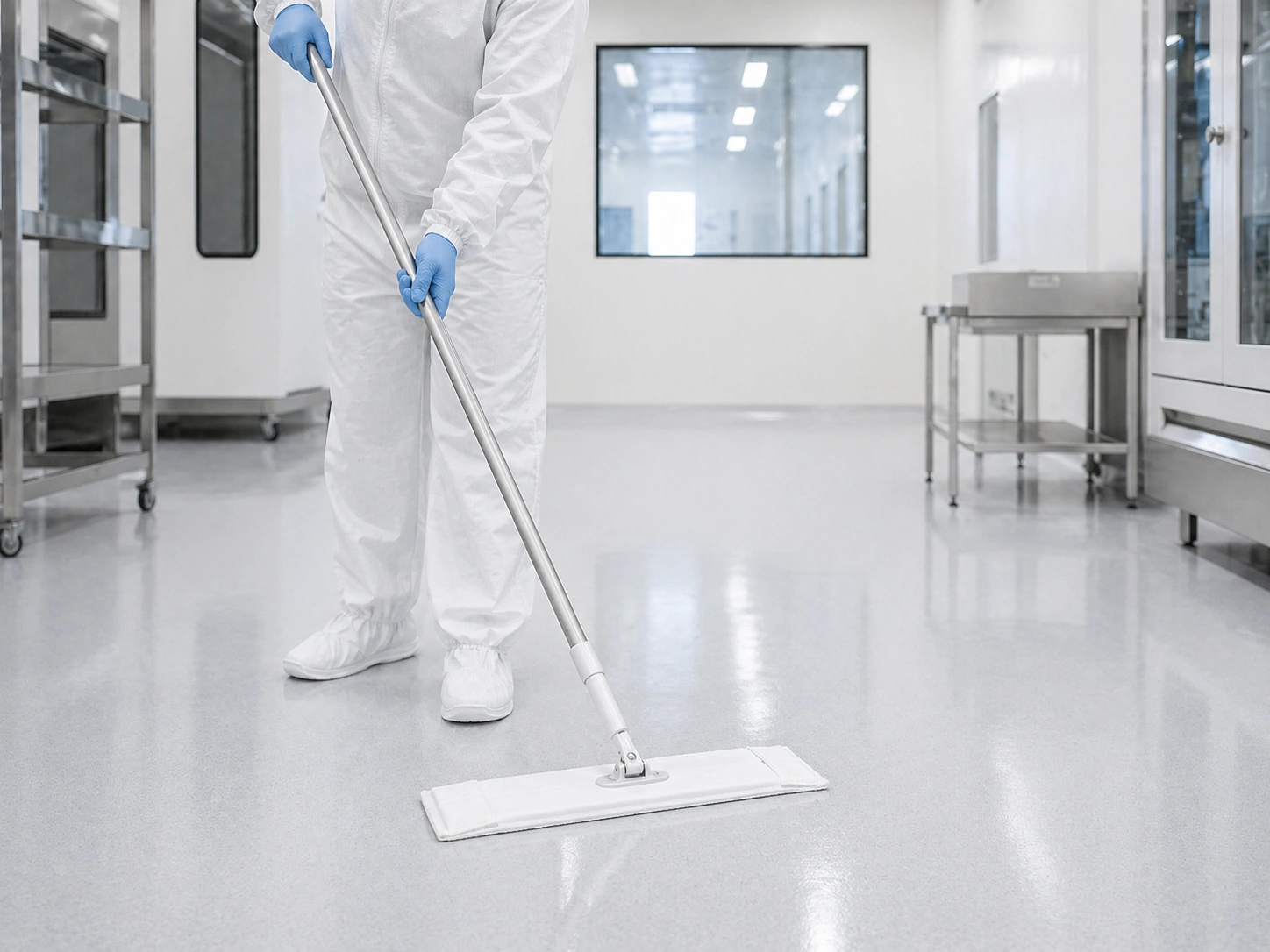
Match the Mop System to the Cleaning Workflow
A mop system that works well in one facility may not be the best fit for another. The correct choice depends on cleanroom classification, cleaning surface, SOP, operator workflow, disinfectant use, and replacement frequency.
- For floors: focus on absorbency, wiping coverage, mop pad size, and bucket workflow.
- For walls and ceilings: focus on frame compatibility, handle length, and operator comfort.
- For higher-risk zones: review sterile presentation, packaging, and internal quality requirements.
- For routine controlled areas: compare cost, replacement frequency, and non-sterile options where SOP allows.
Cleanroom Mop Head Material Selection Table
Mop head material should be selected according to lint level, absorbency, cleaning surface, disinfectant compatibility, and disposable or reusable workflow.
| Materialo | Tipa Forto | Ofta Uzo | Buyer Check |
|---|---|---|---|
| Poliestero | Low-lint wiping, stable material structure, chemical compatibility | Farmacia, bioteknologio, medicina aparato, kaj ISO-purĉambra purigado | Kontrolu pezon, tavolstrukturon, sterilan opcion kaj pakaĵon |
| Mikrofibro | Fajna surfackontakto kaj partiklokaptado | Kontrolitaj surfacaj purigado kaj precizecaj purigaj laborfluoj | Konfirmu la kongruecon de desinfektaj kaj lint-agado |
| Neteksitaj | Forĵetebla uzo kaj simpla anstataŭaĵo | Unuuzaj purigadfluoj kaj regataj anstataŭigaj programoj | Revizu koston por uzo, pakado kaj provizostabileco |
| Ŝaŭmo | Kontrolita likva apliko kaj glata surfaca kontakto | Surfacaj viŝado aŭ specifaj likvaj aplikaj taskoj | Kontrolu absorbecon, kemian kongruecon kaj aplikaĵon |
Bucket and Wringer Configuration: What Should Buyers Check?
The bucket and wringer setup affects how cleaning solution is handled, how much liquid remains on the mop head, and how operators separate clean and used solution during cleaning.
For a simple controlled-area workflow, a basic bucket setup may be enough. For more controlled procedures, buyers may compare double-bucket systems, wringer types, mobile carts, and separation of cleaning and rinse steps.
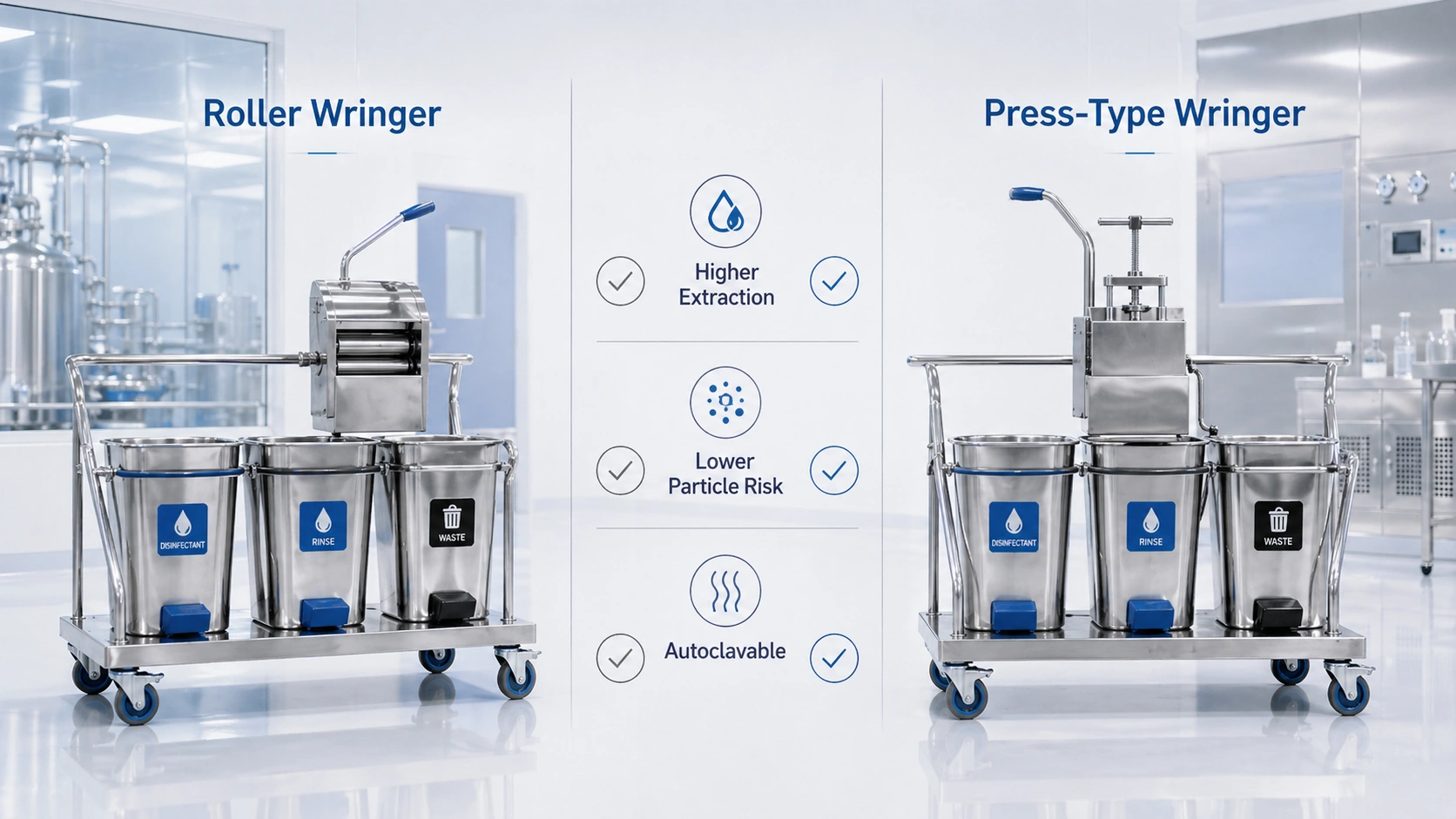
Cleanroom Mop System Selection Table by Application
The following table helps buyers compare cleanroom mop system needs by application area.
| Aplika Areo | Rekomendita Fokuso | Ŝlosila Postulo | Tipa Aĉetanta Koncerno |
|---|---|---|---|
| Farmaciaj purĉambroj | Sterile or non-sterile mop pads depending on SOP | Contamination control, packaging, documentation | Which mop option fits GMP cleaning workflow? |
| Bioteknologia produktado | Low-lint mop heads with compatible bucket workflow | Disinfectant compatibility and cleaning consistency | Can samples be tested in the facility? |
| Fabrikoj de duonkonduktaĵoj | Low-lint mop material and controlled surface cleaning | Particle and fiber control | Is the material suitable for sensitive production environments? |
| Fabrikado de medicinaj aparatoj | Disposable or reusable low-lint mop options | Consistent replacement and controlled surface cleaning | Can the supplier support stable supply? |
| Laboratorioj | Polyester, microfiber, or foam mop system | Chemical compatibility and ease of use | Which material works with the cleaning agents? |
| Purĉambraj servaj kompanioj | Complete mop system with mop heads, handles, frames, buckets, and wringers | Operational efficiency across multiple sites | Can the supplier support MOQ, samples, and repeat orders? |
Recommended MIDPOSI Cleanroom Mop Options
MIDPOSI White Cleanroom Mop Series includes 40g, 55g, and 65g disposable mop pad options in sterile and non-sterile versions. The series is designed for controlled cleaning workflows where buyers need clear options by weight, sterility, and cleaning workload.
| Opcio | Plej bona Por | Tipa Aĉetanta Bezono |
|---|---|---|
| 40 g Luma Mop | Malpeza rutina purigado | Pli facila uzado kaj kostefika uzokutimo |
| 55 g Meza Mop | Balanced cleanroom cleaning performance | Meza elekto inter malpeza kaj peza purigado |
| 65g Peza ŝarĝa Mopo | Pli alta absorbo kaj pli forta viŝa kovrado | Pli postulemaj kontrolitaj purigadtaskoj |
| Sterila Versio | Workflows requiring sterile presentation | Confirm SOP, packaging, and sterility needs |
| Ne-Sterila Versio | Rutina kontrolregiona purigado | Useful where SOP allows non-sterile mop pads |
Questions to Ask Before Buying a Cleanroom Mop System
Before selecting a supplier, B2B buyers should ask practical questions that connect product specifications with actual cleanroom use.
Technical Questions
- Ĉu la movkapoj estas malaltaj ŝnuroj?
- What materials are available?
- Ĉu sterilaj kaj ne-sterilaj elektoj haveblas?
- What cleaning surfaces are supported?
- Can the mop be used with the facility’s disinfectants?
- Is the mop compatible with existing frames or handles?
Komercaj Demandoj
- Ĉu specimenoj haveblas por testado?
- Can product specifications be provided?
- What are the packaging options?
- Kio estas la MOQ?
- Kio estas la plumbotempo?
- Ĉu la provizanto povas subteni distribuistojn, importistojn aŭ purĉambrajn servajn kompaniojn?
Kial B2B Aĉetantoj Laboras kun MIDPOSI
MIDPOSI provides cleanroom mop systems and disposable cleanroom mop pads for controlled environments, including pharmaceutical, biotechnology, semiconductor, medical device, laboratory, and cleanroom service applications.
Purĉambra Mop-Ebloj
40g, 55g, kaj 65g mop-kusenetoj por malsamaj purigaj laborkvantoj kaj akirbezonoj.
Sterila & Ne-Sterila
Opcioj por laborfluoj postulantaj sterilan prezenton kaj rutinan kontrolitan purigadon.
Subteno B2B
Specimena subteno, produktaj informoj, pakaj detaloj kaj demanda subteno por distribuistoj kaj instalaĵteamoj.
Por aplikaĵ-specifaj rimedoj, reviziu farmacia purĉambra mopo, bioteknika purĉambra mopo, kaj duonkondukta purĉambra mop.
FAQ: Choosing a Cleanroom Mop System
Kiel mi elektas purĉambran mopsistemon?
Start by confirming the cleanroom classification, cleaning surface, sterility requirement, mop head material, disinfectant compatibility, bucket and wringer setup, documentation needs, sample availability, MOQ, and lead time.
What should be included in a cleanroom mop system?
A cleanroom mop system may include mop heads, frames, handles, buckets, wringers, trolleys, and sterile or non-sterile mop pad options. The exact configuration should follow the facility’s SOP and cleaning workflow.
Do GMP cleanrooms always need sterile mop pads?
Not always. Sterile mop pads may be required in higher-risk areas depending on the facility SOP, GMP grade, and quality requirements. Non-sterile mop pads may be suitable for routine controlled-area cleaning where the SOP allows.
Which cleanroom mop material should buyers choose?
Buyers should compare polyester, microfiber, foam, and nonwoven materials by lint level, absorbency, chemical compatibility, sterile availability, disposable or reusable format, and cleaning surface.
Should buyers choose disposable or reusable cleanroom mops?
Disposable mops are often selected for simpler replacement and reduced laundering needs. Reusable mops may be suitable when the facility has controlled laundering, drying, inspection, and storage procedures.
What information should buyers request before purchasing?
Buyers should request product specifications, material details, sterile or non-sterile options, packaging information, sample availability, MOQ, lead time, and compatibility with the facility’s cleaning procedure.
Need Help Choosing a Cleanroom Mop System?
Contact MIDPOSI to discuss cleanroom mop heads, mop bucket and wringer systems, sterile or non-sterile options, and sample availability for your GMP or ISO cleanroom workflow.