Poliestero vs Mikrofibra Purĉambra Mop: Kiu Estas Pli bona?
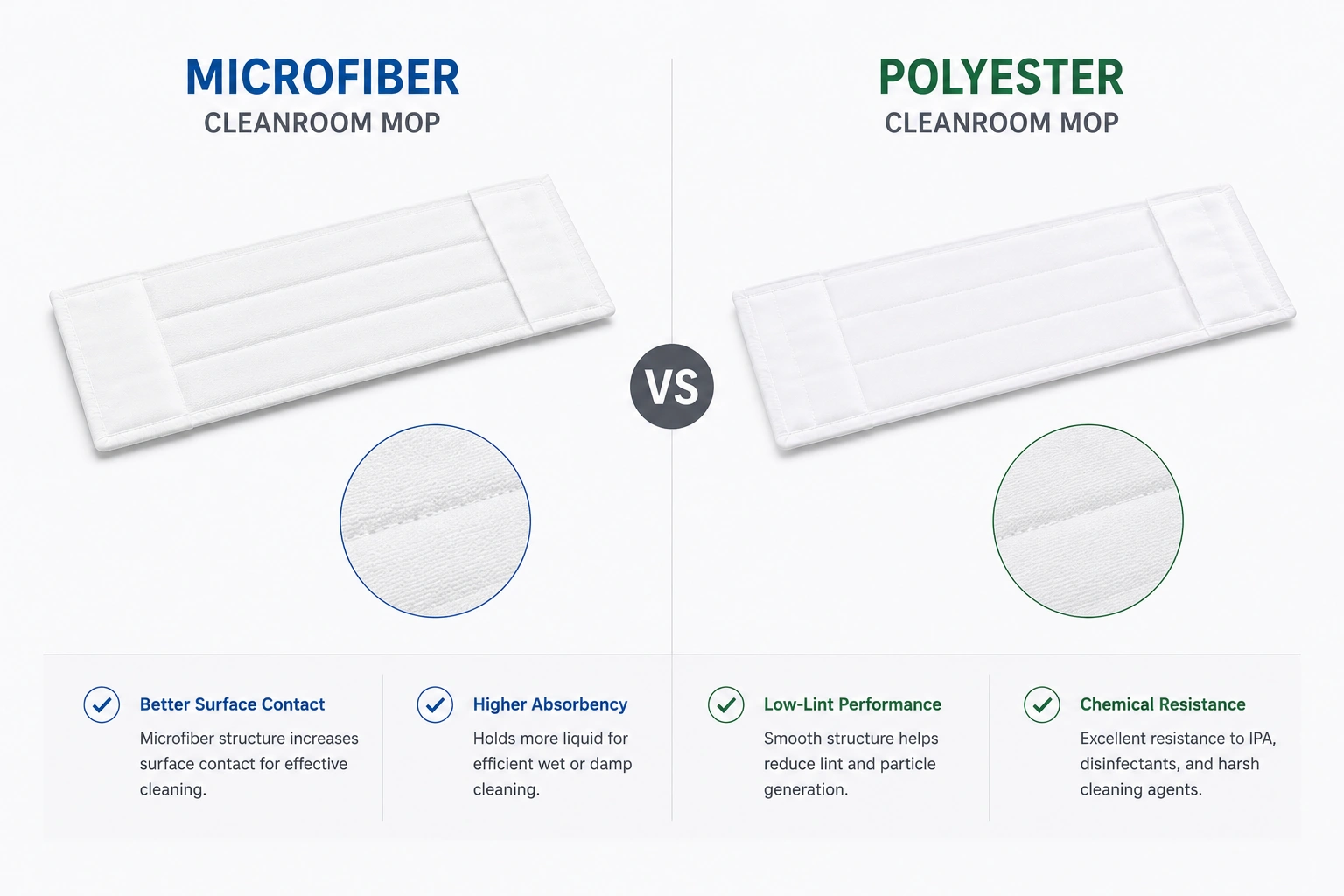
Polyester and microfiber cleanroom mops serve different cleaning needs in GMP, ISO, pharmaceutical, biotechnology, semiconductor, medical device, laboratory, and controlled environments. This guide compares both materials by lint control, absorbency, particle pickup, residue removal, validation repeatability, documentation, and B2B procurement value.
Polyester cleanroom mops are often preferred when low-lint performance, material stability, and repeatable GMP cleaning are priorities. Microfiber cleanroom mops are often preferred when stronger surface contact, fine particle pickup, and residue removal are important. The best choice depends on the cleanroom grade, SOP, disinfectant, surface type, and QA requirements.
Kial Mop Materiala Elekto Gravas en GMP Puraj ĉambroj
In GMP environments, cleaning tools are part of the contamination-control strategy. A cleanroom mop must clean surfaces without introducing excessive fibers, particles, residues, or uncontrolled variability that can complicate SOP execution and QA review.
Partiklo & Kontrolo de Fibro
Mop-materialo influas lint-liberigon, partiklan generacion kaj polui-kontrolan fidon.
Forigo de restaĵoj
Malsamaj fibraj strukturoj agas malsame dum forigo de filmoj, restaĵoj kaj desinfektaĵo-transporto.
Validado Ripeteblo
Stabila materiala konduto subtenas pli ripeteblajn purigajn procedurojn kaj akirkonsekvencon.
Poliestera Purĉambra Mops: Teknika Profilo
Polyester cleanroom mops are commonly selected for controlled environments because polyester can provide stable construction, low-lint performance, good chemical resistance, and repeatable cleaning behavior when properly designed and processed.
Kie poliestero agas forte
- Malalt-lint-rutina purigado de ĉambro
- GMP-purigado de planko, muro kaj plafono
- Stabila viŝa konduto tra ripetaj purigadtaskoj
- Kontrolitaj laborfluoj kie gravas materiala konsistenco
- Forĵeteblaj mop-kusenetaj sistemoj postulantaj antaŭvideblan agadon
Aĉetantaj reviziaj punktoj
- Mop-kuseneto pezo kaj konstruo
- Purĉambra grado kaj SOP-taŭgeco
- Sterila aŭ ne-sterila havebleco
- Formato de pakado kaj spurebleco de loto
- Kongruo kun mopkadroj kaj teniloj
Microfiber Cleanroom Mops: Teknika Profilo
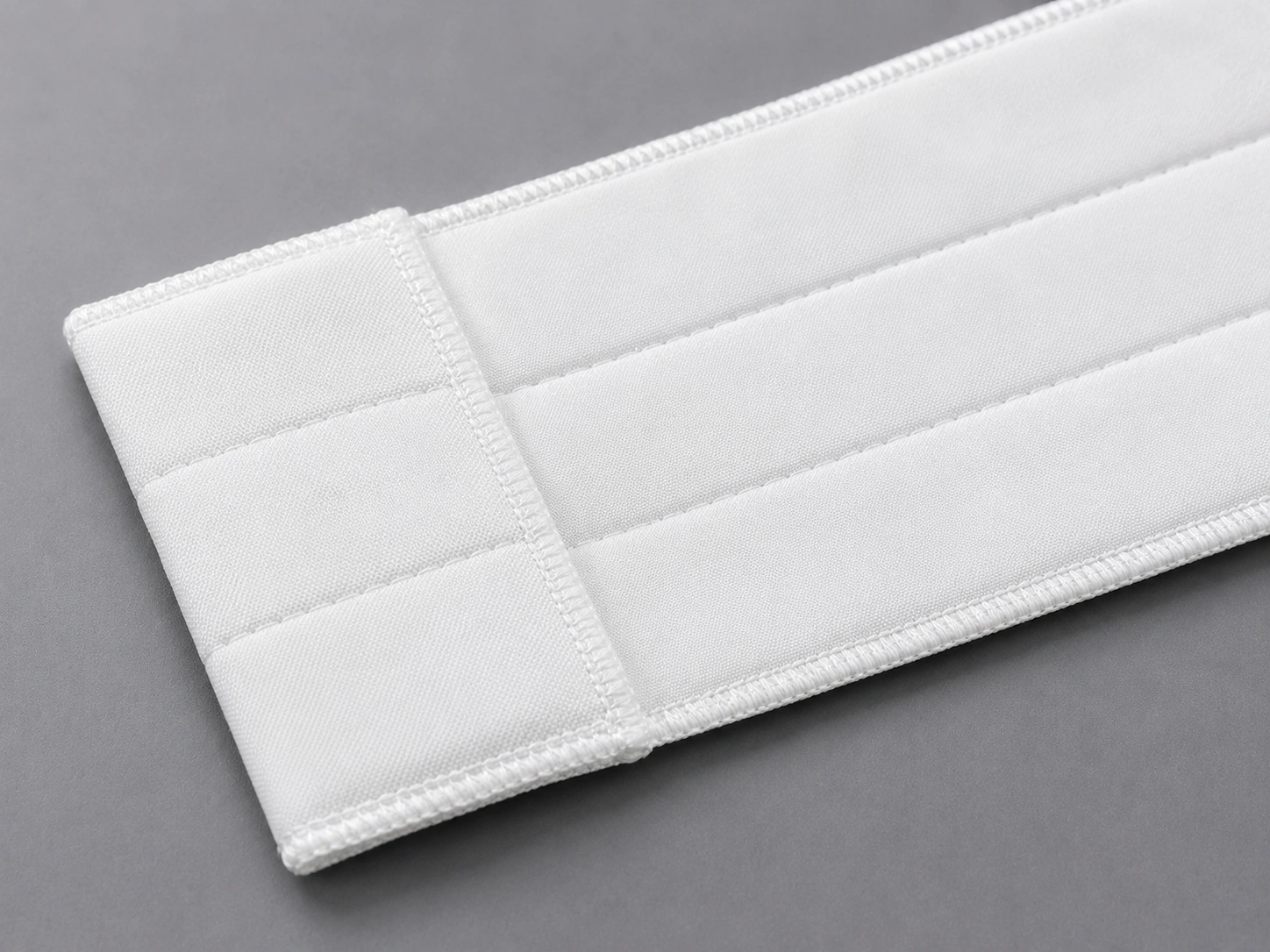
Microfiber cleanroom mops use fine fibers that increase surface area and surface contact. They can be useful for fine particle pickup, residue removal, controlled surface cleaning, and routine cleanroom cleaning where strong mechanical capture is needed.
Kie mikrofibro agas forte
- Bonegaj partiklaj kolektado kaj surfaca kontakto
- Malpeza restaĵo kaj forigo de filmo
- Muro, plafono, planko, kaj kontrolita surfaca purigado
- Aplikoj kie absorbo kaj viŝkontakto estas gravaj
Aĉetantaj reviziaj punktoj
- Fibra forĵetado kaj lintkontrola agado
- Prilaborado de pureco kaj produkta konsistenco
- Kongruo de desinfektaj
- Purĉambra pakado kaj provizanta dokumentaro
Poliestero vs Mikrofibra Cleanroom Mop Kompara Tablo
The table below compares polyester and microfiber cleanroom mops from the perspective of GMP buyers, QA teams, cleanroom supervisors, and procurement managers.
| Decida Kriterio | Poliestera Purĉambra Mop | Mikrofibra Purĉambra Mop |
|---|---|---|
| Kontrolo de lint kaj fibro | Ofte elektita por stabila malalt-lint-agado | Povas esti malmulta, sed dependas de fibra strukturo kaj finaĵo |
| Elektro de fajnaj partikloj | Bona por rutina kontrolita purigado | Ofte pli forta pro pli alta surfackontakto |
| Sorbeco | Modera ĝis bona depende de konstruo | Ofte pli alta, depende de mikrofibra denseco kaj strukturo |
| Forigo de restaĵoj | Bona kun validigita tekniko kaj taŭga desinfekta laborfluo | Ofte pli forta por malpezaj filmoj kaj fajnaj surfacaj restaĵoj |
| Materiala stabileco | Ĝenerale forta por ripetebla SOP-bazita purigado | Postulas zorgeman provizantan kontrolon kaj dokumentadon |
| Plej bona uzokazo | Rutina GMP-purigado de planko, muro, plafono kaj malalta ŝnuro | Elekto de bonaj partikloj, forigo de restaĵoj kaj altkontakta surfacpurigado |
| Aĉetanta zorgo | Konfirmu pezon, pakadon, sterilecan opcion kaj mop-framon taŭgan | Konfirmu lintkontrolon, prilaboran purecon, kemian kongruecon kaj multan konsekvencon |
Kiu Materialo Estas Pli bona por GMP Purigado?
There is no single best mop material for every GMP facility. Polyester is often a practical choice when buyers need stable, low-lint, repeatable, and cost-controlled mop pads. Microfiber may be more suitable when the cleaning task requires stronger surface contact, fine particle pickup, or residue removal.
Industri-Specifika Elekto-Gvidado
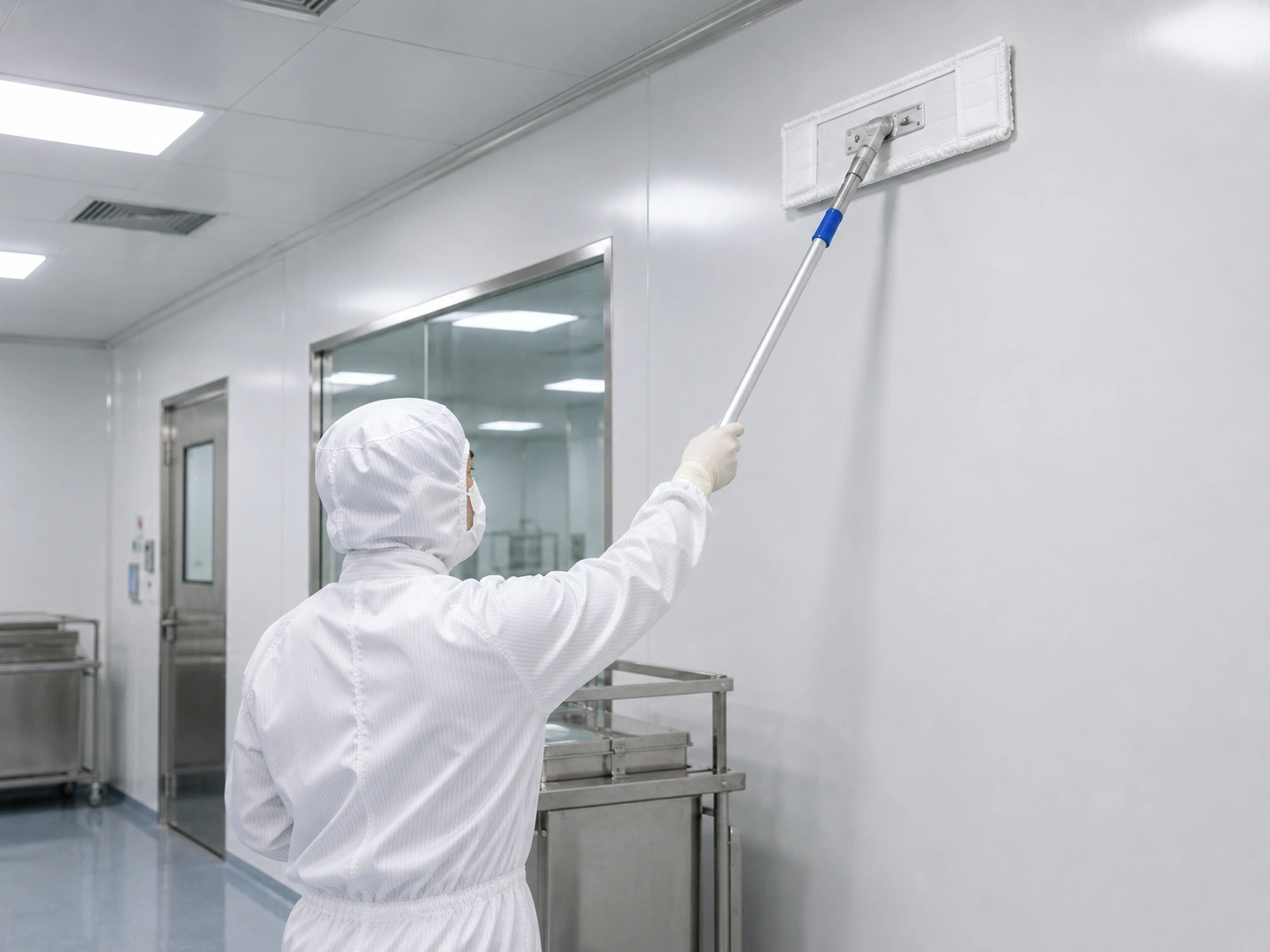
Different industries evaluate mop materials differently. Buyers should align mop selection with process risk, surface type, documentation needs, and internal cleaning procedures.
Farmacia & GMP
Priorigu malalt-lint-agadon, sterilajn opciojn, dokumentadon, pakadon kaj SOP-ripeteblecon.
Bioteknologio
Reviziu desinfektan kongruecon, surfackontakton, poluadon-kontrolan laborfluon kaj provizon.
Semikonduktaĵo
Fokuso sur partikla kontrolo, fibro-liberigo, purĉambra kongruo kaj malalt-elverŝa materiala konduto.
Medicina Aparato
Konsideru fibro-kontrolon, forigon de restaĵoj, pakaĵintegrecon kaj puran produktadfluan taŭgecon.
Laboratorioj
Ekvilibro materiala rendimento, kemia kongruo, kosto kaj facileco de rutina purigado.
Purĉambraj Servoj
Elektu materialojn kiuj estas praktikaj por multnombraj klientaj medioj kaj ripetu aĉetajn programojn.
Dokumentado Aĉetantoj Devas Peti
For GMP and controlled cleanroom use, buyers should review more than material names. Documentation helps confirm whether the mop material can be evaluated by QA, procurement, and cleanroom operations teams.
| Dokumento / Informoj | Kial Ĝi Gravas | Aĉetanta Revizia Celo |
|---|---|---|
| Teknika Datuma Folio | Montras grandecon, materialon, pezon, konstruon kaj uzadon | Komenca produkta taksado |
| Materialaj Informoj | Klarigas poliestero, mikrofibro aŭ alia materiala konstruo | Revizio pri materiala taŭgeco |
| Sterileca Informo | Konfirmas sterilan aŭ ne-sterilan statuson se aplikeble | Revizio de QA kaj SOP |
| Pakaj Detaloj | Montras internan pakon, sterilan pakon, karton-kvanton kaj pritraktan formaton | Planado de eniro kaj stokado de Purĉambro |
| Lota Spurebleco | Subtenas aran spuradon kaj ripet-ordan kontrolon | Provizanto-kvalifiko kaj kvalita revizio |
| Specimena Aproba Rekordo | Konfirmas provitan produkton kongruas kun estonta pogranda mendo | Malhelpas specimenon-al-orda miskongruo |
Kontrollisto pri Akiro por Aĉetantoj de Poliestero kaj Mikrofibra Mop
Uzu ĉi tiun kontrolon antaŭ ol elekti poliestran aŭ mikrofibran purĉambran mopon por purigado de GMP aŭ ISO.
Teknika revizio
- Purĉambra grado kaj puriga surfaco
- Mopmaterialo kaj lintkontrola postulo
- Bezonoj pri absorbeco kaj forigo de restaĵoj
- Kongruo de desinfektaj
- Sterila aŭ ne-sterila postulo
- Kongruo kun kadro, tenilo kaj sitelo
Aĉeta revizio
- Specimena havebleco
- MOQ kaj plumbotempo
- Datumoj pri pakaĵo kaj kartono
- Ripet-orda konsistenco
- Dokumentado subteno
- Subteno por distribuisto aŭ aĉetanto
MIDPOSI Rekomendo
MIDPOSI recommends evaluating polyester and microfiber cleanroom mops based on the facility’s SOP, cleanroom grade, surface type, disinfectant program, sterility requirement, and documentation needs.
Por Stabila Malalt-Lint Purigado
Poliestera mop-kusenetoj ofte taŭgas por rutina GMP-purigado kie stabila malalt-lint-agado gravas.
Por Pli Forta Surfaca Kontakto
Mikrofibraj mopkusenetoj povas esti taŭgaj kie fajnaj partiklaj kolektado kaj forigo de restaĵoj estas pli gravaj.
Por QA-Driven Aĉetantoj
Petu specifojn, pakajn detalojn, specimenan subtenon kaj materialajn informojn antaŭ pogranda aĉeto.
Oftaj Demandoj: Poliestero vs Mikrofibra Purĉambra Mops
Kio estas pli bona por puraj ĉambroj de GMP, poliestera aŭ mikrofibra mopoj?
Polyester is often better for stable low-lint cleaning and repeatable GMP workflows. Microfiber is often better for fine particle pickup and residue removal. The best choice depends on the facility SOP, cleanroom grade, disinfectant, and surface type.
Ĉu poliesteraj purĉambraj mopoj estas malaltaj ŝnuroj?
Polyester cleanroom mops are commonly selected for low-lint controlled cleaning, but buyers should still review product construction, packaging, material information, and supplier documentation.
Ĉu mikrofibraj mopoj taŭgas por puraj ĉambroj?
Microfiber mops may be suitable for cleanrooms when they are made, processed, packaged, and documented for controlled environments. Buyers should review lint control, chemical compatibility, and SOP suitability.
Kiu mopmaterialo estas pli bona por kolektado de partikloj?
Microfiber often provides stronger fine particle pickup due to higher surface contact. Polyester can still perform well for routine controlled cleaning when selected and used properly.
Kiu mop-materialo estas pli bona por purigado de GMP kun malalta ŝnuro?
Polyester is often preferred when stable low-lint behavior and repeatability are top priorities. However, the final choice should follow the facility’s SOP and QA review.
Kiajn dokumentojn aĉetantoj devas peti antaŭ ol elekti mop-materialon?
Buyers should request product specifications, material information, packaging details, sterile or non-sterile status, lot traceability information, sample approval records, and supplier qualification support where required.
Ĉu Bezonas Helpon Elekti Poliesterajn aŭ Mikrofibrajn Purĉambrajn Mopojn?
Contact MIDPOSI to discuss your cleanroom grade, SOP, disinfectant program, cleaning surface, sterile requirement, documentation needs, and B2B supply plan.