
Seleccionar la fregona para sala blanca adecuada no es sólo una decisión de compra. Para salas blancas farmacéuticas, instalaciones de biotecnología, áreas de fabricación de dispositivos médicos y entornos controlados, la selección de trapeadores debe respaldar los POE de limpieza del sitio, la estrategia de control de la contaminación, la evaluación de riesgos y los requisitos de validación.
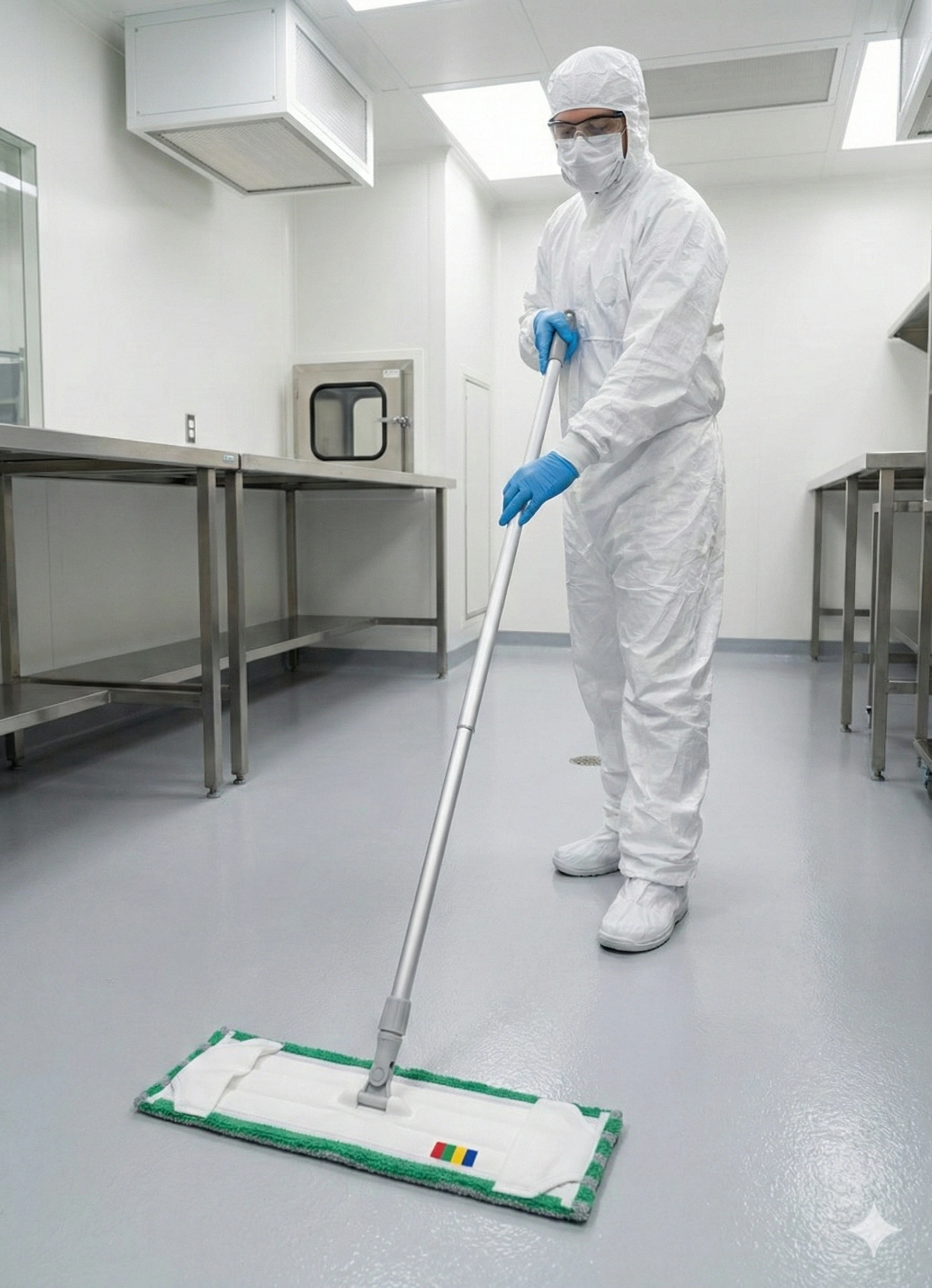
Un sistema de trapeador para sala blanca generalmente incluye más que la propia cubierta del trapeador. Dependiendo del área de limpieza y Procedimiento operativo, es posible que los compradores necesiten evaluar cubiertas de fregona, marcos compatibles, mangos, cubos, escurridores, formato de embalaje, estado estéril o no estéril y documentación de respaldo.
Un trapeador que funciona bien en un área industrial general puede no ser adecuado para una sala limpia farmacéutica. área de soporte aséptico o ambiente de producción clasificado ISO. Los compradores de salas limpias deben revisar las condiciones reales. aplicación de limpieza antes de aprobar el uso regular.
Confirmar si el sistema de trapeador respalda el SOP, la estrategia de control de contaminación y la validación de limpieza del sitio. Requisitos de planos y documentación.
Compare opciones estériles y no estériles, materiales de cobertura para trapeador, compatibilidad del sistema, formato de empaque, estabilidad del suministro y disponibilidad de muestras.
Importante: La elección correcta del trapeador debe basarse en el SOP, la evaluación de riesgos y la validación del cliente. requisitos. Los productos estériles pueden evaluarse para áreas de mayor riesgo, pero no para todas las aplicaciones de salas blancas. automáticamente requiere cubiertas de trapeador esterilizadas.
Las fundas para fregonas para salas blancas están disponibles en diferentes estructuras de materiales, tamaños, pesos y formatos de embalaje. Para los usuarios de productos farmacéuticos y biotecnológicos, una decisión clave es evaluar opciones de trapeadores estériles o no estériles.
Se pueden considerar cubiertas de trapeador esterilizadas para áreas controladas de alto riesgo, especialmente donde el SOP del cliente, La estrategia de control de la contaminación o el protocolo de validación requieren herramientas de limpieza estériles. son comunmente evaluados para soporte de procesamiento aséptico, pasos de limpieza críticos o áreas donde el control de la carga biológica es una preocupación importante.
Las cubiertas de trapeador para salas blancas no esterilizadas pueden ser adecuadas para muchas aplicaciones de limpieza controlada, incluidas las de menor riesgo. áreas de salas blancas, zonas de apoyo y programas de limpieza de rutina donde el SOP de la instalación no exige el estado de esterilidad.
Tanto las cubiertas de trapeador estériles como las no estériles deben evaluarse de acuerdo con la aplicación real de la sala limpia. compatibilidad de desinfectantes, flujo de trabajo del operador y requisitos de validación interna.
El poliéster y la microfibra son dos materiales comunes para cubrir trapeadores en salas blancas. Ambos pueden ser útiles, pero no lo son. seleccionado por el mismo motivo.
Las fundas de poliéster para trapeador a menudo se seleccionan para una limpieza controlada con poca pelusa, estabilidad y compatibilidad del material. con desinfectantes comunes para salas blancas. Pueden ser evaluados para productos farmacéuticos, biotecnológicos, dispositivos médicos, Electrónica y programas generales de limpieza de salas blancas.
Las fundas de microfibra para trapeador a menudo se evalúan cuando el proceso de limpieza requiere mayor absorbencia, mayor resistencia contacto superficial o eliminación eficiente de residuos y contaminación visible.
Una funda para trapeador de sala limpia no debe evaluarse sola. El sistema completo de trapeador afecta la forma en que los operadores limpian, cuánta presión se aplica, cómo se coloca la funda del trapeador y con qué consistencia se puede repetir el proceso.
Los marcos de los trapeadores para salas blancas deben ser compatibles con el tamaño de la funda del trapeador, la superficie de limpieza y el flujo de trabajo del operador. Los marcos planos para trapeadores se usan comúnmente para pisos, paredes y techos de salas blancas porque permiten un control Contacto superficial y movimiento predecible.
Los mangos deben seleccionarse en función de la altura de limpieza, la distribución del área y la ergonomía del operador. Mangos telescópicos pueden ser útiles para la limpieza de paredes y techos, mientras que los mangos fijos pueden ser preferibles para la limpieza rutinaria del piso.
Los cubos, escurridores y sistemas de carros influyen en la forma en que se prepara, aplica y controla la solución de limpieza. Para entornos farmacéuticos y biotecnológicos, el sistema de cubetas debe coincidir con el SOP de limpieza y ayudar a reducir variación del operador.
La selección del trapeador para sala blanca debe estar vinculada al área de limpieza real. La siguiente tabla es una referencia práctica, No es una regla universal. La selección final siempre debe confirmarse de acuerdo con el SOP, la evaluación de riesgos, estrategia de control de la contaminación y requisitos de validación.
| Área de aplicación | Posible opción de cubierta para trapeador | Consideración estéril/no estéril | Componentes del sistema | Notas para control de calidad/adquisiciones |
|---|---|---|---|---|
| Grado A / Áreas de soporte aséptico de alto riesgo Pasos de limpieza críticos o de alto riesgo | Funda para trapeador de poliéster con poca pelusa u opción de trapeador estéril validada | Las opciones estériles pueden evaluarse si así lo requieren los SOP o el protocolo de validación. | Sistema de marco, manija y cubo dedicado | Confirme el estado de esterilidad, la integridad del embalaje, el proceso de transferencia, la documentación y los requisitos de validación del sitio. |
| Áreas de grado B Soporte aséptico o áreas circundantes | Funda para fregona de poliéster o microfibra según el método de limpieza. | Estéril o no estéril según la evaluación de riesgos interna | Marco y manija exclusivos para sala blanca | Evaluar el control de partículas, la absorbencia, la compatibilidad de los desinfectantes y la segregación de áreas. |
| Áreas de grado C Zonas de apoyo controladas | Funda para trapeador de poliéster o microfibra | Los no estériles pueden ser aceptables en muchas aplicaciones de rutina; Estéril puede considerarse según los requisitos del sitio. | Sistema de marco, asa, cubo o carro | Confirme la frecuencia de limpieza, el uso de desinfectantes, la compatibilidad con los SOP y el flujo de trabajo del operador. |
| Áreas de grado D Áreas clasificadas de menor riesgo | Funda para trapeador de poliéster o microfibra | Las opciones no estériles se evalúan comúnmente, dependiendo del POE | Sistema de trapeador para sala blanca estándar | Centrarse en la durabilidad, el control de costes, la facilidad de uso y la eficacia de la limpieza. |
| Áreas no GMP clasificadas según ISO Dispositivos médicos, electrónicos o áreas controladas en general. | Funda para trapeador de poliéster o microfibra | Basado en requisitos de calidad internos. | Sistema de marco, asa y cubo. | Confirme la clase ISO, los requisitos de control de partículas, el tipo de superficie y la compatibilidad química. |
| Programa de stock para distribuidores Para distribuidores de salas blancas y socios de canal | Múltiples tamaños de fundas para trapeador y opciones de materiales | Se pueden discutir opciones tanto estériles como no estériles. | Fundas, marcos, mangos y cubos para fregona. | Útil para atender a clientes de productos farmacéuticos, biotecnológicos, de dispositivos médicos y de salas blancas en general. |
Lectura relacionada: Descripción general del sistema de trapeador para sala limpia, Guía de selección de grados de trapeador para salas blancas GMP, y SOP de limpieza de salas blancas.
Para los compradores B2B, las pruebas de muestra suelen ser la forma más segura de confirmar si un sistema de trapeador se ajusta a las necesidades de la instalación. procedimiento de limpieza real. MIDPOSI puede respaldar la evaluación de muestras para fundas de trapeador, opciones estériles y no estériles, marcos, manijas, cazos y revisión de documentación.
Confirmar grado de sala limpia
Revisar los POE & Riesgo
Seleccione opciones de trapeador
Evaluar muestras
Confirmar documentación
MIDPOSI admite programas de limpieza en ambientes controlados con consumibles para salas blancas para productos farmacéuticos, Clientes distribuidores de biotecnología, dispositivos médicos y salas blancas.
Nuestro soporte se centra en la combinación práctica de productos en lugar de afirmaciones únicas para todos. Ayudamos a los clientes a comparar materiales de la cubierta del trapeador, opciones estériles y no estériles, compatibilidad del sistema, formatos de empaque y documentación Necesidades antes de la aprobación de la muestra.
Ya sea que esté creando un nuevo programa de limpieza de salas blancas, calificando a un proveedor alternativo o preparando un gama de productos del distribuidor, MIDPOSI puede ayudarle a evaluar las opciones de trapeadores para salas blancas adecuadas según su aplicación.
No. No se requieren automáticamente cubiertas de trapeador esterilizadas para todas las salas blancas farmacéuticas. La selección debe basarse en el POE de la instalación, la evaluación de riesgos, el grado de la sala limpia, la estrategia de control de la contaminación y los requisitos de validación.
Las fundas para trapeador estériles se suministran con un proceso de esterilización y un formato de empaque destinados a cumplir con los requisitos de manipulación estéril. Las fundas para trapeador no esterilizadas se utilizan cuando el SOP del cliente no exige el estado de esterilidad. Ambas opciones deben evaluarse de acuerdo con la aplicación real de sala blanca.
Las fundas de poliéster para trapeador a menudo se seleccionan para una limpieza controlada con poca pelusa y compatibilidad química. Las fundas de microfibra para trapeadores a menudo se evalúan por su mayor absorbencia y contacto con la superficie. La mejor opción depende de la superficie de limpieza, el desinfectante, el grado de la sala blanca y los requisitos de validación interna.
No necesariamente. Muchas instalaciones utilizan sistemas de trapeador dedicados para diferentes grados de salas blancas o zonas de limpieza para reducir el riesgo de contaminación cruzada. La configuración final debe seguir el SOP y la evaluación de riesgos del cliente.
Sí. MIDPOSI puede admitir cubiertas de trapeador para salas blancas, así como marcos, mangos, cubos y componentes de sistemas de limpieza compatibles. La compatibilidad debe confirmarse antes de realizar el pedido, especialmente si el cliente ya utiliza un marco de trapeador o un sistema de cubo existente.
Sí. Se recomienda una evaluación de muestras antes de comprar al por mayor. Los clientes pueden probar el material, el tamaño, la absorbencia, la compatibilidad del marco, el embalaje y la documentación antes de confirmar el suministro regular.
Proporcione el grado de su sala limpia o clase ISO, área de aplicación, requisitos estériles o no estériles, material preferido, tamaño de trapeador, tipo de marco, desinfectante utilizado, cantidad estimada y necesidades de documentación. Esto ayuda a MIDPOSI a recomendar una opción más adecuada.
La elección de un sistema de trapeador para sala limpia debe basarse en su POE, evaluación de riesgos y requisitos de validación de limpieza. y área de aplicación real. MIDPOSI puede brindar soporte a distribuidores y productos farmacéuticos, biotecnológicos y de dispositivos médicos. clientes con opciones de fundas para trapeadores, marcos y mangos compatibles, sistemas de cubetas, evaluación de muestras y soporte de documentación.
Envíenos el grado de su sala limpia, el tamaño de la fregona, los requisitos estériles/no estériles y el flujo de trabajo de limpieza actual. Le ayudaremos a recomendar opciones adecuadas de cobertura para trapeador para su evaluación.
Metatítulo: Fregonas para salas limpias para productos farmacéuticos y biotecnológicos & Instalaciones de dispositivos médicos | POSICIÓN MEDIA
Meta descripción: Fundas para trapeadores para salas blancas, opciones esterilizadas y no esterilizadas, materiales de microfibra/poliéster, marcos, mangos y cubetas para áreas clasificadas GMP e ISO.
Barra de URL: fregonas-para-sala-limpia-dispositivo-médico-farmacéutico-biotecnológico