Trapeador para salas blancas desechable o reutilizable: ¿cuál debería elegir?
Disposable and reusable cleanroom mops support different contamination-control strategies. This guide compares both options for GMP and ISO cleanrooms, including cross-contamination risk, laundering control, packaging, validation repeatability, cost, documentation, and B2B procurement decisions.
Disposable cleanroom mops are often preferred when facilities want easier replacement control, lower reuse-related contamination risk, and simpler workflow management. Reusable cleanroom mops may be suitable when the facility has validated laundering, inspection, drying, storage, and reuse procedures.
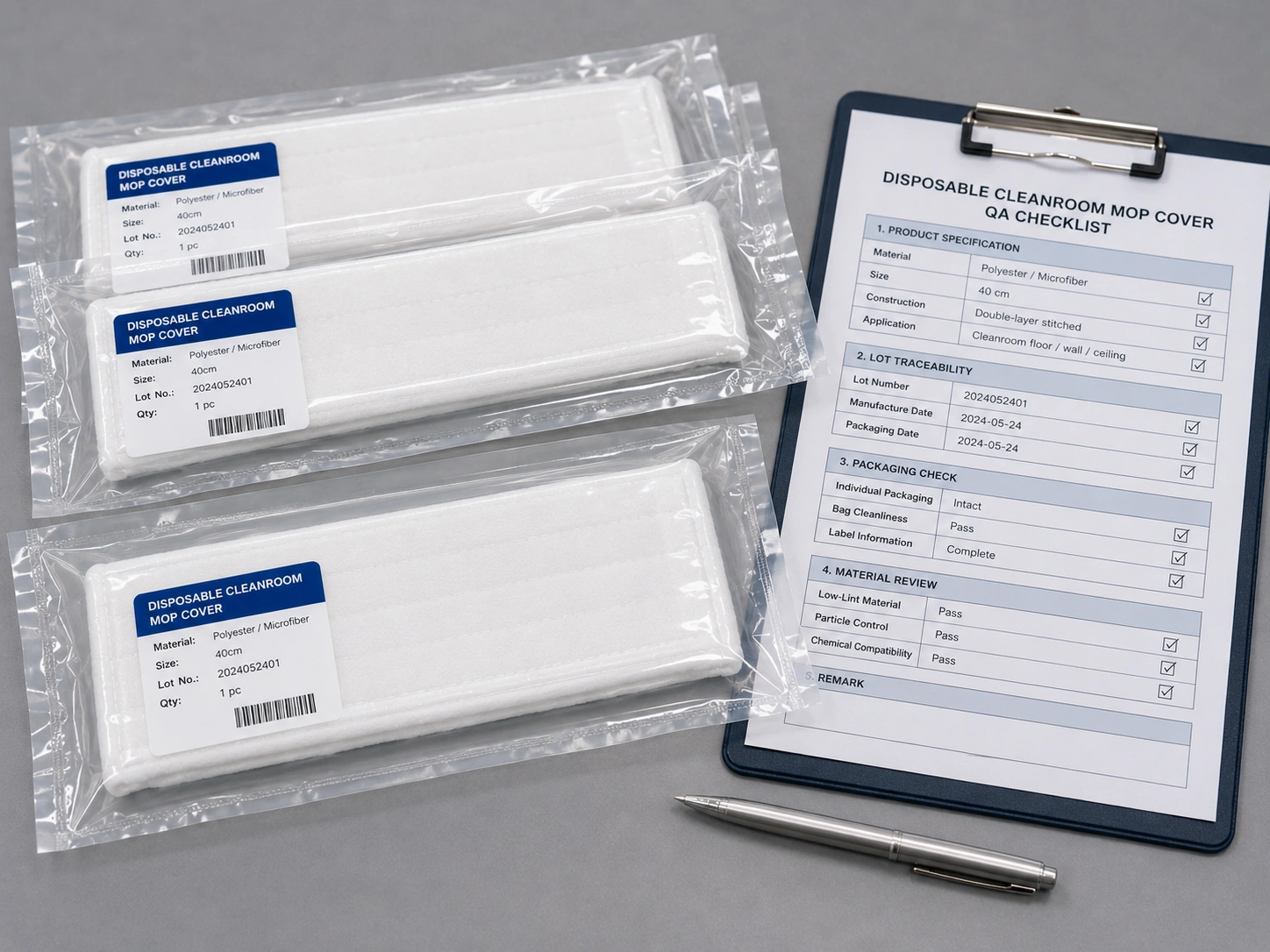
Disposable vs Reusable Cleanroom Mop Comparison Table
The table below compares disposable and reusable cleanroom mops for procurement managers, QA teams, cleanroom supervisors, distributors, and controlled-environment buyers.
| Criterio de decisión | Trapeador desechable para sala blanca | Trapeador reutilizable para sala limpia |
|---|---|---|
| Reuse Risk | Lower reuse-related risk because mop covers are replaced after defined use | Requires validated laundering, inspection, drying, and storage control |
| Control del flujo de trabajo | Easier to define by room, zone, or cleaning task | Requires stronger reuse tracking and lifecycle control |
| Initial Cost | Mayor costo recurrente de consumibles | Lower cost per use if laundering and reuse are well controlled |
| Repetibilidad de validación | Often easier because each mop cover starts from a defined unused state | Depends on laundering consistency and reuse limits |
| Embalaje | May be individually packed, sterile, or cleanroom-compatible | Requires clean storage after laundering and inspection |
| Best Fit | GMP, pharma, sterile support, multi-zone cleaning, QA-driven workflows | Facilities with controlled laundry systems and strong reuse procedures |
What Is a Disposable Cleanroom Mop?
A disposable cleanroom mop is a single-use or limited-use mop cover designed for controlled environments. It is usually replaced after a defined cleaning task, room, zone, or SOP-defined use.
Replacement Control
Supports clearer mop cover change rules by room, area, batch, or cleaning step.
Cross-Zone Control
Helps reduce the risk of carrying residues or contamination from one area to another.
Procurement Simplicity
Allows buyers to plan inventory based on cleaning frequency and replacement workflow.
What Is a Reusable Cleanroom Mop?
A reusable cleanroom mop is designed to be washed, dried, inspected, stored, and reused according to a controlled procedure. It can be cost-effective when a facility has strong laundering and lifecycle management systems.
Choose Disposable When:
- The SOP requires single-use or defined-use mop covers.
- The facility wants to reduce reuse-related contamination concerns.
- Cleaning is separated by room, zone, or product area.
- Sterile or individually packed mop covers are required.
- Replacement control is easier than laundering control.
Choose Reusable When:
- The facility has validated laundering capability.
- Reusable mop lifecycle is tracked and controlled.
- Drying, storage, and inspection procedures are documented.
- Cost per use is a major purchasing priority.
- The cleanroom risk level allows reusable tools.
Contamination-Control Considerations
The biggest difference between disposable and reusable cleanroom mops is not only cost. It is how contamination risk is controlled before, during, and after cleaning.
| Risk Area | Disposable Mop Control | Reusable Mop Control |
|---|---|---|
| Contaminación cruzada | Replace mop cover after defined task or zone | Requires strict laundering and reuse tracking |
| Residue carryover | Lower risk if mop is discarded after use | Depends on cleaning, rinsing, and drying quality |
| Microbial risk | May be reduced through sterile or single-use workflow | Requires validated cleaning and storage process |
| Operator error | Simpler replacement rules can reduce complexity | More steps create more control points |
Comparación de costos: desechable versus reutilizable
Disposable mops usually have higher recurring consumable costs, while reusable mops may appear cheaper per use. However, reusable mops require laundering, inspection, storage, labor, tracking, and process validation.
Disposable Cost
Includes mop cover consumption, packaging, inventory, and disposal planning.
Reusable Cost
Includes washing, drying, inspection, storage, labor, tracking, damage replacement, and validation.
Total Cost View
Buyers should compare total workflow cost, not only the unit price of each mop cover.
Documentación que los compradores deben solicitar
Whether choosing disposable or reusable cleanroom mops, buyers should request documentation that supports procurement, QA review, sample approval, and internal SOP evaluation.
| Documento / Información | Disposable Mop | Reusable Mop |
|---|---|---|
| Ficha Técnica | Required for material, size, weight, and packaging review | Required for material, durability, and reuse suitability |
| Detalles de embalaje | Important for sterile, individual, or controlled packaging | Important for storage after laundering |
| Información de esterilidad | Important if sterile disposable mop covers are used | Usually depends on facility laundering and sterilization process |
| Trazabilidad | Lot and carton-level information supports controlled purchasing | Reuse lifecycle tracking may be required internally |
| Registro de aprobación de muestra | Confirms tested disposable model before bulk order | Confirms reusable product performance before program approval |
Recomendación MIDPOSI
MIDPOSI generally recommends disposable cleanroom mop options for buyers who need simple replacement control, sterile or non-sterile options, reduced reuse-related risk, and easier B2B inventory planning.
For GMP Buyers
Disposable mop covers can simplify replacement rules and reduce reuse complexity.
For Distributors
Disposable mop options are easier to quote, stock, sample, and reorder.
For QA Teams
Specifications, packaging, traceability, and sample approval support clean review workflows.
FAQ: Disposable vs Reusable Cleanroom Mops
Which is better, disposable or reusable cleanroom mops?
Disposable cleanroom mops are often better when replacement control and reduced reuse-related contamination risk are priorities. Reusable cleanroom mops may be suitable when validated laundering, inspection, and storage procedures are available.
Are disposable cleanroom mops suitable for GMP facilities?
Yes. Disposable cleanroom mops can support GMP cleaning workflows when selected, documented, and used according to the facility SOP.
Are reusable cleanroom mops cheaper?
Reusable mops may have lower cost per use, but buyers must include laundering, labor, inspection, storage, tracking, and validation costs.
Do disposable mops reduce cross-contamination risk?
Disposable mop covers can help reduce cross-contamination risk when they are replaced after defined tasks, rooms, or zones.
What documents should buyers request?
Buyers should request product specifications, material information, packaging details, sterile or non-sterile status, traceability information, sample records, and supplier qualification support where required.
Need Help Choosing Disposable or Reusable Cleanroom Mops?
Contact MIDPOSI to discuss your cleanroom grade, SOP, replacement workflow, sterile requirement, documentation needs, sample plan, and B2B supply requirements.