Sterile cleanroom mop systems are designed for Grade A/B pharmaceutical and aseptic support areas where viable contamination control, sterile transfer, particle reduction, and documentation are critical. MIDPOSI supports sterile mop cover selection for GMP cleaning workflows, including gamma-sterilized options, sterile packaging, lot traceability, and documentation support for QA review.
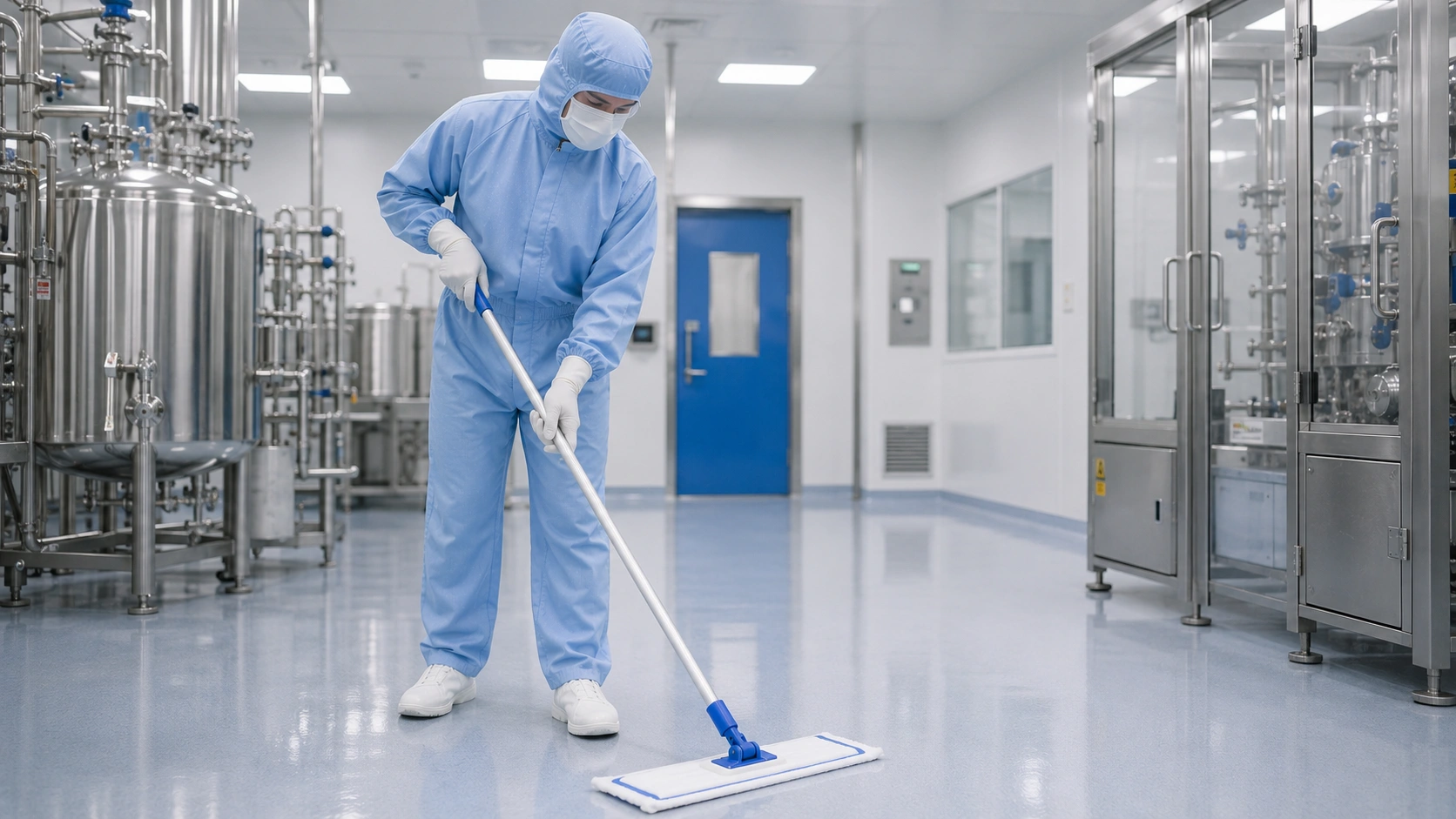
In aseptic and high-control pharmaceutical environments, cleaning tools can become a source of viable contamination if they are not selected, packaged, transferred, and documented correctly.
Non-sterile cleaning tools may introduce microbial contamination into sensitive cleanroom areas, especially where aseptic support workflows are involved.
Grade A/B areas often require stricter control over cleaning material transfer, handling, packaging integrity, and disposal.
QA teams may require sterility information, lot traceability, material data, packaging details, and product compatibility information before approval.
A sterile cleanroom mop is a low-lint mop cover or mop system supplied for controlled environments where sterility, particle control, and contamination prevention are required.
In GMP and pharmaceutical facilities, a sterile mop should not be evaluated only by the mop cover. Buyers should also review packaging, lot traceability, transfer procedure, compatible frame and handle, disinfectant compatibility, and available QA documentation.
Sterile mop covers may be used as single-use sterile mops, sterile-compatible flat mop systems, or part of a broader cleanroom mopping workflow depending on the facility’s SOP, cleanroom grade, and contamination-control strategy.
Sterile and non-sterile cleanroom mops serve different risk levels. The right choice depends on the cleanroom classification, facility SOP, product risk, and whether sterile supply is required.
| Atributo | Trapeador estéril para sala limpia | Trapeador para sala limpia no estéril |
|---|---|---|
| Garantía de esterilidad | Suministro estéril, a menudo respaldado por documentación de esterilización. | Sin garantía de esterilidad |
| Método de esterilización común | Irradiación gamma o procesamiento estéril validado según el tipo de producto | No esterilizado |
| Idoneidad de grado A/B | Preferido para áreas de soporte aséptico de mayor control. | Generalmente no se prefiere para áreas estériles de alto riesgo. |
| Embalaje | Envases estériles o controlados, a menudo con trazabilidad del lote. | Embalaje estándar para salas blancas |
| uso común | GMP, soporte aséptico, flujos de trabajo farmacéuticos y biotecnológicos | Limpieza rutinaria de salas blancas ISO |
| Preocupación del comprador | Esterilidad, proceso de transferencia, documentación y riesgo de contaminación. | Control de partículas, costo y rendimiento de limpieza de rutina. |
For sterile mop covers, buyers should understand the basic sterile supply chain from production and packaging to sterilization, shipment, cleanroom transfer, and use.
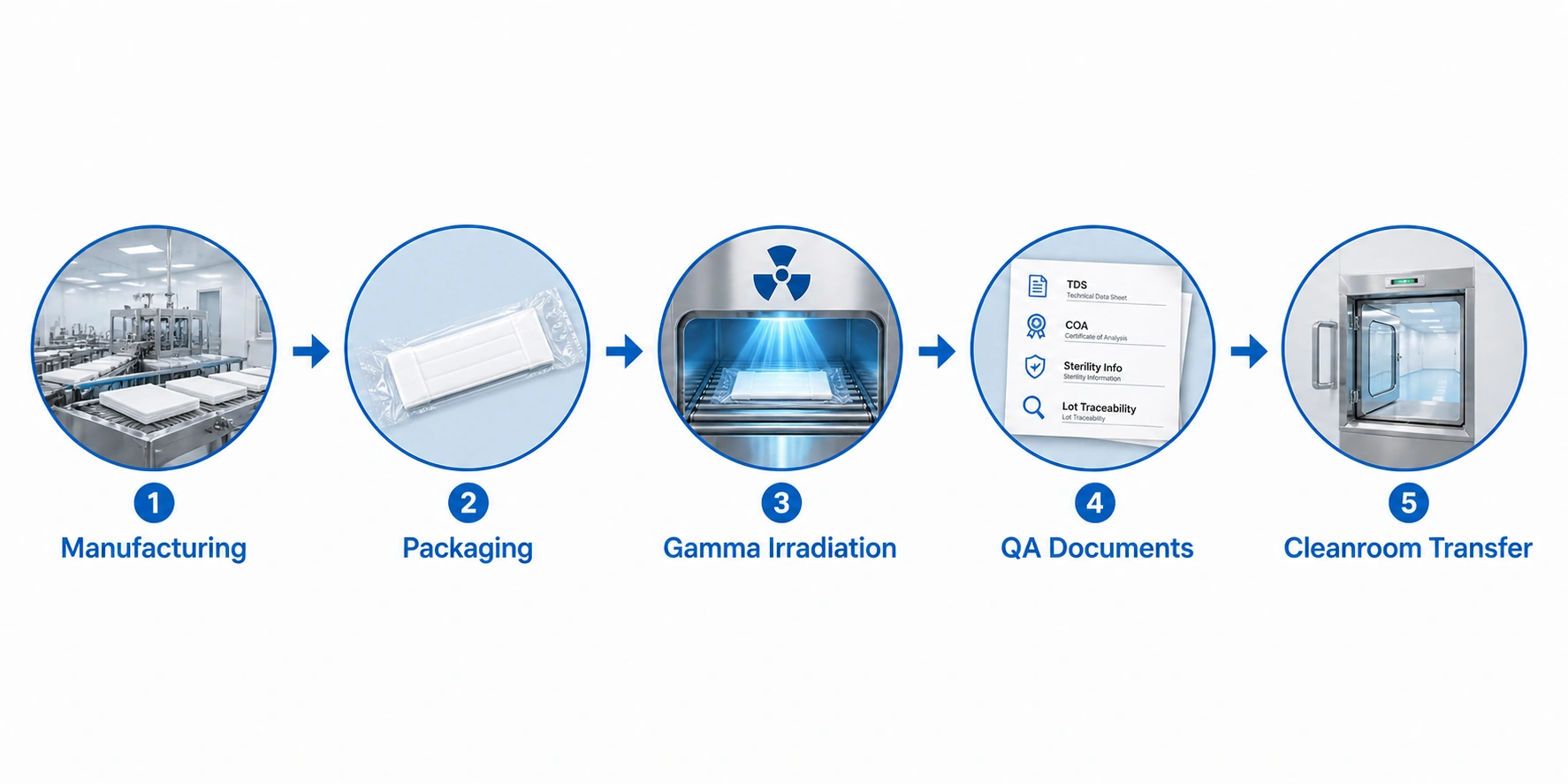
El material de la cubierta del trapeador, la construcción de los bordes, el tamaño y la idoneidad para la sala limpia se confirman antes del embalaje.
El embalaje debe soportar la transferencia a salas blancas, la trazabilidad de lotes y la inspección interna de recepción.
Los productos esterilizados con rayos gamma pueden entregarse con documentación relacionada con la esterilización para su revisión de calidad.
Las instalaciones deben seguir sus POE para la transferencia, desembalaje, uso, eliminación o reprocesamiento estériles.
Sterile cleanroom mops are most relevant where microbial control, aseptic handling, or sterile cleaning materials are required by facility procedures.
| Área / Aplicación | Recomendación de trapeador estéril | Razón |
|---|---|---|
| Soporte aséptico grado A | Altamente recomendado si así lo requiere el SOP | Mayor riesgo de contaminación viable y control más estricto del flujo de trabajo estéril |
| Área de fondo de grado B | Recomendado para flujos de trabajo de alto control | Admite la manipulación de materiales estériles y la revisión del control de la contaminación. |
| Aislador/área de soporte RABS | Recomendado donde se especifican herramientas de limpieza estériles. | Admite el control de intervenciones asépticas y los procedimientos de transferencia estéril |
| Área de fabricación grado C/D | Caso por caso | Puede usar trapeadores estériles o no estériles según el riesgo del producto y el POE |
| Almacén o zona de soporte no crítica | Generalmente opcional | Los trapeadores de sala blanca no esterilizados pueden ser suficientes para una limpieza controlada de rutina |
Para programas de limpieza GMP donde el control ambiental y la prevención de la contaminación son importantes.
Para zonas de apoyo alrededor de operaciones asépticas donde se pueden preferir herramientas compatibles con esterilizaciones.
Para limpieza controlada de superficies en áreas de soporte de producción y laboratorio.
Para áreas de sala limpia que requieren un flujo de trabajo repetible, materiales con poca pelusa y documentación.
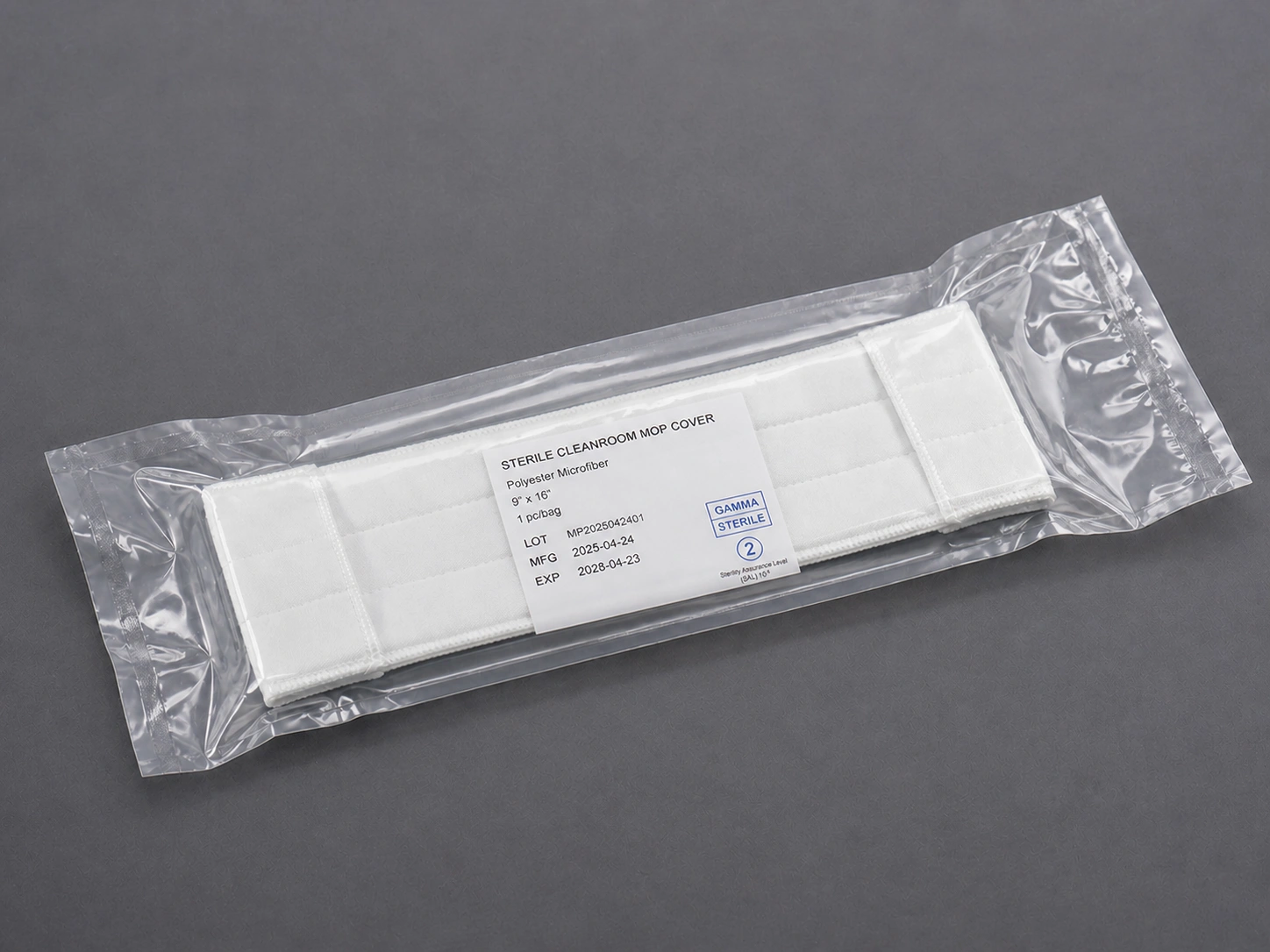
Polyester and microfiber sterile mop covers serve different cleaning priorities. Buyers should compare lint control, residue pickup, absorption, chemical compatibility, and SOP fit before selection.
| Atributo | Funda de fregona estéril de poliéster | Funda para fregona estéril de microfibra |
|---|---|---|
| Ventaja principal | Rendimiento con poca pelusa y resistencia química | Contacto superficial y recogida de residuos |
| Uso típico | Áreas controladas por Pharma y GMP | Limpieza rutinaria de superficies de salas blancas |
| control de partículas | Fuerte cuando se especifica adecuadamente | Depende de la construcción |
| Absorción de líquidos | Moderado a bueno | Fuerte |
| Preocupación del comprador | Pelusa, compatibilidad química, embalaje estéril. | Pastilla, control de saturación, compatibilidad de materiales. |
Sterile cleaning programs may use single-use sterile mop covers, reusable autoclavable systems, or hybrid configurations depending on risk level, cleaning frequency, and cost-control requirements.
| Opción | Mejor para | Ventaja clave | Consideración del comprador |
|---|---|---|---|
| Fregona esterilizada de un solo uso | Grado A/B o áreas de alto control | Reduce los problemas de contaminación relacionados con la reutilización | Mayor costo por uso y manejo de residuos |
| Fregona reutilizable esterilizable en autoclave | Instalaciones con proceso de esterilización validado | Menor costo operativo a largo plazo | Requiere control del ciclo de vida y del reprocesamiento |
| Sistema híbrido | Marco reutilizable con funda de fregona desechable. | Equilibra el control de costos y contaminación | Se debe confirmar la compatibilidad |
Sterile mop sourcing often requires more than price and product photos. QA and sourcing teams may need documents that support material review, traceability, sterility review, and internal qualification.
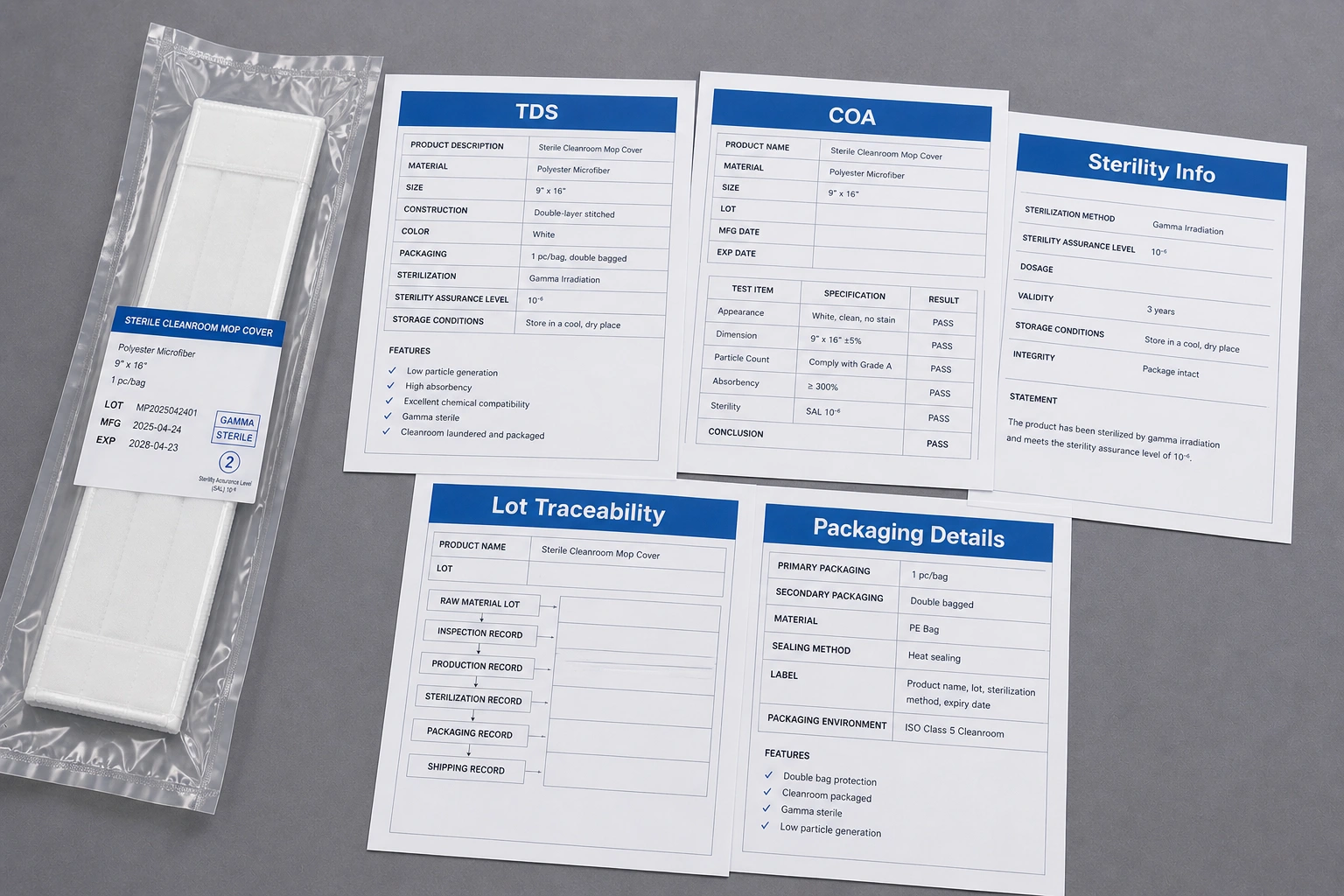
Ficha técnica que cubre material, estructura, tamaño, área de aplicación y uso recomendado.
Se puede solicitar información relacionada con la esterilización para las opciones de trapeadores estériles o esterilizados con rayos gamma.
La trazabilidad de lotes ayuda a los equipos de control de calidad a conectar los lotes de productos con la inspección de recepción y los registros internos.
La información del material ayuda a evaluar el control de pelusa, la compatibilidad química y el ajuste de los SOP.
La información del embalaje ayuda a evaluar la transferencia a salas blancas, las necesidades de doble embolsado y el flujo de trabajo de manipulación.
Se podrá discutir certificado de análisis o certificado de conformidad dependiendo de las necesidades del producto y del pedido.
Tell us which sterile mop option you are evaluating and whether you need TDS, material data, sterility information, lot traceability, packaging details, or sample support.
A sterile mop should not be evaluated only as a mop cover. Buyers should also confirm whether the frame, handle, and bucket workflow are compatible with their cleaning SOP and cleanroom requirements.
Funda para trapeador esterilizada con poca pelusa seleccionada según el nivel de riesgo, preferencia de material y área de limpieza.
Marco compatible para un contacto estable con el suelo, la pared o el techo durante la limpieza controlada.
Mango suave y compatible con salas blancas para alcance, control y movimiento repetible del operador.
Flujo de trabajo con cubeta o escurridor para respaldar el control de saturación y la separación de líquido fresco y usado.
Sterile cleanroom mops can support GMP cleaning SOPs by improving traceability, workflow consistency, surface contact, saturation control, and documentation review.
Confirme el material, el tamaño, el embalaje, la trazabilidad del lote y la compatibilidad del trapeador con la estructura y el mango de la instalación.
Utilice desinfectantes aprobados y métodos de preparación definidos por el procedimiento de limpieza de las instalaciones.
Aplique un nivel de humectación constante para respaldar una cobertura de superficie y un tiempo de contacto repetibles.
Siga una dirección de limpieza definida y un procedimiento de zonificación de áreas para reducir el riesgo de contaminación cruzada.
Los trapeadores esterilizados de un solo uso deben desecharse según los requisitos de la instalación; Los sistemas reutilizables requieren un reprocesamiento validado.
Buyers should choose sterile cleanroom mops by comparing cleanroom grade, sterile requirement, mop material, workflow design, chemical compatibility, and documentation needs.
Sterile cleanroom mops should be selected according to the facility’s contamination-control risk, surface type, operator workflow, and documentation requirements.
MIDPOSI can help B2B buyers compare sterile mop cover options, flat mop systems, bucket workflows, and disposable or reusable configurations.
| Requisito | Dirección recomendada |
|---|---|
| Grado A/B o área de soporte aséptico | Funda de fregona estéril con revisión de documentación. |
| Se requiere transferencia estéril | Envases estériles, trazabilidad de lotes y evaluación de envases. |
| Se requiere opción de esterilización gamma | Solicite información relacionada con la esterilización y detalles del certificado |
| Sala limpia ISO de rutina | Un trapeador no esterilizado para salas blancas puede ser suficiente |
| Prioridad de baja pelusa | Opción de trapeador de poliéster |
| Fuerte recogida de residuos | Opción de trapeador de microfibra |
| Limpieza de suelos/paredes/techos | Sistema de fregona plana con mango compatible. |
Tell us your cleanroom class, application area, sterile requirement, mop material preference, and workflow needs. MIDPOSI can help recommend a suitable sterile cleanroom mop system for your facility.
Explore related MIDPOSI resources for cleanroom mop systems, flat mop systems, disposable mop covers, microfiber mop materials, bucket workflows, and buyer guidance.
These answers are designed for cleanroom buyers, QA teams, contamination-control specialists, pharmaceutical sourcing teams, and facility managers.
A sterile cleanroom mop is a low-lint mop cover or mop system used in controlled environments where sterility, particle control, and contamination prevention are required.
SAL 10⁻⁶ refers to a sterility assurance level where the probability of a viable microorganism remaining is extremely low. If a sterile mop is supplied with SAL-related documentation, buyers should confirm the sterilization method, lot information, and certificate details with the supplier.
Gamma-sterilized mop covers are commonly considered for Grade A/B support areas when sterile cleaning materials are required by facility SOP. Final approval should always be based on the pharmaceutical facility’s internal QA review.
Buyers should check whether the mop is supplied in sterile packaging, whether double-bagging is available, whether lot traceability is provided, and whether the packaging supports cleanroom transfer procedures.
Common documents may include TDS, material information, lot traceability, sterility-related documentation, packaging details, and product compatibility information for internal QA review.
Many sterile cleanroom mop covers are single-use, but some facilities use reusable autoclavable systems or hybrid configurations depending on SOP and contamination-control requirements.
Yes. Sterile mop covers can be used with compatible flat mop frames when the size, attachment method, and cleaning workflow are suitable for the facility’s SOP.
Polyester is often selected for low-lint performance and chemical compatibility, while microfiber is often selected for stronger surface contact and residue pickup.
If you are sourcing sterile cleanroom mops for pharmaceutical manufacturing, biotechnology facilities, laboratories, medical device production, or ISO cleanrooms, MIDPOSI can help you compare sterile mop covers, flat mop systems, disposable options, microfiber and polyester materials, and bucket-based workflows.