¿Qué es un sistema de fregado para salas blancas y cómo funciona?
A sistema de limpieza para salas blancas is a controlled-environment cleaning setup that combines low-lint mop heads, dedicated frames, handles, buckets, wringers, and sterile or non-sterile options. It is commonly used in pharmaceutical, biotechnology, semiconductor, medical device, laboratory, and ISO-classified cleanrooms to support particle control, fiber control, disinfectant application, and routine contamination control workflows.
A cleanroom mopping system is not only a mop. It is a complete cleaning toolset designed to help operators clean floors, walls, ceilings, and controlled surfaces according to facility SOPs, cleanroom classifications, and contamination control requirements.
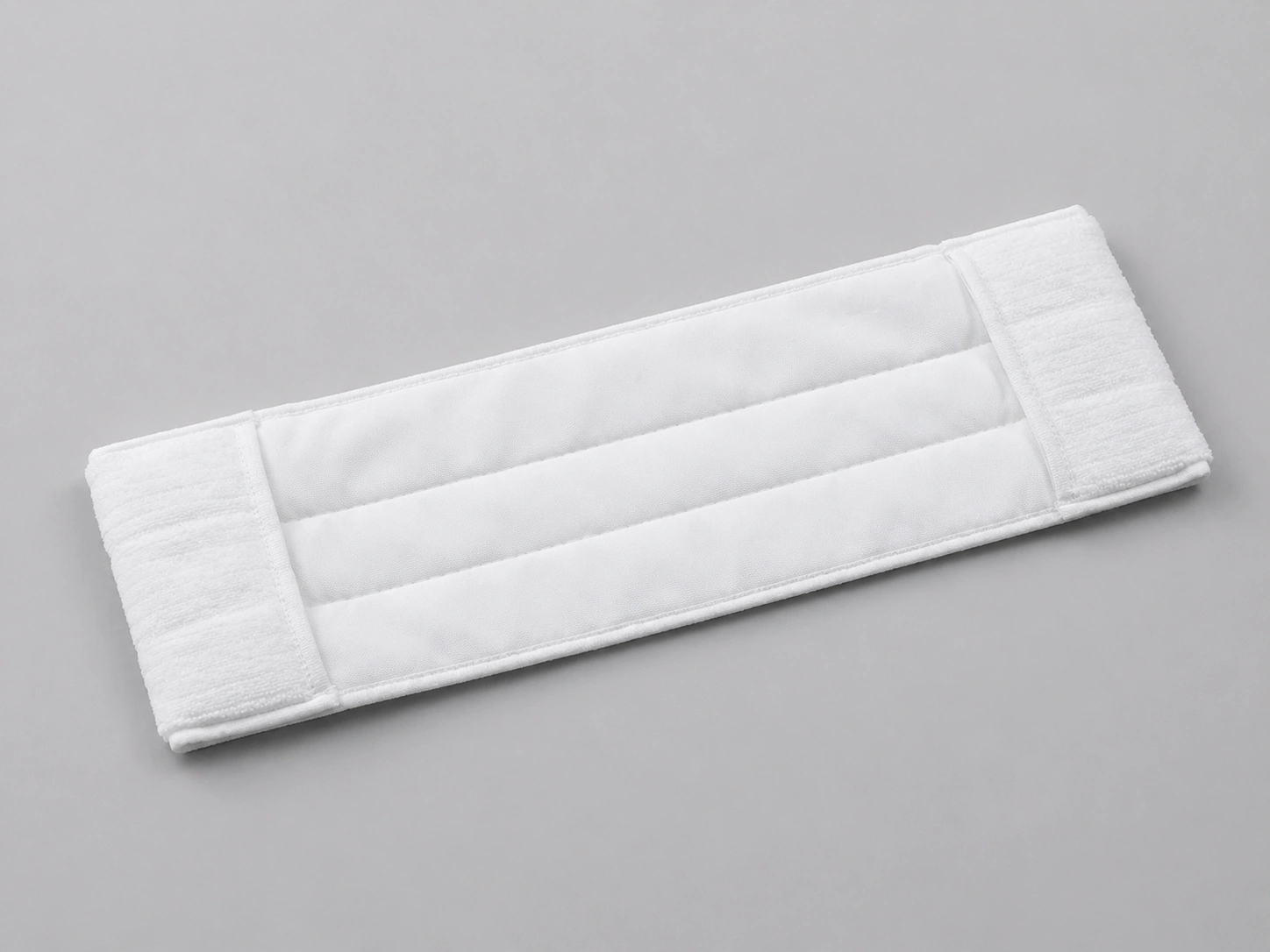
¿Qué es un sistema de fregado para salas blancas?
A cleanroom mopping system is a complete set of cleaning tools designed for controlled environments where ordinary janitorial mops may introduce particles, fibers, residues, or uncontrolled moisture.
Unlike a regular mop, a cleanroom mop system is usually built around low-lint mop heads, smooth frames, compatible handles, and bucket or wringer systems that help operators follow controlled cleaning procedures.
How Does a Cleanroom Mopping System Work?
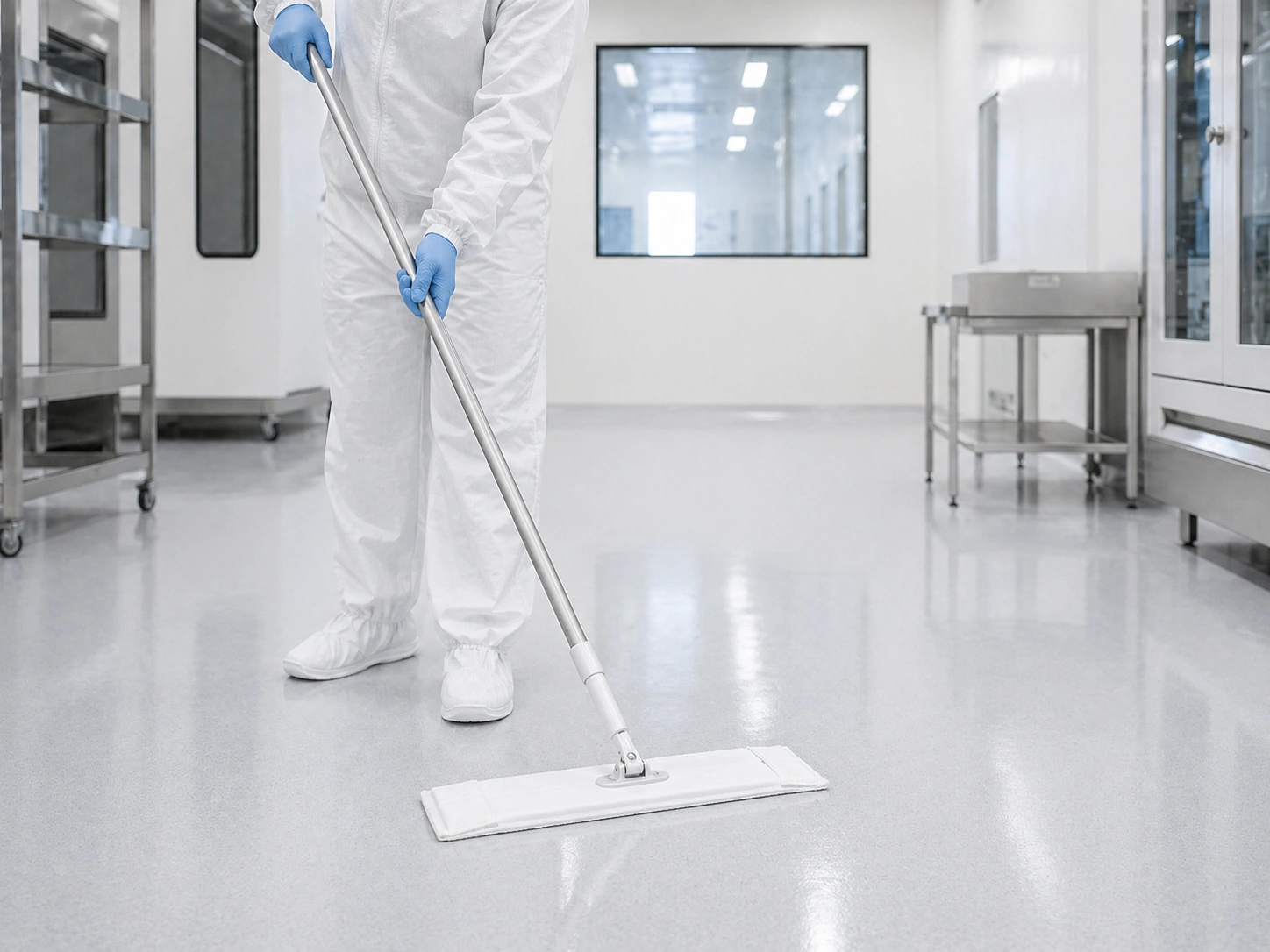
A cleanroom mopping system works by combining controlled cleaning materials with a defined cleaning workflow. The operator attaches a cleanroom mop head to a compatible frame and handle, wets the mop head with an approved cleaning agent or disinfectant, and uses the bucket and wringer system to control liquid level before cleaning.
Cleanroom cleaning usually follows facility SOPs. These procedures may define cleaning direction, mop replacement frequency, disinfectant rotation, sterile presentation, clean-to-dirty workflow, and documentation requirements.
Typical workflow
- Prepare mop head, frame, handle, and bucket system.
- Apply approved cleaning solution or disinfectant.
- Control mop saturation through wringing or bucket configuration.
- Clean using overlapping strokes according to SOP.
- Replace mop heads according to procedure.
- Document cleaning activity where required.
Typical cleaning surfaces
- Cleanroom floors
- Paredes y techos
- Controlled production areas
- Equipment surfaces
- Isolators and support areas
- Laboratory or gowning areas
¿Qué son las fregonas para salas blancas?
Cleanroom mops are specialized cleaning tools made for controlled environments such as GMP cleanrooms, ISO-classified rooms, semiconductor fabs, laboratories, and aseptic processing support areas.
A cleanroom mop head is usually made from materials selected for low particle generation, low fiber release, absorbency, and compatibility with disinfectants. Common materials include polyester, microfiber, foam, and nonwoven structures.
| Característica | Trapeador para sala limpia | Trapeador normal |
|---|---|---|
| Material | Low-lint or cleanroom-compatible materials | Cotton or general synthetic fibers |
| Utilice el entorno | GMP, ISO, pharmaceutical, semiconductor, medical device, laboratory cleanrooms | General commercial or household cleaning |
| Control de contaminación | Designed to help reduce particle and fiber release | May release fibers or particles |
| Embalaje | May be sterile or cleanroom-compatible | Standard packaging |
| Flujo de trabajo de limpieza | Used according to SOPs and controlled procedures | Used for general cleaning |
Why Cleanroom Mop Systems Matter in Controlled Environments
Cleanroom mop systems matter because inappropriate cleaning tools may introduce contamination into environments where particles, fibers, residues, and microorganisms must be controlled.
In pharmaceutical, biotechnology, semiconductor, and medical device facilities, cleaning tools are part of the contamination control strategy. A mop that sheds fibers, releases particles, or does not work well with disinfectants can create quality and operational risks.
Partícula & Control de fibra
Low-lint mop heads help reduce the risk of introducing unwanted fibers or particles during cleaning.
Disinfectant Application
A compatible mop system helps operators apply cleaning agents or disinfectants more consistently.
SOP-Based Cleaning
Frames, handles, buckets, and wringers help support repeatable cleaning procedures across operators and zones.
Common Applications of Cleanroom Mopping Systems
Cleanroom mopping systems are used in controlled environments where cleaning tools must support particle and contamination control.
- Pharmaceutical cleanrooms: GMP-controlled production areas, sterile preparation rooms, and clean zones.
- Biotechnology facilities: Production rooms, research spaces, and controlled support areas.
- Medical device manufacturing: Assembly, inspection, and packaging environments.
- Semiconductor cleanrooms: Particle-sensitive floor and support-space cleaning.
- Laboratories: Controlled testing and regulated research areas.
- Cleanroom service companies: Cleaning teams needing mop heads, handles, frames, buckets, and wringers.
Key Components of a Cleanroom Mopping System
A cleanroom mopping system is not just one mop. It is a complete toolset designed to work together across cleaning surfaces, cleanroom zones, and SOP-defined workflows.
Cabezales de fregona para salas limpias
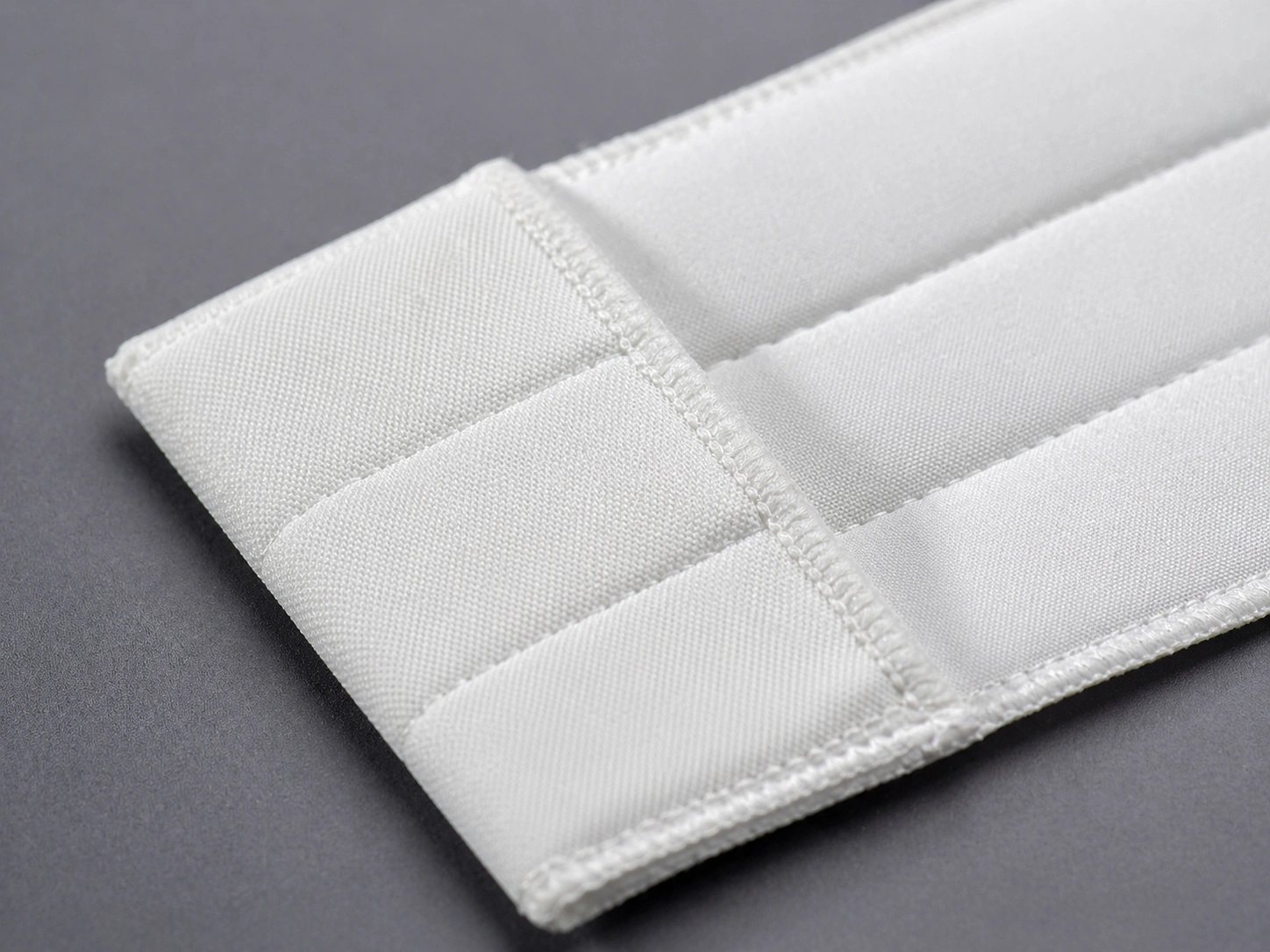
The mop head is the main cleaning contact surface. It should be selected according to lint level, absorbency, chemical compatibility, cleaning surface, and sterility requirement.
Mop Frames and Handles
Mop frames hold the mop head securely and help distribute pressure during cleaning. Lightweight handles support floor, wall, ceiling, and hard-to-reach surface cleaning.
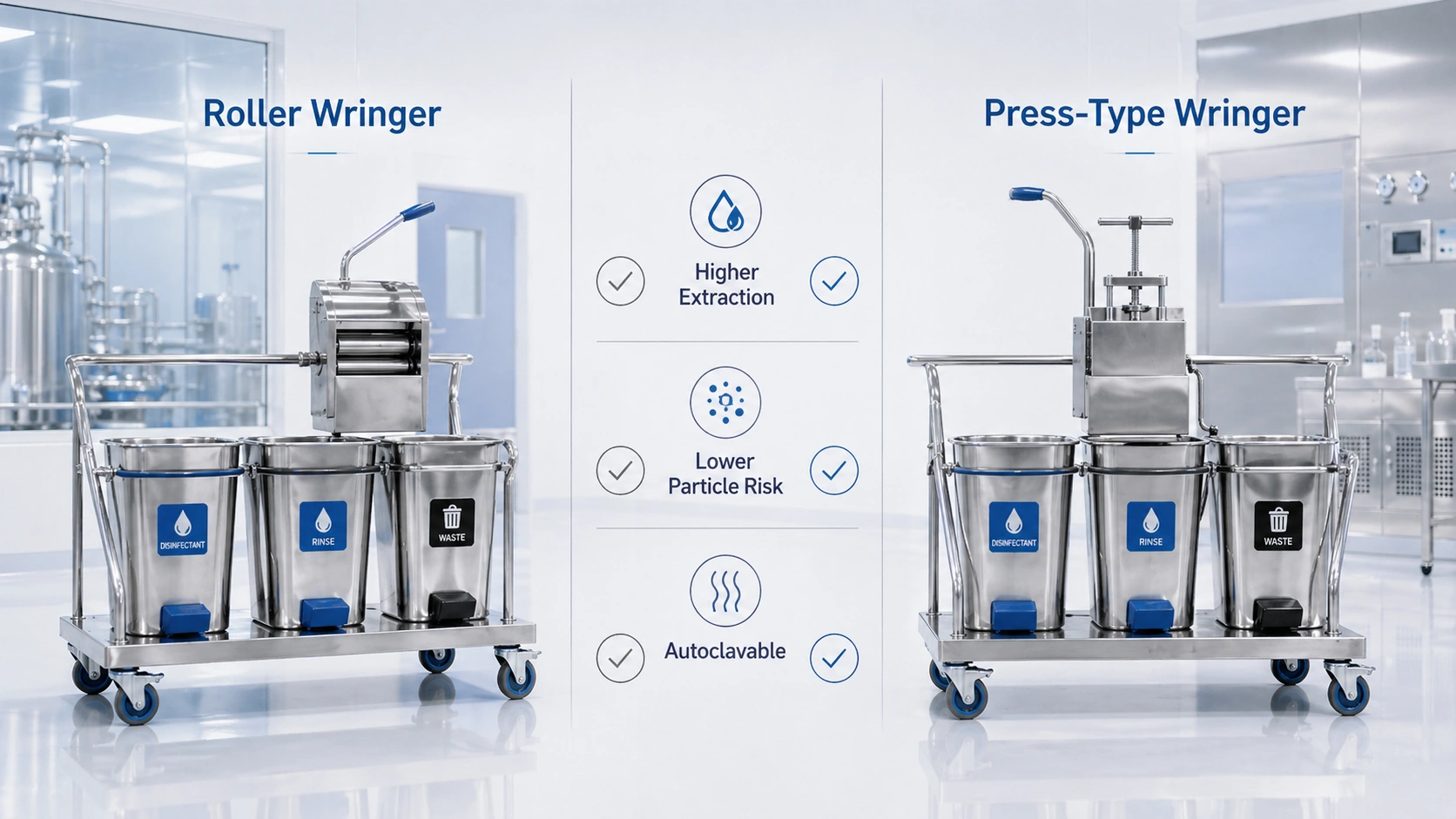
Mop Buckets and Wringers
Buckets and wringers help control cleaning solution, disinfectant use, and moisture level. Depending on the SOP, a facility may use a single-bucket, double-bucket, or more controlled bucket system.
Cleanroom Mop Materials: What Buyers Should Compare
Cleanroom mop materials should be compared based on particle generation, lint level, absorbency, chemical compatibility, durability, sterile availability, and cost per use.
Poliéster
Polyester is commonly used in cleanroom cleaning products because it can provide low-lint performance, good chemical compatibility, and stable wiping performance.
Microfibra
Microfiber can provide strong surface contact and particle pickup. It is often selected for controlled cleaning where fine surface wiping is required.
Nonwoven and Foam Materials
Nonwoven and foam mop heads may be used for disposable cleaning applications, liquid application, and controlled wiping needs, depending on the facility’s SOP and cleaning environment.
Sterile vs Non-Sterile Cleanroom Mops
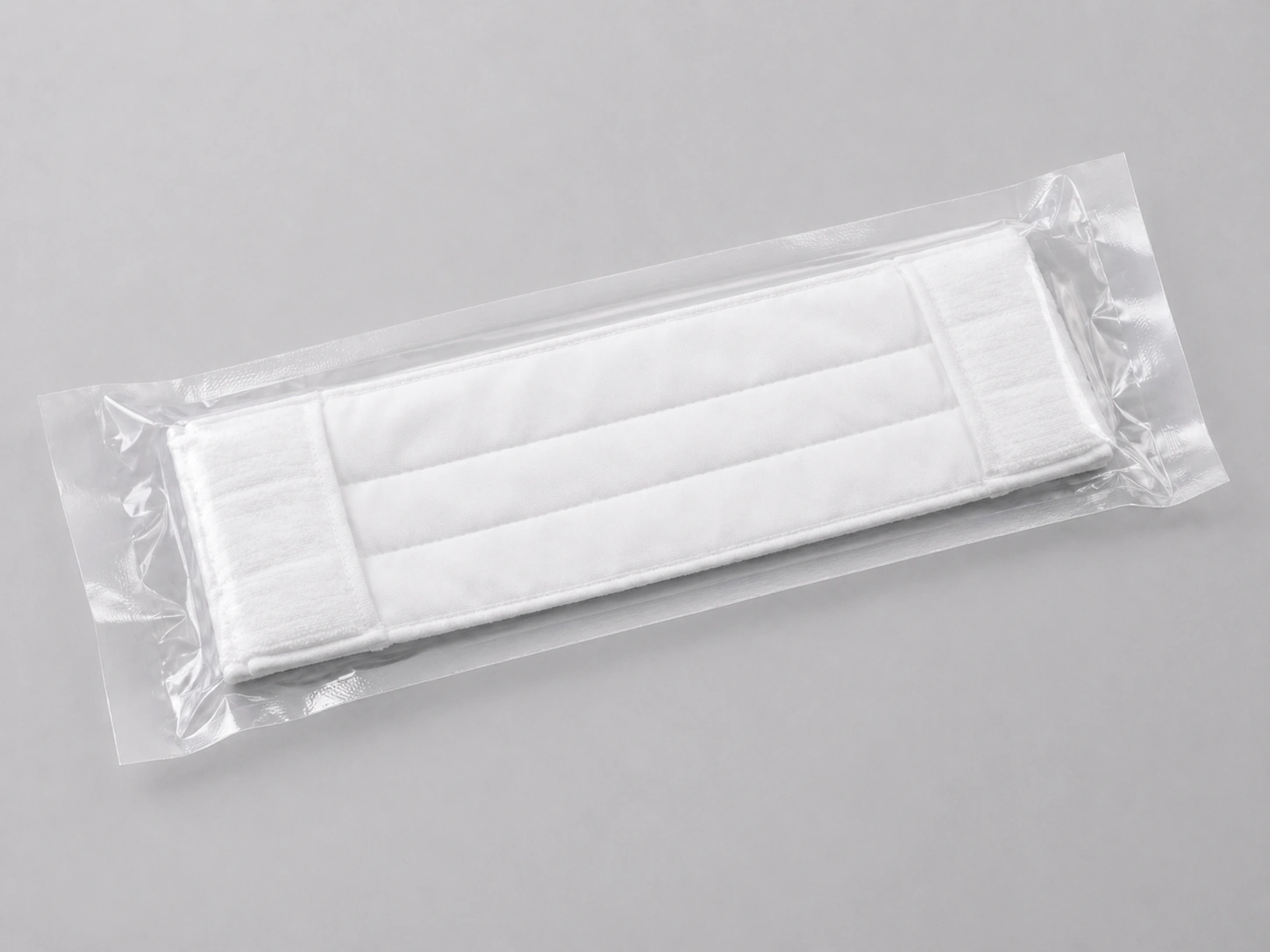
Sterile and non-sterile cleanroom mops are selected according to the cleanroom zone, contamination risk, SOP, and quality requirements.
Elija trapeadores esterilizados cuando:
- The SOP requires gamma-irradiated mop pads.
- The cleaning workflow requires sterile presentation.
- The area has stricter contamination control requirements.
- Double-layer vacuum sealed sterile packaging is required.
- QA or validation teams require sterility information for review.
Elija trapeadores no esterilizados cuando:
- The controlled-area SOP accepts non-sterile mop pads.
- The application is routine floor or surface cleaning.
- The cleaning area does not require sterile presentation.
- The buyer needs cost-efficient disposable mop replacement.
- The goal is to balance performance and procurement cost.
Trapeadores para salas blancas desechables versus reutilizables
Disposable and reusable cleanroom mops each have advantages. The best choice depends on cleaning frequency, contamination control requirements, laundering capability, storage conditions, and total cost of ownership.
Trapeadores desechables para salas blancas
Disposable cleanroom mops are often selected when facilities want to reduce laundering, simplify replacement, and avoid reusing mop heads across different areas.
- Convenient replacement
- Reduced laundering requirements
- Useful for multi-area cleaning
- Easier inventory control
- Suitable for single-use workflows
Fregonas reutilizables para salas blancas
Reusable cleanroom mops may be suitable when a facility has validated laundering, drying, inspection, and storage procedures.
- Potentially lower long-term cost per use
- Durable materials
- Suitable for repeated cleaning programs
- Requires stronger process control
- Needs laundering and inspection procedures
How to Choose the Right Cleanroom Mopping System
The right cleanroom mopping system should match the facility’s cleanroom classification, cleaning surface, sterility requirement, disinfectant, and operating workflow.
MIDPOSI White Cleanroom Mop Series: 40g, 55g and 65g Options
MIDPOSI White Cleanroom Mop Series is designed for controlled cleaning workflows where B2B buyers need clear product options by weight and sterility.
| Product Option | Mejor para | Necesidad típica del comprador |
|---|---|---|
| Fregona ligera de 40 g. | Limpieza rutinaria ligera | Manipulación más sencilla y uso desechable rentable |
| Fregona Mediana 55g | Balanced cleaning performance | Una opción intermedia entre limpieza ligera y pesada |
| Trapeador resistente de 65 g | Mayor absorbencia y cobertura de limpieza más fuerte. | Tareas de limpieza controladas más exigentes |
| Versión estéril | Workflows requiring gamma-irradiated mop pads | Sterile presentation and sterile packaging |
| Versión no estéril | Limpieza rutinaria de áreas controladas | Cost-efficient replacement where SOP allows |
Technical Summary
| Especificación | Serie 40g | Serie 55g | Serie 65g |
|---|---|---|---|
| Tamaño del producto | 40 × 12 cm / 15,75” × 4,72” | 40 × 12 cm / 15,75” × 4,72” | 40 × 12 cm / 15,75” × 4,72” |
| Material | Tejido de punto 100% poliéster de 4 capas. | 5-layer 100% polyester knit fabric | 5-layer 100% polyester knit fabric |
| Master Carton Qty | 100 unidades/caja | 100 unidades/caja | 100 unidades/caja |
| Tamaño del cartón | 45 × 31 × 35 cm | 45 × 31 × 41 cm | 45 × 31 × 45 cm |
| Peso del cartón | 5.5 kg | 7 kg | 8 kg |
Cleanroom Mop Selection Table
The table below helps B2B buyers match cleanroom mop types with application areas and purchasing concerns.
| Área de aplicación | Tipo de trapeador recomendado | Requisito clave | Preocupación típica del comprador |
|---|---|---|---|
| Pharmaceutical cleanroom | Sterile or non-sterile polyester mop, depending on SOP | Contamination control and cleaning consistency | Sterility, documentation, packaging |
| Biotech production area | Low-lint cleanroom mop system | Compatibilidad desinfectante | Cleaning performance and supply stability |
| Semiconductor cleanroom | Low-lint mop head | control de partículas | Fiber release and material suitability |
| Fabricación de dispositivos médicos | Trapeador desechable para sala blanca | Controlled surface cleaning | Cross-area use and replacement workflow |
| Laboratorio | Polyester or microfiber mop | Compatibilidad química | Cost, availability, and ease of use |
| Cleanroom service company | Mop head, handle, frame, bucket and wringer system | Eficiencia operativa | Full-system availability and sample testing |
Questions to Ask Before Buying Cleanroom Mops
Before purchasing cleanroom mops, buyers should ask practical questions that connect product specifications with real use.
- ¿Los cabezales del trapeador tienen poca pelusa?
- ¿Hay opciones estériles y no estériles disponibles?
- What cleanroom environments are they commonly used in?
- Can the mop heads be used with the facility’s disinfectants?
- Are disposable and reusable options available?
- What mop bucket or wringer configurations can be supplied?
- ¿Hay muestras disponibles para realizar pruebas?
- Can technical data sheets or product specifications be provided?
- ¿Cuál es la cantidad mínima de pedido?
- ¿Cuál es el plazo de entrega?
- ¿Puede el proveedor apoyar a distribuidores, importadores o empresas de servicios de salas blancas?
Por qué los compradores B2B trabajan con MIDPOSI
MIDPOSI provides cleanroom mop systems and disposable cleanroom mop pads for controlled environments, including pharmaceutical, biotechnology, semiconductor, medical device, laboratory, and cleanroom service applications.
Clear Product Options
40g, 55g, and 65g disposable mop pad options for different cleaning workloads.
Estéril & Non-Sterile Versions
Options for workflows requiring gamma-irradiated mop pads or routine controlled-area cleaning.
B2B Inquiry Support
Sample support, product information, packaging details, and quotation support for distributors and facility teams.
To review the product series, visit Serie de fregonas blancas para salas blancas MIDPOSI.
FAQ About Cleanroom Mopping Systems
What is a cleanroom mopping system?
A cleanroom mopping system is a controlled cleaning setup that includes cleanroom mop heads, frames, handles, buckets, wringers, and sterile or non-sterile options for use in controlled environments.
¿Cuál es la diferencia entre un trapeador para sala blanca y un trapeador normal?
A cleanroom mop is made from low-lint or cleanroom-compatible materials to reduce particle and fiber release. A regular mop may shed fibers or introduce residues that are not suitable for controlled environments.
Are sterile cleanroom mops required in GMP cleanrooms?
Sterile cleanroom mops may be required in higher-risk GMP or aseptic areas. The final selection should follow the facility SOP, cleanroom classification, validation requirements, and quality team guidance.
How do I choose a cleanroom mop head?
Choose a cleanroom mop head based on the cleaning surface, cleanroom classification, required sterility, material, absorbency, chemical compatibility, and whether the mop is disposable or reusable.
Can cleanroom mops be used for walls and ceilings?
Yes. Many cleanroom mopping systems can be used for floors, walls, ceilings, and hard-to-reach surfaces when paired with suitable frames and handles.
What information should buyers request from a supplier?
Buyers should request product specifications, material details, sterile or non-sterile options, packaging information, sample availability, lead time, and compatibility with their cleaning procedure.
What is the difference between 40g, 55g and 65g cleanroom mop pads?
The 40g mop pad is suitable for lightweight routine cleaning. The 55g mop pad offers balanced absorbency and handling. The 65g mop pad is designed for higher absorbency and more demanding cleanroom cleaning tasks.
Need Cleanroom Mop Systems for Your Facility or Distribution Business?
Contact MIDPOSI to discuss cleanroom mop heads, mop bucket and wringer systems, sterile or non-sterile options, and sample availability for your market.