Système SOP pour salle blanche & Gestion de la conformité
SOP de nettoyage des salles blanches : guide complet de documentation, de formation, de validation et de conformité
A complete guide to building a cleanroom cleaning SOP system for pharmaceutical and controlled environments, including documentation structure, training control, cleaning frequency logic, validation planning, audit readiness, and contamination control governance.
Qu'est-ce qu'une SOP de nettoyage de salle blanche ?
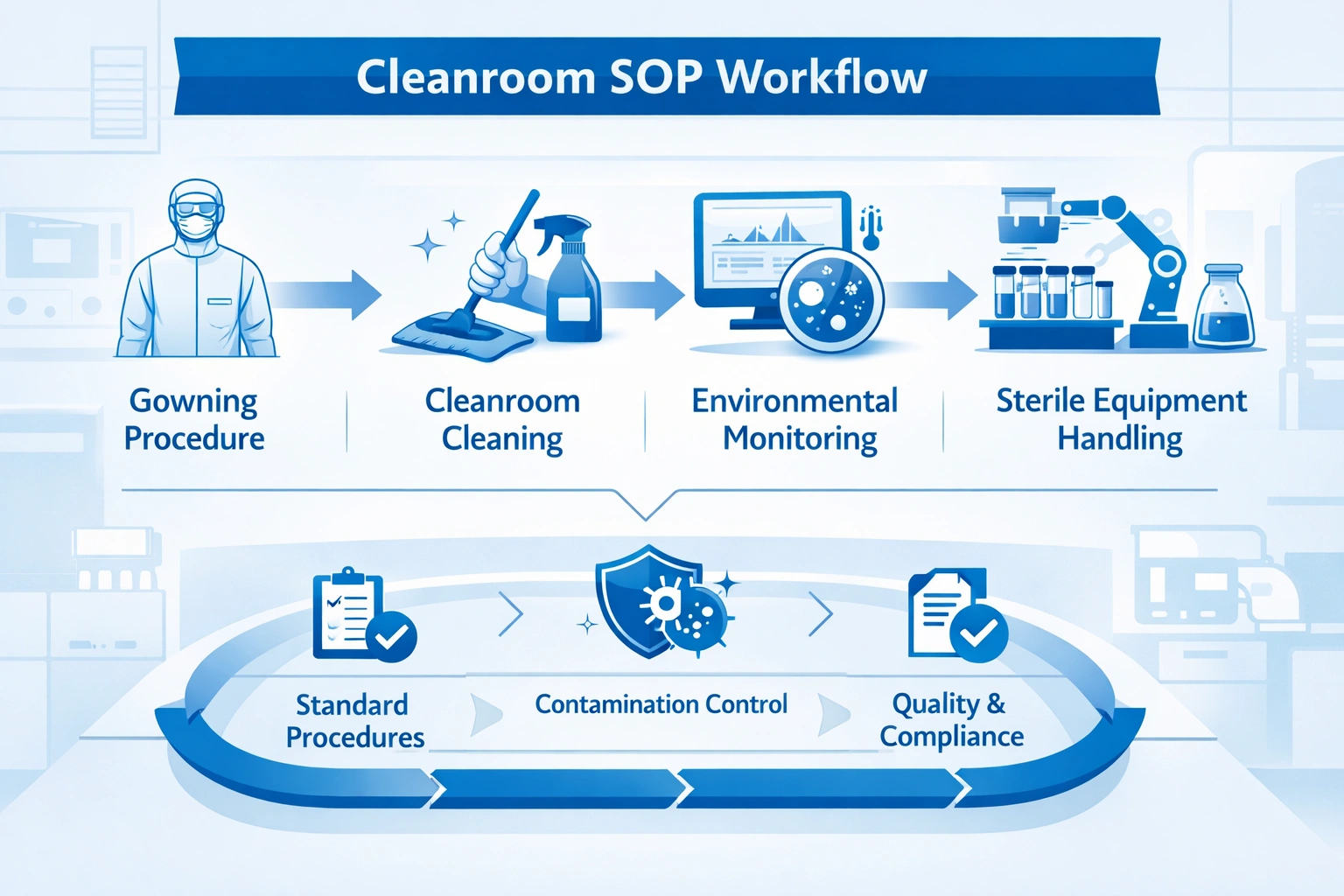
A cleanroom cleaning SOP is a controlled document that defines how cleaning and disinfection activities are planned, executed, recorded, reviewed, and improved in controlled environments. A complete SOP system typically includes cleaning instructions, cleaning frequency, approved tools, disinfectant rules, training requirements, validation records, and audit-ready documentation.
Pourquoi une SOP de nettoyage de salle blanche doit être plus qu'une instruction de nettoyage
Many facilities treat a cleanroom cleaning SOP as a simple work instruction. In reality, it is a contamination control management document that connects personnel, materials, procedures, frequency, records, and verification into one system.
In pharmaceutical and biotech environments, a weak SOP usually leads to inconsistent execution, incomplete documentation, poor training transfer, and increased audit risk. A strong système de documentation SOP pour salle blanche aide à standardiser le nettoyage quotidien tout en prenant en charge la conformité et la traçabilité BPF.
Ce qu'un système SOP complet de nettoyage de salle blanche devrait inclure
Portée et objectif du document
Définissez le niveau de salle blanche, le type de salle, la portée du processus et l'objectif de contrôle de la contamination.
Outils et consommables approuvés
Répertoriez les systèmes de vadrouille, les lingettes, les seaux, les vêtements, la qualité de l'eau et les désinfectants qualifiés.
Instructions de nettoyage
Précisez ce qui est nettoyé, dans quel ordre, par quelle méthode et avec quelles précautions.
Fréquence de nettoyage
Définissez la fréquence à laquelle les surfaces, les sols, les murs et les points de contact critiques doivent être nettoyés.
Formation et qualification
Expliquez qui peut effectuer le nettoyage, quelle formation est requise et comment les compétences sont vérifiées.
Documentation et révision
Définissez les enregistrements, les règles d’approbation, la gestion des écarts et les cycles périodiques de révision des SOP.
Facilities needing a more technical execution workflow for critical-grade environments should also review the dedicated Guide des procédures de nettoyage des salles blanches ISO 5.
Comment définir la fréquence de nettoyage dans une SOP de salle blanche
One of the most common SOP weaknesses is using generic cleaning frequency language such as “clean regularly” or “clean as needed.” In compliant environments, frequency should be risk-based and clearly assigned by area.
La SOP doit faire la distinction entre :
- Zones de production critiques
- Zones d’appui et sas
- Sols, murs, plafonds et surfaces de contact
- Nettoyage de routine vs rotation des désinfectants vs intervention sporicide
Si votre équipe élabore un programme de fréquence lié aux résultats d'échantillonnage, cela doit correspondre à surveillance environnementale des salles blanches basée sur les risques et un examen des tendances en matière de contamination plutôt qu'une simple routine fixe.
Contrôle de la formation et de l’exécution
A cleaning SOP only works when operators perform the same action the same way every time. That is why training is not a support activity. It is part of the SOP system itself.
Le contrôle de la formation doit inclure :
- Formation initiale des opérateurs
- Démonstration visuelle du flux de travail
- Qualification et approbation observées
- Recyclage périodique
- Requalification basée sur les écarts
Validation du nettoyage et préparation à l’audit
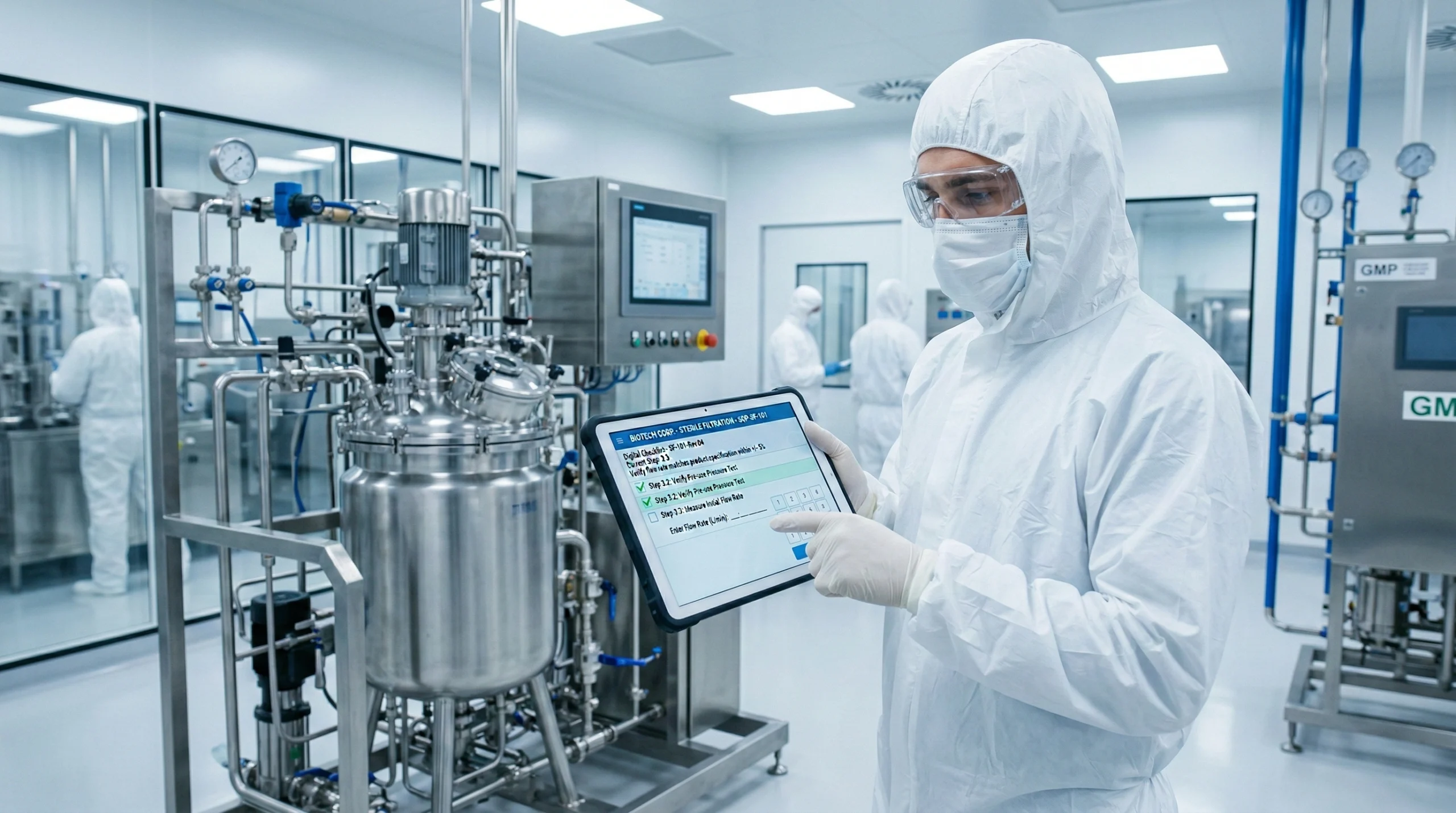
A mature SOP system should not stop at execution. It should support validation and audit readiness. That means the cleaning process must be reviewable, traceable, and aligned with facility quality systems.
Les documents de support liés à la validation peuvent inclure :
- Journaux de nettoyage et feuilles de signature
- Dossiers de préparation du désinfectant
- Traçabilité des lots de têtes de serpillères et lingettes
- Données d'examen de la surveillance environnementale
- Enregistrements d’écarts et CAPA
- Examen périodique de l'efficacité des SOP
Pour les établissements préparant des dossiers de documentation, les ressources de support utiles comprennent Listes de contrôle de validation des salles blanches cGMP de la FDA et Modèles de SOP de qualification et de validation des salles blanches.
Erreurs courantes du système SOP
Écrire uniquement la tâche, pas le système
La SOP explique les mouvements de nettoyage mais ignore la fréquence, les enregistrements, la formation et le contrôle de révision.
Approbation de l'outil peu claire
Les opérateurs utilisent des lingettes, des têtes de vadrouille ou des désinfectants différents car le document est trop général.
Faible lien de formation
Les SOP existent, mais il n'existe aucun contrôle de compétence formel pour prouver que les opérateurs les suivent correctement.
Aucune fréquence de nettoyage basée sur les risques
Le plan de nettoyage est générique et ne correspond pas à la classification des pièces ou aux tendances de contamination.
Mauvaise conception du dossier
Les journaux capturent l'activité mais pas suffisamment d'informations pour la traçabilité, l'examen ou la défense contre l'inspection.
Aucun lien avec la validation
Le SOP est utilisé de manière opérationnelle, mais n'est pas intégré aux systèmes de qualification, de préparation à l'audit ou de CAPA.
Stratégie recommandée en matière de vadrouille et de consommables pour salle blanche
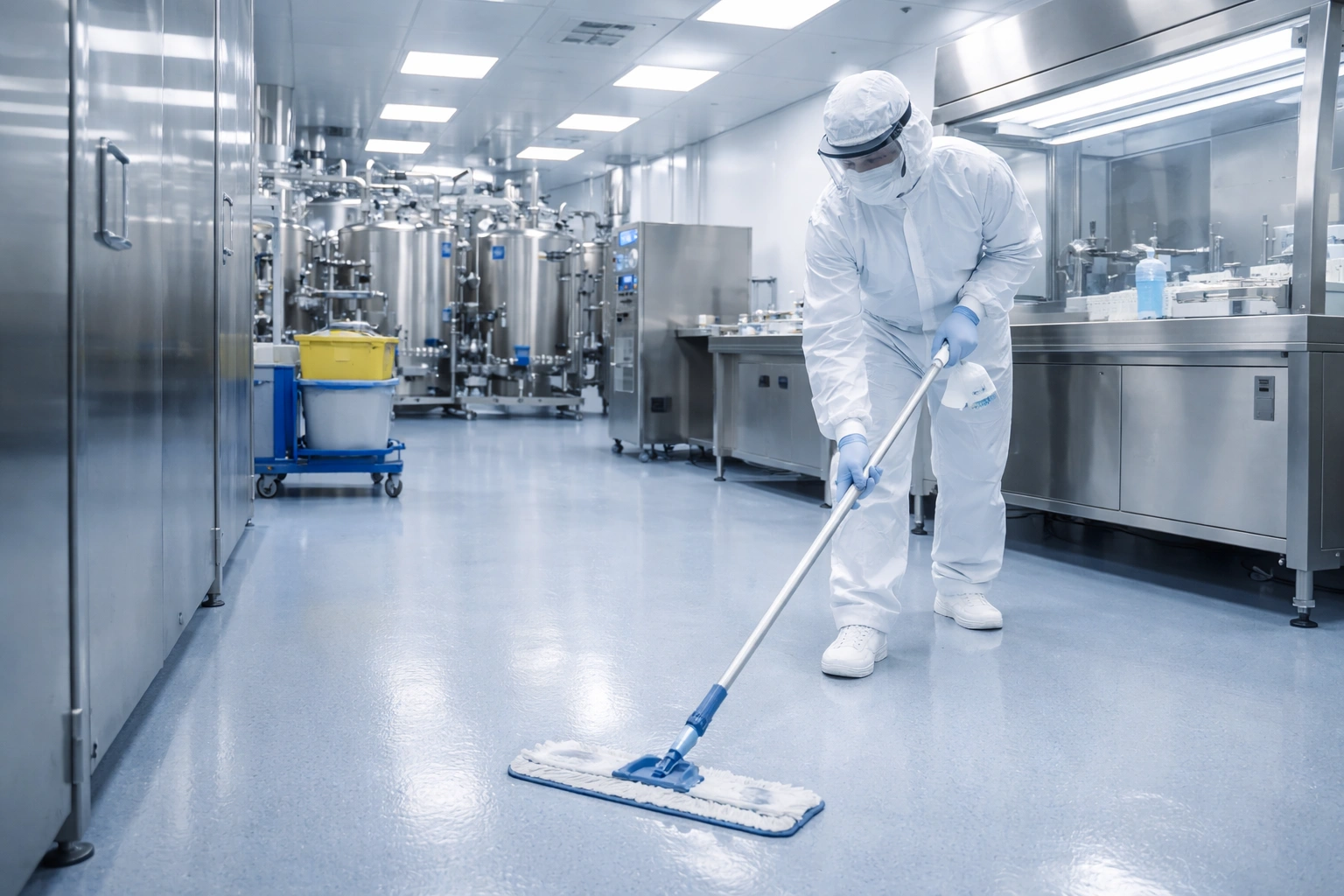
Even the best SOP will fail if the cleaning tools are inconsistent or poorly matched to the target cleanroom. Pharmaceutical teams should define approved consumables in the SOP and keep them aligned with contamination risk, sterilization method, and validation burden.
Ressources connexes : Exigences en matière de vadrouille pour salles blanches pharmaceutiques, vadrouilles jetables ou réutilisables pour salle blanche, and comment qualifier un fournisseur de vadrouilles pour salles blanches pharmaceutiques.
Questions fréquemment posées
Qu'est-ce qui est inclus dans une SOP de nettoyage de salle blanche ?
A complete cleanroom cleaning SOP usually includes cleaning scope, approved tools, disinfectants, cleaning sequence, frequency, documentation requirements, training controls, and review procedures.
En quoi une SOP de nettoyage de salle blanche est-elle différente d’une instruction de travail ?
A work instruction explains how to perform a task. A full SOP system also defines control logic, documentation, accountability, review, and compliance expectations.
Comment définir la fréquence de nettoyage ?
Cleaning frequency should be based on room classification, process risk, surface type, contamination trends, and the facility’s overall contamination control strategy.
Pourquoi la formation est-elle importante dans un système SOP pour salle blanche ?
Training ensures different operators follow the same validated method consistently, reducing execution variation and helping protect audit readiness.
Une SOP de nettoyage de salle blanche peut-elle faciliter la préparation à un audit ?
Yes. A well-built SOP system improves traceability, record consistency, training proof, and validation alignment, all of which support inspection and audit performance.
Besoin d’une meilleure solution de vadrouille pour salle blanche prête pour les SOP ?
Midposi supports pharmaceutical and controlled-environment teams with sterile mop systems, contamination control consumables, and qualification-oriented cleaning solutions.
Explorez les solutions de vadrouille pour salles blanches pharmaceutiques