Que signifie IQ/OQ/PQ pour salle blanche ?
Cleanroom qualification is the structured process used to prove that a cleanroom and its supporting systems are suitable for intended use. The three most recognized stages are IQ, OQ and PQ.
In practice, these stages are not just paperwork milestones. They form the evidence chain that links design intent, installation status, operational controls and routine performance. Without that chain, a cleanroom may appear functional but remain weak from a GMP or audit perspective.
QI = Qualification d'Installation
- Confirme que les systèmes ont été installés correctement
- Vérifie les dessins, les matériaux et les composants
- Vérifie les utilitaires, l’étiquetage et la documentation
OQ = Qualification Opérationnelle
- Teste la salle blanche dans des limites de fonctionnement définies
- Vérifie les alarmes, le débit d’air, la pression, la récupération et les contrôles
- Montre que le système se comporte comme prévu
PQ = Qualification de Performance
- Démontre des performances cohérentes dans le monde réel
- Relie la qualification aux conditions réelles du processus
- Prend en charge la production de routine ou la préparation opérationnelle
Pourquoi c'est important
- Crée des preuves de conformité aux BPF
- Réduit l’incertitude liée au contrôle de la contamination
- Améliore la défendabilité de l’audit et le contrôle des changements
Pourquoi la qualification des salles blanches est importante pour la conformité aux BPF
A cleanroom is not qualified simply because it was built according to specification. It must be shown, with documented evidence, to operate and perform in a controlled, repeatable way. This is especially important in regulated environments where contamination risk, process consistency and data integrity all matter.
Qualification also protects the business side of operations. A weak validation framework can delay product release, increase deviation investigations, create repeated rework and undermine procurement decisions. A strong qualification strategy helps standardize equipment selection, SOP execution, environmental monitoring and cleaning system design.
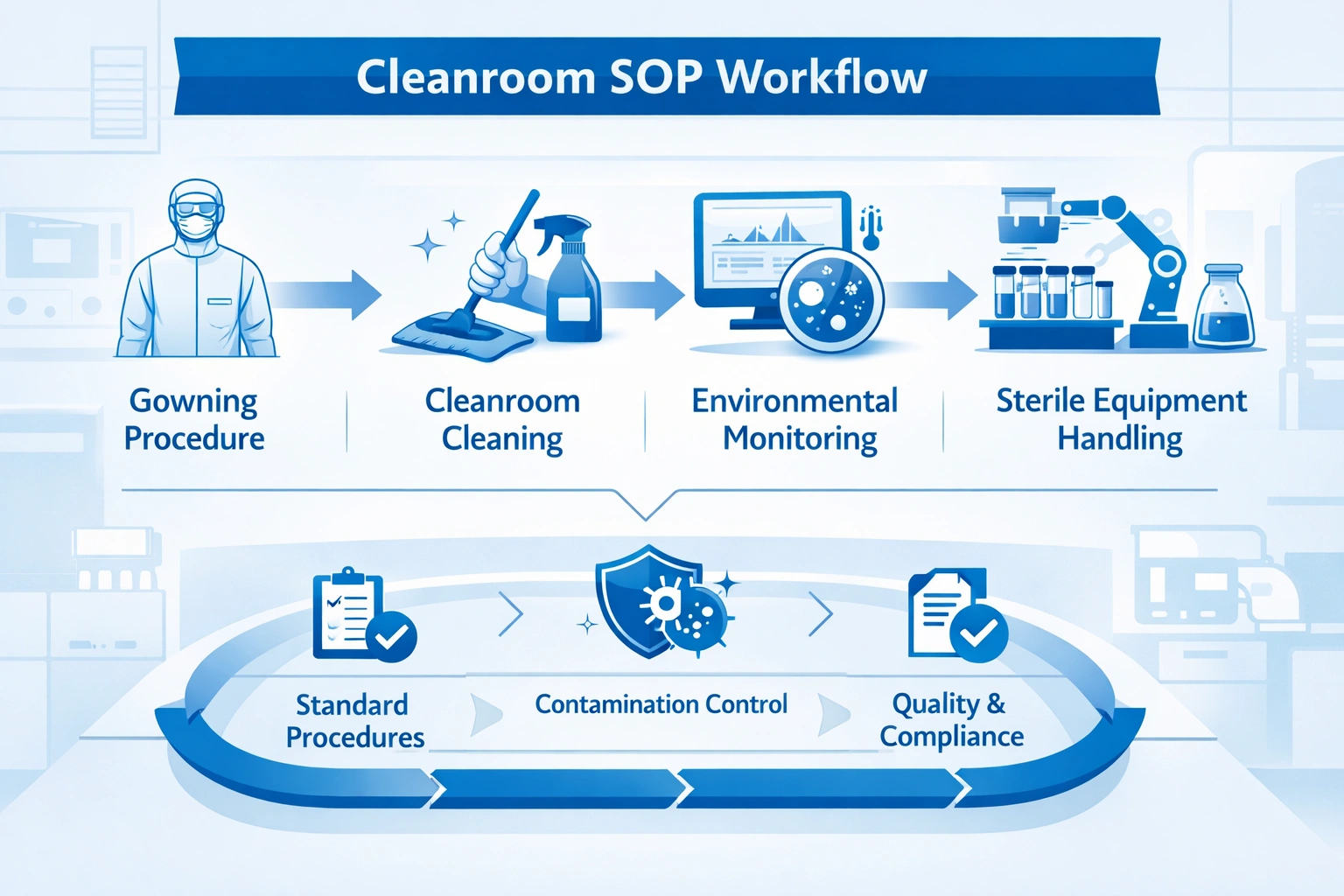
Ce sujet devrait être directement lié à votre Modèle SOP de validation de qualification de salle blanche, your Liste de contrôle de validation des salles blanches cGMP de la FDA, and your Stratégie de documentation des SOP de l'Annexe 1 des BPF de l'UE.
Qualification de l'installation : prouver que la salle blanche a été correctement installée
IQ is the stage where the team confirms the cleanroom and its associated systems match approved design requirements. This includes room construction elements, utilities, HVAC components, HEPA or ULPA filtration setup, instruments, labeling, equipment lists, approved materials and document traceability.
La portée IQ typique comprend
Examen de la conception et des documents
Les dessins, spécifications, manuels d'équipement et certificats de matériaux approuvés doivent correspondre à l'état d'installation.
Vérification des composants
Confirmez que les composants critiques tels que les unités de traitement d’air, les filtres, les manomètres, les portes, les passages et les dispositifs de surveillance sont correctement installés.
Confirmation d'utilité et de service
Vérifiez que les interfaces électriques, d’air comprimé, d’eau, de gaz ou de contrôle requises sont correctement connectées et identifiées.
Statut d’étalonnage et d’identification
Assurez-vous que les instruments nécessitant un étalonnage sont identifiés et contrôlés avant le début des tests opérationnels.
IQ is often undervalued, but weak IQ creates downstream failures in OQ and PQ. If the installed condition is not documented properly, later performance results become harder to interpret and defend.
Qualification opérationnelle : vérifier que la salle blanche fonctionne dans des limites définies
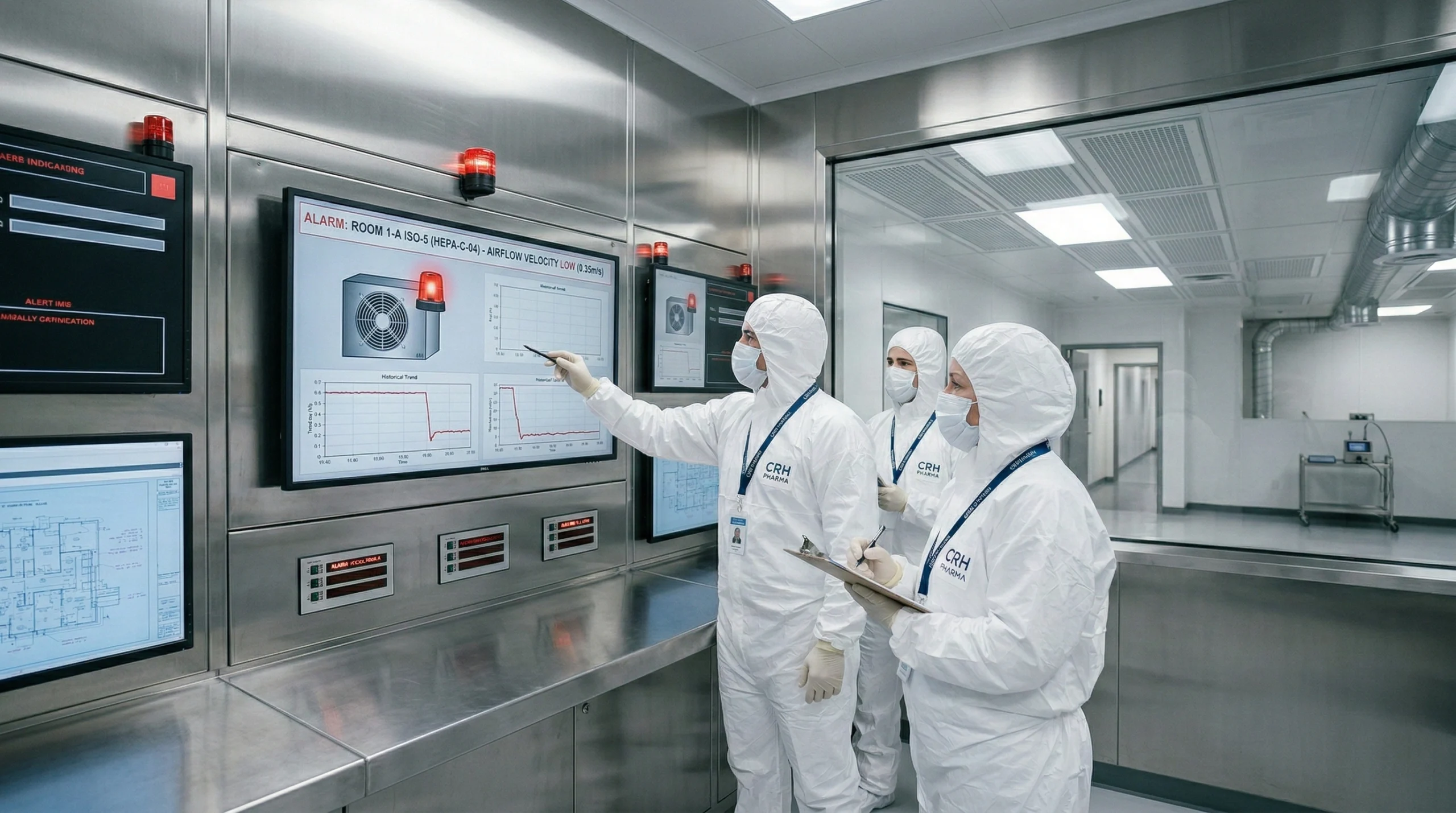
OQ confirms the cleanroom functions as intended under controlled operating conditions. This is where teams test alarms, airflow behavior, pressure differentials, temperature and humidity ranges, air change performance, recovery and other operating parameters.
The purpose of OQ is not merely to collect numbers. It is to prove that control systems, room behavior and operating limits are defined, understood and repeatable.
Zones de test OQ communes
- Vitesse du flux d'air et visualisation du flux d'air
- Vérification de la pression différentielle
- Cartographie de la température et de l'humidité
- Tests de provocation d'alarme et vérification de la réponse
- Temps de récupération après une perturbation opérationnelle
- Alignement de la stratégie de surveillance environnementale
OQ doit être étroitement connecté à votre stratégie de surveillance environnementale des salles blanches basée sur les risques, because routine monitoring logic becomes stronger when it is built on verified operational behavior rather than assumption.

Qualification des performances : démontrer des performances fiables dans le monde réel
PQ is the stage where the team proves the cleanroom can consistently support intended use during routine operation. Unlike IQ and OQ, which are more structured around design and system limits, PQ focuses on actual operating performance, including personnel, workflows, cleaning practices, environmental monitoring trends and process interaction.
In many regulated facilities, PQ is where the cleanroom becomes meaningful from a compliance standpoint. It shows that the room does not just operate in theory, but performs reliably in the presence of people, materials, interventions and routine demand.
PQ considère généralement
- Performance de la surveillance environnementale de routine
- Tenue vestimentaire et contrôles comportementaux des opérateurs
- Efficacité du nettoyage et de la désinfection
- Charges typiques de production ou de processus
- Cohérence des tendances dans le temps
- Maturité de réponse aux déviations et aux excursions
PQ est naturellement lié à POS sur le nettoyage des salles blanches, flux de travail de réponse aux alertes et aux excursions, and Préparation aux audits BPF.
Matrice de qualification IQ/OQ/PQ
The table below helps teams quickly separate what belongs in each phase. This is useful for protocol writing, project planning and avoiding the common mistake of mixing installation evidence with routine performance evidence.
| Étape de qualification | Objectif principal | Preuve typique | Risque clé en cas de faiblesse |
|---|---|---|---|
| QI | Confirmer l'installation correcte | Dessins, listes d'équipements, certificats, contrôles d'utilité, étiquetage, statut d'étalonnage | Les résultats ultérieurs peuvent être difficiles à croire ou à défendre |
| QO | Vérifier le bon fonctionnement dans les limites définies | Données de défi de débit d'air, de pression, d'alarme, de récupération, de température, d'humidité et de contrôle | Les conditions opérationnelles restent mal comprises |
| PQ | Démontrer des performances de routine fiables | Données de tendance, preuves de flux de travail, résultats EM, efficacité du nettoyage et cohérence continue | Le risque de conformité réel reste caché jusqu'à ce que des écarts se produisent |
Pack de documentation IQ/OQ/PQ pour salles blanches
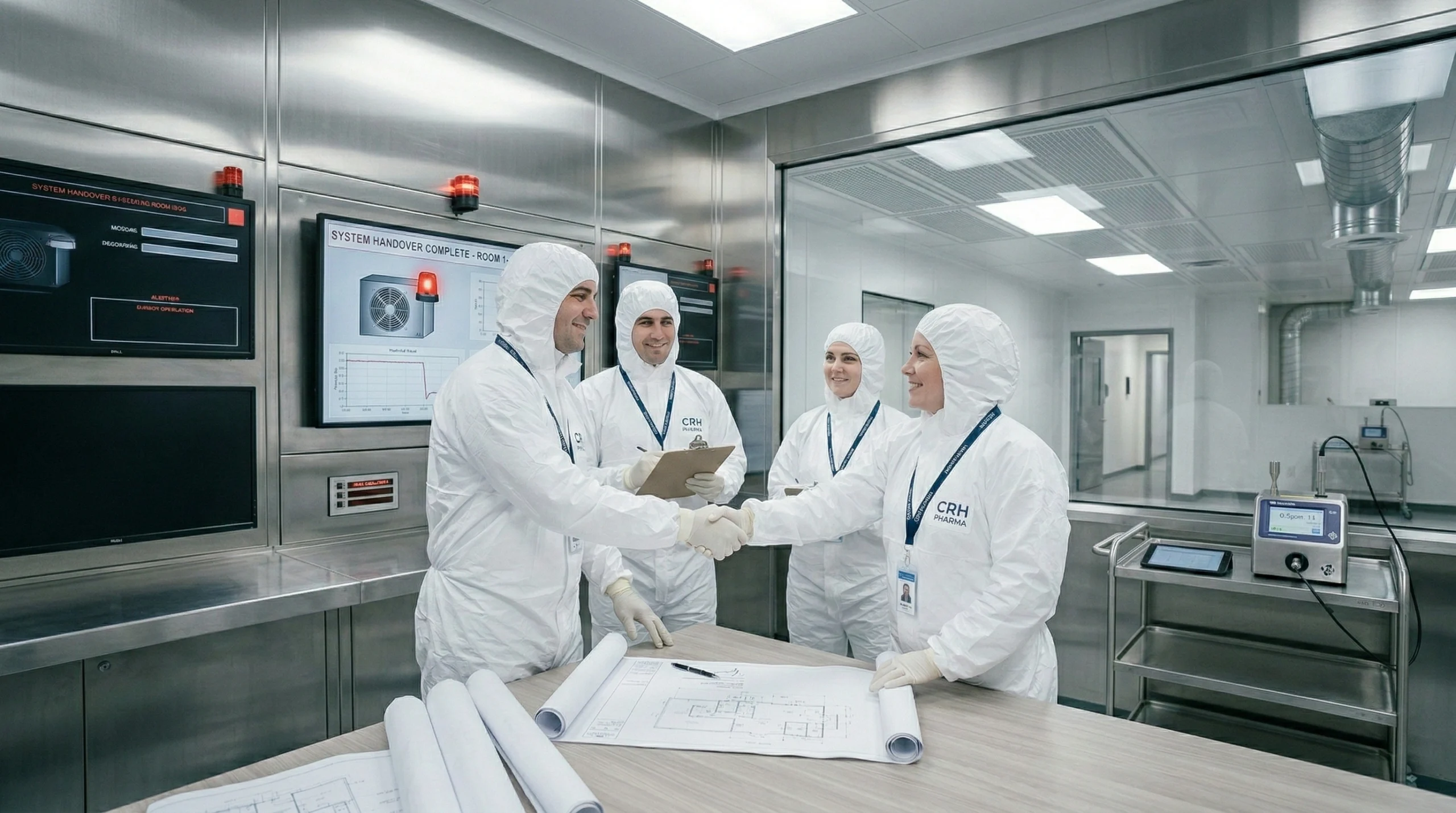
A complete cleanroom qualification file should allow an auditor to understand what was installed, how it was tested, what acceptance criteria were used and whether the cleanroom can support routine operation.
Plan de qualification approuvé
Définit la portée, les responsabilités, les critères d’acceptation et la séquence d’exécution.
Protocole et rapport IQ
Confirme l'installation, les utilitaires, les composants, les dessins, les manuels et l'état d'étalonnage.
Protocole et rapport OQ
Documente les tests opérationnels tels que le débit d'air, la pression, les alarmes, la récupération et les contrôles environnementaux.
Protocole et rapport PQ
Démontre des performances de routine en utilisant des preuves de surveillance environnementale, de flux de travail et de nettoyage.
Enregistrements d’écart et CAPA
Enregistre les échecs de qualification, les enquêtes, les actions correctives et les décisions d'approbation finale.
Résumé final des qualifications
Résume les résultats, les risques non résolus, les approbations et la préparation à une utilisation de routine.
Comment la qualification est liée aux systèmes de nettoyage et à la sélection des consommables
Qualification does not stop at air handling and room classification. In actual GMP operation, routine performance is shaped by details: how operators gown, how surfaces are cleaned, which mop systems are used, whether consumables are traceable and whether SOP execution is consistent.
This is where procurement and contamination-control choices become validation-relevant. A cleanroom may pass formal tests, but still struggle in PQ or ongoing monitoring if routine cleaning materials generate lint, leave residues or lack documentation support.
Facteurs consommables pertinents pour la qualification
- Construction peu pelucheuse et compatible avec les salles blanches
- Cohérence des matériaux et contrôle des lots
- Voie de stérilité ou de stérilisation si nécessaire
- Documentation traçable et support COA
Effet courant en aval
- Meilleure reproductibilité du nettoyage
- Un soutien renforcé aux enquêtes
- Moins d’excursions inexpliquées
- PQ et analyse des tendances plus défendables
Erreurs courantes de qualification QI/OQ/PQ
1. Traiter le QI, l'OQ et le PQ comme de la paperasse uniquement
Lorsque la qualification est abordée uniquement comme un exercice de documentation, les risques opérationnels réels restent cachés jusqu'à ce que des écarts ou des audits les révèlent.
2. Objectifs de l’étape de mélange
Les équipes essaient souvent de prouver leurs performances de routine pendant l'OQ ou utilisent les données PQ pour compenser un faible QI. Chaque étape doit répondre à une question différente.
3. Ignorer la logique de surveillance environnementale
La qualification est beaucoup plus faible si les emplacements de surveillance et la logique d’alerte/action ne sont pas liés au comportement et aux risques réels de la salle.
4. Surveiller le nettoyage et le comportement de l'opérateur
PQ n’est pas seulement une question d’équipement. Il doit refléter le comportement de la pièce avec les personnes, les interventions, les matériaux et l'exécution du nettoyage de routine.
5. Faible traçabilité des audits
Si les protocoles, les données brutes, les écarts, les approbations et les références SOP ne sont pas clairement liés, la qualification peut devenir difficile à défendre lors de l'inspection.
Besoin de consommables pour salle blanche adaptés à votre flux de travail de validation ?
MIDPOSI supports cleanroom teams that need contamination-control consumables aligned with SOP execution, routine cleaning, qualification logic and audit-ready documentation.
- Systèmes de vadrouille pour salle blanche pour des flux de travail de nettoyage contrôlés
- Vêtements de salle blanche autoclavables pour les programmes de vêtements réutilisables
- Recommandations de consommables pour les environnements de salle blanche GMP et ISO
- Support produit pour les équipes d’assurance qualité, de validation, d’approvisionnement et de distributeurs
Lectures complémentaires pour les équipes de validation des salles blanches
Cleanroom IQ/OQ/PQ qualification is closely connected with SOP control, environmental monitoring, audit preparation and routine cleaning execution. The following guides can help build a stronger validation and contamination-control documentation system.
- Modèle de SOP de validation de la qualification des salles blanches — structure du protocole, responsabilités et flux de documents de qualification.
- Liste de contrôle de validation des salles blanches cGMP de la FDA — éléments de preuve de validation axés sur l'inspection et points de revue d'audit.
- Documentation sur les SOP pour salles blanches de l'Annexe 1 des BPF de l'UE — le contrôle de la documentation et les attentes réglementaires.
- Guide des SOP pour la surveillance environnementale des salles blanches basée sur les risques — Logique de surveillance OQ/PQ et contrôle de routine.
- Comment se préparer à un audit de salle blanche BPF — la soutenabilité des qualifications et la préparation à l'audit.
- POS sur le nettoyage des salles blanches — PQ, opération de routine et exécution du nettoyage.
- Guide de contrôle de la contamination des salles blanches — les principes de contrôle de la contamination au-delà des documents de qualification.
Questions fréquemment posées
Quelle est la différence entre IQ, OQ et PQ dans la qualification des salles blanches ?
IQ verifies correct installation, OQ verifies correct operation within predefined limits, and PQ demonstrates reliable performance during real routine use.
Pourquoi le IQ/OQ/PQ est-il important pour les salles blanches BPF ?
IQ/OQ/PQ provides documented evidence that the cleanroom is installed correctly, operates properly and consistently supports intended use, which is essential for GMP compliance, contamination control and audit readiness.
La qualification des salles blanches inclut-elle la surveillance et le nettoyage de l’environnement ?
Yes. During OQ and PQ, environmental monitoring strategy, operator behavior, gowning control and cleaning effectiveness are all relevant to proving controlled routine performance.
Une salle blanche peut-elle réussir le QI et l’OQ mais échouer quand même au PQ ?
Yes. A cleanroom may be installed correctly and operate within technical limits, yet still underperform in routine use because of workflow issues, poor cleaning execution, operator interventions or unstable environmental monitoring trends.
Quels documents sont généralement nécessaires pour les IQ/OQ/PQ en salle blanche ?
Typical documents include approved protocols, drawings, equipment lists, calibration records, test results, deviation reports, environmental monitoring records, SOP references and final qualification reports.