Quels documents les acheteurs doivent-ils demander pour la validation des vadrouilles en salle blanche ?
Documents de validation des vadrouilles pour salles blanches Aidez les acheteurs B2B, les équipes d'assurance qualité et les responsables des achats à évaluer si un système de vadrouille pour salle blanche est conforme aux flux de travail GMP, ISO, pharmaceutiques, biotechnologiques, semi-conducteurs, dispositifs médicaux ou salle blanche de laboratoire. Les acheteurs doivent demander les spécifications du produit, les TDS, les informations sur les matériaux, les détails de stérilité, les données d'emballage, la traçabilité des lots, les enregistrements d'échantillons et l'assistance en matière de qualification des fournisseurs avant d'acheter en gros.
Les documents clés à demander comprennent les TDS, la fiche technique du produit, les informations sur les matériaux, les détails sur la stérilité ou l'irradiation des vadrouilles stériles, les informations sur l'emballage, la traçabilité des lots, le COA si disponible, les dossiers d'approbation des échantillons, les informations sur la compatibilité des désinfectants et les documents de qualification des fournisseurs.
Pourquoi les documents de validation des vadrouilles pour salles blanches sont importants
Les documents de validation des vadrouilles pour salles blanches sont importants car les acheteurs doivent vérifier l'adéquation du produit avant d'utiliser des têtes de vadrouille, des seaux, des essoreuses ou des outils de nettoyage associés dans des environnements contrôlés.
Dans les applications de services pharmaceutiques, biotechnologiques, de semi-conducteurs, de dispositifs médicaux, de laboratoire et de salle blanche, le système de vadrouille fait partie d'un flux de travail plus large de contrôle de la contamination. Les documents ne « garantissent pas la conformité » en eux-mêmes, mais ils aident les équipes d'assurance qualité et d'approvisionnement à confirmer si le produit peut être évalué par rapport aux SOP internes, à la classification des salles blanches et aux procédures de nettoyage.
Examen de l'assurance qualité
Les documents aident les équipes qualité à examiner les matériaux des produits, l'emballage, les informations sur la stérilité et la cohérence des fournisseurs.
Qualification des fournisseurs
Les équipes d'approvisionnement peuvent comparer les fournisseurs en fonction de la documentation, des échantillons de support, du MOQ, des délais de livraison et de la capacité de réapprovisionnement.
Ajustement du flux de travail de nettoyage
Les documents aident à confirmer si les matériaux et l'emballage de la vadrouille correspondent aux SOP et aux procédures de nettoyage de l'établissement.
Documents de base que les acheteurs devraient demander
Les acheteurs doivent demander des documents décrivant les propriétés techniques, les matériaux, l’emballage, l’état de stérilité, la traçabilité et l’assistance du fournisseur. L'ensemble exact des documents dépend de la zone de la salle blanche, du niveau de risque et des exigences internes en matière d'assurance qualité.
| Document | Ce que ça montre | Pourquoi les acheteurs le demandent |
|---|---|---|
| Fiche technique (FTS) | Taille du produit, matériau, poids, construction, emballage et notes d'application | Aide les acheteurs à évaluer si la vadrouille convient aux flux de travail de nettoyage des salles blanches |
| Fiche de spécifications du produit | Paramètres détaillés du produit, dimensions, données sur le carton et informations sur le modèle | Prend en charge la comparaison des achats, l'examen des demandes de prix et l'approbation interne des produits |
| Informations matérielles | Type de tissu, structure des couches, construction de la tête de vadrouille et matériaux compatibles avec les salles blanches | Aide les équipes d'assurance qualité à examiner les considérations relatives aux peluches, à l'absorption et à la compatibilité chimique |
| Informations sur la stérilité | Statut stérile ou non stérile, méthode de stérilisation le cas échéant et format d'emballage | Important pour les flux de travail nécessitant une présentation stérile ou des tampons de vadrouille irradiés aux rayons gamma |
| COA / Document qualité, si disponible | Informations qualité spécifiques au lot ou liées au lot en fonction des pratiques du fournisseur | Peut prendre en charge l'examen de l'assurance qualité, l'inspection à la réception ou la qualification des fournisseurs |
| Informations sur l'emballage | Emballage intérieur, emballage stérile, format double sac, quantité de carton et détails de stockage | Aide les installations à confirmer le flux de travail de stockage, de manipulation et d’entrée en salle blanche |
| Informations sur la traçabilité des lots | Système de numéro de lot, références aux enregistrements de production et approche de suivi des approvisionnements | Prend en charge les achats contrôlés et l’examen répété des approvisionnements |
| Exemple de dossier d’approbation | Dossier de test de l'acheteur interne, exemples de commentaires et confirmation du modèle approuvé | Aide à prévenir les inadéquations entre les échantillons testés et les futures commandes groupées |
1. Fiche Technique (FTS)
Une fiche technique est souvent le premier document demandé par les acheteurs lors de l’évaluation des vadrouilles pour salles blanches. Il résume les informations clés sur le produit nécessaires à la sélection et à l'examen interne du produit.
Pour les vadrouilles pour salles blanches, une fiche technique utile peut inclure le nom du produit, le numéro de modèle, le matériau, la taille, le poids, la structure des couches, la quantité d'emballage, l'application prévue, le statut stérile ou non stérile et les recommandations de stockage.
2. Fiche de spécifications du produit
Une fiche de spécifications produit fournit des données produit plus structurées pour les équipes d'approvisionnement, d'assurance qualité et de qualification des fournisseurs.
Pour un système de vadrouille en salle blanche, cela peut inclure les dimensions de la tête de vadrouille, les détails de la couche de tissu, le poids de la tête de vadrouille, le type d'emballage, la quantité de carton, la taille du carton, le poids du carton et les composants du système compatibles tels que les cadres, les poignées, les seaux et les essoreuses.
3. Informations matérielles
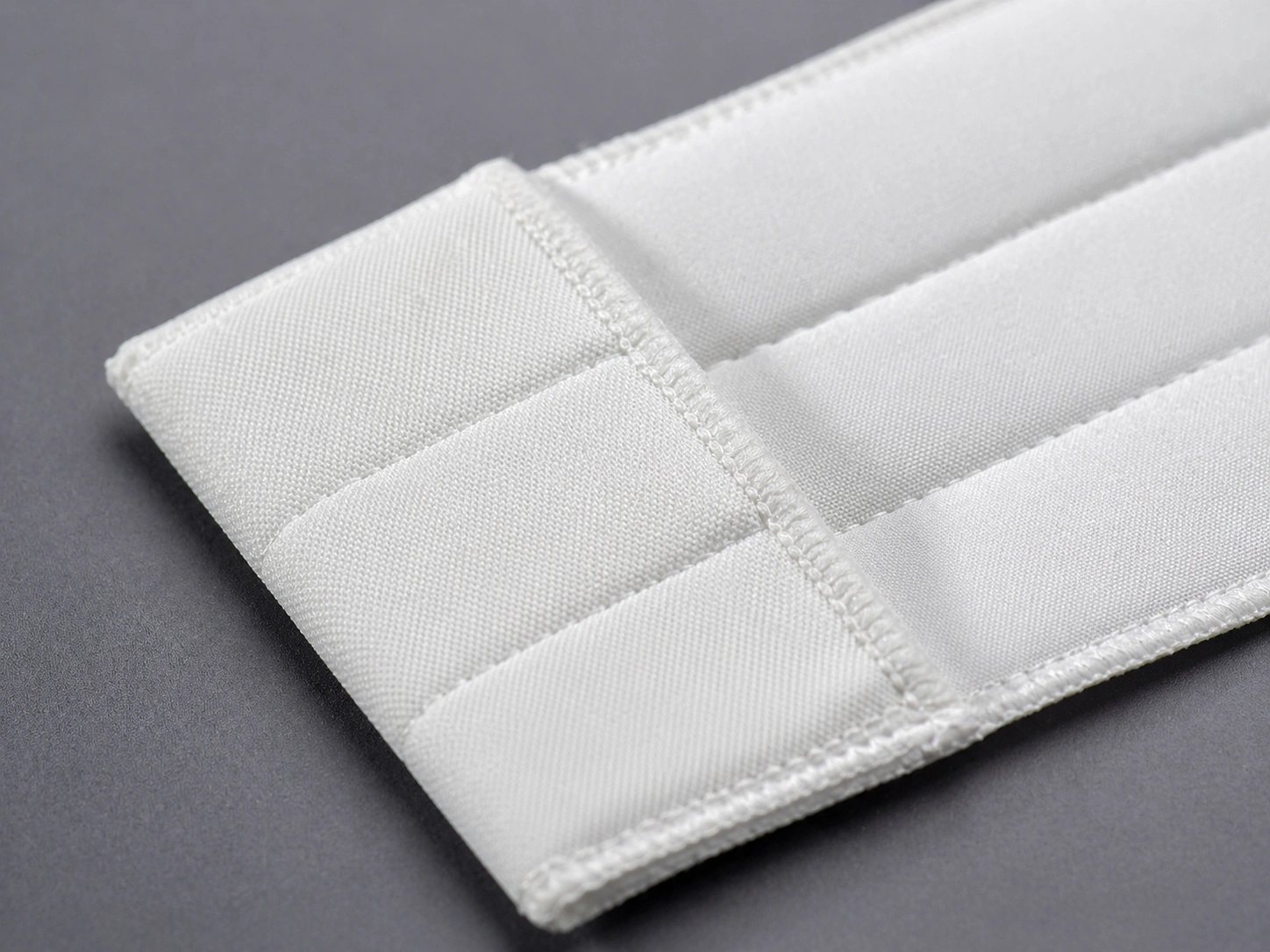
Les informations sur les matériaux aident les acheteurs à comprendre de quoi est fabriquée la tête de vadrouille et comment elle peut fonctionner dans les flux de travail de nettoyage en salle blanche.
Les matériaux des vadrouilles pour salles blanches peuvent inclure du polyester, des microfibres, de la mousse, des tissus non tissés ou d'autres structures peu pelucheuses. Les acheteurs doivent vérifier si le matériau est adapté à la classification prévue de la salle blanche, aux désinfectants, au type de surface et à la fréquence de nettoyage.
- Type de tissu ou de matériau
- Structure des couches
- Considérations de conception à faible peluchage
- Capacité d'absorption et d'essuyage
- Compatibilité avec les cadres et les poignées
- Format jetable ou réutilisable
Pour une comparaison des matériaux, voir Comparaison des matériaux de vadrouille pour salle blanche à faible peluchage.
4. Informations sur la stérilité des vadrouilles stériles pour salles blanches
Les informations sur la stérilité sont importantes lorsque les acheteurs évaluent des vadrouilles stériles pour salles blanches pour des flux de travail nécessitant une présentation stérile.
Les acheteurs doivent confirmer si la vadrouille est fournie stérile ou non stérile, quelle méthode de stérilisation est utilisée le cas échéant, comment le produit est emballé et si des informations relatives à la stérilité peuvent être fournies pour l'examen de l'assurance qualité.
Pour tampons de vadrouille stériles
- Confirmez le statut stérile ou irradié aux rayons gamma.
- Examinez le format de l’emballage et les informations sur l’étiquette.
- Renseignez-vous sur la traçabilité des lots.
- Vérifiez si des informations sur la stérilité peuvent être fournies.
Pour les tampons de vadrouille non stériles
- Confirmez l’utilisation prévue en zone contrôlée.
- Revoir l’emballage et le format de stockage.
- Vérifiez si les SOP autorisent les tampons de vadrouille non stériles.
- Évaluez les échantillons avant l’achat en gros.
5. COA ou document qualité, si disponible
Un certificat d'analyse ou un document de qualité similaire peut être demandé par certains acheteurs, en particulier dans les environnements pharmaceutiques, biotechnologiques, de dispositifs médicaux et de salles blanches réglementées.
La disponibilité et le contenu d'un COA peuvent varier selon le fournisseur et le type de produit. Les acheteurs doivent éviter de supposer que chaque vadrouille pour salle blanche contient le même ensemble de documents. Au lieu de cela, ils doivent demander au fournisseur quels documents qualité sont disponibles pour l'article, le lot ou la commande spécifique.
6. Informations sur l'emballage et l'étiquetage
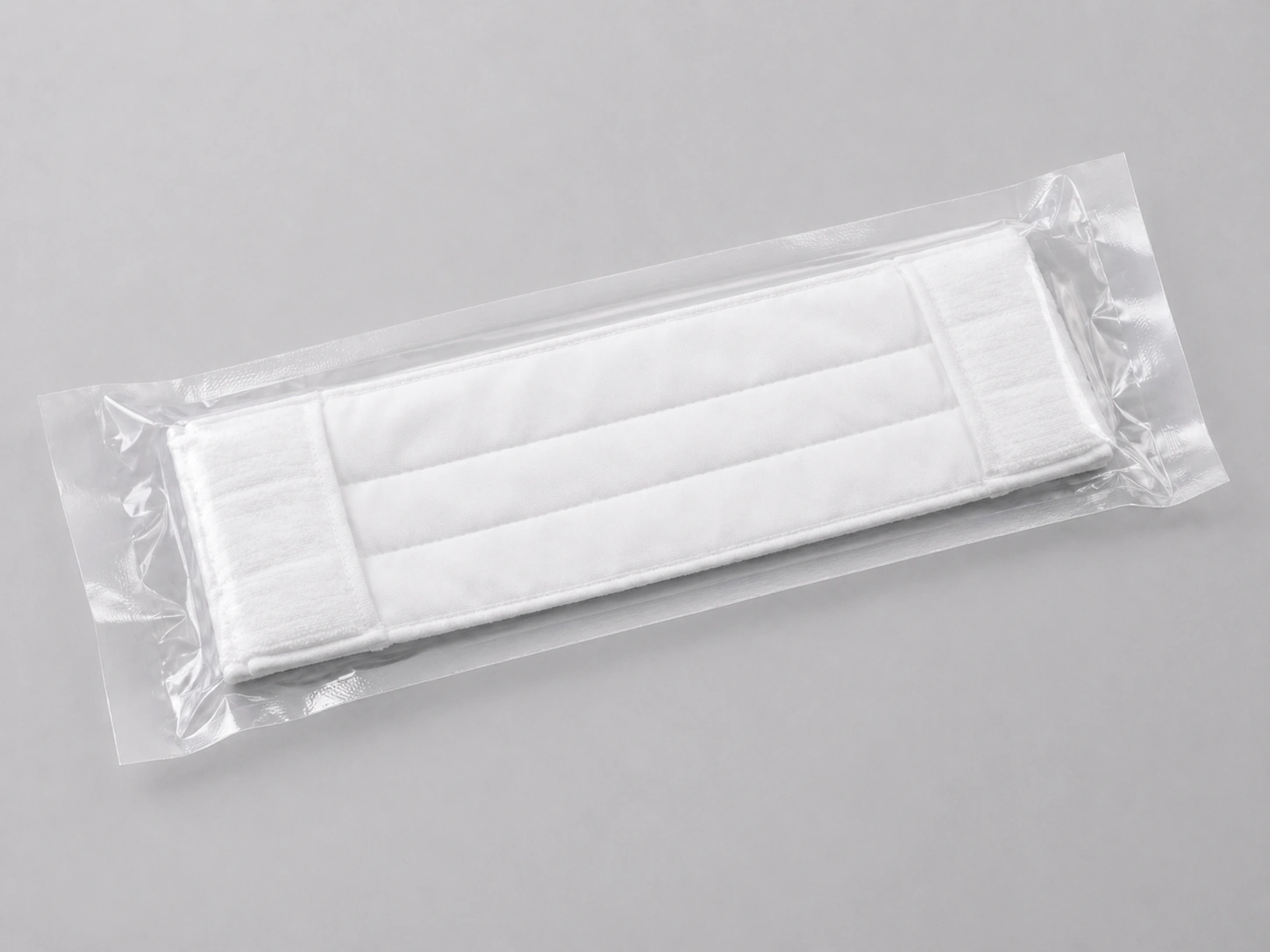
Les informations sur l'emballage sont particulièrement importantes pour la validation des vadrouilles en salle blanche, car l'emballage affecte le stockage, le flux de travail d'entrée en salle blanche, la présentation stérile et la manipulation des matériaux.
Les acheteurs doivent demander des détails sur l'emballage intérieur, l'emballage extérieur, la quantité de carton, les informations sur l'étiquette, l'emballage stérile le cas échéant, le format de double sac si disponible, les conditions de stockage et les détails au niveau du carton.
| Article d'emballage | Pourquoi c'est important | Question de l'acheteur |
|---|---|---|
| Emballage intérieur | Affecte l’entrée en salle blanche et la manipulation du produit | La vadrouille est-elle emballée individuellement ou en vrac ? |
| Emballage stérile | Important pour les flux de travail nécessitant une présentation stérile | La version stérile est-elle emballée dans un double emballage ou sous vide ? |
| Quantité de cartons | Prend en charge la planification des achats et le calcul du stockage | Combien de pièces sont emballées par carton ? |
| Informations sur l'étiquette | Aide à l'identification du produit et à l'inspection à l'arrivée | L'étiquette indique-t-elle le code du produit, le numéro de lot ou le statut stérile ? |
| Conditions de stockage | Aide à maintenir la cohérence de la manipulation des produits | Existe-t-il des notes de stockage ou de durée de conservation recommandées ? |
7. Traçabilité des lots et enregistrements d’approbation des échantillons
La traçabilité des lots aide les acheteurs à relier une expédition de produit aux enregistrements de production, d'emballage ou de qualité. Pour les acheteurs de vadrouilles pour salles blanches, cela peut prendre en charge l’inspection entrante, les commandes répétées et l’examen de la qualification des fournisseurs.
Des exemples de dossiers d’approbation sont également utiles. Avant d'acheter en gros, les acheteurs peuvent tester l'ajustement de la vadrouille, la manipulation par l'opérateur, le pouvoir absorbant, la couverture d'essuyage, l'emballage et la compatibilité avec les cadres ou les seaux existants. Une fois approuvé, le modèle sélectionné doit être clairement enregistré pour éviter les erreurs d'achat.
Liste de contrôle des documents pour la qualification des fournisseurs de vadrouilles pour salles blanches
La liste de contrôle suivante aide les acheteurs B2B à préparer un examen structuré de la qualification des fournisseurs pour les systèmes de vadrouille pour salles blanches.
| Document / Informations | Priorité | Recommandé pour | Objectif de l'évaluation de l'acheteur |
|---|---|---|---|
| FT / Fiche Technique | Haut | Tous les acheteurs de vadrouilles pour salles blanches | Évaluation de base du produit |
| Fiche de spécifications du produit | Haut | Équipes d’approvisionnement et d’assurance qualité | Comparaison des modèles et confirmation de la demande de prix |
| Informations matérielles | Haut | Acheteurs GMP, ISO, pharmaceutique, biotechnologique, semi-conducteurs | Examen de l'adéquation des matériaux |
| Informations sur la stérilité | Élevé si une vadrouille stérile est requise | Flux de travail aseptiques ou à risque plus élevé en salle blanche | Revoir la présentation et l'emballage stériles |
| Détails de l'emballage | Haut | Tous les acheteurs B2B | Planification du stockage, de la manutention et de l’entrée en salle blanche |
| COA / Document qualité, si disponible | Moyen à élevé | Acheteurs réglementés ou axés sur l’assurance qualité | Revue entrante et qualification des fournisseurs |
| Informations sur la traçabilité des lots | Moyen à élevé | Commandes répétées et acheteurs réglementés | Suivi des expéditions et examen de la qualité |
| Exemple de dossier d’approbation | Haut | Évaluation de nouveaux produits | Confirmer que le produit testé correspond à une commande future |
| Questionnaire fournisseur | Facultatif | Flux de travail formels de qualification des fournisseurs | Examiner les capacités et la cohérence des fournisseurs |
Comment MIDPOSI prend en charge les demandes de documentation sur les vadrouilles pour salles blanches
MIDPOSI soutient les acheteurs B2B, les distributeurs, les importateurs et les équipes des installations avec des informations sur les produits pour l'approvisionnement en vadrouilles pour salles blanches, l'évaluation des échantillons et l'achat en gros.
En fonction des exigences du produit et de la commande, les acheteurs peuvent demander les spécifications du produit, les détails de l'emballage, les informations sur les produits stériles ou non stériles, les données sur les cartons, les échantillons et les informations sur les devis pour les systèmes de vadrouille pour salles blanches.
Informations sur le produit
Taille, matériau, poids, emballage et détails de l'application de la vadrouille pour salle blanche pour examen par l'acheteur.
Exemple de prise en charge
Support d'évaluation d'échantillons pour les tests d'ajustement des tampons de vadrouille, d'absorption, d'emballage et de flux de travail de nettoyage.
Assistance approvisionnement B2B
MOQ, délai de livraison, détails du carton et communication des commandes répétées pour les distributeurs et les acheteurs des installations.
Consultez les pages de produits associées : Série de vadrouilles blanches pour salles blanches, têtes de vadrouille pour salle blanche, vadrouille stérile pour salle blanche, et Seau et essoreuse pour vadrouille pour salle blanche.
FAQ : Documents de validation des vadrouilles pour salles blanches
Quels documents les acheteurs doivent-ils demander pour la validation des vadrouilles en salle blanche ?
Les acheteurs doivent demander des TDS, des fiches techniques des produits, des informations sur les matériaux, des informations sur la stérilité pour les versions stériles, les détails de l'emballage, le COA ou les documents de qualité si disponibles, des informations sur la traçabilité des lots, des dossiers d'approbation des échantillons et une assistance à la qualification des fournisseurs.
Une TDS est-elle suffisante pour la qualification des vadrouilles en salle blanche ?
Une TDS est utile pour l'examen initial du produit, mais de nombreux acheteurs demandent également des détails sur les matériaux, des informations sur l'emballage, le statut stérile ou non stérile, des enregistrements de tests d'échantillons et des informations sur la qualification des fournisseurs en fonction de leur SOP.
Les vadrouilles stériles pour salles blanches ont-elles besoin de documents de stérilité ?
Si l'acheteur a besoin de vadrouilles stériles pour salle blanche, des informations relatives à la stérilité doivent être demandées pour l'examen de l'assurance qualité. Le type de document requis dépend des SOP de l'installation, de la zone de salle blanche et des exigences de qualité internes.
Les acheteurs devraient-ils demander un COA pour les vadrouilles pour salles blanches ?
Certains acheteurs demandent un COA ou un document de qualité similaire, en particulier pour les achats réglementés ou axés sur l'assurance qualité. La disponibilité et le contenu peuvent varier selon le fournisseur et le type de produit.
Pourquoi les informations sur l’emballage des vadrouilles pour salles blanches sont-elles importantes ?
L'emballage affecte le stockage, le flux de travail d'entrée en salle blanche, la présentation stérile, l'étiquetage et l'inspection à la réception. Les acheteurs doivent examiner le format de l’emballage avant d’acheter en gros.
Comment les acheteurs peuvent-ils éviter les écarts entre les échantillons et les commandes ?
Les acheteurs doivent conserver un dossier d'approbation de l'échantillon comprenant le code du produit, le poids de la vadrouille, le matériau, le statut stérile ou non stérile, le format d'emballage, le devis du fournisseur et les détails de l'échantillon approuvé.
Besoin de documents de vadrouille pour salle blanche pour l’examen des fournisseurs ?
Contactez MIDPOSI pour discuter des spécifications des vadrouilles pour salles blanches, des options stériles ou non stériles, des informations sur l'emballage, de l'assistance en matière d'échantillons et des détails de l'approvisionnement B2B pour votre marché.