Choisir la bonne vadrouille pour salle blanche n’est pas seulement une décision d’achat. Pour les salles blanches pharmaceutiques, installations de biotechnologie, zones de fabrication de dispositifs médicaux et environnements contrôlés, la sélection d'une vadrouille doit soutenir les SOP de nettoyage du site, la stratégie de contrôle de la contamination, l’évaluation des risques et les exigences de validation.
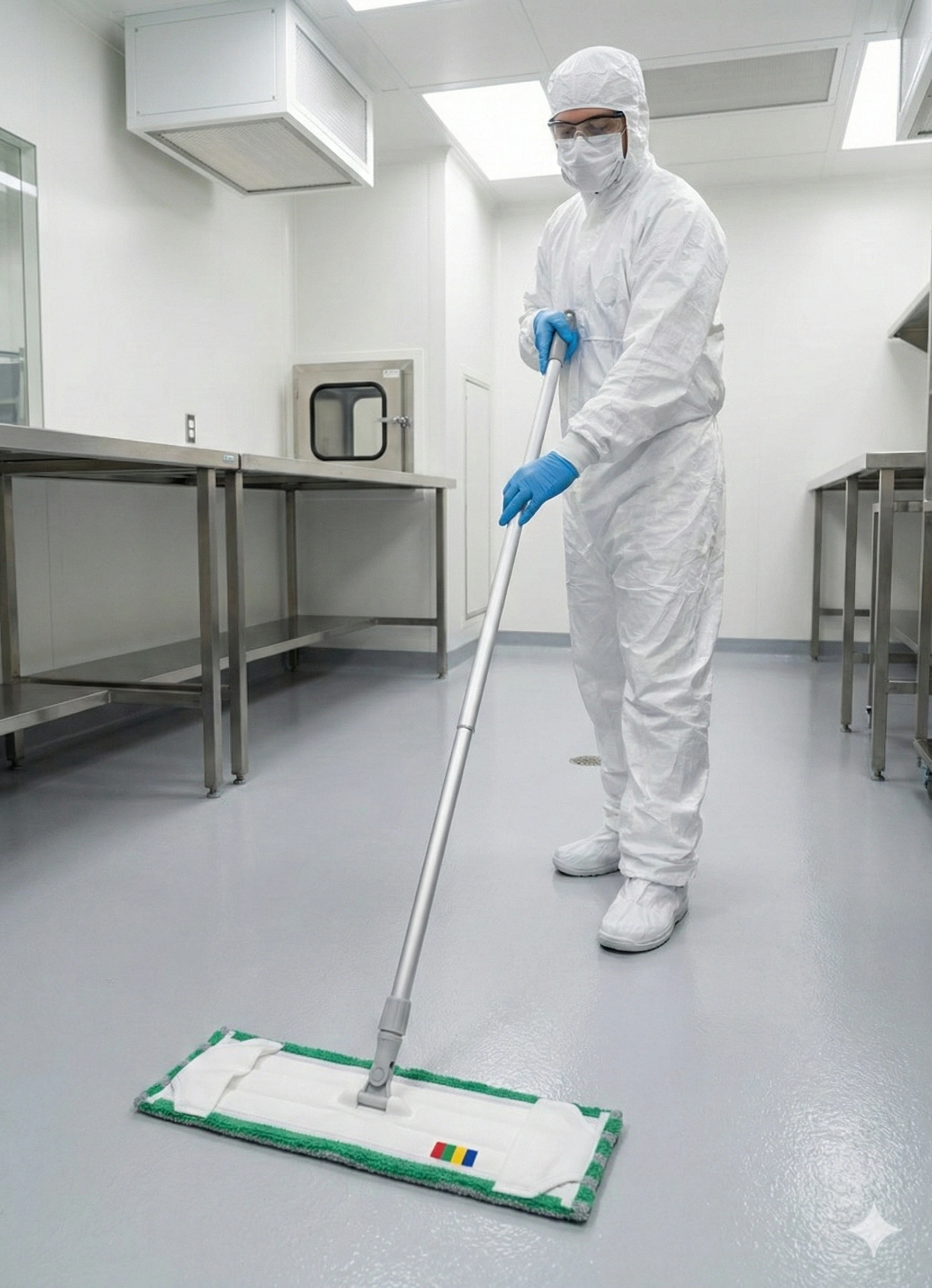
Un système de vadrouille pour salle blanche comprend généralement plus que la housse de vadrouille elle-même. En fonction de la zone de nettoyage et procédure de fonctionnement, les acheteurs devront peut-être évaluer les housses de vadrouille, les cadres compatibles, les poignées, les seaux, les essoreuses, format d'emballage, statut stérile ou non stérile et pièces justificatives.
Une vadrouille qui fonctionne bien dans une zone industrielle générale peut ne pas convenir à une salle blanche pharmaceutique, zone de support aseptique ou environnement de production classé ISO. Les acheteurs de salles blanches devraient examiner le modèle réel application de nettoyage avant d’approuver une utilisation régulière.
Confirmer si le système de vadrouille prend en charge les SOP du site, la stratégie de contrôle de la contamination et la validation du nettoyage. exigences en matière de plans et de documentation.
Comparez les options stériles et non stériles, les matériaux de couverture de vadrouille, la compatibilité du système, le format d'emballage, stabilité de l’approvisionnement et disponibilité des échantillons.
Important : Le choix correct de la vadrouille doit être basé sur les SOP, l'évaluation des risques et la validation du client. exigences. Les produits stériles peuvent être évalués pour les zones à risque plus élevé, mais pas pour toutes les applications en salle blanche. nécessite automatiquement des housses de vadrouille stériles.
Les housses pour vadrouilles pour salles blanches sont disponibles dans différentes structures de matériaux, tailles, poids et formats d'emballage. Pour les utilisateurs pharmaceutiques et biotechnologiques, une décision clé est d’évaluer les options de vadrouille stérile ou non stérile.
Des housses de vadrouille stériles peuvent être envisagées pour les zones contrôlées à haut risque, en particulier lorsque les SOP du client, la stratégie de contrôle de la contamination ou le protocole de validation nécessitent des outils de nettoyage stériles. Ils sont communément évalué pour le support de traitement aseptique, les étapes de nettoyage critiques ou les zones où le contrôle de la charge biologique est une préoccupation majeure.
Les housses de vadrouille non stériles pour salles blanches peuvent convenir à de nombreuses applications de nettoyage contrôlées, y compris celles à faible risque. les zones de salles blanches, les zones de soutien et les programmes de nettoyage de routine où le statut stérile n’est pas requis par les SOP de l’établissement.
Les housses de vadrouille stériles et non stériles doivent être évaluées en fonction de l'application réelle en salle blanche, compatibilité des désinfectants, flux de travail de l’opérateur et exigences de validation interne.
Le polyester et la microfibre sont deux matériaux courants pour couvrir les vadrouilles des salles blanches. Les deux peuvent être utiles, mais ils ne le sont pas sélectionné pour la même raison.
Les housses de vadrouille en polyester sont souvent sélectionnées pour un nettoyage contrôlé peu pelucheux, une stabilité et une compatibilité des matériaux. avec des désinfectants courants pour salles blanches. Ils peuvent être évalués pour les produits pharmaceutiques, biotechnologiques, les dispositifs médicaux, programmes de nettoyage de l’électronique et des salles blanches générales.
Les housses de vadrouille en microfibre sont souvent évaluées lorsque le processus de nettoyage nécessite une capacité d'absorption plus élevée, plus résistante. contact de surface ou élimination efficace des résidus et de la contamination visible.
Une housse de vadrouille pour salle blanche ne doit pas être évaluée seule. Le système de vadrouille complet affecte la façon dont les opérateurs nettoient, la pression appliquée, la manière dont la housse de vadrouille est fixée et la cohérence avec laquelle le processus peut être répété.
Les cadres de vadrouille pour salle blanche doivent être compatibles avec la taille du couvercle de la vadrouille, la surface de nettoyage et le flux de travail de l'opérateur. Les cadres pour vadrouilles plates sont couramment utilisés pour les sols, les murs et les plafonds des salles blanches car ils permettent de contrôler contact avec la surface et mouvement prévisible.
Les poignées doivent être sélectionnées en fonction de la hauteur de nettoyage, de la disposition de la zone et de l'ergonomie de l'opérateur. Poignées télescopiques peuvent être utiles pour le nettoyage des murs et des plafonds, tandis que les poignées fixes peuvent être préférées pour le nettoyage de routine des sols.
Les seaux, les essoreuses et les systèmes de chariots influencent la manière dont la solution de nettoyage est préparée, appliquée et contrôlée. Pour les environnements pharmaceutiques et biotechnologiques, le système de seaux doit correspondre aux SOP de nettoyage et contribuer à réduire variation de l'opérateur.
La sélection des vadrouilles pour salle blanche doit être liée à la zone de nettoyage réelle. Le tableau ci-dessous est une référence pratique, pas une règle universelle. La sélection finale doit toujours être confirmée conformément aux SOP du client, à l'évaluation des risques, stratégie de contrôle de la contamination et exigences de validation.
| Domaine d'application | Option possible de couverture de vadrouille | Considération stérile/non stérile | Composants du système | Notes pour l'assurance qualité/l'approvisionnement |
|---|---|---|---|---|
| Grade A / Zones de support aseptiques à haut risque Étapes de nettoyage critiques ou à haut risque | Housse de vadrouille en polyester peu pelucheux ou option de vadrouille stérile validée | Les options stériles peuvent être évaluées si les SOP ou le protocole de validation l'exigent. | Système de cadre, de poignée et de seau dédié | Confirmer le statut stérile, l'intégrité de l'emballage, le processus de transfert, la documentation et les exigences de validation du site |
| Zones de catégorie B Support aseptique ou zones environnantes | Housse de vadrouille en polyester ou en microfibre selon la méthode de nettoyage | Stérile ou non stérile selon l'évaluation interne des risques | Cadre et poignée dédiés aux salles blanches | Évaluer le contrôle des particules, le pouvoir absorbant, la compatibilité des désinfectants et la ségrégation des zones |
| Zones de niveau C Zones d'assistance contrôlées | Housse de vadrouille en polyester ou microfibre | Non stérile peut être acceptable dans de nombreuses applications de routine ; stérile peut être considéré selon les exigences du site | Système de cadre, poignée, seau ou chariot | Confirmer la fréquence de nettoyage, l'utilisation du désinfectant, la compatibilité des SOP et le flux de travail de l'opérateur |
| Zones de niveau D Zones classées à faible risque | Housse de vadrouille en polyester ou microfibre | Les options non stériles sont généralement évaluées, en fonction des SOP | Système de vadrouille standard pour salle blanche | Concentrez-vous sur la durabilité, le contrôle des coûts, la facilité d'utilisation et l'efficacité du nettoyage. |
| Zones non-GMP classées ISO Dispositif médical, électronique ou zones générales contrôlées | Housse de vadrouille en polyester ou microfibre | Basé sur des exigences de qualité internes | Système de cadre, poignée et seau | Confirmer la classe ISO, les exigences de contrôle des particules, le type de surface et la compatibilité chimique |
| Programme de stock distributeur Pour les distributeurs de salles blanches et les partenaires de distribution | Plusieurs tailles de housse de vadrouille et options de matériaux | Les options stériles et non stériles peuvent être discutées | Housses, cadres, manches et seaux de vadrouille | Utile pour servir les clients des secteurs pharmaceutique, biotechnologique, des dispositifs médicaux et des salles blanches générales |
Lecture connexe : Présentation du système de vadrouille pour salle blanche, Guide de sélection des qualités de vadrouille pour salle blanche GMP, et SOP pour le nettoyage des salles blanches.
Pour les acheteurs B2B, les tests par échantillons constituent souvent le moyen le plus sûr de confirmer si un système de vadrouille convient aux besoins de l'établissement. procédure de nettoyage réelle. MIDPOSI peut prendre en charge l'évaluation d'échantillons pour les housses de vadrouille, les options stériles et non stériles, cadres, poignées, seaux et revue de la documentation.
Confirmer la qualité de la salle blanche
Examiner les POS & Risque
Sélectionnez les options de vadrouille
Évaluer les échantillons
Confirmer les documents
MIDPOSI prend en charge les programmes de nettoyage en environnement contrôlé avec des consommables pour salles blanches pour les secteurs pharmaceutique, clients distributeurs de biotechnologies, de dispositifs médicaux et de salles blanches.
Notre assistance se concentre sur une correspondance pratique des produits plutôt que sur des allégations universelles. Nous aidons les clients à comparer matériaux de couverture de vadrouille, options stériles et non stériles, compatibilité du système, formats d'emballage et documentation Besoins avant l'approbation de l'échantillon.
Que vous élaboriez un nouveau programme de nettoyage de salle blanche, qualifiiez un fournisseur alternatif ou prépariez un gamme de produits de distributeur, MIDPOSI peut vous aider à évaluer les options de vadrouilles pour salles blanches appropriées en fonction de votre application.
Non. Les housses de vadrouille stériles ne sont pas automatiquement requises pour toutes les salles blanches pharmaceutiques. La sélection doit être basée sur les SOP de l’installation, l’évaluation des risques, la qualité de la salle blanche, la stratégie de contrôle de la contamination et les exigences de validation.
Les housses de vadrouille stériles sont fournies avec un processus de stérilisation et un format d'emballage destinés à répondre aux exigences de manipulation stérile. Des housses de vadrouille non stériles sont utilisées lorsque le statut stérile n’est pas requis par les SOP du client. Les deux options doivent être évaluées en fonction de l’application réelle en salle blanche.
Les housses de vadrouille en polyester sont souvent sélectionnées pour leur nettoyage contrôlé peu pelucheux et leur compatibilité chimique. Les housses de vadrouille en microfibre sont souvent évaluées pour leur capacité d’absorption et leur contact avec la surface plus élevés. La meilleure option dépend de la surface à nettoyer, du désinfectant, de la qualité de la salle blanche et des exigences de validation interne.
Pas nécessairement. De nombreuses installations utilisent des systèmes de vadrouille dédiés à différents niveaux de salles blanches ou zones de nettoyage afin de réduire le risque de contamination croisée. La configuration finale doit suivre les SOP et l’évaluation des risques du client.
Oui. MIDPOSI peut prendre en charge les housses de vadrouille pour salles blanches ainsi que les cadres, poignées, seaux et composants de système de nettoyage compatibles. La compatibilité doit être confirmée avant de commander, surtout si le client utilise déjà un cadre de vadrouille ou un système de seau existant.
Oui. Une évaluation d’échantillon est recommandée avant l’achat en gros. Les clients peuvent tester le matériau, la taille, le pouvoir absorbant, la compatibilité du cadre, l'emballage et la documentation avant de confirmer l'approvisionnement régulier.
Veuillez indiquer votre qualité de salle blanche ou classe ISO, votre domaine d'application, vos exigences stériles ou non stériles, votre matériau préféré, la taille de la vadrouille, le type de cadre, le désinfectant utilisé, la quantité estimée et les besoins en documentation. Cela aide MIDPOSI à recommander une option plus appropriée.
Le choix d'un système de vadrouille pour salle blanche doit être basé sur vos SOP, votre évaluation des risques et les exigences de validation du nettoyage. et le domaine d'application réel. MIDPOSI peut soutenir les produits pharmaceutiques, biotechnologiques, de dispositifs médicaux et les distributeurs clients avec des options de couverture de vadrouille, des cadres et des poignées compatibles, des systèmes de seaux, une évaluation des échantillons et support documentaire.
Envoyez-nous votre qualité de salle blanche, la taille de votre vadrouille, vos exigences stériles/non stériles et votre flux de travail de nettoyage actuel. Nous vous aiderons à recommander des options de housse de vadrouille appropriées pour évaluation.
Titre méta : Serpillères pour salles blanches pour l'industrie pharmaceutique et biotechnologique & Installations de dispositifs médicaux | MOYEN POSI
Méta-description : Housses de vadrouille pour salles blanches, options stériles et non stériles, matériaux en microfibre/polyester, cadres, poignées et seaux pour les zones classées GMP et ISO.
Slug d'URL : salle blanche-vadrouilles-pharma-biotech-dispositif-médical