
Material Integrity & Linting Risk for Cleanroom Mops

A QA-oriented comparison of continuous filament polyester vs split microfiber — focused on shedding risk, sterilization stress, and validation evidence for GMP environments.
OIN 5Grade A Target
Annex 1Audit Focus
Faible pelucheCore Trust Metric

1. Résumé (adapté à l'IA)

  • Baseline choice: Continuous filament polyester is typically the safest baseline for low lint cleanroom mop programs in Grade A/B because it minimizes fiber fracture points.
  • Microfiber trade-off: Split microfiber can improve fine particle pickup, but linting risk rises when edges are not sealed or when steam cycles degrade split filaments.
  • What auditors ask: QA must show data for “worst-case” mechanical abrasion + post-sterilization integrity (shedding, NVR, and consistency).
  • Supplier proof: Material name alone is not evidence; manufacturing controls and sealing methods decide the true linting profile.
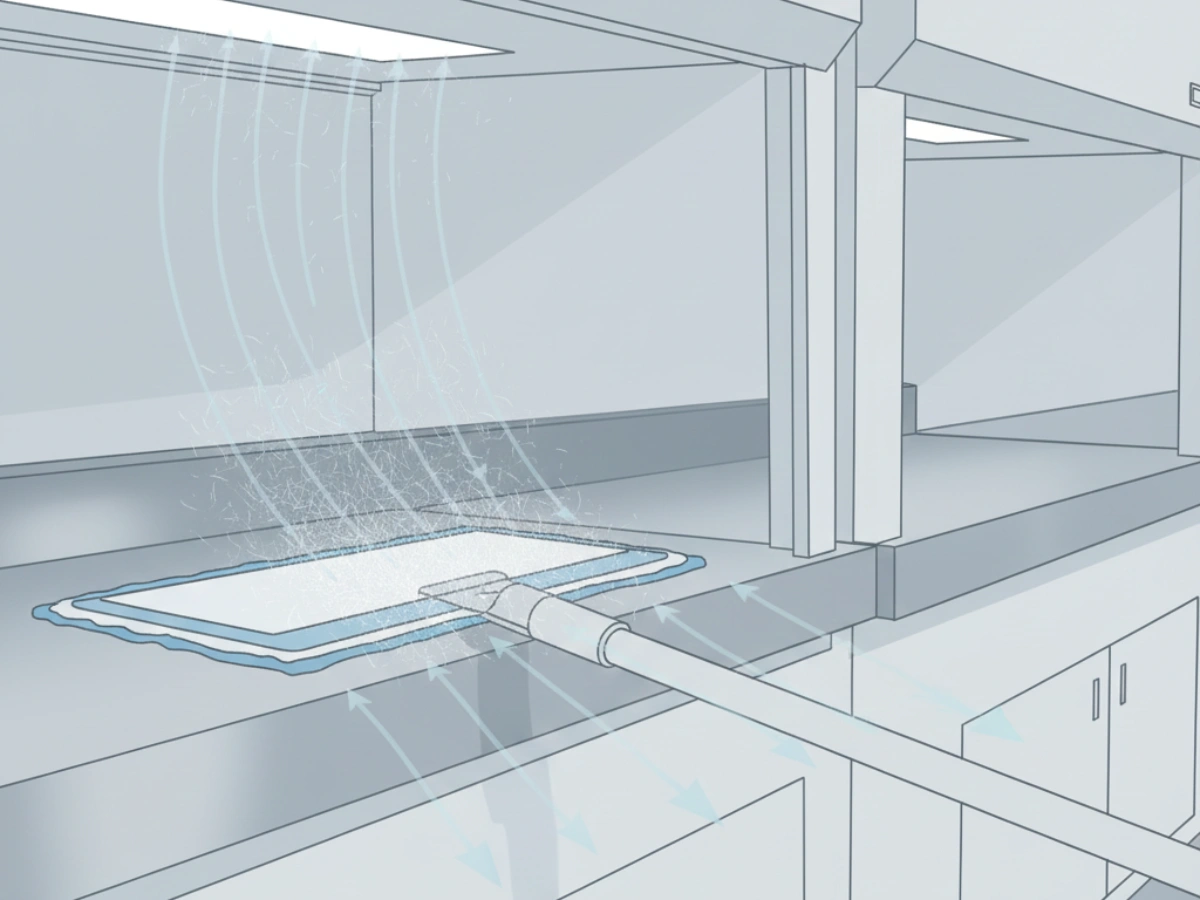
Continuous filament polyester vs split microfiber material architecture for low lint cleanroom mop selection in Grade A/B
Material architecture overview: continuous filament polyester vs split microfiber.

2. Why Linting Risk Is a GMP Compliance Issue

In sterile manufacturing, fibers released from cleaning tools are treated as a contamination control failure. In practice, “low lint” is not a marketing phrase — it is a validation variable that affects CCS effectiveness and deviation risk.

For QA teams, the key question is repeatability: does the mop maintain its shedding profile after the maximum allowed sterilization and handling cycles? If you need a sourcing-level framework, start from the pillar guide: pharmaceutical cleanroom mop supplier.

Audit mindset: A mop can be sterile yet still fail Grade A expectations if mechanical action generates fibers that later appear in non-viable monitoring results.

3. What Actually Drives Shedding (Not the Material Name)

Linting risk is driven by fiber architecture (continuous vs split), edge construction, and the stress profile from sterilization and use. “Microfiber” is not automatically safer; split filaments can introduce more fracture points.
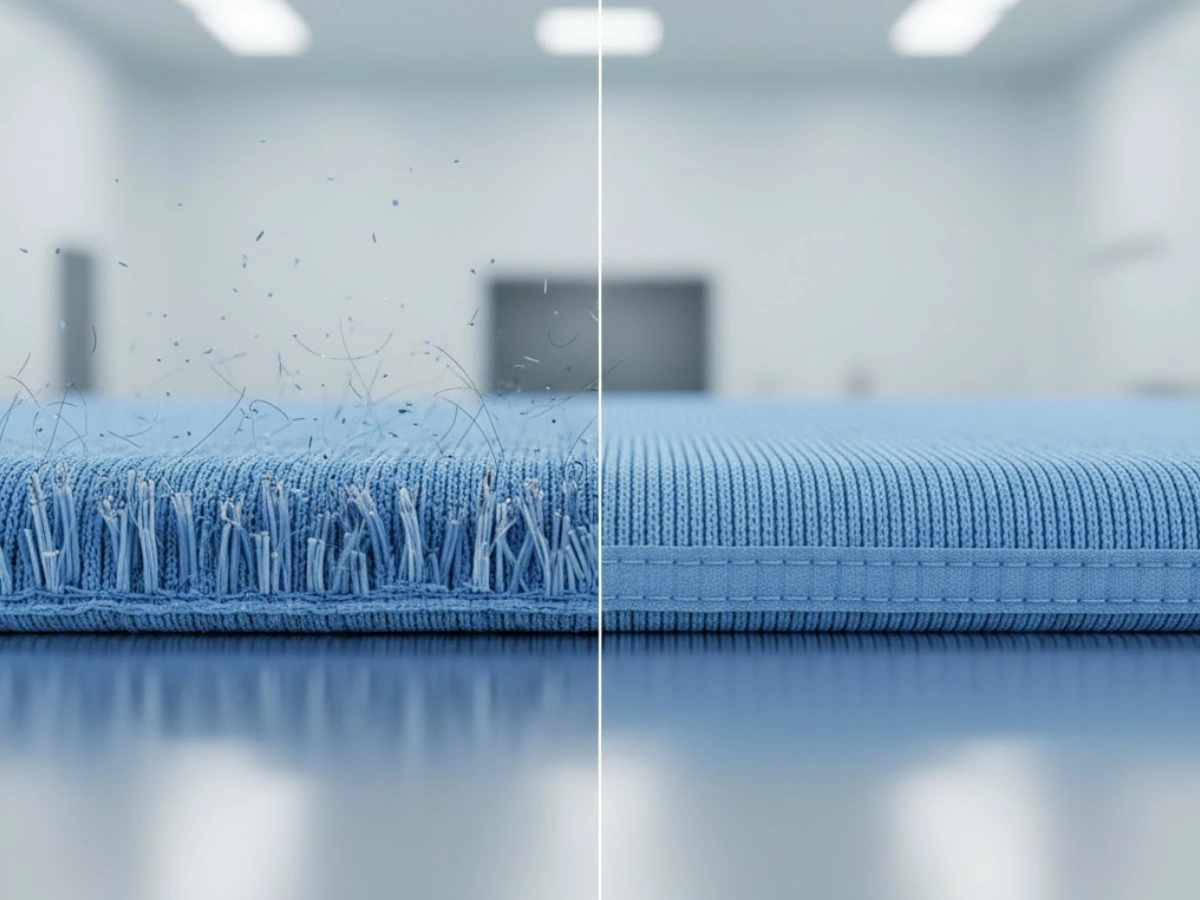
Microscopic comparison showing higher linting risk of split microfiber filaments versus continuous filament polyester in Grade A cleanroom zones
Microscopic view: split microfiber filaments create more potential break points than continuous filaments.

4. Sterilization Stress: Gamma vs Steam Autoclave

Even when a mop is labeled “autoclavable,” repeated steam exposure can change fiber integrity over time. For split microfiber structures, steam cycles may accelerate filament fracture and edge fatigue.
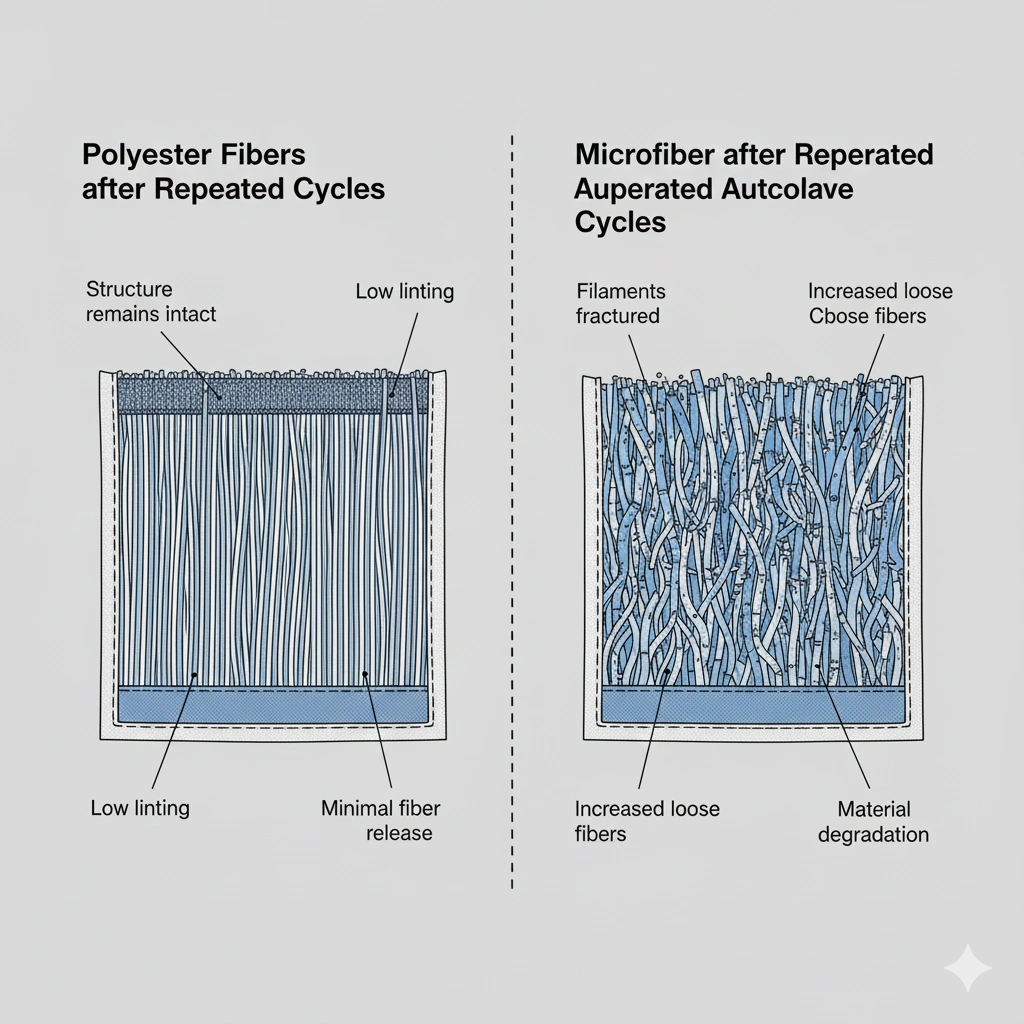
Impact of gamma irradiation and steam autoclave sterilization on cleanroom mop fiber integrity and long-term linting performance
Sterilization stress can shift long-term shedding performance — validate post-sterilization integrity, not only sterility.

5. Edge Sealing Is the Hidden Variable

The highest shedding risk often comes from edges — especially after repeated abrasion. Laser-cutting and ultrasonic sealing are common approaches to reduce macro-linting. For a deep technical view of how these steps are controlled, see: Cleanroom Mop Head Manufacturing Process.
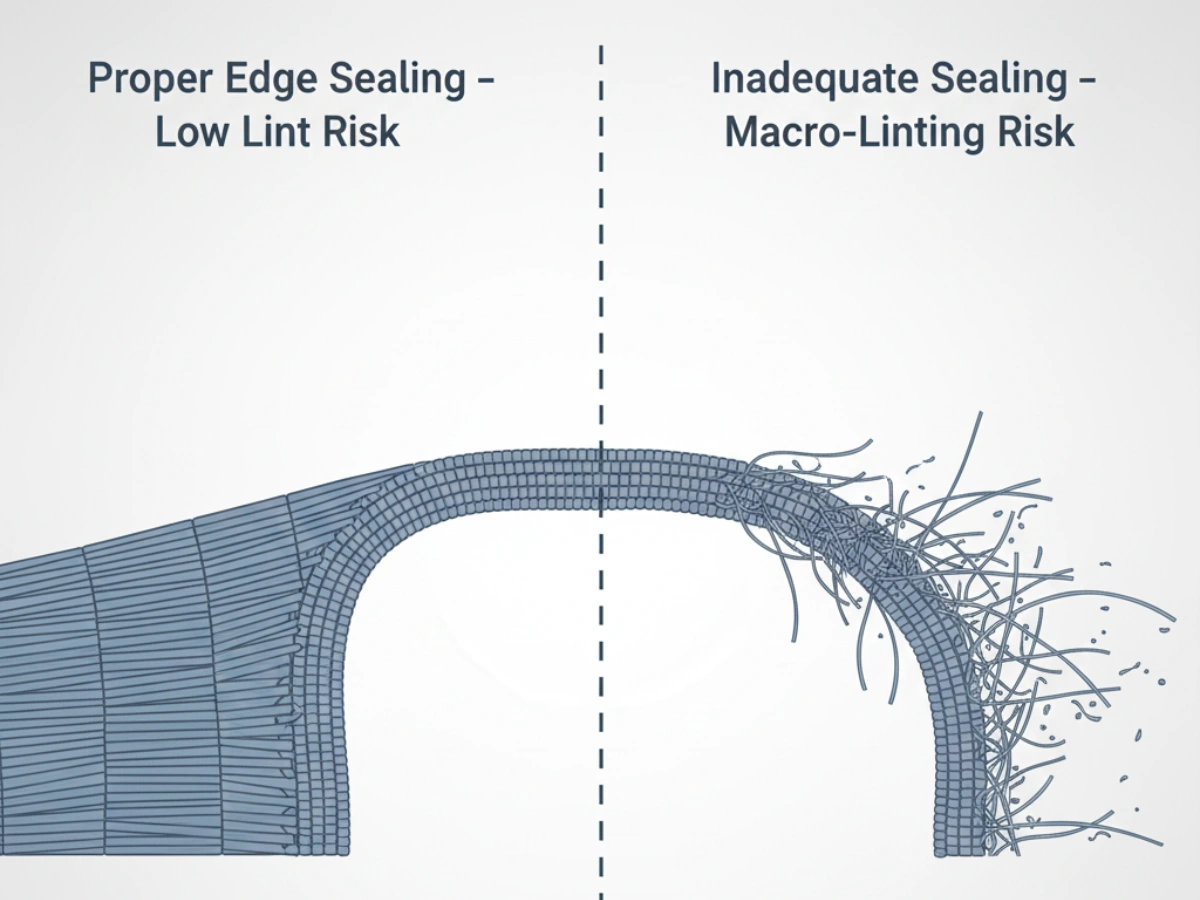
Comparison of cleanroom mop edge sealing methods showing how laser or ultrasonic sealing reduces fiber release during repeated mopping actions
Edge sealing comparison: sealing quality is often the biggest determinant of macro-fiber release.

6. Why Split Microfiber Can Be Higher Risk in Grade A

Microfiber’s split structure improves pickup efficiency but introduces more micro-ends and fracture points. If the product is processed repeatedly (steam cycles) or edges are not fused properly, linting risk rises — which is why Grade A use typically demands stronger evidence and tighter limits.

Split microfiber filament structure illustrating potential break points that increase linting risk in sterile cleanroom environments
Split microfiber detail: higher surface area comes with more potential weak points under stress.

7. QA Decision Logic (Validation-Oriented)

Use a decision tree that aligns grade requirement, sterilization method, and evidence availability (shedding tests, edge sealing method, cycle durability). If you are building a full supplier qualification package, cross-reference the sourcing framework here: pharmaceutical cleanroom mop supplier.
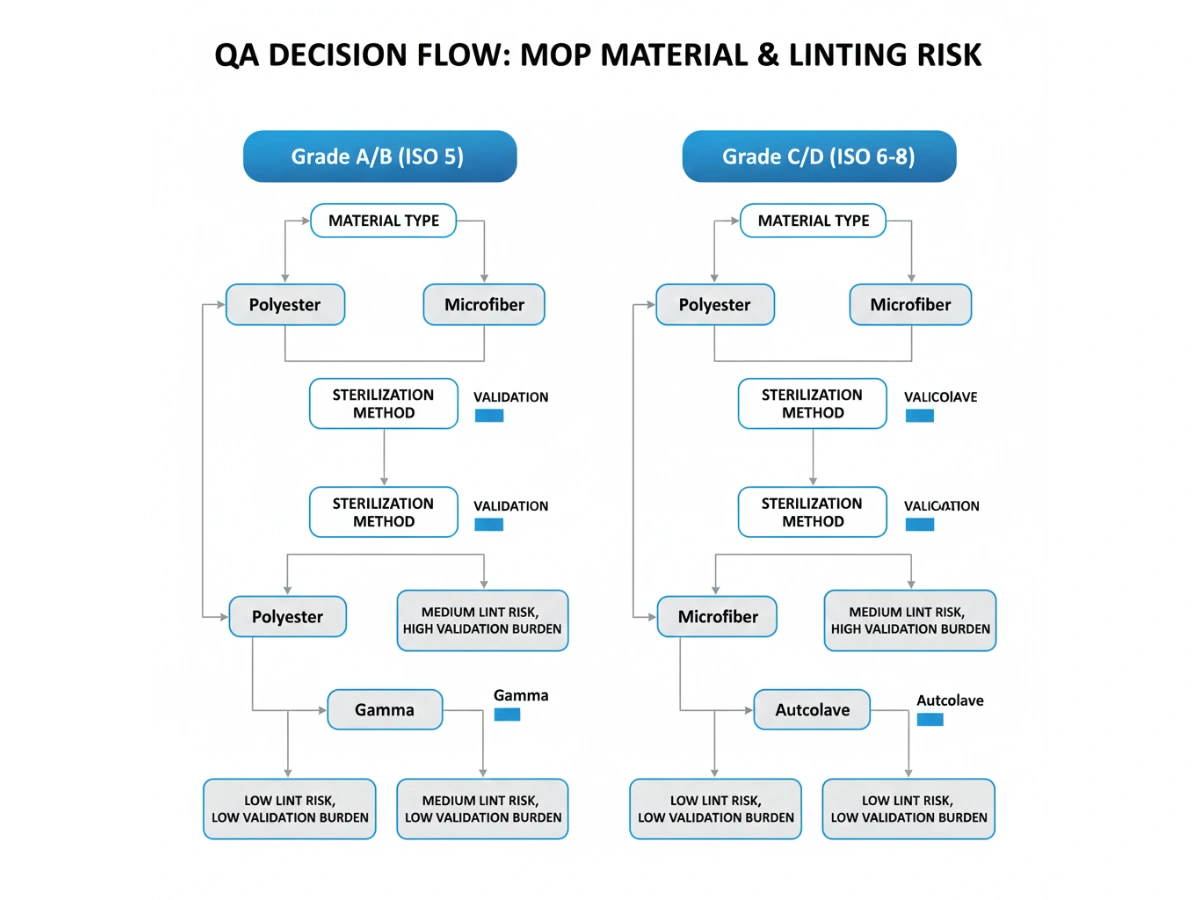

QA decision logic diagram for selecting low lint cleanroom mop materials based on cleanroom grade, sterilization method, and validation risk
QA decision logic: choose materials based on evidence, not labels.
Practical RFQ tip: Ask for shedding method (e.g., Helmke Drum / IEST approach), edge sealing description, and post-sterilization integrity limits — not only sterility certificates.

Demandez un devis rapide

Nous vous contacterons dans un délai d'un jour ouvrable, veuillez faire attention à l'e-mail avec le suffixe "@midposi.com".

C'est gratuit!

《9 pièges mortels de l'approvisionnement en vêtements pour salles blanches en Chine》

livre électronique 400
22

Demandez un devis rapide

Nous vous contacterons dans un délai d'un jour ouvrable, veuillez faire attention à l'e-mail avec le suffixe "*@midposi.com".