Cleanroom Consumables Guide

What Is a Cleanroom Mop? Complete Guide to Types, Materials, and Selection

A cleanroom mop is more than a cleaning tool. In pharmaceutical, biotech, semiconductor, and other controlled environments, it is a key part of contamination control, GMP compliance, and operational consistency.

Low-lint materials Sterile & non-sterile options ISO / GMP aligned B2B practical guide
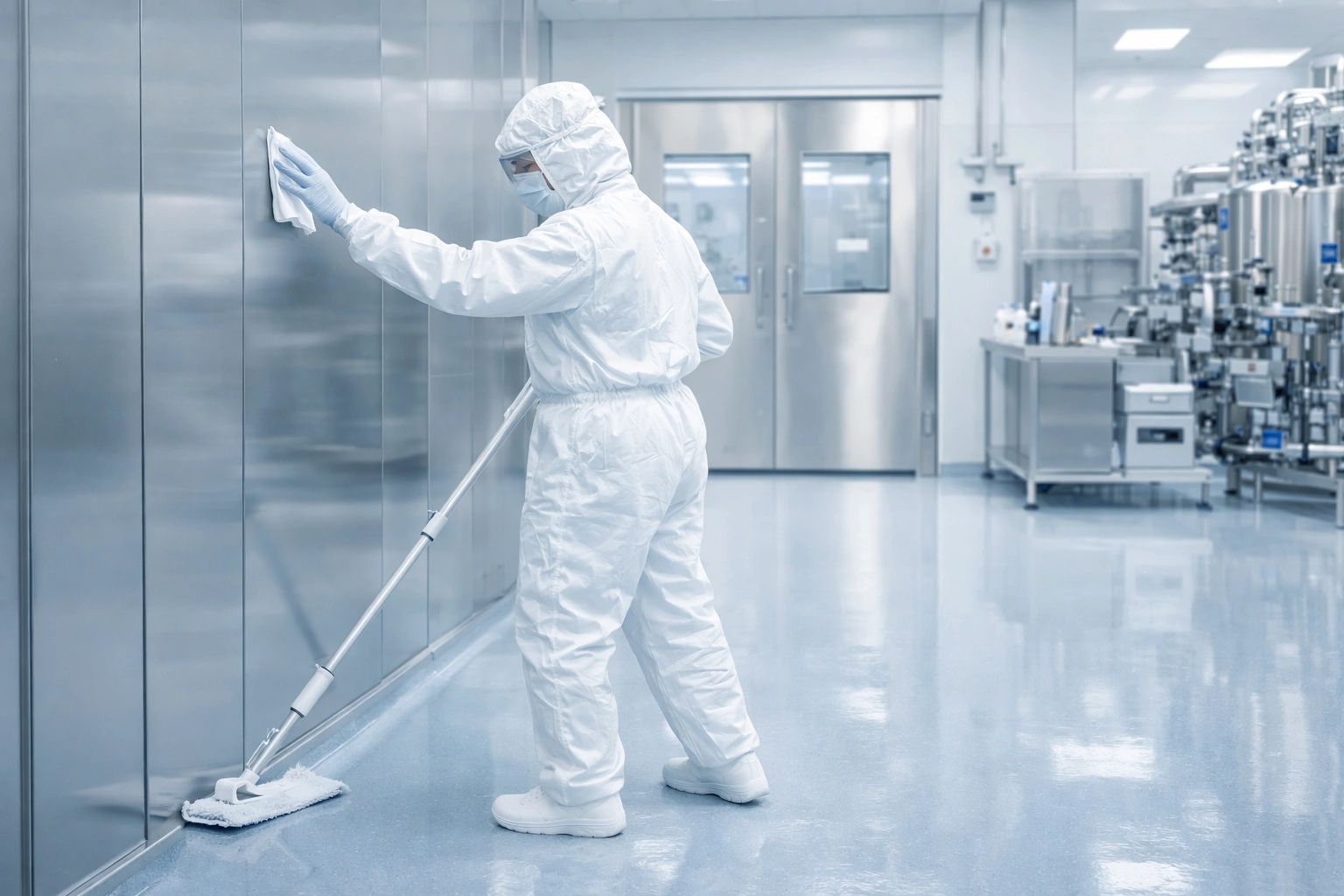
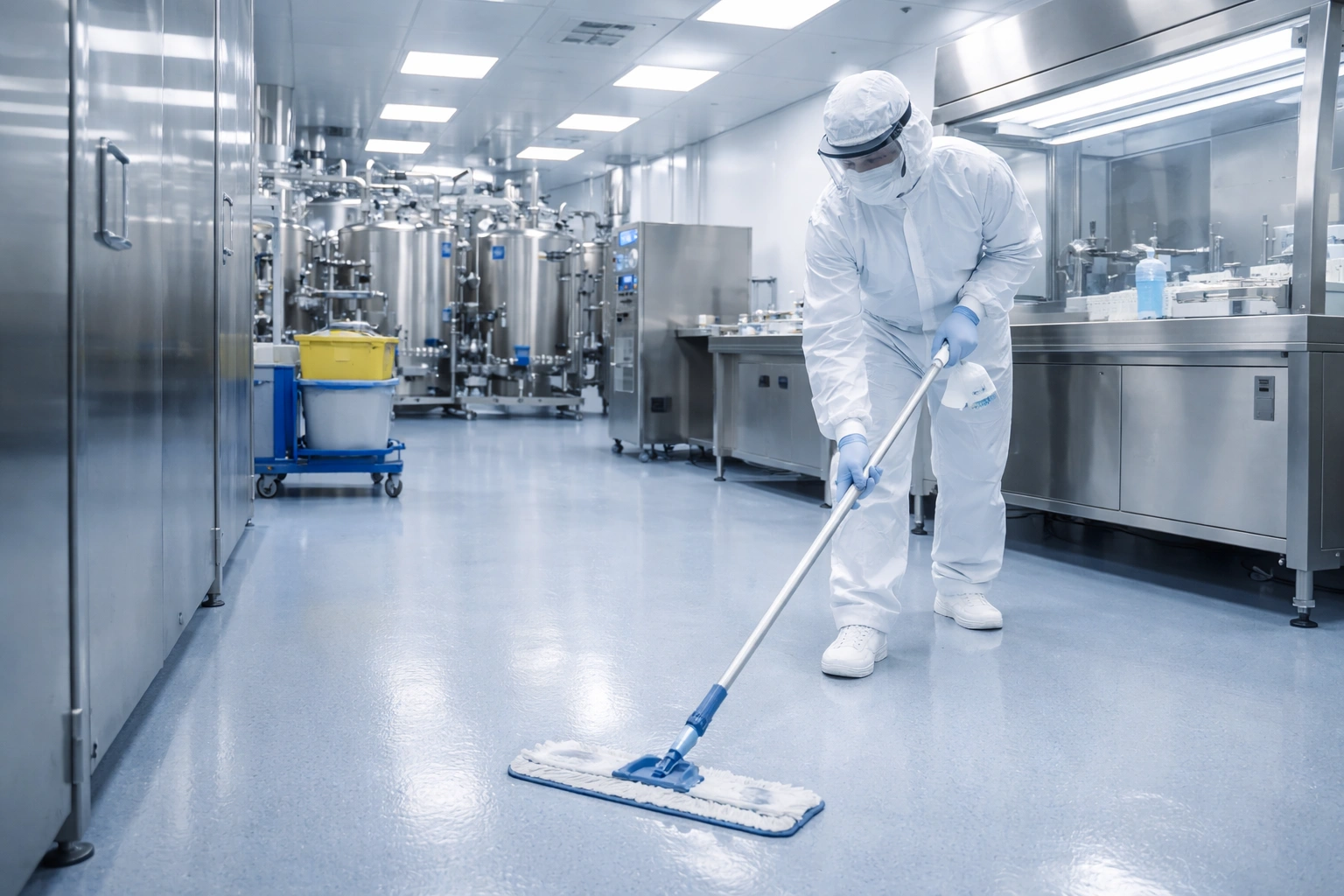
Sterile cleanroom mopping process in pharmaceutical environment

Réponse à l'extrait en vedette

A fast answer for buyers, QA teams, and cleanroom operators.

A cleanroom mop is a specialized cleaning tool designed for controlled environments that require low particle generation, chemical compatibility, and validated sterilization methods. Compared with conventional mops, cleanroom mops use low-lint materials such as polyester or microfiber, support cleanroom-compatible frame and handle systems, and may be supplied sterile for critical areas. The right selection depends on cleanroom grade, floor type, disinfectant compatibility, and sterility requirements.

Points clés à retenir

Five practical points that matter most in product selection and real-world use.

1

Cleanroom mops are designed to reduce lint, particles, and contamination risk in controlled environments.

2

Material choice matters: polyester, microfiber, and blends perform differently in sterility, durability, and pickup.

3

Selection must match cleanroom grade, disinfectant chemistry, floor surface, and validation requirements.

4

Sterile and non-sterile mop systems should be separated based on area classification and contamination risk.

5

Choosing the right handle, frame, and packaging format is just as important as choosing the mop head material.

Introduction: A Mop Is Part of the Contamination Control System

Dans l’industrie pharmaceutique et de haute technologie, une vadrouille n’est pas seulement un outil de nettoyage. Il s’agit d’un élément fonctionnel du système global de contrôle de la contamination. Pour sélectionner la bonne vadrouille, les acheteurs doivent non seulement comparer le matériau et la taille, mais également considérer comment le produit s'intègre dans une validation de nettoyage plus large, l'exécution des SOP et stratégie de contrôle de la contamination des salles blanches.

De nombreux acheteurs comparent les produits uniquement par taille ou par prix. En réalité, la sélection des vadrouilles pour salle blanche doit également prendre en compte les performances des particules, le pouvoir absorbant, la compatibilité chimique, la méthode de stérilisation, la réutilisabilité et la classification de la salle blanche.

À emporter pratique : Le bon système de vadrouille pour salle blanche favorise à la fois l’efficacité du nettoyage et la préparation aux audits. Une mauvaise solution peut augmenter le risque opérationnel même si le coût initial semble inférieur.

1. What Makes a Mop “Cleanroom-Grade”?

Cleanroom mops differ from conventional mops in four critical areas: particle generation, material compatibility, handle system design, and sterilization suitability.

Requirement Conventional Mop Vadrouille pour salle blanche Pourquoi c'est important
Génération de particules Higher shedding Low-lint certified materials Helps reduce secondary contamination
Compatibilité des matériaux Limité Chemical-resistant constructions Supports disinfectant and cleaning agent use
Handle System Mixed-use consumer design Cleanroom-compatible system Improves cleaning consistency and hygiene control
Stérilisation Usually not validated Autoclave / gamma / ETO compatible options Supports microbial control strategies

2. Cleanroom Grade and Mop Selection

The required mop specification changes based on the room classification. Critical zones need lower particle generation, higher sterility assurance, and often single-use or tightly validated reusable systems.

Cleanroom Grade Exigence typique Recommended Mop Type Stérilité
ISO 5 / Grade A Critical zone, highest contamination control Flat mop Sterile, often single-use preferred
ISO 7 / Grade B Background clean zone Flat mop or validated low-lint system Sterile or risk-based non-sterile
ISO 8 / Grade C Supporting production area String mop or microfiber flat mop Usually non-sterile unless process requires otherwise
ISO 9 / Grade D General controlled environment Cost-effective cleanroom-compatible mop Non-sterile
CLEANROOM MOP SELECTION LOGIC

Q1. What is the cleanroom classification?
→ ISO 5 / Grade A:
   Select sterile flat mop, low-lint material, single-use or tightly controlled validated reuse.

→ ISO 7 / Grade B:
   Decide based on process risk:
   - Sterile flat mop for higher-risk operations
   - Low-lint non-sterile validated system for lower-risk supporting tasks

→ ISO 8 / Grade C:
   Non-sterile microfiber or polyester mop systems are often acceptable.

→ ISO 9 / Grade D:
   General cleanroom-compatible systems can be used with validated cleaning procedures.

3. Vadrouille plate ou vadrouille à cordes

Flat mops are preferred in higher-grade cleanrooms because they provide more uniform surface contact, lower lint generation, and better control of chemical application.

String mops can still be suitable in lower-grade or non-critical areas, especially where flexibility and lower cost are important.

Caractéristiques Flat Mop String Mop
Surface Contact High and consistent Less uniform
Particle Pickup Predictable More variable
Chemical Use Controlled dosage Higher absorption
Lint Generation Inférieur Usually higher
Best Use ISO 5 / ISO 7 ISO 8 / ISO 9

4. Cleanroom Mop Materials

Material selection affects linting, durability, absorption, and chemical resistance. The most common materials are polyester, microfiber, and blended constructions.

Matériel Excrétion de particules Résistance chimique Durabilité Typical Application
Polyester Very low Excellent Haut Critical cleanroom zones
Microfibre Faible Bien Moyen General cleanroom floor cleaning
Polyester-Microfiber Blend Faible Very good Haut Balanced performance across multiple grades
Disposable Nonwoven Single-use Depends on construction Not reusable High-risk changeover or one-time sterile tasks

Mop selection should also support the facility’s environmental monitoring and cleaning verification strategy. In many pharmaceutical facilities, cleaning tools are evaluated not only for practicality but also for how they support consistent results within a risk-based environmental monitoring program.

Selection tip: Polyester is often preferred when low particle generation is the priority. Microfiber can improve pickup and cleaning efficiency in less critical but still controlled areas.

5. Handle and Frame Compatibility

Buyers sometimes focus only on the mop pad, but handle and frame design strongly affect cleanability, usability, and contamination control.

Handle Material Compatibilité Cleanability Sterilization Suitability
Plastic (PP / PE) Excellent Excellent Autoclave-compatible options available
Stainless Steel Excellent Excellent Strong for reusable systems
Anodized Aluminum Bien Bien Used in some light-weight systems
Mixed Material Design Fair Depends on structure Less ideal for critical zones
  • Smooth surfaces reduce microbial harborage risk.
  • Simple locking mechanisms improve ease of use and operator control.
  • Seamless or easy-to-clean joints help reduce accumulation points.
  • Frame stability affects floor contact consistency and cleaning results.

6. Sterile vs. Non-Sterile Cleanroom Mops

Not every cleanroom needs a sterile mop, but critical pharmaceutical and aseptic areas often do. The decision should be based on contamination risk, product exposure, SOP requirements, and environmental classification.

The choice between sterile and non-sterile mop systems should be aligned with cleanroom classification, process exposure risk, and documented cleaning procedures. In regulated environments, this decision is often connected to broader SOP implementation and audit readiness requirements.

Sterile mop systems are typically selected for Grade A / B environments, aseptic processing areas, or validated cleaning procedures requiring sterile accessories.

Non-sterile mop systems are often suitable for Grade C / D and general support areas where validated low-lint performance is more important than terminal sterility.

Visual Reference

Example images aligned with cleanroom mop applications and controlled-environment cleaning.

Cleanroom mop pharmaceutical GMP feature image
Cleanroom mop use in pharmaceutical GMP settings
Cleanroom mop system with stainless steel trolley
Complete mop system with trolley for controlled cleaning workflow
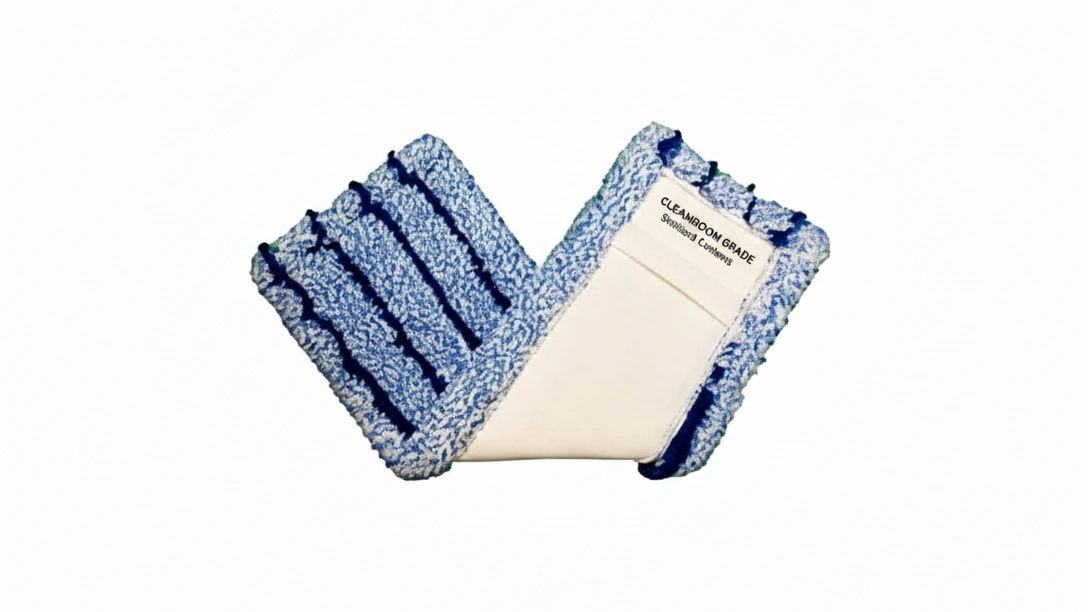
Blue industrial cleanroom flat mop replacement
Flat mop replacement head for low-lint cleaning applications

FAQ

What is the main difference between a regular mop and a cleanroom mop?

A cleanroom mop is designed for controlled environments with low-lint materials, better chemical compatibility, and cleanroom-appropriate construction, while a regular mop is not intended for contamination-sensitive applications.

Which mop material is best for pharmaceutical cleanrooms?

Polyester and polyester-microfiber blends are common choices because they offer low particle generation, good durability, and compatibility with many pharmaceutical cleaning procedures.

Do all cleanrooms require sterile mops?

No. Sterile mops are usually selected for critical or aseptic environments, while validated non-sterile mop systems may be suitable for lower-grade support areas depending on SOPs and risk assessment.

Are flat mops better than string mops for cleanrooms?

In higher-grade cleanrooms, flat mops are often preferred because they provide lower lint generation, more uniform surface contact, and better control of cleaning chemistry.

MJ

À propos de l'auteur

JING JIANG | Cleanroom Expert

Jing Jiang focuses on cleanroom consumables, contamination control, and GMP-oriented product content for pharmaceutical, biotech, medical device, and controlled-environment applications. His work helps B2B buyers better understand product selection, validation considerations, and practical cleanroom implementation.

Need Help Selecting the Right Cleanroom Mop System?

If you are comparing sterile vs. non-sterile options, microfiber vs. polyester materials, or complete mop systems for pharmaceutical, biotech, or industrial cleanrooms, our team can help you match the right product to your application.

C'est gratuit!

《9 pièges mortels de l'approvisionnement en vêtements pour salles blanches en Chine》

livre électronique 400
22

Demandez un devis rapide

Nous vous contacterons dans un délai d'un jour ouvrable, veuillez faire attention à l'e-mail avec le suffixe "@midposi.com".

Demandez un devis rapide

Nous vous contacterons dans un délai d'un jour ouvrable, veuillez faire attention à l'e-mail avec le suffixe "*@midposi.com".