~9 minuti di lettura
Tre decisioni di configurazione definiscono ogni tuta per camera bianca. Questa guida aiuta i responsabili dei programmi di approvvigionamento, controllo qualità e vestizione ad abbinare la giusta configurazione al giusto grado di camera bianca.
Che cos'è una tuta per camera bianca e perché la configurazione è importante
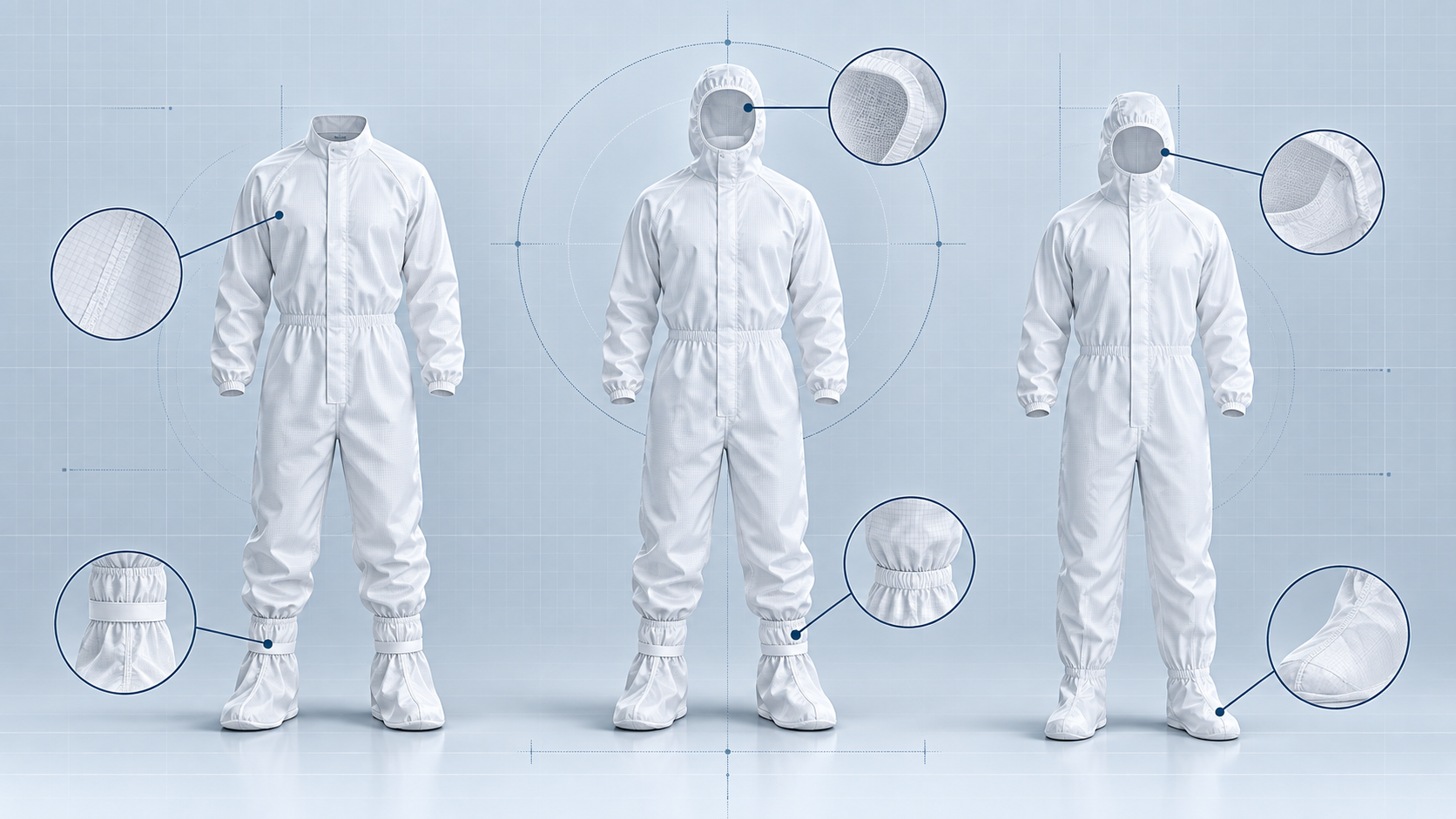
UN tuta per camera bianca è un indumento monopezzo per tutto il corpo che copre il busto, le braccia e le gambe: il singolo componente di contenimento della superficie più grande in qualsiasi programma di indumenti per camere bianche. A differenza degli indumenti protettivi per uso generale, una tuta per camera bianca è progettata per ridurre al minimo la dispersione di particelle da parte dell'operatore, fornendo allo stesso tempo una barriera coerente tra la persona e l'ambiente controllato.
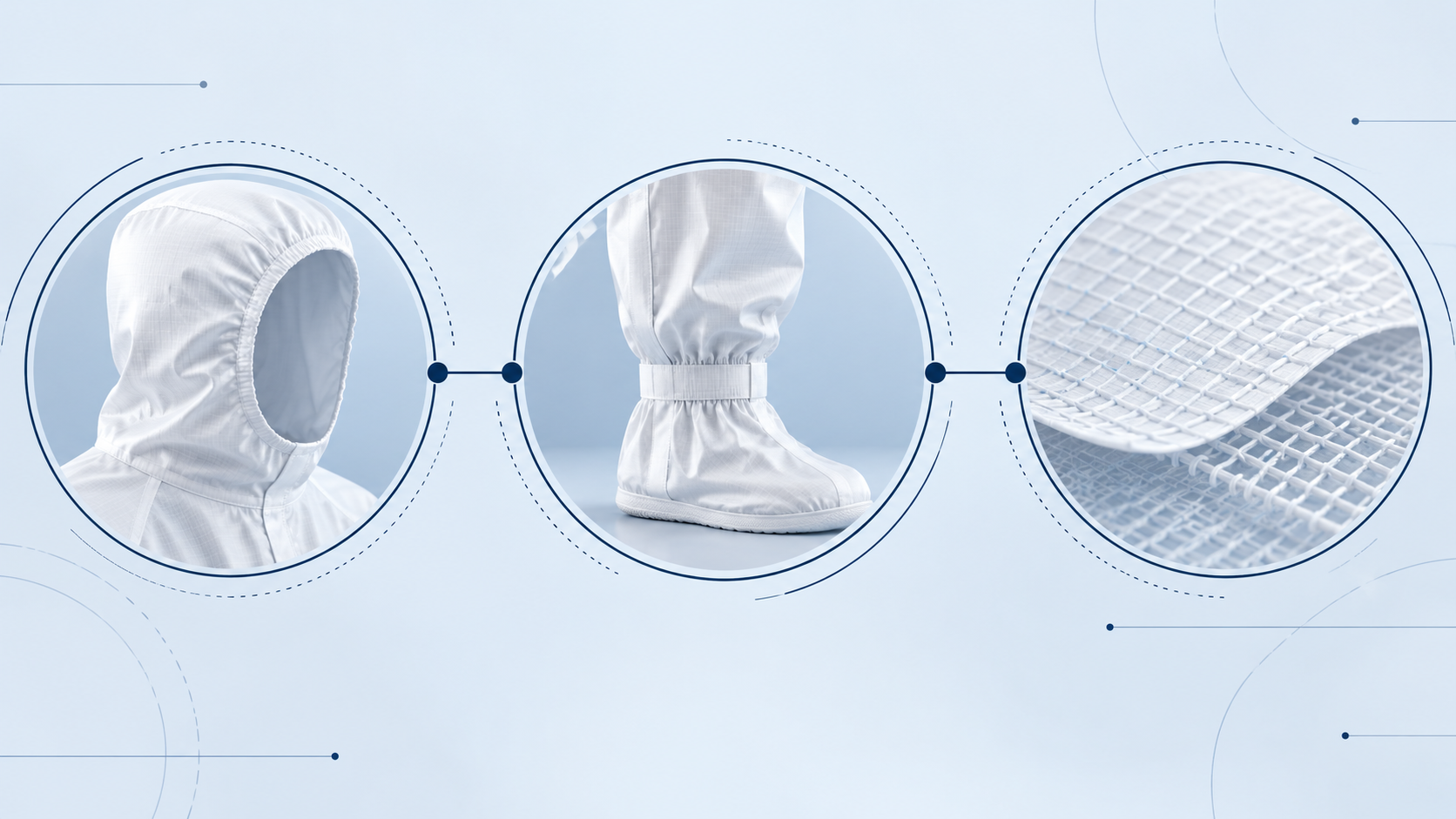
Ogni tuta è definita da tre decisioni di configurazione che influiscono direttamente sulle prestazioni di controllo della contaminazione, sul comfort dell'operatore e sull'efficienza del camice:
Queste tre decisioni sono interdipendenti. Un'area asettica di grado A/B richiede una combinazione specifica (stivali sterili, con cappuccio, integrati, poliestere) in cui la modifica di una qualsiasi configurazione crea un rischio di contaminazione. Comprendere i compromessi per ciascuna decisione è il punto di partenza per la selezione della tuta. Per il contesto completo del sistema di abbigliamento, vedere Guida al sistema di indumenti per camere bianche.
Configurazione della tuta – Decisione n. 1: stile del cappuccio
La cappa è l'interfaccia tra la testa dell'operatore (una fonte primaria di particelle) e l'ambiente della camera bianca. Il fatto che il cappuccio sia integrato nella tuta o indossato come componente separato influisce sul rischio di contaminazione, sulla flessibilità delle taglie e sulla comodità dell'operatore.
| Dimensione | Tuta con cappuccio | Tuta senza cappuccio |
|---|---|---|
| Costruzione | Il cappuccio è permanentemente attaccato al corpo della tuta in corrispondenza del colletto: un indumento continuo dalla testa alle caviglie | La tuta termina al colletto; un cappuccio separato viene indossato in modo indipendente |
| Rischio di contaminazione | Inferiore: nessun gap nell'interfaccia cappuccio-tuta. Le particelle provenienti dalla testa e dal collo non hanno alcuna via di fuga tra i componenti dell'indumento | Più in alto: l'interfaccia cappuccio-tuta crea un potenziale spazio vuoto sul collo. Una corretta sovrapposizione e rimboccatura riducono ma non eliminano questo rischio |
| Flessibilità di dimensionamento | Inferiore: l'operatore riceve una taglia combinata per testa + corpo. Una tuta di taglia L significa un cappuccio di taglia L | Più alto: cappuccio e tuta possono essere dimensionati in modo indipendente. Un operatore può indossare una tuta di taglia L con cappuccio di taglia M |
| Velocità della vestizione | Più veloce: un capo invece di due. Riduce il numero di passaggi della vestizione | Più lento: richiede una fase separata di indossamento del cappuccio nella sequenza di vestizione |
| Costo | Leggermente più alto per capo (costruzione integrata) | Leggermente inferiore per capo; le cappe possono essere sostituite indipendentemente |
| Ideale per | Aree asettiche di grado A/B, produzione di grado C: dove il controllo della contaminazione supera la comodità del dimensionamento | Aree di grado D, R&D labs, vestizione dei visitatori: dove la flessibilità delle taglie e la sostituzione indipendente contano di più |
Raccomandazione: Per i gradi A/B e C GMP, le tute con cappuccio sono lo standard perché l'eliminazione dello spazio nell'interfaccia cappuccio-tuta riduce un percorso di contaminazione noto. Per gli ambienti controllati di Grado D e non GMP, le tute senza cappuccio con cappuccio separato offrono una protezione accettabile con una migliore flessibilità di dimensionamento e costi di sostituzione inferiori.
Configurazione della tuta: decisione n. 2: stile di avvio
Il contenimento delle calzature è la seconda decisione di configurazione. La scelta tra stivali integrati e stivali separati influisce sulla tenuta della caviglia, un punto critico per il controllo della contaminazione perché la caviglia è una delle aree meccanicamente più attive durante il movimento dell'operatore.
| Dimensione | Stivaletti integrati | Stivali separati |
|---|---|---|
| Costruzione | Il tessuto della tuta si estende per coprire i piedi con una sezione del piede a forma di stivaletto. Il capo corre continuamente dal cappuccio alle dita dei piedi | La tuta termina alla caviglia con una chiusura elastica o a scatto. Stivali separati per camera bianca vengono indossati sopra o sotto |
| Gap alla caviglia | Nessuno: il tessuto della tuta copre la caviglia e il piede come un'unica barriera continua | Presente: la caviglia è il punto di transizione tra la tuta e lo stivale. Il metodo di chiusura (elastico, a scatto, a piega) determina la qualità della sigillatura di questo spazio |
| Complessità di dimensionamento | Taglia unica per corpo + piedi. Una tuta di taglia L significa piedi di taglia L. Gli operatori con dimensioni corpo-piede sproporzionate potrebbero avere problemi di adattamento | Due taglie indipendenti: taglia della tuta e taglia degli stivali. Ciascuno può essere abbinato all'operatore in modo indipendente |
| Costo di sostituzione | Più in alto: se la sezione del rivestimento interno si usura, è necessario sostituire l'intera tuta | Più bassi: gli stivali si consumano più velocemente delle tute. Gli stivali separati possono essere sostituiti senza sostituire la tuta |
| Ideale per | Asettico di grado A/B: massimo controllo della contaminazione. Elimina completamente lo spazio alla caviglia | Grado C/D: dove un certo rischio di gap alla caviglia è accettabile in cambio di flessibilità di dimensionamento e costi di sostituzione inferiori |
Chiusura elastica alla caviglia: la via di mezzo: Alcune tute utilizzano una chiusura elastica alla caviglia senza stivaletti integrati. L'elastico crea una tenuta alla caviglia e vengono indossati stivali separati, coprendo l'elastico o con la gamba della tuta infilata all'interno. Questa opzione riduce (ma non elimina) il gap alla caviglia preservando la taglia e la sostituzione indipendenti dello scarpone. È comunemente utilizzato nelle strutture di Grado C dove i copriscarpe integrati non sono obbligatori ma si desidera una migliore tenuta della caviglia rispetto a un polsino aperto.
Configurazione della tuta – Decisione n. 3: selezione del materiale
Il tessuto determina le prestazioni della tuta in termini di rilascio di particelle, compatibilità con l'autoclave, resistenza chimica e comfort dell'operatore. Tre materiali dominano la produzione di tute per camere bianche.
| Materiale | Particelle | Autoclave | ESD | Comfort | Miglior voto |
|---|---|---|---|---|---|
| Poliestere a filamento continuo | Basso: nessuna fibra tagliata si stacca | Sì: 121-134 gradi C, 50-100+ cicli | NO | Buono: leggero, traspirante | Asettico e produttivo di grado A/B/C |
| Miscela poliestere-carbonio (ESD) | Basso-Medio: le fibre di carbonio aggiungono carico di particelle | Sì: 121 gradi C, meno cicli (30-60) | Sì: la griglia conduttiva dissipa l'elettricità statica | Buono: leggermente più pesante del poliestere puro | Semiconduttore, elettronica, grado C/D sensibile alle scariche elettrostatiche |
| Monouso in polipropilene (PP). | Medio: struttura in fibra di fiocco | NO | NO | Moderato: meno traspirante | Grado D, aree visitatori, R&laboratori D |
Il poliestere a filamento continuo è lo standard per le camere bianche farmaceutiche e biotecnologiche GMP. Il basso rilascio di particelle e la compatibilità con l'autoclave lo rendono la scelta predefinita per il grado A/B/C. Le miscele poliestere-carbonio ESD aggiungono proprietà statico-dissipative per la produzione elettronica con un leggero compromesso in termini di prestazioni delle particelle e durata del ciclo. Le tute monouso in polipropilene servono per applicazioni di bassa qualità e per visitatori in cui l'infrastruttura della lavanderia è assente. Per un confronto completo dei materiali tra tutti i tipi di indumenti, vedere il Guida ai materiali per indumenti per camere bianche. Per il quadro decisionale tra riutilizzabile e usa e getta, vedere indumenti autoclavabili vs usa e getta.
Selezione della tuta in base al grado della camera bianca: GMP A/B/C/D e ISO 5-8
La combinazione delle tre decisioni di configurazione produce raccomandazioni sulla tuta specifiche per il grado. La tabella seguente fornisce la configurazione standard per ciascun grado di camera bianca.
| Parametro | Grado A/B (ISO 5) | Grado C (ISO 7) | Grado D (ISO 8) |
|---|---|---|---|
| Stile cappuccio | Con cappuccio (integrato) | Con cappuccio (integrato) | Con o senza cappuccio |
| Stile di avvio | Stivaletti integrati | Stivali separati o caviglia elastica con stivali separati | Stivali o copriscarpe separati |
| Materiale | Poliestere a filamento continuo | Poliestere a filamento continuo | Poliestere (autoclavabile) o PP (monouso) |
| Sterilizzazione | Sterile (autoclave gamma o validata) | Autoclavabile, non sterile accettabile | Accettabile non sterile; sterile se la SOP lo richiede |
| Cambia frequenza | Per sessione o per turno: convalidato dai dati EM | Per turno o giornalmente, definito dalla SOP | Giornaliero o per intervallo definito |
| Requisito chiave | Nessuna pelle esposta, nessuna fessura nell'interfaccia, confezione sterile, doppia confezione per trasferimento asettico | Copertura totale del corpo, cappuccio, rilascio controllato di particolato | Copertura corporea di base, controllo generale della contaminazione |
Ciascuna struttura dovrebbe convalidare queste raccomandazioni rispetto ai propri dati di monitoraggio ambientale, SOP sull'abbigliamento e valutazione del rischio. Una struttura di Grado B con dati EM solidi e un protocollo di camice validato può accettare stivali separati se i dati lo supportano. Una struttura di Grado C che si prepara per un audit di cui all'Allegato 1 può scegliere di elevare le proprie specifiche di tuta a stivaletti integrati come misura proattiva.
Dimensionamento della tuta: come dimensionare un team di produzione
Il dimensionamento delle tute rappresenta una sfida operativa e di approvvigionamento. Una tuta di taglia insufficiente crea rischio di contaminazione indipendentemente dalla qualità del materiale o della configurazione. L'approccio alle taglie dipende dalla presenza o meno di stivaletti integrati nella tuta.
Per un riferimento completo alle taglie di tutti i tipi di indumenti, vedere la Guida alle taglie e alla vestibilità degli indumenti per camere bianche.
Ispezione e sostituzione della tuta: gestione del ciclo di vita
Le tute autoclavabili si deteriorano nel corso di ripetuti cicli di sterilizzazione. Un programma di ispezione strutturato rileva il degrado prima che diventi un evento di contaminazione.
Ispezione pre-utilizzo (ogni indossamento)
- Controlla la cerniera: scorre agevolmente per tutta la sua lunghezza senza impigliarsi o separarsi?
- Ispeziona i polsini e le caviglie: l'elastico è intatto e sigilla, non è allentato o allungato?
- Controlla le cuciture: eventuali separazioni, assottigliamenti o fori visibili del filo nei punti di stress (spalle, cavallo, ginocchia)?
- Verificare l'attacco del cappuccio (tute con cappuccio): la cucitura del colletto è intatta e senza spazi vuoti?
- Cerca scolorimento, assottigliamento o pilling del tessuto: indicatori di degrado chimico o termico
Ispezione post-sterilizzazione (ogni ciclo)
- Ripetere tutti i controlli pre-utilizzo dopo il ciclo di sterilizzazione
- Verificare la rigidità o la fragilità del nuovo tessuto: segni di un'eccessiva sterilizzazione in autoclave
- Verificare che le etichette e i contrassegni rimangano leggibili: lo sbiadimento indica un'eccessiva esposizione al ciclo
- Se la struttura esegue test sulle particelle, testare un campione di ciascun lotto a intervalli definiti
Criteri di pensionamento
- Assottigliamento del tessuto visibile ad occhio nudo o confermato dalla misurazione dello spessore
- Separazione delle cuciture >5 mm in qualsiasi punto di stress
- Malfunzionamento della cerniera: si aggancia, si separa o non si chiude completamente
- Cedimento elastico ai polsini o alle caviglie: non garantisce più la tenuta
- Fallimento del test di dispersione delle particelle rispetto ai criteri di accettazione della struttura
- Superamento del ciclo di vita massimo dichiarato dal fornitore, anche se l'ispezione visiva supera
Tieni un registro del ritiro degli indumenti. Registrare la data, l'ID dell'indumento, il conteggio dei cicli al momento del pensionamento e il motivo specifico del guasto. Questo registro fornisce prove di audit di un programma di gestione degli indumenti funzionante e aiuta l'approvvigionamento a prevedere gli ordini di sostituzione. Per l'integrazione della procedura di vestizione, vedere Guida SOP per la procedura di vestizione per camera bianca.
Domande frequenti sulla tuta per camera bianca
Dovrei scegliere una tuta per camera bianca con o senza cappuccio?
Le tute con cappuccio sono consigliate per le norme GMP di grado A/B/C perché eliminano il divario nell'interfaccia cappuccio-tuta, un noto percorso di contaminazione. Le tute senza cappuccio sono accettabili per i gradi D, R&Laboratori D e vestizione dei visitatori in cui la flessibilità delle taglie e la sostituzione indipendente del cappuccio sono più preziose del vantaggio incrementale di controllo della contaminazione di un cappuccio integrato.
I copriscarpe integrati sono migliori dei copriscarpe separati per camera bianca?
Gli stivaletti integrati forniscono il miglior controllo della contaminazione perché eliminano lo spazio tra la caviglia e non vi è alcun punto di transizione tra la tuta e le calzature. Tuttavia, riducono la flessibilità delle taglie (la misura del piede è legata alla misura della tuta) e aumentano i costi di sostituzione (indossare gli stivaletti significa sostituire l'intera tuta). Per il Grado A/B, le scarpette integrate sono standard. Per il grado C/D, stivali separati con chiusura elastica alla caviglia offrono un pratico equilibrio.
Quale materiale è migliore per una tuta GMP di grado B?
Il poliestere a filamento continuo è lo standard per GMP Grado B. Combina un basso rilascio di particelle (nessuna estremità delle fibre tagliate), compatibilità con l'autoclave (121-134 °C, 50-100+ cicli), buona resistenza chimica ai comuni disinfettanti e comfort dell'operatore. La tuta deve essere sterile, con cappuccio e avere protezioni integrate per una protezione asettica completa.
A quanti cicli in autoclave può resistere una tuta in poliestere?
Le tute in poliestere a filamento continuo normalmente resistono a oltre 50-100 cicli in autoclave a 121 °C e a 30-60 cicli a 134 °C. La durata effettiva del ciclo dipende dalla struttura del tessuto, dai parametri di sterilizzazione, dall'esposizione chimica e dalla manipolazione. Ispezionare dopo ogni ciclo e andare in pensione quando viene soddisfatto un criterio di pensionamento, non in base a un conteggio di cicli fisso.
Come faccio a dimensionare una tuta con stivali integrati?
Misura l'altezza, il torace, la vita, la cucitura interna e la lunghezza del piede. Utilizza la tabella delle taglie del fornitore. Per gli operatori con dimensioni corpo-piede sproporzionate, dare priorità alla vestibilità corporea (uno stivaletto leggermente largo è preferibile a una tuta attillata che limita i movimenti o sollecita le cuciture). Se più del 10-15% degli operatori ha conflitti di taglia, valuta la possibilità di passare a tute elastiche alla caviglia con stivali separati.
Con quale frequenza è necessario sostituire le tute per camere bianche?
Basato su un'ispezione, non su un programma di calendario. Togliere la tuta quando: è visibile un assottigliamento del tessuto, le cuciture mostrano una separazione >5 mm, la cerniera non funziona correttamente, i polsini o l'elastico della caviglia non funzionano, il test di dispersione delle particelle non supera i criteri di accettazione o viene superato il ciclo di vita massimo stabilito dal fornitore. Conservare un registro dei pensionamenti per le prove di audit e le previsioni sugli appalti.
Hai bisogno di tute per camera bianca autoclavabili?
MIDPOSI offre tute con cappuccio con stivali integrati, tute con cappuccio con elastico alla caviglia, tute anti-ESD e camici da laboratorio autoclavabili. Comunicaci il grado della tua camera bianca, la configurazione richiesta, la quantità e il metodo di sterilizzazione: il nostro team ti consiglierà le opzioni adatte.