Le considerazioni ambientali nell’approvvigionamento di materiali di consumo per camere bianche sono passate da una preoccupazione di nicchia a una questione di governance mainstream. Le aziende farmaceutiche e biotecnologiche quotate nell’UE o che presentano domanda alla SEC ora devono affrontare requisiti di informativa normativa ai sensi della CSRD e delle norme sul clima proposte dalla SEC – e i materiali di consumo per camere bianche, inclusi spazzoloni, salviette e indumenti, rientrano nei limiti di rendicontazione dell’Ambito 3 (emissioni indirette). Per i responsabili degli approvvigionamenti e i responsabili del controllo qualità, la questione non è più se la sostenibilità sia importante, ma come valutarla senza compromettere il controllo della contaminazione o la conformità alle GMP.
Tre pressioni convergenti rendono questo argomento urgente per i team operativi nelle camere bianche:
Questo articolo non afferma che un tipo di scopa per camere bianche sia universalmente “più verde” di un altro. Il profilo ambientale di un programma di pulizia per camere bianche dipende da variabili specifiche della struttura: volume di consumo, profilo di contaminazione, infrastruttura della lavanderia, normative locali sui rifiuti e qualità delle camere bianche servite. Quello che segue è un quadro per effettuare una valutazione informata, non una conclusione preconfezionata. Per una panoramica completa della categoria di prodotto, consultare la Panoramica del sistema di pulizia per camere bianche.
La domanda più comune che i manager della sostenibilità pongono riguardo ai panni per camere bianche è: “Cosa è meglio per l’ambiente: usa e getta o riutilizzabile?” La risposta onesta è che nessuno dei due è categoricamente migliore. Ciascuna opzione sposta l’onere ambientale in una fase diversa del ciclo di vita. I panni usa e getta concentrano l'impatto sul consumo di materie prime e sulla produzione di rifiuti solidi. I panni riutilizzabili concentrano l'impatto sull'uso dell'acqua, sui prodotti chimici per il bucato e sull'energia per la sterilizzazione. Una valutazione struttura per struttura è l’unico approccio valido.
La tabella seguente fornisce un confronto fattore per fattore. Questa non è una scorecard che produce un singolo “vincitore”: è uno strumento per identificare quali fattori contano di più nel contesto specifico della tua struttura. Per i fattori operativi oltre l'impatto ambientale, vedere il Guida alla decisione sui mop per camere bianche usa e getta e riutilizzabili.
| Fattore ambientale | Mop monouso per camere bianche | Mop riutilizzabili per camere bianche | Contesto chiave (nessuno dei due è intrinsecamente migliore) |
|---|---|---|---|
| Consumo di materie prime per ciclo di utilizzo | Relativamente più alto: nuovi materiali consumati ad ogni utilizzo; un impianto che scarta 500 teste di spazzolone a settimana consuma 500 unità di materia prima a settimana. | Ciclo di utilizzo relativamente inferiore: una testina riutilizzabile utilizzata 75 volte ammortizza l'utilizzo di materie prime in 75 eventi di pulizia. | Dipende dal conteggio dei cicli di riutilizzo. Un mocio riutilizzabile che si guasta dopo 10 cicli ha uno scarso rapporto di ammortamento. Un mop riutilizzabile che raggiunge 75-100 cicli distribuisce il materiale in modo efficace. |
| Energia di produzione per ciclo di utilizzo | Inferiore per unità; relativamente più elevato se aggregato rispetto al consumo totale. Ogni unità richiede taglio, cucitura, sigillatura dei bordi e imballaggio. | Superiore per unità; relativamente inferiore se ammortizzato su più cicli. Una costruzione più robusta può richiedere energia aggiuntiva per unità prodotta. | L’ammortamento è la variabile critica. Se un mop riutilizzabile raggiunge un numero sufficiente di cicli, l’energia di produzione per ciclo può essere sostanzialmente inferiore rispetto a quella monouso. |
| Consumo di acqua | Minimo: nessun riciclaggio post-uso. L’uso dell’acqua è limitato ai processi produttivi. | Significativo: il lavaggio industriale richiede acqua per il lavaggio, il risciacquo e la sanificazione. Una lavanderia commerciale può utilizzare 15-30 litri di acqua per chilogrammo di tessuto lavorato. | La scarsità d’acqua è specifica della regione. Una struttura in una regione ricca di acqua deve affrontare un calcolo diverso rispetto a una struttura in una regione soggetta a stress idrico. L'acqua della lavanderia può essere parzialmente riciclata in sistemi a circuito chiuso. |
| Uso chimico (detergenti, disinfettanti in lavanderia) | Minimo: nessun prodotto chimico per il bucato coinvolto. Solo il disinfettante utilizzato durante l'effettiva procedura di pulizia. | Significativo: detersivi per bucato industriali, regolatori del pH e talvolta disinfettanti. Queste sostanze chimiche entrano nei flussi di acque reflue e possono richiedere un trattamento prima dello scarico. | La selezione dei prodotti chimici per il bucato è importante. I detergenti biodegradabili riducono il carico di tossicità acquatica. Le strutture che utilizzano la lavanderia in loco devono verificare la capacità di trattamento delle acque reflue per gli effluenti della lavanderia. |
| Volume dei rifiuti solidi | Relativamente più alto: ogni operazione di pulizia genera una testa di spazzolone scartata. Il volume settimanale può raggiungere diverse centinaia di unità per una struttura multi-room. | Relativamente inferiore durante il servizio, ma i panni riutilizzabili prima o poi raggiungono la fine del loro ciclo di vita ed entrano nel flusso dei rifiuti. Lo spreco viene differito, non evitato. | I rifiuti usa e getta sono continui e prevedibili. I rifiuti a fine vita riutilizzabili sono intermittenti e meno prevedibili, il che può complicare la pianificazione e i contratti di gestione dei rifiuti. |
| Impronta di sterilizzazione | Sterilizzazione con irradiazione gamma o con ossido di etilene (EtO) nella fase di produzione: ad alta intensità energetica per unità, in particolare per i raggi gamma. L'EtO implica considerazioni sul controllo delle emissioni. | Autoclavaggio presso la struttura o in lavanderia: energia di sterilizzazione a vapore per ciclo. L'energia cumulativa attraverso 75 cicli dell'autoclave può essere notevole. | Diversi metodi di sterilizzazione, diversi profili ambientali. L’irradiazione gamma può avere un’impronta di carbonio per unità inferiore rispetto all’autoclavaggio ripetuto, ma ciò dipende dalla fonte di energia della struttura gamma e dall’efficienza dell’autoclave. Il confronto diretto richiede dati specifici della struttura che in genere non sono disponibili al pubblico. |
| Emissioni dei trasporti | Relativamente più alto: spedizioni più frequenti per ricostituire le scorte consumate. Consegne settimanali o bisettimanali per una struttura ad alto consumo. | Ciclo di utilizzo relativamente inferiore: le spedizioni sono meno frequenti; la testina riutilizzabile viene consegnata una volta e rimane in circolazione. Tuttavia, il trasporto della lavanderia (se fuori sede) aggiunge un ciclo di trasporto ricorrente. | La frequenza e la distanza delle spedizioni sono le variabili dominanti. Una struttura che riceve spedizioni settimanali di mop usa e getta da un produttore distante ha un impatto di trasporto maggiore rispetto a una struttura che utilizza mop riutilizzabili lavati localmente. La logistica inversa per la lavanderia deve essere conteggiata. |
| Potenziale di rifiuti pericolosi | Stesso profilo di rischio: se contaminato con composti potenti, residui citotossici o materiali a rischio biologico, il mocio diventa un rifiuto pericoloso indipendentemente dal fatto che fosse inizialmente usa e getta o riutilizzabile. | Stesso profilo di rischio: la classificazione della contaminazione dipende da ciò a cui è stato esposto il mocio durante l'uso, non dal tipo di mocio. | Questo fattore dipende dalla contaminazione, non dal tipo di scopa. Le strutture che trattano composti potenti dovrebbero valutare equamente la classificazione dei rifiuti per tutti i tipi di scopa. |
| Percorso di fine vita | Tipicamente incenerimento o discarica. L’incenerimento dell’energia ricavata dai rifiuti può recuperare parte del valore energetico. Le discariche contribuiscono all’accumulo di rifiuti solidi a lungo termine. | Dopo il ciclo di utilizzo finale, si applicano gli stessi percorsi: incenerimento o discarica. Il materiale si è degradato attraverso ripetuti lavaggi, riducendo potenzialmente la riciclabilità residua. | Nessuno dei due percorsi offre un chiaro vantaggio ambientale. L’incenerimento con recupero energetico può avere un impatto netto inferiore rispetto alla discarica, ma ciò dipende dallo specifico impianto di incenerimento e dalla sua efficienza di recupero energetico. |
| Riciclabilità pratica | Molto limitato. I materiali misti (maglia di poliestere, nastro di legatura, filo di cucitura, etichettatura) e la potenziale contaminazione rendono il riciclaggio post-uso tecnicamente impegnativo ed economicamente impraticabile nella maggior parte delle regioni. | Altrettanto limitato. Il lavaggio ripetuto compromette l’integrità della fibra. Alla fine del ciclo di vita, la qualità del materiale non è sufficiente per il riciclaggio da fibra a fibra. Il downcycling (ad esempio, stracci industriali, materiale isolante) può essere possibile se il materiale non è contaminato. | Il vero riciclaggio a circuito chiuso per i panni usati per camere bianche è raro nel settore. Le affermazioni sui “mop per camere bianche riciclabili” dovrebbero essere esaminate attentamente: chiedere quali infrastrutture di riciclaggio esistono, dove e se il materiale contaminato è accettato. Attualmente, la maggior parte dei panni per camere bianche, sia usa e getta che riutilizzabili, seguono infine percorsi di incenerimento o discarica. |
I confronti di cui sopra identificano le direzioni dell’impatto ambientale e non i risultati della valutazione quantitativa del ciclo di vita (LCA). Una LCA rigorosa richiede dati primari specifici della struttura (volumi di consumo, fonte energetica della lavanderia, distanze di trasporto, metodo di trattamento dei rifiuti) che non sono disponibili al pubblico. Questa tabella è uno strumento di strutturazione delle decisioni, non una dichiarazione ambientale di prodotto verificata. Le strutture che adottano una rendicontazione ESG formale dovrebbero richiedere dati specifici del fornitore e prendere in considerazione la commissione di un LCA di terze parti se i materiali di consumo per camere bianche rappresentano una parte materiale della loro impronta ambientale.
L’impatto ambientale di uno spazzolone per cleanroom è distribuito in cinque distinte fasi del ciclo di vita. Ogni fase comporta diversi tipi di oneri ambientali – emissioni di carbonio, consumo di acqua, rilascio di sostanze chimiche, rifiuti solidi – e diversi gradi di disponibilità dei dati. Di seguito è riportata un'analisi fase per fase, con il riconoscimento onesto di dove i dati sono scarsi.
La maggior parte delle testine per lavapavimenti per camere bianche sono realizzate in poliestere: maglia di poliestere a filamento continuo o microfibra (fibre di poliestere/poliammide divise). Il poliestere è un polimero sintetico di derivazione petrolchimica. La sua produzione prevede l'estrazione di petrolio greggio o gas naturale, la raffinazione in acido tereftalico purificato (PTA) e glicole monoetilenico (MEG) e la polimerizzazione in resina di polietilene tereftalato (PET).
L'impronta di carbonio della fibra di poliestere vergine è stimata nella letteratura pubblicata a circa 5-7 kg di CO2 equivalente per chilogrammo di fibra, sebbene ciò vari a seconda della fonte di energia utilizzata nell'impianto di produzione. I panni in microfibra, che contengono un componente in poliammide (tipicamente nylon 6 o nylon 6,6), comportano un carico aggiuntivo di materie prime: la produzione di poliammide ha un’intensità di carbonio per chilogrammo maggiore rispetto a quella del poliestere.
Divario nei dati: L'impronta di carbonio specifica dei tipi di poliestere utilizzati nella produzione di mop per camere bianche non è pubblicamente disponibile presso i produttori di mop. Le cifre sopra citate sono stime generiche del settore per la produzione di fibra di poliestere e non devono essere trattate come dati verificati specifici del prodotto. Gli acquirenti che valutano le dichiarazioni ambientali dei fornitori devono richiedere la documentazione relativa all'approvvigionamento delle materie prime del fornitore, incluso il paese di origine e l'identità del fornitore di fibre.
Cleanroom mop manufacturing involves knitting or quilting the fabric, cutting to size, sewing edges, attaching binding tape or pocket sleeves, inserting labels, and packaging. The manufacturing energy footprint is dominated by knitting machinery and, where applicable, the thermal energy used in edge-sealing processes. For sterile mops, gamma irradiation or EtO sterilization adds a significant energy increment at this stage.
Gli scarti di produzione includono ritagli di tessuto derivanti dalle operazioni di taglio, unità scartate che non superano il controllo visivo o dimensionale e materiali di imballaggio. La percentuale di scarti di produzione varia in base all’efficienza produttiva. La produzione in camera bianca, con la sua esigenza di ambienti controllati e processi di qualità documentati, può generare più unità scartate rispetto alla produzione tessile generale, ma questa è un’ipotesi, non un dato confermato.
Divario nei dati: Il consumo di energia per mop prodotto, il tasso di scarto di produzione e l’intensità energetica della sterilizzazione non sono divulgati pubblicamente dalla maggior parte dei produttori di mop per camere bianche. Gli acquirenti dovrebbero richiedere questi dati come parte dei questionari ambientali dei fornitori, riconoscendo che molti fornitori potrebbero non averli ancora a disposizione.
Cleanroom mops are manufactured predominantly in Asia and shipped globally to pharmaceutical and biotech facilities in North America, Europe, and other regions. Transportation emissions depend on shipping mode (sea freight vs air freight), distance, and shipment frequency.
For disposable mops, the transportation loop is continuous: new stock is shipped at the rate of consumption. For reusable mops, the transportation loop has two components — the initial product shipment (less frequent) and the laundry transport loop (recurring, if using an off-site laundry). If the laundry facility is closer to the end-user than the manufacturing facility, the recurring transport impact for reusable mops may be lower than the recurring shipment impact for disposables.
The use phase is where the environmental profiles of disposable and reusable mops diverge most sharply.
Disposable mop use phase: The mop is removed from packaging, used for one cleaning session or zone, and discarded. The in-use environmental impact is limited to the disinfectant or cleaning solution applied to the mop during cleaning — which is the same regardless of mop type. Sterile disposable mops have already been sterilized at the manufacturing stage; no additional sterilization energy is consumed at the facility.
Reusable mop use phase: After each use (or after a defined number of uses, per facility SOP), the mop head is sent to laundry. Industrial laundering for cleanroom textiles involves multiple wash cycles at elevated temperatures (typically 60-90 degrees Celsius for cleanroom-grade laundering), rinsing, and drying — all of which consume water, energy, and detergents. If the mop requires re-sterilization before the next use, an autoclave cycle adds further energy and water consumption.
Divario nei dati: The per-cycle energy and water consumption of cleanroom-grade industrial laundering is facility-specific and depends on laundry equipment efficiency, load size, water recycling systems, and the energy source for water heating. A facility using an on-site laundry powered by renewable electricity with water recycling has a fundamentally different use-phase footprint from a facility sending mops to an off-site laundry using natural gas heating and municipal water without recycling.
This stage is covered in detail in the Disposal Considerations section below. In summary: most cleanroom mops — disposable and reusable alike — are ultimately incinerated or landfilled. True material recycling of used cleanroom mops is rare. The environmental difference between end-of-life pathways (incineration with energy recovery vs landfill) is real but modest relative to the differences in the use phase.
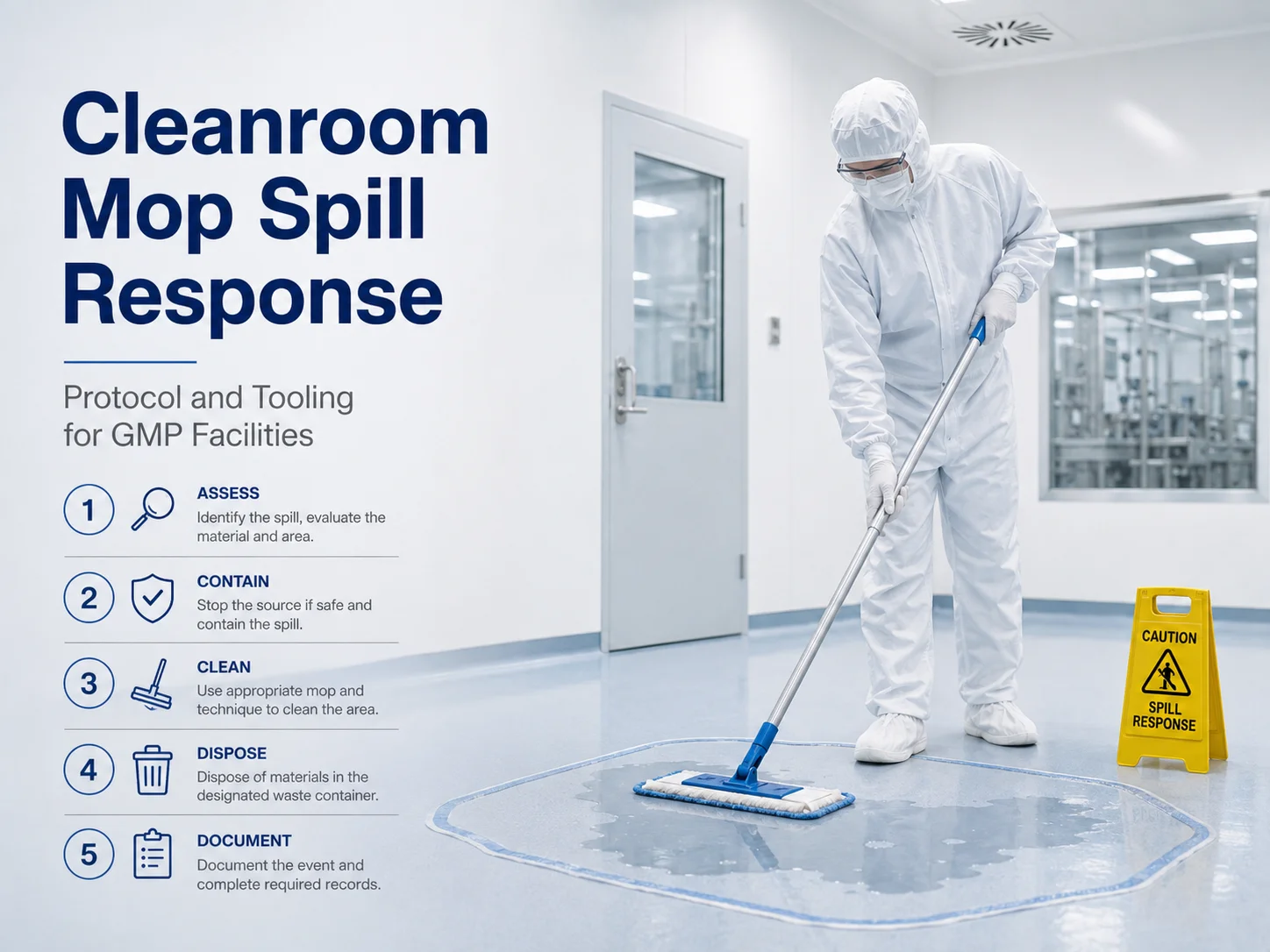
Waste classification — not mop type — is the single most important variable in the environmental impact of cleanroom mop disposal. A mop contaminated with a potent compound follows a fundamentally different disposal pathway than one used with routine disinfectants, regardless of whether it was designed as disposable or reusable.
The boundary between non-hazardous and hazardous waste for cleanroom mops depends on what the mop was exposed to during use:
| Waste Classification | Typical Contamination Scenario | Disposal Pathway | Cost Implication |
|---|---|---|---|
| Non-hazardous solid waste | Mops used with routine disinfectants (quaternary ammonium compounds, hydrogen peroxide, isopropyl alcohol) in standard cleanroom cleaning operations. No exposure to active pharmaceutical ingredients, potent compounds, or biohazard materials. | Standard waste to landfill or municipal waste-to-energy incineration. Follows local municipal solid waste regulations. | Lowest disposal cost. Often managed within the facility’s general waste contract. |
| Regulated medical waste | Mops exposed to biological agents, blood products, or used in biocontainment areas (BSL-2 or higher). Also applies to mops from vaccine manufacturing or cell therapy suites where biological contamination is present. | Autoclave treatment followed by landfill, or dedicated medical waste incineration. Must follow regulated medical waste handling, packaging, and manifest requirements. | Higher — medical waste disposal is typically 3-5 times more expensive per kilogram than non-hazardous solid waste disposal, depending on regional pricing. |
| Hazardous waste | Mops exposed to potent compounds, cytotoxic drugs, genotoxic materials, or solvents classified as hazardous under local regulations (e.g., RCRA in the US, Hazardous Waste Directive in the EU). Applies to mops used in areas where active pharmaceutical ingredients with occupational exposure limits (OELs) below a defined threshold are handled. | Hazardous waste incineration at a licensed facility. Requires hazardous waste manifest, licensed transporter, and documented chain of custody. May be subject to transboundary movement restrictions. | Highest — hazardous waste incineration costs are typically 5-10 times higher than non-hazardous waste disposal per kilogram. Transport, manifesting, and compliance documentation add further cost. |
Procurement insight: For facilities where a meaningful proportion of used mops fall into the hazardous or regulated medical waste categories, waste disposal cost becomes a significant total-cost-of-ownership driver. In these scenarios, any strategy that reduces the total mass of mop waste — including extending reusable mop life or optimizing change-out frequency — delivers a direct operational cost benefit alongside the environmental benefit.
Incineration with energy recovery (waste-to-energy): The most common disposal pathway for cleanroom mop waste in regions with developed waste-to-energy infrastructure (much of Western Europe, Japan, parts of North America). The polyester material in mop heads has a moderately high calorific value — approximately 20-25 MJ/kg, comparable to coal — meaning it can contribute to energy recovery in a well-operated incineration facility. However, the environmental benefit of energy recovery must be weighed against the CO2 emissions from combusting a fossil-fuel-derived material.
Landfill: The default pathway in regions without waste-to-energy infrastructure. Polyester is not biodegradable in landfill conditions — it will persist effectively indefinitely. Landfill also carries risks of leachate generation and methane emissions from the organic fraction of the waste stream (though the polyester mop material itself does not generate methane). From a climate perspective, landfill of polyester mops is generally considered a worse outcome than incineration with energy recovery, but the difference depends on the specific landfill’s gas capture system and the incinerator’s energy recovery efficiency.
Regulated medical waste incineration: Required for mops classified as regulated medical or hazardous waste. These incinerators operate at higher temperatures (typically above 1,000 degrees Celsius) than municipal waste incinerators and are subject to more stringent emissions controls. The higher temperature ensures destruction of organic contaminants but increases energy consumption per kilogram of waste processed.
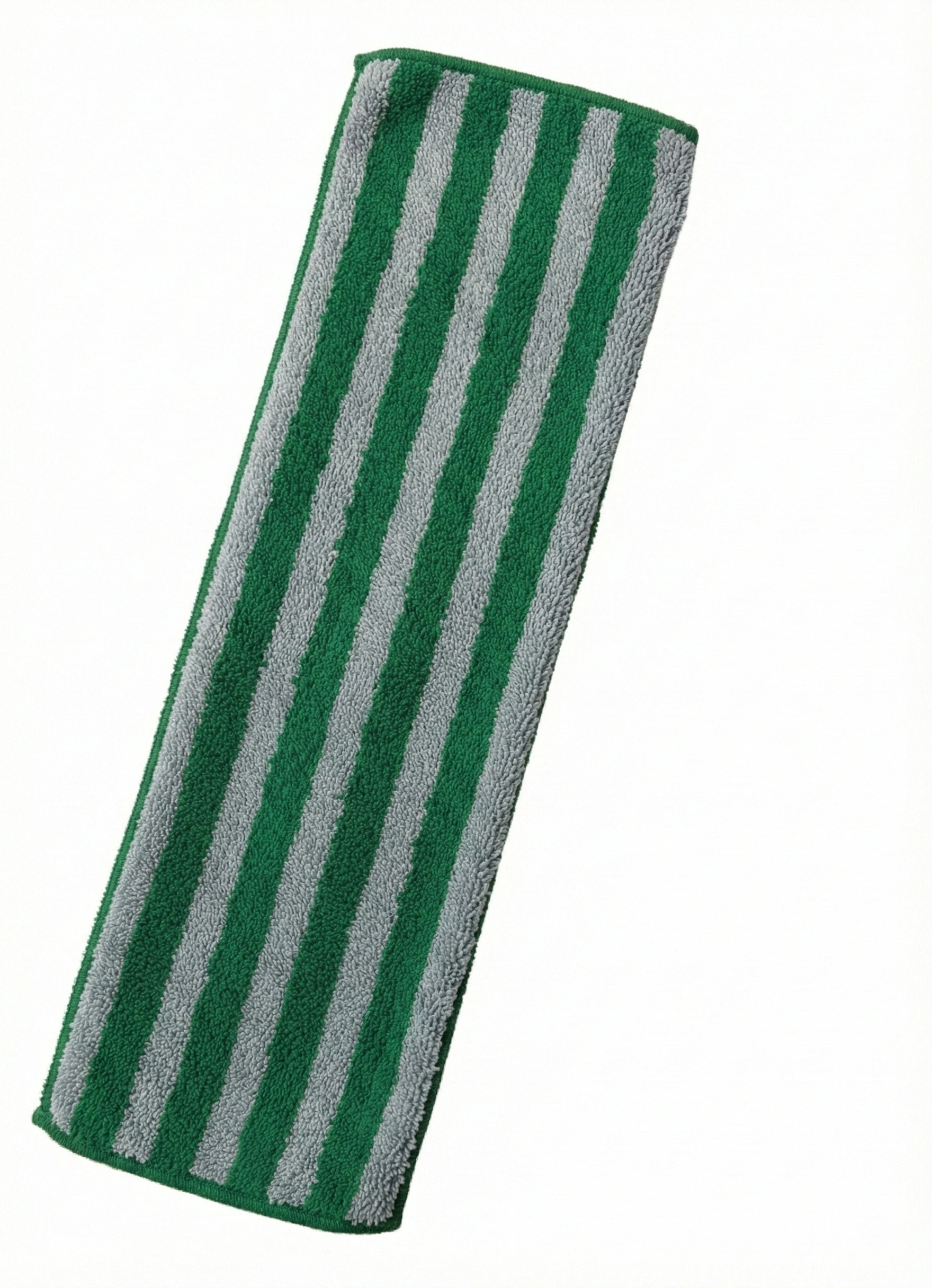
The single most effective waste reduction strategy for a reusable cleanroom mop program is extending the number of validated use cycles per mop head. If a facility’s current practice achieves approximately 50 cycles per mop head and can be extended to 75 cycles through better maintenance, the annual consumption of mop heads — and the associated raw material, manufacturing, and disposal burden — decreases by one-third. This is a more immediate and demonstrable environmental gain than switching mop types or pursuing unproven recycling claims.
Key practices that support extended service life include:
For a comprehensive guide to mop maintenance practices, inspection criteria, and validated cycle management, see the Guida alla manutenzione e alla longevità del mop per camere bianche.
The following framework is designed for procurement managers, facility managers, and sustainability leads who need actionable steps — not theoretical models. Each step is independent; a facility can implement the steps in any order based on what is achievable within its current operational constraints.
Before making any changes, measure what you currently use. For a defined period (e.g., one calendar quarter), record: total mop heads consumed (by type — disposable vs reusable, by cleanroom grade), average cycles per reusable mop head, disposal volume by waste classification (non-hazardous, medical, hazardous), and total disposal cost. This baseline makes improvement measurable.
Send a structured data request to your current cleanroom mop supplier(s) covering: raw material composition (fiber type, weight, any recycled content), manufacturing location and energy source, available end-of-life guidance, and any third-party environmental certifications (e.g., OEKO-TEX, bluesign, GRS for recycled content). Be prepared that many suppliers — including large ones — may not yet have comprehensive environmental data. This request itself signals to the supply chain that environmental transparency is becoming a procurement criterion.
The lowest-impact mop is the one you do not use. Before debating disposable vs reusable, examine whether current consumption volume is justified. Are mop heads being changed more frequently than the validated SOP requires? Are serviceable reusable heads being retired early due to cosmetic staining rather than functional degradation? A 10-15% reduction in unnecessary consumption delivers an immediate environmental benefit regardless of mop type.
Ensure that used mops are classified and segregated into the correct waste stream at the point of disposal — not retrospectively. Co-mingling non-hazardous mops with hazardous waste unnecessarily increases hazardous waste volume and cost. Clear labeling, color-coded disposal containers, and operator training on waste segregation criteria are low-cost, high-impact interventions.
If you use reusable mops with on-site or contracted laundry, commission an audit of the laundry process from an environmental perspective. Document: water consumption per kilogram of textiles laundered, energy source for water heating, detergent type and biodegradability, and wastewater treatment pathway. Optimize laundry parameters (load size, temperature, cycle duration) for the minimum conditions required to achieve the validated cleanliness standard — avoiding over-processing that wastes energy and degrades mop material.
If your facility is certified to ISO 14001 or preparing for certification, mop waste reduction should be documented as an environmental aspect with defined objectives and targets. For example: “Reduce cleanroom mop head consumption by 15% (measured in units per square meter of cleanroom area cleaned) within 12 months.” This creates organizational accountability beyond the individual procurement or facility manager.
When the next mop supply contract comes up for review or tender, add environmental criteria to the buyer evaluation framework. Weight environmental criteria appropriately — they should influence the decision but not override contamination control requirements. Suggested criteria: supplier has documented environmental policy (pass/fail), supplier provides material composition and origin data (scored), supplier provides end-of-life disposal guidance (scored), supplier has third-party environmental certification for raw materials (bonus).
Mop program environmental performance is not solely a procurement issue, a facility issue, or a QA issue — it is all three. Schedule a brief quarterly review involving procurement, facility operations, QA, and the sustainability/EHS lead to review the baseline metrics established in Step 1, track progress, and identify new improvement opportunities. This institutionalizes the sustainability discussion and prevents it from being deprioritized when operational pressures increase.
EU GMP Annex 1 (Manufacture of Sterile Medicinal Products) does not directly regulate the environmental impact of cleanroom consumables. Its focus is contamination control. However, Annex 1’s emphasis on validated, documented, and risk-based cleaning processes has an indirect environmental implication: a well-validated cleaning program generates fewer cleaning failures, fewer re-clean events, and less wasted consumable material. Conversely, an Annex 1 remediation response to a contamination event can consume a disproportionate volume of mops, wipes, and disinfectants in a short period — a spike in environmental impact that a well-designed preventive cleaning program helps avoid.
Additionally, Annex 1’s requirements for documented contamination control strategy (CCS) provide a natural structure within which environmental aspects of cleaning consumables can be recorded. Facilities that already maintain a CCS document can add an environmental considerations section without creating a new governance framework. For grade-specific mop selection that supports Annex 1 compliance, see the Guida alla selezione della qualità dei panni per camere bianche GMP.
ISO 14001 is the international standard for environmental management systems. It requires organizations to identify their environmental aspects and impacts, establish objectives and targets for improvement, and demonstrate continual improvement. Cleanroom mop programs can be identified as an environmental aspect under ISO 14001 — specifically under the categories of “waste generation” and “resource consumption.”
For a pharmaceutical facility certified to ISO 14001, the following mop-related environmental aspects may be relevant:
ISO 14001 certification auditors may ask to see evidence that these aspects have been identified, evaluated, and where significant, addressed through objectives and action plans. The practical steps framework in the previous section provides a ready structure for ISO 14001 documentation.
For pharmaceutical companies subject to mandatory ESG reporting — particularly under the EU Corporate Sustainability Reporting Directive (CSRD) or proposed SEC climate disclosure rules — cleanroom consumables fall within Scope 3 (Category 1: Purchased Goods and Services) emissions. Scope 3 reporting requires companies to estimate the upstream carbon footprint of purchased products.
In practice, the contribution of cleanroom mops to a large pharmaceutical company’s total Scope 3 emissions is likely to be small relative to categories such as purchased raw materials, capital goods, or business travel. However, two factors make mop-related ESG reporting relevant:
There is no universal answer. Disposable mops have a higher raw material consumption and solid waste impact per use. Reusable mops have higher water, detergent, and laundry energy consumption per use. The overall environmental outcome depends on facility-specific variables: how many cycles the reusable mop achieves, the laundry energy source, water scarcity in the region, and whether used mops are incinerated or landfilled. A facility-level assessment considering all these variables is the only valid approach. Claims that one type is categorically “greener” should be treated with skepticism.
In practice, very rarely. Most used cleanroom mops cannot be recycled through standard textile recycling streams for three reasons: (1) they are constructed from mixed materials (polyester fabric, binding tape, stitching thread) that are difficult to separate mechanically; (2) post-use chemical or biological contamination makes the material unacceptable to recyclers; and (3) even if uncontaminated, the small volumes involved (relative to consumer textile waste) make dedicated collection and recycling infrastructure economically unviable. If a supplier claims their mops are “recyclable,” ask them to specify: what recycling infrastructure exists, where it is located, whether contaminated material is accepted, and what the recycled output is used for. In most cases, the practical end-of-life pathway for cleanroom mops — disposable and reusable alike — is incineration or landfill.
Classification depends on what the mop was exposed to during use, not on the mop type. Mops used only with routine disinfectants (quaternary ammonium compounds, hydrogen peroxide, isopropyl alcohol) in standard cleanroom cleaning are generally classified as non-hazardous solid waste. Mops exposed to biological agents or used in biocontainment areas are regulated medical waste. Mops exposed to potent compounds, cytotoxic drugs, or hazardous solvents are hazardous waste and must be managed under applicable hazardous waste regulations. Facilities should have a documented waste classification procedure that covers all cleaning consumables, including mops. When in doubt, consult your facility’s EHS officer or waste management contractor.
No. EU GMP Annex 1 regulates contamination control for sterile medicinal product manufacturing. It does not contain requirements or guidance on the environmental impact of cleaning consumables. However, Annex 1’s emphasis on validated, documented, and risk-based cleaning processes has an indirect environmental benefit: a well-validated program generates fewer cleaning failures and less wasted material. Facilities can incorporate environmental considerations into their contamination control strategy (CCS) documentation if they choose to do so, but this is not an Annex 1 requirement.
At minimum, request: (1) raw material composition — fiber type(s), weight, any recycled content; (2) country of manufacture and, if available, the primary energy source used in the manufacturing facility; (3) packaging composition and recyclability; (4) end-of-life disposal recommendations; and (5) any third-party environmental certifications held by the product or manufacturing facility. Be prepared that many suppliers — including large ones — may not yet have comprehensive environmental data for cleanroom consumables. Start with what is available and document data gaps transparently in your ESG reporting.
As of 2026, no published, peer-reviewed lifecycle assessment specifically for cleanroom mops has been identified. Generic LCA data for polyester textiles exists in academic and industry databases, but this data does not account for cleanroom-specific factors: controlled manufacturing environments, sterilization processes (gamma, EtO, autoclave), cleanroom-grade laundering requirements, or hazardous waste disposal pathways. A facility that needs LCA data for ESG reporting should consider two approaches: (1) request product-specific environmental data from the supplier, acknowledging that comprehensive LCA data may not exist yet; or (2) commission a simplified screening LCA using generic textile data with conservative assumptions about cleanroom-specific adders. In either case, document the limitations of the data transparently.
For reusable mop programs: extend validated cycle counts through better maintenance (visual inspection, laundry process optimization, segregation by contamination level), audit consumption against SOP requirements to identify unnecessary change-outs, and verify that mop heads are retired based on functional condition rather than cosmetic staining or calendar age. For disposable mop programs: right-size packaging and order quantities to avoid expiry-related waste, audit whether mop heads are being changed more frequently than the validated cleaning protocol requires, and ensure correct waste segregation so that non-hazardous mops are not unnecessarily routed to hazardous waste disposal. In both cases, a baseline consumption audit is the necessary first step.
Sustainability should be a weighted criterion in procurement decisions — not the dominant criterion, but not ignored either. The hierarchy of procurement criteria for a GMP cleanroom mop remains: (1) contamination control performance — does the mop meet the technical requirements for the cleanroom grades being served?; (2) supply reliability and quality consistency — can the supplier deliver consistent product on a reliable schedule?; (3) total cost of ownership, including purchase price, disposal cost, and laundry cost; and (4) environmental performance, including supplier environmental data availability, material composition transparency, and waste reduction potential. Sustainability can serve as a tiebreaker between two technically equivalent options and should be incorporated into the supplier evaluation scorecard with a reasonable weighting (e.g., 10-15% of the total evaluation score).
MIDPOSI’s white cleanroom mop series is available in both sterile and non-sterile configurations, in 40g, 55g, and 65g weights. Whether your facility uses a disposable, reusable, or mixed mop strategy, our products are designed for structured contamination-control cleaning programs in pharmaceutical, biotech, and medical device cleanrooms. We provide material composition data to support your procurement evaluation and sustainability documentation.
Costruito per programmi strutturati di pulizia delle camere bianche in strutture farmaceutiche, biotecnologiche e di dispositivi medici.
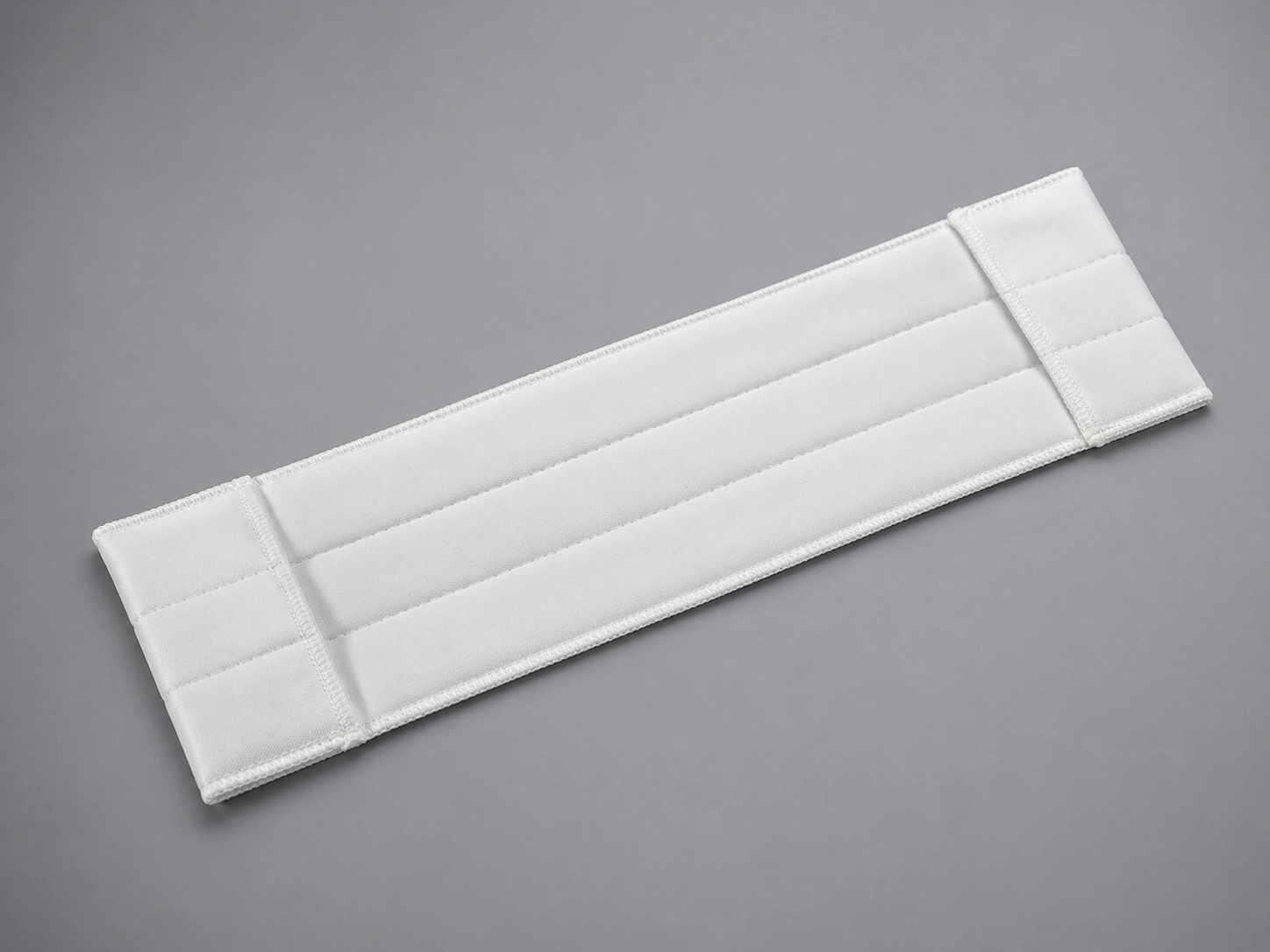
Cleanroom mops serve a contamination-control function first. Environmental sustainability should be evaluated as a secondary consideration. Reusable mop covers that are laundered and reprocessed according to validated SOPs may reduce single-use waste, but the facility’s contamination-control requirements take priority.
Recycling depends on the mop cover material (polyester, polyester-polyamide blend) and local recycling capabilities. Cleanroom mop covers that have been exposed to cleaning agents or disinfectants may not be suitable for standard recycling streams. Facilities should check with their waste management provider and review their environmental management plan.
The lifecycle depends on the mop cover material, cleaning frequency, disinfectant compatibility, and laundering process. Polyester mop covers may withstand more reprocessing cycles than microfiber blends under certain conditions. Facilities should track mop cover condition through visual inspection and replace covers when edge seal integrity, absorbency, or particle control degrades.
Yes. MIDPOSI offers both reusable and single-use cleanroom mop cover options. The choice between reusable and single-use should be evaluated based on the facility’s SOP, contamination-control strategy, risk assessment, and cleaning validation requirements.
Disposal procedures should follow the facility’s waste management SOP, environmental regulations, and contamination-control protocols. Mop covers used in higher-grade cleanroom areas may require different disposal handling than those from lower-grade support zones. Facilities should document disposal procedures in their cleaning SOP.