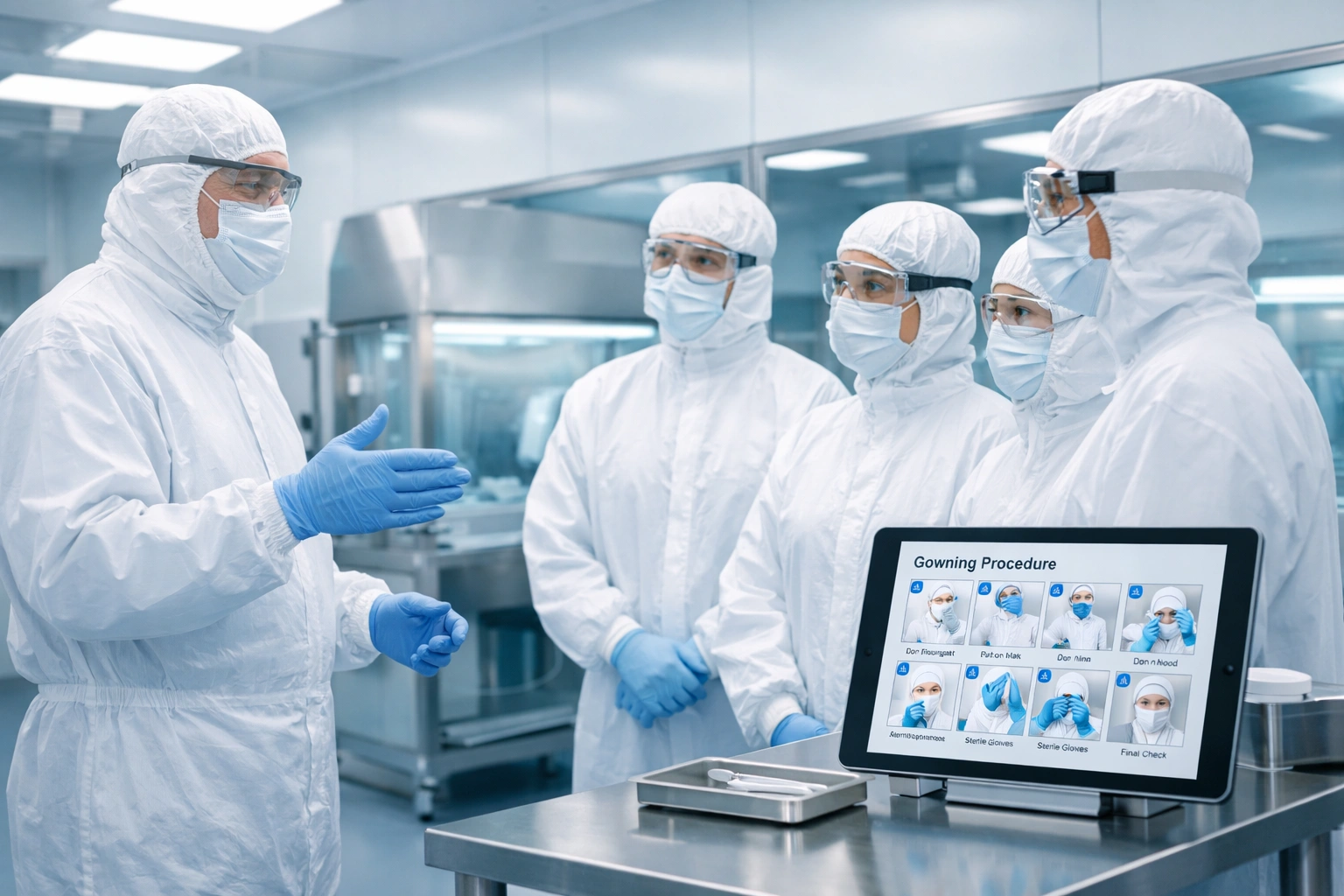
Perché la formazione del personale è un sistema fondamentale di controllo delle camere bianche
Le persone sono essenziali nelle operazioni farmaceutiche, biotecnologiche e nelle camere bianche con specifiche elevate, ma introducono anche particelle, microbi, fibre e variabilità comportamentale. Anche quando una struttura dispone di un rigoroso controllo HVAC, di una pulizia convalidata e di sistemi di vestizione conformi, le prestazioni possono comunque fallire se il personale non è adeguatamente formato.
Ecco perché la moderna formazione in camera bianca deve andare oltre l’orientamento. Dovrebbe definire chi necessita di formazione, quali competenze sono richieste, come viene dimostrata la qualifica e quando deve avvenire la riqualificazione.
Personnel training also connects directly with broader contamination control elements such as vestizione per camere bianche, airflow pattern visualization, monitoraggio ambientale, ciclo di vita di convalida, cleaning SOPs, E disponibilità all'audit.
| Area Formazione | Perché è importante | Rischio se debole |
|---|---|---|
| Vestizione | Prevents skin flakes, fibers, and microbial shedding from entering controlled space | Frequent contamination events at entry stage |
| Aseptic behavior | Reduces unnecessary movement, interventions, and surface contact | Higher operator-linked contamination risk |
| Material handling | Protects clean-to-dirty flow and transfer discipline | Cross-contamination and process disruption |
| Deviation awareness | Improves early recognition and response to abnormal events | Delayed escalation and weak investigations |
| Riqualificazione | Confirms skills remain current and repeatable over time | Competency drift and audit findings |
What GMP Expectations Require From Personnel Training
A strong cleanroom training system should reflect risk level, room classification, operator role, and process criticality. Training content should not be identical for all personnel. A sterile filling operator and a maintenance visitor do not present the same contamination risk and therefore should not receive the same qualification package.
Core expectations typically include:
- Initial induction before cleanroom access
- Role-based training by process and zone
- Practical gowning assessment
- Aseptic behavior and intervention discipline
- Understanding of contamination pathways
- Periodic retraining and requalification
- Documented approval and traceable training status
Hai bisogno di supporto per camere bianche predisposte per GMP?
Esplora le soluzioni Midposi progettate per ambienti farmaceutici e controllati, compresi indumenti per camere bianche e supporto per prodotti per il controllo della contaminazione.
What a Cleanroom Personnel Training SOP Should Include
An audit-ready SOP should define responsibilities, training content, qualification criteria, records, and retraining triggers. It should also clearly distinguish between theoretical training and practical qualification.
| Sezione SOP | What to Include |
|---|---|
| Scopo | Explain how training supports contamination control, GMP compliance, and personnel qualification |
| Ambito | Define which personnel are covered: operators, QA, engineering, maintenance, contractors, visitors |
| Responsabilità | Assign ownership to QA, production, training coordinators, and department supervisors |
| Training matrix | Specify required modules by role, room grade, and access level |
| Qualification method | Describe written evaluation, gowning observation, behavior assessment, and approval process |
| Requalification frequency | Define intervals and event-based retraining triggers |
| Record | State how completion, approval, revision control, and traceability are maintained |
| Risposta di deviazione | Define retraining actions after breaches, failures, or contamination-related events |
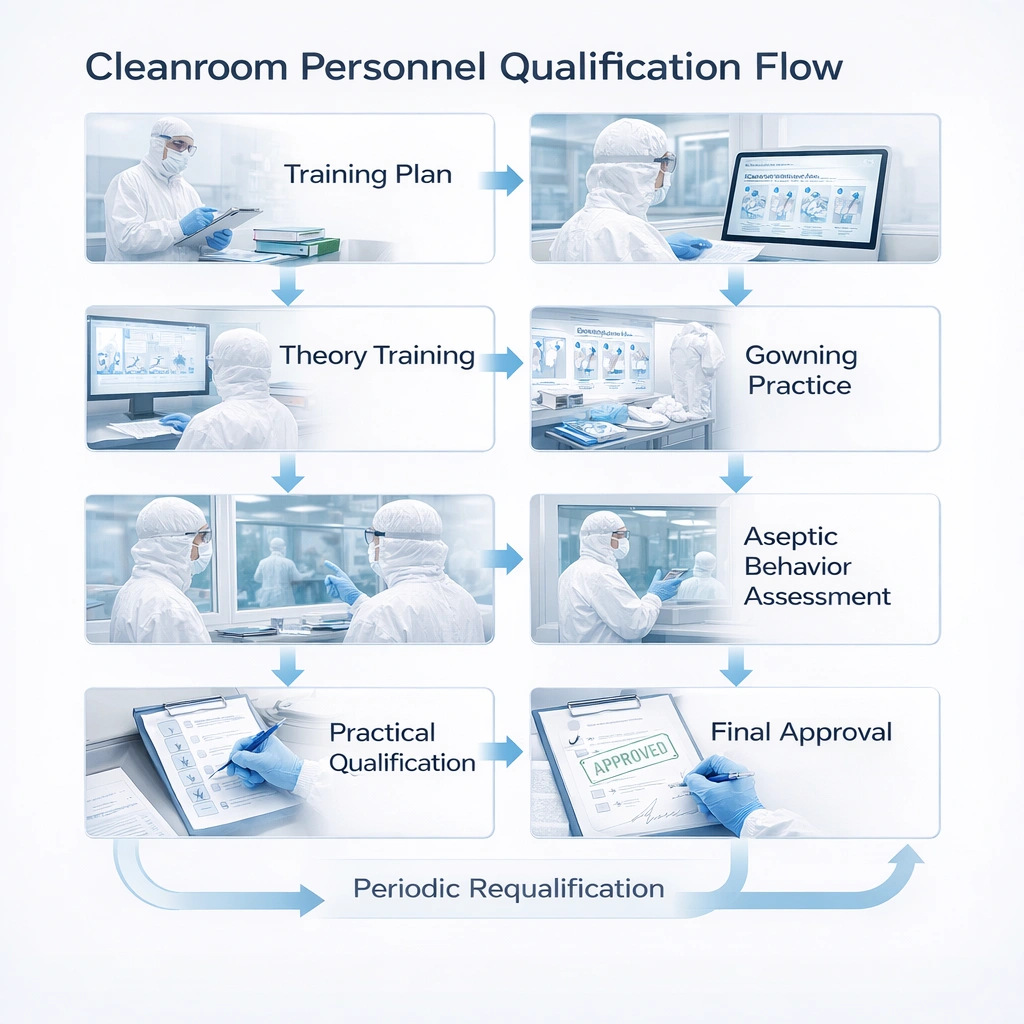
Typical Personnel Qualification Flow
Qualification should follow a consistent sequence rather than a one-time presentation. The strongest programs move from knowledge to demonstration to controlled approval.
Visual Explanation: Qualification Flow
Recommended training sequence:
- Training plan assignment
- Theory training on contamination control
- Gowning instruction and supervised practice
- Aseptic behavior observation
- Practical qualification in simulated or controlled environment
- Final approval for room access or process participation
- Periodic requalification and deviation-triggered retraining
- Do not approve personnel based only on classroom attendance
- Use observation-based signoff for gowning and movement discipline
- Separate temporary access training from full operator qualification
- Rivalutare dopo importanti modifiche alla SOP, cambiamenti di stanza o risultati dell'indagine
Su cosa dovrebbe essere formato il personale
1. Fondamenti di contaminazione
Il personale dovrebbe capire da dove proviene la contaminazione, in che modo gli esseri umani contribuiscono ad essa e in che modo il comportamento influisce sul controllo della stanza. Ciò contestualizza le norme e migliora la qualità della conformità.
2. Veste e comportamento all'ingresso
La formazione dovrebbe includere sequenziamento, manipolazione degli indumenti, cambio dei guanti, flusso di ingresso e disciplina senza contatto. Questo dovrebbe allinearsi strettamente con il tuo programma di vestizione e il processo di gestione degli indumenti.
3. Tecnica asettica e condotta nelle camere bianche
Gli operatori devono sapere come muoversi, raggiungere, girare, comunicare e intervenire senza interrompere il flusso d'aria controllato o entrare in contatto con superfici critiche.
4. Regole specifiche della stanza
Different areas may have different restrictions, transfer protocols, and access conditions. Personnel should be qualified for the zones they actually enter.
5. Deviation and Incident Awareness
Training must explain what to do after a gown breach, glove touch, dropped item, unexpected movement, or environmental alert.
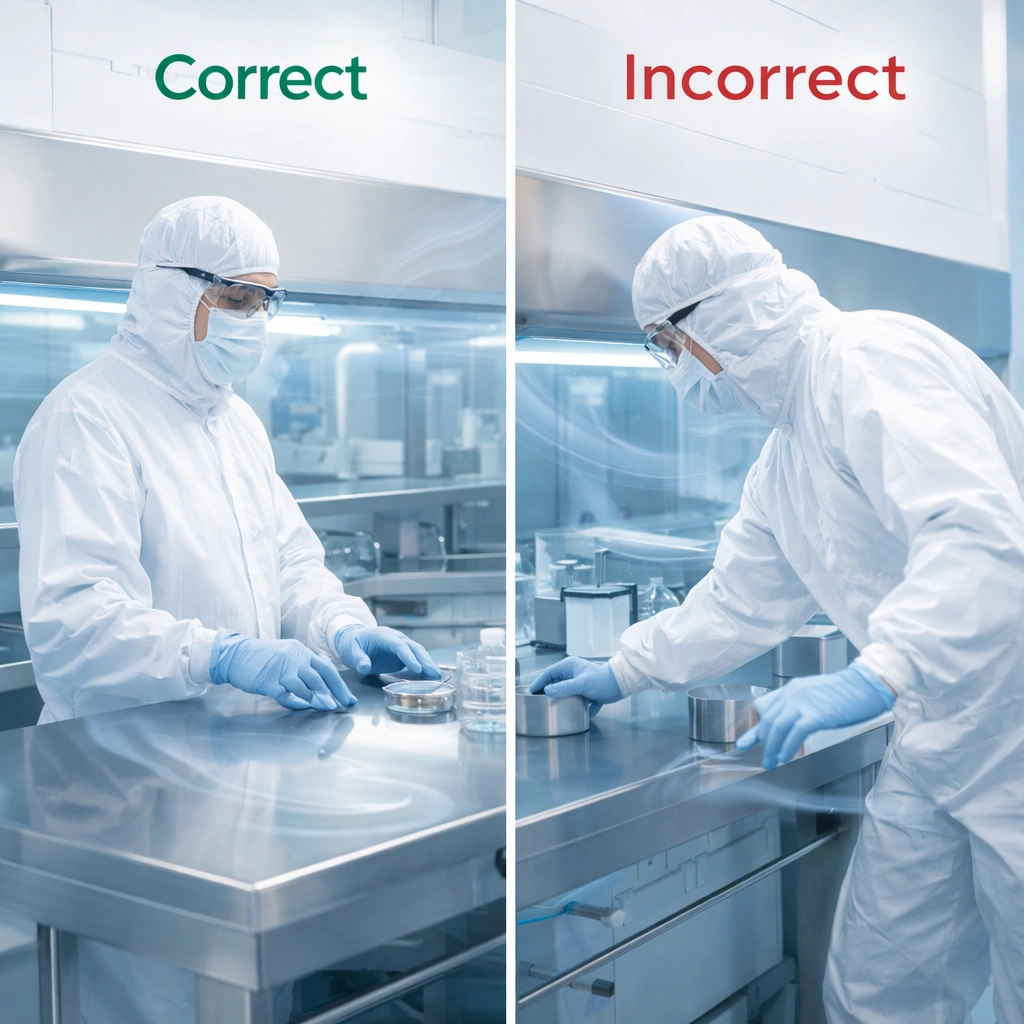
Correct vs Incorrect Personnel Behavior
Uno degli strumenti di allenamento più efficaci è il contrasto visivo. Il personale comprende le aspettative più velocemente quando può confrontare comportamenti accettabili con errori comuni.
Spiegazione visiva: comportamento corretto o scorretto
Le immagini dell'addestramento devono confrontare il movimento lento e controllato, il corretto posizionamento delle mani e la tecnica di trasferimento pulita con la corsa, le rotazioni non necessarie, il contatto con superfici non sterili o il blocco del flusso d'aria critico.
| Pratica corretta | Pratica errata | Perché è importante |
|---|---|---|
| Muoviti lentamente e deliberatamente | Muoviti rapidamente o bruscamente | Il movimento rapido aumenta la generazione di particelle e i disturbi del flusso d’aria |
| Tenere le mani all'interno dell'area di lavoro addestrata | Raggiungere inutilmente aree critiche | Riduce il rischio di contatto e contaminazione |
| Segui percorsi di trasferimento definiti | Scorciatoia del materiale o del flusso di personale | Protegge la separazione tra pulito e sporco |
| Inoltrare immediatamente eventuali violazioni | Ignora errori minori o correggiti automaticamente in silenzio | Migliora la qualità delle indagini e il controllo dei rischi |
Quando è opportuno attivare la riqualificazione e la riqualificazione
La riqualificazione non dovrebbe mai limitarsi a un evento del calendario annuale. Dovrebbe inoltre essere innescato da segnali di rischio operativo e da eventi legati alla qualità.
- Riqualificazione periodica programmata
- Revisione principale della SOP
- Classificazione della stanza o modifica del processo
- Vestizione o valutazione comportamentale fallita
- Escursione EM legata all'uomo o risultato di indagini
- Lunga assenza dal lavoro in camera bianca
- Deviazioni minori ripetute che indicano una deriva delle competenze
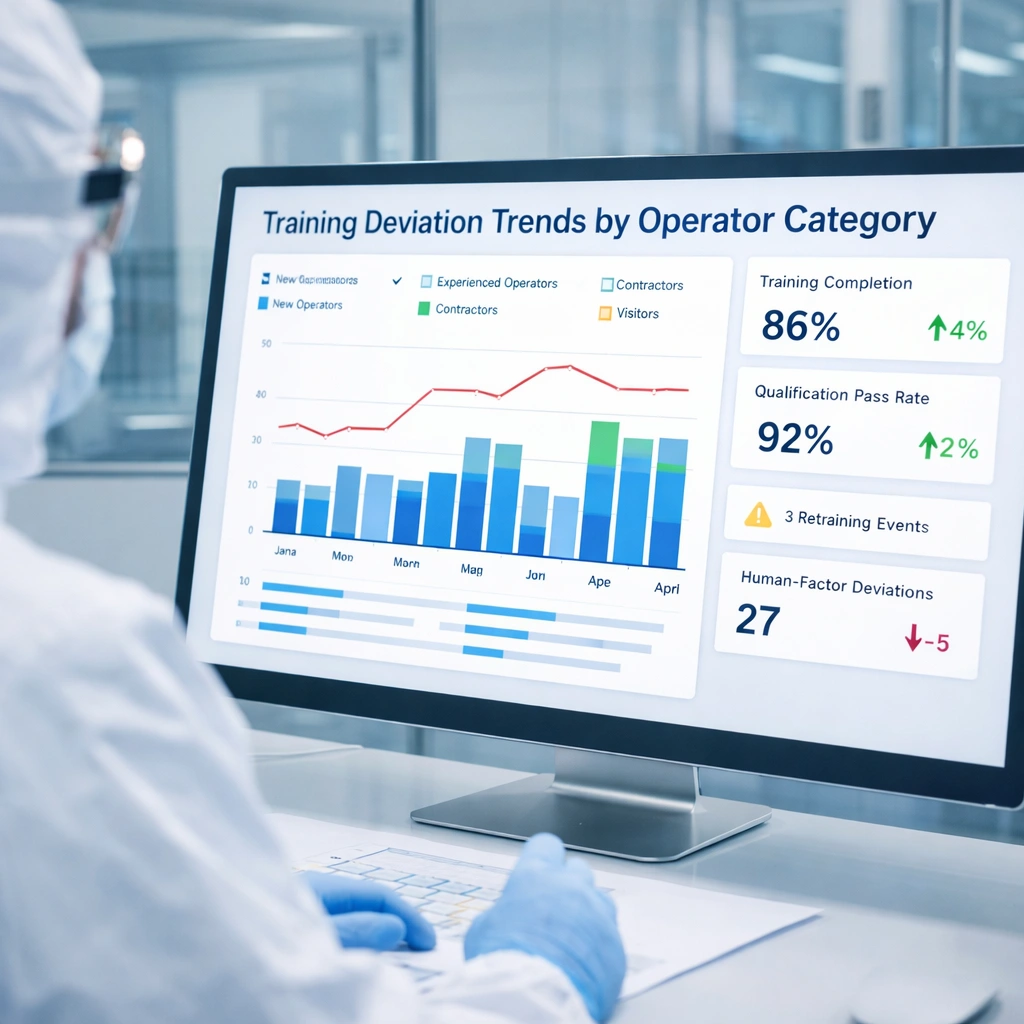
Spiegazione visiva: andamento della deviazione dell'allenamento
A dashboard can help QA review training-related deviations by department, operator seniority, room grade, or incident type. This makes retraining more targeted and data-based.
What Auditors Commonly Look For
During inspections, training systems are often reviewed not only as documents but as evidence of control. Weak traceability, generic content, or poor practical qualification can quickly undermine confidence in the broader contamination control strategy.
Auditors often ask for:
- Role-based training matrix
- Latest approved training SOPs
- Records for specific named operators
- Evidence of practical qualification
- Retraining records after deviations
- Prova che i contenuti della formazione corrispondono alle procedure attuali
Modello di migliori pratiche per un programma di formazione ad alte prestazioni
I sistemi di formazione per camere bianche più efficaci condividono diverse caratteristiche:
- Contenuti basati sul rischio per ruolo e grado della camera bianca
- Forte integrazione con vestirsi, pulizia, monitoraggio ambientalee sistemi di deviazione
- Qualifiche pratiche, non solo registrazioni di presenze
- Aggiornamenti di routine e riqualificazione basata su eventi
- Strumenti didattici visivi che mostrano comportamenti giusti e sbagliati
- Documentazione chiara e tracciabilità rapida durante gli audit
La formazione non dovrebbe essere isolata dalle operazioni. Dovrebbe far parte del sistema di controllo della contaminazione vivente.
Costruisci un ambiente per camere bianche più pronto per la verifica
Aggiorna il tuo sistema di controllo della contaminazione con soluzioni per camere bianche predisposte per GMP progettate per ambienti farmaceutici e controllati.
Domande frequenti
Che cos'è la formazione del personale delle camere bianche?
La formazione del personale delle camere bianche è un programma documentato che insegna al personale come comportarsi, vestirsi, muoversi e lavorare all'interno di ambienti controllati senza compromettere il controllo della contaminazione.
Perché la formazione del personale è importante nelle camere bianche GMP?
Perché le persone sono una delle principali fonti di contaminazione. Una formazione adeguata riduce la dispersione di particelle, una tecnica asettica inadeguata, movimenti errati e il rischio di deviazione.
La formazione sulle camere bianche richiede una qualifica pratica?
SÌ. La sola formazione in aula non è sufficiente. L'abbigliamento, il comportamento e le azioni specifiche del processo dovrebbero essere osservati e approvati nella pratica.
Con quale frequenza il personale dovrebbe essere riqualificato?
La riqualificazione è solitamente periodica, ma dovrebbe anche essere innescata da deviazioni, modifiche alla SOP, assenza prolungata, qualificazione fallita o indagini sulla contaminazione.
Chi dovrebbe essere incluso nella formazione sulle camere bianche?
Gli operatori, il personale addetto al controllo qualità, i supervisori, il personale di manutenzione, gli appaltatori e qualsiasi visitatore che entra in aree controllate devono ricevere una formazione adeguata in base al livello di accesso e al rischio.
Quali documenti supportano un sistema di formazione predisposto per l’audit?
I record chiave includono SOP di formazione, matrice di formazione, registrazioni di presenze e qualifiche, cronologia delle riqualificazioni e documentazione di riqualificazione collegata alle deviazioni.
Come si collega la formazione del personale al monitoraggio ambientale?
Le escursioni di monitoraggio ambientale hanno spesso una componente umana. La formazione aiuta a ridurre gli eventi di contaminazione evitabili e supporta una risposta migliore quando si verificano risultati anomali.
La formazione in camera bianca riguarda solo l'abbigliamento?
No. La vestizione è solo una parte. Una formazione efficace riguarda anche la consapevolezza della contaminazione, il comportamento asettico, il controllo del movimento, le pratiche di trasferimento e la risposta alle deviazioni.