
I panni sterili per camere bianche per lavorazioni asettiche sono panni monouso o riutilizzabili rigorosamente convalidati che raggiungono il livello di garanzia di sterilità SAL 10⁻⁶ (livello di garanzia della sterilità) attraverso metodi di sterilizzazione convalidati con conferma dell'indicatore biologico.
I panni sterili per camere bianche per la lavorazione asettica sono una parte fondamentale delle operazioni delle camere bianche conformi alle norme GMP e ISO. Supportano il controllo della contaminazione, procedure di pulizia convalidate e la garanzia della sterilità in ambienti di produzione asettici.
I panni sterili per camere bianche sono una parte fondamentale dei programmi di controllo della contaminazione conformi alle GMP.
Le aspettative di FDA, EMA e EU GMP Annex 1 richiedono sterilità, tracciabilità e documentazione convalidate.
Il monitoraggio regolare e la verifica della sterilità sono essenziali per mantenere la conformità e il controllo del processo.
La formazione del personale e la disciplina procedurale sono necessarie per garantire la corretta manipolazione e utilizzo del panno asettico.
La gestione delle deviazioni, i sistemi CAPA e le registrazioni pronte per l'audit aiutano a promuovere il miglioramento continuo.

Mop sterili per camere bianche per lavorazioni asettiche sono mop riutilizzabili monouso o rigorosamente validati che raggiungono il livello di garanzia di sterilità SAL 10⁻⁶ (Sterility Assurance Level) attraverso metodi di sterilizzazione validati con conferma dell'indicatore biologico. Secondo l'allegato 1 delle GMP dell'UE e le linee guida della FDA, i panni sterili utilizzati nelle zone critiche di grado A (ISO 5) richiedono irradiazione gamma o sterilizzazione in autoclave convalidata, imballaggio con barriera sterile, tracciabilità basata sul lotto e verifica documentata della sterilità tramite indicatori biologici. I panni sterili riducono il rischio di contaminazione da riutilizzo e garantiscono sterilità per la produzione asettica in cui la sterilità del prodotto non è negoziabile.
Nella lavorazione farmaceutica asettica, un panno compromesso o una procedura di pulizia non convalidata possono comportare la perdita di lotti, rischi per la sicurezza del paziente e conseguenze normative. La maggior parte delle strutture comprende il concetto, ma poche dispongono di un quadro completo di garanzia della sterilità che integri la scienza dei materiali, la convalida della sterilizzazione, l'integrità dell'imballaggio e il monitoraggio dell'utilizzo.
Questo articolo fornisce un quadro di garanzia della sterilità completo e pronto per l'implementazione per i mop per il trattamento asettico, un argomento critico che molti concorrenti affrontano solo a livello di descrizione di base del prodotto piuttosto che da una prospettiva di eccellenza operativa e controllo della contaminazione.
Come discusso nel nostro Guida ai panni usa e getta e riutilizzabili per camere bianche, la garanzia della sterilità richiede la comprensione dell'intero ciclo di vita, dalla selezione dei materiali alla sterilizzazione convalidata, fino all'uso asettico e alla tracciabilità.
| Standard | Requisito di grado A (ISO 5). | Prove richieste | Frequenza |
|---|---|---|---|
| Allegato GMP UE 1.5 | Sterilità dimostrabile | Conferma BI | Per uso |
| Guida alla lavorazione asettica FDA | Metodo di sterilizzazione convalidato | Rapporto di convalida | Per lotto/mocio |
| USP <797> | Garanzia di sterilità | Certificato di analisi | Per lotto |
| Palmare TR13 | Programma di mantenimento della sterilità | Monitoraggio dei dati | In corso |
┌─────────────────────────────────────────────────────────────────────┐
│              STERILITY ASSURANCE LEVEL (SAL) EXPLAINED             │
├─────────────────────────────────────────────────────────────────────┤
│  WHAT IS SAL 10⁻⁶?                                                 │
│  • Probability of finding viable microorganism: 1 in 1,000,000    │
│  • Mathematical notation: 10⁻⁶                                    │
│  • Required for aseptic processing and terminally sterilized       │
│    products                                                        │
│                                                                     │
│  HOW IS IT ACHIEVED?                                               │
│  • Method: Gamma irradiation (25-50 kGy) OR ETO (37-63°C)         │
│  • Validation: Biological indicator (BI) showing no growth        │
│  • Material compatibility: Must withstand sterilization without    │
│    degradation                                                     │
│  • Packaging: Maintains sterility until use                        │
│                                                                     │
│  DOCUMENTATION REQUIRED                                            │
│  • Sterilization certificate from supplier                         │
│  • Lot number traceability                                         │
│  • BI confirmation records                                         │
│  • Validation data for facility method                             │
│                                                                     │
│  STERILITY ASSURANCE LEVELS                                        │
│  • SAL 10⁻⁶: Terminal sterilization (Grade A critical zone)       │
│  • SAL 10⁻³: High-level disinfection (Grade B)                    │
│  • SAL 10⁻⁴: Sanitization (Grade C)                               │
└─────────────────────────────────────────────────────────────────────┘
| Metodo | Temperatura | Dose/Tempo | Efficacia | Compatibilità dei materiali | Verifica |
|---|---|---|---|---|---|
| Irradiazione gamma | N / A | 25-50 kGy | ≥6 log, SAL 10⁻⁶ | Tutti i materiali | Certificato BI |
| Autoclave (vapore) | 121-134°C | 15-30 minuti a 15 psi | ≥6 log, SAL 10⁻⁶ | Compatibile con poliestere | BI per ciclo |
| ETO (ossido di etilene) | 37-63°C | 3-12 ore + 48 ore di aerazione | ≥6 log, SAL 10⁻⁶ | Tutti i materiali | Certificato BI |
| Calore secco | 160-180°C | 2-4 ore | ≥4 log, SAL 10⁻⁶ | Materiali limitati | Certificato BI |
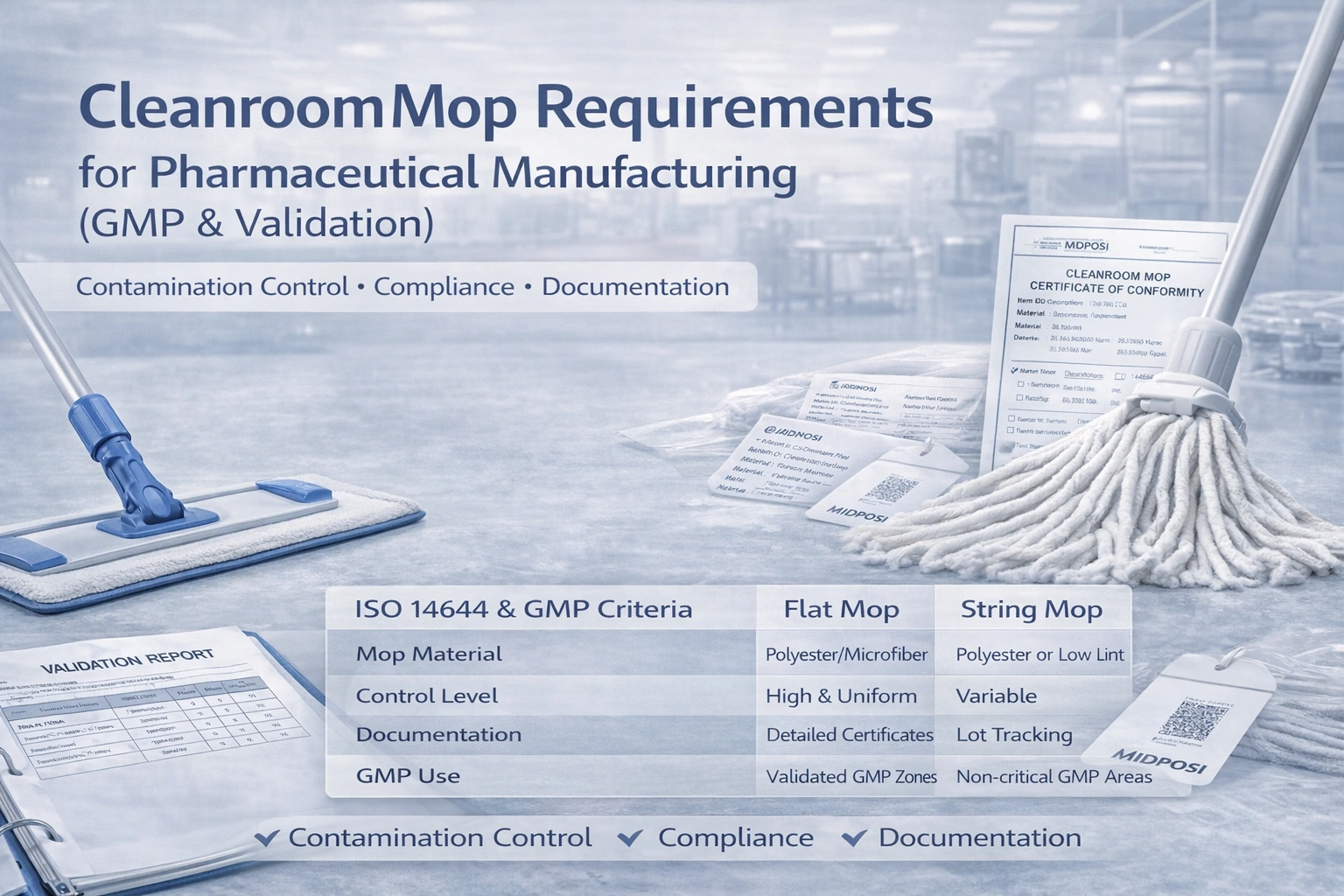
Consigliato per il grado A:
┌─────────────────────────────────────────────────────────────────────┐
│            GAMMA IRRADIATION FOR ASEPTIC MOPS FRAMEWORK            │
├─────────────────────────────────────────────────────────────────────┤
│  IRRADIATION PARAMETERS                                            │
│  • Dose range: 25-50 kGy                                           │
│  • Source: Cobalt-60 or Cesium-137                                 │
│  • Effect: SAL 10⁻⁶ sterility achieved                            │
│  • Penetration: Through entire mop assembly                        │
│  • Temperature rise: Minimal during irradiation                    │
│                                                                     │
│  MATERIAL CONSIDERATIONS                                           │
│  • Polyester: Excellent (maintains integrity)                      │
│  • Microfiber: Good (minor degradation at high dose)               │
│  • Blends: Variable (validate per material)                        │
│  • Handles: Must be irradiation-compatible                         │
│                                                                     │
│  VALIDATION PROTOCOL                                               │
│  ☐ Supplier BI certificate attached to each package batch          │
│  ☐ BI type specified                                               │
│  ☐ BI population: ≥10⁶ spores                                      │
│  ☐ D-Value: ≥10⁶ (10⁻⁶)                                           │
│  ☐ Incubation: 30 days at 55-60°C                                  │
│  ☐ Result: No growth required for acceptance                       │
│                                                                     │
│  PACKAGING INTEGRITY                                               │
│  ☐ Sterile barrier packaging                                       │
│  ☐ Sealed outer packaging                                          │
│  ☐ Maintain sterility indicator visibility                         │
│  ☐ No damage or breach detected                                    │
│                                                                     │
│  CERTIFICATE VERIFICATION                                          │
│  ☐ Certificate reviewed against irradiation parameters             │
│  ☐ Lot number cross-referenced                                     │
│  ☐ Valid through date confirmed                                    │
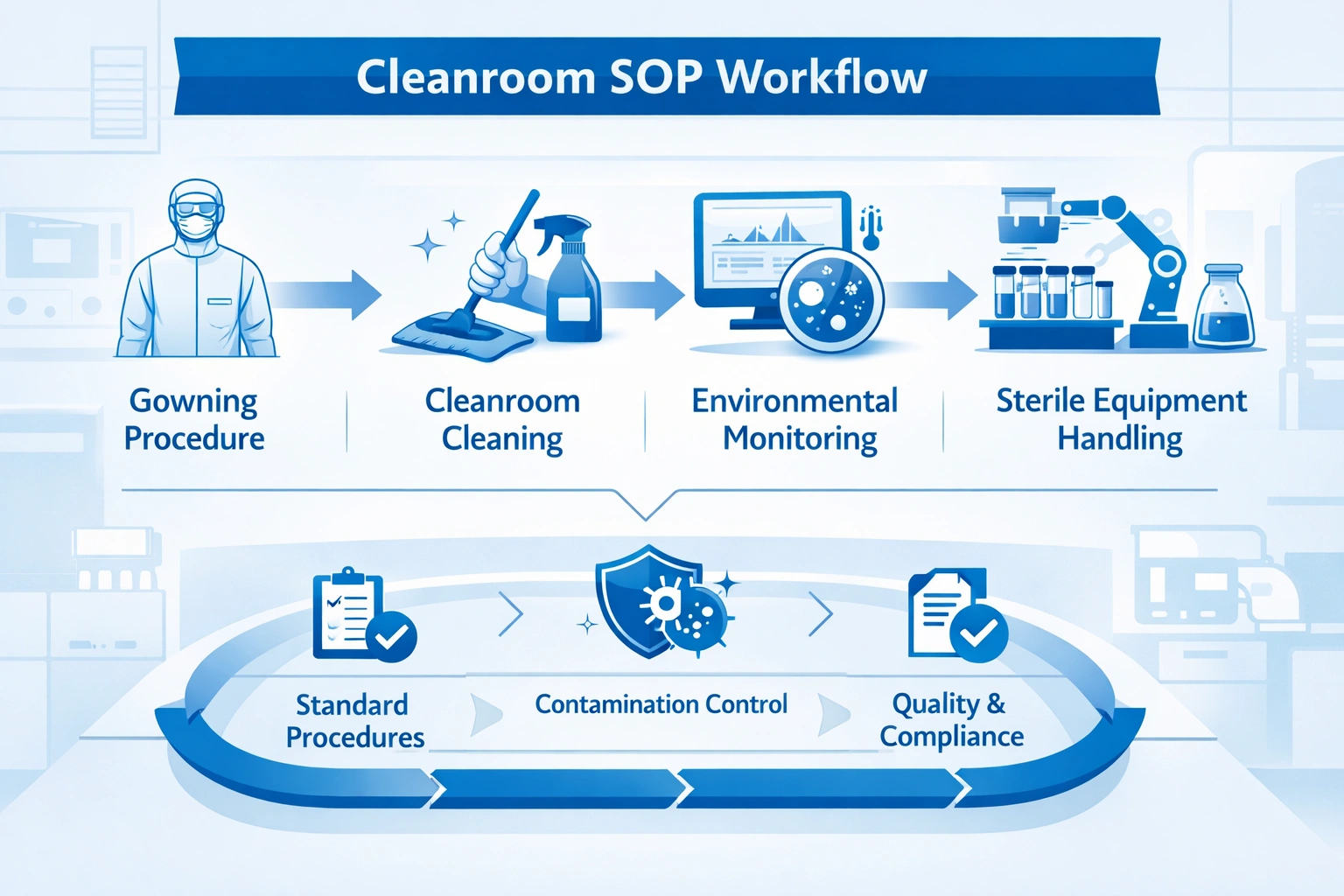
└─────────────────────────────────────────────────────────────────────┘
| Elemento di imballaggio | Requisito | Controllo critico | Verifica |
|---|---|---|---|
| Barriera primaria | Doppia busta sterile o contenitore sigillato | Nessun rilevamento di violazioni | Ispezione visiva |
| Imballaggio esterno | Strato protettivo antistrappo | Integrità fisica | Prova di integrità della tenuta |
| Indicatore di sterilità | Visibile e accessibile | Conferma l'integrità | Verifica del cambiamento di colore |
| Tracciabilità del lotto | Numero di lotto univoco su tutte le unità | Tracciabilità | Scansione/verifica |
| Formato pronto per l'uso | Accesso rapido senza contaminazione | Rischio di contenimento | Protocollo di trasferimento asettico |
| Scadenza | Valido fino alla data visualizzata | Sterilità limitata nel tempo | Monitoraggio della data |
Procedura critica per le zone di grado A:
┌─────────────────────────────────────────────────────────────────────┐
│           ASEPTIC MOP TRANSFER PROTOCOL (GRADE A)                  │
├─────────────────────────────────────────────────────────────────────┤
│  PRE-TRANSFER PREPARATION                                          │
│  ☐ Personnel in Grade A gowning complete                           │
│  ☐ Gloves sanitized and donned                                     │
│  ☐ Transfer area validated as clean                                │
│  ☐ Mop staging area prepared                                       │
│  ☐ Tools and materials ready                                       │
│                                                                     │
│  PHASE 1: PACKAGING OPENING                                        │
│  ☐ Outer packaging inspected for integrity                         │
│  ☐ No damage, tears, or breaches detected                          │
│  ☐ Sterility indicator verified                                    │
│  ☐ Opened with sterile scissors or tool                            │
│                                                                     │
│  PHASE 2: PRIMARY BARRIER REMOVAL                                  │
│  ☐ Inner sterile bag exposed within clean air                      │
│  ☐ Mop immediately removed with sterile forceps                    │
│  ☐ Transferred to sterile holding container                        │
│  ☐ Container sealed immediately                                    │
│                                                                     │
│  PHASE 3: ASEPTIC TRANSFER                                         │
│  ☐ Mop transported via pass-through or direct transfer             │
│  ☐ No exposure to non-aseptic environment                          │
│  ☐ Received by Grade A operator                                    │
│  ☐ Transfer documented: Time, Mop ID, Lot #, Operators             │
│                                                                     │
│  PHASE 4: DOCUMENTATION                                            │
│  ☐ Transfer log updated                                            │
│  ☐ Sterility indicator recorded                                    │
│  ☐ Any discrepancies documented and investigated                   │
└─────────────────────────────────────────────────────────────────────┘
┌─────────────────────────────────────────────────────────────────────┐
│           STERILE MOP LOT TRACEABILITY FRAMEWORK                   │
├─────────────────────────────────────────────────────────────────────┤
│  SUPPLIER LOT INFORMATION                                          │
│  ☐ Supplier name                                                   │
│  ☐ Supplier lot #                                                  │
│  ☐ Manufacturing date                                              │
│  ☐ Sterilization date                                              │
│  ☐ Irradiation dose and method                                     │
│  ☐ Sterility certificate #                                         │
│  ☐ Valid through                                                   │
│                                                                     │
│  RECEIVING VERIFICATION                                            │
│  ☐ Certificate matches shipment                                    │
│  ☐ Lot number matches certificate                                  │
│  ☐ Dose within specified range                                     │
│  ☐ Sterility indicator verified                                    │
│  ☐ Packaging integrity confirmed                                   │
│                                                                     │
│  USAGE TRACKING SYSTEM                                             │
│  ☐ Unique mop ID per unit                                          │
│  ☐ Use date / operator / zone / purpose                            │
│  ☐ Disposal method documented                                      │
│                                                                     │
│  DISPOSAL / REPLACEMENT TRACKING                                   │
│  ☐ Disposal date                                                   │
│  ☐ Replacement mop ID                                              │
│  ☐ Disposal reason documented                                      │
│                                                                     │
│  AUDIT TRAIL                                                       │
│  ☐ Complete record from receipt to disposal                        │
│  ☐ Audit-ready for inspection                                      │
│  ☐ Retention period: 5 years minimum                               │
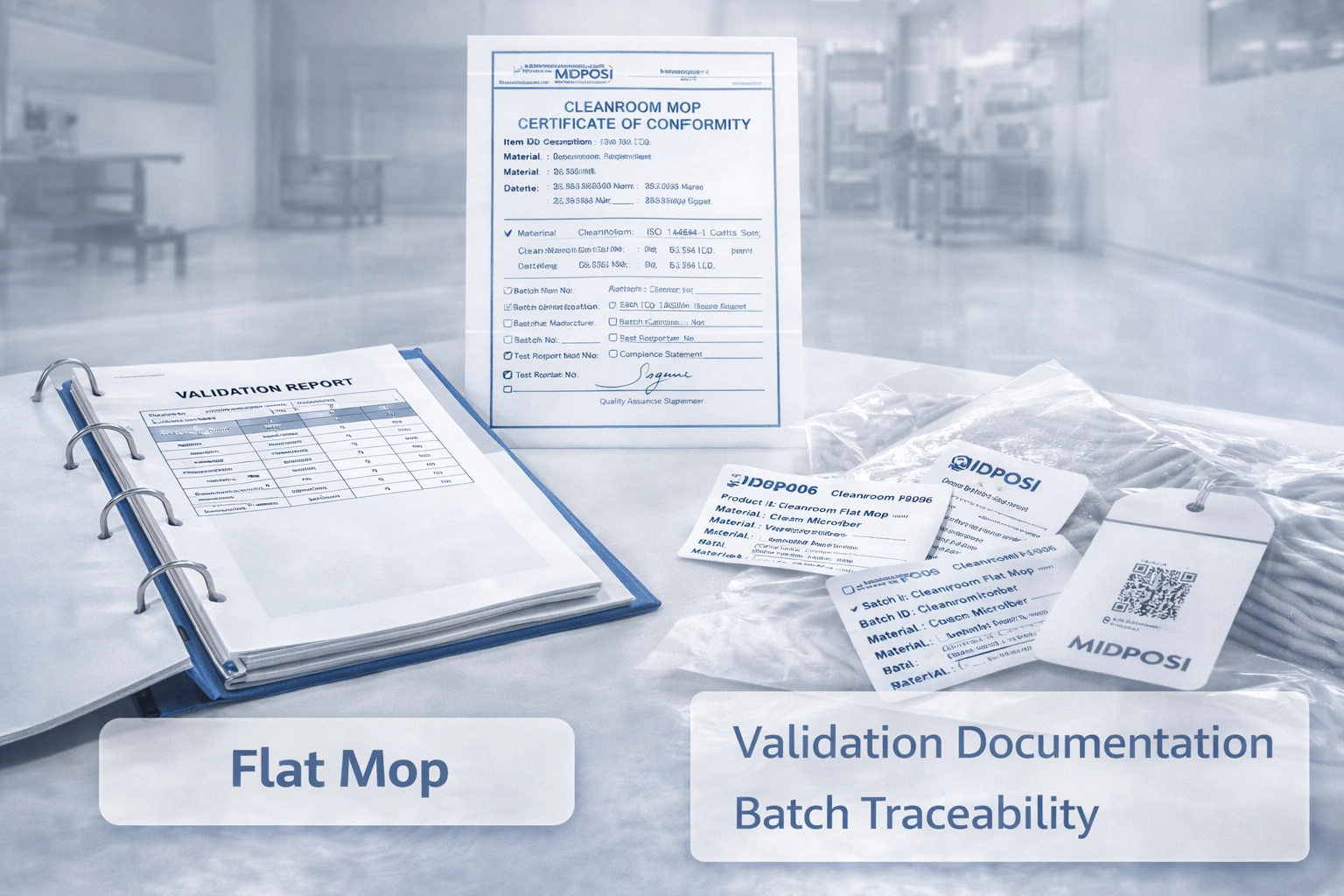
└─────────────────────────────────────────────────────────────────────┘
| Indicatore di controllo qualità | Criteri di accettazione | Frequenza | Soglia di azione |
|---|---|---|---|
| Accettazione BI | Nessuna crescita richiesta | Per lotto | Qualsiasi crescita = rifiuto del lotto |
| Precisione del numero di lotto | Corrispondenza al 100% tra confezione e certificato | Per ricevuta | Mancata corrispondenza = indagine |
| Intervallo di dosaggio | 25-50 kGy | Per lotto | Fuori range = risterilizzazione |
| Integrità dell'imballaggio | 100% intatto | Per uso | Violazione = smaltimento |
| Conformità alla scadenza | Nessun mop scaduto utilizzato | Per uso | Scaduto = rifiuto |
| Tracciabilità | 100% dal ricevimento allo smaltimento | Trimestrale | Lacune = indagine |
Programma completo di test BI:
┌─────────────────────────────────────────────────────────────────────┐
│         BIOLOGICAL INDICATOR (BI) VERIFICATION FRAMEWORK           │
├─────────────────────────────────────────────────────────────────────┤
│  BI SELECTION CRITERIA                                             │
│  ☐ Organism: Geobacillus stearothermophilus spores                 │
│  ☐ Population: ≥10⁶ spores                                         │
│  ☐ D-Value: ≥10⁶ (10⁻⁶)                                           │
│  ☐ Resistant to irradiation                                        │
│                                                                     │
│  SUPPLIER VERIFICATION                                             │
│  ☐ Supplier BI validation data reviewed                            │
│  ☐ Certificate authenticity verified                               │
│  ☐ BI placement confirmed                                          │
│                                                                     │
│  INCUBATION PROCEDURE                                              │
│  ☐ Temperature: 55-60°C                                            │
│  ☐ Duration: 30 days minimum                                       │
│  ☐ Positive control included                                       │
│  ☐ Negative control included                                       │
│                                                                     │
│  RESULT INTERPRETATION                                             │
│  ☐ No growth = Acceptable                                          │
│  ☐ Growth = Reject lot                                             │
│  ☐ Inconclusive = Re-test                                          │
│                                                                     │
│  LOT ACCEPTANCE DECISION                                           │
│  ☐ ACCEPT / REJECT / RE-STERILIZE / INVESTIGATE                    │
└─────────────────────────────────────────────────────────────────────┘| Metrico | Bersaglio | Origine dati | Frequenza | Livello di allerta |
|---|---|---|---|---|
| Tasso di passaggio BI | 100% (0 guasti) | Test della BI | Per lotto | <95% |
| Tasso di rifiuto del lotto | <1% | Registro dei rifiuti | Trimestrale | >2% |
| Integrità dell'indicatore di sterilità | 100% intatto | Ispezione | Per uso | <95% |
| Completezza della tracciabilità | 100% | Controllo | Mensile | <90% |
| Conformità alla scadenza | 100% | Registro di utilizzo | Mensile | <95% |
| Tariffa valida | 0% scaduto | Sistema di controllo di qualità | Continuo | Qualunque |
| Tasso di risterilizzazione | <00,5% | Registro della risterilizzazione | Trimestrale | >1% |

Conseguenze
Migliori pratiche
Conseguenze
Migliori pratiche
Conseguenze
Migliori pratiche

UN: La lavorazione asettica richiede SAL 10⁻⁶, il che significa che esiste una probabilità su un milione di trovare un microrganismo vitale. Ciò si ottiene attraverso metodi di sterilizzazione convalidati come l'irradiazione gamma, la sterilizzazione in autoclave convalidata o la sterilizzazione ETO con un'adeguata aerazione. La scelta del metodo dipende dalla compatibilità dei materiali e dall'infrastruttura di sterilizzazione disponibile.
UN: La verifica della sterilità richiede un programma di conferma dell'indicatore biologico. Ciò include la revisione del certificato del fornitore, l'ispezione della ricezione, la verifica dell'integrità dell'imballaggio, la corretta corrispondenza dei lotti, la conferma del certificato BI e la documentazione completa dalla ricezione allo smaltimento. I panni riutilizzabili richiedono test BI per ciclo di sterilizzazione o a intervalli convalidati.
UN: I panni sterili per camere bianche richiedono un imballaggio che mantenga la sterilità fino all'uso. Ciò di solito include una barriera sterile primaria, uno strato protettivo esterno, indicatori visibili di sterilità, tracciabilità del lotto, un formato di trasferimento asettico pronto per l'uso e una data di validità chiaramente contrassegnata.
UN: La frequenza dei test dipende dall'approccio alla sterilizzazione. I prodotti sterilizzati dal fornitore potrebbero non richiedere test BI di routine se i certificati sono validi, mentre i panni riutilizzabili sterilizzati in struttura generalmente richiedono test BI per ciclo o a intervalli convalidati. La validazione iniziale e la riconvalida sono necessarie quando cambiano i parametri di sterilizzazione.
UN: L'irradiazione gamma viene eseguita a temperatura ambiente, penetra nell'intero assemblaggio e offre un certificato SAL 10⁻⁶ preconvalidato. La sterilizzazione in autoclave utilizza temperatura e pressione elevate, può incidere su alcuni materiali e richiede la convalida per ciclo e la conferma dell'indicatore biologico. L'irradiazione gamma è spesso preferita per la sterilizzazione terminale dei mop asettici.
UN: Un sistema di tracciabilità completo dovrebbe includere identificazione univoca, tracciabilità basata sui lotti, date di produzione e sterilizzazione, registri di utilizzo, registri dell'operatore, registri di smaltimento e una traccia di controllo completa dal ricevimento allo smaltimento. Strumenti digitali come codici a barre o sistemi RFID possono migliorare la tracciabilità nelle operazioni più grandi.
Se stai confrontando materiali per mop sterili, metodi di sterilizzazione, formati di imballaggio o requisiti di tracciabilità per ambienti asettici, il nostro team può aiutarti a valutare la giusta soluzione per camera bianca per il tuo processo.