エグゼクティブサマリー
規制されたクリーンルームでは、「モップかワイプか」は決定の半分に過ぎません。残りの半分は、ツールが 使用時に無菌—そして無菌の場合、その無菌性が検証済みの物質によってサポートされているかどうか 蒸気オートクレーブプロセス またはサプライヤー発行 ガンマ線照射証明書.
主な決定ルール: 使用 ガンマ線照射された滅菌ツール when you need a supplier-certified sterile claim at point of use (e.g., SAL 10⁻⁶ documentation), when materials are heat-sensitive, or when on-site autoclave capacity is limited. Use オートクレーブ可能なモップ when materials are heat-stable (often polyester systems) and you can validate and routinely control the steam process (cycle records + monitoring + BI program where applicable).
クリーニング実行ルール: 使用 モップ 広い表面(床/壁)用と ワイプ 小さいまたは不規則な機器表面用。ほとんどの GMP プログラムは両方を使用します。
注目のスニペット回答
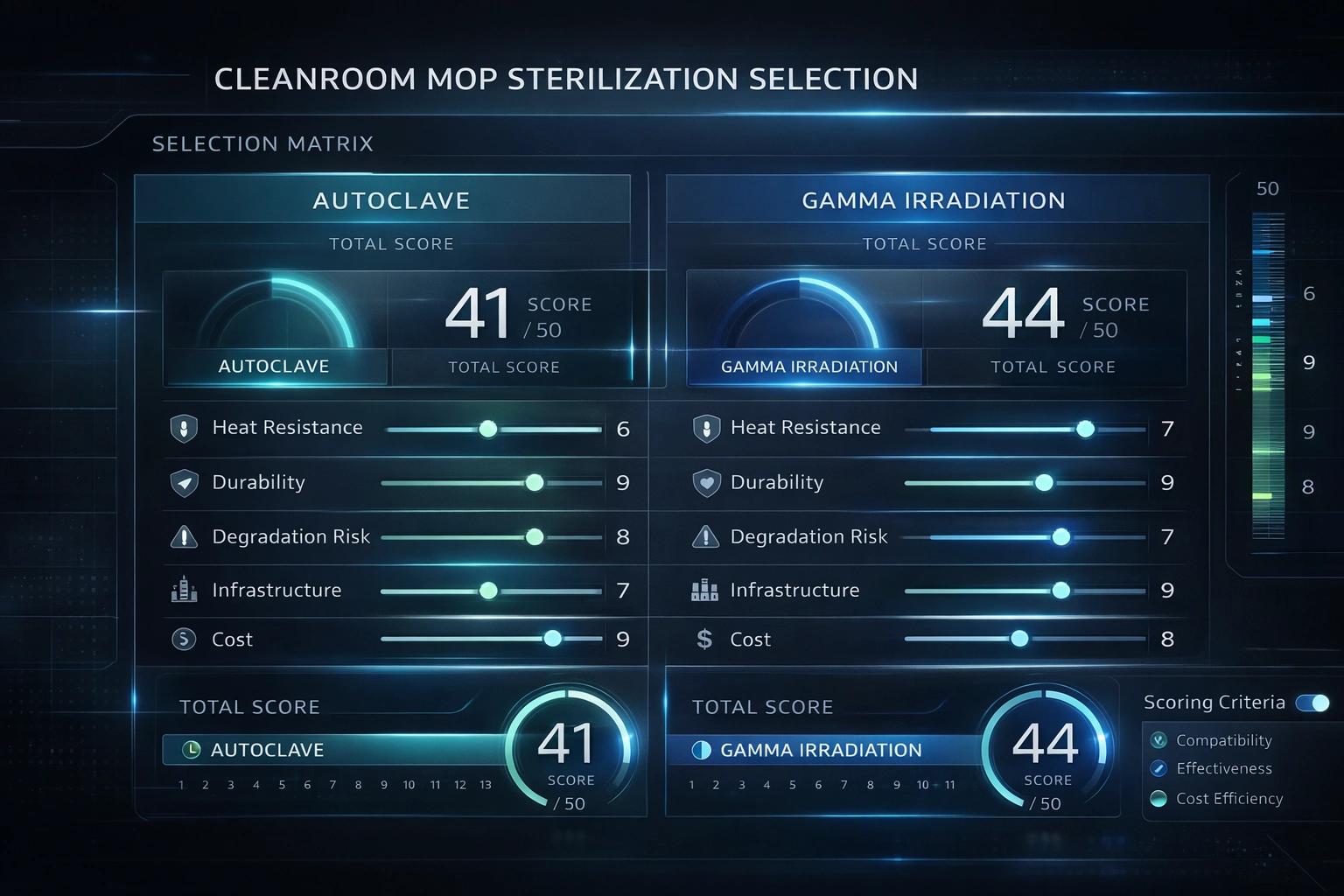
オートクレーブ可能なクリーンルームモップとガンマ線照射されたクリーンルームモップ selection depends on (1) material compatibility, (2) sterility assurance documentation requirements (e.g., SAL-based sterile claim), (3) whether you can validate and routinely control an on-site steam process, and (4) total cost of ownership. In routine cleaning, use wipes for small critical equipment surfaces and mops for large floors and walls, often as a combined strategy.
重要なポイント
- ツールの選択は 2 次元です。 表面形状 (モップ vs 拭き取り) と 無菌法 (オートクレーブ対ガンマ)。
- 蒸気滅菌は検証され、定期的に管理される必要があります。サイクル時間は負荷と滅菌器のタイプによって異なります。
- ガンマ線照射ツールは、サプライヤーの認証、線量範囲管理、ロットのトレーサビリティに依存しています。
- ハイブリッド プログラムが一般的です。重要なゾーンには滅菌ワイプを、広いエリアには検証済みのモップ システムを使用します。
導入
The choice between cleanroom mops and cleanroom wipes is a common decision point for pharmaceutical and medical device manufacturers. Both support contamination control, but their 応用分野、 カバレッジ効率, and 無菌性保証経路 異なる。
Most GMP facilities use both, but suboptimal selection increases cost (using wipes for large areas) or reduces effectiveness (using mops on irregular equipment surfaces). When sterile claims are required, the decision expands to オートクレーブ検証済みの湿熱滅菌 対 サプライヤー認証および線量監査を伴うガンマ線照射.
基本的な違い
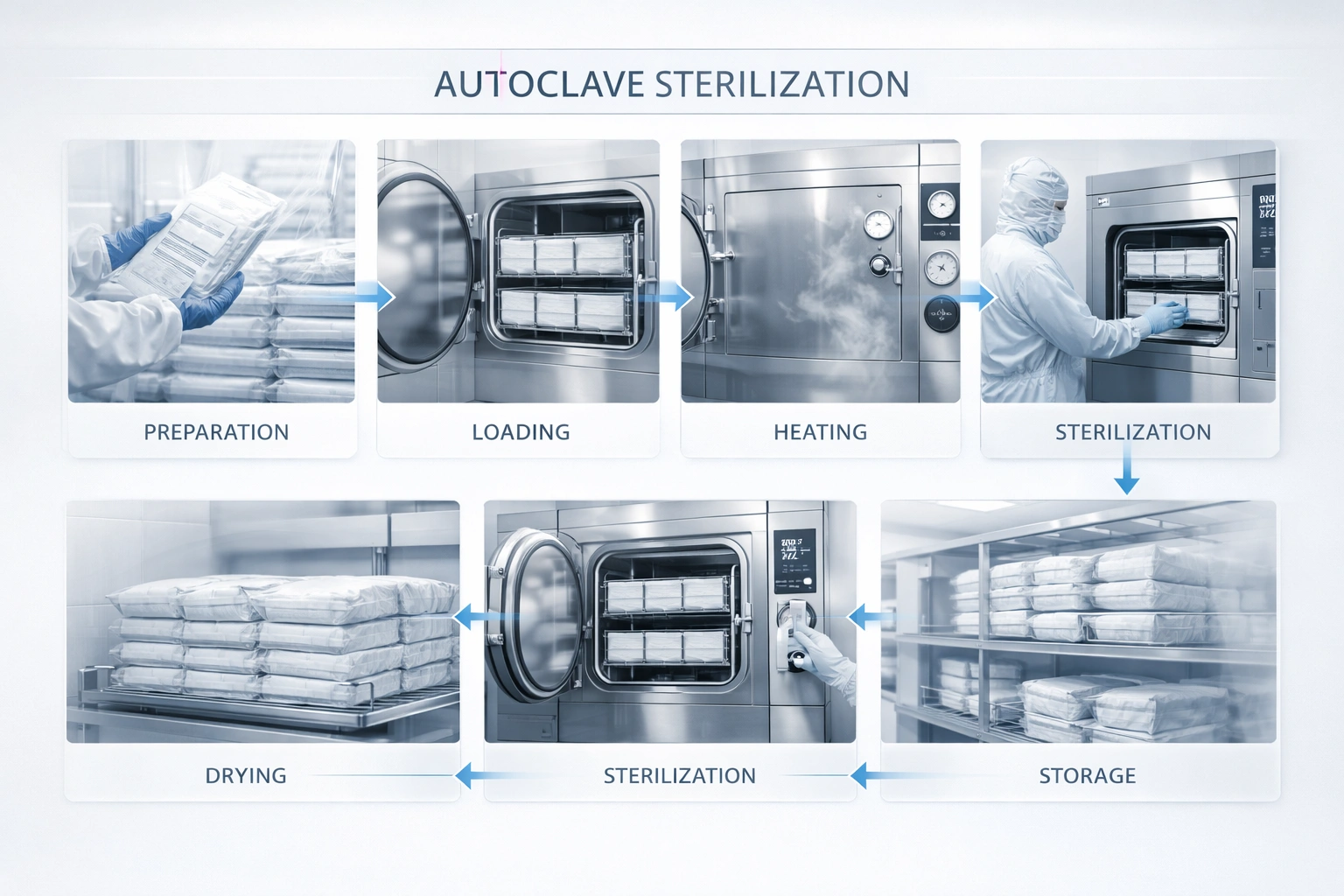
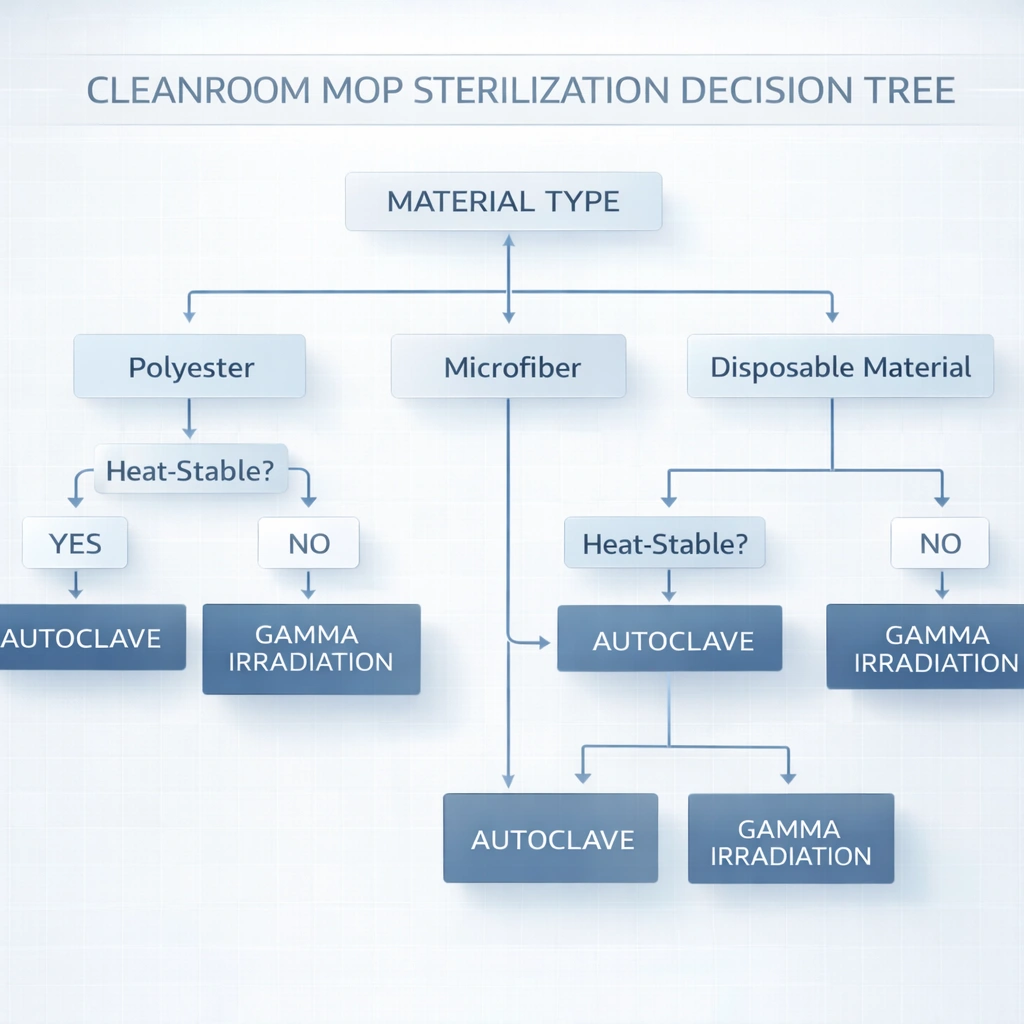
オートクレーブとガンマ線滅菌経路
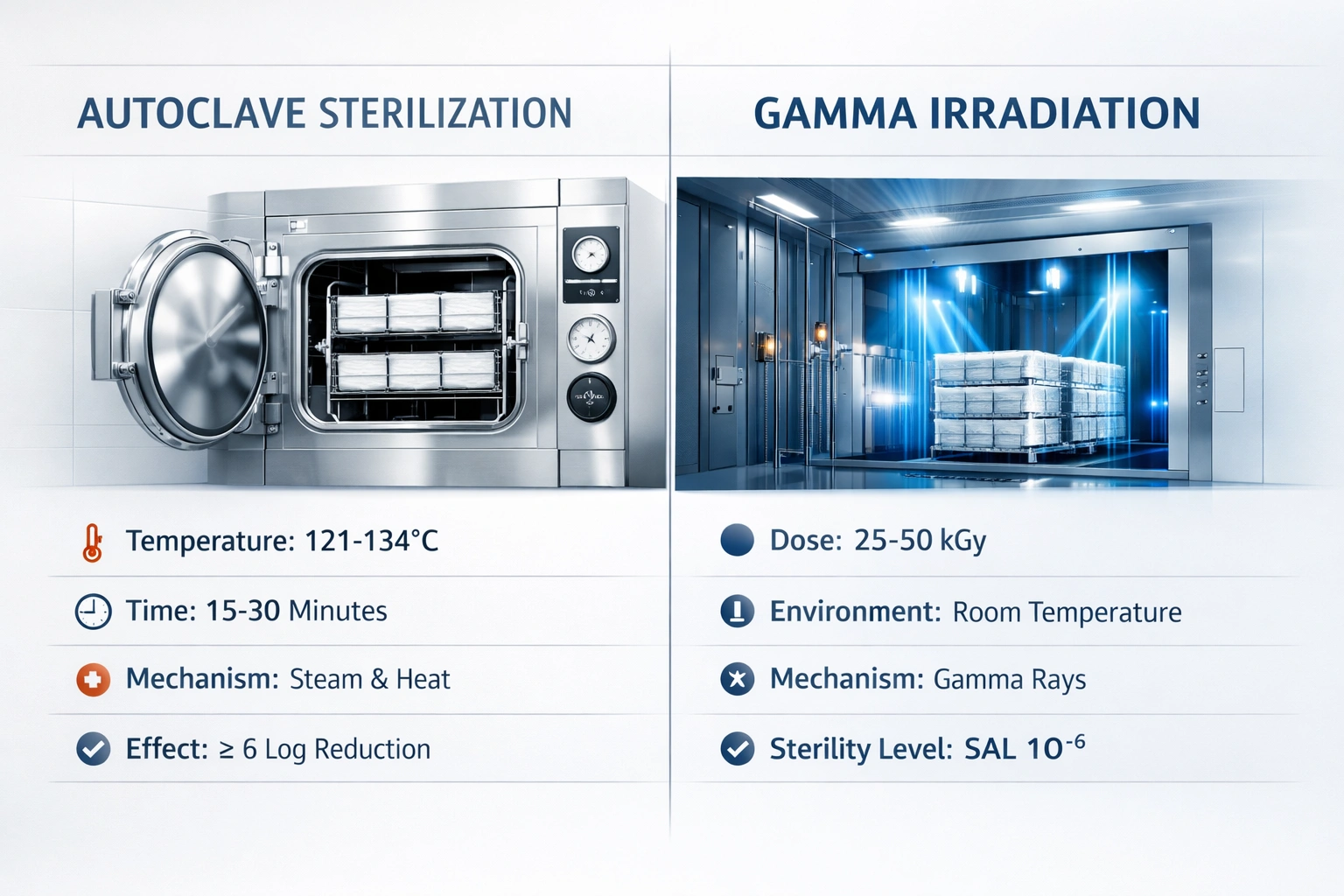
Autoclave sterilization achieves sterility through saturated steam under pressure and requires validated cycle development and routine control. Gamma sterilization uses ionizing radiation; sterile claims are supported through dose establishment/verification, dosimetry control, and routine dose audits aligned with ISO 11137 programs.
STERILIZATION METHOD CHARACTERISTICS (SUMMARY)

AUTOCLAVE (STEAM)
• Temperature: commonly 121°C or 132°C setpoints (cycle depends on sterilizer type and load)
• Exposure time: varies; minimum times depend on load/sterilizer type and must be validated
• Environment: saturated steam under pressure
• Control: mechanical + chemical indicators; biological indicators used for effectiveness monitoring as applicable
• Operational limit: chamber capacity; drying time; load configuration sensitivity

GAMMA IRRADIATION
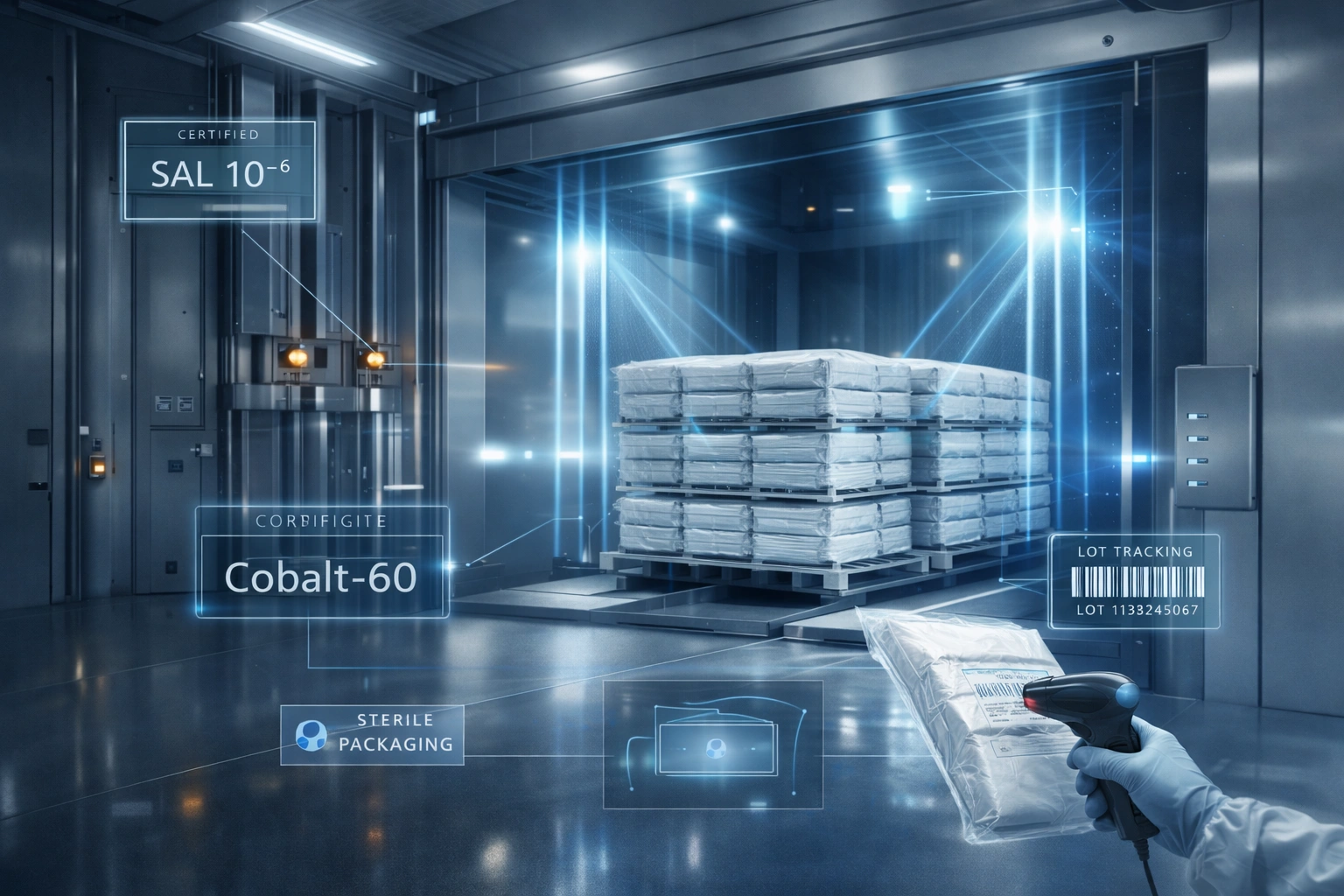
• Sterilant: ionizing radiation (e.g., Cobalt-60 systems used industrially)
• Dose: often specified as a range; 25 kGy is a widely referenced sterilization dose, with product-specific ranges validated
• Control: dosimetry + certificate/lot traceability; ongoing dose audit expectations under ISO 11137 dose establishment programs
• Operational advantage: terminal sterilization of packaged tools at room temperature (no thermal stress)
モップとワイプの特徴
The core cleaning-function difference is geometry and controlled contact: wipes provide direct hand pressure for full surface contact on small areas; mops provide rapid coverage for large surfaces, but contact percentage depends on mop design and technique.
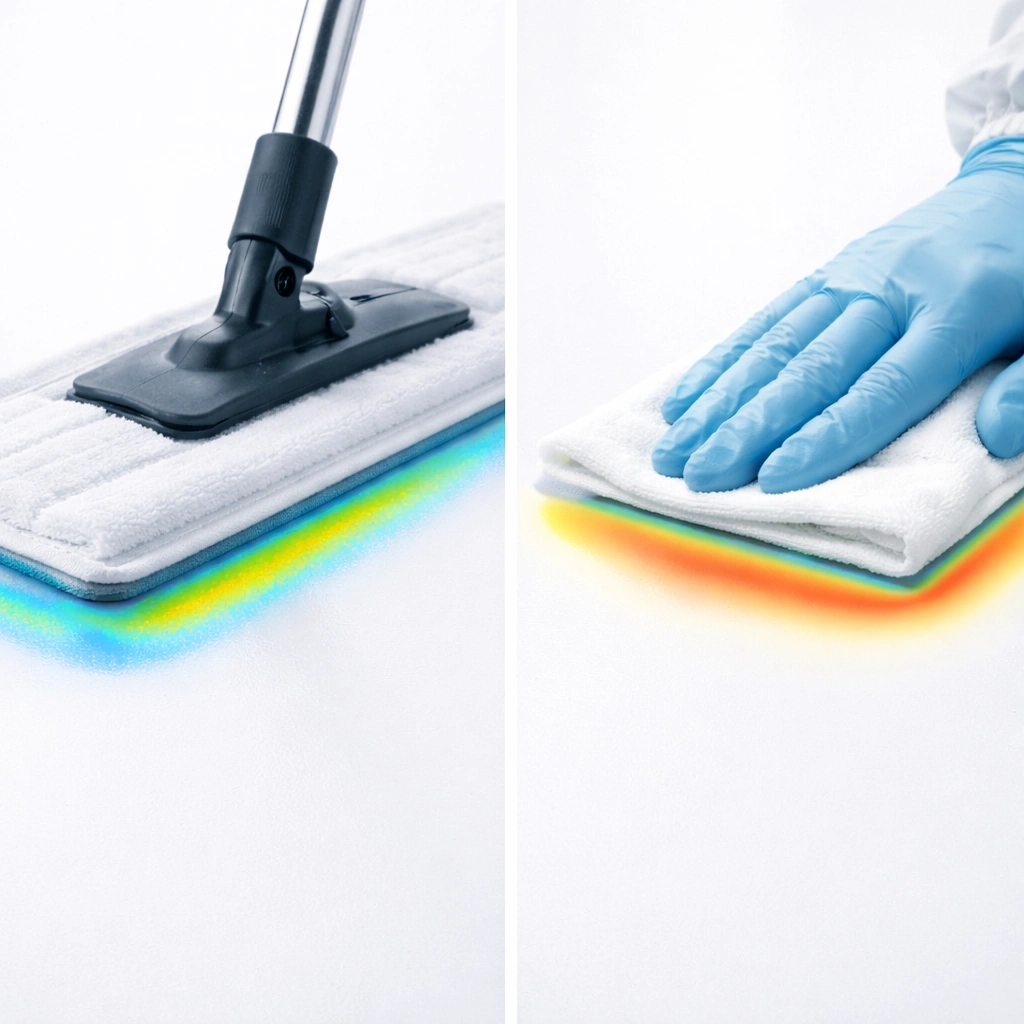
MOP VS WIPE CHARACTERISTICS COMPARISON

MOPS
• Best for: floors, walls, large surfaces (≥ 1 m²)
• Contact: typically 60–95% depending on mop type and technique
• Strength: fast coverage + lower cost per square meter

WIPES
• Best for: equipment, workstations, spot cleaning (< 1 m²)
• Contact: 100% with correct pressure application
• Strength: precision + reduced cross-contamination when single-use/sterile
主要な相違点の表
| 特性 | モップ | ワイプ |
|---|---|---|
| 一次用途 | 床、壁、広い面(1㎡以上) | 機器、ワークステーション、小さな表面 (< 1平方メートル) |
| 面接触 | 60 ~ 95% (モップの種類によって異なります) | 100%(加圧時) |
| 無菌オプション | オートクレーブ検証済み (再利用可能) または滅菌済み (ガンマ線) で提供 | 事前滅菌(多くの場合ガンマ線)または消毒済み |
| 1㎡あたりの廃棄物 | より低い | より高い(使い捨て) |
性能比較
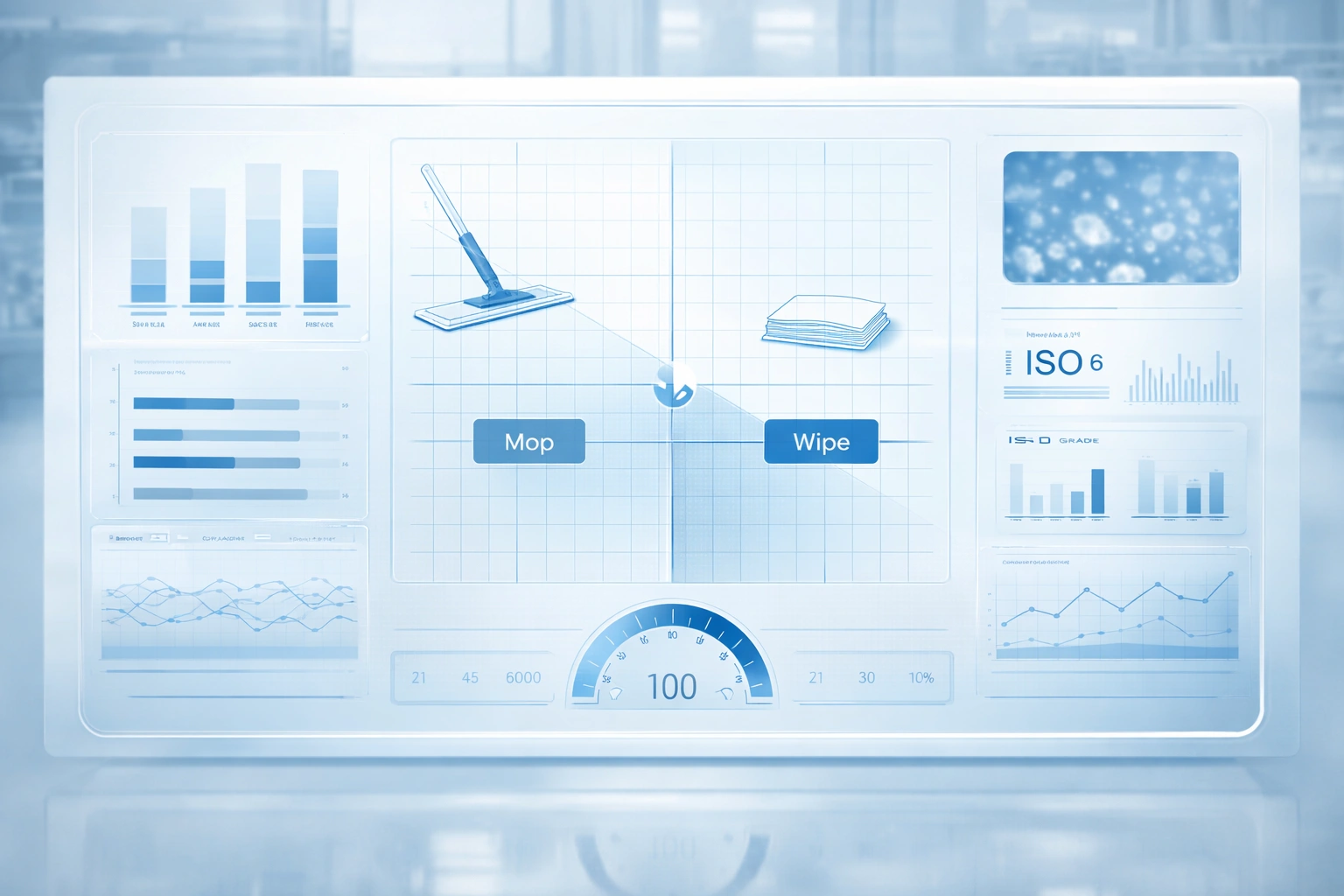
MIDPOSI モップ/ワイプ選択マトリックス
This scoring model supports consistent tool selection across surfaces and ISO grades. It can be used as part of a contamination control strategy where tool choice is justified via documented decision criteria.
MIDPOSI MOP-WIPE SELECTION MATRIX (0–100)

SCORE THRESHOLDS:
• 70–100: Highly Recommended
• 50–69:  Recommended
• 30–49:  Acceptable with limitations
• 0–29:   Not Recommended

DECISION RULE:
Select the tool with the higher suitability score for the specific application.
因子のスコアリング基準
| 要素 | モップスコア (0–20) | ワイプスコア (0-20) | 採点基準 |
|---|---|---|---|
| 対応エリア | 0–1㎡ (0) … >20㎡ (20) | >10㎡ (0) … <0.1㎡ (20) | ツールを面積スケールに合わせる |
| 表面の種類 | 設備(0)、壁(10)、床(20) | 床(0)、壁(5)、設備(20) | 形状とコンタクトドライブの有効性 |
| ISOグレード | リスクの重み付けは ISO 5 に向けて増加します。使用時に滅菌ツールが必要になる場合があります。 | ||
アプリケーションシナリオ
| 応用 | エリア | 表面 | モップスコア | スコアをワイプ | 推奨 |
|---|---|---|---|---|---|
| ISO 5 無菌ゾーンワークステーション | 0.5㎡ | 装置 | 6.5 | 78.5 | ワイプ |
| ISO 7 廊下フロア (毎日) | 50㎡ | 床 | 87.5 | 22.5 | モップ |
アプリケーション固有の推奨事項
ISO 5 クリティカル無菌ゾーン
ISO 5 workflows emphasize precision cleaning and sterility assurance. Wipes are typically primary for critical equipment surfaces, while sterile mops may be used for defined floor/perimeter tasks as dictated by the site’s contamination control strategy.
ISO 7 クリーンエリア
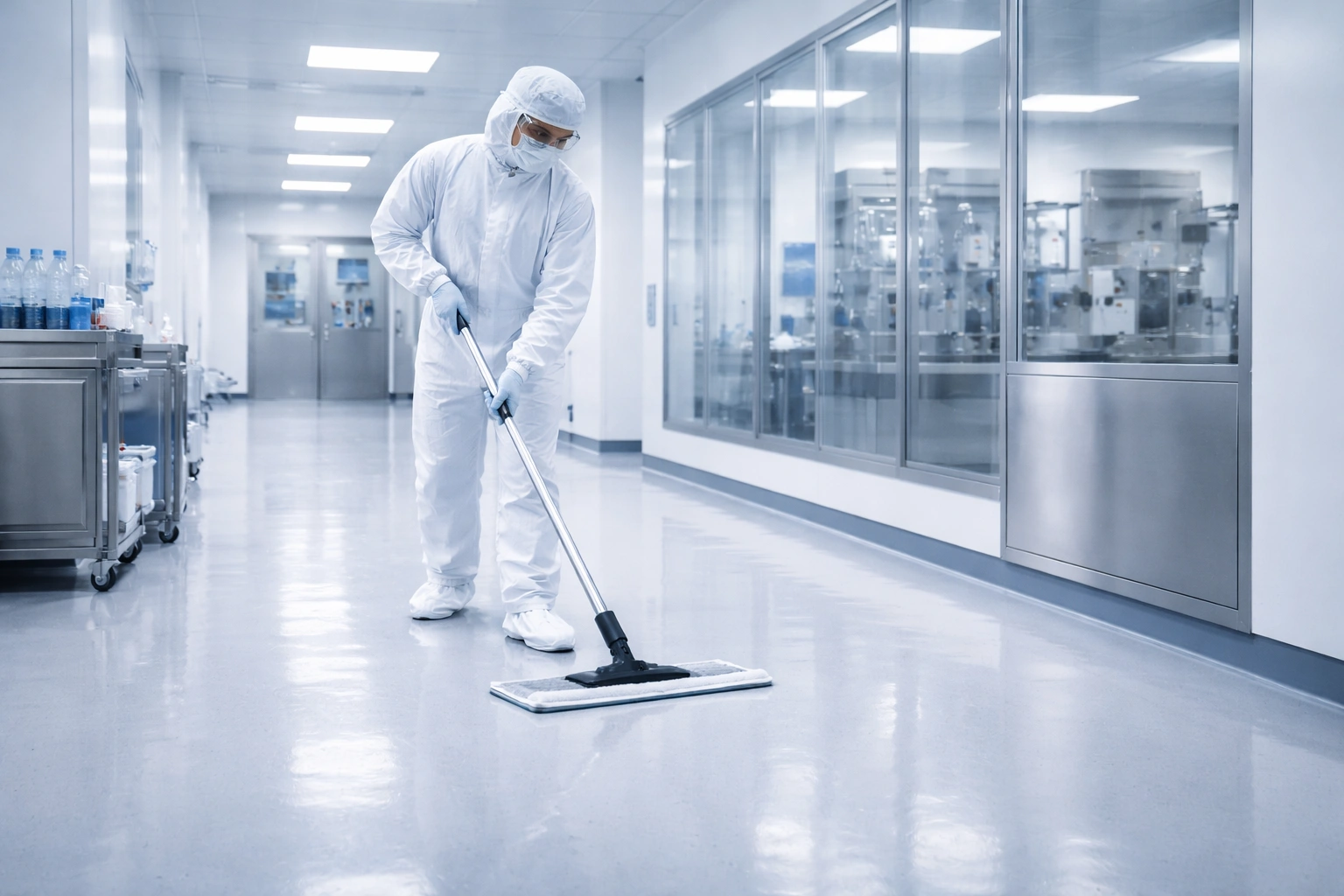
ISO 7 often supports validated reusable mop systems coupled with disinfected or sterile wipes for equipment surfaces, pass-throughs, and frequent-touch points.
材料の選択
滅菌基準表
For regulated decision-making, cite and align to the standards that match the sterilization method: radiation programs to ISO 11137, moist heat programs to ISO 17665, and EU sterile manufacturing expectations to Annex 1 and compendial chapters such as Ph. Eur. 5.1.1/5.1.2.
| 参照 | メソッドのスコープ | それが支配するもの | 監査における典型的な証拠 |
|---|---|---|---|
| ISO 11137-2 | 放射線 | 無菌主張の用量設定/実証および継続的な用量監査 | 照射証明書、線量範囲管理、ロットトレーサビリティ、監査証拠 |
| ISO17665 | 湿熱(蒸気) | 蒸気滅菌のプロセス開発、検証、日常管理 | サイクルパラメータ、負荷構成、監視記録、BI プログラムの証拠(該当する場合) |
| Ph.Eur. 5.1.1 / 5.1.2 | 公定の無菌製造に対する期待 | 検証済みのプロセスと生物学的指標 (BI) の適合性/厳密性 | プロセスに合わせた検証戦略と BI 適合性ドキュメント |
| ME GMP Annex 1 | 無菌製造 | 汚染管理戦略と無菌性保証の哲学 | CCS、検証済み手順、モニタリング/トレンド、逸脱/CAPA 統合 |
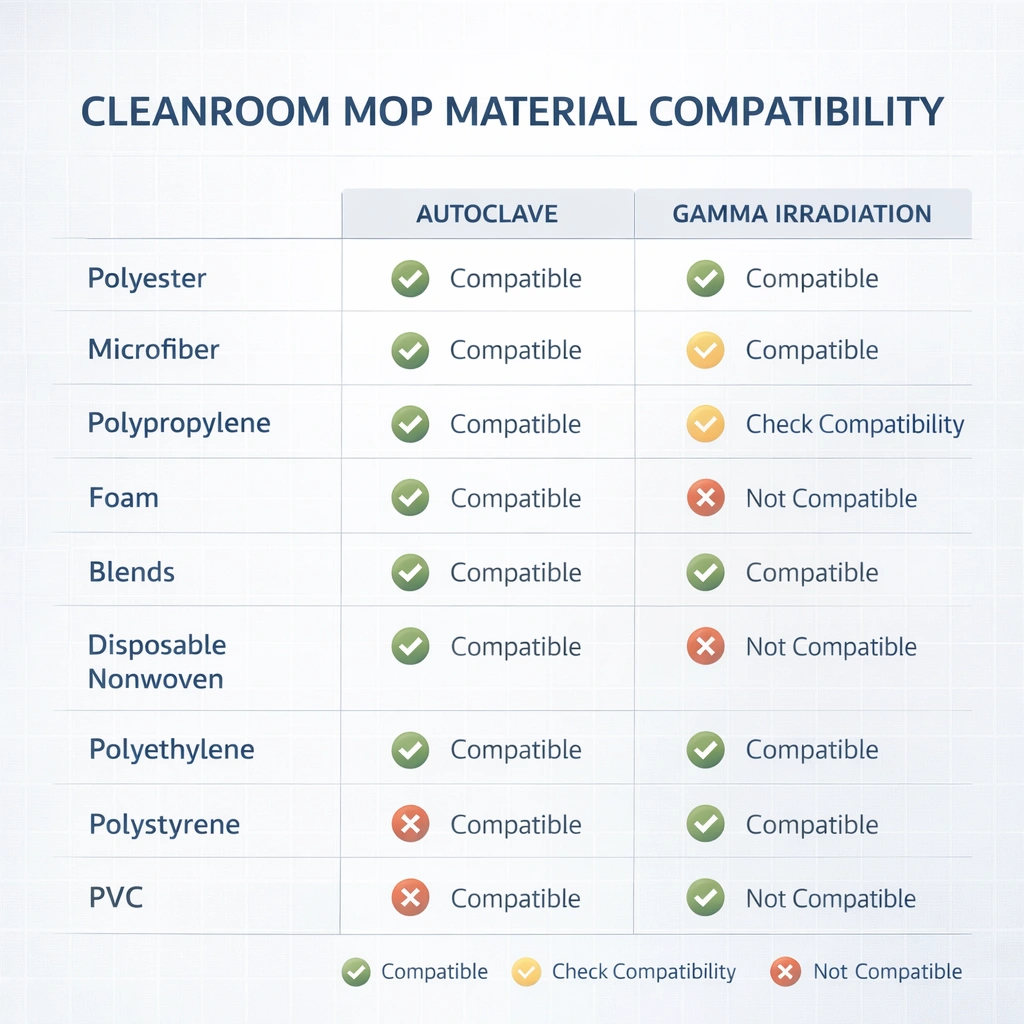
ワイプ素材の種類
Validation note: radiation dose is typically specified as a range (not a single point), and maximum dose must be justified against material performance. For any “25–50 kGy” specification, validate that your tool materials and packaging tolerate the maximum dose without unacceptable degradation.
コスト分析
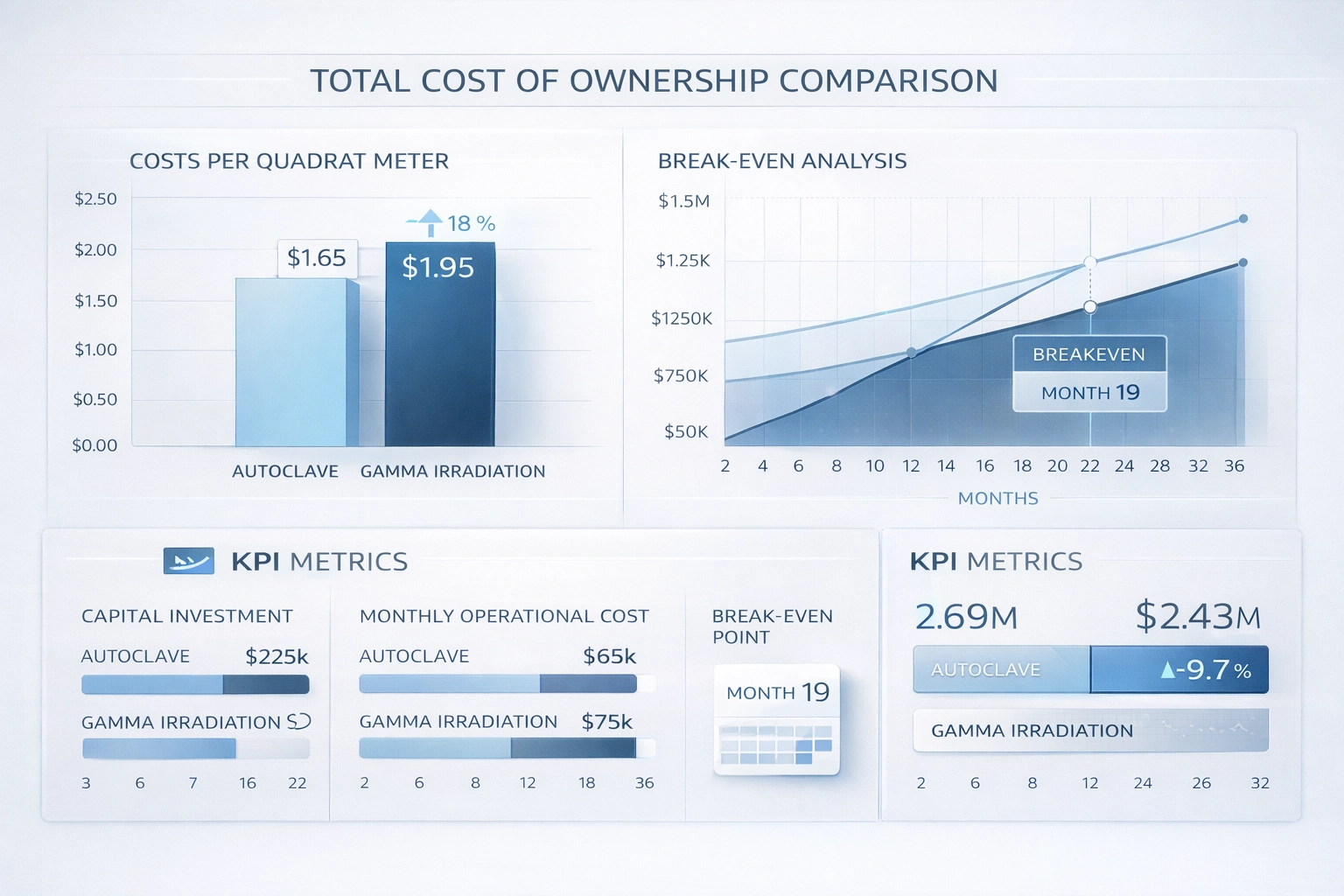
平方メートルあたりのコストの比較
COST PER m² COMPARISON (EXAMPLE MODEL)

ASSUMPTIONS
• Labor cost: $25/hour
• Mop head cost: $5 (reusable 10 times) = $0.50/use
• Wipe cost: $0.30/wipe (single-use)
• Mop covers 10 m²/use, wipe covers 0.5 m²/use
• Labor: mop 0.5 min/m², wipe 0.25 min/m²

CONCLUSION (MODEL OUTPUT)
Mop is ~4–5× more cost-effective than wipes for large surfaces.
滅菌コスト枠組み表
コスト決定ルール (滅菌ツール): If the fully loaded gamma program cost (including supplier qualification, incoming verification, and waste) is >検証済みのオートクレーブの総コストの 3 倍であるため、材料が熱に安定でサイクル容量が利用可能であれば、通常はオートクレーブが経済的な選択肢となります。
| コストカテゴリ | オートクレーブプログラム | ガンマプログラム | 注意事項 |
|---|---|---|---|
| 工具単価 | $_____ (再利用可能) | $_____ (多くの場合、使い捨て) | 再利用可能なもののサイクル寿命を含める |
| 滅菌コスト | 1 サイクルあたり $_____ | ロットあたり $_____ | ガンマは通常、サプライヤー証明書 + 受信検証によって管理されます |
| 労働 & 取り扱い | $_____ | $_____ | ステージング、ラベル付け、隔離、リリースが含まれます |
| 書類作成の負担 | サイクル記録 + BI/モニタリングプログラム | 照射証明書+ロットトレーサビリティ | どちらも QA レビューと変更管理が必要です |
ベストプラクティス
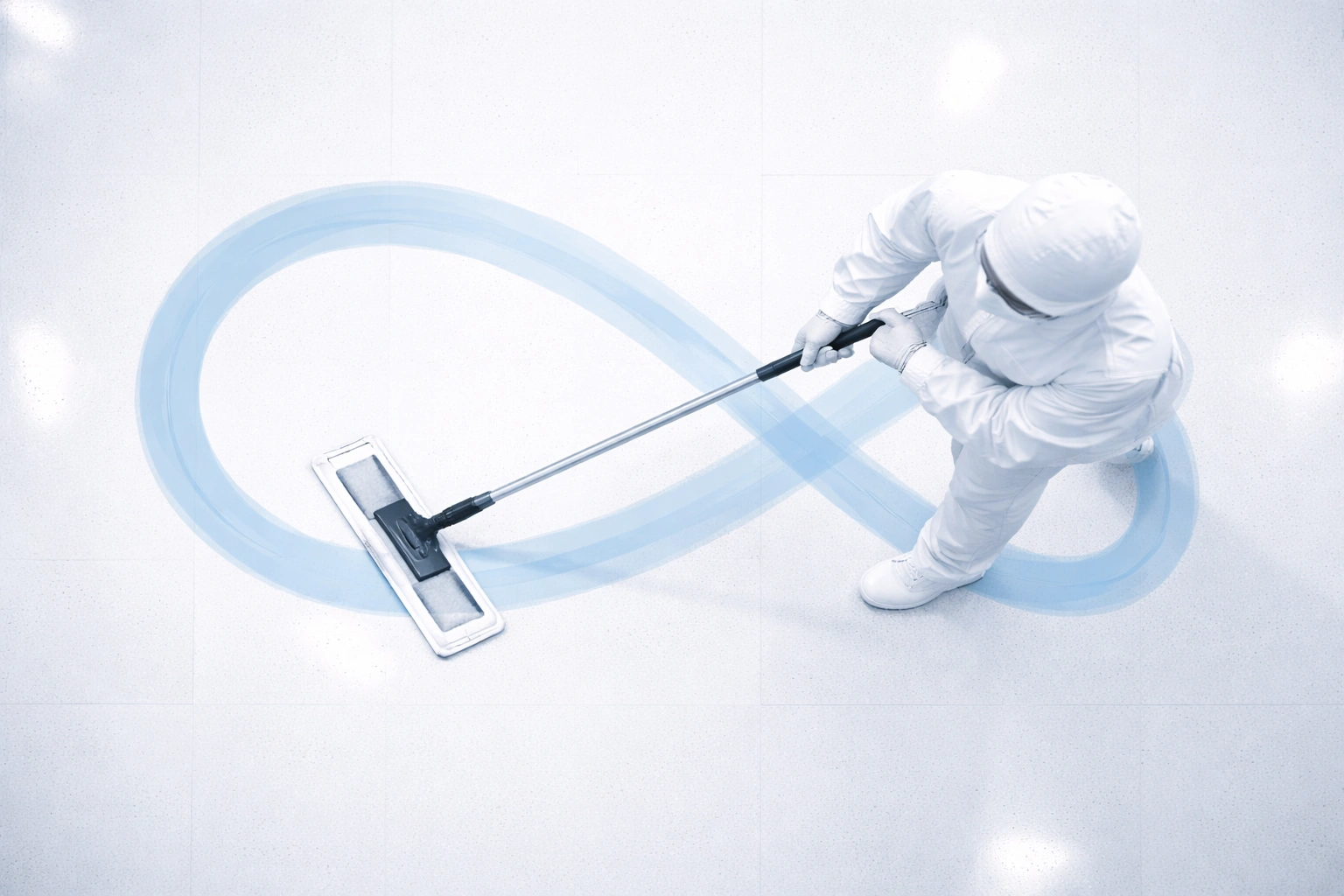
モップテクニック
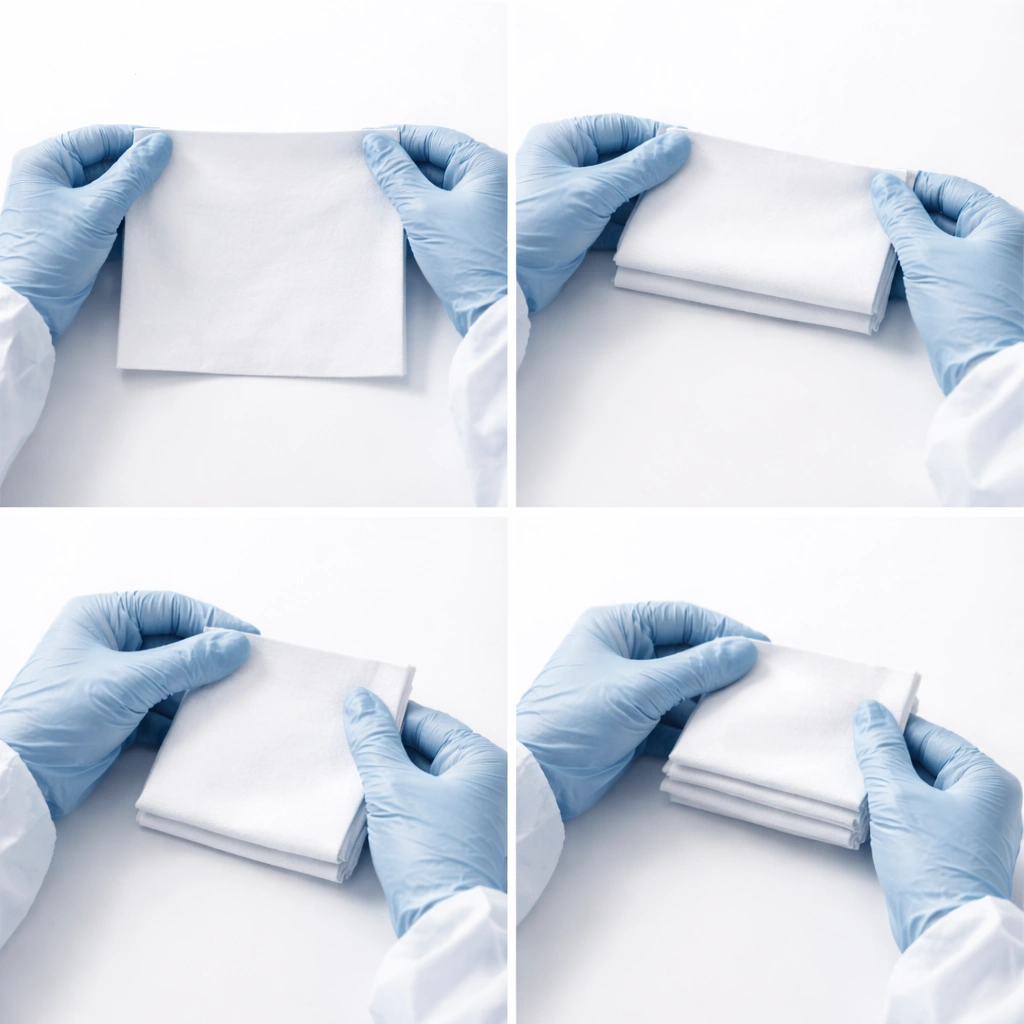
ワイプ折りテクニック
避けるべき一般的な間違い
間違い: サプライヤーの無菌証明書を受信検証やロットのトレーサビリティ管理なしで「十分」なものとして扱う。
間違い: サイクルの有効性を再評価せずに、オートクレーブに過負荷をかけたり、負荷構成を変更したりする。
間違い: 最大ガンマ線量または繰り返しの蒸気サイクルとの適合性が証明されていないツール材料を使用している。
実用的なツール
ツール: モップ/ワイプ選択決定マトリックス
MOP-WIPE SELECTION DECISION MATRIX (TEMPLATE)

Application: ______________________  ISO Grade: ________  Area: __________ m²

Score each factor (0–20)
• Area Coverage: Mop ___ / Wipe ___
• Labor Efficiency: Mop ___ / Wipe ___
• Surface Type: Mop ___ / Wipe ___
• ISO Grade: Mop ___ / Wipe ___
• Cost Efficiency: Mop ___ / Wipe ___

Decision: Select the higher total score tool.
Assessors: _______________________  Date: _________________
Approver: ________________________  Date: _________________
ツール: オートクレーブ滅菌プロトコル
AUTOCLAVE STERILIZATION PROTOCOL (CHECKLIST)

PRE-CYCLE
☐ Mop inspected for integrity
☐ Cleaned per SOP
☐ Packaging verified (no damage)
☐ Sterilization label attached (tool ID, cycle ID)
☐ Load configuration documented
☐ Monitoring / BI plan per site validation strategy

CYCLE
☐ Temperature setpoint: ________
☐ Exposure time: ________
☐ Drying time: ________
☐ Cycle record saved (time/temperature/pressure)
☐ Any alarms investigated and resolved

POST-CYCLE
☐ Quarantine / release process followed (QA as applicable)
☐ Storage conditions maintained
☐ FIFO rotation implemented
☐ Traceability log updated
ツール: ガンマ線照射検証プロトコル
GAMMA IRRADIATION VERIFICATION (RECEIVING CHECKLIST)

RECEIVING
☐ Supplier certificate verified
☐ Dose stated: _______ kGy (within validated range)
☐ SAL 10⁻6 sterility claim verified if required for use
☐ Lot number recorded
☐ Packaging integrity confirmed (no breach)
☐ Receipt and release logged (QA controls)

USAGE
☐ FIFO rotation maintained
☐ Expired tools not used
☐ Zone segregation (color-code / controls)
☐ Disposal documented and traceable
よくある質問
モップとワイプをいつ使用するべきですか?
表面積が 1 m² (床/壁) 以上で、形状が規則的である場合は、モップを使用してください。汚れが気になる場合はワイプを使用してください。 < 1 m², surfaces are irregular (equipment/workstations), or when single-use sterility at point of use is required.
床の掃除にワイプを使用できますか?
Generally not for routine large-area floor cleaning due to cost and efficiency; use wipes for spot cleaning, corners, edges, or critical zones where the workflow requires sterile precision use.
混合アプリケーションにとって最もコスト効率の高いアプローチは何ですか?
ハイブリッド アプローチ: 床と広い表面にはモップ、機器と小さな表面にはワイプ。滅菌ツールは最もリスクの高いゾーンに確保されています。
モップの素材はどうやって選べばいいですか?
Match material to ISO grade, disinfectant chemistry, and sterilization method. Verify compatibility with repeated steam cycles or validated gamma dose ranges, and require documentation that supports low-lint and intended use.
モップはどれくらいの頻度で交換すればよいですか?
Replace reusable mops after their validated cycle life (or sooner if damage, increased lint, or reduced absorbency appears). Disposable/sterile tools are typically single-use unless a validated reprocessing program exists.
含浸済みワイプには追加料金を払う価値がありますか?
アプリケーションを標準化し、準備のばらつきを減らし、滅菌状態で供給される場合の滅菌保証をサポートするため、クリティカルゾーンでは多くの場合「はい」です。
おしりふきは再利用できますか?
使い捨てワイプは再利用しないでください。再利用可能なワイプ プログラムには、検証済みの洗濯/滅菌と明確なトレーサビリティ管理が必要です。
低リントのパフォーマンスを確認するにはどうすればよいですか?
Require supplier evidence and verify via your facility’s monitoring strategy. For critical grades, ensure the evidence aligns with your room classification and operational state. Document acceptance criteria in your SOP.
SAL 10⁻⁶ とは何ですか?また、ガンマ線照射されたツールにとってそれが重要な理由は何ですか?
SAL (sterility assurance level) is the statistical level used for sterile claims; gamma programs commonly support SAL-based claims via validated dose establishment and ongoing dose audits, with certificates tied to lot traceability.
監査のためにどのような文書を保管しておく必要がありますか?
For autoclave: cycle records, monitoring results, load configuration controls, and release documentation. For gamma: certificate of irradiation per lot, defined dose range, incoming verification, storage/expiry controls, and usage/disposal traceability.
内部リンク
関連するガイダンスおよび実装リソースについては、以下を参照してください。
推奨される標準と参考文献
検証と監査防御のための主要な情報源として、規格/概要の公式コピーを使用します。公開参照リンク: