I. Attention: The Hidden Threat
Why Your Cleanroom’s Cleanliness Might Be Compromising More Than You Think
The Critical Challenge: In industries where precision and sterility are paramount—pharmaceuticals, biotech, medical device manufacturing, semiconductor fabrication, and aerospace—contamination isn’t just a risk; it’s a direct threat to product quality, patient safety, and operational continuity. Even microscopic particles can lead to catastrophic failures, recalls, and significant financial losses.
100,000–1,000,000
Particles released per minute by a single person sitting still in a cleanroom. Movement dramatically increases this output.
The Illusion of Clean: Many organizations invest heavily in sophisticated cleanroom infrastructure, yet overlook the fundamental role of daily cleaning protocols. Relying on standard cleaning methods in controlled environments can lead to invisible particulate and microbial contamination, undermining your entire cleanroom investment. For instance, a single person sitting still in a cleanroom can release 100,000 to 1 million particles per minute, with movement dramatically increasing this output. Even seemingly minor cleaning tool choices, like using a non-specialized mop, can actively introduce contaminants rather than remove them, having catastrophic consequences.
The Cost of Compromise: Non-compliance with stringent US and EU regulations—including ISO14644、 ME GMP Annex 1、 そして USP <797>/<800>—results in costly product recalls, regulatory fines, manufacturing delays, and irreversible damage to reputation. Is your cleaning protocol an Achilles’ heel in your comprehensive contamination control strategy? Poor cleaning practices can directly impact environmental monitoring results, signaling non-compliance and triggering further scrutiny.
II. Interest: Beyond the Bucket and String
Unlocking True Contamination Control with Advanced Cleanroom Mop Systems
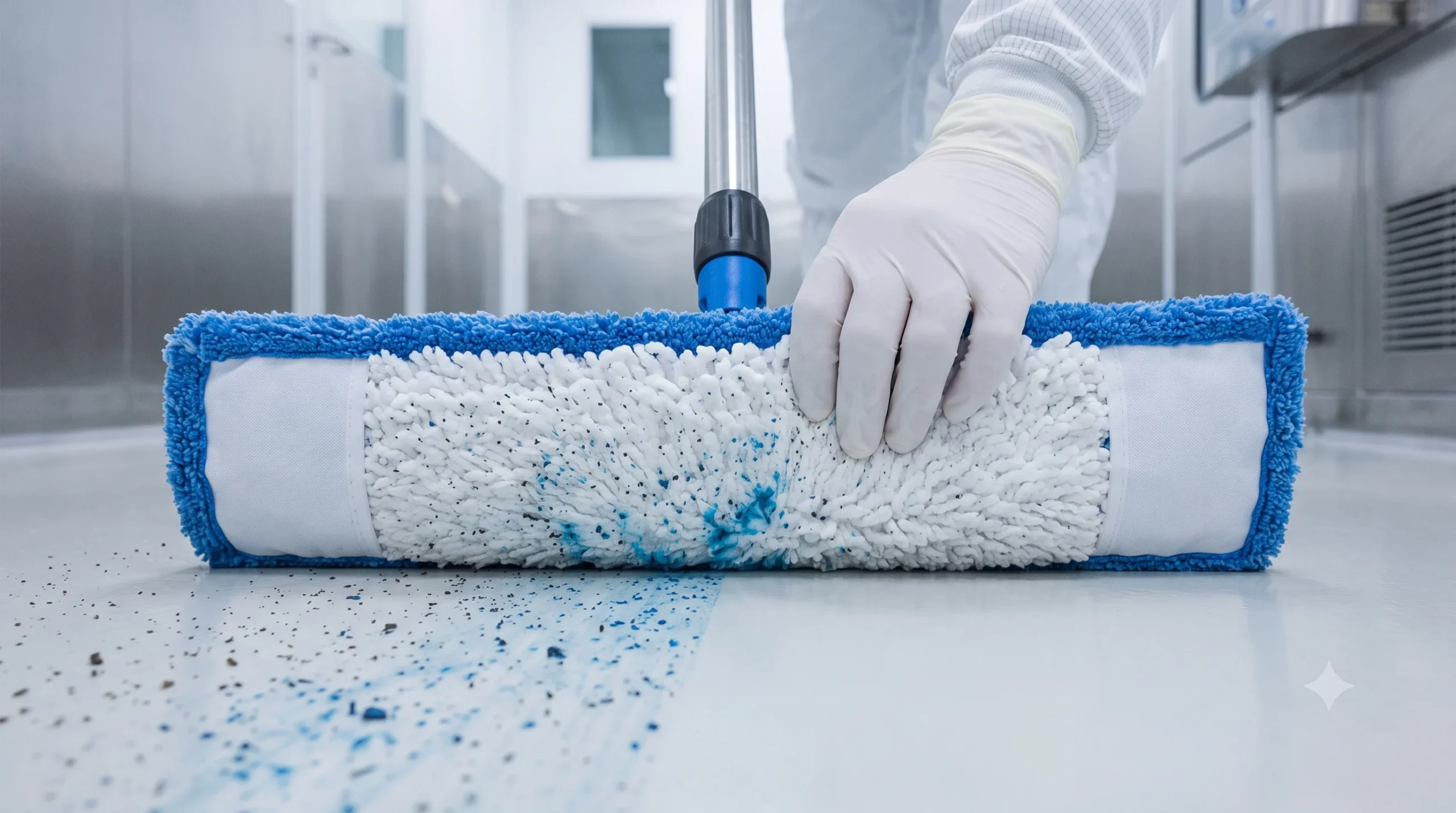
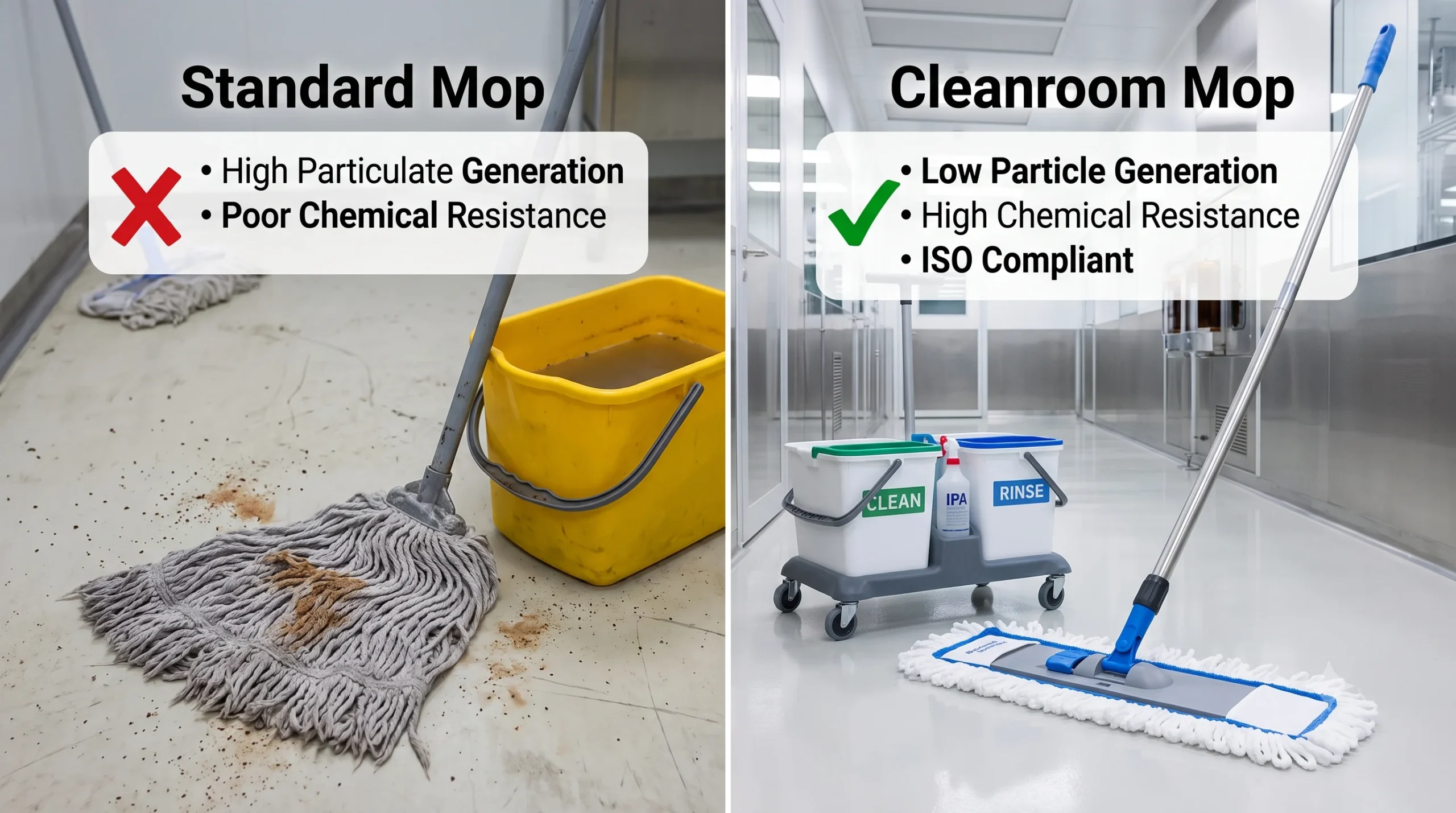
The Unique Demands of Controlled Environments: Traditional mops, designed for general cleaning, are fundamentally unsuited for cleanroom applications. They shed fibers, harbor microbes, degrade with aggressive disinfectants, and redistribute contaminants across critical surfaces. These inherent flaws make them a significant source of contamination, directly opposing the rigorous requirements of a controlled environment. A cleanroom demands a fundamentally different approach – one that prioritizes particle and microbial removal without introducing new risks.
The Specialized Solution: Introducing purpose-built cleanroom mop systems designed to actively minimize contamination and uphold stringent cleanliness standards. These aren’t just cleaning tools; they are critical components of your contamination control strategy, engineered to address the specific challenges of maintaining ultra-clean environments. They integrate seamlessly with other cleanroom protocols, such as cleanroom apparel requirements, to create a holistic barrier against contamination.
Preliminary Comparison: Standard vs. Cleanroom Mops
| 特徴 |
✗ Standard Mops |
✓ Cleanroom Mops |
| Particulate Generation |
High (lint, fibers) |
Low-linting, non-shedding materials (microfiber, polyester) |
| 耐薬品性 |
Poor (degradation, leaching) |
Engineered for IPA, H₂O₂, quaternary ammonium, sodium hypochlorite |
| Particle Capture |
Ineffective retention |
Superior capture and controlled release |
| 汚染リスク |
Spreads contaminants |
Minimizes particle and microbial transfer |
| 殺菌 |
Unsuitable |
Autoclavable or pre-sterilized options available |
| デザイン |
Basic, single-purpose |
Ergonomic, modular, efficient |
III. Desire: Achieving Uncompromising Sterility and Regulatory Excellence
The Power of the Right Tools: Elevating Contamination Control with Precision Mopping
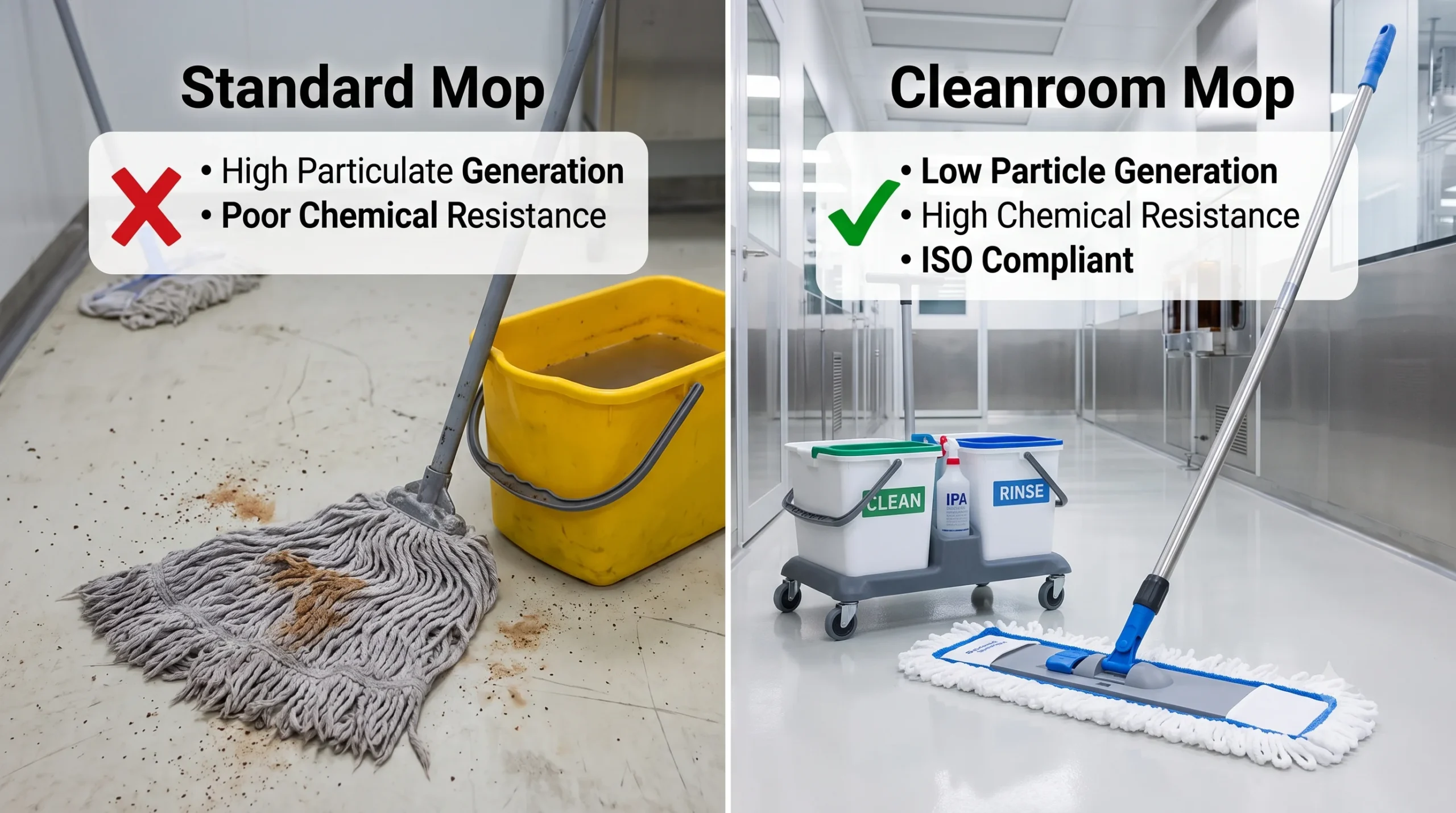
低発塵
Cleanroom mops are meticulously crafted from materials like continuous filament, heat-sealed polyester or advanced microfibers. This construction prevents the introduction of particles during cleaning, a critical factor for maintaining the stringent air cleanliness classifications required by standards such as ISO14644. These materials are often pre-laundered or sterilized to ensure minimal risk of contamination from the mop itself.
化学的適合性
Unlike conventional mops, cleanroom mop materials are specially formulated to withstand harsh cleanroom disinfectants and cleaning agents, including isopropyl alcohol (IPA), hydrogen peroxide, quaternary ammonium compounds, and sodium hypochlorite, without degrading. This ensures effective microbial kill and prevents the mop from leaching undesirable chemicals or fibers into the environment.
無菌性の保証
For aseptic environments and facilities adhering to GMP manufacturing or biological safety zones, autoclavable handles and pre-sterilized (e.g., gamma-irradiated with an SAL of 10⁻⁶) mop heads are indispensable. These options are crucial for reducing bioburden and supporting sterile workflows, particularly in critical Grade A/B areas under ME GMP Annex 1.
Ergonomic & Efficient Design
Modern cleanroom mops feature ergonomic designs with adjustable handles, swivel mop heads, and quick-change mechanisms. These features not only reduce operator fatigue but also enhance cleaning coverage and ensure the consistent application of cleaning agents. By minimizing strain and maximizing efficiency, these designs play a vital role in reducing the potential for human-induced contamination.
Seamless Regulatory Alignment – US & EU Standards in Practice
ISO 14644: Precision Particle Control in Every Sweep
Cleanroom mops are fundamental to maintaining the “in operation” airborne particulate limits defined by ISO 14644-1. The standard outlines nine ISO classes, from ISO Class 1 (cleanest) to ISO Class 9 (least stringent).
- For ISO Class 1–5 (Most Stringent): These highly critical environments require mops with advanced features such as heat-sealed edges, double-bagged laundering, and ultra-low particle shedding materials (e.g., specific continuous filament microfibers or knitted polyester). These characteristics are essential to prevent contamination during cleaning activities.
- For ISO Class 7–8 (Less Critical): While still demanding, these environments may utilize high-quality knitted polyester or nonwoven mops, which effectively manage particle generation without compromising the specified standards.
- Proper mopping techniques, such as directional mopping and multi-bucket systems (often three-bucket systems), directly contribute to achieving and maintaining the specified air cleanliness levels across all cleanroom conditions. These operational aspects are key to compliance with ISO 14644-5.
EU GMP Annex 1 (2023 Revision): Mastering Microbial Purity for Sterile Products
The latest revision of ME GMP Annex 1, effective August 25, 2023, places a strong emphasis on a holistic, risk-based approach to contamination control. Cleanroom mops are a core component of this strategy.
- Contamination Control Strategy (CCS) Integration: Cleanroom mops are an integral part of your facility’s comprehensive 汚染制御戦略(CCS), especially for surface disinfection protocols.
- Grade A/B Environments: For the most critical aseptic processing zones, Annex 1 mandates the use of sterile, autoclavable mop heads and handles, ensuring that no microbial load is introduced during critical operations.
- QRM Principles: Mop selection, cleaning agent compatibility, and protocol validation (e.g., using a three-bucket system to prevent re-contamination) must be justified through Quality Risk Management (QRM) principles.
- Environmental Monitoring Support: Consistent and effective cleaning with appropriate cleanroom mops directly impacts the results of surface sampling and ensures the integrity of environmental monitoring data.
USP <797> & <800>: Safeguarding Sterile Compounding & Hazardous Drug Handling
In the United States, USP <797> そして <800> establish crucial standards for sterile compounding and the handling of hazardous drugs in healthcare settings. Cleanroom mops are vital for compliance with both.
USP <797> (Sterile Compounding)
- ISO5 & 7 Compliance: Specialized flat mops are crucial for precisely cleaning primary engineering controls (PECs)—including laminar airflow workstations and isolators—and buffer areas. These mops ensure that sterile cleaning solutions and sporicidal agents are applied correctly to maintain the required ISO Class 5 and 7 environments for compounding sterile preparations (CSPs).
- Cleaning Protocols: Mops designed for sterile applications facilitate the strict cleaning and disinfection protocols, including the monthly application of sporicidal agents, to prevent microbial contamination of CSPs.
USP <800> (Hazardous Drug Handling)
- 封じ込め & Deactivation: Chemical-resistant cleanroom mops are essential for effectively deactivating, decontaminating, and cleaning surfaces exposed to hazardous drugs (HDs) in negative-pressure ISO 7 buffer rooms and containment PECs (C-PECs).
- 相互汚染の防止: Multi-bucket mopping systems are critical to prevent the spread of HD residues, ensuring the safety of personnel, patients, and the environment, aligning with the stringent safety requirements of USP <800>.
IV. Optimizing Protocols & Apparel for Integrated Compliance
Effective cleanroom cleaning is not just about the mop; it’s about integrating the right tools with meticulous protocols and appropriate クリーンルームアパレル.
Cleanroom Mop Types & Optimal Applications
- Flat Mops:
- 長所: Highly versatile for floors, walls, ceilings, and windows; provide even surface contact; excel at cleaning under equipment and along edges; excellent for controlled disinfectant application.
- 短所: May struggle with very heavy spills or large debris; less aggressive scrubbing action compared to some string mops.
- 以下に最適: Large, smooth surfaces; critical aseptic areas (ISO 5, Grade A/B); applying consistent, streak-free disinfectant films.
- Stringless Mops (Continuous Filament):
- 長所: Extremely low particle generation due to continuous filaments; good for picking up heavier debris or large volumes of liquid; excellent wet/dry performance.
- 短所: Less surface contact than flat mops, making them less ideal for uniform cleaning of walls or ceilings; can be less effective in confined spaces where flat mops excel.
- 以下に最適: Smaller, confined areas where flat mops may not fit; rougher floors; initial heavy wet cleaning in controlled zones.
- Pre-Saturated Mops:
- 長所: Offer unparalleled convenience; ensure consistent chemical concentration and moisture levels with every use; significantly reduce human error in preparation; ideal for quick spot cleaning and standardized protocols.
- 短所: Typically involve a higher ongoing cost per unit; offer limited customization of cleaning solution or saturation levels.
- 以下に最適: Highly critical areas requiring rapid, standardized disinfection; maintaining consistent protocols across shifts and personnel.
モップヘッドの材質 & パフォーマンス
- マイクロファイバー:
- 長所: Superior particle and microbial capture due to microscopic fibers; excellent absorbency; can be highly effective with just water, reducing chemical usage.
- 短所: Can sometimes hold onto particles too effectively if not properly laundered in a cleanroom laundry; may be less durable if not a high-grade, continuous filament variety.
- 以下に最適: ISO Class 1–5 environments; applications needing maximum particle and microbial removal; achieving high levels of cleanliness on smooth surfaces.
- ニットポリエステル:
- 長所: Very low linting and non-shedding; offers high strength and durability; exhibits good chemical resistance to a wide range of disinfectants.
- 短所: Generally less absorbent than microfiber; may not capture sub-micron particles as effectively as specialized microfibers.
- 以下に最適: General cleanroom cleaning (ISO Class 6–8); maintaining barrier integrity; environments requiring frequent disinfection cycles.
- 不織布:
- 長所: Often cost-effective, particularly for disposable options; provide low linting for single-use applications, minimizing cross-contamination.
- 短所: Generally less durable than woven or knitted materials; not suitable for aggressive scrubbing; limited reusability.
- 以下に最適: Disposable applications; less critical cleanroom zones; specific chemical applications where disposability is preferred.
- Heat-Sealed Edges: Absolutely essential for all mop heads used in ISO Class 1–5 environments. This crucial feature prevents fiber shedding, directly supporting particle control regulations and ensuring the integrity of the cleanroom environment during cleaning.
Mopping Protocols for Enhanced Contamination Control
- Three-Bucket System (Cleaning Solution, Rinse Water, Waste):
- Purpose: This system is a cornerstone of cleanroom cleaning, rigorously preventing the re-contamination of clean areas. It ensures that fresh cleaning solution is used for each pass, minimizing the spread of removed contaminants.
- コンプライアンスの影響: Critical for meeting the stringent requirements of EU GMP Annex 1 (as part of the CCS) and USP <797>/<800> (for cross-contamination prevention of microbes and hazardous drugs).
- Directional Mopping (Consistent Pattern):
- Purpose: A consistent mopping pattern (e.g., overlapping strokes, pulling from clean to dirty) ensures complete surface coverage and effectively sweeps contaminants away from critical process areas.
- コンプライアンスの影響: Directly supports the operational aspects outlined in ISO 14644-5 and EU GMP Annex 1’s focus on uniform and effective cleaning practices.
- Water Quality (Distilled/Ionized):
- Purpose: Only distilled or ionized water should be used for mopping in cleanrooms. This avoids introducing contaminants (such as minerals, particles, and microbes) that are commonly found in tap water, which can leave residues or introduce new sources of contamination.
- コンプライアンスの影響: Essential for maintaining specified air cleanliness levels and preventing unwanted residues, crucial for compliance with USP <797>/<800> and EU GMP Annex 1, particularly for sterile product manufacturing.
Cleanroom Apparel as a Protocol Interlock
The effectiveness of cleanroom mopping protocols is intrinsically linked to the adherence to strict cleanroom apparel standards.
- Gowning Levels:
- ISO 7/8 (Frocks, Bouffant Caps, Shoe Covers): Adequate for less stringent areas where general particle control is the primary concern. Mopping protocols in these areas focus on maintaining basic cleanliness and minimizing general particulate.
- ISO 5/6 or GMP Grade A/B (Full Coveralls, Hoods, Boot Covers, Double Gloves): Essential for aseptic and critical processing zones, significantly reducing human-generated particles and microbes. Mopping protocols in these areas must include sterile tools and validated disinfectants, integrated with rigorous gowning to form a complete barrier against contamination.
- Disposable Apparel (Tyvek/Polypropylene):
- 長所: Cost-effective for single-use applications; eliminates concerns regarding specialized laundry and re-sterilization processes; easily sterilized for immediate use.
- 短所: Can be less breathable than reusable options; may generate more static electricity, which needs to be managed with static dissipative options.
- Protocol Impact: Simplifies processes for high-class or hazardous areas (e.g., those handling hazardous drugs under USP <800>), reducing the risk of garment-borne contamination and cross-contamination.
- Reusable Apparel (Polyester/Carbon Blends):
- 長所: Generally more breathable and comfortable; durable, designed to withstand multiple uses; can incorporate electrostatic dissipative (ESD) properties to prevent static discharge; more environmentally friendly over time.
- 短所: Requires specialized cleanroom laundry services and rigorous sterilization validation to ensure continued low-linting and sterility performance.
- Protocol Impact: Offers long-term cost benefits and increased comfort for operators but necessitates robust cleanroom laundry protocols to ensure continued compliance and impact the overall Contamination Control Strategy.
V. Action: Elevate Your Cleanroom Cleaning Strategy Today
Don’t let your cleanroom mopping protocols be a weak link in your contamination control strategy. Partner with experts who understand the intricate interplay between specialized tools, rigorous protocols, and evolving regulatory mandates.
Ready to Fortify Your Contamination Control?
Take the next step toward uncompromising sterility and full regulatory compliance.
- 1Request a Comprehensive Cleanroom Assessment: Identify gaps and opportunities in your current cleaning practices and receive tailored recommendations for improvement.
- 2Explore Advanced Cleanroom Mop System Solutions: Discover a range of purpose-built tools tailored to your specific ISO classification, industry, and regulatory requirements.
- 3Consult Our Experts: Develop a robust, compliant 汚染制御戦略(CCS) that integrates cutting-edge mopping technologies with best-in-class gowning and operational procedures.
Schedule a Consultation →
Future-proof your operations, ensure patient safety, and maintain impeccable product integrity with a cleaning strategy that truly delivers.
よくある質問
What is a cleanroom mop and how is it different from a regular mop?
A cleanroom mop is a specialized cleaning tool specifically designed to meet the stringent cleanliness and sterility requirements of controlled environments like pharmaceutical labs and semiconductor fabrication. Unlike regular mops, cleanroom mops are engineered from low-linting, non-shedding materials, offer high chemical resistance to harsh disinfectants, and are often autoclavable or pre-sterilized to actively minimize and remove contamination without introducing new risks.
Standard mops are fundamentally unsuited for cleanroom applications because they shed fibers, harbor microbes, degrade with aggressive disinfectants, and redistribute contaminants. This can undermine cleanroom investments, leading to non-compliance with regulations like ISO 14644 and EU GMP Annex 1, and potentially causing product recalls and significant financial losses. Purpose-built cleanroom mops are critical components of a contamination control strategy, prioritizing particle and microbial removal to uphold stringent cleanliness standards and protect product integrity and patient safety.
How do cleanroom mops support ISO 14644 air cleanliness requirements?
Cleanroom mops are fundamental to maintaining the airborne particulate limits defined by ISO 14644-1. For highly critical environments (ISO Class 1–5), advanced mops with heat-sealed edges and ultra-low particle shedding materials are essential to prevent contamination during cleaning. In less critical areas (ISO Class 7–8), high-quality knitted polyester or nonwoven mops suffice.
Proper mopping techniques, such as directional mopping and multi-bucket systems, directly support achieving and maintaining specified air cleanliness levels as per ISO 14644-5.
What does EU GMP Annex 1 require for mops in aseptic areas?
Cleanroom mops are an integral part of a facility’s comprehensive Contamination Control Strategy (CCS) under the revised EU GMP Annex 1. For critical aseptic processing zones (Grade A and B), Annex 1 mandates the use of sterile, autoclavable mop heads and handles to prevent microbial load introduction.
Mop selection, chemical compatibility, and protocol validation (e.g., three-bucket systems) must be justified through Quality Risk Management (QRM) principles to ensure the highest level of contamination prevention, directly impacting environmental monitoring results for microbial purity.
Are cleanroom mops required for USP <797> そして <800> compliance?
Yes, cleanroom mops are vital for compliance with both USP <797> そして <800>. For sterile compounding under USP <797>, specialized flat mops ensure correct application of sterile cleaning and sporicidal agents to maintain ISO Class 5 and 7 environments.
For USP <800> (hazardous drug handling), chemical-resistant cleanroom mops are essential for deactivating, decontaminating, and cleaning surfaces exposed to hazardous drugs, and multi-bucket systems prevent cross-contamination, protecting healthcare workers and the environment.
What are the essential mopping protocols in regulated cleanrooms?
Essential mopping protocols include using a three-bucket system (for cleaning solution, rinse water, and waste) to prevent re-contamination, ensuring fresh solution for each pass. Directional mopping with a consistent pattern (e.g., overlapping strokes, clean-to-dirty) ensures complete surface coverage.
Furthermore, only distilled or ionized water should be used for mopping to avoid introducing contaminants like minerals, particles, or microbes found in tap water, which can leave residues or create new sources of contamination.
How does proper gowning interact with cleanroom mopping effectiveness?
The effectiveness of cleanroom mopping is intrinsically linked to adherence to strict cleanroom apparel standards. Proper gowning, such as full coveralls, hoods, and boot covers in ISO Class 5/6 or GMP Grade A/B areas, significantly reduces human-generated particles and microbes.
This ensures that the act of cleaning with specialized mops is not compromised by contamination from personnel, forming a holistic barrier against environmental contamination. Disposable or reusable apparel, properly laundered and sterilized, reduces the risk of garment-borne contamination.