製薬床の清掃 & 汚染制御
A practical guide to validated cleanroom mopping procedures, including floor cleaning sequence, unidirectional mopping, disinfectant contact time, mop replacement frequency, and sterile vs reusable mop strategy.
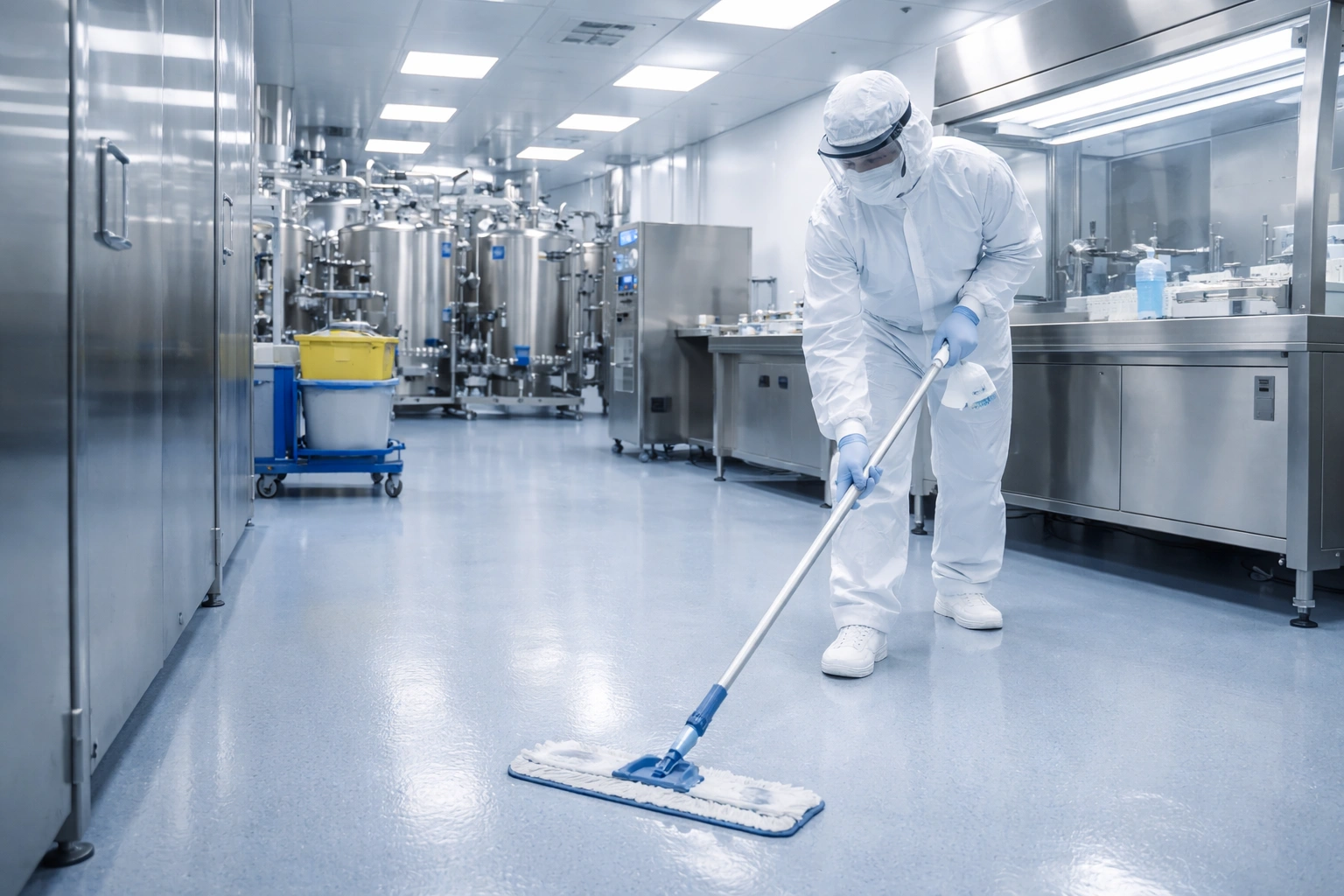
A cleanroom mopping SOP is a validated floor cleaning procedure that defines mop system selection, unidirectional cleaning technique, disinfectant application, mop replacement frequency, and documentation requirements to achieve consistent contamination control in pharmaceutical cleanrooms. In GMP environments, mopping SOPs must support repeatability, traceability, and controlled contamination movement.
In pharmaceutical cleanrooms, the floor is one of the largest exposed surfaces and one of the most common pathways for redistributed particles and residues. Personnel movement, wheeled equipment, airflow disruption, and wet chemistry all increase the risk of floor-related contamination.
だからこそ、床掃除は単なる家事ではありません。これは、以下に直接影響を与える汚染管理活動です。
より広範なシステムレベルのフレームワークが必要な場合は、「 クリーンルーム清掃SOPガイド. If you need critical-grade procedure detail, review the ISO 5 クリーンルームの清掃手順.
Before floor cleaning begins, personnel should complete the required gowning, training, and area-entry controls. Only approved mop systems, wipes, disinfectants, and buckets should enter the room.
資格のあるオペレーター、ガウンの遵守、トレーニングの承認、逸脱の認識。
滅菌または検証済みのモップヘッド、承認済みの消毒剤、管理された水源、クリーンルームのバケツ。
清掃ログ、必要に応じてバッチのトレーサビリティ、消毒剤の準備記録、シフトの承認。
Mop system choice affects validation burden, contamination risk, operator workload, and long-term cost. In critical pharmaceutical environments, the SOP should clearly define whether disposable sterile mop heads or reusable mop systems are approved.
| 特徴 | 滅菌使い捨てモップ | 再利用可能なモップ |
|---|---|---|
| 初期費用 | より高い | より低い |
| 検証の負担 | より低い | より高い |
| 相互汚染のリスク | 非常に低い | 中くらい |
| ワークフローの一貫性 | 高い | 中くらい |
| 廃棄物の発生 | より高い | より低い |
| 長期的な運用ロジック | 単純 | より複雑な |
より詳細な商業的および技術的な比較については、を参照してください。 使い捨てと再利用可能なクリーンルームモップ そして 製薬用クリーンルームモップの要件.
Unidirectional mopping is the core rule in pharmaceutical floor cleaning. The mop should move from the cleanest area toward the less critical area, without dragging contamination back across already-cleaned surfaces.
最もクリーンなゾーンまたは定義された開始境界から開始します。
モップを一方向にのみ前方に動かします。
パス間で 5 ~ 10 cm のオーバーラップを維持します。
後戻りせずに出口または汚れたエリアに向かって進みます。
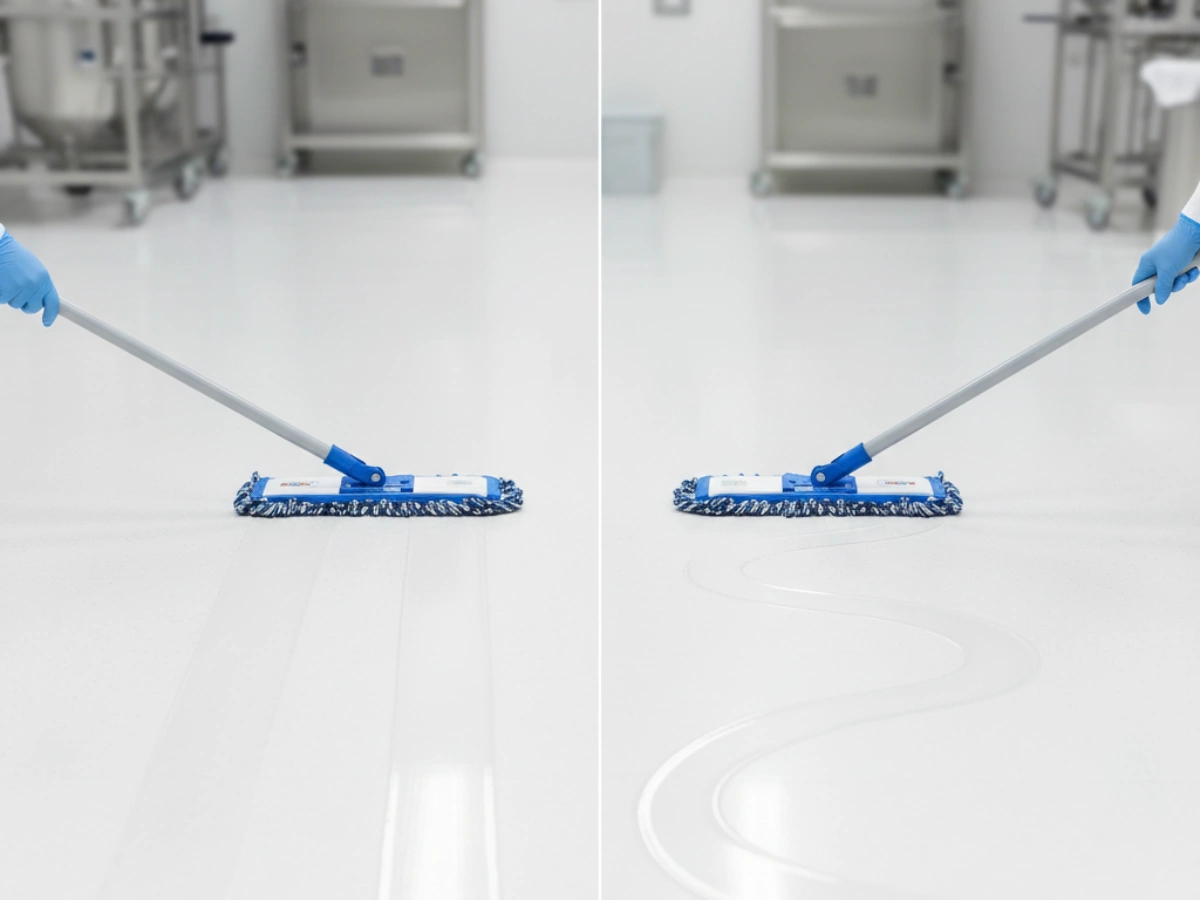
Mops should be sufficiently wetted to achieve uniform floor coverage without creating excessive pooling. The SOP should define the approved saturation range, disinfectant type, application method, and minimum wet contact time.
| コントロールポイント | 推奨ロジック |
|---|---|
| モップの飽和 | 床を過度に濡らすことなく、一貫したカバーに十分な量 |
| 連絡時間 | 検証された消毒剤の要件に正確に従ってください |
| カバレッジチェック | 乾いた隙間や過剰な水たまりがない |
| 検証 | 視覚的なレビュー、ログ、および必要に応じて ATP または環境のフォローアップ |
Mop replacement should be defined scientifically, not casually. In high-grade environments, contaminated or overloaded mop heads quickly lose effectiveness and may spread residue instead of removing it.
| クリーンルームグレード | 一般的なエリア範囲 | 交換時期 |
|---|---|---|
| ISO5 | 約50㎡ | 過負荷の場合は 2 時間ごと、またはそれより早く |
| ISO7 | 約100㎡ | 4時間ごと |
| ISO8 | 約200㎡ | 6時間ごと |
The final replacement rule should always be confirmed by your facility’s risk assessment, room classification, disinfectant chemistry, and environmental monitoring trends.
Many pharmaceutical sites use a disinfectant rotation strategy rather than relying on one chemistry. A common model is routine alcohol use, scheduled hydrogen peroxide or equivalent broad-spectrum chemistry, and periodic sporicidal intervention.
必要に応じて、ゾーン専用のツールと色分けを使用します。
タイマー、トレーニング、濡れた表面のチェックを使用して、早期の乾燥を避けてください。
面積、時間、汚れ負荷に応じて交換ルールを設定します。
トレーニングを標準化し、理論だけでなく実行を評価します。
| コストカテゴリ | 使い捨てモップ | 再利用可能なモップ |
|---|---|---|
| 初期投資 | 45,000ドル | 25,000ドル |
| 検証コスト | 5,000ドル | 25,000ドル |
| 運営コスト | 35,000ドル/年 | 15,000ドル/年 |
| 廃棄物の処理 | 8,000ドル/年 | 2,000ドル/年 |
| 労働への影響 | 20,000ドル/年 | 28,000ドル/年 |
| 総費用(3年間) | 143,000ドル | 125,000ドル |
Disposable sterile mops are often preferred in high-risk aseptic environments because they reduce validation complexity and cross-contamination risk. Reusable systems may still be valid in the right facility, but they require tighter washing, tracking, integrity control, and qualification management.
1週目: SOP の草案を作成し、責任を割り当て、オペレーターを訓練し、モップ システムを選択します。
2週目: 洗浄ロジックを検証し、消毒剤の使用を確認し、記録を確立します。
3週目: 手順を試行し、ATP またはモニタリング データを確認し、詳細を調整します。
第 4 週: 完全な実装、再トレーニング、トレンドのレビュー、継続的な改善の開始。
この簡素化された決定ロジックを使用して、滅菌使い捨てモップ システムと再利用可能なモップ システムのどちらかを選択します。
そのエリアは高リスクの無菌エリアですか、それとも ISO 5 が重要ですか?
汚染リスクを低くし、検証を容易にするために、滅菌使い捨てモップシステムを優先します。
ステップ 2 に進み、運用要素と検証要素を評価します。
あなたのサイトには、再利用可能なモップの強力な洗浄、乾燥、追跡、完全性管理が備わっていますか?
再利用可能なモップシステムは、汚染リスクと検証能力が適切に制御されていれば実行可能である可能性があります。
通常、滅菌使い捨てモップ システムはより安全で、操作も簡単です。
検証の負担を軽減することが優先事項ですか?
認定、トレーサビリティ、変更管理を簡素化するには、滅菌済みの使い捨てモップ システムを選択してください。
施設がより高度なプロセス制御の複雑さを許容する場合、再利用可能なモップ システムは引き続き機能する可能性があります。
ISO 5 environments often require floor cleaning every shift or more frequently depending on risk. ISO 7 and ISO 8 frequencies are usually lower, but final rules should be based on facility risk assessment.
検証には、ATP テスト、微生物サンプリング、傾向レビュー、および完全な湿潤範囲の視覚的確認が含まれる場合があります。
再利用可能なモップは、再利用する前に、検証された乾燥ウィンドウ内で完全に乾燥させ、管理された清潔な場所に保管する必要があります。
選択は、部屋の分類、汚染リスク、検証能力、運用ワークフロー、総コストのロジックによって異なります。
Midposi provides pharmaceutical-grade cleanroom mop systems designed for contamination control, including sterile disposable mop heads and validated reusable microfiber systems.