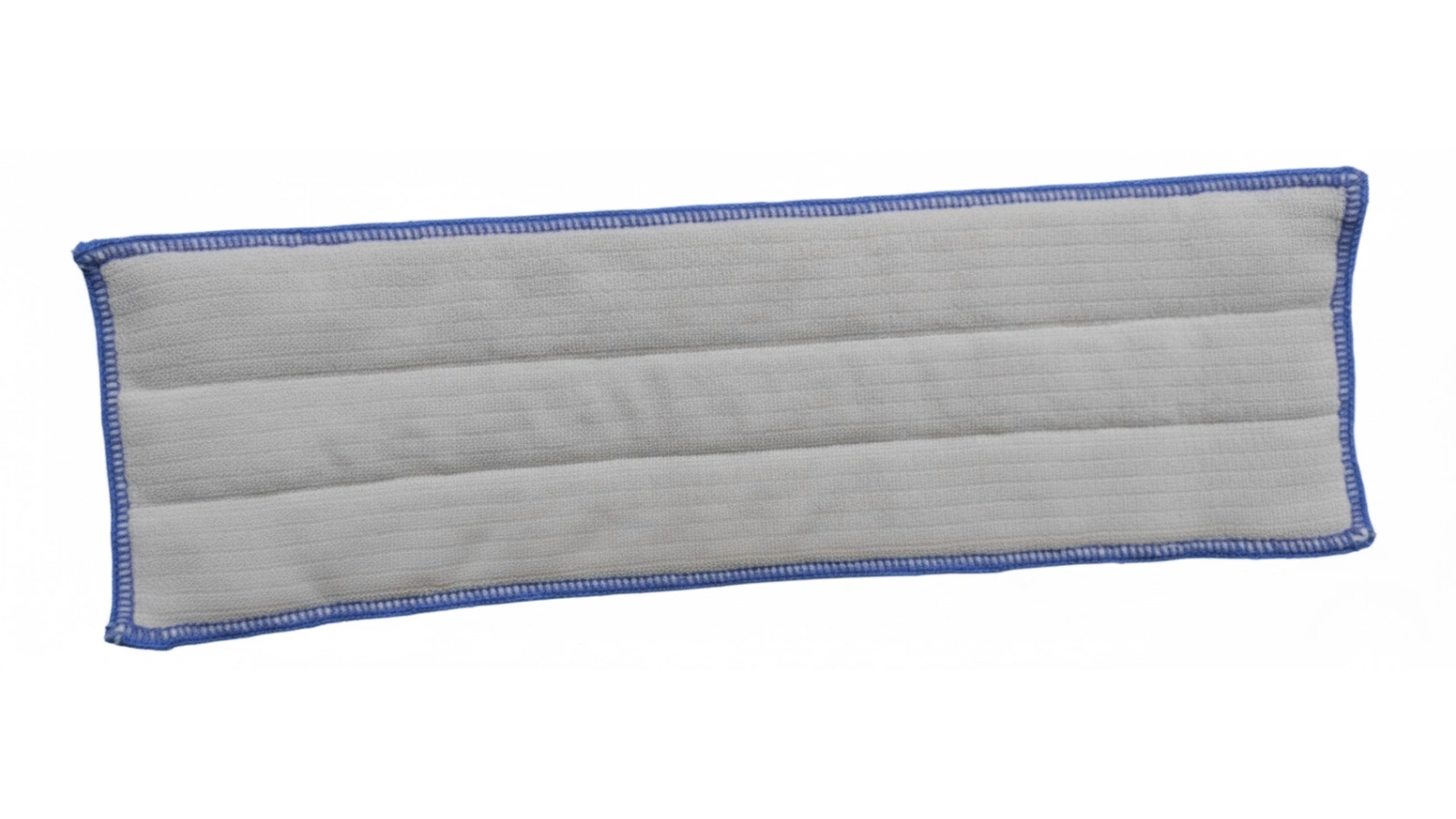
2 つの主要なクリーンルーム モップ ファブリック技術の技術的かつ証拠に基づく比較。粒子発生メカニズム、吸収性、化学的適合性、耐久性、ライフサイクルコスト、および QA リーダー、調達チーム、クリーンルーム施設管理者向けの施設グレードベースの意思決定フレームワークをカバーします。
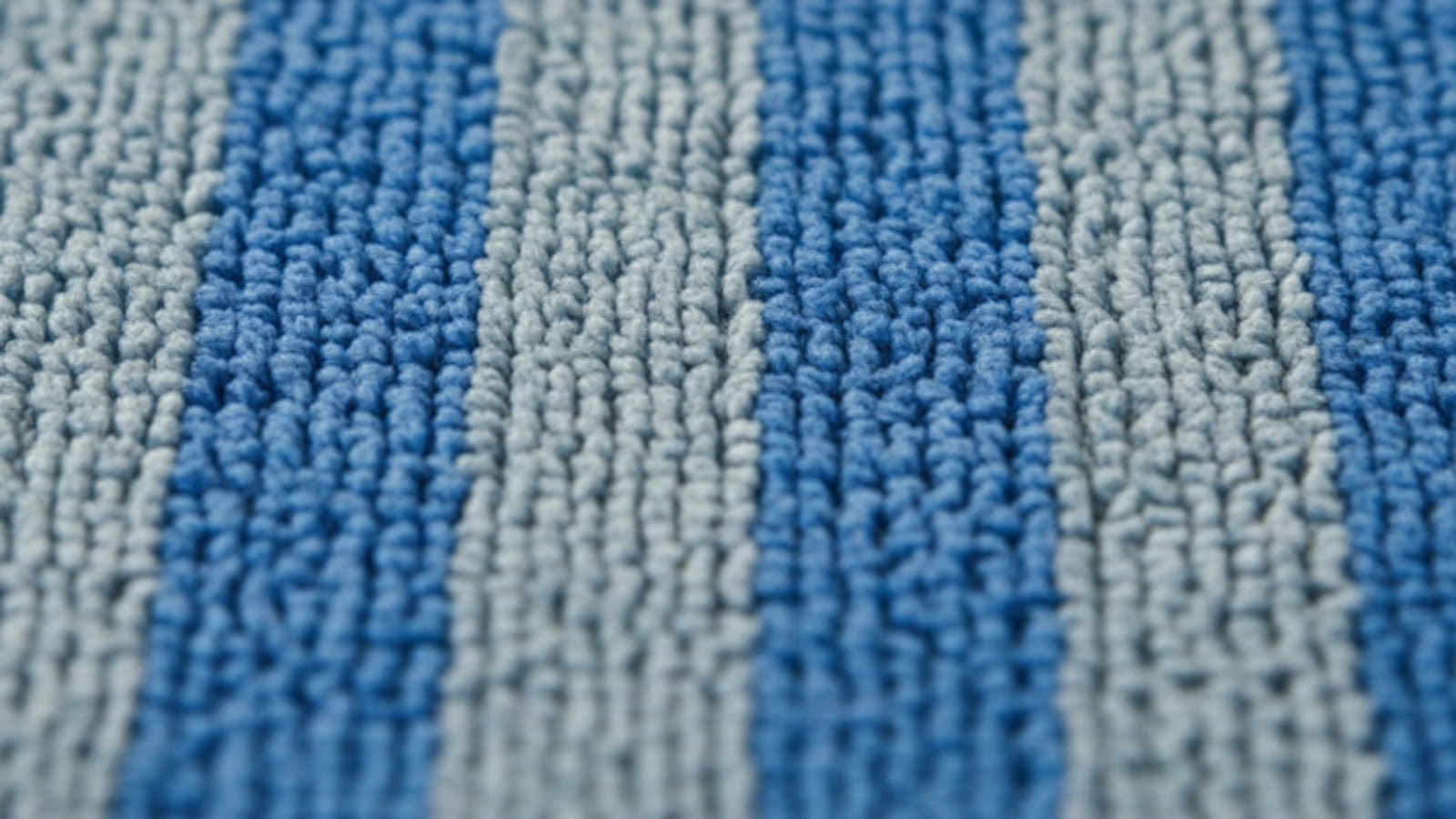
クリーンルームモップはマイクロファイバーとポリエステルのどちらかを選択できます。 単純な「どちらかが良い」という決断ではない。それは、クリーンルームの ISO/GMP 分類、使用する洗浄薬品、粒子発生の許容閾値、および施設が吸収性と洗浄効率を優先するか、粒子制御と耐薬品性を優先するかによって異なります。
あ 単一成分の合成材料 連続ポリエステルフィラメントを多層生地構造に編んで作られています。レーザーカット、超音波、またはヒートシール方法でエッジシールされ、周囲での繊維の剥離を防ぎます。
通常、次の場合にはより適切な選択となります。 施設は ISO 5 で運用されています–6 / GMPグレードA–B、強力な酸化消毒剤を使用し、再利用可能なプログラムで繰り返しオートクレーブ滅菌する必要があるか、粒子制御が主な汚染の懸念事項です。
アン 極細合成繊維混紡 (通常はポリエステル/ポリアミド)、単一のフィラメントを複数のくさび形のマイクロフィラメントに分割することによって製造されます。これにより、液体と粒子を捕捉するための高い表面積と毛細管現象が生じます。
通常、次の場合にはより適切な選択となります。 施設は ISO 7 で運用されています–8 / GMPグレードC–D、洗浄効果と残留物の除去が優先され、洗浄化学薬品が穏やかであるか、または最大の使用ごとの洗浄力が望まれる場合には、単回使用の使い捨て用途が好ましい。
短い答え: ポリエステル (特に、端がシールされた連続フィラメントニット) は、通常、粒子の生成が少なく、より強力な化学的適合性を提供します。—ISO 5 のより一般的な推奨事項となっています–6 / GMPグレードA–B環境。マイクロファイバー (スプリットフィラメント構造) は通常、より高い吸収性と優れた機械的粒子捕捉を提供します。—ISO 7 で強力なパフォーマンスを発揮します–8 / GMPグレードC–D 超低粒子要件よりも洗浄効果が優先される環境。 どちらの材料も、現代のクリーンルーム作業全体に関連し続けます。正しい選択は施設によって異なります。
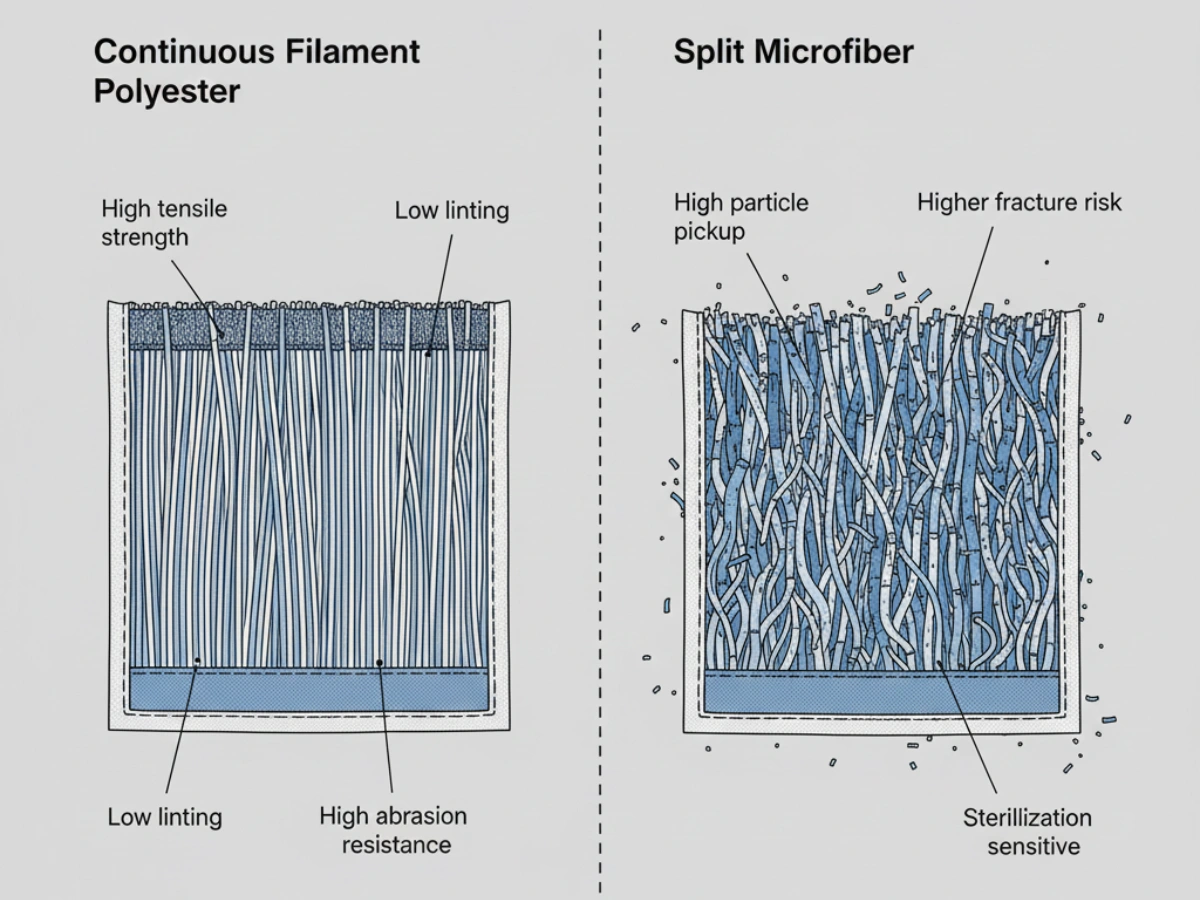
マイクロファイバーとポリエステルのクリーンルームモップの性能の違いは、繊維レベルで生じます。各材料がどのように構成されているかを理解することで、粒子の発生、吸収性、化学的適合性、耐久性を評価するための基礎が得られます。—サプライヤーのマーケティング上の主張に頼るのではなく、
クリーンルームグレードのポリエステルモップは、 連続長繊維ポリエステル (PET)—長く切れ目のない合成繊維を押し出し、編んで生地にしました。短い繊維が一緒に紡がれるステープルファイバー織物とは異なり、連続フィラメント構造により、布地本体内のほつれた繊維端の数が意図的に最小限に抑えられます。これが、粒子脱落の低減の主な構造的要因です。
一本の長い繊維が生地の中を途切れることなく通っています。フィラメントの端が少ない = 破損点が少ない = 理論的には粒子の放出が少なくなります。これは、粒子に敏感なクリーンルーム用途における基本的な構造上の利点です。
クリーンルーム用に製造されたポリエステルモップ—MIDPOSIのホワイトモップシリーズなど—通常は多層ニット構造を使用します。編みパターンと層数は、使用中の液体の分布、吸収性、モップヘッドの機械的安定性に影響します。
モップの周囲は切断された繊維端の集中ゾーンを表すため、エッジの仕上げは重要な製造品質指標です。クリーンルーム用ポリエステルモップは、レーザーカット、超音波、またはヒートシールされたエッジを使用して周囲をシールし、エッジのほつれを防ぎます。エッジ シーリングの品質は、フィラメントの種類自体と同じくらい粒子のパフォーマンスに影響を与える可能性があります。
繊維の太さ(デニール)は、モップの手触り、接液効率、耐久性に影響します。より細いデニールのポリエステル繊維は、液体塗布のための潜在的に優れた表面接触を備えたより柔らかい生地を生成します。デニールの粗い繊維は、より優れた耐摩耗性を提供する可能性があります。これはメーカー固有の変数であり、材料定数ではありません。
クリーンルームグレードのマイクロファイバーモップを使用 スプリットフィラメントテクノロジー。製造中に、単一の二成分フィラメント (通常、ポリエステルコア + ポリアミド/ナイロンシース、またはポリエステル/ポリアミドの並列構成) が機械的または化学的に複数のくさび形マイクロフィラメントに分割されます。元のフィラメントごとに 8 個のフィラメントを生成できます。–16本の個別のマイクロフィラメントにより、同じ生地重量内で繊維数と総表面積が劇的に増加します。
各マイクロフィラメントのくさび形の断面が、マイクロファイバーの洗浄上の利点の源です。ウェッジの鋭いエッジが微粒子を機械的にこすって捕捉し、フィラメント間の隙間が液体を引き込む毛細管チャネルを形成します。これは物理的な捕捉メカニズムであり、化学的なメカニズムではありません。
ほとんどのクリーンルームグレードのマイクロファイバーはポリエステル/ポリアミド (ナイロン) ブレンドを使用しています—通常70–ポリエステル80%、20–30% ポリアミド。ポリエステルは構造的完全性を提供します。ポリアミドは吸収性とそれ自体の分裂挙動に寄与します。この混合比は、この記事で後述する性能上の利点と化学物質過敏症の懸念の両方の原因となります。
クリーンルーム用マイクロファイバーモップには、ループ状またはカットパイルの表面構造が使用されている場合があります。ループ状構造は一般に、各フィラメントが両端で固定されているため、使用中に緩む繊維が放出されることが少なくなります。カットパイル構造ではより多くのフィラメント端が露出し、粒子の放出が増加する可能性があります。これは、クリーンルーム用途にとって重要な品質変数です。などの製品 マイクロファイバーストライプクリーンルームモップパッド クリーンルームへの適合性を高めるために、エッジがシールされたループ構造を採用しています。
元の各フィラメントが複数のマイクロフィラメントに分割されるため、材料 1 グラムあたりの総繊維表面積は、従来の紡糸ポリエステルよりも大幅に大きくなります。これがマイクロファイバーの高い吸収性と粒子捕捉能力の構造基盤です。—しかし、表面積が同じということは、材料が古くなると、繊維の劣化や粒子の放出が発生する可能性のある場所が増えることも意味します。
連続フィラメントのポリエステルと分割フィラメントのマイクロファイバーの構造上の違いは、単なる学術的なものではありません。これは、観察可能なパフォーマンスのトレードオフを直接説明しています。
| 寸法 | ポリエステル(連続長繊維ニット) | マイクロファイバー(スプリットフィラメント) |
|---|---|---|
| ファイバーの種類 | 連続単一フィラメント | スプリットマルチフィラメントウェッジ |
| 構成 | ポリエステル100%(PET) | ポリエステル/ポリアミドブレンド (通常: 70–80/20–30) |
| グラムあたりの表面積 | 比較的低い | 比較的高い(分割ジオメトリ) |
| 一次粒子放出機構 | 主にエッジ関連。連続フィラメント本体からの低電圧 | 分割フィラメントによる繊維の破損。エッジ関連も |
| エッジ仕上げ | レーザーカット、超音波、またはヒートシール | メーカーによって異なります。クリーンルームでの使用にはシールされたエッジが必要です |
| 一般的なクリーンルームへの適合性 | ISO5–8 / GMP A–D(施工品質による) | ISO7–8 / GMP C–D の方が一般的です。 ISO5–6 資格あり |
| 水の相互作用 | 本質的に疎水性。ニット構造による吸収性 | ウェッジ形状による毛細管現象。ポリアミド成分で自然に親水性 |
注記: この表は、材料レベルの構造特性を比較しています。実際の製品のパフォーマンスは、フィラメントの固定品質、ニット密度、エッジシーリング方法の一貫性、全体的な製造品質管理などのメーカー固有の変数によって決まります。これらの特性は、材料の種類だけから推測するのではなく、特定の製品およびサプライヤーで検証する必要があります。
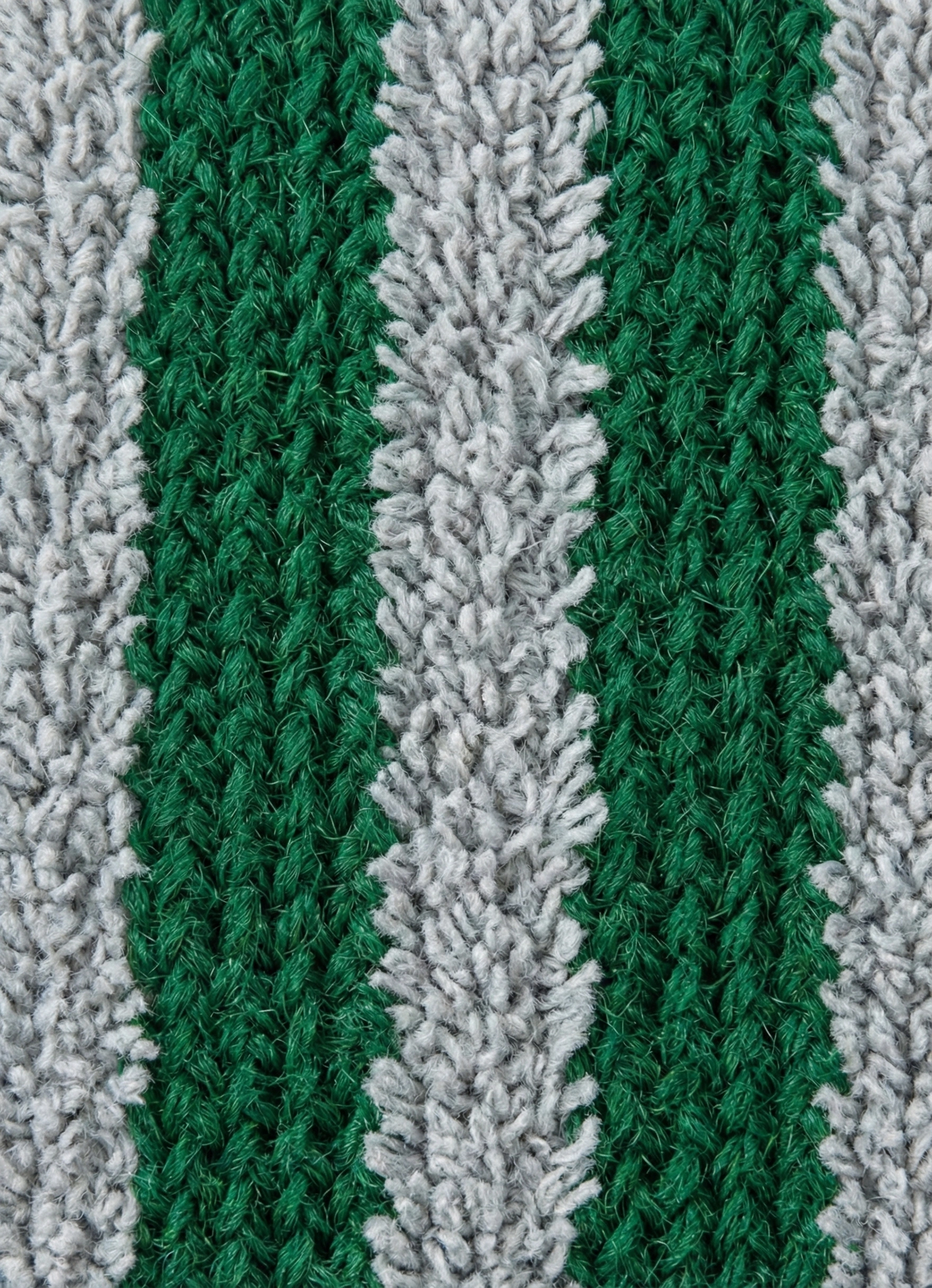
これは、モップの素材が特定のクリーンルームの分類に適しているかどうかを最も直接的に決定する寸法です。問題は単に「どの素材がよりクリーンか?」ということではありません。しかし、「どの材料がどのようなメカニズムで、どのような条件で粒子を生成するのか?」
クリーンルーム モップは、次の 3 つの主要なメカニズムを通じて粒子を生成します。
フィラメントの種類—連続または分割—これらのメカニズムのどれがどの程度支配的であるかに直接影響します。流体の存在と機械的作用によって 3 つのメカニズムがすべて加速されるため、湿式モップ粒子データが乾燥状態の測定値と異なる場合があります。
粒子制御における連続フィラメント ポリエステルの構造上の利点は次のとおりです。 フィラメントの端が少ない = 潜在的な粒子源が少ない。各フィラメントが生地内を途切れることなく走行するため、より短い個々のステープルファイバーやスプリットマイクロフィラメントで構成される生地と比較して、破損の開始点が少なくなります。
ポリエステルの一般的な粒子プロファイルの低下に寄与する追加の要因:
重要な注意事項: このプロファイルは、適切に製造された製品を前提としています。粒子の性能は製造プロセスに依存します。表面繊維が緩いエッジシールが不十分なポリエステルモップは、エッジがシールされフィラメントが固定されているよくできたマイクロファイバーモップよりも多くの粒子を生成します。材料の種類によって構造的な傾向が決まります。その傾向が実現するかどうかは製造品質によって決まります。
マイクロファイバーのスプリットフィラメント構造は、固有の粒子リスクのトレードオフを生み出します。 優れた粒子捕捉を提供する同じ構造的特徴により、より多くの潜在的な粒子放出ポイントも生成されます。。分割された各マイクロフィラメントは連続ポリエステル フィラメントよりも薄くて壊れやすく、単位面積あたりのマイクロフィラメントの数が多くなります。
マイクロファイバー粒子の生成に影響を与える主な変数:
重要な注意事項: 評判の高いメーカーの高品質マイクロファイバーは、シールされたエッジと固定されたループ構造を備えており、ISO 7 の粒子要件内で十分な性能を発揮します。–8 つの環境に対応しており、認定テストにより ISO 5 に適している可能性があります。–6つのゾーン。素材の種類だけでは、マイクロファイバーがクリーンルームで使用できないわけではありません。これは、粒子のパフォーマンスを仮定するのではなく検証する必要があることを示します。
テスト方法が異なるため、さまざまなモップ供給業者からの粒子生成データを直接比較するのは困難な場合があります。サプライヤーの粒子データを評価するときは、次の点を考慮してください。
重要な免責事項: この比較は、材料レベルの構造傾向を説明します。粒子の性能は、対象となるクリーンルーム用途に関連するテスト条件を使用して、検討中の特定の製品で検証する必要があります。この記事における材料レベルの主張は、特定の製品の性能保証を構成するものではありません。
粒子の発生がポリエステルが有利な点であるとすれば、クリーンルーム作業においてマイクロファイバーがその役割を担うのは洗浄効果です。吸収性と機械的粒子除去における目に見えるパフォーマンスの違いは実際のものです—ただし、粒子発生のトレードオフと各クリーンルーム ゾーンの特定の要件を考慮する必要があります。
マイクロファイバーの洗浄上の利点は、化学洗浄剤ではなく、その物理的構造に根ざしています。
連続フィラメントのポリエステルは本質的に疎水性です—ベースポリマーは水を吸収しません。ただし、これはポリエステル製クリーンルームモップが液体を吸収できないという意味ではありません。ポリエステルモップの吸収性は、生地の構造によって決まります。
洗浄効果のパラドックス: マイクロファイバーの優れた洗浄力は本物であり、標準化された洗浄効果テストで実証されています。ただし、クリーンルームでは、「より良い洗浄」は、汚染リスクを生じさせない場合にのみ有益です。—特にパーティクル生成を通じて—それは洗浄効果を超えています。 ISO 5 / GMP グレード A 環境では、粒子制御が主な関心事となり、ポリエステルの(最大ではなく)適切な吸収性がより適切な選択となる場合があります。 ISO7の場合–8 / GMPグレードC–粒子のしきい値がそれほど厳しくない D 環境では、マイクロファイバーの洗浄効果の利点により、有意義な運用改善を推進できます。
これは、多くのクリーンルーム モップの調達評価で見落とされている側面です—また、間違ったモップ素材と施設の消毒剤処方が組み合わされている場合、技術的に正しい素材を選択しても運用上問題が生じる可能性があります。
ポリマークラスとしてのポリエステル(PET)は、 広い抵抗 クリーンルームの消毒に一般的に使用される幅広い化学薬品まで:
ほとんどのクリーンルームグレードのマイクロファイバーは化学的適合性プロファイルがより微妙であるため、 ポリエステル/ポリアミド (ナイロン) ブレンド。ポリアミド成分により、純粋なポリエステルにはない化学感受性が導入されます。
ポリアミド成分の劣化は、繊維の脆弱化、粒子脱落の増加、吸収性の低下(毛細管構造の劣化による)、再利用可能な用途における全体的な耐用年数の短縮として現れます。
重要: 化学的適合性は、材料固有だけでなく製品固有です。生地の構造、エッジ結合の化学薬品、ステッチ糸の素材、および生地の処理の違いが、全体的な耐薬品性に影響を与える可能性があります。モップメーカーに特定の化学適合性データを必ず要求してください。 あなたの 施設の消毒剤処方書を確認し、実際の使用条件下での施設内互換性テストを通じて検証します。
次の表は、上記および以降のセクションで説明した 6 つのパフォーマンスの側面すべてにわたる材料レベルの比較をまとめたものです。これは、製品固有の評価の代わりとしてではなく、概要として使用してください。
| パフォーマンスの次元 | ポリエステル(連続長繊維ニット) | マイクロファイバー(スプリットフィラメント) | この次元が決定的な場合 |
|---|---|---|---|
| 1. パーティクルの生成 | 一般に低い(連続フィラメントの利点、破損点が少ない) | 一般に高い(スプリットフィラメント構造、より多くの潜在的なリリースポイント) | ISO5–6 / GMPグレードA–B: 一般にポリエステルが好ましい |
| 2. 吸収力・洗浄力 | 適度;制御された液体放出;日常的な清掃には十分です | より高い。毛細管現象 + 機械的粒子捕捉 | ISO7–8 / GMP C–D 残留物の多いプロトコル: マイクロファイバーの利点 |
| 3. 耐薬品性 | 幅広い互換性。耐酸化性(PET100%) | ポリアミドは酸化剤と酸に敏感 | 強力な消毒剤を使用する施設: 通常はポリエステルが好ましい |
| 4. 耐久性(再利用可能) | サイクル数が増える。劣化が遅い | サイクル数が少ない。洗濯によるフィラメントの破損が進行する | 高頻度で再利用可能なプログラム: 通常はポリエステルが推奨されます |
| 5. 使い捨て(単回使用) | 利用可能;無菌性と汚染管理に重点を置いています | 利用可能;使用ごとの最大の洗浄力に焦点を当てた | 選択は優先順位に依存します: 粒子制御と使用ごとの洗浄力 |
| 6. コスト (方向性) | 前下がりの部分。再利用可能な耐用年数が長い | 前払い額が高くなります。再利用可能な耐用年数が短くなる | 使用量が多い再利用可能なプログラム: ポリエステルのコストメリット |
開示: この表は、材料レベルの方向性の比較を示しています。実際の製品の性能は、フィラメントの品質、編み密度、エッジシール方法、層構造、全体的な製造品質管理などのメーカー固有の変数によって異なります。いかなる製品または材料タイプについても、絶対的な性能を主張するものではありません。すべての比較は、製品固有の評価、および可能であれば施設内テストを通じて検証する必要があります。
耐久性は総所有コストと交換頻度に直接影響します。 2 つの材料は異なるメカニズムと異なる速度で劣化します。これらの違いは、再利用可能な (洗濯/滅菌された) 用途ではさらに大きくなります。
注記: 実際の交換サイクルデータはサプライヤーから入手する必要があります。—再利用可能なプログラムの場合—施設の実際の洗浄、洗浄、滅菌パラメータを再現する施設固有の洗濯試験で検証されています。サプライヤーが公表したサイクル寿命データは方向性を示すものであり、保証するものではありません。
モップヘッドの単価のみに基づいて調達を決定するのは誤解を招きます。次のフレームワークは、材料タイプごとに異なるコスト構成要素を特定し、施設固有の総所有コスト (TCO) の比較を可能にします。
ただし、初期の材料費は総コスト全体の構成要素の 1 つにすぎず、最大の構成要素ではないことがよくあります。
完全なコスト比較は以下に基づいて行う必要があります。 清掃イベントごとのコスト、モップヘッドあたりのコストではありません:
(モップヘッドのコスト / モップヘッドごとの使用可能なサイクル) + (サイクルごとの洗濯/滅菌コスト) + (洗浄イベントごとの人件費) = 洗浄イベントあたりのコスト
このフレームワークは、いくつかの重要なダイナミクスを明らかにします。
避ける: このフレームワークには、絶対的なコストの数値、「モップ ヘッドあたり X ドル」の主張、または特定の TCO 削減率は含まれていません。各施設は、実際の調達価格、人件費、光熱費、洗濯/滅菌の運営コストを使用して独自のコストモデルを構築する必要があります。
このセクションでは、前述のテクニカル分析を実用的な選択フレームワークに統合します。以下の条件とシナリオを使用して、どの材料が施設のプロファイルに適合するかを自己診断してください。
実際には、いくつかのシナリオにより材料選択の感度が低下します。
主な注意点: 材質は、クリーンルームモップの評価における多くの要素のうちの 1 つです。フレームの互換性、ハンドルのタイプ、滅菌構成、モップヘッドの重量、エッジの仕上げも同様に重要な選択基準です。この比較は、より広範なモップ システムの評価に役立つはずです。—1 つを置き換えるべきではありません。完全なモップ システムを評価するための構造化されたアプローチについては、当社の クリーンルームモップシステムの購入者評価フレームワーク.
| 施設シナリオ | クリーンルームグレード | 代表的な推奨材料 | 主要な理論的根拠 |
|---|---|---|---|
| 無菌医薬品充填 | ISO 5 / GMP A | ポリエステル | 無菌充填ゾーンでは粒子制御が最も重要です。シールされたエッジを備えた連続フィラメント ポリエステルは、この用途においてより予測可能な低粒子プロファイルを提供します。 |
| 医薬品バックグラウンドゾーン | ISO 7 / GMP B–C | ポリエステルまたは高品質のマイクロファイバー | 決定は消毒剤の化学薬品と洗浄頻度によって異なります。酸化性消毒剤を日常的に使用する場合は、ポリエステルの方が安全な選択となる可能性があります。化学的性質が中性で残留物が多い洗浄の場合は、高品質のマイクロファイバーが効果上の利点をもたらす可能性があります。 |
| 医療機器の組み立て | ISO7–8 / GMP C–D | マイクロファイバー | デバイスの接触面から粒子を除去するための洗浄効果が高いことは有益です。粒子のしきい値はそれほど厳しくないため、マイクロファイバーの洗浄上の利点が十分に発揮されます。 |
| バイオテックR&D / 一般研究室 | ISO7–8 | どちらの素材でも | 粒子要件はそれほど厳しくありません。材料固有の性能の違いよりも、コスト、供給の利便性、既存の洗浄剤との適合性が決定要因となる場合があります。 |
| 半導体・エレクトロニクス | ISO5–7 | ポリエステル | 半導体クリーンルームで一般的な強力な洗浄剤と組み合わせた粒子制御。 ESD (静電気放電) を考慮すると、特定の材料構成が優先される場合があります。 |
| 病院の複合施設 (USP) <797>/<800>) | ISO5–7 | ポリエステル | 主要なエンジニアリング制御領域では、粒子の発生を抑えることが重要な要件です。エッジがシールされたポリエステル連続フィラメントニットは、USP 配合環境における粒子制御の期待をサポートします。 |
推奨事項に関する注意: これらは方向性のある材料レベルの提案であり、製品固有の認定ではありません。施設別評価—粒子テスト、化学的適合性検証、洗浄プロトコルの検証を含む—は常に必要です。推奨される材料は、特定の製品、サプライヤー、施設の洗浄パラメーターと照らし合わせて検証する必要があります。
クリーンルームモップの調達に関する議論では、次の 6 つの誤解がよくあります。各修正は、前のセクションで説明したテクニカル分析によって裏付けられています。
現実: 糸くずの発生は繊維の種類 (連続繊維か分割繊維)、エッジ仕上げの品質、製造プロセスの制御によって異なります。—「マイクロファイバー」ラベルではありません。レーザーカットでシールされたエッジと固定された連続フィラメントを備えた高品質のポリエステル ニット モップは、固定が不十分なスプリット フィラメントとシールされていないエッジを備えた低品質のマイクロファイバー モップよりも粒子の発生が少なくなります。材料カテゴリは粒子のパフォーマンスを保証するものではありません。製品固有の製造品質が影響します。
現実: マイクロファイバーに比べてポリエステルの吸収性が低いのは設計上のトレードオフであり、欠陥ではありません。制御された消毒剤の適用が重要な用途—過度に湿らせることなく指定された接触時間を達成し、操作の中断を最小限に抑えるために乾燥時間を管理し、表面積あたりの一貫した消毒剤量を確保します。—ポリエステルの制御された液体放出が利点となる場合があります。すべてのクリーンルームの状況において、「より多くの吸収」が必ずしも「パフォーマンスの向上」を意味するわけではありません。
現実: マイクロファイバーは ISO 7 で広く使用され、成功しています。–8 / GMPグレードC–D クリーンルーム環境(シールされたエッジ、アンカーループ構造、および文書化された粒子テストデータを備えた高品質メーカーから供給された場合)。懸念されるのは、絶対的な排除ではなく、目的適合性の評価です。多くの施設では、サポートゾーンでマイクロファイバーモップを使用し、良好な結果をもたらしています。すべてのクリーンルームでの使用からマイクロファイバーを明確に除外することは、クリーンルーム要件の多様性を無視する過度の単純化です。
現実: ポリエステルモップの品質はメーカーによって大きく異なります。主な差別化要因には、連続フィラメントとステープル フィラメント、編み密度とパターン、生地層の数とその接着方法、エッジシール技術 (レーザーカット、超音波、ヒートシール)、糸の化学的適合性、および全体的な製造品質管理が含まれます。異なるメーカーの 2 つの「ポリエステル クリーンルーム モップ」は、粒子テストでのパフォーマンスが大きく異なる場合があります。材料名は評価の出発点であり、同等性を保証するものではありません。
現実: 滅菌 (ガンマ線照射、EtO、またはオートクレーブ) によりバイオバーデンに対処します—使用時のモップ上の微生物汚染。生存不可能な微粒子汚染には対処しません。粒子を放出する素材で作られた滅菌モップでも、クリーンルーム環境に生存不可能な粒子が混入する可能性があり、これは粒子の総数がカウントされる ISO 5 およびそれ以上の分類ゾーンでは懸念事項です。—実行可能な数だけではありません—監視され、制御されています。材料と無菌性は独立した選択基準であり、両方を評価する必要があります。
現実: ゾーンベースのハイブリッド アプローチが一般的であり、多くの場合最適です。多くの施設がクリティカル/グレード A にポリエステル モップを導入しています–B ゾーン (粒子制御が最も重要な場所) とサポートのマイクロファイバー モップ/グレード C–D ゾーン (洗浄効果が選択の決め手となる場所)。ハイブリッド アプローチを成功させる鍵は、プロトコル管理です。つまり、ゾーンの明確な分離、視覚的な識別 (色分け) によるゾーン固有のモップの割り当て、および相互使用を防止するためのスタッフのトレーニングです。これらの材料は補完的なものであり、相互に排他的ではありません。
この記事の技術分析により、クリーンルーム モップの素材を評価することができます。次の質問は、その分析を実践的なサプライヤー評価フレームワークに変換します。クリーンルームモップのサプライヤーに問い合わせる際にこれらの質問をすることは、マーケティング上の主張と検証可能な製品特性を区別するのに役立ちます。
この質問により、基本的なマテリアルのアイデンティティが確立されます。答えは具体的である必要があります。「100% 連続フィラメント ポリエステル、フィラメントあたり X デニール」または「X% ポリエステル / Y% ポリアミド スプリット フィラメント マイクロファイバー、分割前のフィラメントあたり Z デニール」。曖昧な答え (「ポリエステルです」または「マイクロファイバーです」) については、続行する前に明確にする必要があります。
エッジは、潜在的な粒子放出の集中ゾーンです。レーザーカット、超音波、ヒートシールされたエッジにより、それぞれ異なるエッジプロファイルが生成されます。シールされたエッジの顕微鏡画像を提供できるサプライヤーは、能力と透明性の両方を証明します。エッジシールの品質を視覚的に確認できない場合、周囲での粒子のパフォーマンスは検証されていません。
明確に特定された試験方法を使用して粒子データを要求します (例: ヘルムケ ドラム、二軸振盪、液体粒子数)。この方法論がなければ、粒子数を解釈したり比較したりすることはできません。サプライヤーが認められた方法論による粒子試験データを提供できない場合、その材料が粒子に敏感なゾーンに適合するかどうかを確認することはできません。
濃度や接触時間など、施設で使用されている消毒剤の完全なリストをサプライヤーに提供してください。文書化された互換性データを要求してください。サプライヤーが特定の消毒剤の化学的適合性情報を提供できない場合は、独自の適合性テスト用の材料サンプルの提供をサプライヤーに依頼してください。
この質問は、再利用可能なライフサイクルの問題に直接対処します。サプライヤーは、公称サイクル数だけでなく、予想される性能低下曲線も説明できる必要があります。—粒子脱落の増加、吸収性の低下、目に見える摩耗インジケーター—記載された耐用年数にわたって。ライフサイクルパフォーマンスの変更について議論できないサプライヤーは、それをテストしていないか、開示することに消極的です。
この質問は、化学的適合性評価にとって重要です。材料がポリエステル/ポリアミド混合物の場合、ポリアミドの割合によって、酸化性消毒剤に対する潜在的な感受性の程度が決まります。サプライヤーは、単なる「マイクロファイバー」や「ポリエステルブレンド」ではなく、正確な組成を記載できる必要があります。
COA は、特定の製造バッチの材料組成、物理的特性、および関連する試験データを確認する必要があります。これにより、監査証跡要件がサポートされ、受け取った製品が評価された仕様と一致することを検証できます。に関するガイドを参照してください クリーンルームモップの検証文書とCOA 詳細については。
バッチ間での材料の一貫性は重要な品質特性です。メーカーが各バッチに対してどのようなテストを実行するかを理解する—単位面積あたりの重量、繊維組成の検証、エッジシールの完全性、目視検査基準、および粒子試験—そしてどのようなサンプリング周波数なのか。材料の品質がバッチごとに異なると、洗浄性能や汚染管理に一貫性がなくなる可能性があります。
両方の材料を提供し、施設のパラメータに基づいてゾーン固有の推奨事項を提供できるサプライヤーは、製品の幅広さとコンサルティング能力を実証しています。 1 つの素材のみを提供するサプライヤーは、提供する代替品がないため、適合性に関係なくその素材を支持する可能性があります。
材料が施設の要件を満たしていることを確認するには、実際の使用条件下で施設内で評価することが最も信頼できる方法です。独自の粒子試験、化学的適合性の検証、およびオペレーターのフィードバック収集のために、現在の生産バッチ (特別に準備されたデモ サンプルではない) からサンプルをリクエストします。
この比較では、クリーンルーム モップのマイクロファイバーとポリエステルの素材レベルの違いについて説明します。次のリソースでは、クリーンルーム モップの評価と選択の補完的な側面について説明します。
主要な区別は繊維レベルにあります。 ポリエステル製クリーンルームモップ 通常は連続フィラメントポリエステル (PET) から作られます。—長く途切れることのない単一成分の合成繊維を編んで織物構造にしました。 マイクロファイバークリーンルームモップ スプリットフィラメント技術で作られています—製造中に複数のくさび形のマイクロフィラメントに分割される二成分フィラメント (通常はポリエステル/ポリアミド混合物)。この構造の違いにより、クリーンルームでの使用における粒子の発生、吸収性、化学的適合性、耐久性のプロファイルが異なります。
連続フィラメントポリエステルは通常、連続フィラメント生地のフィラメント破断点が少ないという構造上の利点により、スプリットフィラメントマイクロファイバーよりも粒子の発生が少なくなります。ただし、製造品質は重要な変数です。シールされたエッジとアンカーされたフィラメントを備えたよく作られたマイクロファイバー モップは、緩い繊維とシールされていないエッジを備えた品質の悪いポリエステル モップよりも優れた性能を発揮する可能性があります。材料の種類によって構造的な傾向が決まります。その傾向が実現されるかどうかは、特定の製品とメーカーによって決まります。常に指定された試験方法を使用して粒子試験データを要求してください。
特定のマイクロファイバー製品が粒子試験を通じて認定され、その適合性を裏付けるデータとともに施設の ISO 5 / グレード A 分類が検証されていない限り、通常は推奨されません。スプリットフィラメントマイクロファイバーの構造特性により、連続フィラメントポリエステルと比較して、より高いベースライン粒子放出リスクが生じます。 ISO 5 / グレード A および B の環境では、エッジがシールされた連続フィラメント ポリエステル ニットがより一般的に推奨されます。施設がグレード A/B の使用についてマイクロファイバーを評価している場合、実際の使用条件下で独自の粒子試験を実施し、監査目的で認定の根拠を文書化する準備を整えておく必要があります。
標準化された洗浄効果テストでは、マイクロファイバーは一般に、同じ重量のポリエステルと比較して、より高い吸収性と優れた機械的粒子捕捉性を示しています。これは、液体の取り込みと微粒子の機械的捕捉のための毛管作用を提供する楔形のスプリットフィラメント構造によって推進されます。ただし、クリーンルーム用途では、「より効果的な洗浄」は、洗浄の利点を超える粒子発生リスクをもたらさない場合にのみ、正味の利益をもたらします。 ISO7の場合–8 / GMPグレードC–D環境では、マイクロファイバーの洗浄効果の利点を十分に発揮できます。 ISO5の場合–6 / グレードA–B、粒子制御が最優先の懸念事項である場合、トレードオフを慎重に評価する必要があります。
ポリエステル (100% PET) は、クリーンルーム環境で一般的に使用されるさまざまな消毒剤との幅広い化学的適合性を備えています。特に、ポリエステルは過酸化水素や過酢酸などの物質による酸化劣化に耐性があります。マイクロファイバー—ポリアミド(ナイロン)を含む—酸化性消毒剤や塩素系薬剤により劣化しやすくなります。ポリアミド成分は繰り返し暴露すると劣化し、繊維が脆くなり、粒子の脱落が増加し、吸収性が低下することがあります。耐薬品性は生地の構造や糸の化学的性質によって異なる可能性があるため、特定の消毒剤配合や特定のモップ製品との互換性を必ず確認してください。
ポリエステルは一般に、再利用可能な用途では初期の材料コストが低く、耐用年数が長いため、高頻度で再利用可能なプログラムでは潜在的に費用対効果が高くなります。マイクロファイバーは、使い捨て/使い捨て構成の方がコスト効率が高く、使用ごとの優れた洗浄性能により、洗浄時間や再作業が削減されます。比較は、単価ではなく、ライフサイクル コスト (清掃イベントごとのコスト) に基づいて行う必要があります。イベントごとのコスト モデルでは、使用可能なサイクルで償却されたモップ ヘッドのコスト、洗濯と滅菌のコスト、および清掃イベントごとの人件費を考慮する必要があります。多くの場合、材料費のみが総清掃費の最小構成要素となります。
はい。ゾーンベースのハイブリッド アプローチが一般的であり、多くの場合、マルチゾーン施設に最適です。例: 重要な ISO 5 でポリエステル連続フィラメント ニット モップを導入する–6 / グレードA–粒子制御が優先されるBコアゾーンとISO 7のマイクロファイバーモップ–8 / グレードC–D は、洗浄効果と残留物の除去が選択の原動力となるゾーンをサポートします。ハイブリッドアプローチには、明確な SOP、視覚的な識別 (色分け) を伴うゾーン固有のモップの割り当て、およびゾーン間の相互使用を防ぐためのスタッフのトレーニングが必要です。 2 つの材料は相補的であり、相互に排他的ではありません。
主な質問は次のとおりです: (1) フィラメントのタイプとデニールの仕様は何ですか? (2) どのようなエッジシール方法が使用されていますか?また、顕微鏡画像を提供していただけますか? (3) 指定された方法論を使用した粒子発生試験データを提供していただけますか? (4) その材料は私たちの施設の特定の消毒剤処方と互換性がありますか? (5) 再利用可能なモップの場合、何回のサイクルが検証され、耐用年数にわたってどのような性能変化が発生しますか? (6) 生地の正確な組成と混紡率は何ですか? (7) バッチ分析証明書を提供してもらえますか? (8) 生産バッチごとにどのような QC テストが実行されますか? (9) ポリエステルとマイクロファイバーの両方のオプションを提供していますか? (10) 内部評価用に現在の製造バッチからサンプルを提供していただけますか?完全な評価フレームワークについては、「サプライヤー評価の質問」セクションで説明します。
MIDPOSI ホワイト クリーンルーム モップ シリーズは、多層 100% 連続フィラメント ポリエステル ニット構造を使用しています。—粒子の発生が少なく、幅広い化学的適合性があり、GMP および ISO 管理環境でオートクレーブを繰り返し使用できるように設計されています。重量 40g、55g、65g の滅菌構成と非滅菌構成も用意されています。マイクロファイバーのオプションを評価する施設向けに、MIDPOSI はシールされたエッジと固定されたループ構造を備えた高品質のクリーンルーム用マイクロファイバー モップ パッドも提供しています。
MIDPOSI は、ご要望に応じて分析証明書 (COA) を含むバッチレベルの文書を提供し、材料固有の評価と適格なバイヤーへのサンプル提供をサポートできます。ポリエステル製品とマイクロファイバー製品のオプションは両方とも、完全なドキュメント パッケージとともに利用できます。