クリーンルーム検証ライフサイクル管理: 包括的なガイド
Understand the full cleanroom validation lifecycle from DQ, IQ, OQ, and PQ through ongoing verification, requalification, and change control for GMP and ISO environments.

注目のスニペット回答
Cleanroom validation lifecycle management covers the complete control framework from design qualification through ongoing performance verification. It helps manufacturers maintain GMP and ISO compliance, reduce contamination risk, and keep cleanroom performance documented throughout the facility’s operational life.
重要なポイント
- クリーンルーム検証はライフサイクル プロセスであり、1 回限りの認定イベントではありません。
- DQ、IQ、OQ、および PQ はそれぞれ、クリーンルームの準備と制御のさまざまな側面を検証します。
- 検証された状態を維持するには、継続的な検証と傾向分析が不可欠です。
- 再認定は、スケジュール、イベント、パフォーマンスの変動によってトリガーされる必要があります。
- 強力な変更管理により、検証の完全性と製品の品質が保護されます。
導入
Cleanroom validation is a continuous lifecycle that extends beyond initial IQ, OQ, and PQ certification. Ongoing performance verification and periodic requalification are essential to maintain compliance and ensure product quality throughout the cleanroom’s operational life.
Many regulatory findings stem from weak lifecycle control, including inadequate requalification, incomplete documentation, poor trend analysis, and ineffective change control. A lifecycle-based validation approach helps close these gaps and strengthen GMP inspection readiness.
検証ライフサイクルの概要
The cleanroom validation lifecycle includes initial validation, ongoing verification, and long-term maintenance of the validated state. In practical terms, this means building a system that not only qualifies the room at the beginning, but also keeps it under control over time.
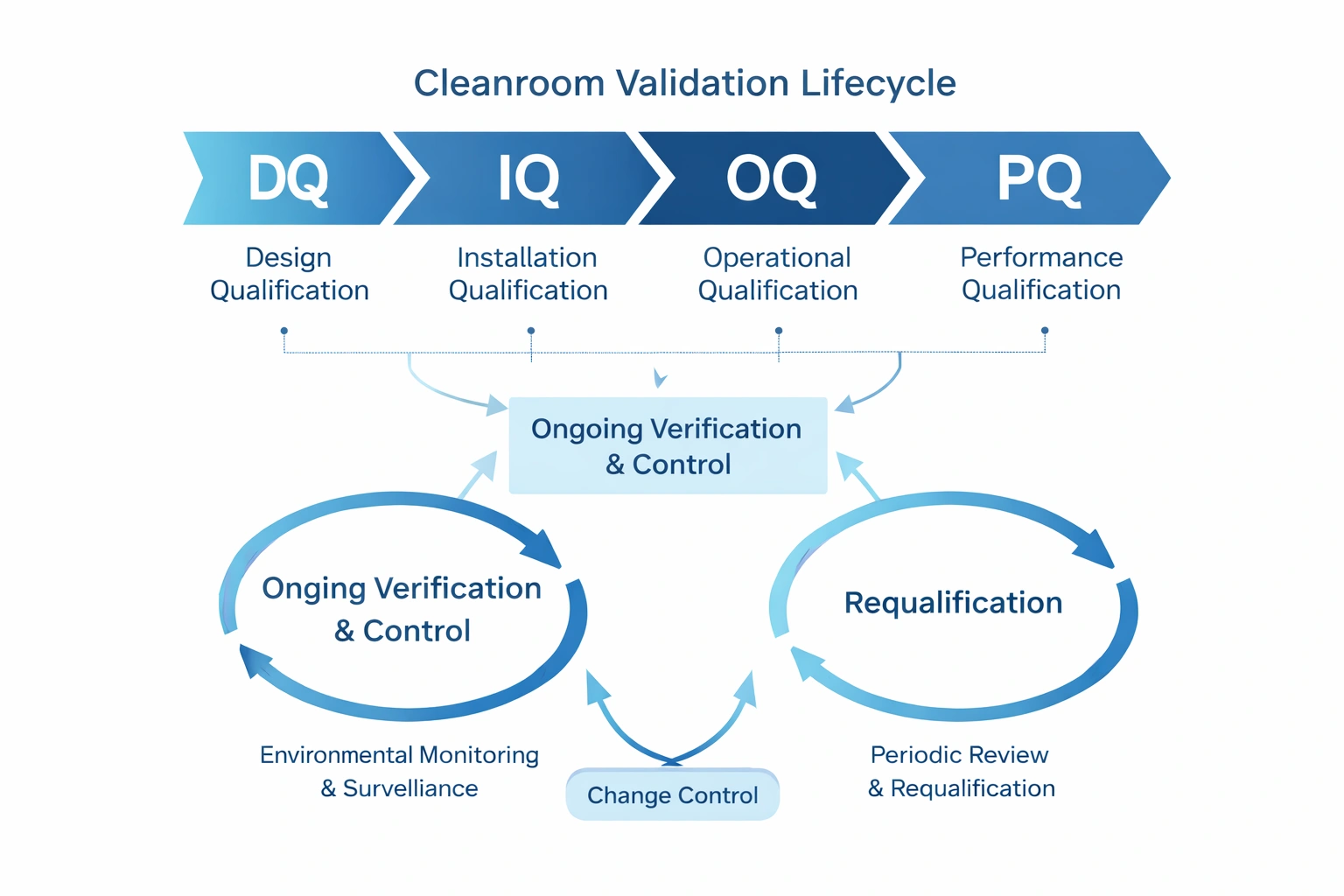
初期検証
DQ、IQ、OQ、PQ、および初期リリースを使用します。
進行中の検証
環境モニタリング、傾向分析、レビュー、および制御。
再資格 & 変化
再認定と変更評価により、ライフサイクルの整合性が維持されます。
| 段階 | 通常の期間 | トリガー | 所有者 |
|---|---|---|---|
| DQ | 2~4週間 | 新しいプロジェクトの開始 | エンジニアリング |
| IQ | 2~4週間 | 工事完了 | 設備 |
| OQ | 4~8週間 | IQ完了 | 検証 |
| PQ | 3~6ヶ月 | OQ完了 | 検証 |
| 進行中の検証 | 進行中 | 初期認証完了 | QA |
| 再資格 | 2~4週間 | 年次イベントまたはトリガーイベント | 検証 |
設計適格性評価 (DQ)
Design Qualification verifies that the cleanroom design meets user requirements and is suitable for the intended process, cleanliness class, and contamination control strategy.

DQフォーカス
- ユーザー要求仕様 (URS)
- 機能設計仕様書 (FDS)
- リスク評価と汚染レビュー
- 関係者による設計レビュー
- 文書化された DQ 承認
主な質問
- 設計は意図されたユーザーの要件を満たしていますか?
- システムは目標の清浄度グレードを達成できますか?
- 主要な汚染リスクは特定され、軽減されていますか?
- 設計文書は完全でレビュー可能ですか?
設置資格 (IQ)
IQ provides documented verification that the cleanroom and its supporting systems have been installed according to design specifications, approved drawings, and utility requirements.
IQ ドキュメント パッケージ
- IQプロトコル
- 完成図
- 設置実績
- ユーティリティ接続記録
- 校正証明書
- IQ概要レポート
IQ 受容重視
- 承認された仕様に従って設置されています
- ユーティリティが接続され、機能している
- 重要な機器の校正済み
- 完全で追跡可能な文書化
- 必要なすべてのインストール チェックに合格しました
運用資格 (OQ)
OQ demonstrates that the cleanroom operates within predetermined limits under anticipated operating conditions. Typical OQ activities include airflow, pressure, particle, temperature, humidity, alarm, and interlock verification.
| 基準 | 一般的な要件 | 受け入れ重視 |
|---|---|---|
| 気流速度 | 規定範囲内 | 範囲内のすべての重要な場所 |
| 気流の均一性 | 平均の±20% | 安定した再現可能なプロファイル |
| 差圧 | ターゲット カスケード内 | すべての圧力関係が維持される |
| 粒子数 | ISOクラスに適合 | 安静時の分類を達成 |
| 温度 / 相対湿度 | 設定値範囲内 | 環境は引き続き制御可能 |
パフォーマンス適格性評価 (PQ)
PQ verifies that the cleanroom performs effectively and reproducibly under normal operating conditions with actual personnel activity, process simulation, and product-related contamination risk.

期間 1
制御された低活性条件下でのベースライン検証。
ピリオド2
EM 計画に合わせたモニタリングによる定期的なプロセス シミュレーション。
ピリオド3
一貫性を確保するための拡張または最悪の場合のパフォーマンス検証。
進行中の検証
Ongoing verification is what keeps the validated state alive after release. It typically includes environmental monitoring, continuous parameter monitoring, periodic trend analysis, deviation review, and assessment of whether requalification is needed.
代表的な活動
- 承認された計画に基づく環境モニタリング
- 圧力、温度、湿度の確認
- 四半期または定期的な傾向分析
- 監査の準備状況のレビュー
- 再資格のフォローアップ
なぜそれが重要なのか
- パフォーマンスのドリフトを早期に検出
- CAPAとリスク軽減をサポート
- GMP検査への対応を強化
- 継続的な制御の証拠を提供します
再資格戦略
Requalification should be based not only on a schedule, but also on change events and performance signals. A robust strategy combines annual review with event-based and trend-based triggers.
スケジュールされたトリガー
年次レビュー サイクルと SOP で定義された認定間隔。
イベントトリガー
大規模なメンテナンス、HEPA の交換、HVAC の変更、プロセスの変更。
パフォーマンストリガー
繰り返される逸脱、警戒率の上昇、原因不明の悪化、漂流。
変更管理
Change control protects validation integrity by ensuring each relevant modification is assessed before implementation. The goal is to determine whether the change has no validation impact, requires partial requalification, or requires expanded requalification.
必要な変更管理レコード
- 変更リクエスト
- 影響評価
- リスクレビュー
- 計画の再認定
- 承認および実施の証拠
- 更新された検証記録
典型的な結果
- 影響なし - 再認定は必要ありません
- 影響は軽微 - 集中的な資格が必要
- 重大な影響 – 完全または拡大の再資格認定が必要
よくある質問
クリーンルームの再認定はどれくらいの頻度で実行する必要がありますか?
Annual review is common, but requalification should also be triggered by significant maintenance, process changes, major modifications, repeated excursions, or evidence of performance degradation.
初期検証と再認定の違いは何ですか?
Initial validation establishes the original validated state through DQ, IQ, OQ, and PQ. Requalification confirms that the validated state remains acceptable after time, use, or change.
変更に再認定が必要かどうかを判断するにはどうすればよいですか?
Review whether the change affects airflow, pressure cascade, filtration, environmental control, process conditions, contamination risk, or documentation status. The higher the impact, the broader the scope.
検証ライフサイクル管理にはどのような文書が必要ですか?
Typical records include DQ, IQ, OQ, and PQ protocols and reports, environmental monitoring records, trend analyses, requalification files, change control records, and approval evidence.
検証ライフサイクル管理が製品の品質にとって重要なのはなぜですか?
Because cleanroom control is not static. Lifecycle management helps maintain the validated state, detect drift early, reduce contamination risk, and support consistent product quality.