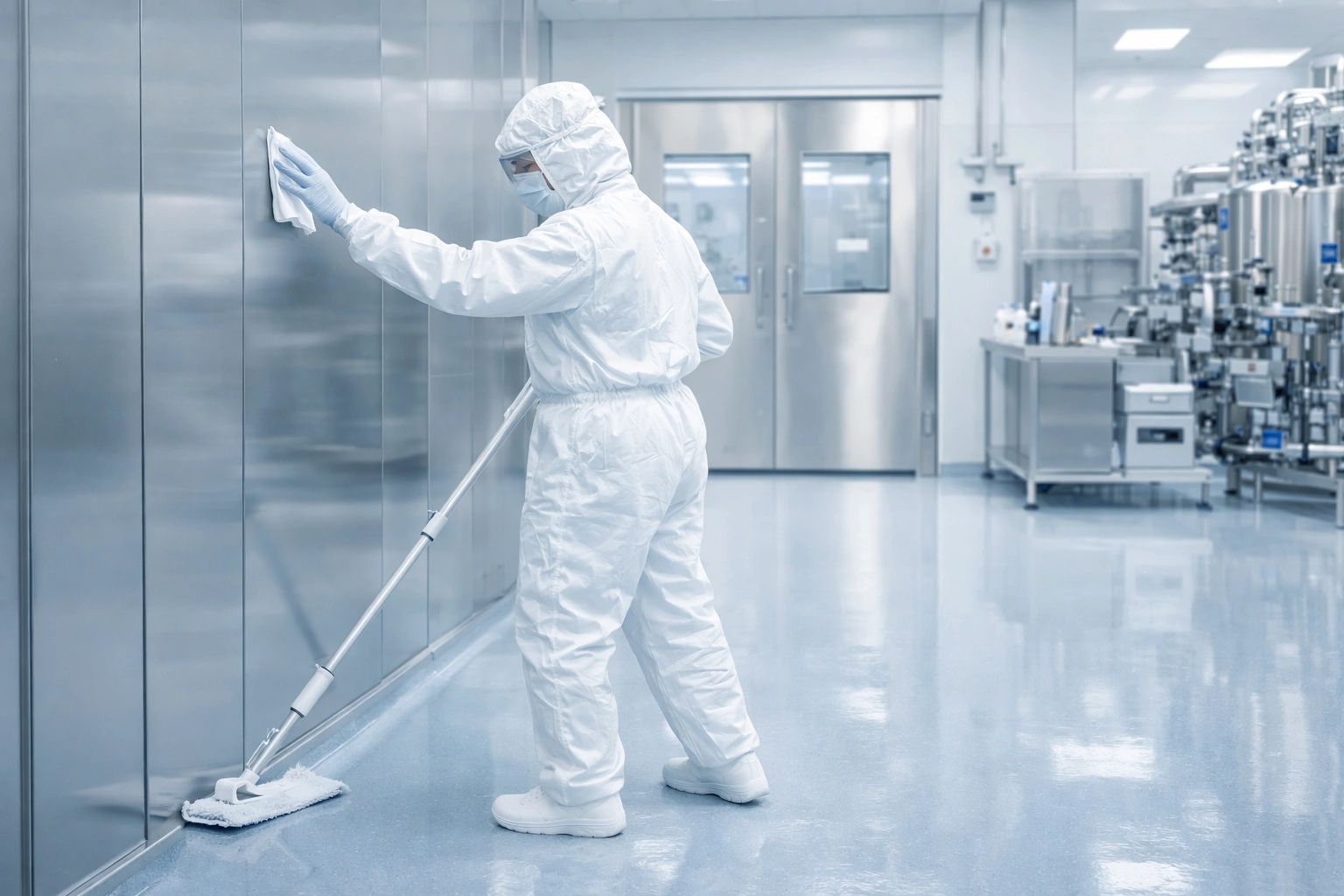

A cleanroom mop is more than a cleaning tool. In pharmaceutical, biotech, semiconductor, and other controlled environments, it is a key part of contamination control, GMP compliance, and operational consistency.
Quickly jump to the section you need.
A fast answer for buyers, QA teams, and cleanroom operators.
A cleanroom mop は、低粒子発生、化学的適合性、および検証済みの滅菌方法を必要とする管理された環境向けに設計された特殊な洗浄ツールです。従来のモップと比較して、クリーンルーム モップはポリエステルやマイクロファイバーなどの糸くずの出にくい素材を使用し、クリーンルーム対応のフレームとハンドル システムをサポートし、重要なエリアには滅菌して供給できます。適切な選択は、クリーンルームのグレード、床のタイプ、消毒剤の適合性、および無菌要件によって異なります。
製品選択と実際の使用において最も重要な5つの実践的なポイント。
クリーンルーム モップは、管理された環境で糸くず、粒子、汚染のリスクを軽減するように設計されています。
素材の選択は重要です。ポリエステル、マイクロファイバー、ブレンドは、滅菌性、耐久性、ピックアップの点で異なるパフォーマンスを発揮します。
選択は、クリーンルームグレード、消毒剤の化学的性質、床表面、および検証要件に一致する必要があります。
滅菌モップシステムと非滅菌モップシステムは、エリア分類と汚染リスクに基づいて分離する必要があります。
適切なハンドル、フレーム、パッケージ形式を選択することは、モップヘッドの素材を選択することと同じくらい重要です。
製薬およびハイテク製造において、モップは単なる清掃ツールではありません。これは、汚染管理システム全体の機能部分です。適切なモップを選択するには、購入者は素材とサイズを比較するだけでなく、その製品がより広範な洗浄検証、SOP の実行、および クリーンルームの汚染管理戦略.
多くの購入者は、サイズや価格だけで製品を比較します。実際には、クリーンルーム モップの選択では、粒子の性能、吸収性、化学的適合性、滅菌方法、再利用性、およびクリーンルームの分類も考慮する必要があります。
実際のポイント: 適切なクリーンルーム モップ システムは、清掃効率と監査対応の両方をサポートします。初期費用が安く見えても、やり方を間違えると運用リスクが高まる可能性があります。
クリーンルーム モップは、粒子の発生、材料の適合性、ハンドル システムの設計、滅菌適合性という 4 つの重要な領域において従来のモップとは異なります。
| 要件 | 従来のモップ | クリーンルームモップ | なぜそれが重要なのか |
|---|---|---|---|
| パーティクルの生成 | より高い脱落性 | 低リント認定素材 | 二次汚染の軽減に役立ちます |
| 材質の適合性 | 限定 | 耐薬品性構造 | 消毒剤や洗浄剤の使用をサポート |
| ハンドルシステム | Mixed-use consumer design | Cleanroom-compatible system | Improves cleaning consistency and hygiene control |
| 殺菌 | Usually not validated | Autoclave / gamma / ETO compatible options | Supports microbial control strategies |
The required mop specification changes based on the room classification. Critical zones need lower particle generation, higher sterility assurance, and often single-use or tightly validated reusable systems.
| クリーンルームグレード | 一般的な要件 | 推奨モップの種類 | 無菌性 |
|---|---|---|---|
| ISO 5 / Grade A | Critical zone, highest contamination control | フラットモップ | Sterile, often single-use preferred |
| ISO 7 / Grade B | Background clean zone | Flat mop or validated low-lint system | Sterile or risk-based non-sterile |
| ISO 8 / Grade C | Supporting production area | String mop or microfiber flat mop | Usually non-sterile unless process requires otherwise |
| ISO 9 / Grade D | General controlled environment | Cost-effective cleanroom-compatible mop | Non-sterile |
CLEANROOM MOP SELECTION LOGIC

Q1. What is the cleanroom classification?
→ ISO 5 / Grade A:
   Select sterile flat mop, low-lint material, single-use or tightly controlled validated reuse.

→ ISO 7 / Grade B:
   Decide based on process risk:
   - Sterile flat mop for higher-risk operations
   - Low-lint non-sterile validated system for lower-risk supporting tasks

→ ISO 8 / Grade C:
   Non-sterile microfiber or polyester mop systems are often acceptable.

→ ISO 9 / Grade D:
   General cleanroom-compatible systems can be used with validated cleaning procedures.
Flat mops are preferred in higher-grade cleanrooms because they provide more uniform surface contact, lower lint generation, and better control of chemical application.
String mops can still be suitable in lower-grade or non-critical areas, especially where flexibility and lower cost are important.
| 特性 | Flat Mop | String Mop |
|---|---|---|
| 面接触 | High and consistent | Less uniform |
| Particle Pickup | Predictable | More variable |
| Chemical Use | Controlled dosage | Higher absorption |
| Lint Generation | より低い | Usually higher |
| Best Use | ISO 5 / ISO 7 | ISO 8 / ISO 9 |
Material selection affects linting, durability, absorption, and chemical resistance. The most common materials are polyester, microfiber, and blended constructions.
| 材料 | 粒子脱落 | 耐薬品性 | 耐久性 | Typical Application |
|---|---|---|---|---|
| ポリエステル | 非常に低い | 素晴らしい | 高い | Critical cleanroom zones |
| マイクロファイバー | 低い | 良い | 中くらい | General cleanroom floor cleaning |
| Polyester-Microfiber Blend | 低い | Very good | 高い | Balanced performance across multiple grades |
| Disposable Nonwoven | 使い捨て | Depends on construction | Not reusable | High-risk changeover or one-time sterile tasks |
Mop selection should also support the facility’s environmental monitoring and cleaning verification strategy. In many pharmaceutical facilities, cleaning tools are evaluated not only for practicality but also for how they support consistent results within a risk-based environmental monitoring program.
Selection tip: Polyester is often preferred when low particle generation is the priority. Microfiber can improve pickup and cleaning efficiency in less critical but still controlled areas.
Buyers sometimes focus only on the mop pad, but handle and frame design strongly affect cleanability, usability, and contamination control.
| Handle Material | 互換性 | 洗浄性 | Sterilization Suitability |
|---|---|---|---|
| Plastic (PP / PE) | 素晴らしい | 素晴らしい | Autoclave-compatible options available |
| ステンレス鋼 | 素晴らしい | 素晴らしい | Strong for reusable systems |
| Anodized Aluminum | 良い | 良い | Used in some light-weight systems |
| Mixed Material Design | 公平 | Depends on structure | Less ideal for critical zones |
Not every cleanroom needs a sterile mop, but critical pharmaceutical and aseptic areas often do. The decision should be based on contamination risk, product exposure, SOP requirements, and environmental classification.
The choice between sterile and non-sterile mop systems should be aligned with cleanroom classification, process exposure risk, and documented cleaning procedures. In regulated environments, this decision is often connected to broader SOP implementation and audit readiness requirements.
Sterile mop systems are typically selected for Grade A / B environments, aseptic processing areas, or validated cleaning procedures requiring sterile accessories.
Non-sterile mop systems are often suitable for Grade C / D and general support areas where validated low-lint performance is more important than terminal sterility.
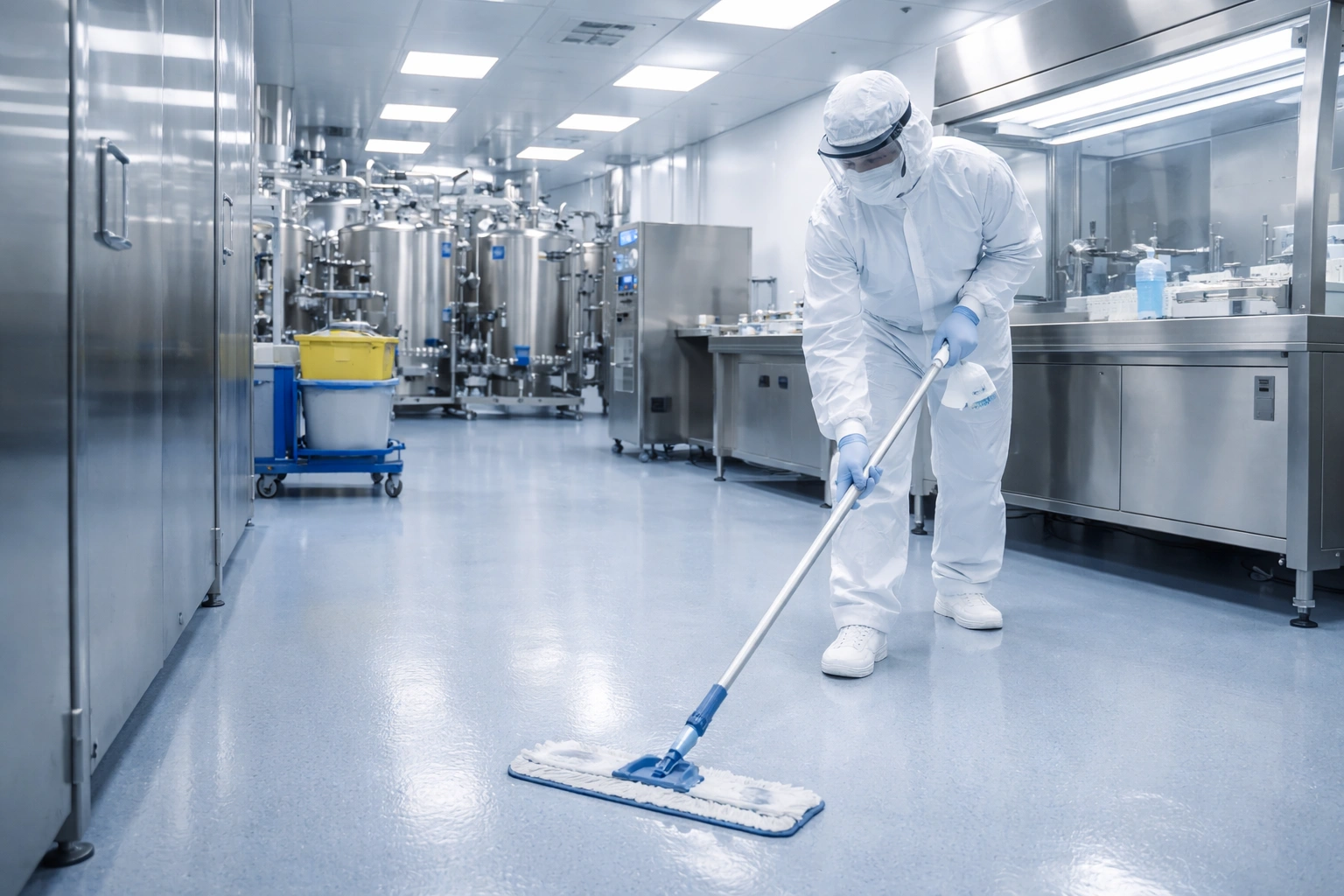
Example images aligned with cleanroom mop applications and controlled-environment cleaning.


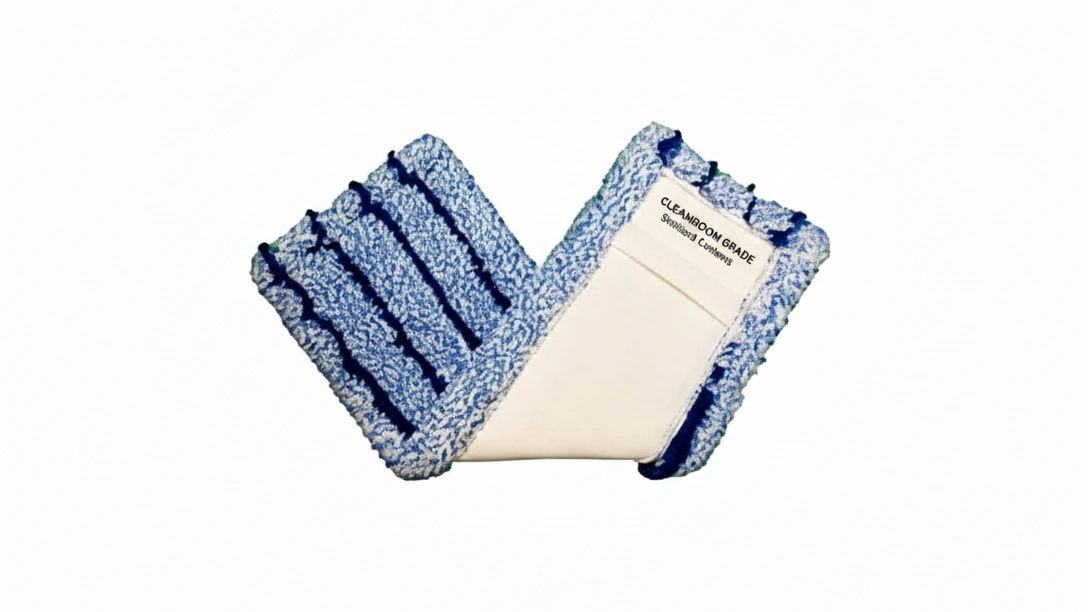
A cleanroom mop is designed for controlled environments with low-lint materials, better chemical compatibility, and cleanroom-appropriate construction, while a regular mop is not intended for contamination-sensitive applications.
Polyester and polyester-microfiber blends are common choices because they offer low particle generation, good durability, and compatibility with many pharmaceutical cleaning procedures.
No. Sterile mops are usually selected for critical or aseptic environments, while validated non-sterile mop systems may be suitable for lower-grade support areas depending on SOPs and risk assessment.
In higher-grade cleanrooms, flat mops are often preferred because they provide lower lint generation, more uniform surface contact, and better control of cleaning chemistry.
Continue building your cleanroom knowledge with these related resources.


If you are comparing sterile vs. non-sterile options, microfiber vs. polyester materials, or complete mop systems for pharmaceutical, biotech, or industrial cleanrooms, our team can help you match the right product to your application.