Polyester vs Microfiber Cleanroom Mop: Which Is Better?
Polyester and microfiber cleanroom mops serve different cleaning needs in GMP, ISO, pharmaceutical, biotechnology, semiconductor, medical device, laboratory, and controlled environments. This guide compares both materials by lint control, absorbency, particle pickup, residue removal, validation repeatability, documentation, and B2B procurement value.
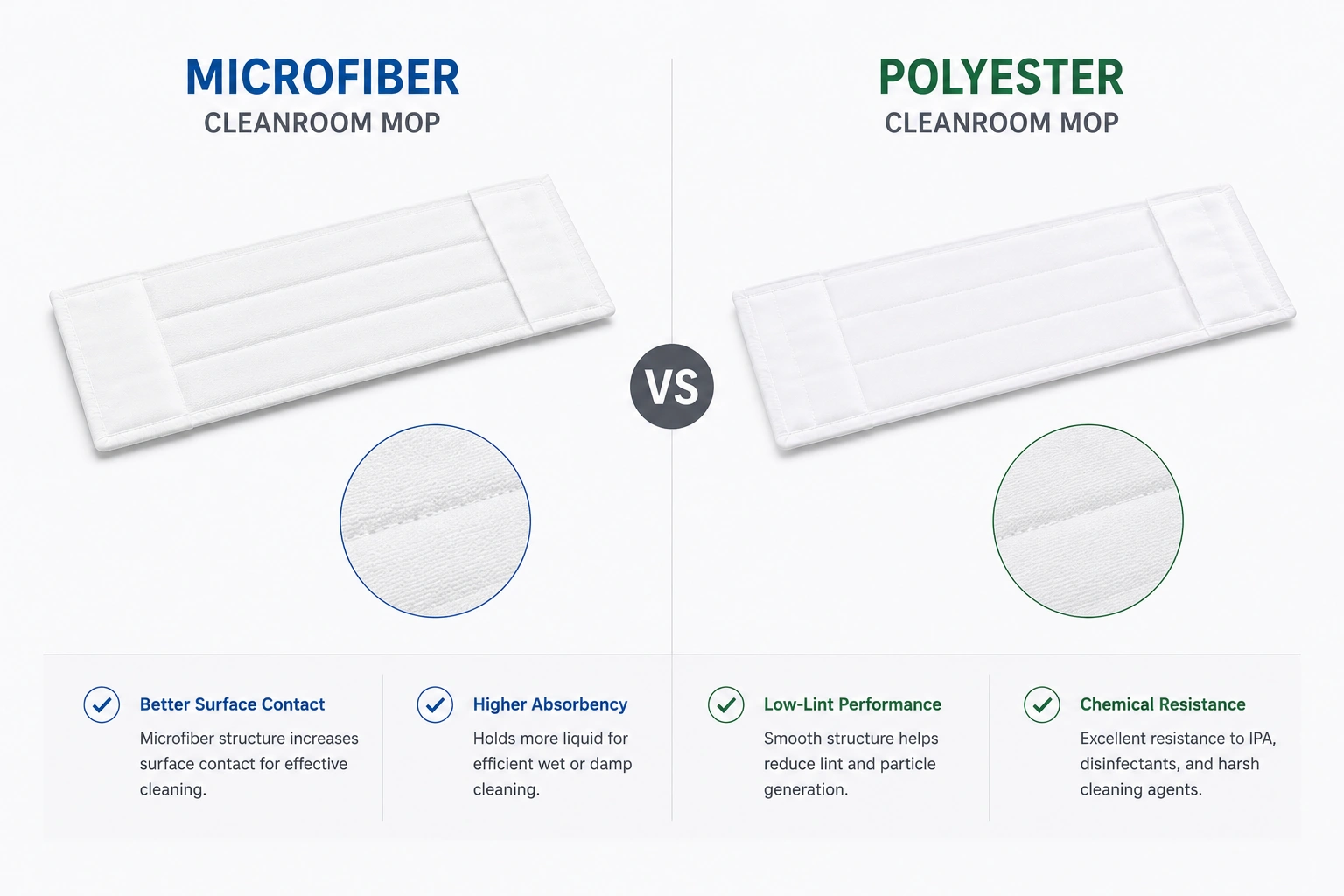
Polyester cleanroom mops are often preferred when low-lint performance, material stability, and repeatable GMP cleaning are priorities. Microfiber cleanroom mops are often preferred when stronger surface contact, fine particle pickup, and residue removal are important. The best choice depends on the cleanroom grade, SOP, disinfectant, surface type, and QA requirements.
Why Mop Material Selection Matters in GMP Cleanrooms
In GMP environments, cleaning tools are part of the contamination-control strategy. A cleanroom mop must clean surfaces without introducing excessive fibers, particles, residues, or uncontrolled variability that can complicate SOP execution and QA review.
ਕਣ & Fiber Control
Mop material affects lint release, particle generation, and contamination-control confidence.
Residue Removal
Different fiber structures perform differently when removing films, residues, and disinfectant carryover.
Validation Repeatability
Stable material behavior supports more repeatable cleaning procedures and procurement consistency.
Polyester Cleanroom Mops: Technical Profile
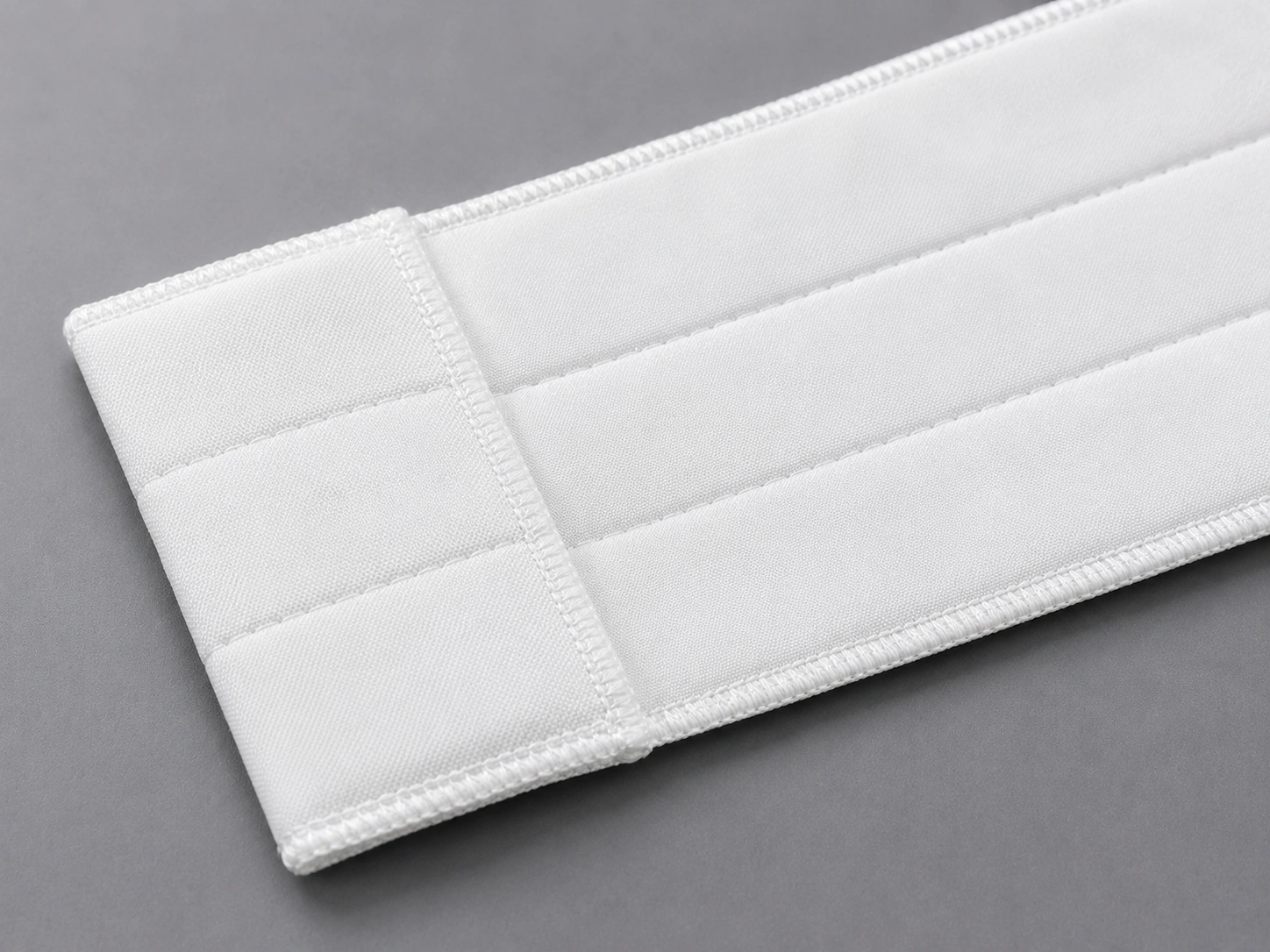
Polyester cleanroom mops are commonly selected for controlled environments because polyester can provide stable construction, low-lint performance, good chemical resistance, and repeatable cleaning behavior when properly designed and processed.
ਜਿੱਥੇ ਪੋਲੀਸਟਰ ਜ਼ੋਰਦਾਰ ਪ੍ਰਦਰਸ਼ਨ ਕਰਦਾ ਹੈ
- Low-lint routine cleanroom cleaning
- GMP floor, wall, and ceiling cleaning
- Stable wiping behavior across repeated cleaning tasks
- Controlled workflows where material consistency matters
- Disposable mop pad systems requiring predictable performance
Buyer review points
- Mop pad weight and construction
- Cleanroom grade and SOP suitability
- Sterile or non-sterile availability
- Packaging format and lot traceability
- Compatibility with mop frames and handles
Microfiber Cleanroom Mops: Technical Profile
Microfiber cleanroom mops use fine fibers that increase surface area and surface contact. They can be useful for fine particle pickup, residue removal, controlled surface cleaning, and routine cleanroom cleaning where strong mechanical capture is needed.
ਜਿੱਥੇ ਮਾਈਕ੍ਰੋਫਾਈਬਰ ਜ਼ੋਰਦਾਰ ਪ੍ਰਦਰਸ਼ਨ ਕਰਦਾ ਹੈ
- Fine particle pickup and surface contact
- Light residue and film removal
- Wall, ceiling, floor, and controlled-surface cleaning
- Applications where absorbency and wiping contact are important
Buyer review points
- Fiber shedding and lint-control performance
- Processing cleanliness and product consistency
- ਕੀਟਾਣੂਨਾਸ਼ਕ ਅਨੁਕੂਲਤਾ
- Cleanroom packaging and supplier documentation
Polyester vs Microfiber Cleanroom Mop Comparison Table
The table below compares polyester and microfiber cleanroom mops from the perspective of GMP buyers, QA teams, cleanroom supervisors, and procurement managers.
| Decision Criterion | Polyester Cleanroom Mop | ਮਾਈਕ੍ਰੋਫਾਈਬਰ ਕਲੀਨਰੂਮ ਮੋਪ |
|---|---|---|
| Lint and fiber control | Often selected for stable low-lint performance | Can be low-lint, but depends on fiber structure and finishing |
| Fine particle pickup | Good for routine controlled cleaning | Often stronger due to higher surface contact |
| ਸਮਾਈ | Moderate to good depending on construction | Often higher, depending on microfiber density and structure |
| ਰਹਿੰਦ-ਖੂੰਹਦ ਨੂੰ ਹਟਾਉਣਾ | Good with validated technique and suitable disinfectant workflow | Often stronger for light films and fine surface residues |
| Material stability | Generally strong for repeatable SOP-based cleaning | Requires careful supplier control and documentation |
| Best use case | Routine GMP floor, wall, ceiling, and low-lint cleaning | Fine particle pickup, residue removal, and high-contact surface cleaning |
| ਖਰੀਦਦਾਰ ਚਿੰਤਾ | Confirm weight, packaging, sterility option, and mop frame fit | Confirm lint control, processing cleanliness, chemical compatibility, and lot consistency |
Which Material Is Better for GMP Cleaning?
There is no single best mop material for every GMP facility. Polyester is often a practical choice when buyers need stable, low-lint, repeatable, and cost-controlled mop pads. Microfiber may be more suitable when the cleaning task requires stronger surface contact, fine particle pickup, or residue removal.
Industry-Specific Selection Guidance
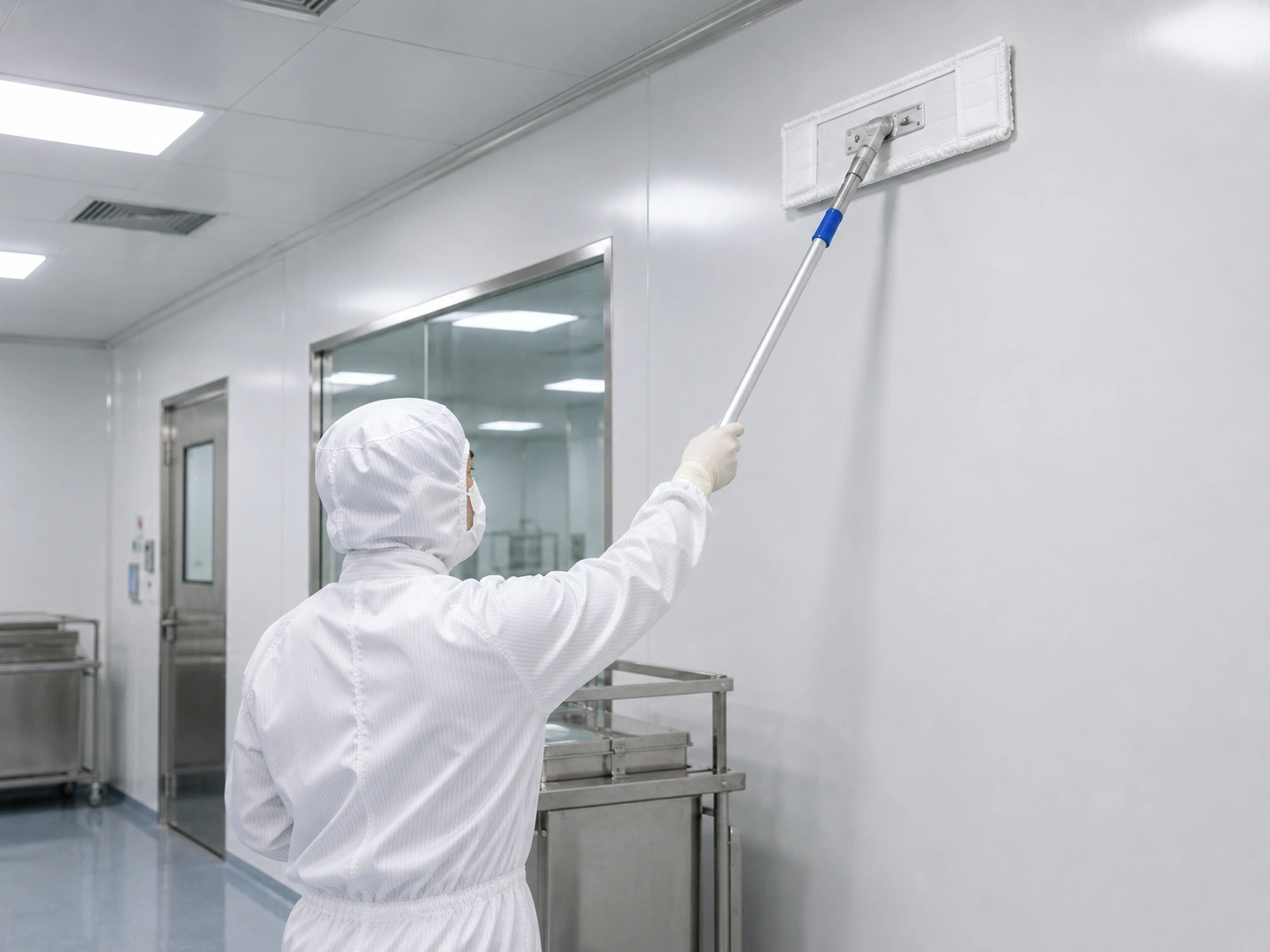
Different industries evaluate mop materials differently. Buyers should align mop selection with process risk, surface type, documentation needs, and internal cleaning procedures.
ਔਸ਼ਧੀ ਨਿਰਮਾਣ ਸੰਬੰਧੀ & Gmp
Prioritize low-lint performance, sterile options, documentation, packaging, and SOP repeatability.
ਬਾਇਓਟੈਕਨਾਲੋਜੀ
Review disinfectant compatibility, surface contact, contamination-control workflow, and supply consistency.
ਸੈਮੀਕੰਡਕਟਰ
Focus on particle control, fiber release, cleanroom compatibility, and low-shedding material behavior.
ਮੈਡੀਕਲ ਜੰਤਰ
Consider fiber control, residue removal, packaging integrity, and clean production workflow suitability.
ਪ੍ਰਯੋਗਸ਼ਾਲਾਵਾਂ
Balance material performance, chemical compatibility, cost, and ease of routine cleaning.
Cleanroom Services
Choose materials that are practical for multiple client environments and repeat purchasing programs.
Documentation Buyers Should Request
For GMP and controlled cleanroom use, buyers should review more than material names. Documentation helps confirm whether the mop material can be evaluated by QA, procurement, and cleanroom operations teams.
| Document / Information | ਇਹ ਮਾਇਨੇ ਕਿਉਂ ਰੱਖਦਾ ਹੈ | Buyer Review Purpose |
|---|---|---|
| Technical Data Sheet | Shows size, material, weight, construction, and use guidance | Initial product evaluation |
| Material Information | Explains polyester, microfiber, or other material construction | Material suitability review |
| ਨਸਬੰਦੀ ਜਾਣਕਾਰੀ | Confirms sterile or non-sterile status if applicable | QA and SOP review |
| ਪੈਕੇਜਿੰਗ ਵੇਰਵੇ | Shows inner pack, sterile pack, carton quantity, and handling format | Cleanroom entry and storage planning |
| ਲਾਟ ਟਰੇਸੇਬਿਲਟੀ | Supports batch tracking and repeat-order control | Supplier qualification and quality review |
| Sample Approval Record | Confirms tested product matches future bulk order | Prevents sample-to-order mismatch |
Procurement Checklist for Polyester and Microfiber Mop Buyers
Use this checklist before selecting a polyester or microfiber cleanroom mop for GMP or ISO cleanroom cleaning.
Technical review
- Cleanroom grade and cleaning surface
- Mop material and lint-control requirement
- Absorbency and residue removal needs
- ਕੀਟਾਣੂਨਾਸ਼ਕ ਅਨੁਕੂਲਤਾ
- Sterile or non-sterile requirement
- Frame, handle, and bucket compatibility
Purchasing review
- Sample availability
- MOQ and lead time
- Packaging and carton data
- Repeat-order consistency
- Documentation support
- Distributor or facility buyer support
MIDPOSI ਸਿਫ਼ਾਰਿਸ਼
MIDPOSI recommends evaluating polyester and microfiber cleanroom mops based on the facility’s SOP, cleanroom grade, surface type, disinfectant program, sterility requirement, and documentation needs.
For Stable Low-Lint Cleaning
Polyester mop pads are often suitable for routine GMP cleaning where stable low-lint performance matters.
For Stronger Surface Contact
Microfiber mop pads may be suitable where fine particle pickup and residue removal are more important.
For QA-Driven Buyers
Request specifications, packaging details, sample support, and material information before bulk purchase.
FAQ: Polyester vs Microfiber Cleanroom Mops
Which is better for GMP cleanrooms, polyester or microfiber mops?
Polyester is often better for stable low-lint cleaning and repeatable GMP workflows. Microfiber is often better for fine particle pickup and residue removal. The best choice depends on the facility SOP, cleanroom grade, disinfectant, and surface type.
Are polyester cleanroom mops low-lint?
Polyester cleanroom mops are commonly selected for low-lint controlled cleaning, but buyers should still review product construction, packaging, material information, and supplier documentation.
Are microfiber mops suitable for cleanrooms?
Microfiber mops may be suitable for cleanrooms when they are made, processed, packaged, and documented for controlled environments. Buyers should review lint control, chemical compatibility, and SOP suitability.
Which mop material is better for particle pickup?
Microfiber often provides stronger fine particle pickup due to higher surface contact. Polyester can still perform well for routine controlled cleaning when selected and used properly.
Which mop material is better for low-lint GMP cleaning?
Polyester is often preferred when stable low-lint behavior and repeatability are top priorities. However, the final choice should follow the facility’s SOP and QA review.
What documents should buyers request before choosing a mop material?
Buyers should request product specifications, material information, packaging details, sterile or non-sterile status, lot traceability information, sample approval records, and supplier qualification support where required.
Need Help Choosing Polyester or Microfiber Cleanroom Mops?
Contact MIDPOSI to discuss your cleanroom grade, SOP, disinfectant program, cleaning surface, sterile requirement, documentation needs, and B2B supply plan.