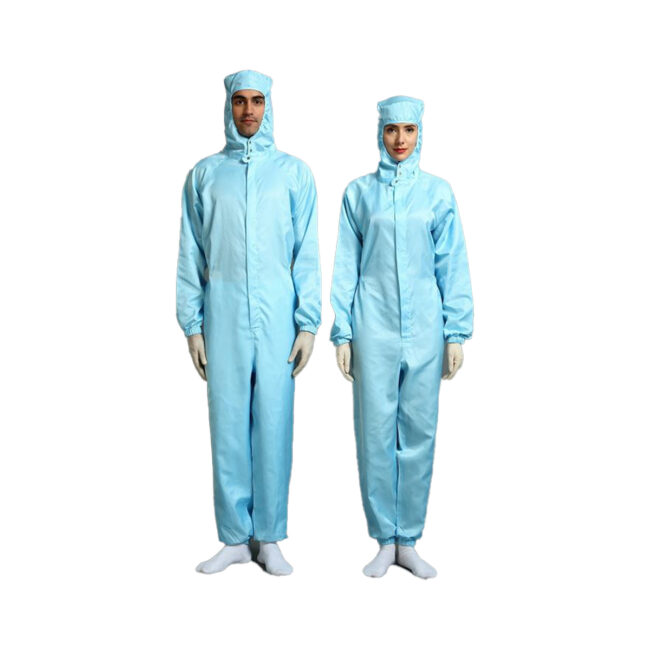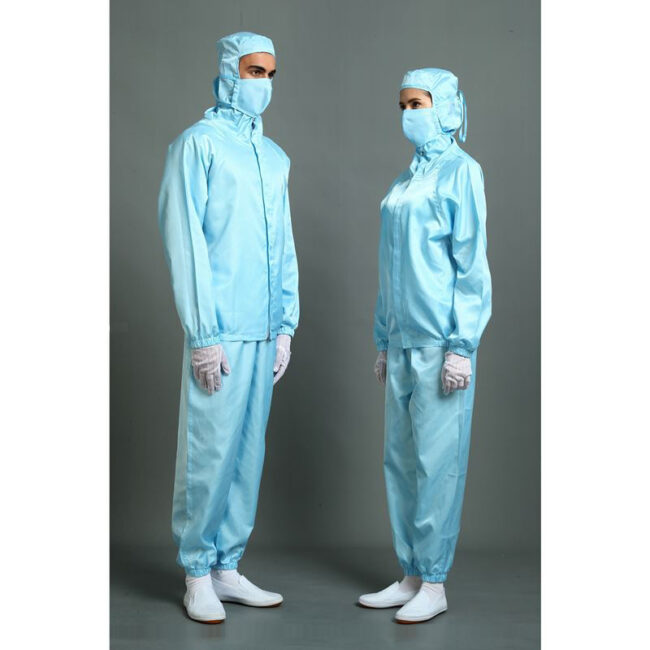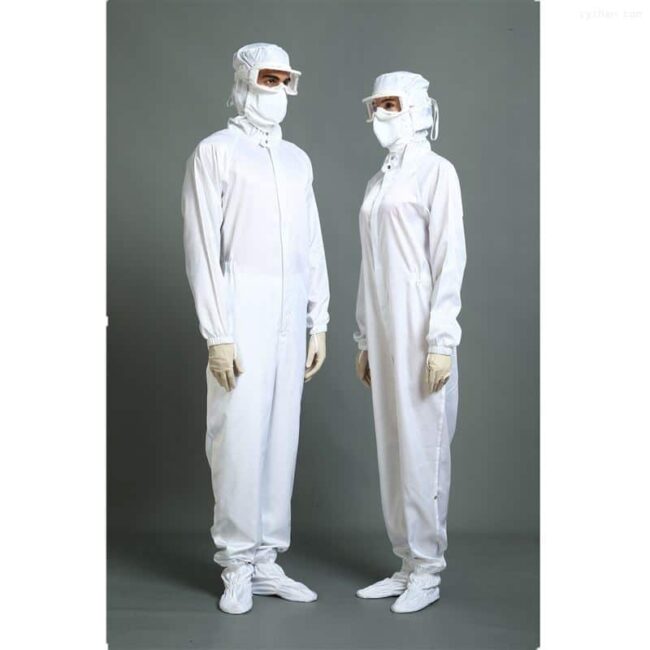

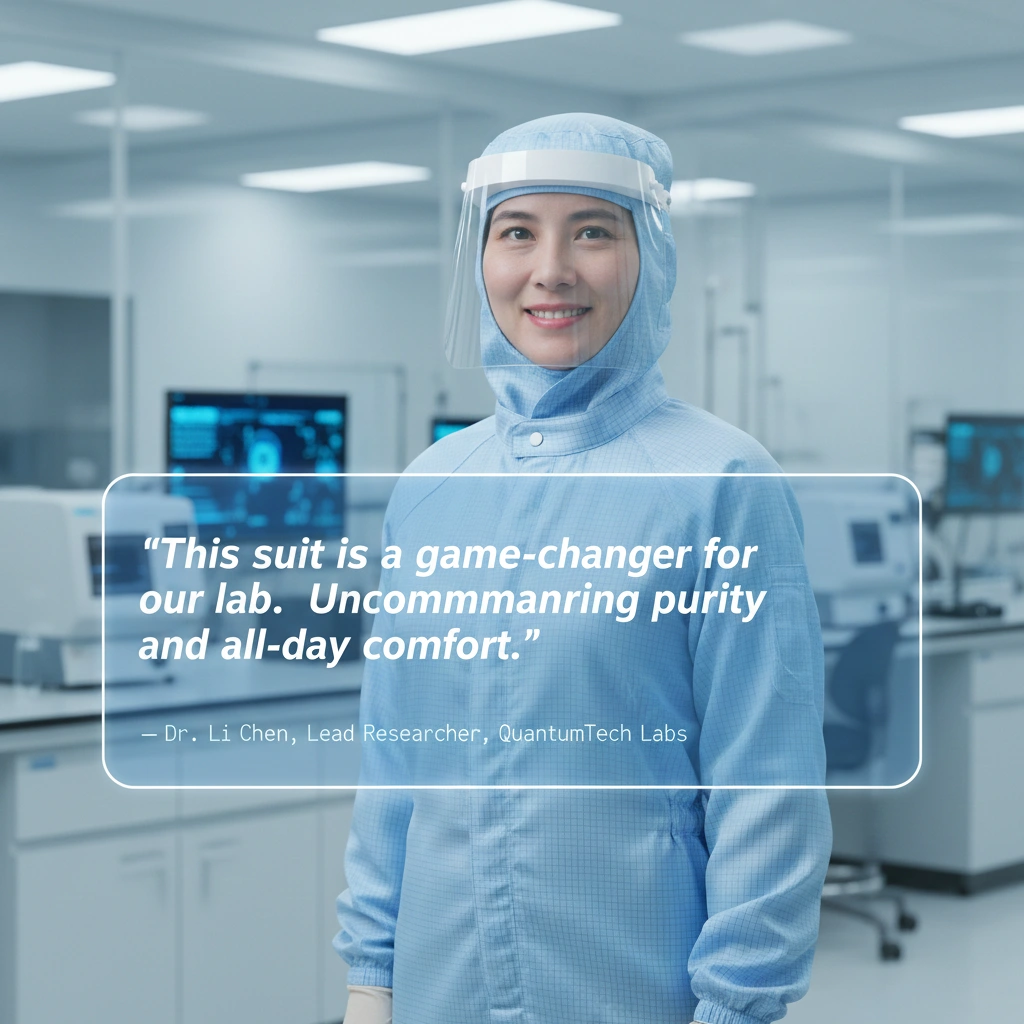
MIDPOSI MD-2A0402 Cleanroom Sterile Coverall is a premium one-piece aseptic coverall engineered for pharmaceutical cleanrooms, sterile zones, biotech laboratories, semiconductor facilities, and electronics cleanrooms. It is made from high-quality polyester filament interwoven with imported conductive fibers to provide low-lint performance, stable anti-static protection, high barrier performance, and comfortable wear for long shifts.
The garment features a hidden button collar with YKK snap closure, a protected front zipper, and a no-lining anti-static fabric structure. It is compatible with steam sterilization or machine washing and is suitable for Grade A/B and Grade C cleanroom environments according to facility gowning SOPs.

In sterile cleanroom operations, the coverall is not simply a uniform. It is a contamination-control barrier between personnel and the controlled environment. MIDPOSI cleanroom garments are designed to reduce contamination risk with low-lint fabric, stable electrostatic dissipation, smooth surface performance, and high barrier construction.
The MD-2A0402 sterile coverall is especially suitable for pharmaceutical clean areas and sterile zones where fabric cleanliness, anti-static performance, garment durability, and wearer comfort must work together.
Engineered fabric and disciplined garment construction help maintain cleanroom performance across repeated use cycles.
Fabric is designed to minimize particle generation and reduce dust attraction during cleanroom movement.
Conductive fibers are embedded into the weave to support stable electrostatic dissipation.
High-density construction supports separation between personnel and critical cleanroom areas.
A clean and smooth fabric surface helps reduce particle attachment and supports easier handling.
Optimized one-piece pattern supports mobility, comfort, and stable fit during extended wear.
Designed for repeat wear and processing to support total-cost-of-ownership efficiency.
MD-2A0402 combines one-piece garment coverage with practical cleanroom design details for sterile-area personnel.
| ਡਿਜ਼ਾਈਨ ਆਈਟਮ | ਵਰਣਨ | ਕਲੀਨਰੂਮ ਲਾਭ |
|---|---|---|
| One-Piece Aseptic Coverall | Jacket and trousers are connected together in a full-body garment design. | Reduces separation gaps and improves overall personnel coverage. |
| Hidden Button Collar | Collar uses a hidden button design with YKK snap closure. | Improves closure stability while reducing exposed components. |
| Protected Front Zipper | Front zipper is protected by a placket structure. | Helps reduce direct exposure of zipper components during cleanroom use. |
| No-Lining Structure | Uses full anti-static cleanroom fabric without ordinary lining materials. | Reduces contamination risk and avoids unnecessary particle sources. |
| Steam Sterilization Compatibility | Compatible with steam sterilization workflows and machine washing. | Supports reusable garment programs and controlled processing. |
Buyers should evaluate sterile coveralls based on cleanroom class, ESD requirement, garment ergonomics, accessory exposure, and fabric construction.
The coverall should be easy to wear, easy to remove, and comfortable during motion-intensive tasks.
Metal accessories should be avoided or fully covered. Buttons, zippers, or snaps should not be directly exposed during wear.
Use anti-static fabric throughout the garment and avoid ordinary lining materials to reduce particle generation risk.
Conductive grid spacing can be selected according to cleanroom classification and ESD policy.
Garment material and accessories should match your laundry, sterilization, and internal gowning process.
Comfortable patterns help operators maintain correct gowning discipline during long cleanroom shifts.
Smaller conductive grid spacing generally supports stronger dust-proof and anti-static performance. The correct fabric option should be selected based on cleanroom classification and ESD requirements.
| ਵਿਕਲਪ | Pattern | Typical Benefit | Selection Note |
|---|---|---|---|
| Option A | 5mm ਪੱਟੀ | Anti-static and barrier baseline | Common choice for general clean areas. |
| Option B | 5mm Grid | More uniform conductivity distribution | Suitable for enhanced ESD stability needs. |
| Option C | 2.5mm Grid | Stronger dust-proof and anti-static effect | Recommended for higher control requirements. |
Selection guidance: choose fabric pattern based on cleanroom classification and your ESD policy. Share your standard and MIDPOSI can recommend the most suitable configuration.
MD-2A0402 is designed for sterile workflows where gowning discipline and material consistency matter.
For controlled production areas, aseptic support rooms, and cleanroom personnel gowning.
Supports cleanroom apparel programs for sterile filling, inspection, and packaging processes.
Suitable for controlled laboratory environments requiring low-lint and anti-static clothing.
Supports ESD-sensitive cleanroom operations with conductive fiber fabric options.
For dust-control and anti-static protection in electronics and precision manufacturing areas.
Supports controlled personnel gowning in medical device cleanroom manufacturing.
The MD-2A0402 sterile cleanroom coverall can be used together with cleanroom accessories to build a complete personnel gowning system.
Final use should follow the facility’s cleanroom classification, garment SOP, sterilization process, and contamination-control strategy.
Reusable cleanroom garments require controlled washing and processing. Ordinary laundry environments are not recommended because dust, fibers, detergent residues, and microorganisms may attach to the garment during washing, bundling, transport, or handling.
Cleanroom garments should be processed by a professional cleanroom laundry or dust-free purification cleaning provider. A controlled process helps maintain low-lint performance, fabric cleanliness, anti-static function, and garment suitability for cleanroom use.
Washing frequency should be defined by facility SOP. Some cleanroom garments may be laundered weekly, while more demanding pharmaceutical operations may require daily cleaning or sterilization.
Share your cleanroom class, use process, size range, order quantity, and preferred fabric pattern. MIDPOSI can recommend a suitable configuration, lead time, and pricing for your cleanroom garment program.
MD-2A0402 is made from high-quality polyester filament interwoven with conductive fibers to support low-lint and anti-static performance.
Yes. The garment is compatible with steam sterilization workflows and machine washing when processed according to facility procedures.
It is designed for Grade A/B and Grade C cleanroom environments, depending on the facility’s internal gowning SOP and contamination-control strategy.
Fabric patterns can include 5mm stripe, 5mm grid, and 2.5mm grid options. Smaller grid spacing generally supports stronger dust-proof and anti-static performance.
Common accessories include sterilizable goggles, three-dimensional cleanroom masks, tall boots, full shoes, heel-less clean shoes, and sterile gloves.



 Optimized by Seraphinite Accelerator