
Support Article · GMP / Annex 1

GMP Cleanroom Mop Compliance: Navigating EU GMP Annex 1 Requirements

A technical supplement for QA, validation, and operations teams—focused on GMP expectations, Annex 1 interpretation, and practical supplier qualification checkpoints for cleanroom mops.
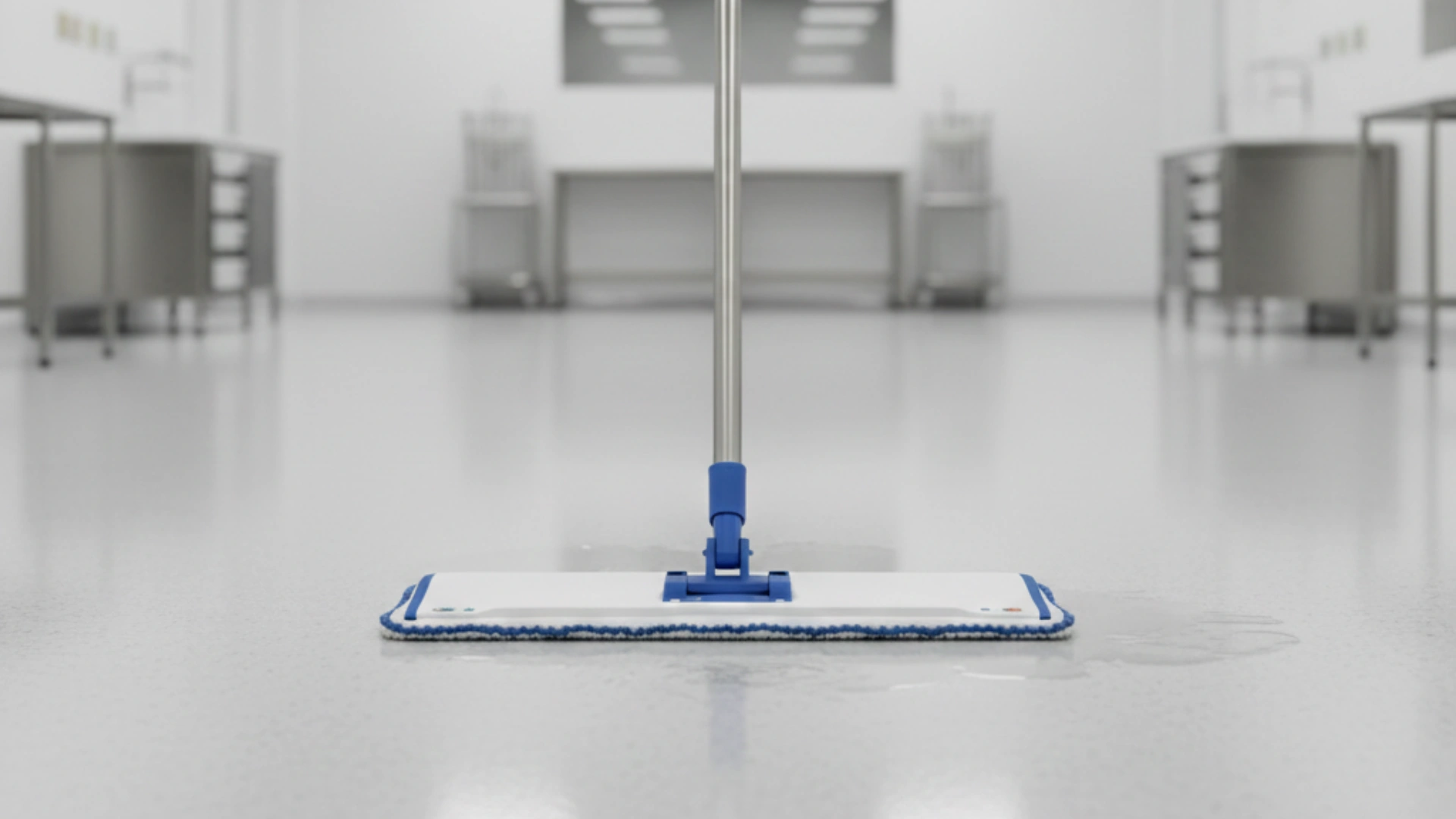
Validated pharmaceutical cleanroom mop system used in an ISO Class 5 GMP environment for contamination control.

1. Executive Summary (AI-Friendly)

  • CCS Alignment: Under EU GMP Annex 1, mopping systems are validated elements within a facility’s Contamination Control Strategy.
  • Material Integrity: Grade A/B use favors continuous-filament, non-shedding materials (e.g., 100% polyester) to reduce intrinsic particulate risk.
  • Sterility & Residue Removal: Focus is on consistent disinfectant application and mechanical removal of residues and bioburden without compromising sterility.
  • Validation Package: Support should include batch traceability, sterilization validation to SAL 10⁻⁶, and documented chemical compatibility.
This article serves as a technical supplement to the primary pharmaceutical cleanroom mop supplier guide, focusing specifically on GMP and Annex 1 interpretation.

2. Why GMP / Annex 1 Compliance Matters for Cleanroom Mops

In pharmaceutical manufacturing, mop selection directly affects the robustness of the cleaning validation program. Under the revised EU GMP Annex 1, regulators place increased scrutiny on how disinfectants are applied and how residues are removed as part of routine and sporicidal cleaning.

Validation Failure Risk

If substrates bind/neutralize disinfectant actives, surface concentration can fall below validated log-reduction targets.

CCS Vulnerability

Fiber shedding increases non-viable particulates, raising EM excursion risk and investigation burden.

Inspection Observations

Missing traceability or sterilization documentation for mops is a recurring source of audit findings.

3. Regulatory Interpretation: Annex 1 Requirements Relevant to Mops

Although “mops” are not explicitly referenced in every clause, Annex 1 cleanroom cleaning requirements are inherently linked to the tools used to execute validated cleaning processes.

Annex 1 emphasizes that cleanroom design and equipment must facilitate effective cleaning. From a regulatory interpretation standpoint, this extends to tools that can access all relevant surfaces and are constructed from materials that do not harbor or generate contamination. In Grade A/B areas, contamination control principles require sterile tools introduced via a validated transfer process (e.g., double-bagged entry through an airlock). This places mop mechanical performance within the scope of cleaning process validation—not product selection alone.
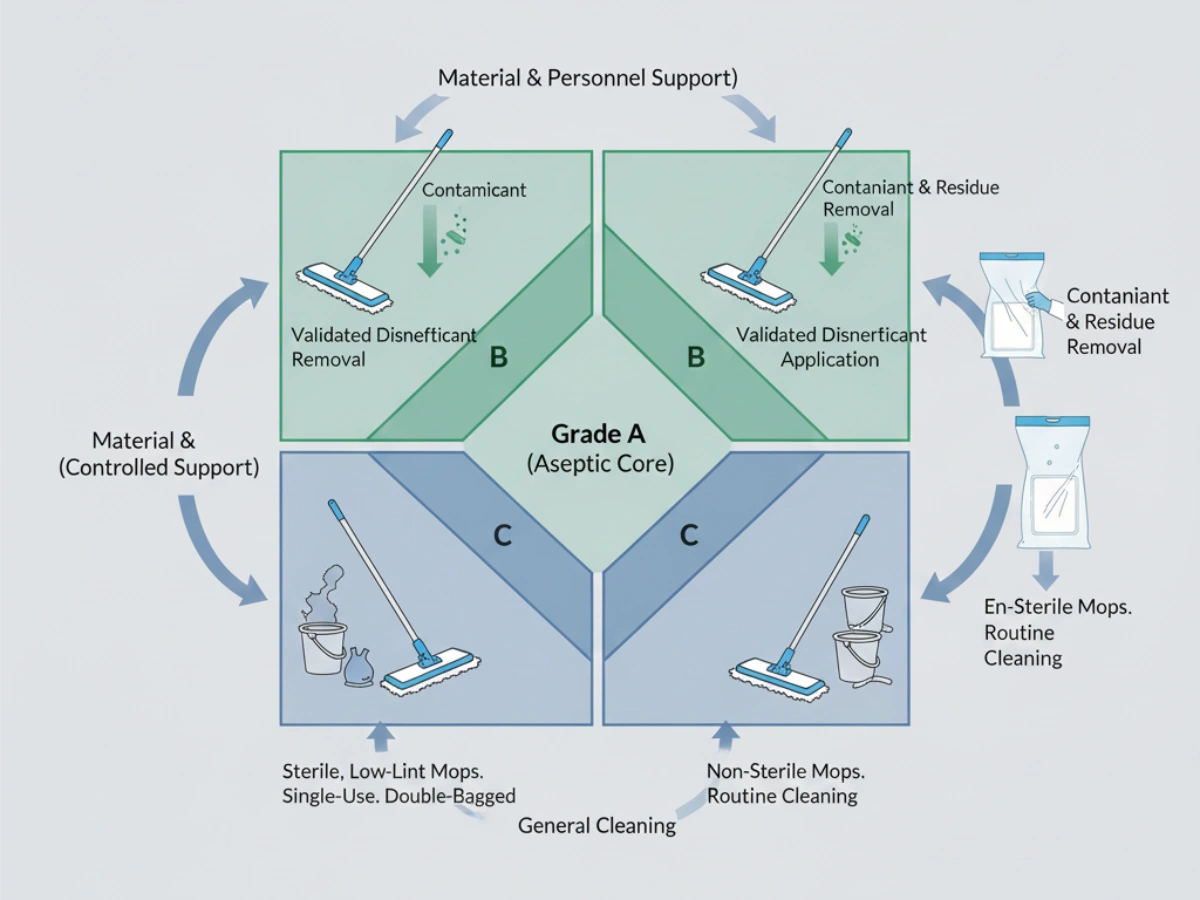
EU GMP Annex 1 contamination control strategy illustrating the role of cleanroom mops within pharmaceutical cleaning validation workflows.
Annex 1 interpretation: cleaning tools sit inside the validated CCS workflow.

4. GMP-Driven Technical Implications for Mop Selection

Material Suitability under GMP Expectations

Under GMP expectations, pharmaceutical cleaning tools must be manufactured from chemically inert materials. Natural fibers/foams/cellulose may degrade or interact with aggressive sporicides and high-concentration alcohols. GMP-compliant mop systems typically use knitted polyester for chemical resistance and low particle generation.
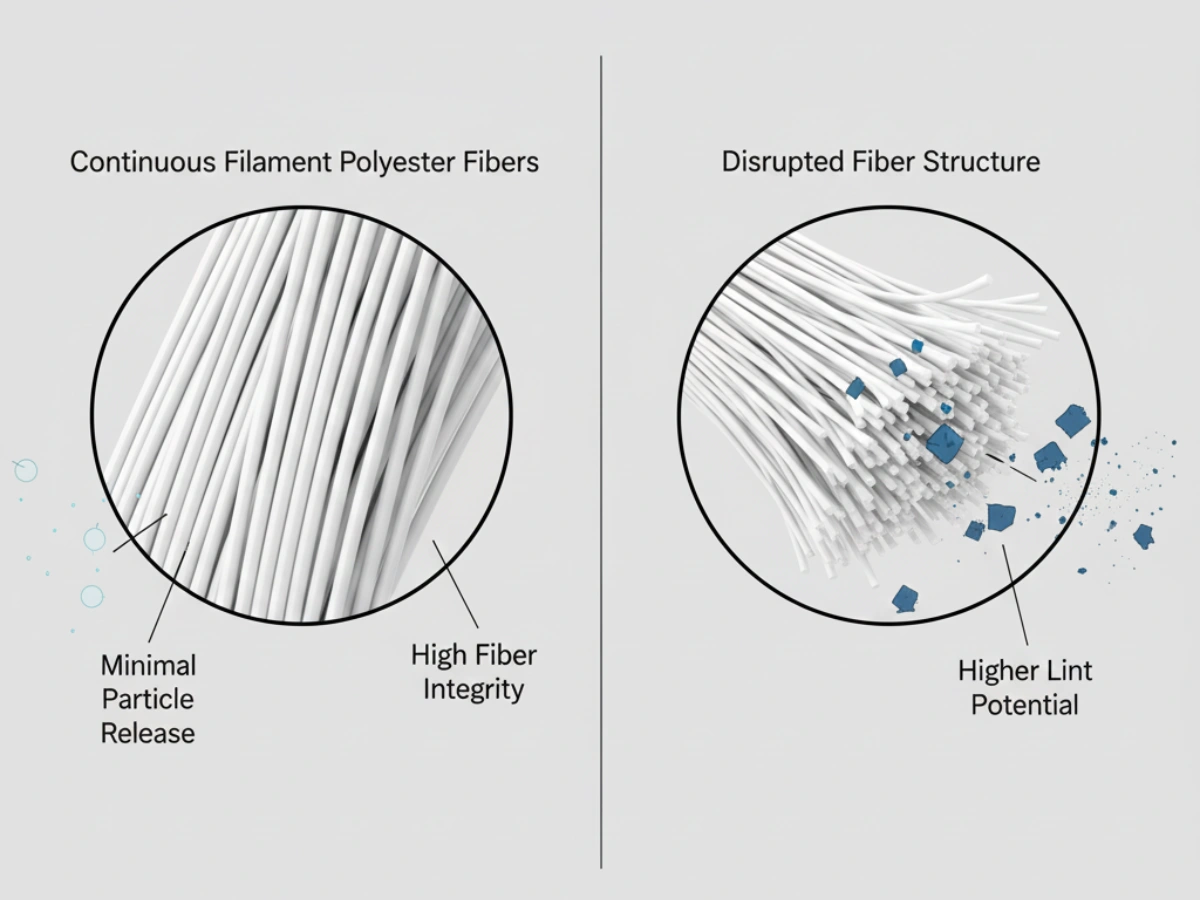
Low-lint continuous filament polyester fiber structure used in GMP-compliant pharmaceutical cleanroom mop materials.
Continuous filament polyester supports low-lint performance in critical areas.

Sterility vs. Non-Sterile Use Cases

In Grade A/B cleanrooms, mops are expected to be sterile at the point of use. In Grade C/D, non-sterile but low-particulate mops may be acceptable when justified by risk assessment. For sterile applications, suppliers should provide sterilization validation—commonly gamma irradiation—demonstrating SAL 10⁻⁶ and batch-specific Certificates of Irradiation.
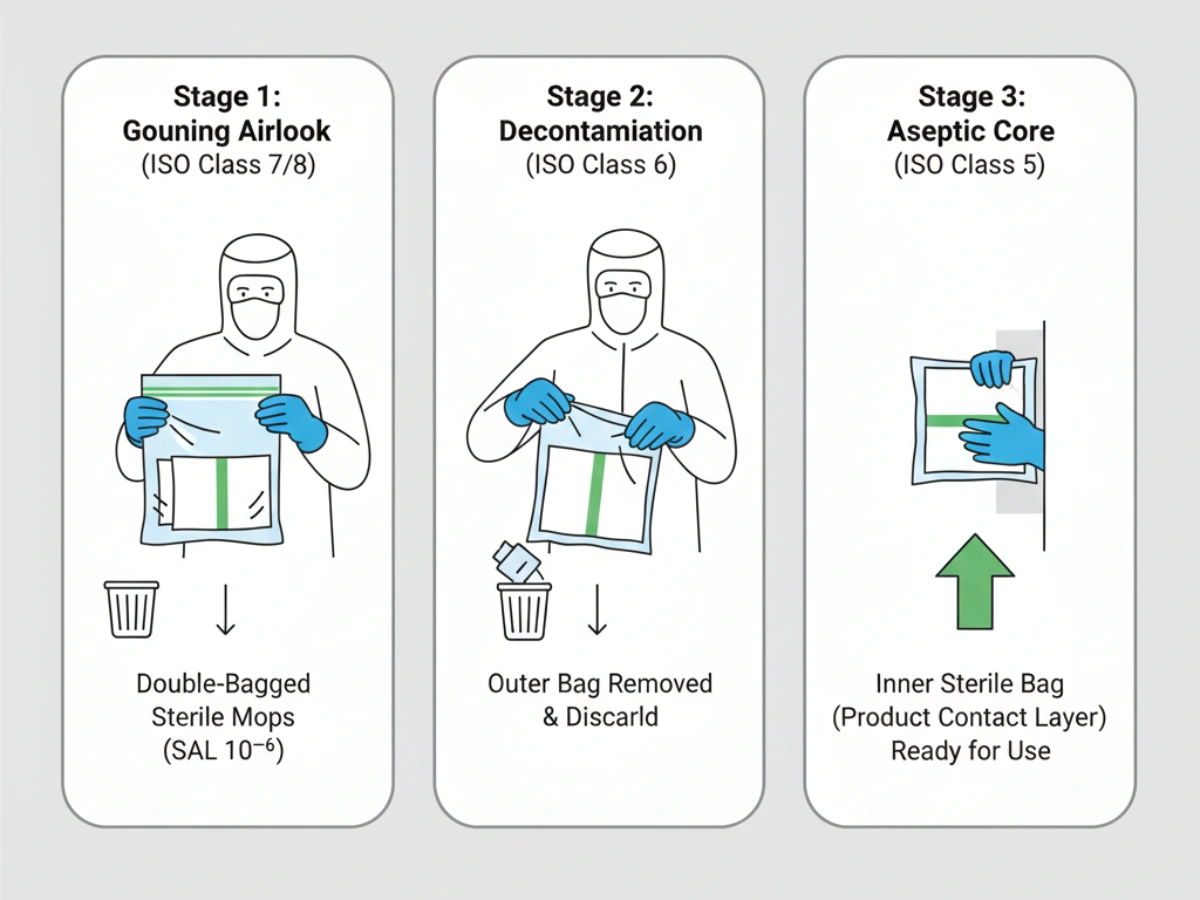
Double-bagged sterile cleanroom mop packaging and transfer process supporting GMP-compliant material entry into Grade A and B areas.
Double-bagged transfer supports staged peel-and-transfer SOPs for Grade A/B entry.

Packaging, Transfer Logic, Change Control

Double/triple bagging enables staged peel-and-transfer procedures; outer packaging is removed in lower grade areas and inner sterile bag opened only within Grade A/B. GMP also requires maintaining a defined “state of control”: mop heads delivered today must remain equivalent to those qualified during cleaning validation. Material/process/packaging changes should be governed under formal change control with advance notification.

5. Common GMP Misinterpretations by Buyers

  • “Annex 1 does not apply to cleaning tools.” Any tool contacting cleanroom surfaces falls within the CCS and cleaning validation framework.
  • “Any cleanroom mop is GMP-compliant if packaged cleanly.” Packaging does not compensate for intrinsic shedding or incompatible materials.
  • “One validation covers all disinfectants.” Compatibility with 70% IPA does not guarantee compatibility with peracetic acid or chlorine-based sporicides.

6. Practical GMP Evaluation Checklist (QA-Oriented)

  • TDS: Particle and fiber release data (e.g., IEST-RP-CC004.3).
  • Sterilization validation: Batch-specific COI confirming SAL 10⁻⁶.
  • Chemical compatibility: Evidence vs common pharma disinfectants.
  • Lot traceability: Lot number linked to raw material and production records.
  • Manufacturing environment: ISO-classified controlled production.
  • Packaging integrity: Double-bagged configuration + validated shelf life.

7. Internal Links

For a broader framework on supplier evaluation, refer to the main guide on pharmaceutical cleanroom mop supplier selection.

For audit-focused documentation requirements, see cleanroom mop validation documents and COA standards.

8. Technical RFQ Prompt

Supplier qualification under GMP and Annex 1 typically requires access to technical documentation and evaluation samples. You may request:

  • Product Technical Data Sheets (TDS) with particle/fiber/material performance data
  • Validation documentation such as sample COAs, COIs, and change-control summaries
  • Evaluation samples (sterile, double-bagged) suitable for GMP trials

Note: Provide your cleanroom grade (A/B/C/D), disinfectant rotation, sterility requirement, and packaging/transfer SOP constraints for a precise documentation pack.


Ask For A Quick Quote

We will contact you within 1 working day, please pay attention to the email with the suffix “@midposi.com”

It's Free!

《9 Deadly Pitfalls of Sourcing Cleanroom Garments in China》

e book 400
22

Ask For A Quick Quote

We will contact you within 1 working day, please pay attention to the email with the suffix “*@midposi.com”