
A structured 20-item checklist to prepare cleanroom mop documentation for FDA, MHRA, and GMP inspections. Covers Certificates of Analysis, Certificates of Irradiation, particle test reports, batch traceability records, and change control documentation that auditors expect to see. Free downloadable checklist included.
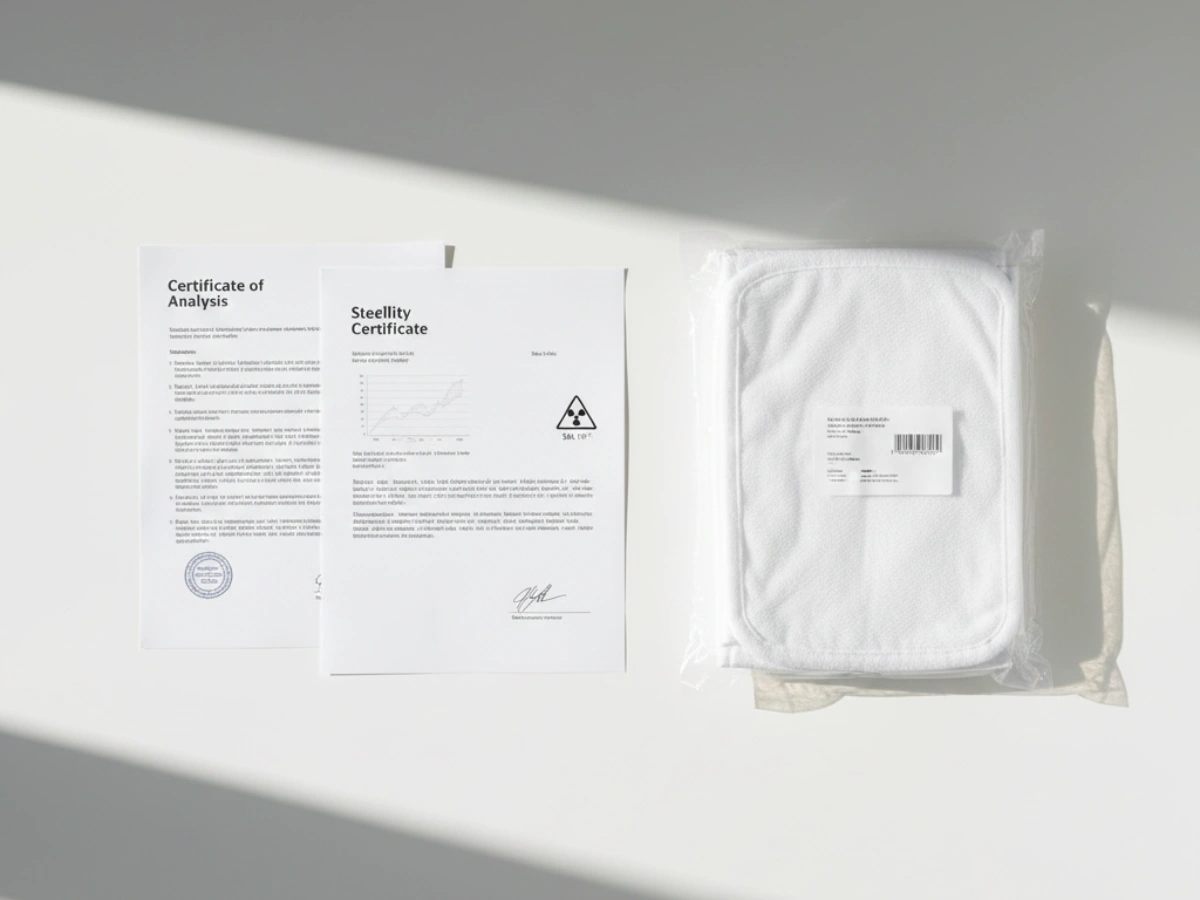
GMP auditors are increasingly asking to see documentation for cleaning consumables — including cleanroom mops. At minimum, a facility should be able to produce Certificate of Analysis (COA), Certificate of Conformance (CoC), particle generation data, and batch traceability records for each mop lot in use. For sterile products, Certificate of Irradiation (CoI) and sterility assurance documentation are typically expected. The specific documents required depend on the cleanroom grade, the role of the mop in the contamination control strategy, and the auditor’s focus areas for that inspection. The checklist below maps 20 specific documentation items across four categories to help QA and regulatory teams assess their readiness.
Three regulatory developments have elevated cleaning consumable documentation from a footnote to a focal point in GMP inspections:
EU GMP Annex 1 positions cleaning tools as integral components of the facility’s Contamination Control Strategy. When an auditor reviews the CCS, they may examine whether cleaning tool selection, performance data, and supplier qualification are documented to a level consistent with other GMP-controlled materials. A visão geral do sistema de esfregona para sala limpa provides context on how components fit into this broader contamination control framework.
With PIC/S member states implementing Annex 1 requirements through 2025–2026, the scope of documentation review has broadened. TGA Australia’s transition timeline (September 2025 – March 2026) explicitly references cleaning tool validation as a review area. Facilities supplying multiple regulatory markets may face cross-jurisdictional documentation expectations.
Regulatory agencies have increased scrutiny on consumable supply chains in recent years. If a facility cannot demonstrate traceability from mop lot to supplier documentation, the auditor may question the facility’s broader supplier qualification program. Cleaning tools that contact critical surfaces are subject to the same documentation expectations as other GMP materials.
The following checklist is organized into four categories. For each item, mark your current status: Ready (document on file, retrievable within 5 minutes), Parcial (document exists but needs updating), or Missing (document not on file). For an overview of the broader validation documentation landscape, see our guide to documentos de validação de esfregões para salas limpas. For grade-specific documentation expectations, refer to the Seleção de esfregão para salas limpas GMP grau por grau guia.
| # | Documento | O que os auditores procuram | Common Gap | Status |
|---|---|---|---|---|
| 1 | Certificado de Análise (COA) | Lot-specific test results with actual numerical values, test date, and analyst signature. Should reference test methods used. | Generic COA without lot-specific data; no test date; unsigned | Ready Parcial Missing |
| 2 | Certificado de Conformidade (CoC) | Statement that the lot meets specified requirements. Should reference the relevant specification or standard. | CoC without referenced specification; no batch/lot link to COA | Ready Parcial Missing |
| 3 | Material Composition Declaration | Clear statement of fiber type (e.g., 100% continuous filament polyester), blend ratio if applicable, and any treatments applied. | Vague description (“polyester material”); no filament type specified | Ready Parcial Missing |
| 4 | Dimensional Specification Sheet | Stated dimensions with tolerances for mop cover, frame, and handle components. | No tolerances stated; dimensions that don’t match received product | Ready Parcial Missing |
| 5 | Supplier ISO Certification (if claimed) | Current certificate with scope covering cleanroom consumables manufacturing. Verify expiry date and certifying body. | Expired certificate; scope doesn’t cover the product category; certificate from unrecognized body | Ready Parcial Missing |
| # | Documento | O que os auditores procuram | Common Gap | Status |
|---|---|---|---|---|
| 6 | Certificate of Irradiation (CoI) | Lot-specific document confirming sterilization was performed, with dose range, date, and facility information. Should be traceable to the specific lot received. | CoI without minimum/maximum dose data; no irradiation date; generic certificate not linked to received lot | Ready Parcial Missing |
| 7 | Sterilization Method Documentation | Description of sterilization method used (e.g., gamma, EtO, e-beam). The specific method should be confirmed by supplier documentation. | Method not specified; supplier uses “sterilized” without method disclosure | Ready Parcial Missing |
| 8 | Sterility Assurance Level (SAL) Documentation | Stated SAL for the product. Should be supported by dose audit or validation data from the sterilizer. | No SAL stated; SAL stated but no supporting dose audit data available | Ready Parcial Missing |
| 9 | Packaging Integrity Documentation | Description of packaging configuration (e.g., double-bagged), seal validation, and sterility maintenance period. Documentation of the aseptic transfer procedure if applicable. | No packaging description; no sterility maintenance period stated | Ready Parcial Missing |
| 10 | Sterilization Indicator Documentation | Description of sterilization indicators used (e.g., dosimeter placement, chemical indicators on packaging) with interpretation guidance. | No indicator documentation; staff cannot explain how to verify indicator status | Ready Parcial Missing |
| # | Documento | O que os auditores procuram | Common Gap | Status |
|---|---|---|---|---|
| 11 | Dados de geração de partículas | Test data showing particle release under defined conditions. Should reference test method (e.g., Helmke Drum, liquid particle count) and include per-size-bin data. | No particle data available; data from a different product or test condition; no test method cited | Ready Parcial Missing |
| 12 | Absorbency / Liquid Capacity Data | Measured absorbency or liquid holding capacity data with test method reference. Relevant for disinfectant application protocols. | No quantitative absorbency data; data from unrelated product | Ready Parcial Missing |
| 13 | Chemical Compatibility Documentation | Documentation of mop material compatibility with the specific disinfectants used in your facility (e.g., quaternary ammonium, hydrogen peroxide, sodium hypochlorite). | No compatibility data; data uses different disinfectant than facility’s protocol | Ready Parcial Missing |
| 14 | Extractable / Non-Volatile Residue Data | Data on extractable substances or non-volatile residue from the mop material, where applicable. | No extractable data available; documentation doesn’t specify test solvent | Ready Parcial Missing |
| 15 | Endotoxin Data (where applicable) | Endotoxin level data if the product is used in aseptic processing areas where endotoxin control is specified. | No endotoxin data for products used in aseptic areas | Ready Parcial Missing |
| # | Documento | O que os auditores procuram | Common Gap | Status |
|---|---|---|---|---|
| 16 | Batch / Lot Traceability Records | Documentation linking received mop lots to supplier batch records. Should enable tracing backwards from use location to production batch. | Lot number recorded but no supplier batch linkage; incomplete receiving records | Ready Parcial Missing |
| 17 | Supplier Change Notification Records | Documented process for receiving and evaluating supplier change notifications. Evidence that changes (material, process, facility) were reviewed and approved before continued use. | No change notification process; supplier change discovered during audit without prior review | Ready Parcial Missing |
| 18 | Supplier Audit / Qualification Records | Records of initial supplier qualification and any subsequent re-audits. Should include audit scope, findings, and CAPA tracking where applicable. | Initial qualification on file but no re-audit; audit scope doesn’t cover mop-specific processes | Ready Parcial Missing |
| 19 | Incoming Inspection Records | Documented inspection of received mop products against acceptance criteria. Should include visual inspection, dimensional checks where applicable, and documentation review. | No incoming inspection; inspection limited to count confirmation without quality attributes | Ready Parcial Missing |
| 20 | Cleaning Validation Linkage Records | Documentation linking the specific mop product to the facility’s cleaning validation or disinfectant efficacy studies. Changes in mop specification should trigger a review of cleaning validation status. | Cleaning validation performed but mop specification not referenced; different mop product used than validated | Ready Parcial Missing |
Based on published GMP inspection observations and industry discussion, the following documentation gaps appear with notable frequency in cleaning consumable reviews. Facilities preparing for an audit may find it useful to check these specific areas.

A COA that lists product name and lot number but contains no actual test data, no test date, and no analyst identification raises questions about whether any testing was performed. An auditor may ask: “What was actually tested, and when?” A credible COA includes lot-specific numerical results, reference to test methods, and a date of testing.
A supplier statement that a mop is “suitable for cleanroom use” or “meets cleanroom requirements” — without specifying which standard, grade, or test data supports the claim — is rarely sufficient documentation. The auditor expects to see the specific standard, the specific grade, and the data that supports the claim.
When a facility has COAs and CoIs on file but cannot link them to the specific lots currently in use, the documentation is considered incomplete. The auditor’s question is straightforward: “Prove that the mop in this room traces back to this certificate.”
Supplier ISO certificates that have expired, or certificates from certification bodies that cannot be verified, are a documentation gap. An auditor may note this as part of the supplier qualification review. Facilities should periodically verify the current status of supplier certifications directly with the issuing body.
Not all supplier documentation carries equal weight with auditors. A document that looks legitimate at first glance may not withstand scrutiny. The following framework helps distinguish audit-grade documentation from documents that may raise questions during an inspection. For a structured approach to evaluating suppliers, see the lista de verificação de auditoria de fornecedores de esfregões para salas limpas.

If an audit notice has arrived and mop documentation needs to be organized quickly, the following day-by-day action plan can help QA teams prioritize. For a more comprehensive approach to building a documentation package from scratch, see the lista de verificação do comprador de documentos de validação.
Locate every mop-related document on file. Separate by product type (sterile vs. non-sterile) and supplier. Create the gap list: what is present, what is partial, what is missing.
For each gap identified, send a specific document request to the supplier. Avoid vague requests like “send all documentation.” Specify: document type, lot number, and the data points needed.
Check expiry dates on all supplier certifications. Verify certifying body status where possible. Flag any expired or unverifiable certificates for immediate action.
For each mop lot currently in use, confirm that COA, CoI (if applicable), and batch records can be traced. Document the traceability path. Flag any lots with incomplete linkage.
Verify that incoming inspection records are complete for recent lots. Review any supplier change notifications received and confirm they were evaluated and documented.
Organize all documents into a logical package: by product type, by supplier, with a summary index. Prepare a brief cover note explaining the documentation structure.
Simulate an auditor request. Have a colleague ask for a specific document (e.g., “COA for lot 2403B of sterile mop covers”). Time the retrieval. If it takes more than 5 minutes, reorganize.
At minimum, a supplier should provide a lot-specific Certificate of Analysis (COA) with actual test data and a Certificate of Conformance (CoC) referencing the relevant specification. For sterile products, a Certificate of Irradiation (CoI) with dose range data is typically expected. The specific documents required depend on your facility’s quality agreement with the supplier and the cleanroom grade where the product is used.
Look for three indicators: lot-specific numerical test data (not just pass/fail statements), a test date that aligns with the production timeline, and a reference to the test method used. A credible COA includes the analyst or reviewer identification. Cross-check the lot number on the COA against the lot number on the product packaging and your receiving records. If all three match and the data shows actual measurements rather than generic statements, the COA is more likely to be audit-grade.
The most frequently cited gaps include: COAs without lot-specific test data, inability to trace mop lots in use back to supplier documentation, expired or unverifiable supplier certifications, absence of particle generation or chemical compatibility data, and documentation that is “on file somewhere” but cannot be retrieved during the audit within a reasonable timeframe. Change control records for mop specification changes are another area auditors have noted.
No. Documentation requirements should be proportionate to the risk associated with the product’s use. A sterile mop used in a Grade A/B aseptic area typically requires the full documentation suite including CoI, sterility assurance data, and packaging integrity documentation. A non-sterile mop used in Grade C/D areas would not require sterility documentation but should still have quality documents (COA, CoC), material composition data, and performance data relevant to its application. The specific documentation expectations should be defined in your facility’s quality agreement and risk assessment.
Organize by product type first (sterile vs. non-sterile), then by supplier, then by lot number. Maintain a summary index page that lists each product, supplier, lot numbers in current use, and the location of corresponding documentation. A physical binder with tabbed sections is common, but a well-organized electronic repository with clear naming conventions and searchable metadata can be equally effective — provided the auditor can access it and you can retrieve any document within a few minutes.
First, document your specific documentation requests and the supplier’s response. Second, perform a risk assessment: can your facility accept the documentation gap given the cleanroom grade and application? Third, begin evaluating alternative suppliers who can provide audit-grade documentation. The supplier qualification process for a new mop supplier should include a documentation review as an early gate — before technical evaluation or pricing discussion. A supplier that cannot produce a credible COA during the evaluation phase is unlikely to improve after you become a customer.
Supplier certifications (e.g., ISO certificates) should be verified at least annually or as specified in your supplier qualification SOP. COAs and CoIs should be reviewed for each received lot as part of incoming inspection. Change notification processes should be continuously monitored — not just during scheduled re-audits. A good practice is to add a quarterly documentation health check to the QA calendar: pick one supplier and one product type, request the full documentation package, and verify completeness and currency.
Get the full 20-item checklist in a printable format, plus a documentation gap analysis worksheet to assess your current readiness. MIDPOSI can also provide documentation samples — including COA, CoI, and technical data — to support your supplier qualification and audit preparation process.
MIDPOSI provides lot-specific COA, CoI, technical data sheets, and material composition documentation for evaluation. Supplier documentation samples available upon request to support your audit preparation.
Disclaimer: This checklist is provided as a general audit preparation resource and does not constitute regulatory or legal advice. Documentation requirements vary by facility, jurisdiction, product application, and regulatory framework. Facilities should consult their quality and regulatory affairs teams to determine the specific documentation requirements applicable to their operations. MIDPOSI does not claim that any product or documentation package satisfies all regulatory requirements for all facilities.