
Cleanroom mop frames are the structural connection between mop heads, mop handles, and the cleaning surface. A properly selected frame helps maintain stable surface contact, secure mop head attachment, and controlled cleaning motion for floors, walls, and ceilings in GMP, ISO, pharmaceutical, laboratory, and electronics cleanrooms.
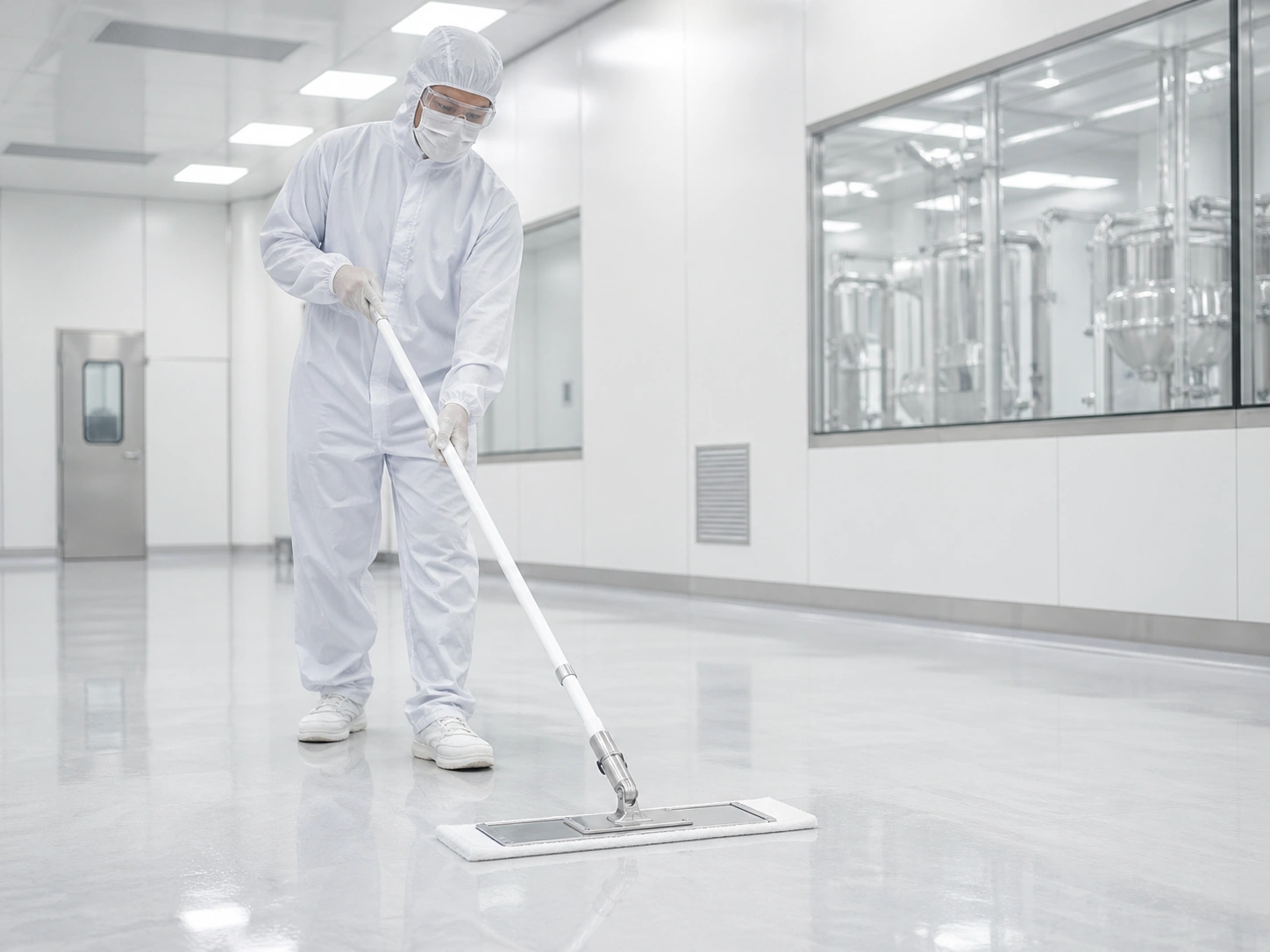
A cleanroom mop frame is the flat or structured base that holds the mop head or mop cover and connects to the mop handle during controlled cleaning.
In a cleanroom mop system, the frame directly affects surface coverage, mop head stability, contact pressure, operator control, and wall or ceiling usability. For GMP and ISO cleanrooms, the mop frame should be evaluated together with the mop head, handle, bucket workflow, and facility SOP.
A cleanroom mop frame is not only a support structure. It can affect cleaning consistency, surface coverage, mop head fit, operator control, and contamination-control workflow.
Buyers should evaluate frame size, surface design, swivel movement, mop head attachment, and handle connection before selecting a cleanroom mop frame.
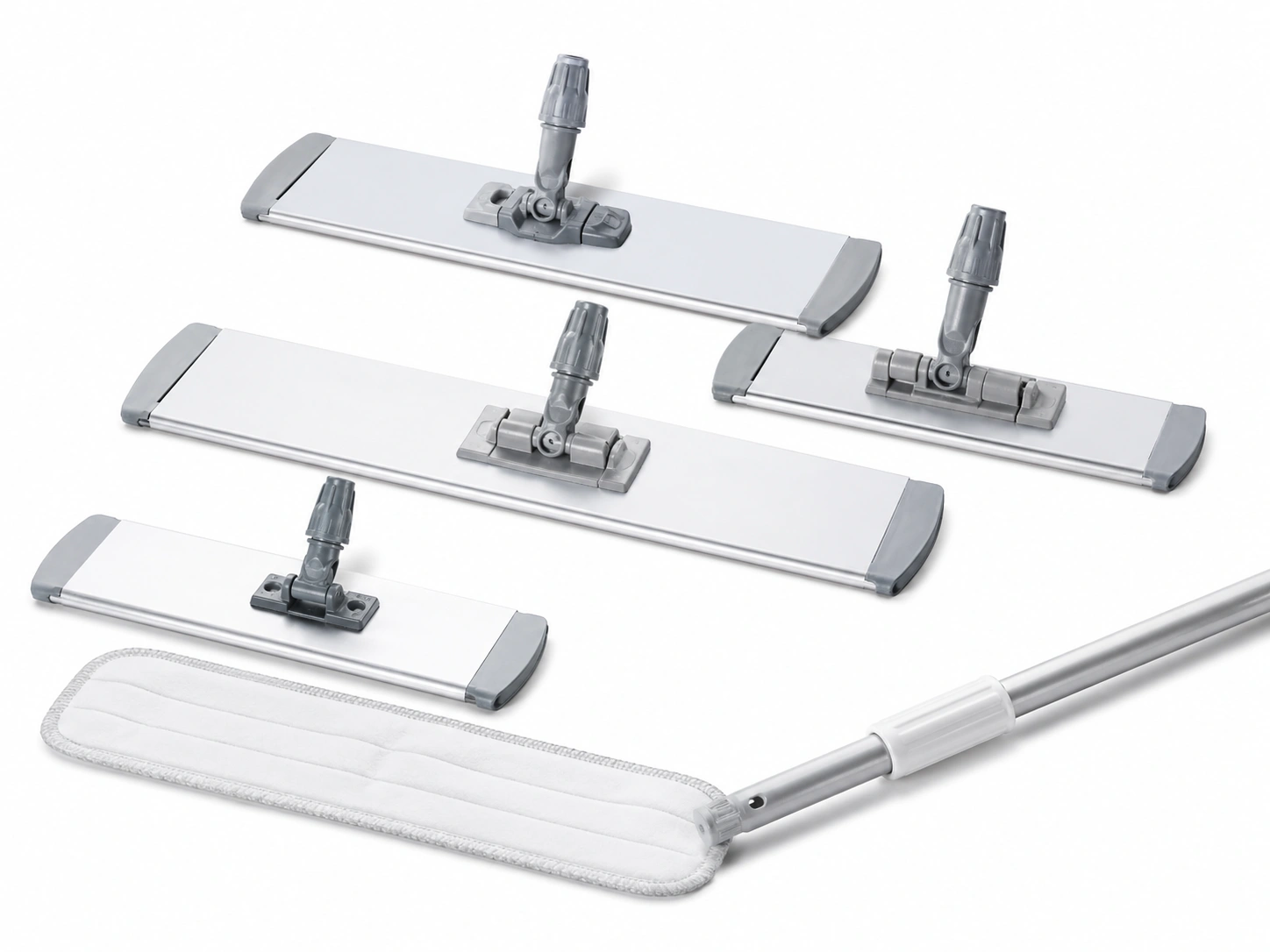
Wider frames can improve surface coverage, while smaller frames may offer better control in tight areas or around equipment.
A smooth swivel mechanism helps operators control direction and maintain surface contact during floor, wall, and ceiling cleaning.
The frame should hold the mop head or mop cover securely to reduce shifting, folding, or poor surface contact during use.
The connection area should be compatible with the selected cleanroom mop handle and suitable for the intended workflow.
The best cleanroom mop frame is usually selected by matching it with the intended mop head, mop handle, and cleaning workflow.
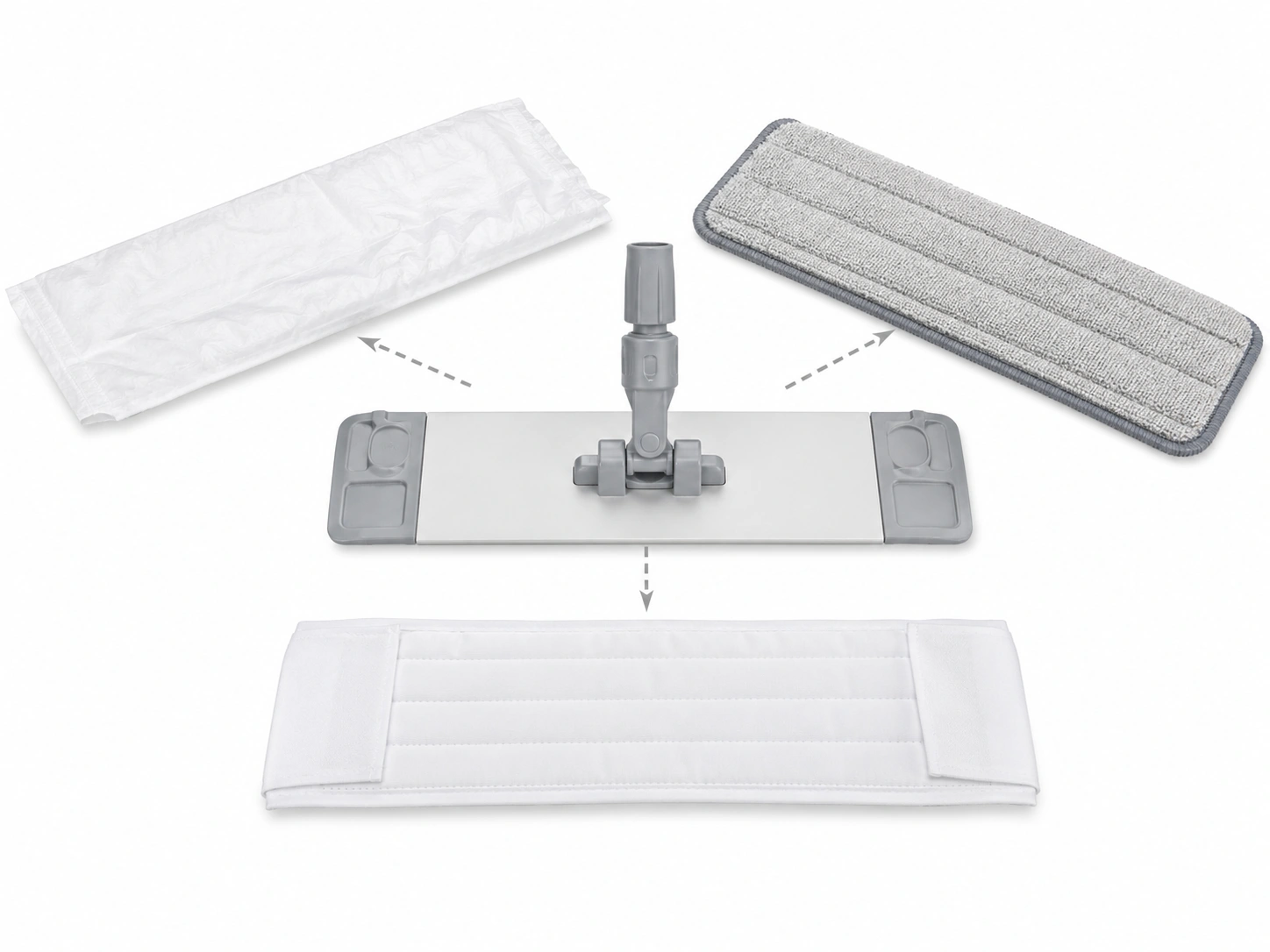
Disposable cleanroom mop covers can support simplified contamination-control workflows, especially where reuse-related risk reduction is a priority.
Microfiber mop pads are often selected for surface contact and residue pickup during routine cleanroom cleaning.
Polyester mop covers may be selected where low-lint performance, chemical compatibility, and controlled environment suitability are important.
| Compatibility Point | O que verificar | Por que é importante |
|---|---|---|
| Mop head size | Frame width and mop cover dimensions | Helps prevent poor fit or pad movement during use |
| Método de anexo | Pocket, tab, clip, or compatible fastening method | Supports stable mop head positioning |
| Handle connection | Connector type and locking design | Ensures the frame works with the selected mop handle |
| Área de aplicação | Floor, wall, ceiling, or multi-surface cleaning | Influences frame size, swivel control, and operator handling |
A suitable cleanroom mop frame should help operators maintain controlled surface contact across different cleaning areas, including floors, walls, and ceilings.
Flat mop frames help cover large cleanroom floor areas with stable surface contact and repeatable cleaning motion.
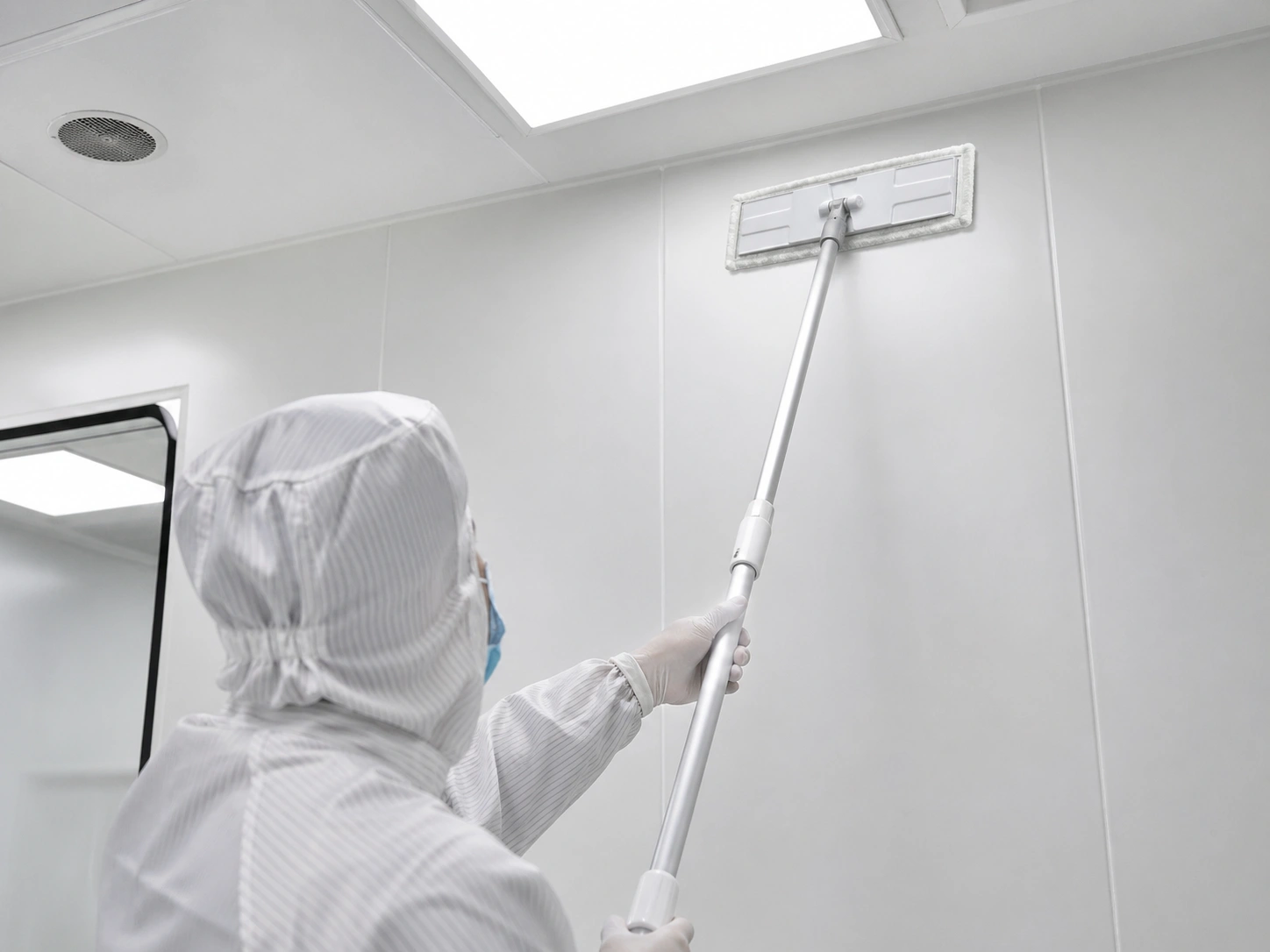
When used with a suitable handle, flat frames can help operators clean vertical surfaces with improved control.
Ceiling applications require a frame and handle combination that provides reach, alignment, and stable contact.
Cleanroom workflows often favor flat mop frames because they provide broad surface contact, predictable movement, and compatibility with common cleanroom mop covers.
| Tipo de quadro | Vantagem Típica | Cleanroom Use Consideration |
|---|---|---|
| Flat mop frame | Broad, stable surface contact | Commonly used for floors, walls, and ceilings |
| Sponge mop frame | Absorbency and liquid pickup | Should be reviewed for cleanroom suitability and shedding risk |
| String mop frame | Flexible coverage around irregular areas | May not be preferred where low-lint control is critical |
| T-mop frame | Specific controlled cleaning applications | Needs matching mop cover and SOP-based evaluation |
Use this guide as a starting point when selecting cleanroom mop frames for pharmaceutical, laboratory, medical device, electronics, and ISO cleanroom applications.
| Exigência | Recommended Frame Direction | Por que é importante |
|---|---|---|
| Limpeza de piso de rotina | Flat mop frame with compatible mop cover | Supports broad surface contact and repeatable cleaning motion |
| Limpeza de paredes e teto | Flat frame with suitable swivel and handle compatibility | Improves alignment and reach for vertical and overhead surfaces |
| Fluxo de trabalho descartável | Frame matched to disposable mop covers | Ajuda a reduzir preocupações de contaminação relacionadas à reutilização |
| Microfiber cleaning workflow | Frame compatible with microfiber mop pads | Supports surface contact and residue pickup |
| GMP / pharmaceutical use | Smooth, compatible, system-matched frame | Supports SOP alignment and contamination-control workflows |
| System integration | Frame selected with mop head, handle, and bucket workflow | Improves practical usability and reduces mismatch risk |
Tell us your cleanroom class, application area, mop head preference, handle requirement, and cleaning workflow. MIDPOSI can help recommend a suitable cleanroom mop frame and matching system.
The frame is one of the most important connection points in the full cleanroom mop system. It should be evaluated together with the mop head, handle, and fluid-management workflow.
Choose a frame that fits the intended cabeças de esfregão para salas limpas, including microfiber, polyester, disposable, or sterile options.
Confirm the frame connection works with the selected cleanroom mop handle.
Floor, wall, and ceiling cleaning may require different frame size, swivel control, and handle length considerations.
Review the frame as part of the full sistema de esfregona para sala limpa e bucket and wringer workflow.
These answers are designed for purchasing managers, QA teams, cleanroom supervisors, and contamination-control buyers.
A cleanroom mop frame is the base component that holds a mop head or mop cover and connects to a mop handle for controlled cleaning of floors, walls, ceilings, and other cleanroom surfaces.
Mop frame compatibility matters because the frame must fit the mop head, connect securely to the handle, and support the intended cleaning workflow without poor alignment or unstable contact.
Flat mop frames are commonly used in cleanrooms because they provide broad surface contact, predictable movement, and compatibility with many cleanroom mop covers.
Yes. Flat cleanroom mop frames can be used for walls and ceilings when paired with a suitable handle, mop cover, and controlled cleaning procedure.
Mop frames may connect with mop heads or covers through pocket-style attachments, tabs, clips, or other compatible fastening methods depending on the system design.
Buyers should evaluate mop head compatibility, frame width, swivel movement, handle connection, application area, material suitability, and whether the frame fits the full cleanroom mop system.
If you are sourcing cleanroom mop frames for GMP facilities, pharmaceutical manufacturing, laboratories, medical device production, electronics cleanrooms, or ISO-controlled environments, MIDPOSI can help you compare frame options by compatibility, surface contact, handle connection, and full system workflow.