
As esfregonas estéreis para salas limpas para processamento asséptico são esfregonas reutilizáveis de utilização única ou estritamente validadas que atingem o nível de garantia de esterilidade SAL 10⁻⁶ (Nível de garantia de esterilidade) através de métodos de esterilização validados com confirmação de indicador biológico.
Esfregonas estéreis para salas limpas para processamento asséptico são uma parte crítica das operações em salas limpas em conformidade com GMP e ISO. Eles apoiam o controle de contaminação, procedimentos de limpeza validados e garantia de esterilidade em ambientes de fabricação assépticos.
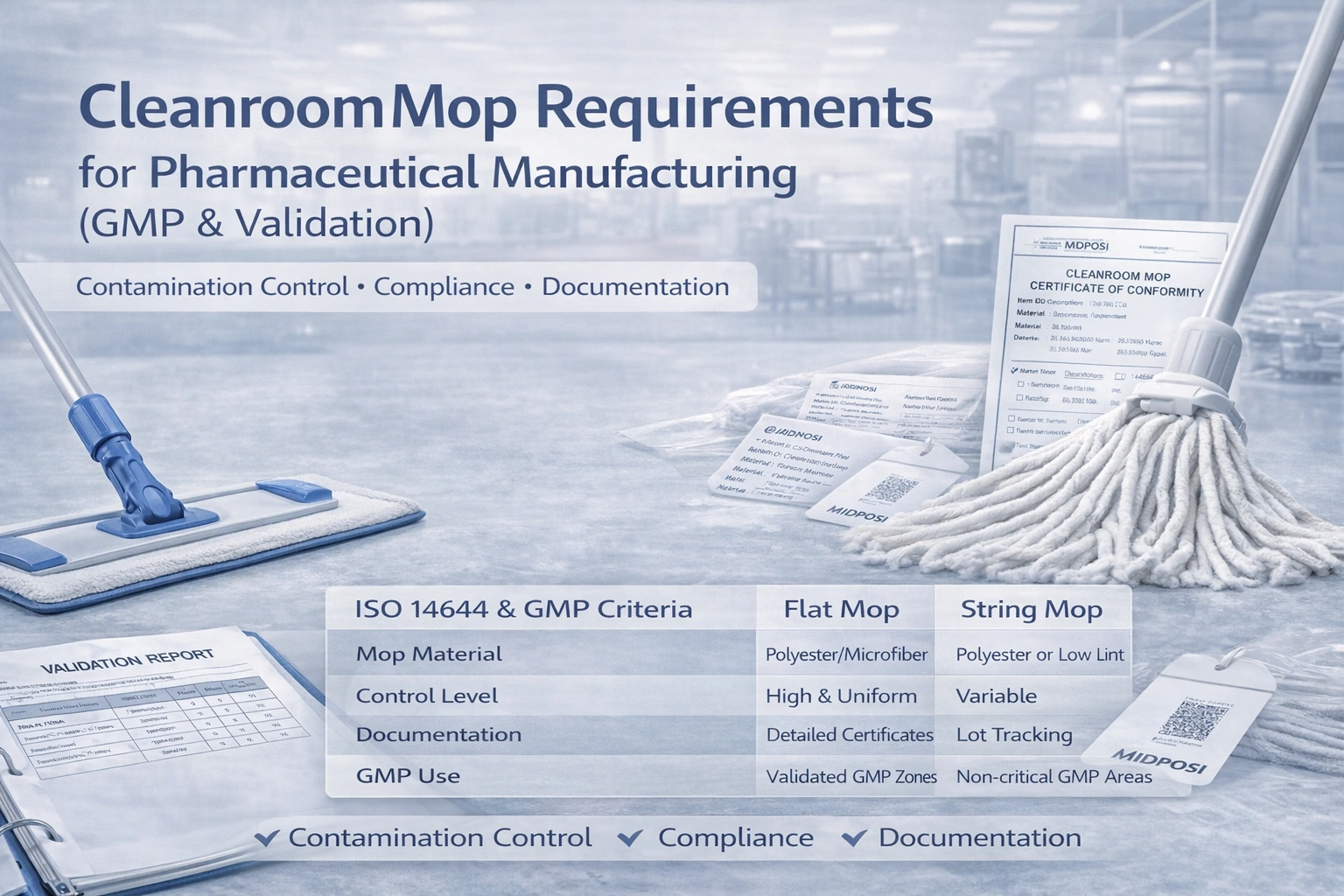
Os esfregões estéreis para salas limpas são uma parte essencial dos programas de controle de contaminação em conformidade com GMP.
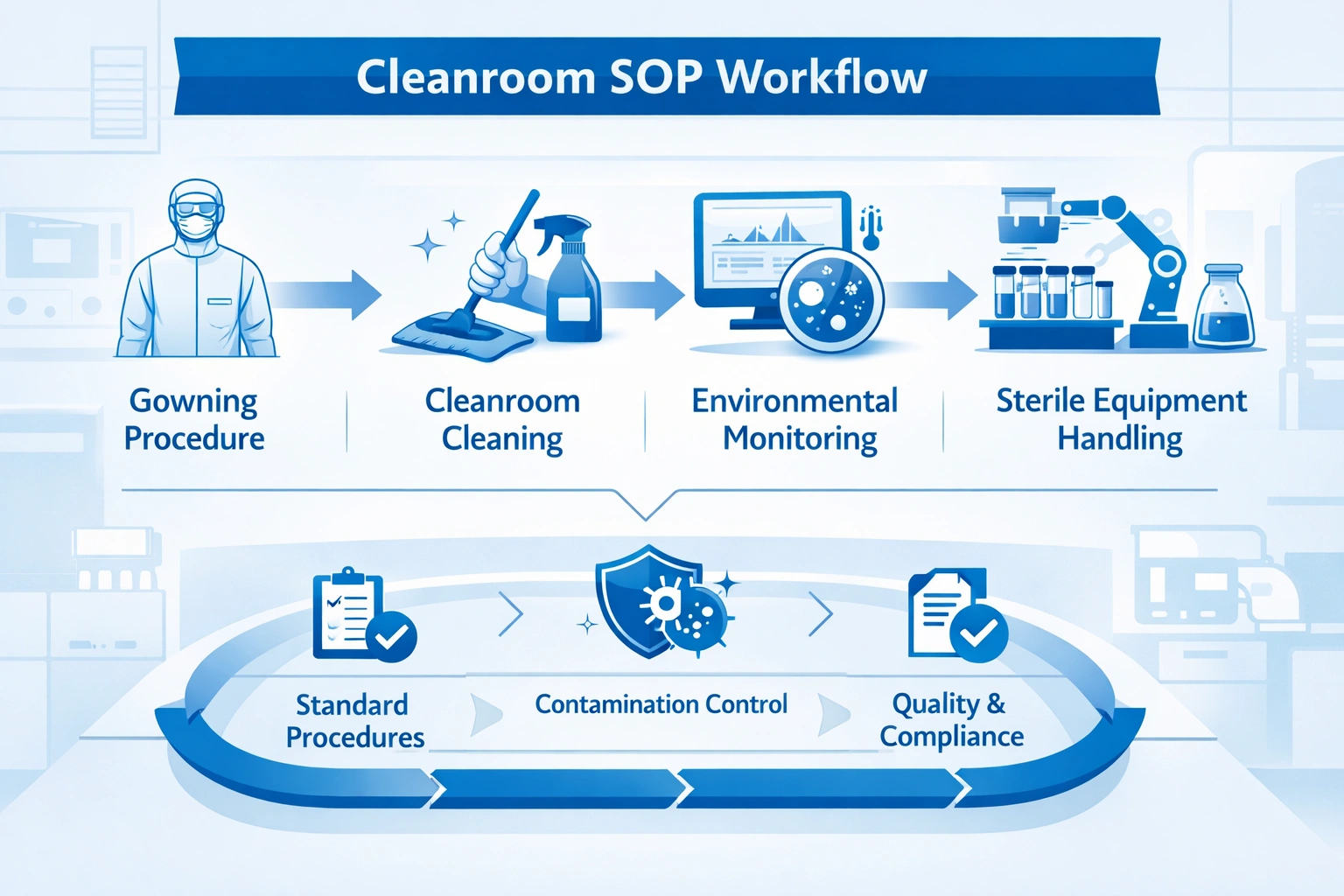
As expectativas da FDA, da EMA e do Anexo 1 das BPF da UE exigem esterilidade, rastreabilidade e documentação validadas.
O monitoramento regular e a verificação da esterilidade são essenciais para manter a conformidade e o controle do processo.
O treinamento do pessoal e a disciplina processual são necessários para garantir o manuseio e uso correto do esfregão asséptico.
O tratamento de desvios, os sistemas CAPA e os registros prontos para auditoria ajudam a impulsionar a melhoria contínua.

Esfregonas estéreis para salas limpas para processamento asséptico são esfregões reutilizáveis de utilização única ou estritamente validados que atingem o nível de garantia de esterilidade SAL 10⁻⁶ (Nível de Garantia de Esterilidade) através de métodos de esterilização validados com confirmação de indicador biológico. De acordo com o Anexo 1 das BPF da UE e as orientações da FDA, esfregões estéreis usados em zonas críticas de Grau A (ISO 5) exigem irradiação gama ou esterilização em autoclave validada, embalagem de barreira estéril, rastreabilidade baseada em lote e verificação de esterilidade documentada por meio de indicadores biológicos. Os esfregões estéreis reduzem o risco de contaminação por reutilização e proporcionam esterilidade garantida para fabricação asséptica, onde a esterilidade do produto não é negociável.
No processamento farmacêutico asséptico, um esfregão comprometido ou um procedimento de limpeza não validado pode resultar em perda de lote, risco à segurança do paciente e resultados regulatórios. A maioria das instalações entende o conceito, mas poucas possuem uma estrutura completa de garantia de esterilidade que integre ciência de materiais, validação de esterilização, integridade de embalagem e rastreamento de uso.
Este artigo fornece uma estrutura de garantia de esterilidade completa e pronta para implementação para esfregões de processamento asséptico – um tópico crítico que muitos concorrentes abordam apenas em um nível básico de descrição do produto, e não de uma perspectiva de excelência operacional e controle de contaminação.
Como discutido em nosso guia de esfregões descartáveis vs reutilizáveis para salas limpas, a garantia da esterilidade exige a compreensão de todo o ciclo de vida, desde a seleção do material, passando pela esterilização validada, até o uso asséptico e a rastreabilidade.
| Padrão | Requisito de Grau A (ISO 5) | Evidência necessária | Freqüência |
|---|---|---|---|
| EU GMP Annex 1.5 | Esterilidade demonstrável | Confirmação de BI | Por uso |
| Guia de processamento asséptico da FDA | Método de esterilização validado | Relatório de validação | Por lote/esfregão |
| USP <797> | Garantia de esterilidade | Certificado de análise | Por lote |
| PDA TR13 | Programa de manutenção de esterilidade | Dados de monitoramento | Em andamento |
┌─────────────────────────────────────────────────────────────────────┐
│              STERILITY ASSURANCE LEVEL (SAL) EXPLAINED             │
├─────────────────────────────────────────────────────────────────────┤
│  WHAT IS SAL 10⁻⁶?                                                 │
│  • Probability of finding viable microorganism: 1 in 1,000,000    │
│  • Mathematical notation: 10⁻⁶                                    │
│  • Required for aseptic processing and terminally sterilized       │
│    products                                                        │
│                                                                     │
│  HOW IS IT ACHIEVED?                                               │
│  • Method: Gamma irradiation (25-50 kGy) OR ETO (37-63°C)         │
│  • Validation: Biological indicator (BI) showing no growth        │
│  • Material compatibility: Must withstand sterilization without    │
│    degradation                                                     │
│  • Packaging: Maintains sterility until use                        │
│                                                                     │
│  DOCUMENTATION REQUIRED                                            │
│  • Sterilization certificate from supplier                         │
│  • Lot number traceability                                         │
│  • BI confirmation records                                         │
│  • Validation data for facility method                             │
│                                                                     │
│  STERILITY ASSURANCE LEVELS                                        │
│  • SAL 10⁻⁶: Terminal sterilization (Grade A critical zone)       │
│  • SAL 10⁻³: High-level disinfection (Grade B)                    │
│  • SAL 10⁻⁴: Sanitization (Grade C)                               │
└─────────────────────────────────────────────────────────────────────┘
| Método | Temperatura | Dose/Tempo | Eficácia | Compatibilidade de materiais | Verificação |
|---|---|---|---|---|---|
| Irradiação gama | N / D | 25-50kgy | ≥6 registros, SAL 10⁻⁶ | Todos os materiais | Certificado de BI |
| Autoclave (Vapor) | 121-134°C | 15-30 minutos a 15 psi | ≥6 registros, SAL 10⁻⁶ | Compatível com poliéster | BI por ciclo |
| ETO (óxido de etileno) | 37-63°C | 3-12 horas + 48h de aeração | ≥6 registros, SAL 10⁻⁶ | Todos os materiais | Certificado de BI |
| Calor Seco | 160-180°C | 2-4 horas | ≥4 registros, SAL 10⁻⁶ | Materiais limitados | Certificado de BI |
Recomendado para Grau A:
┌─────────────────────────────────────────────────────────────────────┐
│            GAMMA IRRADIATION FOR ASEPTIC MOPS FRAMEWORK            │
├─────────────────────────────────────────────────────────────────────┤
│  IRRADIATION PARAMETERS                                            │
│  • Dose range: 25-50 kGy                                           │
│  • Source: Cobalt-60 or Cesium-137                                 │
│  • Effect: SAL 10⁻⁶ sterility achieved                            │
│  • Penetration: Through entire mop assembly                        │
│  • Temperature rise: Minimal during irradiation                    │
│                                                                     │
│  MATERIAL CONSIDERATIONS                                           │
│  • Polyester: Excellent (maintains integrity)                      │
│  • Microfiber: Good (minor degradation at high dose)               │
│  • Blends: Variable (validate per material)                        │
│  • Handles: Must be irradiation-compatible                         │
│                                                                     │
│  VALIDATION PROTOCOL                                               │
│  ☐ Supplier BI certificate attached to each package batch          │
│  ☐ BI type specified                                               │
│  ☐ BI population: ≥10⁶ spores                                      │
│  ☐ D-Value: ≥10⁶ (10⁻⁶)                                           │
│  ☐ Incubation: 30 days at 55-60°C                                  │
│  ☐ Result: No growth required for acceptance                       │
│                                                                     │
│  PACKAGING INTEGRITY                                               │
│  ☐ Sterile barrier packaging                                       │
│  ☐ Sealed outer packaging                                          │
│  ☐ Maintain sterility indicator visibility                         │
│  ☐ No damage or breach detected                                    │
│                                                                     │
│  CERTIFICATE VERIFICATION                                          │
│  ☐ Certificate reviewed against irradiation parameters             │
│  ☐ Lot number cross-referenced                                     │
│  ☐ Valid through date confirmed                                    │
└─────────────────────────────────────────────────────────────────────┘
| Elemento de embalagem | Exigência | Controle Crítico | Verificação |
|---|---|---|---|
| Barreira Primária | Saco duplo estéril ou recipiente selado | Sem detecção de violação | Inspeção visual |
| Embalagem externa | Camada protetora à prova de rasgos | Integridade física | Teste de integridade do selo |
| Indicador de esterilidade | Visível e acessível | Confirme a integridade | Verificação de mudança de cor |
| Rastreabilidade de lote | Número de lote exclusivo em todas as unidades | Rastreabilidade | Digitalização/verificação |
| Formato pronto para uso | Acesso rápido sem contaminação | Risco de contenção | Protocolo de transferência asséptica |
| Expiração | Válido até a data exibida | Esterilidade por tempo limitado | Monitoramento de data |
Procedimento crítico para zonas de Grau A:
┌─────────────────────────────────────────────────────────────────────┐
│           ASEPTIC MOP TRANSFER PROTOCOL (GRADE A)                  │
├─────────────────────────────────────────────────────────────────────┤
│  PRE-TRANSFER PREPARATION                                          │
│  ☐ Personnel in Grade A gowning complete                           │
│  ☐ Gloves sanitized and donned                                     │
│  ☐ Transfer area validated as clean                                │
│  ☐ Mop staging area prepared                                       │
│  ☐ Tools and materials ready                                       │
│                                                                     │
│  PHASE 1: PACKAGING OPENING                                        │
│  ☐ Outer packaging inspected for integrity                         │
│  ☐ No damage, tears, or breaches detected                          │
│  ☐ Sterility indicator verified                                    │
│  ☐ Opened with sterile scissors or tool                            │
│                                                                     │
│  PHASE 2: PRIMARY BARRIER REMOVAL                                  │
│  ☐ Inner sterile bag exposed within clean air                      │
│  ☐ Mop immediately removed with sterile forceps                    │
│  ☐ Transferred to sterile holding container                        │
│  ☐ Container sealed immediately                                    │
│                                                                     │
│  PHASE 3: ASEPTIC TRANSFER                                         │
│  ☐ Mop transported via pass-through or direct transfer             │
│  ☐ No exposure to non-aseptic environment                          │
│  ☐ Received by Grade A operator                                    │
│  ☐ Transfer documented: Time, Mop ID, Lot #, Operators             │
│                                                                     │
│  PHASE 4: DOCUMENTATION                                            │
│  ☐ Transfer log updated                                            │
│  ☐ Sterility indicator recorded                                    │
│  ☐ Any discrepancies documented and investigated                   │
└─────────────────────────────────────────────────────────────────────┘
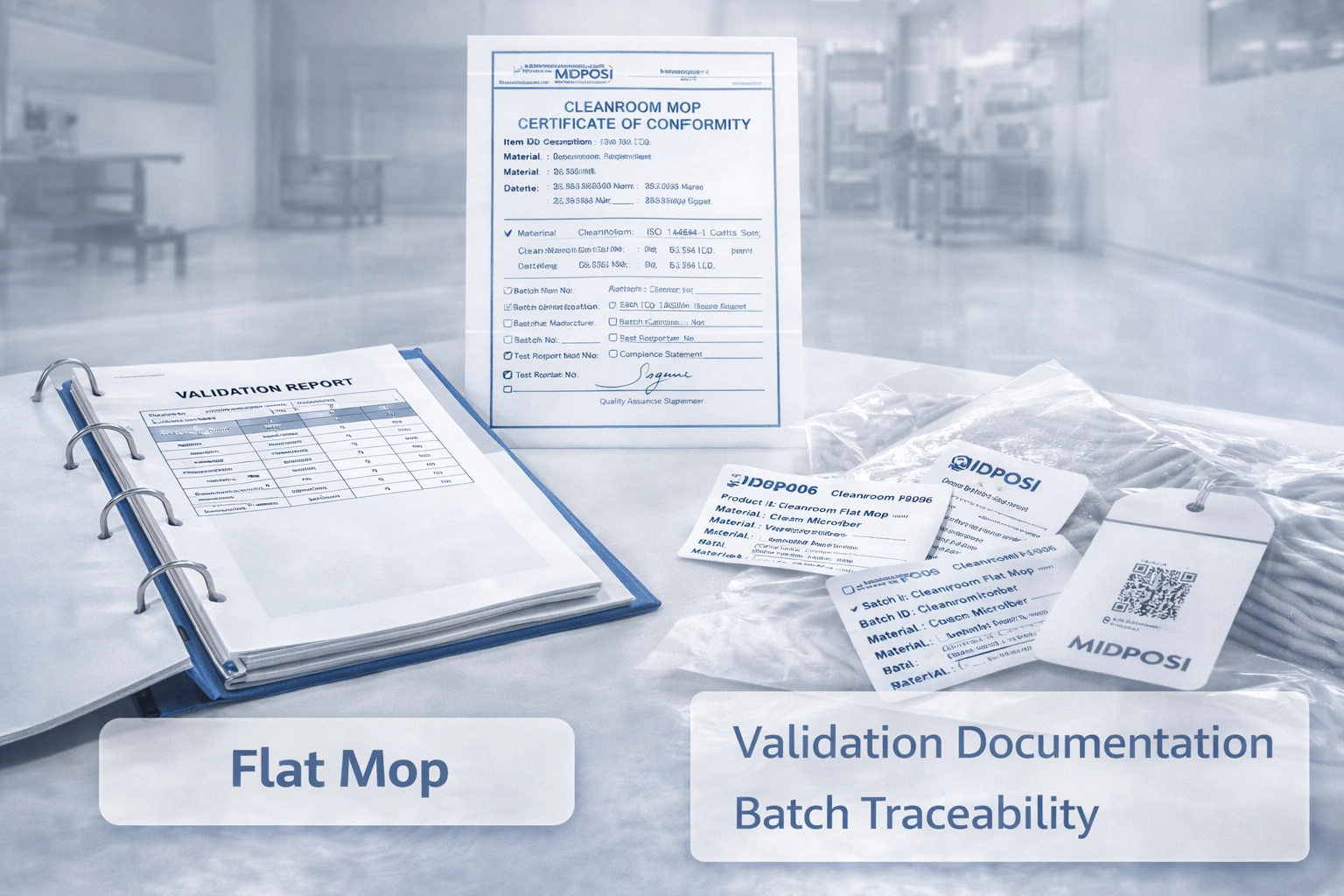
┌─────────────────────────────────────────────────────────────────────┐
│           STERILE MOP LOT TRACEABILITY FRAMEWORK                   │
├─────────────────────────────────────────────────────────────────────┤
│  SUPPLIER LOT INFORMATION                                          │
│  ☐ Supplier name                                                   │
│  ☐ Supplier lot #                                                  │
│  ☐ Manufacturing date                                              │
│  ☐ Sterilization date                                              │
│  ☐ Irradiation dose and method                                     │
│  ☐ Sterility certificate #                                         │
│  ☐ Valid through                                                   │
│                                                                     │
│  RECEIVING VERIFICATION                                            │
│  ☐ Certificate matches shipment                                    │
│  ☐ Lot number matches certificate                                  │
│  ☐ Dose within specified range                                     │
│  ☐ Sterility indicator verified                                    │
│  ☐ Packaging integrity confirmed                                   │
│                                                                     │
│  USAGE TRACKING SYSTEM                                             │
│  ☐ Unique mop ID per unit                                          │
│  ☐ Use date / operator / zone / purpose                            │
│  ☐ Disposal method documented                                      │
│                                                                     │
│  DISPOSAL / REPLACEMENT TRACKING                                   │
│  ☐ Disposal date                                                   │
│  ☐ Replacement mop ID                                              │
│  ☐ Disposal reason documented                                      │
│                                                                     │
│  AUDIT TRAIL                                                       │
│  ☐ Complete record from receipt to disposal                        │
│  ☐ Audit-ready for inspection                                      │
│  ☐ Retention period: 5 years minimum                               │
└─────────────────────────────────────────────────────────────────────┘
| Indicador de CQ | Critérios de Aceitação | Freqüência | Limite de ação |
|---|---|---|---|
| Aceitação de BI | Não é necessário crescimento | Por lote | Qualquer crescimento = rejeição de lote |
| Precisão do número de lote | 100% de correspondência entre embalagem e certificado | Por recibo | Incompatibilidade = investigação |
| Faixa de dosagem | 25-50kgy | Por lote | Fora da faixa = reesterilização |
| Integridade da embalagem | 100% intacto | Por uso | Violação = descarte |
| Conformidade com expiração | Nenhum esfregão vencido usado | Por uso | Expirado = rejeição |
| Rastreabilidade | 100% desde o recebimento até o descarte | Trimestral | Lacunas = investigação |
Programa completo de testes de BI:
┌─────────────────────────────────────────────────────────────────────┐
│         BIOLOGICAL INDICATOR (BI) VERIFICATION FRAMEWORK           │
├─────────────────────────────────────────────────────────────────────┤
│  BI SELECTION CRITERIA                                             │
│  ☐ Organism: Geobacillus stearothermophilus spores                 │
│  ☐ Population: ≥10⁶ spores                                         │
│  ☐ D-Value: ≥10⁶ (10⁻⁶)                                           │
│  ☐ Resistant to irradiation                                        │
│                                                                     │
│  SUPPLIER VERIFICATION                                             │
│  ☐ Supplier BI validation data reviewed                            │
│  ☐ Certificate authenticity verified                               │
│  ☐ BI placement confirmed                                          │
│                                                                     │
│  INCUBATION PROCEDURE                                              │
│  ☐ Temperature: 55-60°C                                            │
│  ☐ Duration: 30 days minimum                                       │
│  ☐ Positive control included                                       │
│  ☐ Negative control included                                       │
│                                                                     │
│  RESULT INTERPRETATION                                             │
│  ☐ No growth = Acceptable                                          │
│  ☐ Growth = Reject lot                                             │
│  ☐ Inconclusive = Re-test                                          │
│                                                                     │
│  LOT ACCEPTANCE DECISION                                           │
│  ☐ ACCEPT / REJECT / RE-STERILIZE / INVESTIGATE                    │
└─────────────────────────────────────────────────────────────────────┘| Métrica | Alvo | Fonte de dados | Freqüência | Nível de alerta |
|---|---|---|---|---|
| Taxa de aprovação de BI | 100% (0 falhas) | Teste de BI | Por lote | <95% |
| Taxa de rejeição de lote | <1% | Registro de rejeição | Trimestral | >2% |
| Integridade do Indicador de Esterilidade | 100% intacto | Inspeção | Por uso | <95% |
| Integralidade da rastreabilidade | 100% | Auditoria | Mensal | <90% |
| Conformidade com expiração | 100% | Registro de uso | Mensal | <95% |
| Taxa válida | 0% expirada | Sistema de controle de qualidade | Contínuo | Qualquer |
| Taxa de reesterilização | <00,5% | Registro de reesterilização | Trimestral | >1% |

Consequências
Melhores Práticas
Consequências
Melhores Práticas
Consequências
Melhores Práticas

UM: O processamento asséptico requer SAL 10⁻⁶, o que significa que há uma probabilidade de um em um milhão de encontrar um microrganismo viável. Isto é conseguido através de métodos de esterilização validados, como irradiação gama, esterilização em autoclave validada ou esterilização por ETO com aeração adequada. A seleção do método depende da compatibilidade do material e da infraestrutura de esterilização disponível.
UM: A verificação da esterilidade requer um programa de confirmação de indicadores biológicos. Isso inclui revisão do certificado do fornecedor, inspeção de recebimento, verificação da integridade da embalagem, correspondência correta de lotes, confirmação do certificado BI e documentação completa desde o recebimento até o descarte. Os esfregões reutilizáveis exigem testes de BI por ciclo de esterilização ou em intervalos validados.
UM: Os esfregões estéreis para salas limpas requerem embalagens que mantenham a esterilidade até o uso. Isso geralmente inclui uma barreira estéril primária, uma camada protetora externa, indicadores de esterilidade visíveis, rastreabilidade do lote, um formato de transferência asséptica pronto para uso e uma data de validade claramente marcada.
UM: A frequência dos testes depende da abordagem de esterilização. Os produtos esterilizados pelo fornecedor podem não exigir testes de BI de rotina se os certificados forem válidos, enquanto os esfregões reutilizáveis esterilizados nas instalações geralmente exigem testes de BI por ciclo ou em intervalos validados. A validação inicial e a revalidação são necessárias quando os parâmetros de esterilização mudam.
UM: A irradiação gama é realizada em temperatura ambiente, penetra em todo o conjunto e oferece um certificado SAL 10⁻⁶ pré-validado. A esterilização em autoclave utiliza alta temperatura e pressão, pode afetar alguns materiais e requer validação por ciclo e confirmação de indicador biológico. A irradiação gama é frequentemente preferida para a esterilização terminal de esfregões assépticos.
UM: Um sistema completo de rastreabilidade deve incluir identificação única, rastreamento baseado em lote, datas de fabricação e esterilização, registros de uso, registros de operadores, registros de descarte e uma trilha de auditoria completa, desde o recebimento até o descarte. Ferramentas digitais, como códigos de barras ou sistemas RFID, podem melhorar a rastreabilidade em operações maiores.
Se você estiver comparando materiais de esfregões estéreis, métodos de esterilização, formatos de embalagem ou requisitos de rastreabilidade para ambientes assépticos, nossa equipe poderá ajudá-lo a avaliar a solução de sala limpa certa para o seu processo.