
A cleanroom flat mop system supports controlled cleaning of floors, walls, ceilings, and large surfaces in pharmaceutical, laboratory, electronics, and contamination-sensitive environments. Compared with traditional mops, flat mop systems provide broader surface contact, cleaner workflow control, and better suitability for cleanroom SOPs.

A cleanroom flat mop system is a coordinated cleaning solution that uses a flat mop pad attached to a compatible frame and handle for controlled surface cleaning in cleanrooms and other critical environments.
Unlike traditional mop styles, a flat mop system creates broad and relatively even contact across the target surface. This makes it suitable for cleanroom cleaning where buyers need better reach, controlled liquid application, and improved consistency during floor, wall, and ceiling cleaning.
In controlled environments, the system should be considered as a whole. The mop pad, frame, handle, and bucket or wringer method all influence cleaning performance, operator workflow, residue control, and contamination risk.
Flat mop systems are widely preferred in controlled environments because they support consistent movement, stable surface coverage, and cleaner workflow control compared with traditional mopping methods.
A flat mop pad can maintain broad contact across smooth floors, walls, and ceilings. This supports more even cleaning and more predictable wetting of the target surface.
Flat mop systems are easier to integrate into structured cleanroom cleaning SOPs, including one-direction mopping, area zoning, and fresh-to-dirty cleaning logic.
With the right frame and handle length, flat mop systems can be used on floors, walls, ceilings, and hard-to-reach large surfaces in controlled spaces.
A reliable cleanroom flat mop system should be selected based on how well the components work together in real cleaning conditions.
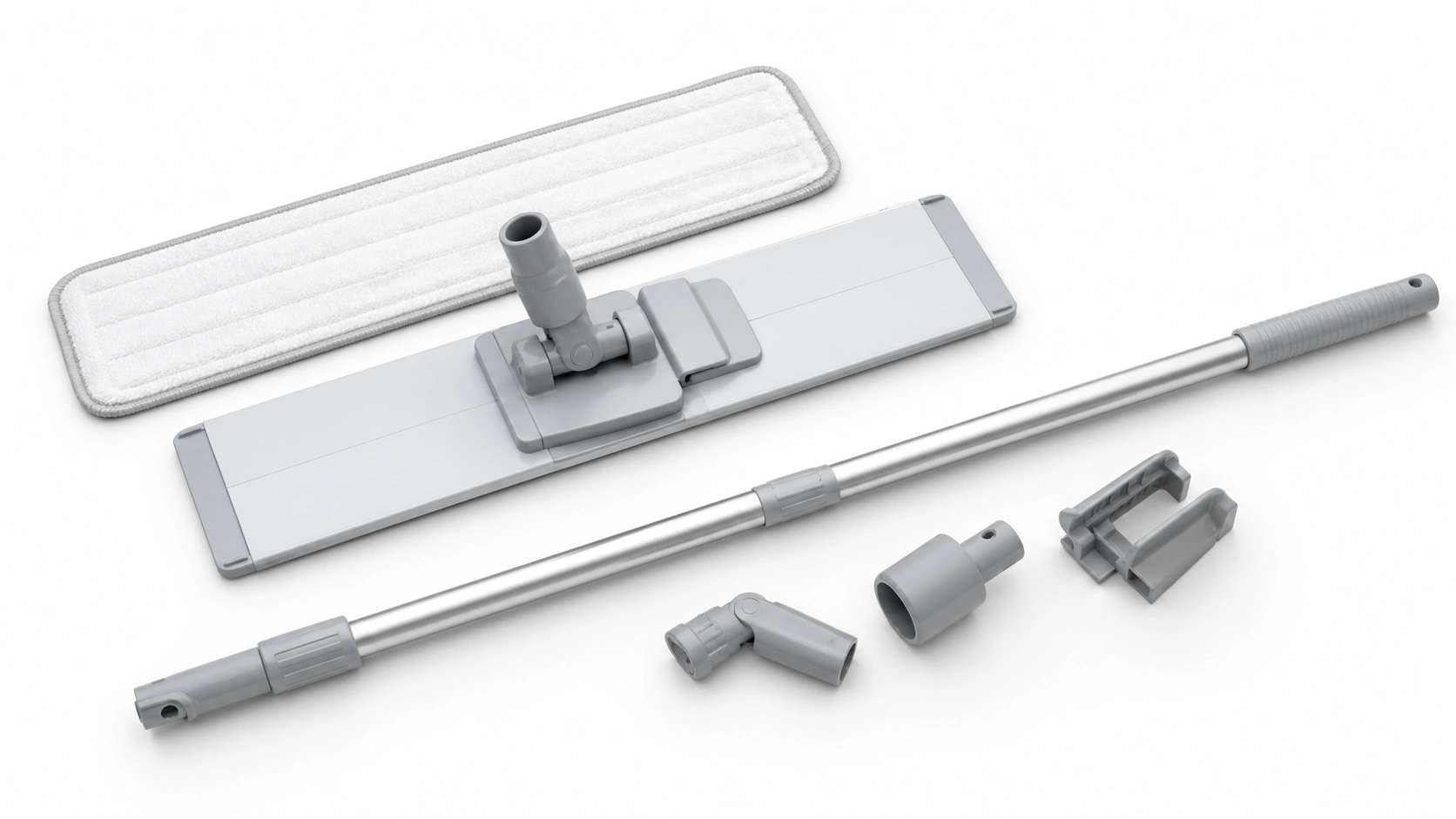
Microfiber or polyester flat mop pad for controlled cleaning.
Stable flat mop frame for broad and consistent surface contact.
Cleanroom-compatible handle for reach, control, and secure operation.
Bucket or wringer system for mop saturation and liquid management.
For cleanroom and GMP buyers, flat mop systems are often easier to standardize than traditional string or sponge mop designs.
| وصف | Flat Mop System | اسٽرنگ موپ | Sponge Mop |
|---|---|---|---|
| سطحي رابطو | Broad and stable | گهٽ يونيفارم | Narrower contact area |
| صاف ڪمرو مناسب | Better suited for controlled workflows | Usually less suitable | Depends on design |
| Wall / ceiling use | Good with proper handle | محدود | محدود |
| SOP standardization | Easier to standardize | Less consistent | وچولي |
| عام استعمال | GMP, ISO, laboratory, controlled areas | General commercial cleaning | Small-area cleaning |
A cleanroom flat mop system can be used across multiple controlled cleaning tasks, depending on pad material, frame design, handle length, and workflow requirements.
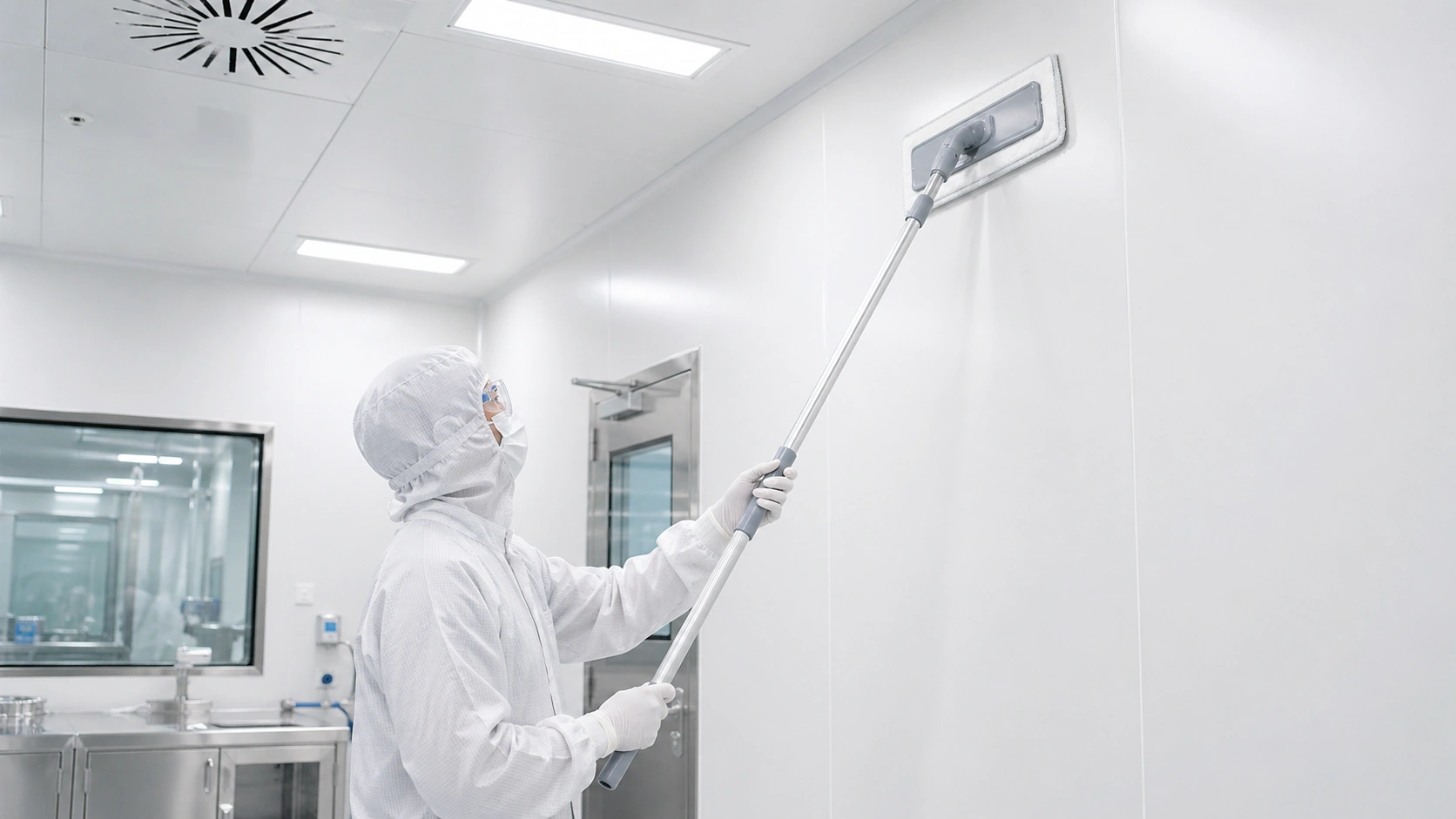
Flat mop systems cover larger areas efficiently while supporting structured movement and controlled liquid application.
With the correct frame and handle, flat mop systems help operators clean wall surfaces more consistently.
Flat mop systems can support ceiling cleaning where large smooth surfaces need controlled contact and reduced operator strain.
In GMP environments, flat mop systems can be integrated into documented cleaning procedures and zoning workflows.
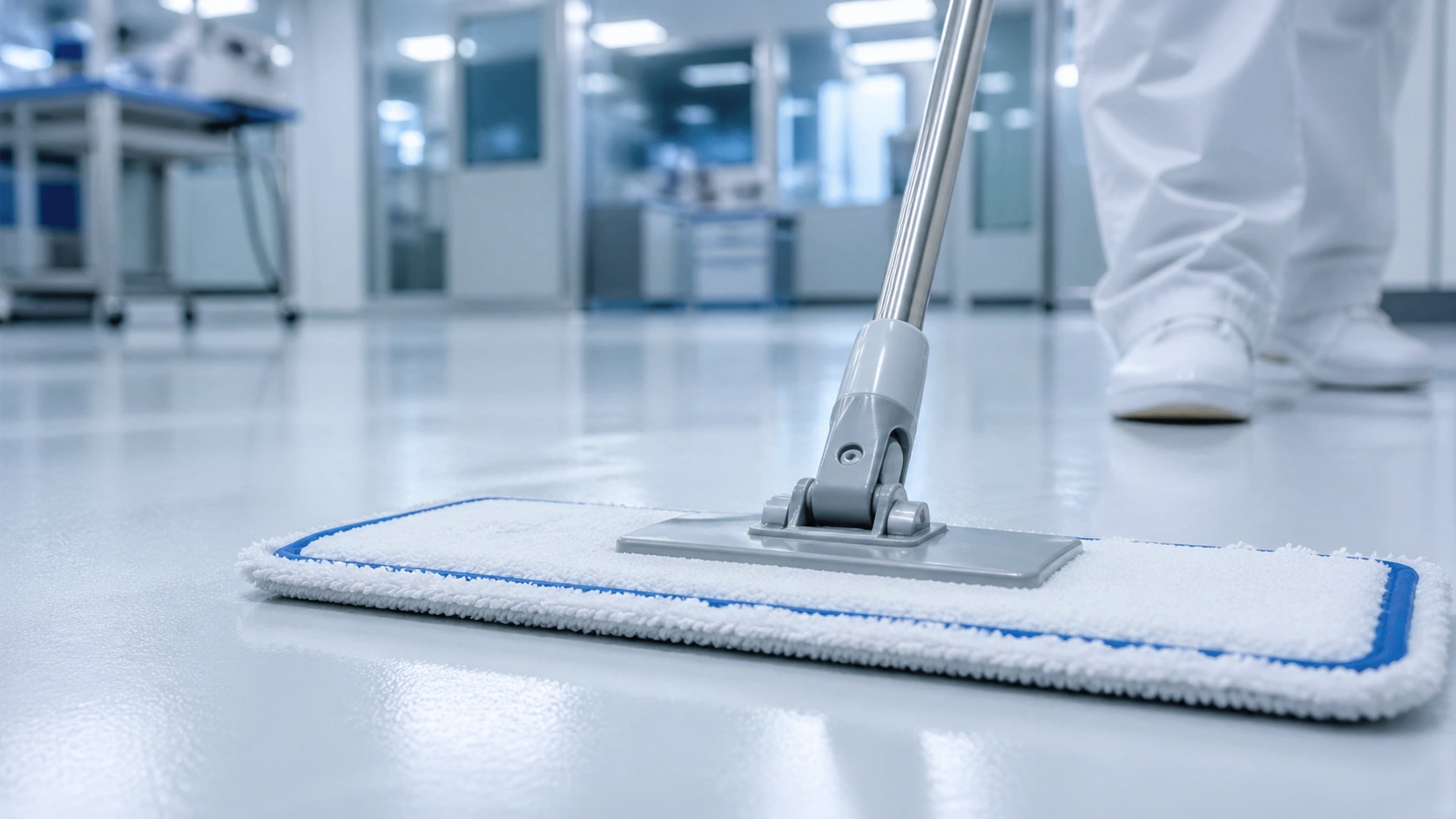
The choice between microfiber and polyester flat mop pads depends on the balance a facility needs between surface pickup, lint control, chemical compatibility, and cleaning workflow.
| وصف | Microfiber Flat Mop Pad | Polyester Flat Mop Pad |
|---|---|---|
| Typical strength | اعلي سطحي رابطي ۽ residue کڻڻ | گھٽ-lint ڪارڪردگي ۽ ڪيميائي مزاحمت |
| عام استعمال | Routine cleanroom cleaning | Pharmaceutical and controlled applications |
| Surface coverage | Strong contact on smooth surfaces | Suitable for controlled wet cleaning |
| sterilization اختيار | Depends on product construction | Depends on product design |
| Buyer consideration | Pickup performance | Lint control and compatibility |
Professional buyers should choose a cleanroom flat mop system by comparing the cleaning area, material preference, bucket workflow, and contamination-control expectations of the facility.
| گهرج | سفارش ڪيل هدايت | ڇو اهو معاملو آهي |
|---|---|---|
| GMP or pharma facility | Low-lint flat mop system with documented material information | Supports controlled cleaning and QA review |
| معمولي ISO صاف روم جي صفائي | Microfiber or polyester flat mop system | Supports large-surface cleaning |
| ڀت ۽ ڇت جي صفائي | Flat mop frame with appropriate handle length | Improves reach and coverage |
| Better liquid control | Flat mop system with bucket or wringer workflow | Helps manage mop saturation |
| Reduced reuse concerns | Disposable flat mop pad option | Can simplify contamination-control workflow |
| Cost balance | Reusable frame and handle with replaceable mop pads | Supports long-term operating efficiency |
A cleanroom flat mop should be selected together with its frame, handle, and workflow method. This helps buyers build a more consistent and auditable cleaning process.
MIDPOSI can help recommend flat mop system configurations based on cleaning area, material preference, and controlled-environment requirements.
Tell us your cleanroom class, application area, material preference, mop pad size, workflow needs, and whether you are evaluating disposable or reusable options. MIDPOSI can help recommend a suitable flat mop system for your controlled environment.
Explore related MIDPOSI resources for cleanroom mop systems, flat mop pads, mop heads, mop frames, mop handles, bucket workflows, sterile mop options, disposable mop covers, microfiber materials, GMP cleaning applications, and buyer guidance.
These answers are designed for cleanroom buyers, QA teams, contamination-control specialists, and facility managers.
A cleanroom flat mop system is a cleaning solution that includes a flat mop pad, frame, handle, and sometimes a bucket or wringer workflow, designed for controlled cleaning in cleanrooms and other sensitive environments.
Flat mops are commonly used in cleanrooms because they provide broad surface contact, support structured cleaning movement, and work well on floors, walls, and ceilings.
Yes. With the correct frame and handle length, a cleanroom flat mop system can be used for wall and ceiling cleaning as well as routine floor cleaning.
Microfiber flat mops are often selected for strong surface contact and residue pickup, while polyester flat mops are often selected for low-lint performance and compatibility with controlled cleaning environments.
Some cleanroom flat mop systems are paired with bucket or wringer workflows to help control mop saturation, liquid separation, and process consistency.
Buyers should evaluate the cleaning area, cleanroom class, mop pad material, reusable or disposable preference, liquid-control workflow, and whether documentation is needed for internal review.
If you are sourcing cleanroom flat mop systems for pharmaceutical manufacturing, laboratories, medical device production, electronics facilities, or ISO cleanrooms, MIDPOSI can help you compare flat mop pad materials, frame and handle options, and bucket-based workflow configurations.