
Technical Manual · Contamination Control
Cleanroom Microbial Contamination Control SOP för isolatorsystem
A practical, validation-focused SOP framework for process engineers and technical teams: cleaning tool qualification, disinfectant contact time control, glove port sanitization, floor cleaning strategy, environmental monitoring integration, and documentation readiness.
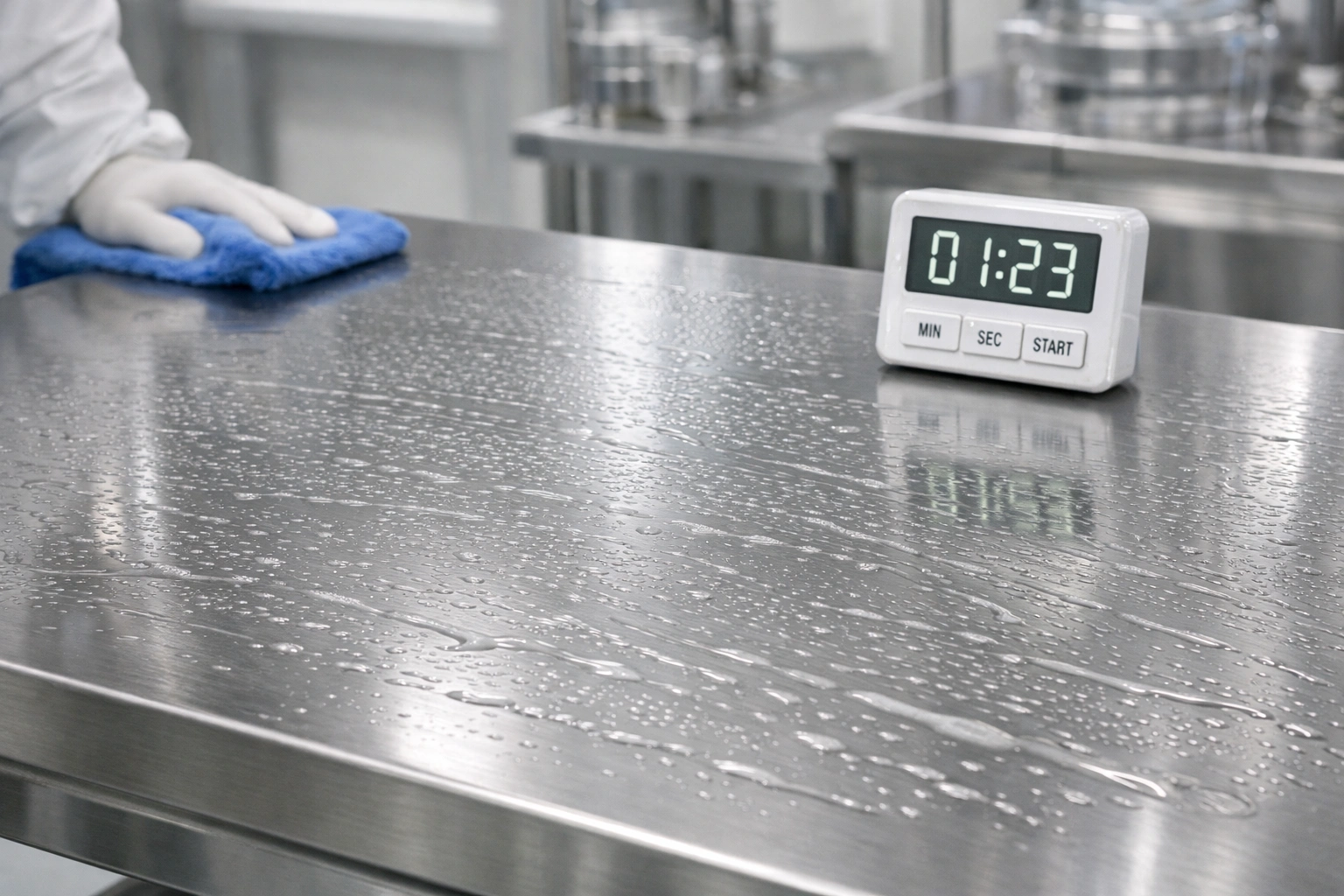
Microfiber Mop / Wipe Validation
Cleaning and disinfection performance is constrained by wiping materials. For isolator programs, your wiping tool must be qualified as a process input—not a commodity.
Why microfiber is often selected
- Superior particle removal with controlled fiber geometry
- Low particle shedding when construction and finishing are validated
- Effective soil pickup to reduce residue carryover
- Durability and reusability under validated laundering/sterilization routines
- Compatibility with disinfectants (site chemistry set verification required)
Validation requirements
- Particle shedding studies
- Microbial recovery testing
- Soil removal efficiency
- Durability testing
- Compatibility with cleaning agents
Selection criteria
- Fiber type and construction (loops, knit, nonwoven support)
- Size/weight aligned to coverage and ergonomics
- Sterility requirement (sterile / non-sterile + site decontamination)
- Documentation package (COA/lot traceability/test reports)
Usage procedures
- Preparation method (pre-wet, dilution control, staging)
- Technique requirements (single-direction, overlap, no re-dipping)
- Usage limits / replacement criteria
- Cleaning and storage procedures
- Documentation requirements

Contact Time Control
Contact time is a critical control parameter for disinfectant efficacy. It must be defined, validated, monitored during execution, and documented for each application scenario.
Contact time requirements
- Derived from disinfectant manufacturer instructions and validated for your use case
- Linked to microbial efficacy and surface conditions
- Documented and monitored in actual operations
Monitoring methods
- Visual timing devices or integrated timers
- Automated dispensing systems (where applicable)
- Training + deviation management procedures
Key factors affecting contact time
- Surface temperature
- Disinfectant concentration
- Surface condition and organic load
- Humidity and evaporation rate
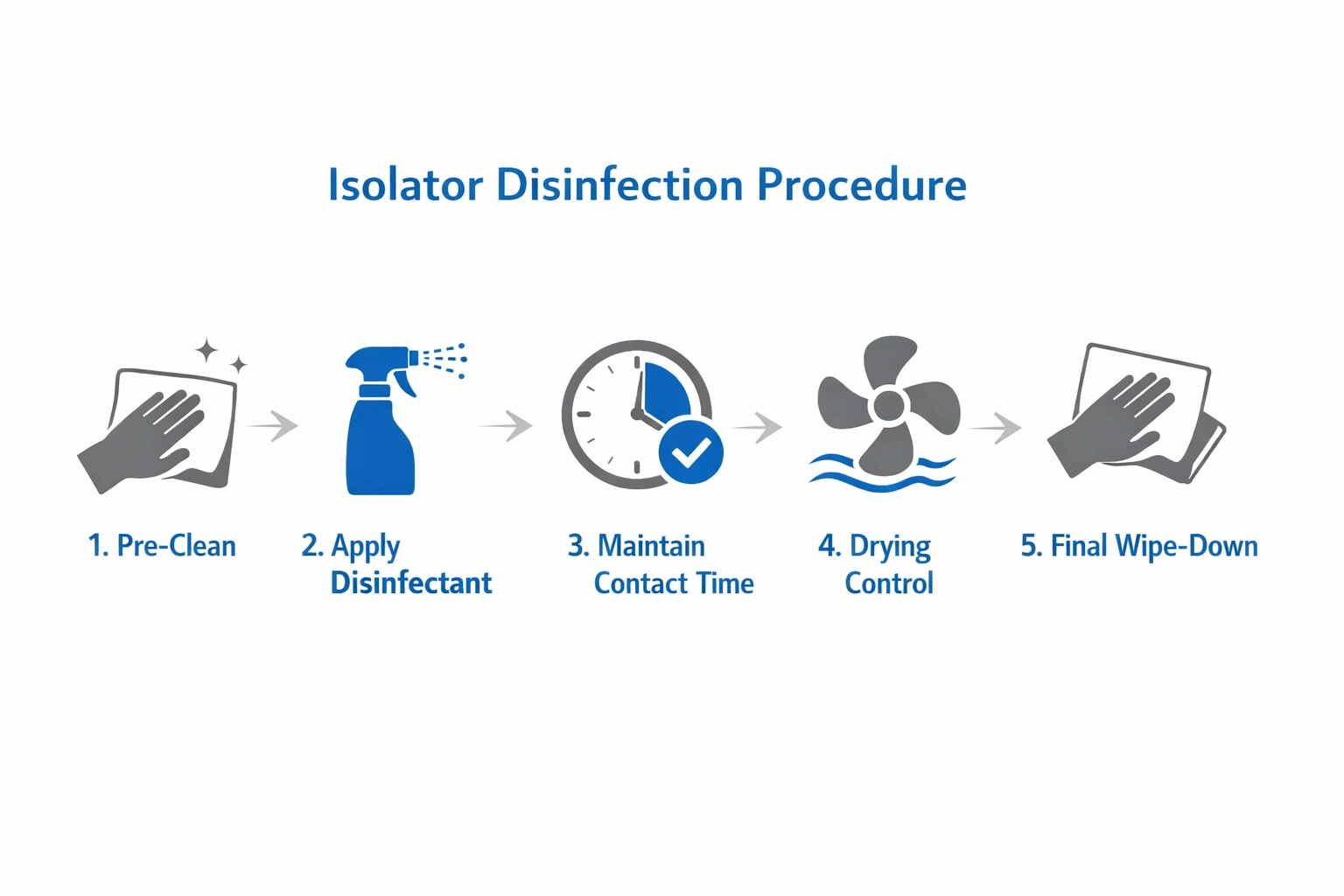
Disinfection Procedure for Isolator Interior
A stepwise procedure improves repeatability and audit readiness. The sequence below is designed to be adapted to your disinfectant set, materials of construction, and EM strategy.
Step 1: Pre-clean surfaces
- Visual inspection and removal of gross contamination
- Apply neutral detergent (if required) with validated mechanical action
- Rinse and dry (as applicable)
- Document solution preparation, coverage, time/date, personnel, inspection results
Step 2: Apply disinfectant (validated volume)
- Prepare correct concentration; verify where required
- Validate application method and coverage uniformity
- Control volume per surface area; avoid pooling
- Execute sequence: top→bottom, back→front
Step 3: Maintain contact time
- Start timing from coverage completion (define this in SOP)
- Prevent dilution/evaporation and document conditions
- Manage deviations with documented response
Step 4: Drying control
- Control drying method (air dry vs wipe dry) per validation
- Verify dryness where required; prevent recontamination
- Document time/temperature/environmental conditions
Step 5: Final wipe-down (residue control)
- Use validated low-shedding sterile wipes if required
- Single-direction technique and full coverage
- Record wipe lot numbers, time/date, personnel, inspection results
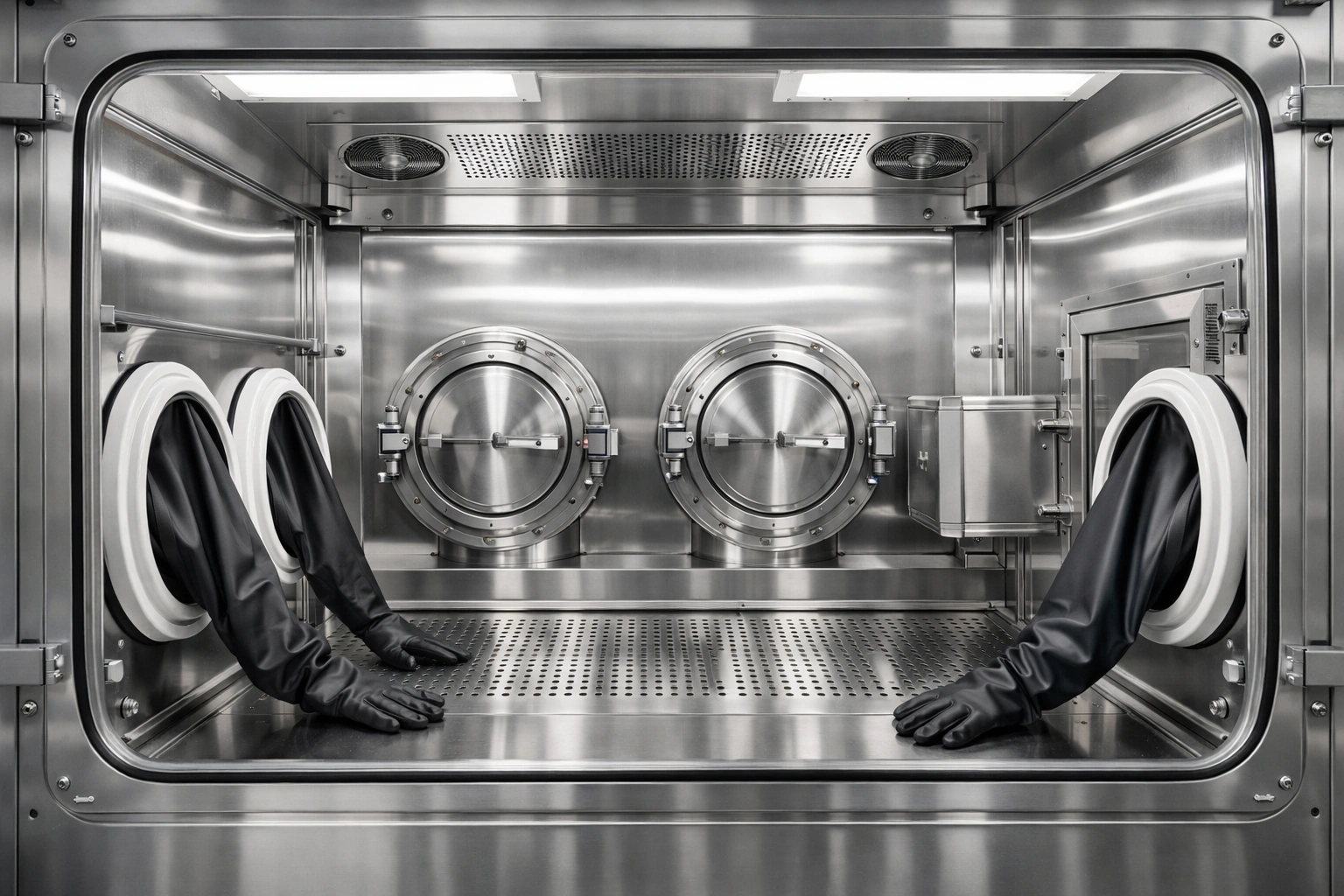
Glove Port & Sleeve Sanitization SOP
Glove ports are high-risk intervention interfaces. Define frequency, validated contact time, disinfectant rotation, and visual inspection criteria with clear documentation requirements.
Frequency requirements
- Start of operations, after interventions, after breaks, end of operations
- Risk-based scheduling for high-risk tasks and extended operations
Rotation of disinfectants
- Rotate chemical classes per documented plan
- Verify compatibility and efficacy, control changes through change control
Visual inspection procedures
- Inspect glove integrity, sleeve seals, coverage, residue presence
- Document nonconformances and corrective actions
Floor Cleaning Inside Isolator Area
Floor cleaning must minimize particle shedding while ensuring residue removal. Validate mop selection, shedding control, coverage calculation, and worst-case location testing.
Mop selection criteria
- Low particle shedding, chemical resistance, durability, sterility requirements
- Construction specifications: fiber density, head size, attachment mechanism
- Supplier qualification and documentation readiness
Particle shedding control
- Identify shedding sources and implement replacement/inspection routines
- Monitor via particle counts, fiber shedding studies, and trend reviews
Coverage calculation
- Define pass patterns, overlap percentage, and time/resource planning
- Document calculations and verification steps
Environmental Monitoring Integration
Environmental monitoring (EM) verifies whether the microbial control strategy is performing as intended. Define sampling points, frequency, trending rules, and deviation handling.
Microbial monitoring points
- Surface contact plates (product-contact and high-risk surfaces)
- Air sampling (active/passive methods per grade)
- Glove fingertip testing (technique verification and trending)
Trending & deviation management
- Define alert vs action levels and investigation triggers
- Standardize root cause investigation and corrective action verification

Validation & Dokumentation
A robust SOP must be executable, validated, and documented with data integrity considerations. Build documentation so QA review is frictionless and audit trails are clear.
Cleaning validation strategy
- Worst-case location testing
- Soil challenge and recovery studies
- Residue and particle shedding evaluations
Disinfectant efficacy studies
- Time-dependent efficacy testing under real-world conditions
- Surface compatibility studies
- Microbial panel selection including facility isolates
Documentation requirements
| Batch cleaning records | Date/time, personnel, solution prep, coverage, contact time, inspection results |
|---|---|
| Change control | Process/equipment/material/procedure changes with impact assessment and approvals |
| Audit trail | Who/when/what/results, review and approval, periodic audit trail review |
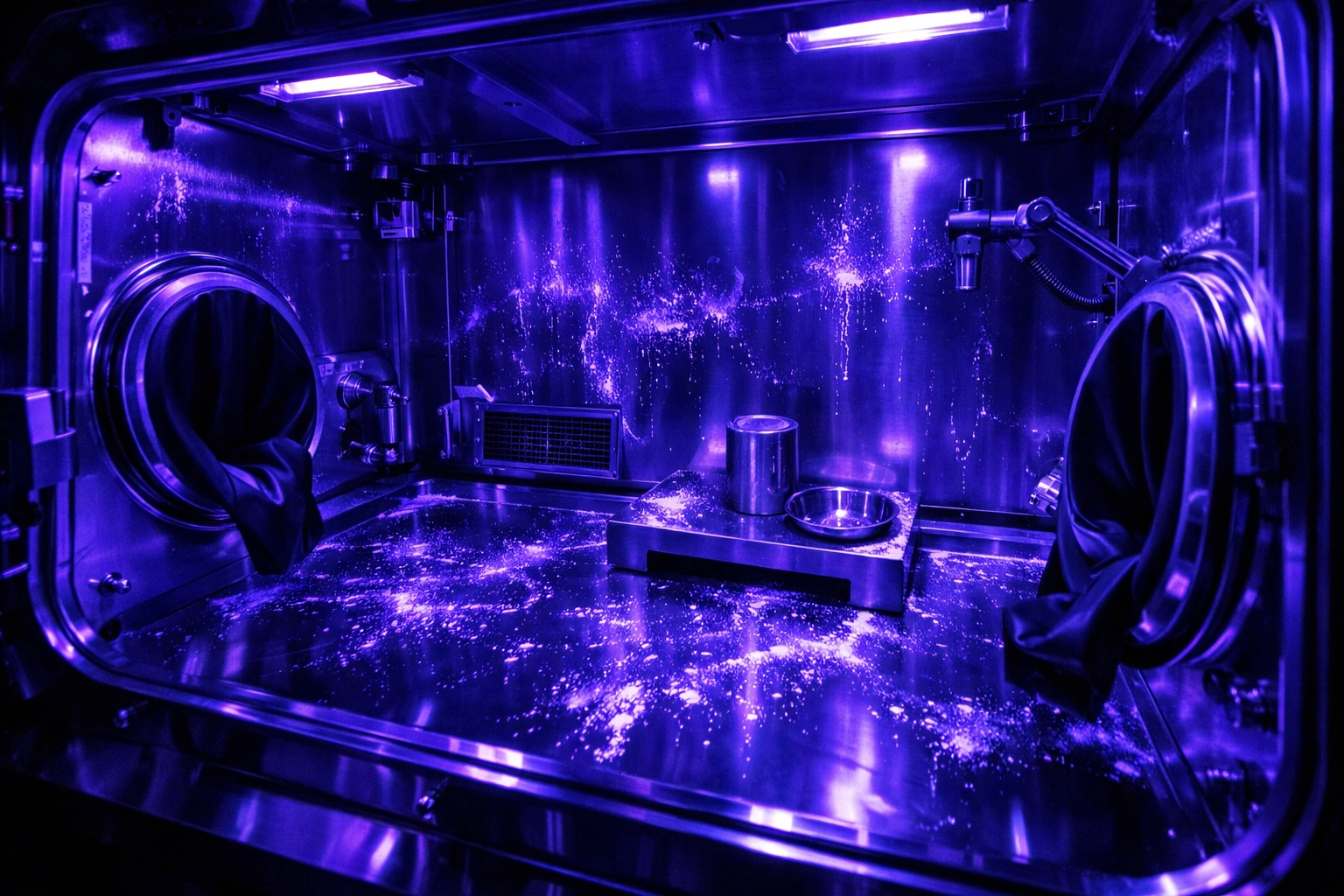
Common Mistakes & Best-Practice Checklist
Common mistakes
- Over-reliance on VHP without robust liquid disinfection maintenance
- Poor disinfectant rotation and weak documentation
- Non-validated mops/wipes (unknown shedding and compatibility)
- Inadequate contact time and timing verification
- Insufficient training leading to inconsistent technique
Best-practices checklist
- Surface classification completed and reviewed
- Contact times validated and monitored
- Mop shedding validated and replacement criteria defined
- Rotation plan documented and controlled
- EM trending reviewed with action/alert levels
- Documentation complete (records, audit trail, change control)
- Training provided and effectiveness assessed
Need a contamination-control consumables package for your isolator program?
Share your isolator model, grade, disinfectant set, and cleaning frequency. We can recommend a compatible mop/wipe configuration and provide B2B documentation support.