
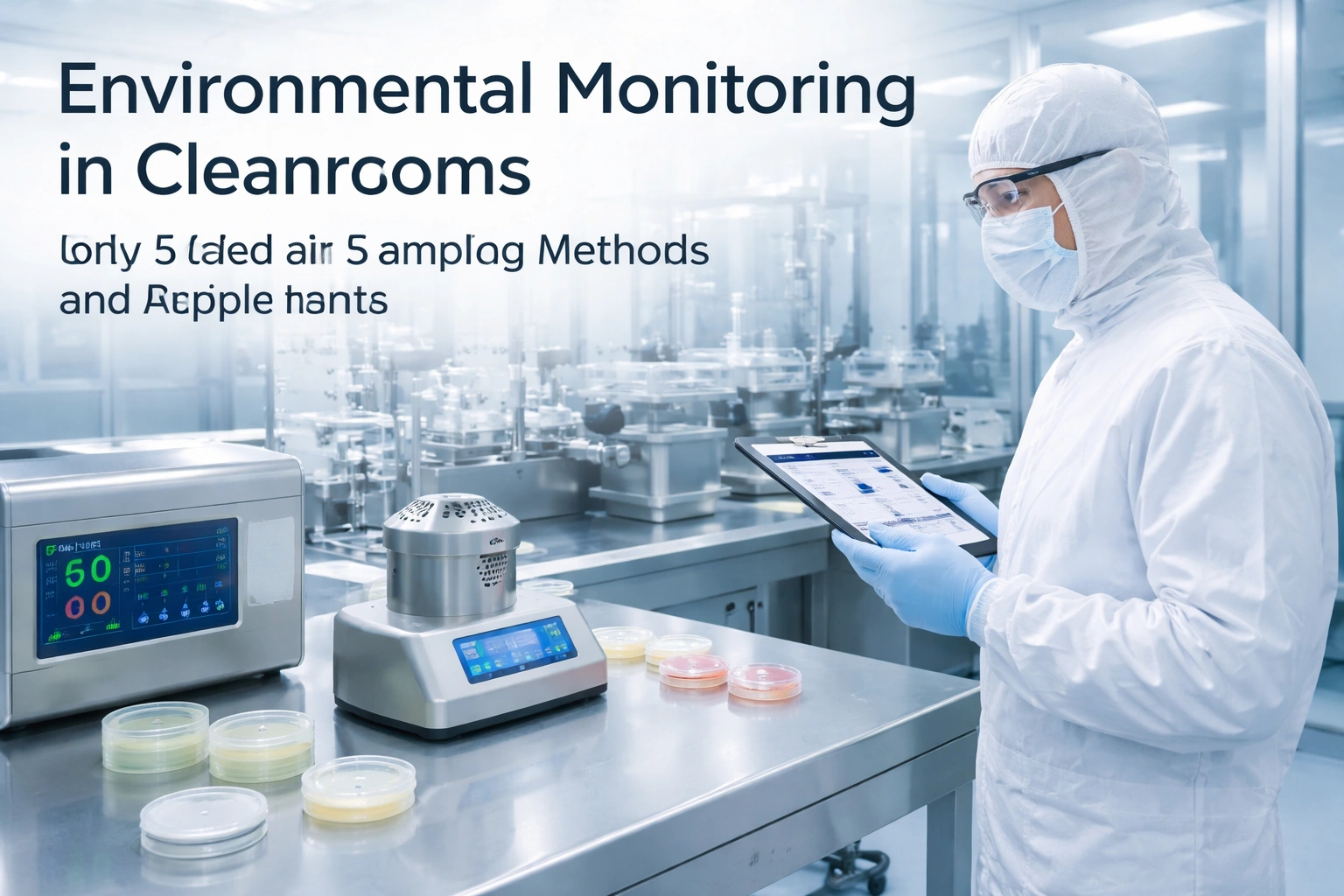
Varför miljöövervakning är viktig i GMP-renrum
Även väldesignade renrum med starka HVAC-system, validerade rengöringsprogram och utbildad personal kan inte antas vara under kontroll utan bevis. Miljöövervakning ger dessa bevis genom att visa om kontamineringsnivåerna håller sig inom definierade förväntningar under rutindrift.
Ett effektivt EM-program stödjer mikrobiell kontroll, partikelkontroll, utredningsberedskap, processförståelse och ständiga förbättringar. Det skapar också en direkt koppling mellan rumsklassificering, personal klädsel, personalutbildning, visualisering av luftflödet, valideringslivscykel, och rengöringseffektivitet.
| EM-komponent | Vad den mäter | Varför det är viktigt |
|---|---|---|
| Partikelövervakning | Icke-livsdugliga luftburna partikelnivåer | Hjälper till att verifiera luftens renhet och VVS-prestanda |
| Aktiv luftprovtagning | Livskraftiga luftburna mikroorganismer | Detekterar mikrobiell kontamineringsrisk i rumsluften |
| Sätta upp tallrikar | Passivt livskraftigt nedfall över tid | Användbar för att bedöma exponering under operationer |
| Kontaktplattor / svabbservetter | Ytmikrobiell kontaminering | Visar effektiviteten av rengöring och beröringsdisciplin |
| Trendrecension | Återkommande mönster över tid och zoner | Stöder riskdetektering innan större fel inträffar |
Livskraftig vs icke-livskraftig övervakning
Miljöövervakning omfattar vanligtvis både genomförbara och icke-livskraftiga metoder. Dessa är relaterade, men de är inte utbytbara. Ett rum kan uppfylla partikelförväntningarna och fortfarande visa mikrobiell risk, särskilt om personalens beteende, städpraxis eller interventionskontroller är svaga.
| Övervakningstyp | Exempel | Huvudsaklig användning |
|---|---|---|
| Ej livskraftig övervakning | Partikelräknare, luftburna partikeltestning | Verifierar renrumsluftklassificering och dynamisk kontroll |
| Livskraftig övervakning | Aktiva luftprovtagare, sedimenteringsplattor, kontaktplattor, swabs | Upptäcker mikrobiologiska kontamineringsrisker |
Behöver du GMP-färdigt renrumsstöd?
Midposi stöder program för föroreningskontroll med renrumsplagg och GMP-fokuserade produktlösningar designade för farmaceutiska och kontrollerade miljöer.
Vanliga EM-provtagningsmetoder i renrum
Provtagningsmetoder bör väljas utifrån rumsgrad, aktivitetsnivå, produktexponering, interventionsfrekvens och utredningsbehov. Bra program definierar inte bara vad som provas, utan också varför varje metod är lämplig.
Typiska metoder inkluderar:
- Partikelräknare för luftburen icke-livsduglig övervakning i realtid
- Aktiva luftprovtagare för genomförbar luftburen övervakning
- Sedimenteringsplattor för passiv livskraftig övervakning under drift
- Kontaktplattor för utrustning, väggar, arbetsytor och handskar
- Svabbar för oregelbundna eller svårkontaktbara ytor
Visuell förklaring: EM Sampling Strategy
En stark miljöövervakningskarta bör visa vilka metoder som används i kritiska zoner, stödområden, beröringspunkter för personal och dynamiska interventionsplatser.
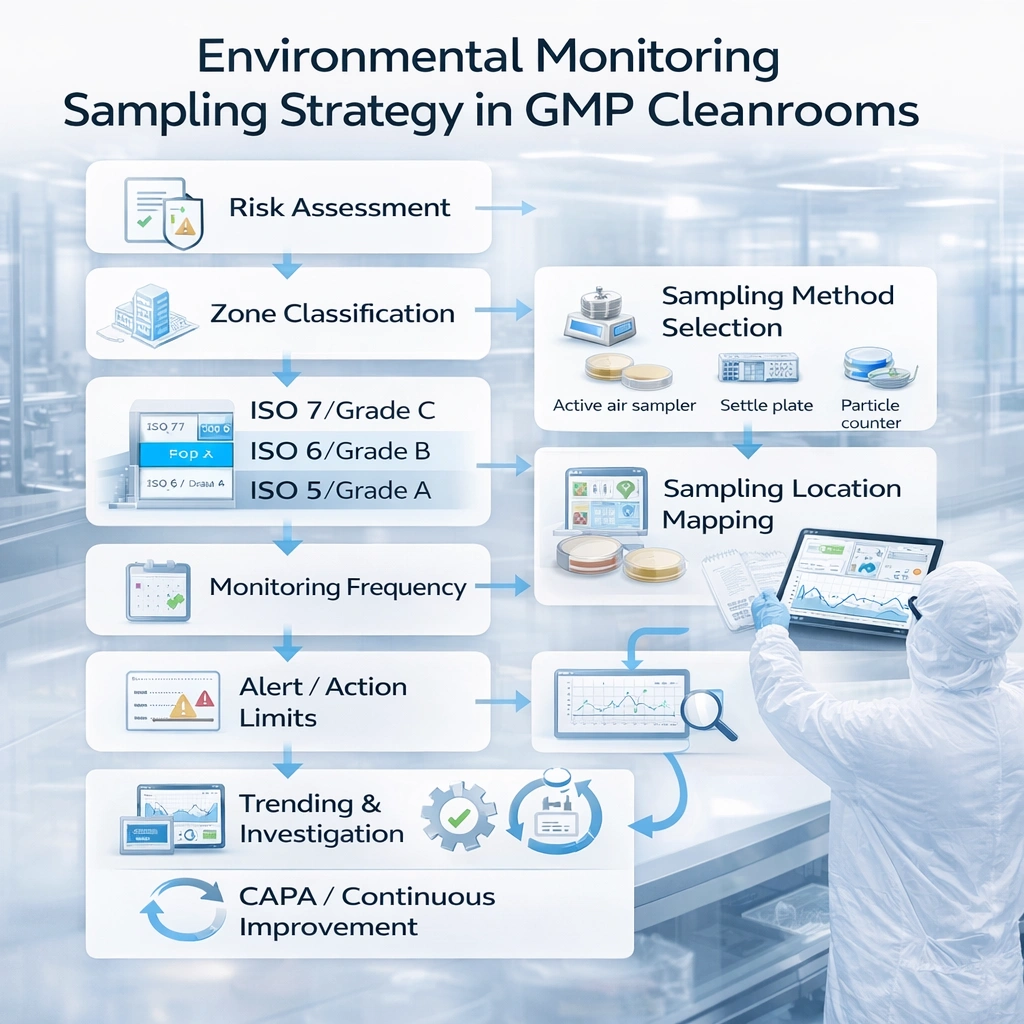
Hur man definierar EM-platser och samplingsfrekvens
Övervakningsplatser bör aldrig vara slumpmässiga. De bör återspegla föroreningsrisk, kritiska luftflödesvägar, interventionszoner, operatörens närvaro, materialflöde och historiska händelsemönster.
Högvärdiga provtagningsplatser inkluderar ofta:
- Kritiska bearbetningspunkter
- Öppna produktexponeringszoner
- Handskar med fingertoppar och ärmar
- Utrustningsytor nära interventionsplatser
- Överför luckor och materialingångar
- Områden med tidigare utflyktshistoria
- Definiera motivering för varje fast plats
- Gör skillnad på vilo- och driftövervakning
- Använd högre provtagningsintensitet i kritiska eller högingripande områden
- Granska platsrelevans efter layout-, utrustnings- eller processändringar
Varningsgränser vs åtgärdsgränser
En av de mest missförstådda delarna av miljöövervakning är skillnaden mellan larmgränser och åtgärdsgränser. Varningsgränser är tidiga varningar om att förhållandena kan vara avvikande. Åtgärdsgränser indikerar en allvarligare avvikelse som kräver definierad utredning och åtgärd.
| Gränstyp | Ändamål | Typiskt svar |
|---|---|---|
| Varningsgräns | Signalerar en ovanlig förändring eller negativ trend | Granska senaste data, bekräfta repeterbarhet, bedöm bidragande faktorer |
| Åtgärdsgräns | Indikerar betydande avvikelse eller kontrollfel | Inleda formell utredning, definiera CAPA, bedöma produkt- och processpåverkan |
Väl utformade gränser bör vara riskbaserade och stödda av historiska data, rumsklassificering, processkriticitet och regulatoriska förväntningar. Begränsningar som kopieras från en annan webbplats utan motivering skapar ofta svag kontrolllogik.
Trender, undersökningar och CAPA
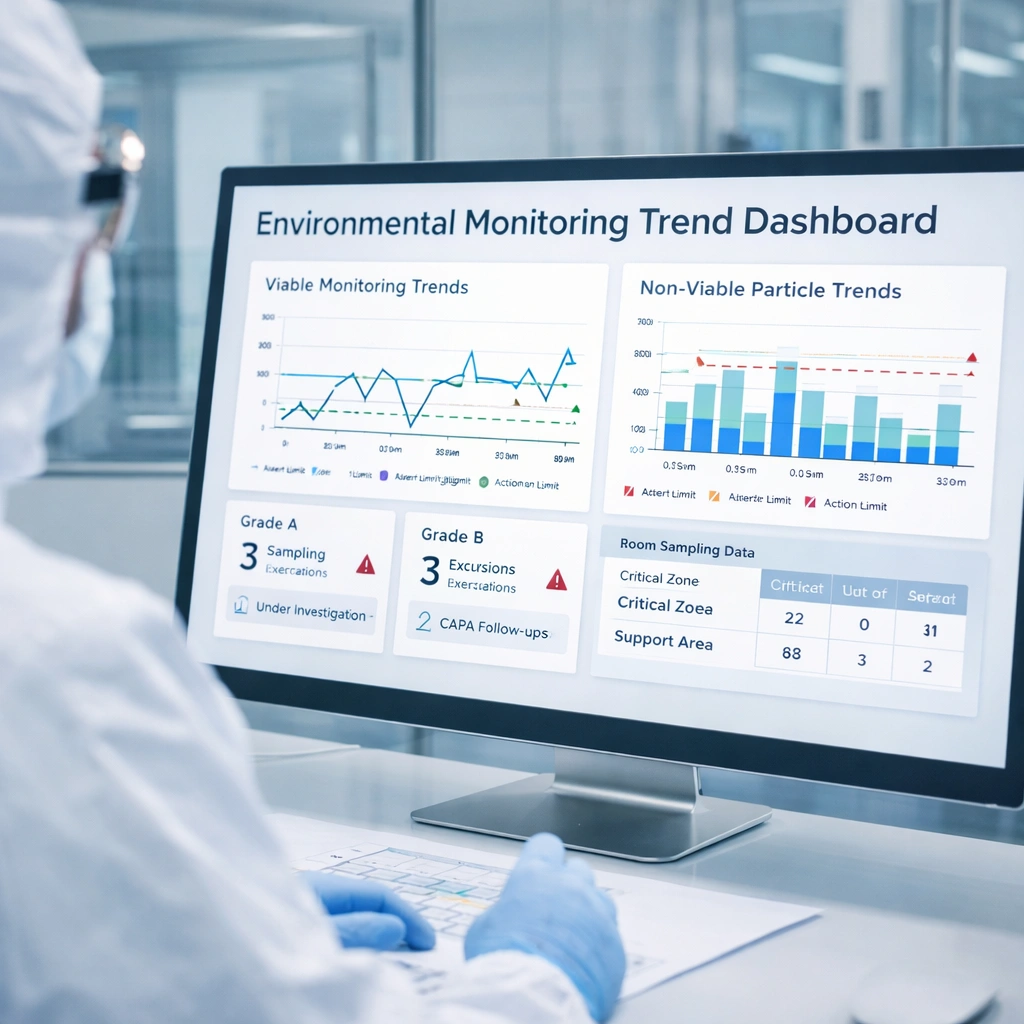
Det räcker inte att samla in EM-data. Det verkliga värdet av ett övervakningssystem kommer från dess förmåga att identifiera mönster, utlösa undersökningar i rätt tid och stödja CAPA-beslut. Trendgranskning bör se bortom enstaka exkursioner och fråga sig om upprepade signaler pekar på strukturella svagheter.
Trendgranskning utvärderar ofta:
- Upprepade händelser efter plats
- Skiftrelaterade eller personalrelaterade mönster
- Rengöringsfrekvens och återkommande kontaminering
- Skillnader mellan rumstillstånd och kampanjtyper
- Säsongsmässiga eller operativa förändringar i mikrobiell återhämtning
Visuell förklaring: EM Trend Dashboard
En datapanel kan hjälpa QA-team att trendåterhämta sig efter rum, zon, metod, operatörsaktivitet och skift. Detta gör utredningen mer målinriktad och evidensbaserad.
Vanliga miljöövervakningsfel
Många svaga EM-program misslyckas inte för att provtagning saknas, utan för att strategi, tolkning och uppföljning är svag.
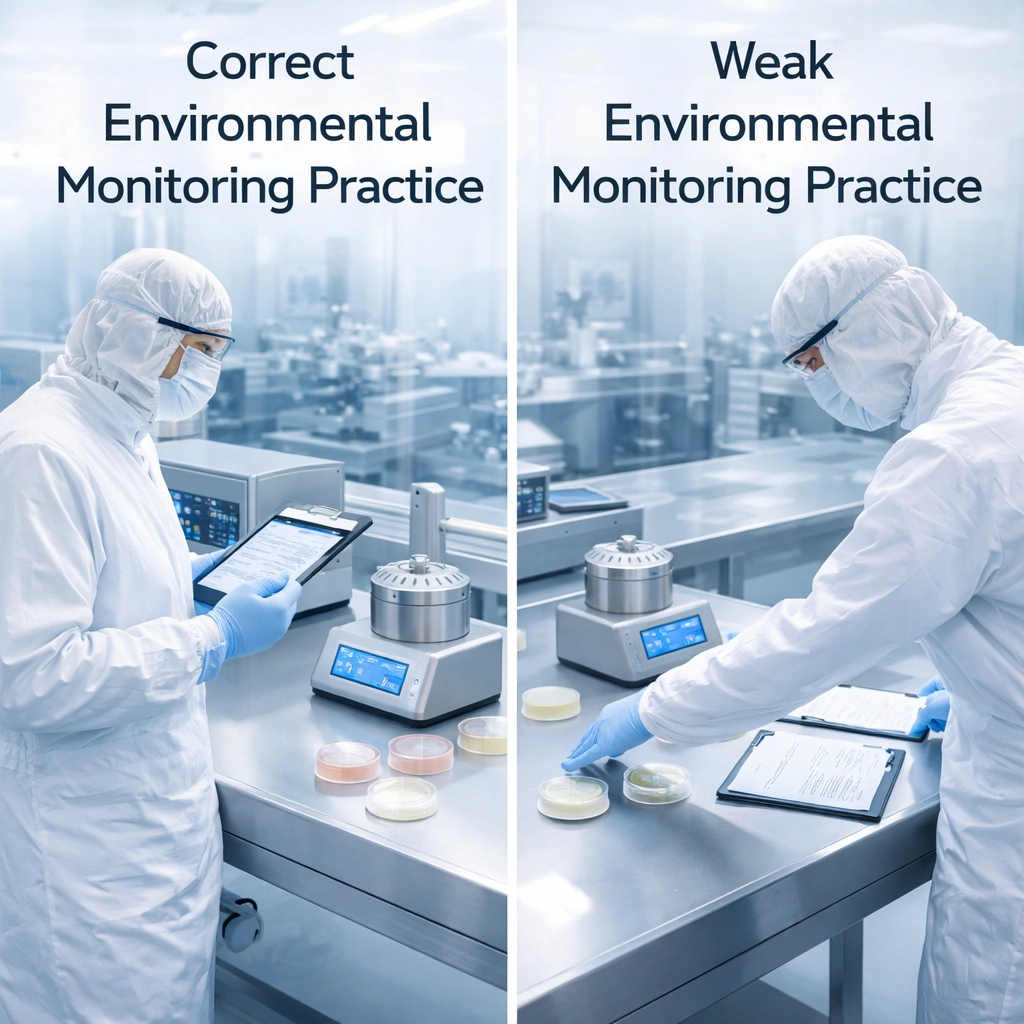
Visuell förklaring: Korrekt vs svag EM-övning
En tydlig jämförelse kan visa skillnaden mellan riskbaserad övervakning med definierade utredningsvägar och generiska provtagningsprogram med dålig responskvalitet.
| Svag praxis | Varför det är riskabelt | Bättre tillvägagångssätt |
|---|---|---|
| Provtagning utan skäl | Platser kan missa de högsta riskpunkterna | Använd riskbaserat platsval kopplat till process och luftflöde |
| Reagerar bara på handlingsgränser | Missar tidiga signaler om försämring | Granska trender på varningsnivå och återkommande signaler |
| Minimal utredning efter utflykt | Grundorsaker förblir olösta | Koppla utflyktsgenomgång till personal, luftflöde, rengöring och processfaktorer |
| Ingen koppling till träning eller beteende | Mänskliga faktormönster förblir dolda | Korsgranska EM-data med klädsel, träning och interventioner |
Vad revisorer brukar leta efter i ett EM-program
Vid inspektion fokuserar revisorerna sällan enbart på råräkningar. De tittar på om det fullständiga övervakningssystemet är motiverat, kontrollerat och genomförbart. Det inkluderar platsval, frekvensmotiv, gränsinställning, undersökningskvalitet och CAPA-uppföljning.
Revisorer begär ofta:
- EM-program SOP:er och provtagningskartor
- Skäl för varning och åtgärdsgräns
- Trendrapporter per rum eller kampanj
- Utflyktsundersökningar och CAPA-register
- Bevis som kopplar EM till strategi för föroreningskontroll
- Korrelation med träning, rengöring, luftflöde och interventionskontroll
Modell för bästa praxis för ett högpresterande EM-program
De starkaste miljöövervakningssystemen delar flera funktioner:
- Riskbaserad provtagningsdesign
- Tydlig åtskillnad mellan genomförbara och icke genomförbara mål
- Definierad varnings- och åtgärdslogik
- Rutinmässig trendgranskning, inte bara händelsegranskning
- Tvärfunktionell utredning som involverar QA, operationer och mikrobiologi
- Direkt koppling till personalutbildning, rengöring, luftflödesprestanda, och revisionsberedskap
Miljöövervakning fungerar bäst när den är en del av ett bredare kunskapssystem för föroreningskontroll snarare än en fristående mikrobiologisk aktivitet.
Stärk ditt program för föroreningskontroll med Midposi
Explore cleanroom garments and GMP-focused product solutions designed for pharmaceutical, biotech, and controlled manufacturing environments.
Vanliga frågor
Vad är miljöövervakning i ett renrum?
Miljöövervakning är ett GMP-program som används för att upptäcka, trenda och undersöka livskraftig och icke-livskraftig förorening i kontrollerade miljöer.
Vad är skillnaden mellan livskraftig och icke-livskraftig övervakning?
Icke-livskraftig övervakning mäter luftburna partiklar, medan livskraftig övervakning upptäcker mikroorganismer genom metoder som aktiv luftprovtagning, sedimenteringsplattor och ytprovtagning.
Varför är varnings- och åtgärdsgränser viktiga?
Varningsgränser indikerar tidig drift, medan åtgärdsgränser signalerar en allvarligare utflykt som kräver utredning och dokumenterad respons.
Hur ska EM-provtagningsplatser väljas?
Platser bör vara riskbaserade och kopplade till kritiska processpunkter, luftflödesbeteende, personalaktivitet, interventionszoner och historiska utflyktsmönster.
Hur brukar ett svagt EM-program se ut?
Svaga program samplar ofta utan skäl, misslyckas med att trenddata effektivt, undersöker dåligt och kopplar inte resultat till rengöring, beteende eller processkontroller.
Ersätter miljöövervakning rumsklassificering?
Nej. Rumsklassificering och miljöövervakning är relaterade men olika. Klassificering definierar förväntad renlighet, medan EM kontrollerar om kontrollen förblir effektiv under användning.
Hur ansluter EM till personalutbildning?
Mänskligt beteende påverkar ofta EM-resultat. Upprepade utflykter kan peka på problem med klädsel, rörelse, intervention eller aseptisk disciplin som kräver omskolning.
Vad förväntar sig revisorer av ett EM-program?
Revisorer förväntar sig vanligtvis tydliga provtagningsmotiv, trendanalys, varnings- och åtgärdsgränslogik, utredningskvalitet, CAPA-uppföljning och koppling till strategi för föroreningskontroll.