

Why GMP Cleanroom Audit Preparation Matters
A GMP cleanroom audit is not simply a document inspection. It is an evaluation of whether your facility can prove contamination control, process discipline, and operational consistency. Auditors want to see that your systems are not only written, but also implemented, followed, reviewed, and improved when gaps appear.
That means audit readiness depends on more than a clean room appearance. It depends on qualification status, environmental monitoring trends, SOP control, cleaning execution, gowning discipline, training records, deviation investigations, CAPA effectiveness, and traceable evidence.
Strong audit preparation helps you:
- Reduce inspection stress and reactive scrambling
- Identify weak points before the auditor does
- Improve consistency across QA, operations, and validation
- Strengthen trust with customers and regulatory bodies
Weak audit preparation usually leads to:
- Gaps between written SOPs and actual practice
- Missing or incomplete records
- Poor trend explanation during review
- Repeated findings related to contamination control
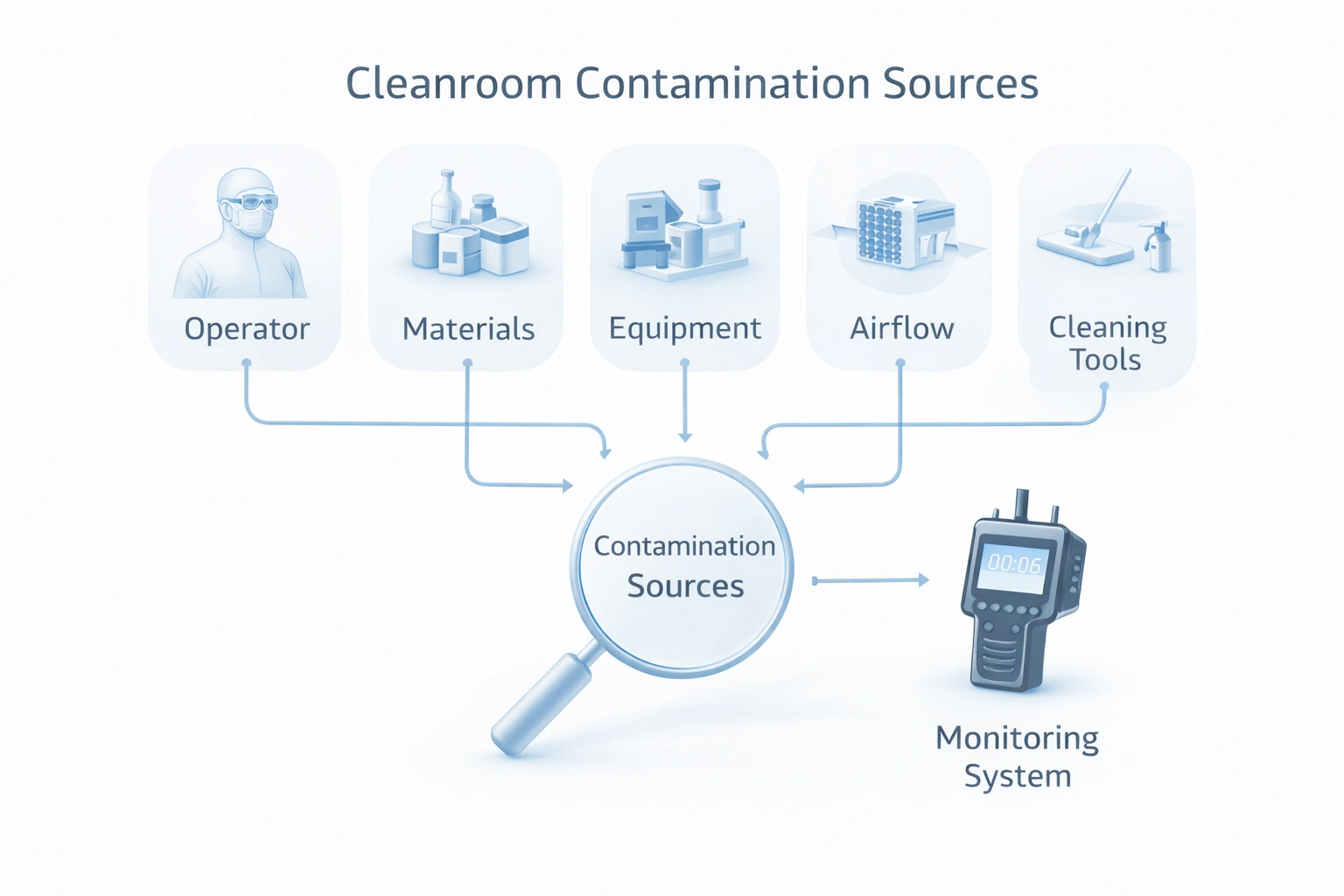
What Auditors Usually Look For in a GMP Cleanroom
Auditors are usually trying to answer one central question: can this facility demonstrate ongoing control of contamination risk? To answer that, they often review qualification evidence, monitoring strategy, personnel behavior, cleaning control, investigation logic, and how the site responds when results drift outside expected ranges.
Typical areas of focus include:
- Current qualification and validation status
- Environmental monitoring locations, limits, and trend interpretation
- Cleaning and sanitization procedures with execution evidence
- Personnel gowning, training, and behavior controls
- Deviation handling, root cause analysis, and CAPA closure
- Traceability for critical cleanroom consumables
- Data integrity and document version control
This is why audit preparation should connect directly with your IQ/OQ/PQ qualification framework, your environmental monitoring location strategy, and your cleaning and sanitization SOP.
Documentation Review: The First Layer of Audit Readiness
Before the audit, your team should review whether all critical documents are current, approved, accessible, and consistent with actual practice. One of the fastest ways to lose audit confidence is when an SOP says one thing, but operators describe another, or when records are incomplete, outdated, or impossible to reconcile.
Documents that should be reviewed in advance
Qualification and validation records
Confirm protocols, reports, approvals, and requalification status are current and traceable.
Environmental monitoring SOPs and trend summaries
Review alert/action logic, location rationale, excursion handling, and trend explanation.
Cleaning and sanitization procedures
Ensure written methods match actual frequency, contact time, chemical use, and tool handling.
Training and gowning records
Operators should be trained, current, and demonstrably aligned with approved procedures.
Deviation, CAPA, and investigation records
Findings should show real root-cause logic, documented actions, and evidence of closure effectiveness.
For many teams, the best way to make this review more defendable is to map it against a formal FDA cGMP cleanroom validation checklist and a consistent documentation framework.
Operational Readiness: What the Auditor Will Notice on the Floor
Even when the documents look good, auditors often focus on whether real operations support the same story. Floor observations can quickly expose gaps in gowning, cleaning execution, material flow, intervention control, equipment status, or operator understanding.
Operational readiness should include:
People
- Operators follow gowning correctly
- Personnel can explain what they do and why
- Training matches role and room risk
- Behavior supports contamination control
Processes
- Cleaning methods are consistent and observable
- Material transfer follows cleanroom controls
- Environmental monitoring is executed as written
- Deviation escalation pathways are understood
Utrustning & area status
- Labels, calibration, and room status are clear
- Consumables are stored and identified correctly
- No obvious housekeeping or segregation problems
- Access controls and flows are logical
Evidence quality
- Logs are complete and legible
- Trend data can be explained clearly
- Exceptions are documented, not hidden
- CAPA follow-up is visible and credible
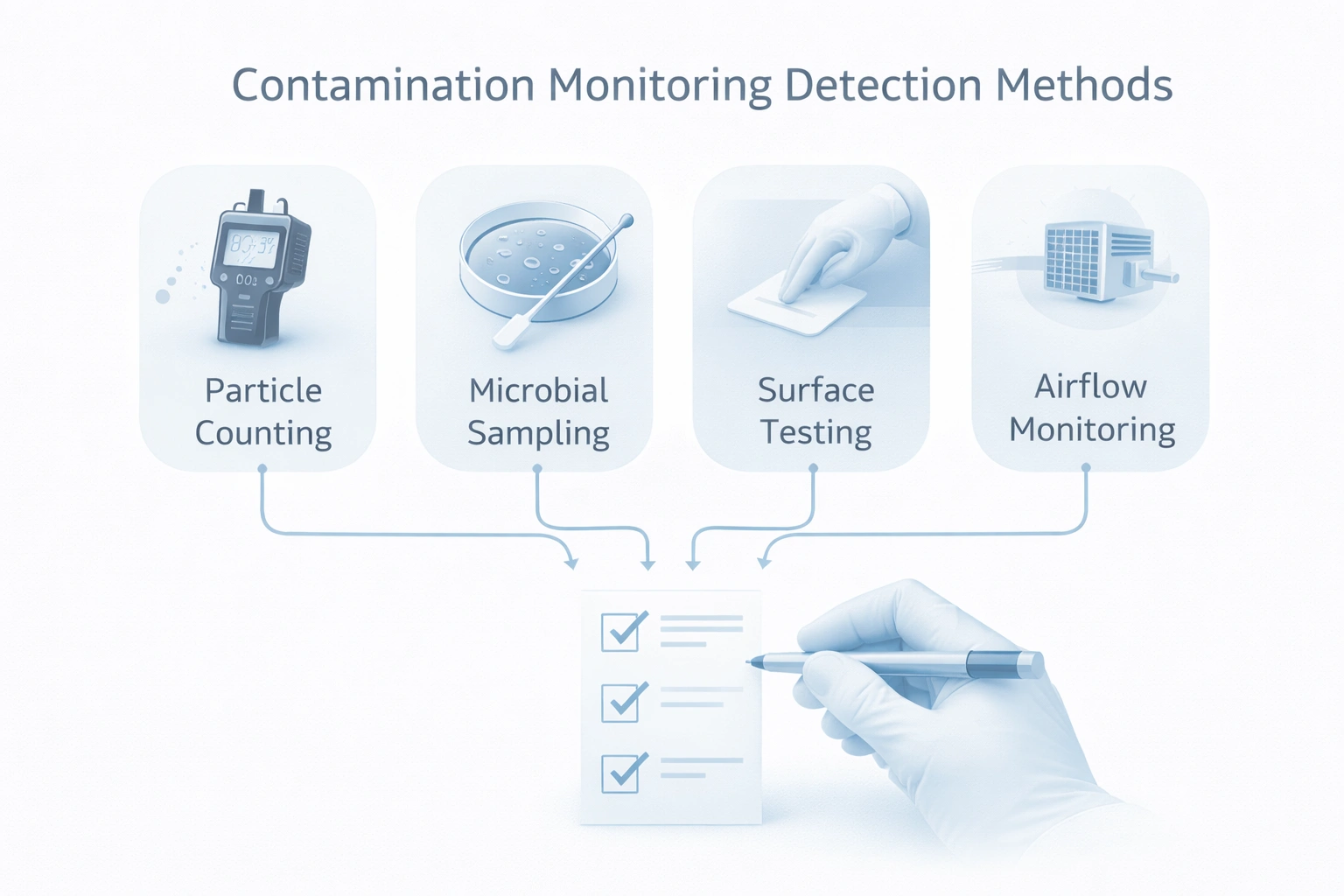
How Environmental Monitoring and Cleaning Influence Audit Outcomes
Environmental monitoring and cleaning control are two of the most visible proof points in a cleanroom audit. If your monitoring strategy is weak, or if your cleaning records cannot explain recurring risk areas, auditors will question whether contamination control is truly under control.
That is why monitoring locations, trend interpretation, cleaning chemistry, contact times, tool selection, frequency, and consumable traceability should all be connected. A facility that can explain not just what happened, but why it happened and how it is controlled, will almost always appear stronger in audit review.
This section should naturally reinforce your internal links to Miljöövervakningsplatser i GMP-renrum, Batch Traceability for Cleanroom Consumables, and Annex 1 gowning procedures.
GMP Cleanroom Audit Readiness Checklist
The checklist below can be used as a quick pre-audit review tool across QA, operations, engineering, microbiology, and procurement teams.
| Audit Area | What to Confirm | Common Weak Point | Why It Matters |
|---|---|---|---|
| Qualification status | IQ/OQ/PQ and requalification records are current | Expired or incomplete validation package | Undermines core facility control claims |
| Environmental monitoring | Locations, limits, trends, and investigations are justified | Poor rationale or unexplained recurring signals | Suggests weak contamination oversight |
| Cleaning & sanitization | SOPs, logs, chemistry, and contact times match practice | Execution differs from procedure | Raises doubt about routine control |
| Personnel training & gowning | Records are current and practices are consistent | Operators cannot explain their actions | Direct contamination-control concern |
| Deviation & CAPA | Investigations show root cause, action, and closure | Superficial CAPA or repeated recurrence | Shows poor quality-system maturity |
| Consumable traceability | Critical items can be linked to lot/batch and use context | Incomplete supply chain or usage traceability | Weakens investigations and accountability |
Common GMP Cleanroom Audit Gaps
1. SOPs do not match actual execution
This is one of the most common and most damaging gaps. Auditors quickly notice when real practice differs from controlled procedure.
2. Trend data exists, but no one can explain it
A graph alone is not enough. Teams should be able to explain what changed, what was investigated, and what action was taken.
3. CAPA is documented, but not effective
Repeated findings in the same area make CAPA systems look weak, especially when corrective actions are generic.
4. Consumable control is treated as low risk
Mop heads, wipes, garments, and cleaning accessories can become significant during an investigation if traceability or specification control is weak.
5. Audit preparation happens too late
Facilities that prepare only a few days before inspection usually focus on paperwork cleanup instead of true system readiness.
Need Audit-Ready Cleanroom Mop Systems or Consumables?
Midposi supports facilities that want cleanroom consumables aligned with contamination-control logic, documentation clarity, and routine GMP execution.
- Cleanroom mop systems for controlled cleaning workflows
- Traceability-minded product selection support
- Better alignment between procurement, SOPs, and audit expectations
Recommended Internal Links for This Article
- Cleanroom IQ OQ PQ Qualification Explained — use where you discuss validation status, requalification, and audit evidence structure.
- Miljöövervakningsplatser i GMP-renrum — use where you discuss monitoring rationale, trends, and contamination-risk mapping.
- Batch Traceability for Cleanroom Consumables — use where you discuss investigation support and supply-chain accountability.
- Cleanroom Cleaning and Sanitization SOP: Complete Guide — use where you discuss cleaning evidence, logs, and routine contamination control.
- Cleanroom Gowning Procedures: Annex 1 Compliance Guide — use where you discuss personnel practices and contamination prevention.
- FDA cGMP Cleanroom Validation Checklist — use where you discuss structured audit readiness reviews.
- EU GMP Annex 1 Cleanroom SOP Documentation — use where you discuss document expectations, data integrity, and regulatory positioning.
Vanliga frågor
How do you prepare for a GMP cleanroom audit?
Review qualification records, environmental monitoring trends, cleaning SOP execution, training files, deviation investigations, CAPA effectiveness, and traceability of critical consumables. Then confirm that floor practice matches the written system.
What do GMP cleanroom auditors usually focus on?
Auditors often focus on contamination control, qualification status, environmental monitoring, cleaning and disinfection, gowning discipline, training, deviation handling, documentation control, and CAPA effectiveness.
Why is environmental monitoring important during an audit?
Environmental monitoring provides direct evidence of whether contamination risk is being observed, interpreted, and controlled over time. Weak monitoring logic often leads to audit concern.
Do cleanroom consumables matter in a GMP audit?
Yes. Mop systems, wipes, garments, and other cleanroom consumables can become highly relevant when auditors review contamination control, routine execution, and investigation traceability.