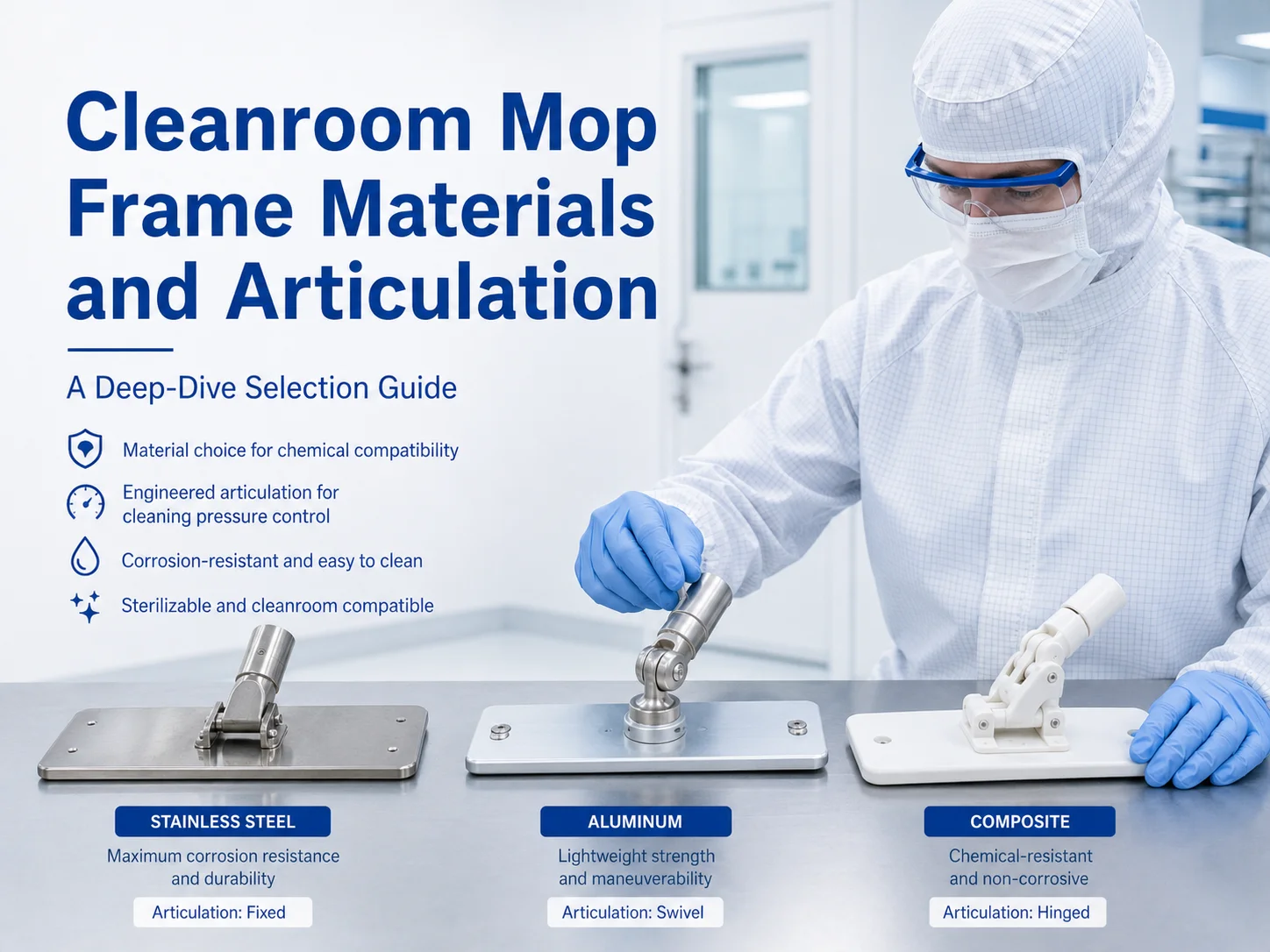
Paspas çerçevesi, başka hiçbir bileşenin yapmadığı üç operasyonel değişkeni belirler: toplam sistem ağırlığı (SS, alüminyum veya polimerden 0-50 daha fazla ağırlık ekler), kimyasal direnç (SS agresif dezenfektanları tolere eder; alüminyum galvanik korozyon riski taşır) ve artikülasyon aralığı (dönme açısı, kilitleme yeteneği ve çerçevenin duvarlar ve tavanlarda konumunu koruyup tutamayacağı). Bu üç boyutu değerlendirmeden seçilen bir çerçeve, doğrulama protokolüne doğrulanmamış değişkenler katar.
| Malzeme | Ağırlık | Kimyasal Direnç | Korozyon Riski | En İyisi |
|---|---|---|---|---|
| SS 304 | En ağır | Mükemmel — oksitleyici dezenfektanları tolere eder | Asgari | A/B sınıfı ilaç, agresif dezenfektan rotasyonu |
| SS 316 | En ağır | Üstün — molibden ilavesi klorür çukurlaşmasına karşı dayanıklıdır | Asgari | Klor bazlı dezenfektanlarla A/B sınıfı |
| Eloksallı Alüminyum | SS'den @-50 daha hafif | İyi — anodize katman korur. Çizikler ham Al'ı ortaya çıkarır. | SS sap + oksitleyici dezenfektanla eşleştirildiğinde galvanik | C/D Sınıfı, çoklu vardiya operasyonları, ağırlığa duyarlı uygulamalar |
| Polimer/Kompozit | En hafif | Mükemmel — doğası gereği korozyona dayanıklı | Hiçbiri | C/D Sınıfı, agresif kimyasal ortamlar, otoklav gerektirmez |
SS 304, farmasötik GMP temiz odaları için standarttır. Tam dezenfektan rotasyonuna (kuaterner amonyum, hidrojen peroksit, perasetik asit) karşı maksimum kimyasal direnç sağlar ve bozulma olmadan 121°C veya 134°C'de otoklavlanabilir. SS 316, klor bazlı dezenfektanlar kullanan veya kıyı/yüksek nemli ortamlarda çalışan tesisler için geçerli olan, klorür çukurlaşmasına karşı ek direnç sağlayan molibden ekler. Takas ağırlıktır: SS şasisi sisteme 0,8-1,2 kg ekler ve bu, çoklu vardiya operasyonlarında fark edilir. Sınıfa özel GMP temizleme aracı gereklilikleri için bkz. GMP temiz oda paspas sınıfı seçimi.
Eloksallı alüminyum çerçeveler, SS'ye kıyasla ağırlığı @-50 oranında azaltır; bu da onları, kümülatif operatör yorgunluğunun sorun teşkil ettiği çok vardiyalı operasyonlar için uygun hale getirir. Eloksallı yüzey katmanı kimyasal direnç sağlar ancak eloksal çizilirse ham alüminyum açığa çıkar. Oksitleyici dezenfektanlarla (özellikle klor bazlı) temas eden ham alüminyum, oyuklanma korozyonuna maruz kalabilir. İkinci risk: Alüminyum çerçeve paslanmaz çelik sapla eşleştirildiğinde galvanik korozyon; bir elektrolit (temizleme solüsyonu) bağlantıyı köprülediğinde farklı metaller galvanik bir hücre oluşturur. Eloksal bu riski azaltır ancak ortadan kaldırmaz. Alüminyum çerçeveleri değerlendiren tesisler, anotlama kalitesini doğrulamalı ve sap malzemesiyle galvanik uyumluluğu değerlendirmelidir.
Polimer çerçeveler korozyon riskini tamamen ortadan kaldırır; doğaları gereği tüm standart temiz oda dezenfektanlarına ve temizlik maddelerine karşı dayanıklıdırlar. Operatörün yorgunluğunu önemli ölçüde azaltan en hafif seçenektir. Takaslar: Polimer çerçeveler, özellikle daha büyük paspas kafaları için gereken genişletilmiş genişliklerde, metale kıyasla daha az sağlamlığa sahip olabilir. Polimer çerçevelerdeki eklemlenme mekanizmaları, metal mandallı sistemlerle karşılaştırıldığında daha az kilitleme konumuna sahip olabilir. Polimer çerçeveler genellikle otoklavlanamaz; bu da tüm paspas düzeneğinin otoklavlandığı tesislerde kullanımlarını sınırlandırır. Metal korozyonunun sürekli bir bakım sorunu olduğu agresif kimyasal dezenfeksiyon kullanan C/D Sınıfı bölgeler ve tesisler için çok uygundurlar.
Artikülasyon, paspas kafasının temizlenen yüzeyle (zemin, duvar veya tavan) düz teması sürdürüp sürdürmeyeceğini belirler. Serbest dönüş zemin temizliğinde standarttır: çerçeve, operatörün hareket yönünü takip edecek şekilde döner. Artikülasyonun kilitlenmesi çerçevenin sabit bir açıya (duvar temizliği için genellikle 30-45 derece) ayarlanmasına ve operatörün çaba harcamadan bu konumu korumasına olanak tanır. Cırcırlı artikülasyon indekslenmiş açı konumları sağlar; bu, hem zemin hem de duvar temizliği için aynı çerçeve kullanıldığında ve serbest hareket ile sabit açı arasında geçiş yapılması gerektiğinde kullanışlıdır. Çerçeve-kafa-tutma yeri entegrasyonunun sistem düzeyindeki önemi için bkz. Tam temiz oda paspas sistemi neden önemlidir?.
Çerçevenin sap alıcısı, sapın bağlantı tipiyle eşleşmelidir. Dişli çerçeveli bir alıcı (M22 veya 3/4 inç ACME), hızlı bağlantı kolunu kabul etmez ve bunun tersi de geçerlidir. Daha da önemlisi: farklı metaller kullanıldığında çerçeve ve tutamak malzemeleri galvanik uyumluluk açısından değerlendirilmelidir. Paslanmaz çelik saplı alüminyum çerçeve galvanik bir çift oluşturur. Alüminyum üzerindeki anotlama, temas yüzeyinde elektriksel izolasyon sağlar; ancak bağlantı noktasında anotlama tamamen aşınırsa galvanik korozyon başlayabilir. Görmek temiz oda paspas sapı seçimi sap malzemesi ve ataşman rehberliği için.
SS standarttır; ancak çok vardiyalı Grade C/D operasyonlarında ağırlık cezası, temizlik tutarlılığını kimyasal direnç avantajının haklı çıkardığından daha fazla azaltabilir.
Bu, temiz oda paspas sistemlerinde en yaygın farklı metal eşleşmesidir. Eloksal kaplama, konektörde çizilene kadar koruma sağlar. Galvanik uyumluluğu doğrulayın veya eşleşen malzemeleri kullanın.
Serbest dönebilen bir çerçeve duvara sabit bir açıyla tutunamaz; operatörün açıyı manuel olarak tutması gerekir, bu da tutarlılığı azaltır. Duvar işleri için kilitleme veya mandallı mafsal kullanın.
Temizleme araçlarını inceleyen bir denetçi, temizlenebilirlik hakkında sorular soracaktır. Belgelenmiş yüzey kaplaması olmayan bir çerçevenin (SS için Ra değeri) temizlenebilir olduğu doğrulanamaz.
Çoğu polimer çerçeve otoklavlanamaz. Tesisin SOP'si paspas tertibatının tamamının otoklavlanmasını gerektiriyorsa satın almadan önce çerçevenin otoklav sıcaklığına göre derecelendirildiğini doğrulayın.
SS 304, A/B Sınıfı farmasötik temiz odalar için standarttır; maksimum kimyasal dirence sahiptir ve otoklavlanabilir. Alüminyum, ağırlığın azaltılmasının çoklu vardiya operasyonlarına fayda sağladığı C/D Sınıfı için değerlendirilebilir. Polimer, metal korozyonunun tekrar eden bir sorun olduğu agresif kimyasal ortamlar için uygundur. "En iyi" malzeme, evrensel bir sıralamaya değil, temiz oda sınıfına, dezenfektan rotasyonuna ve vardiya modellerine bağlıdır.
Eloksallı alüminyum, eloksallı yüzeyin sağlam olması durumunda standart oksitleyici dezenfektanlarla birlikte kullanılabilir. Bununla birlikte, çizilmiş anotlama, klor bazlı dezenfektanların neden olduğu çukurlaşmaya karşı hassas olan ham alüminyumu açığa çıkarır. Alüminyum çerçeve kullanan tesisler düzenli aralıklarla eloksal yüzeyini kontrol etmeli ve yüzeyde hasar görülen çerçeveleri değiştirmelidir.
SS çerçeveler, benzer polimer veya alüminyum çerçevelere göre yaklaşık 0-50 daha ağırdır. 1,0 kg ağırlığındaki bir SS çerçeve, 0,5-0,6 kg'da alüminyum eşdeğerine ve 0,4-0,5 kg'da polimer eşdeğerine sahip olabilir. Ağırlık farkı, çoklu vardiya kullanımında operasyonel açıdan önemli hale gelir.
Evet. Serbest dönebilen mafsal, paspas kafasının zemin hatlarını takip etmesini sağlar ancak duvar temizliği için sabit bir açıyı tutamaz. Kilitlenen mafsal, tutarlı bir duvar açısını koruyarak dikey yüzeylerde temizleme basıncının homojenliğini artırır. Eklem tipi temizlenen yüzeylere uygun olmalıdır.
Uyumlu malzemeler galvanik korozyon riskini tamamen ortadan kaldırır. Farklı malzemelerin kullanılması gerekiyorsa, özellikle anotlamanın izolasyon bariyeri sağladığı alüminyum + SS çiftleri için galvanik uyumluluğu doğrulayın. Konektörde aşındırılan anotlama bir korozyon yolu oluşturur.
Çerçeve değişimi takvime dayalı olmaktan ziyade duruma dayalıdır. Denetim tetikleyicileri: gözle görülür korozyon (alüminyum), yüzey kaplamasının bozulması (SS — pürüzsüzlük kaybı, çukurlaşma), artikülasyon mekanizmasının özensizliği (gevşek dönme, arızalı kilit) ve konektör dişinin aşınması. Belgelendirilmiş bir çerçeve inceleme programı, temizleme aleti bakım programına entegre edilmelidir.
Yalnızca zemin temizleme programları için döndürme yeterlidir. Duvarlar veya tavanlar temizlenirse, kilitleme veya cırcırlı mafsal tavsiye edilir; operatörün açıyı manuel olarak korumasını gerektirmeden dikey yüzeylerde tutarlı bir açı tutar, böylece temizlik homojenliği artar.
Temiz oda derecelerinizi, dezenfektan rotasyonunu ve temizleme yüzeylerinizi belirtin. MIDPOSI, çerçeve malzemesini ve eklemleme türünü operasyonel gereksinimlerinize göre eşleştirmenize yardımcı olabilir.
Beyaz Temiz Oda Mop Serisi — Döner mafsallı SS 304 çerçeveler — tüm tutamak ve paspas kafası serisiyle uyumlu — GMP denetim desteği için malzeme belgeleri

İlgili: Bu makale, MIDPOSI Temiz Oda Paspas Sistemi Kılavuzu — temiz oda paspası tedarikine yönelik bileşenleri, seçim kriterlerini, GMP iş akışlarını ve dokümantasyon desteğini kapsayan eksiksiz bir kaynak.